×

Zambia🇿🇲 | best landmarksTop-Rated 3 landmarks in Zambia

Landmarks in Zambia mean waterfalls, rivers and living ceremonies far more than temples or monuments. Hit the Zambezi corridor in the south and you get polished infrastructure, steady crowds and US dollar pricing. Push north and east and the mood flips: dirt roads, village-run sites, a handful of visitors and fees paid in kwacha. Lusaka and the Copperbelt add colonial-era history and national memorials with almost no queues. Backpackers and independent travelers can mix all of it, since minibuses, shared taxis and long-distance buses reach most hubs. Pick your region first, because it sets your budget, your pace and how much you sweat getting there.

By Johan Kruseman 🇳🇱 | Updated October 23, 2026
Explore the best national parks in Zambia

Why go?Why These unique site Stand Out

Zambia gets its landmarks from water, rock and tradition rather than from stone cities. The country sits on a high plateau of roughly 1,000 to 1,500 meters, crossed by the Zambezi, Luangwa and Kafue systems, and those rivers carve the gorges, falls and escarpments that anchor the best stops. Add 73 ethnic groups and dozens of annual traditional ceremonies, and the cultural landmarks are often events and places held in living use, not roped-off ruins.

The history runs deep and recent. Early human sites and rock art sit alongside colonial railways, mining towns and independence-era sites that tell the story of Northern Rhodesia becoming Zambia in 1964.

Before you commit, know the trade-offs. Distances are huge, public transport thins out fast away from the main highways, and many sites lie … read more 👉
Zambia gets its landmarks from water, rock and tradition rather than from stone cities. The country sits on a high plateau of roughly 1,000 to 1,500 meters, crossed by the Zambezi, Luangwa and Kafue systems, and those rivers carve the gorges, falls and escarpments that anchor the best stops. Add 73 ethnic groups and dozens of annual traditional ceremonies, and the cultural landmarks are often events and places held in living use, not roped-off ruins.

The history runs deep and recent. Early human sites and rock art sit alongside colonial railways, mining towns and independence-era sites that tell the story of Northern Rhodesia becoming Zambia in 1964.

Before you commit, know the trade-offs. Distances are huge, public transport thins out fast away from the main highways, and many sites lie inside or beside national parks with separate entry fees. The south is easy and well signposted. The north rewards self-sufficient travelers willing to carry cash, since card machines vanish outside Lusaka, Livingstone and the larger towns. Seasons reshape what you see at water-based sites, so plan with the calendar in hand. Go in expecting less polish and more space, and Zambia delivers landmarks you can often have almost to yourself.
Our Approach to Ranking
The list of best unique sites in Zambia is created based on history or culture, wow factor, atmosphere, quirks, and memorability. If you feel a unique site is missing in this list, please let us know.

When to go?Optimal Periods for Travel

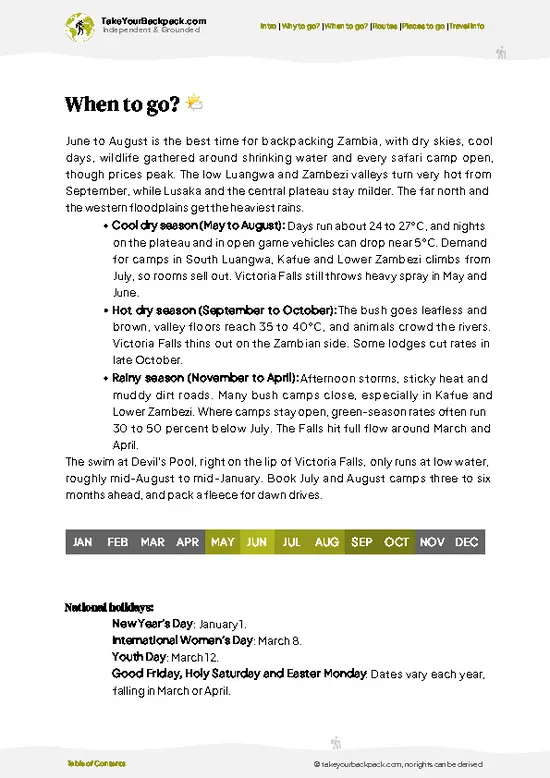
Best months for landmarks: May to August is the sweet spot, because the rains have ended, skies are clear, roads are passable and daytime temperatures sit around 22 to 27°C. Nights on the plateau drop to 5 to 10°C in June and July, so pack a fleece.
Shoulder seasons: September and October swing hot, with 30 to 36°C common in the Zambezi valley and around Livingstone. Visibility stays excellent and crowds thin once the July and August peak passes. Accommodation in tourist hubs can run 20 to 40 percent cheaper than at the peak.
Rainy season: November to April brings heavy afternoon downpours, with most of the country receiving 700 to 1,400 mm, and the north getting the most. Dirt roads in the Northern, Luapula and Eastern provinces turn to mud, and some routes become impassable. In the far south, … read more 👉
Best months for landmarks: May to August is the sweet spot, because the rains have ended, skies are clear, roads are passable and daytime temperatures sit around 22 to 27°C. Nights on the plateau drop to 5 to 10°C in June and July, so pack a fleece.
Shoulder seasons: September and October swing hot, with 30 to 36°C common in the Zambezi valley and around Livingstone. Visibility stays excellent and crowds thin once the July and August peak passes. Accommodation in tourist hubs can run 20 to 40 percent cheaper than at the peak.
Rainy season: November to April brings heavy afternoon downpours, with most of the country receiving 700 to 1,400 mm, and the north getting the most. Dirt roads in the Northern, Luapula and Eastern provinces turn to mud, and some routes become impassable. In the far south, river-based sites are at their fullest around March to May, though spray and cloud can limit views. Low-season lodging deals are real, often 30 to 50 percent below dry-season rates.
Peak periods: July and August, plus the Christmas and Easter holidays, are when southern hubs fill up. Book beds ahead then. Traditional ceremonies cluster mostly between February and October, so check dates before you go.

unique site hoppingOptimizing Your Multi-Stop Itinerary

How many days you need: A trip linking several Zambian landmarks needs 10 to 16 days, because distances are long and roads slow. Travel time eats more of your schedule than sightseeing does.
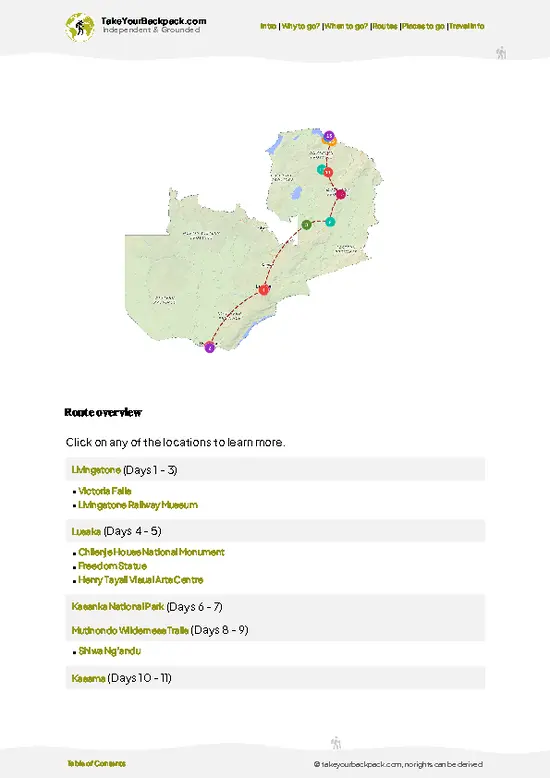
Which regions pair well: Cluster by corridor. The south (Livingstone and the Zambezi) pairs easily with Lusaka, a 7 to 9 hour bus ride. From Lusaka, the Great North Road runs northeast toward Mpika and the Luangwa valley, around 9 to 11 hours with stops. Kasama and the northern circuit sit a further 5 to 7 hours on. Travel one direction rather than looping back, and a south-to-north sweep suits most backpackers. Fly or take the bus from Lusaka to the Copperbelt (Kitwe, Ndola) in 5 to 6 hours if history interests you.
Time per stop: Budget 1 to 2 days at easy southern stops and 2 to 3 days in remote northern … read more 👉
How many days you need: A trip linking several Zambian landmarks needs 10 to 16 days, because distances are long and roads slow. Travel time eats more of your schedule than sightseeing does.
Which regions pair well: Cluster by corridor. The south (Livingstone and the Zambezi) pairs easily with Lusaka, a 7 to 9 hour bus ride. From Lusaka, the Great North Road runs northeast toward Mpika and the Luangwa valley, around 9 to 11 hours with stops. Kasama and the northern circuit sit a further 5 to 7 hours on. Travel one direction rather than looping back, and a south-to-north sweep suits most backpackers. Fly or take the bus from Lusaka to the Copperbelt (Kitwe, Ndola) in 5 to 6 hours if history interests you.
Time per stop: Budget 1 to 2 days at easy southern stops and 2 to 3 days in remote northern areas, where reaching a site can take half a day alone. Add a rest day after every two long transfers.
Planning mistakes: The classic error is cramming too many stops into a short trip. Cut the list and go deeper. Another is trusting map distances, since a 200 km stretch can take 5 hours. Build in slack. Many travelers also ignore departure times, but buses leave when full, often early, so arrive by 6 or 7 a.m. Avoid planning night drives, because livestock and unlit trucks are common hazards.

The ListTop landmarks of Zambia

1 Victoria Falls

Knife-Edge Bridge, Devil’s Pool, Boiling Pot, Batoka rapids

Walk soaked rainforest paths to the lip of the Zambezi, then add a rafting run, a gorge descent or a river cruise.

Zambia&Zimbabwe - the Victoria Falls

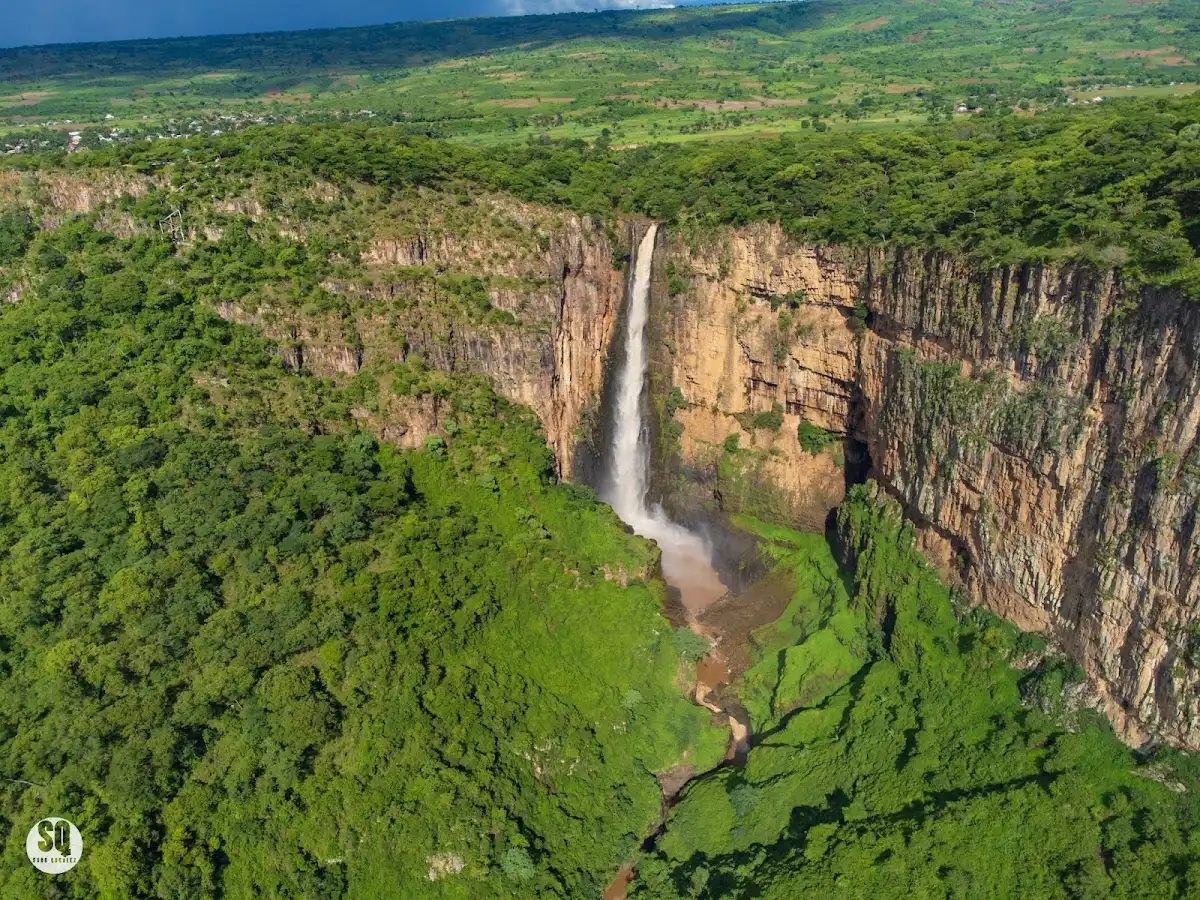
2 Kalambo Falls

235-meter single drop, Stone Age terraces, Cape vultures, Tanzania border gorge

Follow a long remote road to a sheer gorge rim, where spray, nesting vultures and ancient river terraces share one border viewpoint.

zambia-unique-site-kalambo-falls
© Google |

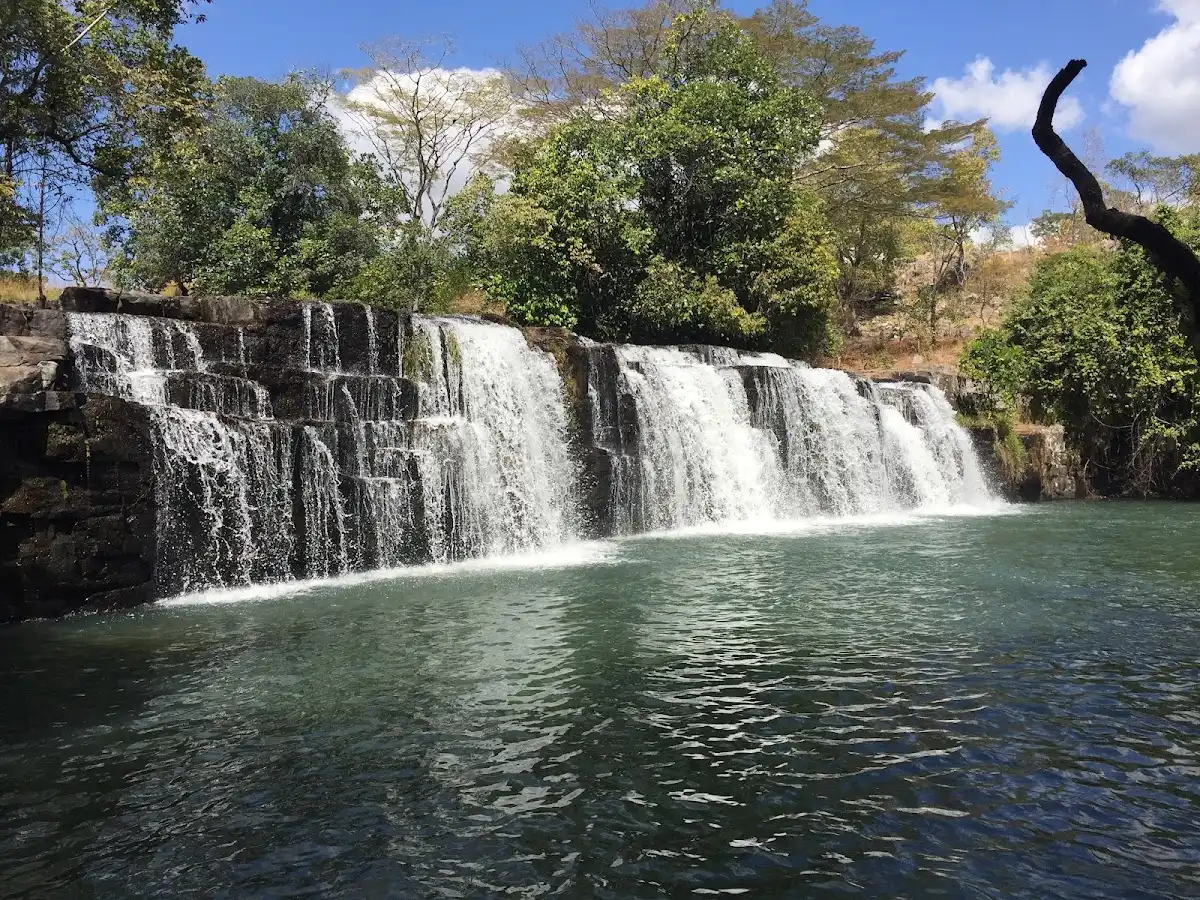
3 Mumbuluma Falls

Luapula bush tracks, rocky lip, plunge pool, miombo woodland

Drive dirt tracks west of Mansa to a green gorge, then cool off in the pool below the drop and walk the stream.

zambia-unique-site-mumbuluma-falls
© Google |
Loading the map 🌍

Expert viewExpert Commentary on landmarks

How many landmarks to aim for: Plan on four to six landmarks in two weeks. Zambia’s distances mean every extra stop costs a day or more in transit, and the rewards come from lingering. An experienced traveler picks fewer places and stays longer, since the best encounters, a guide’s story, a village ceremony, happen on day two, not hour one.
Choosing which kind: Match the type to your style. Water landmarks suit first-timers and short trips, because they come with transport, beds and information. Cultural and historical stops, such as memorials, museums and ceremonies, suit slow, curious travelers and cost very little. Remote natural sites suit self-sufficient people with time and a tolerance for rough transport. Pick one of each kind rather than three of the same, and you get far more variety … read more 👉
How many landmarks to aim for: Plan on four to six landmarks in two weeks. Zambia’s distances mean every extra stop costs a day or more in transit, and the rewards come from lingering. An experienced traveler picks fewer places and stays longer, since the best encounters, a guide’s story, a village ceremony, happen on day two, not hour one.
Choosing which kind: Match the type to your style. Water landmarks suit first-timers and short trips, because they come with transport, beds and information. Cultural and historical stops, such as memorials, museums and ceremonies, suit slow, curious travelers and cost very little. Remote natural sites suit self-sufficient people with time and a tolerance for rough transport. Pick one of each kind rather than three of the same, and you get far more variety out of the same days.
What it costs: Budget US$30 to 50 a day on a shoestring: dorm or basic guesthouse beds at US$10 to 20, local meals at US$3 to 6, minibus rides at US$5 to 15 per leg. Add a mid-range cushion and you reach US$70 to 110. Entry fees vary widely. Big southern sites charge foreign visitors roughly US$20 to 25 per entry, national parks typically US$15 to 30 per day, and small museums or memorials often US$2 to 10. Local guides run US$10 to 30 a visit, and are usually worth paying for, because they supply the context signs omit. Fees at major sites are quoted in dollars, but tickets are often accepted in kwacha at the day’s rate. Carry small bills, since change is scarce.
Safety and conduct: Petty theft is the main risk in Lusaka and Livingstone, so keep phones out of sight and avoid walking after dark. Slippery rock and wet edges cause real injuries at water sites, and local guides know which spots are safe. Wildlife wanders near some sites, so never walk unguided at dusk. Hippos and crocodiles make riverbank swimming dangerous, regardless of how calm the water looks.
Cultural etiquette: Ask before photographing people, ceremonies or chiefs’ areas, because some sacred sites and rituals forbid photos. Dress modestly in villages, with shoulders and knees covered. Greet with a handshake, often with a clasp of the wrist or thumb, and take a moment to say hello before asking questions. Photographing government buildings, bridges and military sites can lead to trouble, so skip it. Small gifts of food are better than cash or sweets to children.

✈️ The backpacker research shortcutZambia Travel Guide

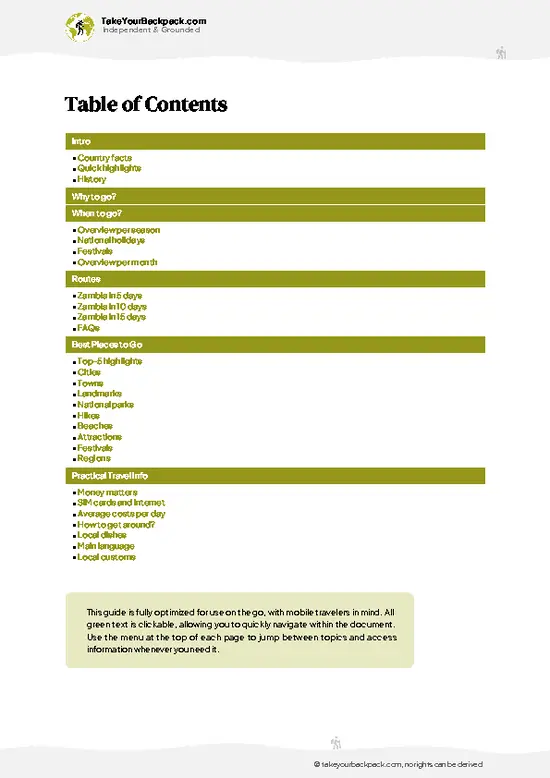
An offline-friendly backpacking guide with optimized travel routes, ranked highlights, transport advice, and the best areas to stay.
example page 0 from our offline Travel Guide for Zambia
example page 1 from our offline Travel Guide for Zambia
example page 2 from our offline Travel Guide for Zambia
example page 3 from our offline Travel Guide for Zambia
example page 4 from our offline Travel Guide for Zambia
example page 5 from our offline Travel Guide for Zambia
example page 6 from our offline Travel Guide for Zambia
example page 7 from our offline Travel Guide for Zambia
The digital guide (351 pages) contains:
✅ 89 highlights, ranked by travel appeal
✅ Optimized 5, 10 & 15-day travel routes
✅ Cities, national parks, landmarks, beaches
✅ How to get around
✅ Offline-friendly for travel without Wi-Fi
👉 Click to see all 30+ guide features

📅 Plan smarter in minutes, not weeks
✅ Month by month travel advice
✅ Festivals & national holidays
✅ Budget expectations

🗺️ Go to the right places, skip the overrated ones
✅ Honest pros & cons of destinations
✅ Top hikes, parks & viewpoints
✅ Lesser-known places most travelers miss
✅ Clear “worth it vs skip it” guidance

🛏️ Travel smoothly without rookie mistakes
✅ Best areas to stay
✅ Transport systems explained simply
✅ Common scams & safety advice
✅ SIM cards, money & practical tips

🌍 Understand the country, not just visit it
✅ Culture & traditions
✅ 52 Essential phrases & customs
✅ Festivals worth planning around
✅ Traveler-friendly historical context
✅ Insights that make places more meaningful

📱 Built for real travel conditions
✅ Fully downloadable PDF
✅ Works completely offline
✅ Optimized for phone use
✅ Useful in remote areas & buses
✅ Everything in one place
Stop searching, start planning
Get instant access to your full guide. 30‑day money-back guarantee.
+ Add another guide for just

By proceeding you agree to our terms.
Sent to your inbox immediately after payment • 100% Secure Checkout
Best Backpacking Travel Advisor 2025 tourism awardBest Backpacking
Travel Advisor
2025
What others say about Take Your Backpack Guides:
⭐⭐⭐⭐⭐
Fantastic, amazing amount of information!
⭐⭐⭐⭐⭐
My goodness this is amazing, it's what I've been looking for hats off too you!
⭐⭐⭐⭐⭐
I think this is absolutely BRILLIANT
⭐⭐⭐⭐
Very complete and informative. It's still missing places, but I gotta to commend you
⭐⭐⭐⭐⭐
This is truly amazing, thank you, can't wait to explore it with my kids!
⭐⭐⭐⭐⭐
Awesome resource, thank you!
⭐⭐⭐⭐⭐
This is amazing! Can't wait to explore the ones I haven't seen
⭐⭐⭐⭐
I love this! Well done, great idea.
⭐⭐⭐⭐⭐
Thanks for taking the time to make this gem!
⭐⭐⭐⭐⭐
This might be the best website I've ever seen.
⭐⭐⭐⭐⭐
Congratulations, and thank you so much for your work; it's incredibly valuable.
⭐⭐⭐⭐
In all seriousness I think you did a great job pointing out the important spots
⭐⭐⭐⭐⭐
10/10 very good
⭐⭐⭐⭐⭐
As someone who's only just starting to visit regularly this is awesome, thank you.
⭐⭐⭐⭐
Thank you very much! I'm going to visit my dad, it's going to be very useful!
⭐⭐⭐⭐⭐
This is really cool! We'll be travelling for the first time and this definitely come in handy.
⭐⭐⭐⭐⭐
You are now our minister of culture, congratulations 👨‍💼
⭐⭐⭐⭐⭐
Just wanted to tell you that this is a pearl! Going to follow your recommendations.
⭐⭐⭐⭐⭐
This is so cool. I'll definitely be using the resource for my travels soon.
⭐⭐⭐⭐⭐
This is very impressive! Good work.
⭐⭐⭐⭐⭐
This is an amazing and informative site. Very well done!

🛏️ Where to stay?Accommodation Highlights

Backpacking Zambia is easy on a budget: dorm beds run roughly US$12 to 20 a night, and most hostels also offer private rooms and camping on the lawn. In Lusaka, the leafy suburbs east of the center such as Rhodes Park, Longacres and Kabulonga hold the best budget options; they are quiet, gated and close to the malls and restaurant strips, but you need a taxi or ride-hailing app to get anywhere after dark. In Livingstone, the hostels cluster in the town center along Mosi-oa-Tunya Road, which puts you within walking distance of bars, ATMs and adventure-booking desks and about 10 km from Victoria Falls, while the quieter riverside stretch upstream on the Zambezi is mostly pricier lodges and campsites. … read more 👉
Backpacking Zambia is easy on a budget: dorm beds run roughly US$12 to 20 a night, and most hostels also offer private rooms and camping on the lawn. In Lusaka, the leafy suburbs east of the center such as Rhodes Park, Longacres and Kabulonga hold the best budget options; they are quiet, gated and close to the malls and restaurant strips, but you need a taxi or ride-hailing app to get anywhere after dark. In Livingstone, the hostels cluster in the town center along Mosi-oa-Tunya Road, which puts you within walking distance of bars, ATMs and adventure-booking desks and about 10 km from Victoria Falls, while the quieter riverside stretch upstream on the Zambezi is mostly pricier lodges and campsites.

If you enjoy meeting fellow travelers, consider choosing hostels with high ratings for atmosphere. On the other hand, if you prefer having your own space, a hotel might be a better option.

ZambiaSee More of Zambia

👋 Meet the founderWho’s Behind Take Your Backpack?

Johan, backpacker and founder of TakeYourBackpackHi, I’m Johan (Netherlands 🇳🇱), the creator of TakeYourBackpack. Over the past 3 decades, I’ve backpacked through 90+ countries across six continents, gaining extensive experience with independent travel, long-term trips, and overland routes.

This site is built on a combination of firsthand travel experience and carefully curated insights from other backpackers. Many guides are based on places I’ve personally visited, while others bring together tips, observations, and practical advice shared by trusted travelers I’ve met along the way.

The goal is to provide realistic, experience-driven guidance — not generic itineraries — so you can explore destinations with better context, clearer expectations, and more confidence.