×

Zimbabwe🇿🇼 | attractionsGreat Zimbabwe Monumentstone ruins, ancient city, UNESCO site | things to do and best time to go

Explore Mosi-oa-Tunya / Victoria Falls Rainforest Viewing AreaExplore Khami Ruins National Monument

Backpacking in Great Zimbabwe Monument
🏆 Top pickattraction ranked #2
By Johan Kruseman 🇳🇱 | Updated May 27, 2026

Your boots crunch on sun-baked granite shards as you squeeze through a passageway barely wide enough for your shoulders. The air smells of dry grass and lichen. Somewhere above, a dassie chirps, and the wind carries the echo of voices—tour guides, school kids, maybe ancestors if you’re feeling poetic. This is Great Zimbabwe Monument, sprawled across the hills near Masvingo, in southern Zimbabwe, far from the capital’s chaos and the safari circuit’s polished gloss.

Here’s the truth: Great Zimbabwe isn’t a quick selfie stop. It’s a slow-burn marvel, a place that humbles you with its scale and the sheer audacity of its stonework—built without mortar, centuries before the first European set foot in Africa. Yes, you’ll dodge a few tour groups and the occasional hawker, but the crowds are nothing compared to Victoria Falls or Hwange. Getting here takes effort—buses are slow, roads can be rough, and the entry fee isn’t pocket change for a backpacker. But the payoff? You get to wander a ruined city that feels both ancient and alive, with a sense of mystery that no Instagram filter can fake. If you want a place that makes you feel small in the best possible way, this is it.

Discover everything you want to know in the 📖 Zimbabwe Travel Guide.


Get your Zimbabwe guide
90 ranked highlights, routes & tips, works offline (356 pages)
Loading the map 🌍
CLICK TO FILTER
cities
towns
landmarks
national parks
hikes
beaches
attractions
festivals
regions
SHOW COUNTRY’S BESTSHOW ALL

✨ Why go?
Ranked #2 attraction in Zimbabwe
The unique appeal for travelers

The Great Zimbabwe Monument isn’t just another photo op plastered all over Instagram—it’s the raw, unfiltered heart of Zimbabwe’s past. Yes, it draws crowds, and yes, the entrance fee isn’t pocket change for a backpacker, but that’s where the story gets real. This isn’t some cookie-cutter ruin; it’s the largest ancient stone structure in sub-Saharan Africa, built without mortar, standing tall since the 11th century. You’re walking through a place that was once the epicenter of a powerful kingdom, a hub for trade stretching as far as China and Persia. That kind of historical weight hits differently when you’re standing inside those towering walls, imagining the lives that shaped a continent’s story.

For backpackers, Great Zimbabwe is a milestone—not just geographically but culturally. It’s … read more 👉
The Great Zimbabwe Monument isn’t just another photo op plastered all over Instagram—it’s the raw, unfiltered heart of Zimbabwe’s past. Yes, it draws crowds, and yes, the entrance fee isn’t pocket change for a backpacker, but that’s where the story gets real. This isn’t some cookie-cutter ruin; it’s the largest ancient stone structure in sub-Saharan Africa, built without mortar, standing tall since the 11th century. You’re walking through a place that was once the epicenter of a powerful kingdom, a hub for trade stretching as far as China and Persia. That kind of historical weight hits differently when you’re standing inside those towering walls, imagining the lives that shaped a continent’s story.

For backpackers, Great Zimbabwe is a milestone—not just geographically but culturally. It’s a checkpoint where history, mystery, and sheer human ingenuity collide. The effort to get here, often involving long bus rides through rugged terrain, pays off with an adrenaline rush that’s part awe, part respect. This isn’t a tourist trap; it’s a profound reminder that Africa’s history isn’t just in books—it’s carved in stone, demanding your attention and respect. If you’re serious about understanding Zimbabwe beyond the surface, this is non-negotiable.
Want to include Great Zimbabwe Monument in your Zimbabwe route?
Create a personalized Zimbabwe itinerary that includes Great Zimbabwe Monument and the places that fit your trip — based on your travel style, budget, and available time. Get your route in seconds.

Generate my trip

💡 HighlightsEssential experiences to have while visiting Great Zimbabwe Monument

The Great Enclosure
Let’s cut through the brochure fog: this is not just a pile of old rocks. The Great Enclosure is the largest ancient stone structure south of the Sahara, and it feels every bit as monumental as the hype suggests. The outer walls soar up to 11 meters high—without a drop of mortar. You can walk inside the ring and run your hands along the granite blocks, each one stacked by hand over 700 years ago. The conical tower at the center is pure architectural bravado; nobody’s sure what it was for, but it dominates the space like a silent riddle. If you want a photo that actually does the place justice, come early or late—midday light flattens everything, and the tour bus crowds are relentless from 10 to 2.

The Hill Complex
This is where the real magic happens. Climb the steep, uneven … read more 👉
The Great Enclosure
Let’s cut through the brochure fog: this is not just a pile of old rocks. The Great Enclosure is the largest ancient stone structure south of the Sahara, and it feels every bit as monumental as the hype suggests. The outer walls soar up to 11 meters high—without a drop of mortar. You can walk inside the ring and run your hands along the granite blocks, each one stacked by hand over 700 years ago. The conical tower at the center is pure architectural bravado; nobody’s sure what it was for, but it dominates the space like a silent riddle. If you want a photo that actually does the place justice, come early or late—midday light flattens everything, and the tour bus crowds are relentless from 10 to 2.

The Hill Complex
This is where the real magic happens. Climb the steep, uneven path (watch your footing—this is not a flip-flop zone) and you’ll reach the original royal citadel. The view from the top is a knockout: you see the entire valley, the Great Enclosure below, and the rolling Zimbabwean bush stretching to the horizon. The ruins themselves are a maze of terraces, passageways, and ancient walls that snake around granite boulders. It’s easy to imagine the power games and ceremonies that played out here. The Hill Complex is less crowded than the main enclosure, and the silence up here is thick—broken only by the wind and the occasional baboon. This is my personal favorite. There’s a raw, haunted energy that you just don’t get down below.

The Soapstone Birds
You’ll see replicas on-site, but the originals are locked away in museums for good reason: these carved birds are the Mona Lisas of Zimbabwean archaeology. Each one is perched on a pedestal, part eagle, part human, and entirely mysterious. They’re the national symbol for a reason. The birds are a reminder that Great Zimbabwe wasn’t just a city—it was a spiritual powerhouse. If you’re lucky, you’ll catch a local guide who can tell you the legends and theories (some wild, some plausible) about what these birds meant to the people who carved them.

The Valley Ruins
Most people skip these, but that’s a rookie mistake. The Valley Ruins are the remnants of the city’s suburbs—stone walls, house foundations, and ancient passageways scattered through the bush. There’s no Instagram crowd here, just the sound of cicadas and the crunch of dry grass underfoot. It’s the best place to get a sense of how big and complex this city really was. You’ll find pottery shards and faded relics if you look closely. This is where the monument stops being a postcard and starts feeling like a lost world.

Traditional Performances at the Site
If you time your visit right, you might catch a local dance or music performance near the entrance. Yes, it’s partly for tourists, but the energy is real—drums, mbira, and dancers in full regalia. It’s a jolt of living culture that connects the ruins to the people who still call this land home. Don’t just watch—join in if you’re invited. That’s where the real stories happen.
Spotted a mistake or missing something? Contact us.

🌤️ When to go?Weather, crowds, and seasonal trade-offs


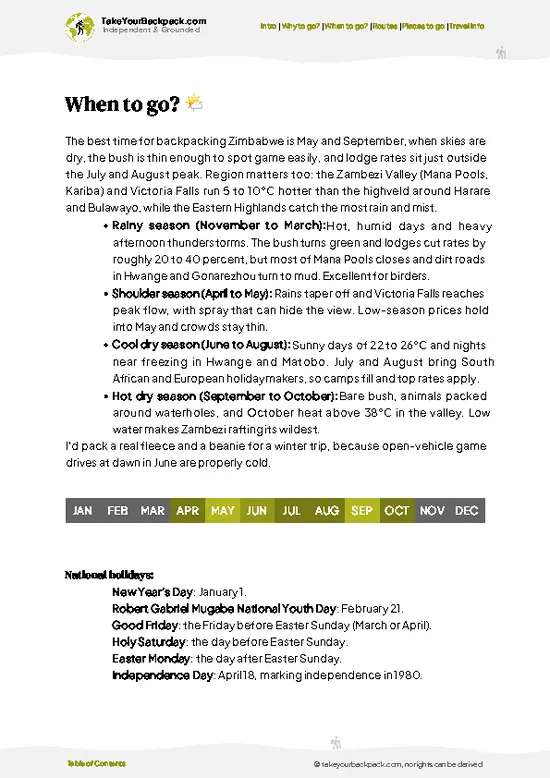
  • Weather: The best time to visit Great Zimbabwe Monument is during the dry season, from May to October. Expect clear skies and minimal rain, making it easier to explore the ruins without mud or slippery paths. The wet season (November to April) brings heavy rains that can turn trails into a mess and obscure views.

  • Temperature: From May to August, temperatures are cooler, ranging from 10°C to 25°C (50°F to 77°F), perfect for hiking and wandering the site without overheating. September and October warm up to 20°C to 30°C (68°F to 86°F), so pack layers and sun protection.

  • Daylight Hours: Zimbabwe enjoys roughly 11 to 12 hours of daylight year-round. During the dry season, longer daylight means more time to soak in the ruins and surrounding landscapes without rushing.

  • Crowds: The dry season
read more 👉

  • Weather: The best time to visit Great Zimbabwe Monument is during the dry season, from May to October. Expect clear skies and minimal rain, making it easier to explore the ruins without mud or slippery paths. The wet season (November to April) brings heavy rains that can turn trails into a mess and obscure views.

  • Temperature: From May to August, temperatures are cooler, ranging from 10°C to 25°C (50°F to 77°F), perfect for hiking and wandering the site without overheating. September and October warm up to 20°C to 30°C (68°F to 86°F), so pack layers and sun protection.

  • Daylight Hours: Zimbabwe enjoys roughly 11 to 12 hours of daylight year-round. During the dry season, longer daylight means more time to soak in the ruins and surrounding landscapes without rushing.

  • Crowds: The dry season attracts more visitors, especially July and August, when local schools are on break. However, crowds remain manageable compared to other global heritage sites, so you’ll still find moments of quiet.

  • Seasonal Activities: Dry months are ideal for combining your visit with wildlife spotting in nearby parks. The wet season offers lush greenery but limits access to some areas and can dampen your experience.

  • Price Fluctuations: Entrance fees and local accommodation prices tend to rise slightly during peak dry months (July-August). Visiting in shoulder months like May or October can save you some cash without sacrificing weather quality.


Pro-tip: Aim for late May or early October to dodge the peak crowds and enjoy pleasant weather with better deals—this sweet spot gives you the ruins almost to yourself.


source: climatestotravel.comJANJanuary: fair for travelingFEBFebruary: fair for travelingMARMarch: fair for travelingAPRApril: fair for travelingMAYMay: excellent for travelingJUNJune: excellent for travelingJULJuly: highly recommended for travelingAUGAugust: highly recommended for travelingSEPSeptember: highly recommended for travelingOCTOctober: excellent for travelingNOVNovember: fair for travelingDECDecember: fair for traveling
when-to-go

✈️ The backpacker research shortcutZimbabwe Travel Guide

An offline-friendly backpacking guide with optimized travel routes, ranked highlights, transport advice, and the best areas to stay.
example page 0 from our offline Travel Guide for Zimbabwe
example page 1 from our offline Travel Guide for Zimbabwe
example page 2 from our offline Travel Guide for Zimbabwe
example page 3 from our offline Travel Guide for Zimbabwe
example page 4 from our offline Travel Guide for Zimbabwe
example page 5 from our offline Travel Guide for Zimbabwe
example page 6 from our offline Travel Guide for Zimbabwe
example page 7 from our offline Travel Guide for Zimbabwe
The digital guide (356 pages) contains:
90 highlights, ranked by travel appeal
Optimized 5, 10 & 15-day travel routes
Cities, national parks, landmarks, beaches
How to get around
Offline-friendly for travel without Wi-Fi
👉 Click to see all 30+ guide features

📅 Plan smarter in minutes, not weeks
Month by month travel advice
Festivals & national holidays
Budget expectations

🗺️ Go to the right places, skip the overrated ones
Honest pros & cons of destinations
Top hikes, parks & viewpoints
Lesser-known places most travelers miss
Clear “worth it vs skip it” guidance

🛏️ Travel smoothly without rookie mistakes
Best areas to stay
Transport systems explained simply
Common scams & safety advice
SIM cards, money & practical tips

🌍 Understand the country, not just visit it
Culture & traditions
52 Essential phrases & customs
Festivals worth planning around
Traveler-friendly historical context
Insights that make places more meaningful

📱 Built for real travel conditions
Fully downloadable PDF
Works completely offline
Optimized for phone use
Useful in remote areas & buses
Everything in one place
Save weeks of stressful planning
Get instant access to your full guide. 30‑day money-back guarantee.


By proceeding you agree to our terms.
Sent to your inbox immediately after payment • 100% Secure Checkout
Best Backpacking Travel Advisor 2025 tourism awardBest Backpacking
Travel Advisor
2025
What others say about Take Your Backpack Guides:
⭐⭐⭐⭐⭐
Fantastic, amazing amount of information!
⭐⭐⭐⭐⭐
My goodness this is amazing, it's what I've been looking for hats off too you!
⭐⭐⭐⭐⭐
I think this is absolutely BRILLIANT
⭐⭐⭐⭐
Very complete and informative. It's still missing places, but I gotta to commend you
⭐⭐⭐⭐⭐
This is truly amazing, thank you, can't wait to explore it with my kids!
⭐⭐⭐⭐⭐
Awesome resource, thank you!
⭐⭐⭐⭐⭐
This is amazing! Can't wait to explore the ones I haven't seen
⭐⭐⭐⭐
I love this! Well done, great idea.
⭐⭐⭐⭐⭐
Thanks for taking the time to make this gem!
⭐⭐⭐⭐⭐
This might be the best website I've ever seen.
⭐⭐⭐⭐⭐
Congratulations, and thank you so much for your work; it's incredibly valuable.
⭐⭐⭐⭐
In all seriousness I think you did a great job pointing out the important spots
⭐⭐⭐⭐⭐
10/10 very good
⭐⭐⭐⭐⭐
As someone who's only just starting to visit regularly this is awesome, thank you.
⭐⭐⭐⭐
Thank you very much! I'm going to visit my dad, it's going to be very useful!
⭐⭐⭐⭐⭐
This is really cool! We'll be travelling for the first time and this definitely come in handy.
⭐⭐⭐⭐⭐
You are now our minister of culture, congratulations 👨‍💼
⭐⭐⭐⭐⭐
Just wanted to tell you that this is a pearl! Going to follow your recommendations.
⭐⭐⭐⭐⭐
This is so cool. I'll definitely be using the resource for my travels soon.
⭐⭐⭐⭐⭐
This is very impressive! Good work.
⭐⭐⭐⭐⭐
This is an amazing and informative site. Very well done!

🛏️ Where to stay?How to pick the right area

The Great Zimbabwe Monument is a heavyweight in African history, but let’s cut through the tourist brochure gloss: this isn’t a place swarming with backpacker hostels or buzzing nightlife. The reality? The area around the monument is rural, quiet, and low-key. If you’re chasing a social scene or a party vibe, you won’t find it here. Instead, you’ll find something rarer—space to breathe, think, and connect with the land’s deep past without the usual tourist noise.

For backpackers, the best base isn’t a flashy town but the small settlements and lodges scattered within a short drive of the site. … read more 👉
The Great Zimbabwe Monument is a heavyweight in African history, but let’s cut through the tourist brochure gloss: this isn’t a place swarming with backpacker hostels or buzzing nightlife. The reality? The area around the monument is rural, quiet, and low-key. If you’re chasing a social scene or a party vibe, you won’t find it here. Instead, you’ll find something rarer—space to breathe, think, and connect with the land’s deep past without the usual tourist noise.

For backpackers, the best base isn’t a flashy town but the small settlements and lodges scattered within a short drive of the site. These spots are safe and attract a steady trickle of budget travelers and solo adventurers who want to swap stories around a fire rather than drown in crowds. Staying close means you can catch the monument early, before the midday heat and the handful of day-trippers arrive. It also means you get to experience the local rural vibe—simple, genuine, and unfiltered.

If you want social, look for communal campsites or lodges that encourage mingling. These places often host travelers who share rides, meals, and tips. The trade-off is fewer amenities and less polish, but that’s part of the charm. You’re here for the monument’s raw power, not a luxury resort. Embrace the quiet, the stars, and the stories whispered by ancient stone walls. That’s the real magic.

👛 Costs (as of 17 June 2025)Money, prices, and spending tips

As of March 2024, the entrance fee for international visitors to the Great Zimbabwe Monument is USD15 per adult, which includes access to the on-site museum. Additional costs may apply for guided tours or other activities.
⚠️ Prices can change and everyone travels differently, so take this as a rough guide. Hope it helps you plan your adventure!

Other Zimbabwean attractions near Great Zimbabwe Monument

Explore more nearby:


💡 Not sure where to go next?
Create a personalized itinerary for Zimbabwe including Great Zimbabwe Monument and the places that fit your trip.

Generate my itinerary

👉 Discover all attractions

Or checkout all Zimbabwe has to offer (think cities, towns, villages, national parks, hikes, beaches, festivals)
Country photo of Zimbabwe

We 💚 feedbackSumming up the experience

The Great Zimbabwe Monument isn’t a postcard-perfect, crowd-free ruin—expect a steady flow of local tourists and a modest entrance fee that might sting if you’re on a shoestring. But here’s the kicker: standing among those ancient stone walls, you’re touching a story that rewrote African history, a massive kingdom’s heartbeat carved in granite. It’s raw, real, and humbling in a way no glossy Instagram shot can capture. That’s why it’s worth every gritty step.

✈️ When did I visit Zimbabwe?
I have backpacked Zimbabwe all the way back in 2001.

✍️ Help improve this page!
The information on this page is based on my own backpacking experience in Zimbabwe, supplemented with up-to-date research and feedback from other travelers. Travel details can change, so if you notice anything outdated or incomplete, feel free to let me know.


🙋‍♂️ Give feedback

👋 Meet the founderWho’s Behind Take Your Backpack?

Johan, backpacker and founder of TakeYourBackpackHi, I’m Johan (Netherlands 🇳🇱), the creator of TakeYourBackpack. Over the past decade, I’ve backpacked through 80+ countries across six continents, gaining extensive experience with independent travel, long-term trips, and overland routes.

This site is built on a combination of firsthand travel experience and carefully curated insights from other backpackers. Many guides are based on places I’ve personally visited, while others bring together tips, observations, and practical advice shared by trusted travelers I’ve met along the way.

The goal is to provide realistic, experience-driven guidance — not generic itineraries — so you can explore destinations with better context, clearer expectations, and more confidence.

Get full Zimbabwe guide •
Instant download • 90 highlights • Full Offline guide