×

Zimbabwe🇿🇼 | attractionsNatural History Museum of Zimbabwetaxidermy displays, mineral collections, scientific exhibits | things to do and best time to go

Explore Zimbabwe Museum of Human SciencesExplore National Heroes Acre

Backpacking in Natural History Museum of Zimbabwe
👍 Recommendedattraction ranked #9
By Johan Kruseman 🇳🇱 | Updated May 14, 2026

Here’s what you won’t see on Instagram: the Natural History Museum of Zimbabwe is less about dinosaur bones and more about the raw, sometimes unsettling, story of Zimbabwe’s wildlife and colonial past—complete with a taxidermy collection that’s both impressive and, frankly, a little haunting. You’ll find it in Bulawayo, Zimbabwe’s second city, not tucked away in the capital or near Victoria Falls, but right in the heart of a city that most backpackers breeze through on their way to Matobo or Hwange. Here’s the truth: you won’t be elbowing through crowds of selfie-sticks, and the entry fee is refreshingly low compared to the country’s headline-grabbing parks. The wow-factor isn’t about spectacle; it’s the depth—fossils, minerals, and a glimpse into Zimbabwe’s ecological battles. It’s not adrenaline, but it’s real. If you want a break from the tourist conveyor belt and a chance to actually learn something about the land you’re walking on, this is your spot.

Discover everything you want to know in the 📖 Zimbabwe Travel Guide.


Get your Zimbabwe guide
90 ranked highlights, routes & tips, works offline (356 pages)
Loading the map 🌍
CLICK TO FILTER
cities
towns
landmarks
national parks
hikes
beaches
attractions
festivals
regions
SHOW COUNTRY’S BESTSHOW ALL

✨ Why go?
Ranked #9 attraction in Zimbabwe
The unique appeal for travelers

The Natural History Museum of Zimbabwe is not your typical tourist stop plastered all over Instagram feeds, and that’s exactly why it deserves your time. Sure, it’s not a flashy safari or a waterfall plunge, but this museum is a heavyweight in understanding Zimbabwe’s soul. It’s the place where you get a grip on the country’s deep history—everything from ancient fossils to the story of the Shona people’s artistry and resilience. Backpackers who skip it miss a crucial chapter in Zimbabwe’s narrative, one that adds layers to the wild landscapes and bustling cities you’ll explore next.

Yes, it can get crowded, especially with school groups, and the entrance fee isn’t dirt cheap by local standards. But the payoff is real. You’re not just looking at dusty bones or random artifacts; you’re stepping … read more 👉
The Natural History Museum of Zimbabwe is not your typical tourist stop plastered all over Instagram feeds, and that’s exactly why it deserves your time. Sure, it’s not a flashy safari or a waterfall plunge, but this museum is a heavyweight in understanding Zimbabwe’s soul. It’s the place where you get a grip on the country’s deep history—everything from ancient fossils to the story of the Shona people’s artistry and resilience. Backpackers who skip it miss a crucial chapter in Zimbabwe’s narrative, one that adds layers to the wild landscapes and bustling cities you’ll explore next.

Yes, it can get crowded, especially with school groups, and the entrance fee isn’t dirt cheap by local standards. But the payoff is real. You’re not just looking at dusty bones or random artifacts; you’re stepping into a timeline that connects you to the land’s geological past and cultural heartbeat. It’s a major milestone on any Zimbabwe route because it grounds your journey in context. When you leave, you’ll see the country’s natural wonders and urban scenes with sharper eyes and a fuller heart. This isn’t a quick pit stop—it’s a foundation for everything that follows.
Want to include Natural History Museum of Zimbabwe in your Zimbabwe route?
Create a personalized Zimbabwe itinerary that includes Natural History Museum of Zimbabwe and the places that fit your trip — based on your travel style, budget, and available time. Get your route in seconds.

Generate my trip

💡 HighlightsTop highlights of Natural History Museum of Zimbabwe

The Hall of Man
Forget the Instagram illusion of empty marble halls and hushed reverence. The Hall of Man is the real deal—Zimbabwe’s answer to the question, “Where did we come from?” You’ll find ancient skulls, stone tools, and a timeline that doesn’t sugarcoat the messy, fascinating story of human evolution in southern Africa. The display cases are old-school, but the content is world-class. If you want to stand face-to-face with the region’s earliest ancestors, this is your spot. It’s not flashy, but it’s honest—and that’s rare.


The Taxidermy Megafauna Gallery
This is not your average “stuffed animals behind glass” situation. The Natural History Museum of Zimbabwe goes big—literally. You’ll walk among full-sized elephants, a white rhino, and a lion pride frozen mid-hunt. It’s a sensory … read more 👉
The Hall of Man
Forget the Instagram illusion of empty marble halls and hushed reverence. The Hall of Man is the real deal—Zimbabwe’s answer to the question, “Where did we come from?” You’ll find ancient skulls, stone tools, and a timeline that doesn’t sugarcoat the messy, fascinating story of human evolution in southern Africa. The display cases are old-school, but the content is world-class. If you want to stand face-to-face with the region’s earliest ancestors, this is your spot. It’s not flashy, but it’s honest—and that’s rare.


The Taxidermy Megafauna Gallery
This is not your average “stuffed animals behind glass” situation. The Natural History Museum of Zimbabwe goes big—literally. You’ll walk among full-sized elephants, a white rhino, and a lion pride frozen mid-hunt. It’s a sensory overload: the musk of preserved hide, the sheer scale of the beasts, and the slightly faded grandeur of a collection built over decades. Kids are awestruck, adults get a jolt of perspective, and everyone leaves with a new respect for the wild. It’s a little retro, a little surreal, and absolutely unforgettable.


The Minerals and Geology Vault
Zimbabwe is a geological jackpot, and this gallery proves it. Expect cabinets crammed with glittering minerals, meteorites, and gold nuggets that would make a Bond villain jealous. The labels are blunt—no poetic fluff, just hard facts about the rocks that shaped a nation. If you’re even remotely interested in geology, this is a treasure trove. If you’re not, you will be by the time you leave. The sheer variety and raw beauty of the specimens are a reminder that the ground beneath your feet is anything but boring.


The Live Snake Pit
Here’s where the museum ditches the dusty stereotype. In the basement, you’ll find a collection of live snakes—yes, alive and slithering—including some of Zimbabwe’s most notorious species. It’s not for the faint of heart, but it’s a rush to see black mambas and pythons up close, safely behind glass. The keepers know their stuff and aren’t shy about sharing stories that will make your skin crawl. This is my personal favorite: it’s raw, real, and a reminder that nature doesn’t care about your comfort zone.


The Birds of Zimbabwe Dioramas
You can scroll through bird photos online all day, but nothing compares to the museum’s old-school dioramas. The detail is obsessive: every feather, every beak, every bit of habitat recreated with loving accuracy. It’s a time capsule from an era when museums were built to inspire awe, not just clicks. If you want to see the diversity of Zimbabwe’s birdlife in one room—hornbills, eagles, and the elusive African pitta—this is your chance. It’s quiet magic, the kind that sneaks up on you.
Spotted a mistake or missing something? Contact us.

Things to do near Natural History Museum of Zimbabwe

Ratings based on Tripadvisor reviews. When you book through this link, you support our work at no extra cost to you.

🌤️ When to go?Best time to visit Natural History Museum of Zimbabwe


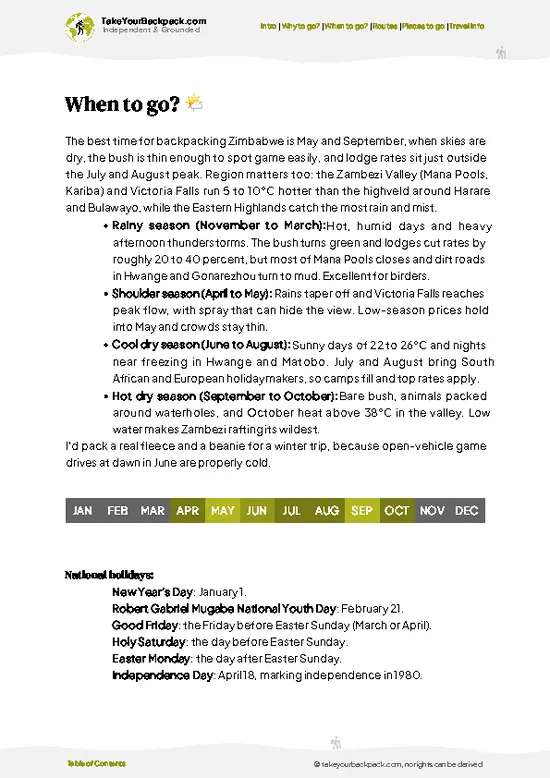
  • Weather: Zimbabwe’s seasons are sharply divided. The best time to visit the Natural History Museum is during the dry season, from May to October, when rainfall is minimal and the air is crisp. Avoid the wet season (November to April) — heavy rains can make travel tricky and dampen your museum experience.

  • Temperature: Expect mild to cool temperatures in the dry months, ranging from 10°C to 25°C (50°F to 77°F). June to August can get chilly, especially in the mornings and evenings, so pack layers. The wet season heats up, often hitting 30°C (86°F) or more, which can be uncomfortable for long indoor visits.

  • Daylight Hours: Daylight is fairly consistent year-round, roughly 11 to 13 hours daily. However, the dry season’s clearer skies mean better natural light inside the museum, enhancing
read more 👉

  • Weather: Zimbabwe’s seasons are sharply divided. The best time to visit the Natural History Museum is during the dry season, from May to October, when rainfall is minimal and the air is crisp. Avoid the wet season (November to April) — heavy rains can make travel tricky and dampen your museum experience.

  • Temperature: Expect mild to cool temperatures in the dry months, ranging from 10°C to 25°C (50°F to 77°F). June to August can get chilly, especially in the mornings and evenings, so pack layers. The wet season heats up, often hitting 30°C (86°F) or more, which can be uncomfortable for long indoor visits.

  • Daylight Hours: Daylight is fairly consistent year-round, roughly 11 to 13 hours daily. However, the dry season’s clearer skies mean better natural light inside the museum, enhancing your viewing experience.

  • Crowds: Peak tourist season coincides with the dry months, especially July and August, so expect more visitors and slightly higher prices. The museum is less crowded in May and September, offering a more relaxed vibe without sacrificing weather quality.

  • Seasonal Activities: Outside the museum, dry season months align with wildlife viewing and cultural festivals, enriching your overall trip. The museum itself occasionally hosts special exhibits or talks during these months, adding value to your visit.

  • Price Fluctuations: Entrance fees and local accommodation prices tend to rise during the dry season’s peak months. Visiting shoulder months like May or September can save you money without compromising the experience.


Pro-tip: Aim for May or September to dodge crowds and high prices while enjoying perfect weather and extra cultural events around Harare.


source: climatestotravel.comJANJanuary: fair for travelingFEBFebruary: fair for travelingMARMarch: fair for travelingAPRApril: fair for travelingMAYMay: excellent for travelingJUNJune: highly recommended for travelingJULJuly: highly recommended for travelingAUGAugust: highly recommended for travelingSEPSeptember: excellent for travelingOCTOctober: excellent for travelingNOVNovember: fair for travelingDECDecember: fair for traveling
when-to-go

✈️ The backpacker research shortcutZimbabwe Travel Guide

An offline-friendly backpacking guide with optimized travel routes, ranked highlights, transport advice, and the best areas to stay.
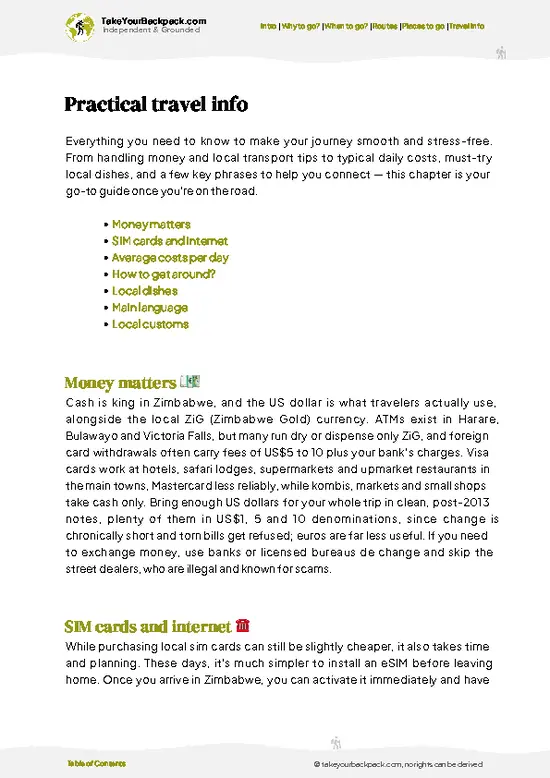
example page 0 from our offline Travel Guide for Zimbabwe
example page 1 from our offline Travel Guide for Zimbabwe
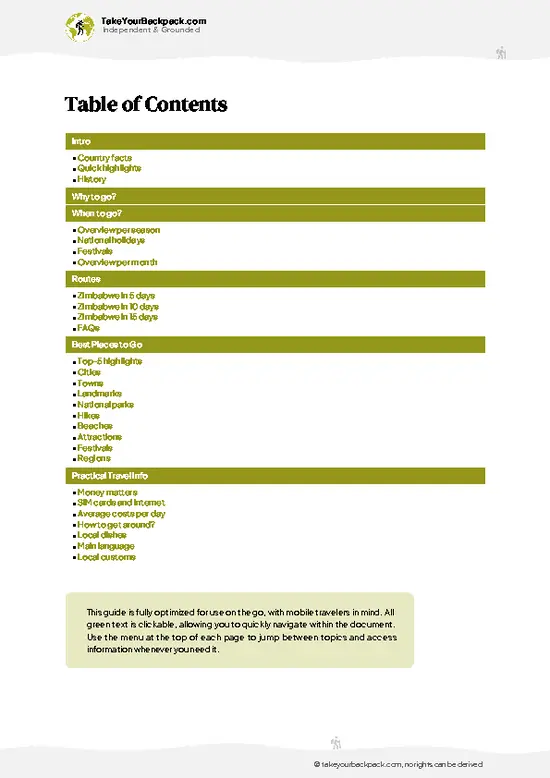
example page 2 from our offline Travel Guide for Zimbabwe
example page 3 from our offline Travel Guide for Zimbabwe
example page 4 from our offline Travel Guide for Zimbabwe
example page 5 from our offline Travel Guide for Zimbabwe
example page 6 from our offline Travel Guide for Zimbabwe
example page 7 from our offline Travel Guide for Zimbabwe
The digital guide (356 pages) contains:
90 highlights, ranked by travel appeal
Optimized 5, 10 & 15-day travel routes
Cities, national parks, landmarks, beaches
How to get around
Offline-friendly for travel without Wi-Fi
👉 Click to see all 30+ guide features

📅 Plan smarter in minutes, not weeks
Month by month travel advice
Festivals & national holidays
Budget expectations

🗺️ Go to the right places, skip the overrated ones
Honest pros & cons of destinations
Top hikes, parks & viewpoints
Lesser-known places most travelers miss
Clear “worth it vs skip it” guidance

🛏️ Travel smoothly without rookie mistakes
Best areas to stay
Transport systems explained simply
Common scams & safety advice
SIM cards, money & practical tips

🌍 Understand the country, not just visit it
Culture & traditions
52 Essential phrases & customs
Festivals worth planning around
Traveler-friendly historical context
Insights that make places more meaningful

📱 Built for real travel conditions
Fully downloadable PDF
Works completely offline
Optimized for phone use
Useful in remote areas & buses
Everything in one place
Save weeks of stressful planning
Get instant access to your full guide. 30‑day money-back guarantee.


By proceeding you agree to our terms.
Sent to your inbox immediately after payment • 100% Secure Checkout
Best Backpacking Travel Advisor 2025 tourism awardBest Backpacking
Travel Advisor
2025
What others say about Take Your Backpack Guides:
⭐⭐⭐⭐⭐
Fantastic, amazing amount of information!
⭐⭐⭐⭐⭐
My goodness this is amazing, it's what I've been looking for hats off too you!
⭐⭐⭐⭐⭐
I think this is absolutely BRILLIANT
⭐⭐⭐⭐
Very complete and informative. It's still missing places, but I gotta to commend you
⭐⭐⭐⭐⭐
This is truly amazing, thank you, can't wait to explore it with my kids!
⭐⭐⭐⭐⭐
Awesome resource, thank you!
⭐⭐⭐⭐⭐
This is amazing! Can't wait to explore the ones I haven't seen
⭐⭐⭐⭐
I love this! Well done, great idea.
⭐⭐⭐⭐⭐
Thanks for taking the time to make this gem!
⭐⭐⭐⭐⭐
This might be the best website I've ever seen.
⭐⭐⭐⭐⭐
Congratulations, and thank you so much for your work; it's incredibly valuable.
⭐⭐⭐⭐
In all seriousness I think you did a great job pointing out the important spots
⭐⭐⭐⭐⭐
10/10 very good
⭐⭐⭐⭐⭐
As someone who's only just starting to visit regularly this is awesome, thank you.
⭐⭐⭐⭐
Thank you very much! I'm going to visit my dad, it's going to be very useful!
⭐⭐⭐⭐⭐
This is really cool! We'll be travelling for the first time and this definitely come in handy.
⭐⭐⭐⭐⭐
You are now our minister of culture, congratulations 👨‍💼
⭐⭐⭐⭐⭐
Just wanted to tell you that this is a pearl! Going to follow your recommendations.
⭐⭐⭐⭐⭐
This is so cool. I'll definitely be using the resource for my travels soon.
⭐⭐⭐⭐⭐
This is very impressive! Good work.
⭐⭐⭐⭐⭐
This is an amazing and informative site. Very well done!

🛏️ Where to stay?Where staying makes the most sense

If you’re backpacking to see the Natural History Museum of Zimbabwe, you’re probably expecting a quiet, tucked-away cultural experience. Reality check: Harare’s city center, where the museum sits, is busy, noisy, and not the kind of place you want to wander alone after dark. That’s the brutal truth. But don’t let that scare you off. The real magic happens when you pick your base wisely.

The best spots for budget travelers and solo backpackers are the neighborhoods just outside the immediate downtown chaos—places like Avondale and Greendale. These areas strike a solid balance between safety and … read more 👉
If you’re backpacking to see the Natural History Museum of Zimbabwe, you’re probably expecting a quiet, tucked-away cultural experience. Reality check: Harare’s city center, where the museum sits, is busy, noisy, and not the kind of place you want to wander alone after dark. That’s the brutal truth. But don’t let that scare you off. The real magic happens when you pick your base wisely.

The best spots for budget travelers and solo backpackers are the neighborhoods just outside the immediate downtown chaos—places like Avondale and Greendale. These areas strike a solid balance between safety and social vibe. You’ll find guesthouses, backpacker-friendly lodges, and small cafés where locals and travelers mix without the touristy pretense. It’s where you can swap stories over a cold drink, not just stare at your phone waiting for the next bus.

Plus, these neighborhoods are close enough to the museum to make a quick morning visit without the hassle of city traffic. You’re also near markets and street food stalls that offer a genuine taste of Zimbabwean life, far from the polished tourist traps. Yes, it costs a bit more than the sketchy downtown hostels, but you get peace of mind and a chance to connect with the city’s pulse. That’s the kind of value that turns a simple visit into a memorable adventure.

👛 Costs (as of 6 June 2025)Money, prices, and spending tips

As of the latest available information, the entrance fees for the Natural History Museum of Zimbabwe are as follows:

- Residents:
- Children: ZWL$7
- Adults: ZWL$20

- SADC Nationals:
- Children: US$5
- Adults: US$7

- International Visitors:
- Children: US$5
- Adults: US$10

*Note: ZWL$ refers to Zimbabwean dollars, and exchange rates may vary. It's advisable to check the current exchange rates before your visit.*

source: naturalhistorymuseumzimbabwe.com
⚠️ Prices can change and everyone travels differently, so take this as a rough guide. Hope it helps you plan your adventure!

Other Zimbabwean attractions near Natural History Museum of Zimbabwe

Explore more nearby:


💡 Not sure where to go next?
Create a personalized itinerary for Zimbabwe including Natural History Museum of Zimbabwe and the places that fit your trip.

Generate my itinerary

👉 Discover all attractions

Or checkout all Zimbabwe has to offer (think cities, towns, villages, national parks, hikes, beaches, festivals)
Country photo of Zimbabwe

We 💚 feedbackFinal thoughts on visiting Natural History Museum of Zimbabwe

The Natural History Museum of Zimbabwe isn’t some polished, touristy showcase—it’s a raw dive into the country’s deep past, packed with fossils and artifacts that tell stories you won’t find in glossy guidebooks. But heads up: the exhibits can feel a bit dated, and the crowds aren’t always manageable, especially on weekends. Still, if you’re hungry for a genuine connection to Zimbabwe’s natural and cultural roots, this place delivers in a way few spots do.

✈️ When did I visit Zimbabwe?
I have backpacked Zimbabwe all the way back in 2001.

✍️ Help improve this page!
The information on this page is based on my own backpacking experience in Zimbabwe, supplemented with up-to-date research and feedback from other travelers. Travel details can change, so if you notice anything outdated or incomplete, feel free to let me know.


🙋‍♂️ Give feedback

👋 Meet the founderWho’s Behind Take Your Backpack?

Johan, backpacker and founder of TakeYourBackpackHi, I’m Johan (Netherlands 🇳🇱), the creator of TakeYourBackpack. Over the past decade, I’ve backpacked through 80+ countries across six continents, gaining extensive experience with independent travel, long-term trips, and overland routes.

This site is built on a combination of firsthand travel experience and carefully curated insights from other backpackers. Many guides are based on places I’ve personally visited, while others bring together tips, observations, and practical advice shared by trusted travelers I’ve met along the way.

The goal is to provide realistic, experience-driven guidance — not generic itineraries — so you can explore destinations with better context, clearer expectations, and more confidence.

Get full Zimbabwe guide •
Instant download • 90 highlights • Full Offline guide