×

Zimbabwe🇿🇼 | townsGwandagold mining, semi-arid landscape, roadside stalls | things to do and best time to go

Explore ChiredziExplore Rusape

Backpacking in Gwanda
🌟 Highlighttown ranked #6
By Johan Kruseman 🇳🇱 | Updated June 11, 2026

Gwanda surprises most backpackers: it’s not just a dusty pit stop, but the mango capital of Zimbabwe—meaning if you hit the right season, the air is thick with sweetness and the markets are stacked with fruit, not just hardware and mining gear. Set in southern Zimbabwe, halfway between Bulawayo and Beitbridge, Gwanda is a sun-baked crossroads town where gold mining and cattle trucks set the pace. For backpackers, it’s less a destination than a strategic pause—think: a place to reset your bearings, stock up, and catch your breath before plunging into Matobo’s granite wilds or crossing into South Africa. The town itself is compact and walkable, with a few lively markets and a handful of simple cafés where locals linger over tea. Don’t expect hostels or a backpacker scene; you’ll likely be the only foreigner in sight, which can feel isolating or quietly thrilling, depending on your mood. Buses and combis are frequent but basic, and costs are low—though you trade nightlife and comfort for authenticity and slow, safe evenings. Compared to Bulawayo’s bustle or Beitbridge’s border chaos, Gwanda is a mellow, practical waypoint: not scenic, but real, and sometimes that’s exactly what you need.

Discover everything you want to know in the 📖 Zimbabwe Travel Guide.


Get your Zimbabwe guide
90 ranked highlights, routes & tips, works offline (356 pages)
Loading the map 🌍
CLICK TO FILTER
cities
towns
landmarks
national parks
hikes
beaches
attractions
festivals
regions
SHOW COUNTRY’S BESTSHOW ALL

✨ Why go?
Ranked #6 town in Zimbabwe
Why visitors keep coming back

Gwanda is a strategic pit stop for backpackers weaving through Zimbabwe. It’s not just a town; it’s a gateway to nearby hikes and cultural experiences. The surrounding landscapes offer trails that lead to stunning vistas, perfect for those who crave the outdoors. You can easily spend a day or two exploring the local markets, where the scent of grilled meats and spices fills the air, or savoring a meal at a small eatery that serves hearty, home-cooked dishes.

The accommodations here are mostly small-scale hostels and guesthouses, fostering a friendly social atmosphere. You’ll find fellow travelers sharing stories over a communal meal or planning the next leg of their journey. Gwanda feels walkable, allowing you to soak in the local vibe without the rush. Most backpackers tend to stay briefly, … read more 👉
Gwanda is a strategic pit stop for backpackers weaving through Zimbabwe. It’s not just a town; it’s a gateway to nearby hikes and cultural experiences. The surrounding landscapes offer trails that lead to stunning vistas, perfect for those who crave the outdoors. You can easily spend a day or two exploring the local markets, where the scent of grilled meats and spices fills the air, or savoring a meal at a small eatery that serves hearty, home-cooked dishes.

The accommodations here are mostly small-scale hostels and guesthouses, fostering a friendly social atmosphere. You’ll find fellow travelers sharing stories over a communal meal or planning the next leg of their journey. Gwanda feels walkable, allowing you to soak in the local vibe without the rush. Most backpackers tend to stay briefly, using it as a launchpad for adventures, but those who linger will appreciate the slow pace and the chance to connect with the community. It’s ideal for solo travelers and small groups looking for a blend of culture and nature without the noise of larger cities.
Want to include Gwanda in your Zimbabwe route?
Create a personalized Zimbabwe itinerary that includes Gwanda and the places that fit your trip — based on your travel style, budget, and available time. Get your route in seconds.

Generate my trip

💡 HighlightsThe experiences that define the visit

  • Gwanda Main Market — The heartbeat of the town where traders sell fresh produce, butchered meat, dried fish and handmade wares; best place to taste local street food, haggle for bargains and watch daily life up close.
  • Gwanda Showgrounds — Venue for the provincial agricultural shows and community events; shows, livestock auctions and weekend gatherings here give a clear window into Matabeleland South’s farming culture.
  • Gwanda Town Hall / Civic Centre — The municipal hub where public meetings, cultural performances and local exhibitions take place; the easiest spot to catch community events and local music nights.
  • Transport Hub / Bus Terminus (Main Road) — The busy junction on the main Bulawayo-Beitbridge road; hanging out here is practical and revealing — minibuses, long-distance coaches
read more 👉
  • Gwanda Main Market — The heartbeat of the town where traders sell fresh produce, butchered meat, dried fish and handmade wares; best place to taste local street food, haggle for bargains and watch daily life up close.
  • Gwanda Showgrounds — Venue for the provincial agricultural shows and community events; shows, livestock auctions and weekend gatherings here give a clear window into Matabeleland South’s farming culture.
  • Gwanda Town Hall / Civic Centre — The municipal hub where public meetings, cultural performances and local exhibitions take place; the easiest spot to catch community events and local music nights.
  • Transport Hub / Bus Terminus (Main Road) — The busy junction on the main Bulawayo-Beitbridge road; hanging out here is practical and revealing — minibuses, long-distance coaches and traders converge, making it a good starting point for day trips and meeting locals.
  • Gwanda Mining Heritage Sites — Scattered old workings, tailings and small-scale gold-mining operations around town that tell the story of the area’s mining past and present; worth visiting with a local guide to learn about miners’ lives and the local economy.
A few real, visitable highlights just outside Gwanda that make easy day trips are nearby small-scale mining areas and mining villages, regional agricultural shows and community-run game/ranch properties in the district; my personal favorite for a day trip is the Main Market vibe and nearby small mining sites for their honest, gritty local character.
Spotted a mistake or missing something? Contact us.

Things to do near Gwanda

Ratings based on Tripadvisor reviews. When you book through this link, you support our work at no extra cost to you.

🏘️ NeighborhoodsNeighborhood guide to Gwanda

Gwanda, a small town in Zimbabwe, offers a unique blend of local culture and accessible adventure. Here’s how to navigate its neighborhoods for an optimal backpacking experience.

Central Gwanda: This is the heartbeat of the town. You’ll find local markets buzzing with vendors selling fresh produce and handmade crafts. It’s walkable, with most amenities within a short stroll. Budget-friendly accommodations are scattered here, making it ideal for both short and longer stays. The nightlife is low-key, with a few bars where you can sip on local beers and mingle with residents.

Gwanda South: A quieter area, perfect for those seeking a peaceful retreat. The vibe is laid-back, with fewer tourists and more locals going about their daily lives. While it’s less walkable, shared taxis are readily available. … read more 👉
Gwanda, a small town in Zimbabwe, offers a unique blend of local culture and accessible adventure. Here’s how to navigate its neighborhoods for an optimal backpacking experience.

Central Gwanda: This is the heartbeat of the town. You’ll find local markets buzzing with vendors selling fresh produce and handmade crafts. It’s walkable, with most amenities within a short stroll. Budget-friendly accommodations are scattered here, making it ideal for both short and longer stays. The nightlife is low-key, with a few bars where you can sip on local beers and mingle with residents.

Gwanda South: A quieter area, perfect for those seeking a peaceful retreat. The vibe is laid-back, with fewer tourists and more locals going about their daily lives. While it’s less walkable, shared taxis are readily available. This neighborhood is great for longer stays, offering guesthouses that feel like home.

Gwanda North: This area is emerging with new cafes and eateries, catering to a younger crowd. It’s a bit more vibrant, with a mix of nightlife options. The walkability is decent, but you might want to use local transport for longer distances. Ideal for short stays, it’s a good base for exploring nearby attractions.

Each area has its own charm, making Gwanda a versatile stop on your Zimbabwean adventure.

⌛️ 1 dayHow to make the most of one day

Gwanda, Zimbabwe, is a town that pulses with the rhythm of everyday life, where the air is thick with the scent of wood smoke and the laughter of children echoes through the streets. It’s a place where you can feel the heartbeat of the country, away from the usual tourist traps.

Start your morning with a stroll through the bustling market at the center of town. The vibrant colors of fresh produce and handmade crafts create a feast for the eyes. Grab a cup of locally brewed tea from a vendor—its warmth will kickstart your day. Engage with the vendors; they’re eager to share stories about their crafts and lives. This is where you’ll find the soul of Gwanda, not just a transaction.

As the sun climbs higher, head to the nearby Matobo Hills, a short drive away. This UNESCO World Heritage site … read more 👉
Gwanda, Zimbabwe, is a town that pulses with the rhythm of everyday life, where the air is thick with the scent of wood smoke and the laughter of children echoes through the streets. It’s a place where you can feel the heartbeat of the country, away from the usual tourist traps.

Start your morning with a stroll through the bustling market at the center of town. The vibrant colors of fresh produce and handmade crafts create a feast for the eyes. Grab a cup of locally brewed tea from a vendor—its warmth will kickstart your day. Engage with the vendors; they’re eager to share stories about their crafts and lives. This is where you’ll find the soul of Gwanda, not just a transaction.

As the sun climbs higher, head to the nearby Matobo Hills, a short drive away. This UNESCO World Heritage site is often overlooked by those sticking to the beaten path. The granite formations rise dramatically, and the views are breathtaking. Take a guided walk to see ancient rock art and learn about the local history. The scent of wild sage fills the air, and the silence is punctuated only by the rustle of leaves. It’s a moment to breathe deeply and appreciate the beauty around you.

In the evening, return to Gwanda and find a local eatery. Try sadza with a side of beef stew; the flavors are rich and comforting. As you savor your meal, listen to the stories shared by locals. They’ll tell you about the town’s history, its challenges, and its triumphs.

End your day with a leisurely walk through the quieter neighborhoods, where the warm glow of street lamps casts a soft light on the faces of friendly locals. Gwanda isn’t just a stop on the map; it’s a place that invites you to connect, to understand, and to enjoy the simple pleasures of life.
Turn your Gwanda visit into an Zimbabwe adventure
Build a complete Zimbabwe route with Gwanda, hidden gems, must-see destinations, and realistic travel times included.

Generate my trip

🌤️ When to go?When to go for the best experience


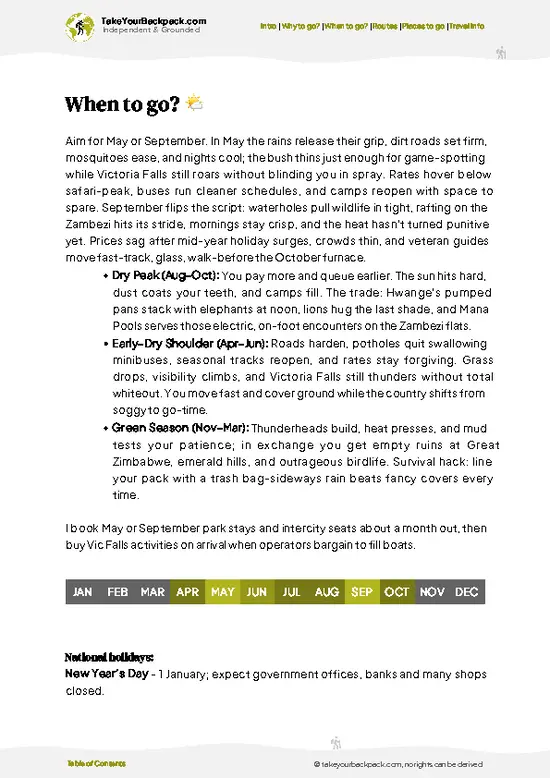
  • Topic: Weather – Gwanda’s dry season from May to October offers clear skies and minimal rain, making trails less slippery and campsites more comfortable. The wet season (November to April) brings heavy rains that can turn dirt roads into mud traps and swell rivers, complicating travel.

  • Topic: Temperature – During the dry months, daytime highs hover around 25-30°C (77-86°F), perfect for hiking without overheating. Nights can dip to 10-15°C (50-59°F), so pack layers. The wet season is warmer and more humid, often pushing 30-35°C (86-95°F), which can drain your energy fast.

  • Topic: Daylight Hours – Gwanda enjoys roughly 11-12 hours of daylight year-round, but the dry season’s clearer skies mean more reliable sunlight for early starts and late finishes, crucial for maximizing your trekking
read more 👉

  • Topic: Weather – Gwanda’s dry season from May to October offers clear skies and minimal rain, making trails less slippery and campsites more comfortable. The wet season (November to April) brings heavy rains that can turn dirt roads into mud traps and swell rivers, complicating travel.

  • Topic: Temperature – During the dry months, daytime highs hover around 25-30°C (77-86°F), perfect for hiking without overheating. Nights can dip to 10-15°C (50-59°F), so pack layers. The wet season is warmer and more humid, often pushing 30-35°C (86-95°F), which can drain your energy fast.

  • Topic: Daylight Hours – Gwanda enjoys roughly 11-12 hours of daylight year-round, but the dry season’s clearer skies mean more reliable sunlight for early starts and late finishes, crucial for maximizing your trekking hours.

  • Topic: Crowds – The dry season attracts more local visitors and some international backpackers, but Gwanda remains low-key. The wet season sees fewer travelers, giving you near-solitude but at the cost of tougher conditions.

  • Topic: Seasonal Activities – Wildlife spotting peaks in the dry months when animals gather around shrinking water sources, making game drives more rewarding. The wet season bursts with lush greenery and birdlife but can limit access to certain parks.

  • Topic: Price Fluctuations – Accommodation and transport costs tend to rise slightly during the dry season due to demand. The wet season offers better deals but expect some services to be sporadic or closed.


Pro-tip: Aim for the shoulder months of May or October—enjoy manageable weather, fewer crowds, and better prices, all while catching the tail ends of seasonal wildlife activity.


source: climatestotravel.comJANJanuary: fair for travelingFEBFebruary: fair for travelingMARMarch: fair for travelingAPRApril: good for travelingMAYMay: highly recommended for travelingJUNJune: excellent for travelingJULJuly: excellent for travelingAUGAugust: excellent for travelingSEPSeptember: excellent for travelingOCTOctober: highly recommended for travelingNOVNovember: fair for travelingDECDecember: fair for traveling
when-to-go

✈️ The backpacker research shortcutZimbabwe Travel Guide

An offline-friendly backpacking guide with optimized travel routes, ranked highlights, transport advice, and the best areas to stay.
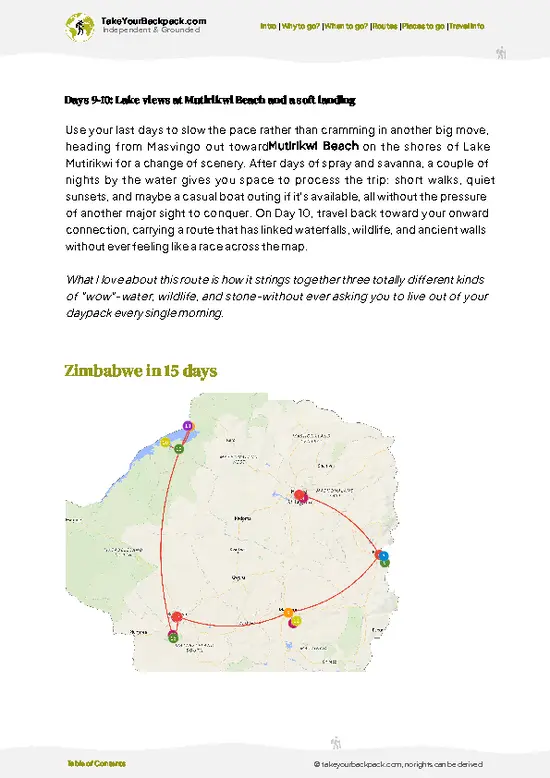
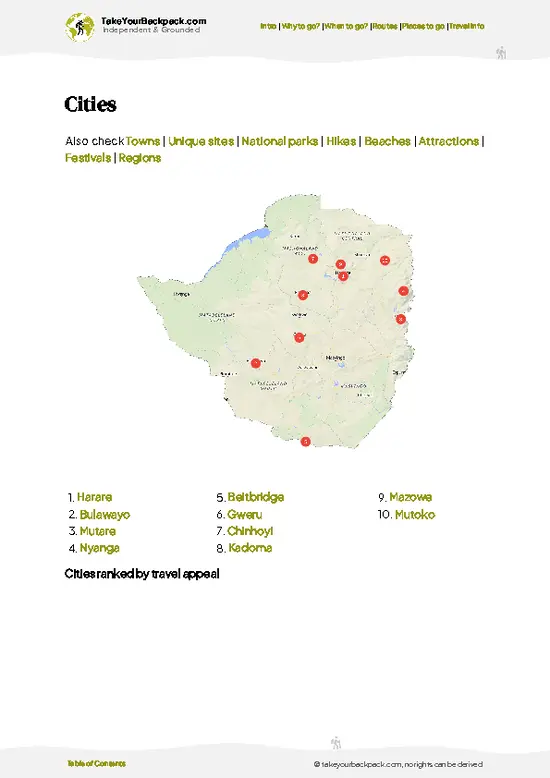
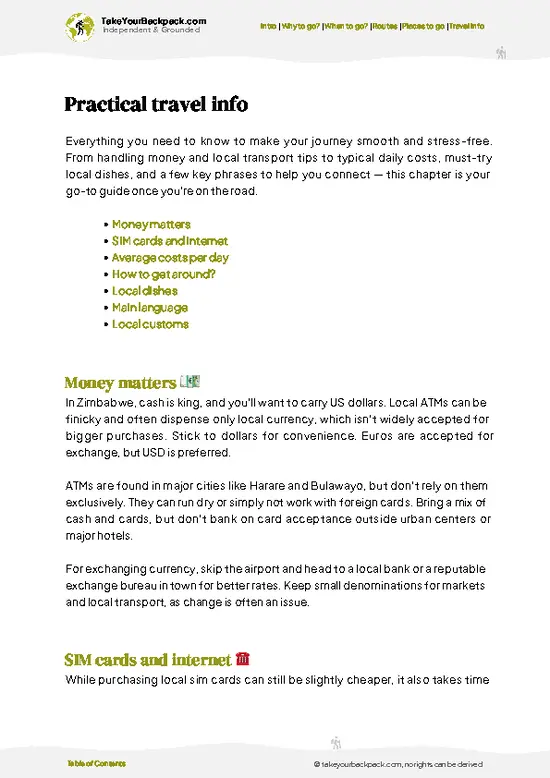
example page 0 from our offline Travel Guide for Zimbabwe
example page 1 from our offline Travel Guide for Zimbabwe
example page 2 from our offline Travel Guide for Zimbabwe
example page 3 from our offline Travel Guide for Zimbabwe
example page 4 from our offline Travel Guide for Zimbabwe
example page 5 from our offline Travel Guide for Zimbabwe
example page 6 from our offline Travel Guide for Zimbabwe
example page 7 from our offline Travel Guide for Zimbabwe
The digital guide (356 pages) contains:
90 highlights, ranked by travel appeal
Optimized 5, 10 & 15-day travel routes
Cities, national parks, landmarks, beaches
How to get around
Offline-friendly for travel without Wi-Fi
👉 Click to see all 30+ guide features

📅 Plan smarter in minutes, not weeks
Month by month travel advice
Festivals & national holidays
Budget expectations

🗺️ Go to the right places, skip the overrated ones
Honest pros & cons of destinations
Top hikes, parks & viewpoints
Lesser-known places most travelers miss
Clear “worth it vs skip it” guidance

🛏️ Travel smoothly without rookie mistakes
Best areas to stay
Transport systems explained simply
Common scams & safety advice
SIM cards, money & practical tips

🌍 Understand the country, not just visit it
Culture & traditions
52 Essential phrases & customs
Festivals worth planning around
Traveler-friendly historical context
Insights that make places more meaningful

📱 Built for real travel conditions
Fully downloadable PDF
Works completely offline
Optimized for phone use
Useful in remote areas & buses
Everything in one place
Save weeks of stressful planning
Get instant access to your full guide. 30‑day money-back guarantee.


By proceeding you agree to our terms.
Sent to your inbox immediately after payment • 100% Secure Checkout
Best Backpacking Travel Advisor 2025 tourism awardBest Backpacking
Travel Advisor
2025
What others say about Take Your Backpack Guides:
⭐⭐⭐⭐⭐
Fantastic, amazing amount of information!
⭐⭐⭐⭐⭐
My goodness this is amazing, it's what I've been looking for hats off too you!
⭐⭐⭐⭐⭐
I think this is absolutely BRILLIANT
⭐⭐⭐⭐
Very complete and informative. It's still missing places, but I gotta to commend you
⭐⭐⭐⭐⭐
This is truly amazing, thank you, can't wait to explore it with my kids!
⭐⭐⭐⭐⭐
Awesome resource, thank you!
⭐⭐⭐⭐⭐
This is amazing! Can't wait to explore the ones I haven't seen
⭐⭐⭐⭐
I love this! Well done, great idea.
⭐⭐⭐⭐⭐
Thanks for taking the time to make this gem!
⭐⭐⭐⭐⭐
This might be the best website I've ever seen.
⭐⭐⭐⭐⭐
Congratulations, and thank you so much for your work; it's incredibly valuable.
⭐⭐⭐⭐
In all seriousness I think you did a great job pointing out the important spots
⭐⭐⭐⭐⭐
10/10 very good
⭐⭐⭐⭐⭐
As someone who's only just starting to visit regularly this is awesome, thank you.
⭐⭐⭐⭐
Thank you very much! I'm going to visit my dad, it's going to be very useful!
⭐⭐⭐⭐⭐
This is really cool! We'll be travelling for the first time and this definitely come in handy.
⭐⭐⭐⭐⭐
You are now our minister of culture, congratulations 👨‍💼
⭐⭐⭐⭐⭐
Just wanted to tell you that this is a pearl! Going to follow your recommendations.
⭐⭐⭐⭐⭐
This is so cool. I'll definitely be using the resource for my travels soon.
⭐⭐⭐⭐⭐
This is very impressive! Good work.
⭐⭐⭐⭐⭐
This is an amazing and informative site. Very well done!

🛏️ Where to stay?Choosing the right base

In Gwanda, the best spot for backpackers is the town center, where the pulse of daily life hums steadily. This area is compact, making it easy to navigate on foot, which is a blessing when you’re carrying a pack and want to soak in the local rhythm. The streets here catch the golden afternoon light just right, casting long shadows that invite you to linger at street stalls or chat with vendors. Safety-wise, the town center benefits from a steady presence of locals and small businesses, which naturally keeps things grounded and watchful without feeling oppressive.

For solo travelers, this is where … read more 👉
In Gwanda, the best spot for backpackers is the town center, where the pulse of daily life hums steadily. This area is compact, making it easy to navigate on foot, which is a blessing when you’re carrying a pack and want to soak in the local rhythm. The streets here catch the golden afternoon light just right, casting long shadows that invite you to linger at street stalls or chat with vendors. Safety-wise, the town center benefits from a steady presence of locals and small businesses, which naturally keeps things grounded and watchful without feeling oppressive.

For solo travelers, this is where you’ll find the social buzz—small guesthouses and hostels cluster here, offering communal spaces where stories flow as freely as the local tea. It’s not about flashy amenities but about connection and authenticity. Compared to the quieter, more residential outskirts, the town center’s vibe is alive but manageable, with enough activity to feel secure but not so much that it overwhelms. Staying here means you’re plugged into Gwanda’s heartbeat, making your experience richer and your logistics simpler—shops, eateries, and transport links all within easy reach.

🚌 Getting aroundMoving around without the hassle

Gwanda moves at its own pace—neither frantic nor sluggish, but a steady rhythm shaped by the sun’s arc and the hum of daily chores. The air carries the scent of dry earth and wood smoke, mingling with the occasional burst of laughter from market stalls. Here, time isn’t dictated by strict timetables but by the flow of people and the readiness of vehicles. You’ll find that patience isn’t just a virtue; it’s your ticket to blending in and catching the right ride. The town’s pulse is a mix of deliberate steps and spontaneous decisions, where a shared minibus might wait until it’s full before peeling away, and the best connections come from knowing when to walk and when to flag down a ride.


  • Walking: The heart of Gwanda is compact enough to explore on foot, especially the market area and main
read more 👉
Gwanda moves at its own pace—neither frantic nor sluggish, but a steady rhythm shaped by the sun’s arc and the hum of daily chores. The air carries the scent of dry earth and wood smoke, mingling with the occasional burst of laughter from market stalls. Here, time isn’t dictated by strict timetables but by the flow of people and the readiness of vehicles. You’ll find that patience isn’t just a virtue; it’s your ticket to blending in and catching the right ride. The town’s pulse is a mix of deliberate steps and spontaneous decisions, where a shared minibus might wait until it’s full before peeling away, and the best connections come from knowing when to walk and when to flag down a ride.


  • Walking: The heart of Gwanda is compact enough to explore on foot, especially the market area and main streets. Walking lets you soak in the dry heat, the chatter of vendors, and the texture of cracked sidewalks. It’s free, flexible, and the best way to catch the town’s vibe up close.


  • Shared Minibuses (Combis): These are the backbone of local transit, running from early morning around 6:30 AM until dusk, roughly 6 PM. They don’t run on a strict schedule but leave once full, so timing depends on your patience and the crowd. Fares are cheap, usually under a dollar, but expect a tight squeeze and a lively atmosphere.


  • Motorcycle Taxis (Zupco Bikes): When you need speed and can handle a bit of dust and wind, these bikes dart through traffic and rough roads alike. They operate all day but slow down after sunset. Prices vary but are affordable for short hops, making them perfect for quick errands or reaching spots beyond walking distance.


  • Private Taxis: Less common and pricier, private taxis offer comfort and direct routes but aren’t the go-to for budget travelers. If you’re carrying heavy gear or traveling in a group, negotiating a flat rate can be worth it, especially for early morning or late-night trips when other options thin out.


  • Intercity Buses: For trips beyond Gwanda, buses depart from the main bus station, usually early morning and mid-afternoon. They’re slower but reliable, with fares that balance cost and comfort. Booking ahead isn’t typical, so arriving early to secure a seat is smart.

👛 Costs (as of 4 July 2025)Typical daily expenses

Backpacking in Gwanda, Zimbabwe, is a raw and grounded experience where every dollar counts, and knowing the local costs can turn a rough guess into a smooth plan.
  • Dorm Accommodation: Expect to pay around $5 to $10 per night for a basic dorm bed. Options are limited and simple, often with shared facilities, but clean enough to rest after a day of exploring the dusty streets and nearby nature.
  • Meals: Local eateries serve hearty, no-frills meals for about $2 to $4. Think sadza (a thick maize porridge) with vegetables or meat stew. Street food is even cheaper but less predictable. Western-style meals or imported goods will push the price higher.
  • Local Transport: Minibus taxis are the go-to, costing roughly $0.50 to $1 per trip within town. For longer distances or private hires, budget $5 to $10.
read more 👉
Backpacking in Gwanda, Zimbabwe, is a raw and grounded experience where every dollar counts, and knowing the local costs can turn a rough guess into a smooth plan.
  • Dorm Accommodation: Expect to pay around $5 to $10 per night for a basic dorm bed. Options are limited and simple, often with shared facilities, but clean enough to rest after a day of exploring the dusty streets and nearby nature.
  • Meals: Local eateries serve hearty, no-frills meals for about $2 to $4. Think sadza (a thick maize porridge) with vegetables or meat stew. Street food is even cheaper but less predictable. Western-style meals or imported goods will push the price higher.
  • Local Transport: Minibus taxis are the go-to, costing roughly $0.50 to $1 per trip within town. For longer distances or private hires, budget $5 to $10. The roads can be bumpy, so factor in some patience and a sense of adventure.
  • Basic Activities/Entry Fees: Gwanda isn’t a tourist hotspot, so entry fees are minimal or nonexistent for local attractions. Visiting community markets or natural spots nearby might cost $1 to $3 if there’s a small local charge or guide fee.
  • Miscellaneous Expenses: Water, snacks, and occasional phone credit top up will add around $1 to $3 daily. Keep some cash handy for unexpected needs, as card payments are rare.

All told, you’re looking at roughly $10 to $20 a day to cover the essentials in Gwanda. It’s not about luxury here but about stepping into a slower, more grounded pace where every meal and ride feels earned. The modest budget matches the town’s unvarnished charm, making it a place where your money stretches and your experience deepens.


source: zimbabwetourism.net
⚠️ Prices can change and everyone travels differently, so take this as a rough guide. Hope it helps you plan your adventure!

🚌 Day tripsWhere to go beyond the main area

Gwanda, Zimbabwe, is a backpacker’s dream base, offering a blend of culture, adventure, and stunning landscapes. With its central location, you can easily access some remarkable day trips that will enrich your experience.

Matobo National Park
Just a short drive from Gwanda, Matobo National Park is a treasure trove of granite hills and ancient rock art. The park is home to the world’s densest population of leopards and a variety of other wildlife. Spend a day hiking the trails, exploring the fascinating cave paintings, and soaking in the panoramic views from the hills. Aim for an early start; the park is about an hour away, and you’ll want to beat the heat. Expect to spend around $10 for entry and transport. The best time to visit is during the dry season, from May to October, when wildlife … read more 👉
Gwanda, Zimbabwe, is a backpacker’s dream base, offering a blend of culture, adventure, and stunning landscapes. With its central location, you can easily access some remarkable day trips that will enrich your experience.

Matobo National Park
Just a short drive from Gwanda, Matobo National Park is a treasure trove of granite hills and ancient rock art. The park is home to the world’s densest population of leopards and a variety of other wildlife. Spend a day hiking the trails, exploring the fascinating cave paintings, and soaking in the panoramic views from the hills. Aim for an early start; the park is about an hour away, and you’ll want to beat the heat. Expect to spend around $10 for entry and transport. The best time to visit is during the dry season, from May to October, when wildlife spotting is at its peak. A common mistake? Many first-timers underestimate the park’s size and miss out on key sights by not planning their route.
👉 Explore Matobo National Park

Bulawayo
A vibrant city just two hours from Gwanda, Bulawayo offers a rich tapestry of history and culture. Visit the Natural History Museum to get a sense of the region’s biodiversity, then stroll through the bustling markets for local crafts and street food. The train station, a relic of colonial times, is worth a visit for its architecture. Budget around $15 for transport and meals. Weekdays are ideal for a quieter experience, while weekends can be lively with local events. A common pitfall? Not allowing enough time to explore the markets, where the real soul of the city lies.
👉 Explore Bulawayo

Great Zimbabwe Ruins
About three hours from Gwanda, the Great Zimbabwe Ruins are a must-see for history buffs. These ancient stone structures tell the story of a once-thriving civilization. The site is expansive, so wear comfortable shoes and bring water. Entry fees are around $10, and you can easily find local guides for a richer experience. The dry season is best for visiting, as the trails can get muddy in the rainy months. Many first-timers rush through the site; take your time to absorb the history and the stunning views.


Chipinge
For a taste of rural Zimbabwe, head to Chipinge, about two hours away. This area is known for its lush tea plantations and rolling hills. You can take a guided tour of the tea estates and even sample some fresh brews. The cost is minimal, around $5 for transport and a small fee for the tour. The best time to visit is during the tea harvest season from October to March. A common mistake is not checking the harvest schedule; timing your visit can enhance your experience significantly.
👉 Explore Chipinge
Want to know what more Zimbabwe offers?
The Zimbabwe Travel Guide describes 90 highlights, from cities to national parks, from beaches to hikes

Get the Travel Guide -

🛡️ SafetyScams, Hazards, and Annoyances

Gwanda is generally safe, but like any place, it has its nuances. Stay aware, especially in crowded markets where distractions can lead to petty theft. Keep your belongings close and your wits sharper.

If you’re traveling solo, daytime exploration is ideal. The sun casts a warm glow over the town, making it inviting. But as dusk approaches, consider heading back to your accommodation. Streets can feel quieter, and it’s best to avoid wandering alone after dark.

Scams are rare, but be cautious of overly friendly strangers offering unsolicited help. Politely decline and trust your instincts. Everyday annoyances might include slow service in local eateries; patience is key here. Embrace the rhythm of life in Gwanda, and you’ll find the experience rewarding. Carry yourself with confidence, and you’ll blend in seamlessly.

Other Zimbabwean towns near Gwanda

Explore more nearby:

  • Zvishavane—platinum mining, small-town shops, local football| 129 km away
  • Plumtree—border town, cattle ranching, railway station| 134 km away
  • Masvingo—Great Zimbabwe ruins, lakeside views, small-town pace, regional crossroads| 214 km away

💡 Not sure where to go next?
Create a personalized itinerary for Zimbabwe including Gwanda and the places that fit your trip.

Generate my itinerary

👉 Discover all towns

Or checkout all Zimbabwe has to offer (think cities, towns, villages, national parks, hikes, beaches, festivals)
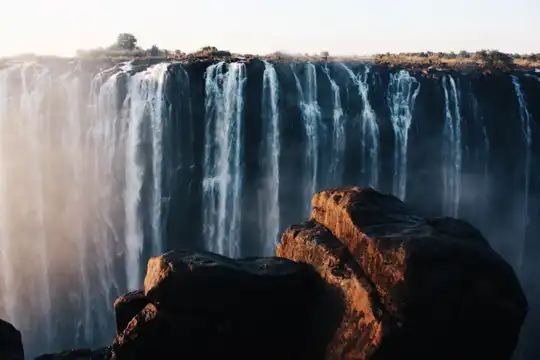
Country photo of Zimbabwe

We 💚 feedbackFinal thoughts on visiting Gwanda

Gwanda has a raw, unfiltered charm that draws you in. The vibrant local markets pulse with life, and the scent of grilled meats fills the air, making every meal an adventure. But be prepared: the heat can be relentless, and amenities aren’t always up to par. Embrace the sweat and discomfort; it’s part of the experience. The payoff? Authentic connections and stories that linger long after you leave.

✈️ When did I visit Zimbabwe?
I have backpacked Zimbabwe all the way back in 2001.

✍️ Help improve this page!
The information on this page is based on my own backpacking experience in Zimbabwe, supplemented with up-to-date research and feedback from other travelers. Travel details can change, so if you notice anything outdated or incomplete, feel free to let me know.


🙋‍♂️ Give feedback

👋 Meet the founderWho’s Behind Take Your Backpack?

Johan, backpacker and founder of TakeYourBackpackHi, I’m Johan (Netherlands 🇳🇱), the creator of TakeYourBackpack. Over the past decade, I’ve backpacked through 80+ countries across six continents, gaining extensive experience with independent travel, long-term trips, and overland routes.

This site is built on a combination of firsthand travel experience and carefully curated insights from other backpackers. Many guides are based on places I’ve personally visited, while others bring together tips, observations, and practical advice shared by trusted travelers I’ve met along the way.

The goal is to provide realistic, experience-driven guidance — not generic itineraries — so you can explore destinations with better context, clearer expectations, and more confidence.

Get full Zimbabwe guide •
Instant download • 90 highlights • Full Offline guide