×

Zimbabwe🇿🇼 | citiesBulawayocolonial-era architecture, wide boulevards, railway heritage, local art galleries | things to do and best time to go

Explore Mutirikwi BeachExplore Harare

Backpacking in Bulawayo
🏆 Top pickcity ranked #2
By Johan Kruseman 🇳🇱 | Updated September 3, 2026

Bulawayo used to be the kind of city where steam trains rumbled through the heart of town and colonial-era cafés buzzed with travelers swapping stories over strong tea. Today, it’s quieter—less of a crossroads, more of a slow-burning secret. You’ll find Bulawayo in Zimbabwe’s southwest, a stone’s throw from Matobo National Park and the gateway to the country’s wildest corners. For backpackers, Bulawayo is a study in contrasts: the National Art Gallery and Natural History Museum are genuinely worth your time, and the city center’s wide, tree-lined avenues still echo with faded grandeur. It’s cheap to stay and eat, but don’t expect a parade of hostels or a ready-made backpacker scene; you’ll need to make your own fun, though locals are warm and curious. Safety is decent by Zimbabwean standards, but keep your wits about you after dark. Compared to Victoria Falls or Harare, Bulawayo is less polished, more real—a place for travelers who like their stories with a bit of grit.

Discover everything you want to know in the 📖 Zimbabwe Travel Guide.


Get your Zimbabwe guide
72 ranked highlights, routes & tips, works offline (281 pages)
Loading the map 🌍
CLICK TO FILTER
cities
towns
landmarks
national parks
hikes
beaches
attractions
festivals
regions
SHOW COUNTRY’S BESTSHOW ALL

✨ Why go?
Ranked #2 city in Zimbabwe
Why visitors keep coming back

Bulawayo is a strategic stop for backpackers navigating Zimbabwe. It’s not just a pit stop; it’s a basecamp for adventure. The city offers a blend of affordable hostels and local eateries that keep your budget in check while satisfying your cravings. You’ll find the streets walkable, making it easy to explore the local culture without burning through your time or cash.

The nightlife here is laid-back yet lively, perfect for unwinding after a day of exploration. You can sip on local brews and mingle with fellow travelers, creating connections that often lead to shared adventures.

What really sets Bulawayo apart is its proximity to stunning day trip options. You can easily venture out to iconic sites without the hassle of long travel times. This means you can maximize your experiences while … read more 👉
Bulawayo is a strategic stop for backpackers navigating Zimbabwe. It’s not just a pit stop; it’s a basecamp for adventure. The city offers a blend of affordable hostels and local eateries that keep your budget in check while satisfying your cravings. You’ll find the streets walkable, making it easy to explore the local culture without burning through your time or cash.

The nightlife here is laid-back yet lively, perfect for unwinding after a day of exploration. You can sip on local brews and mingle with fellow travelers, creating connections that often lead to shared adventures.

What really sets Bulawayo apart is its proximity to stunning day trip options. You can easily venture out to iconic sites without the hassle of long travel times. This means you can maximize your experiences while minimizing your travel fatigue.

In essence, Bulawayo balances comfort and value. If you’re looking for a city that enhances your journey rather than detracts from it, this is your spot. It’s a place where you can recharge and plan your next move, making it a worthy addition to your backpacking route.
Want to include Bulawayo in your Zimbabwe route?
Create a personalized Zimbabwe itinerary that includes Bulawayo and the places that fit your trip — based on your travel style, budget, and available time. Get your route in seconds.

Generate my trip

💡 HighlightsMust-see experiences and standout moments

  1. Natural History Museum (Queens Park) — One of Africa’s oldest natural history museums, full of taxidermy, fossils and local geology that really ground you in the region’s wildlife and past. It’s small but rich: ideal if you want context before heading into the hills.
  2. Queens Park & Botanical Gardens — Right next to the museum, this green lung has shady paths, an aviary and a mellow bandstand vibe. Good for people-watching, picnics and spotting local birdlife without leaving town.
  3. Bulawayo Railway Museum & Station — A proper old-school station and a museum of locomotives and rail history. Great for train buffs and anyone who likes big, noisy metal with stories about the lines that built the city.
  4. National Gallery of Zimbabwe — Bulawayo Branch — The best place to see contemporary and historical
read more 👉
  1. Natural History Museum (Queens Park) — One of Africa’s oldest natural history museums, full of taxidermy, fossils and local geology that really ground you in the region’s wildlife and past. It’s small but rich: ideal if you want context before heading into the hills.
  2. Queens Park & Botanical Gardens — Right next to the museum, this green lung has shady paths, an aviary and a mellow bandstand vibe. Good for people-watching, picnics and spotting local birdlife without leaving town.
  3. Bulawayo Railway Museum & Station — A proper old-school station and a museum of locomotives and rail history. Great for train buffs and anyone who likes big, noisy metal with stories about the lines that built the city.
  4. National Gallery of Zimbabwe — Bulawayo Branch — The best place to see contemporary and historical Zimbabwean art in the city. Small galleries, rotating shows and a chance to meet artists or catch local exhibitions that don’t make it to Harare.
  5. Bulawayo City Hall & Main Street Architecture — The City Hall, the clock tower and the colonial-era facades along Main Street are Bulawayo’s architectural heartbeat. Walk the CBD to get a sense of the city’s layered history and urban character.
  6. Bulawayo City Market (Main Market) — A lively market where you can buy local produce, fresh peanuts, fabrics and everyday life on display. It’s noisy, practical and the best place to test your haggling and people-watching skills.
  7. Makokoba Arts Quarter — Bulawayo’s oldest township turned creative hub. Expect murals, small galleries, music spots and ceramic/metal workshops; it’s where contemporary urban culture and everyday life meet.
  8. Bulawayo Theatre / Local Performance Spaces — The city has an active theatre scene with regular community shows, plays and music nights. Catching a live performance is one of the easiest ways to feel Bulawayo’s cultural pulse.
  9. Barbourfields Stadium (Emagumeni) — Home to passionate football culture. If you can time a Highlanders or Township Rollers game (or local derbies), you’ll see how sport electrifies the city in a way museums can’t replicate.
  10. Bulawayo Club & Heritage Buildings — The old club and several nearby heritage buildings are worth a slow look for their architecture and the social history they represent. Some spaces host public events, but even the exteriors tell a story.
A few great day trips just outside Bulawayo: Matobo National Park (my personal favorite), the Khami Ruins (UNESCO), and several nearby craft villages and picnic spots—all easy to reach from the city.
Spotted a mistake or missing something? Contact us.

Things to do around Bulawayo

Ratings based on Tripadvisor reviews. When you book through this link, you support our work at no extra cost to you.

🏘️ NeighborhoodsKey areas and districts to know

Bulawayo offers a unique blend of culture, history, and accessibility, making it a prime spot for backpackers. Here’s a breakdown of key neighborhoods to help you navigate your stay.

City Centre: This is the heartbeat of Bulawayo. You’ll find bustling markets, shops, and eateries. It’s affordable and walkable, perfect for short stays. The nightlife is low-key, but you can find a few bars to unwind. Public transport is easily accessible, making it a great launchpad for exploring.

Suburbs: A bit quieter, the suburbs offer a more residential vibe. Here, you can experience local life and enjoy spacious parks. Costs are generally lower, and it’s suitable for longer stays if you prefer a slower pace. However, you’ll need to rely on public transport or taxis to reach the city center.

Matobo National read more 👉
Bulawayo offers a unique blend of culture, history, and accessibility, making it a prime spot for backpackers. Here’s a breakdown of key neighborhoods to help you navigate your stay.

City Centre: This is the heartbeat of Bulawayo. You’ll find bustling markets, shops, and eateries. It’s affordable and walkable, perfect for short stays. The nightlife is low-key, but you can find a few bars to unwind. Public transport is easily accessible, making it a great launchpad for exploring.

Suburbs: A bit quieter, the suburbs offer a more residential vibe. Here, you can experience local life and enjoy spacious parks. Costs are generally lower, and it’s suitable for longer stays if you prefer a slower pace. However, you’ll need to rely on public transport or taxis to reach the city center.

Matobo National Park Area: If you’re looking for adventure, this area is a must. It’s a bit further out, so expect higher transport costs. The park offers stunning landscapes and wildlife, making it ideal for nature lovers. Accommodations can vary from budget to mid-range, and it’s best for longer stays to fully immerse yourself in the experience.

Makokoba: Known for its vibrant culture and history, this neighborhood is rich in local art and music. It’s walkable and affordable, with a lively atmosphere. Nightlife is more community-focused, offering a chance to mingle with locals. It’s great for short stays if you want to soak up the local scene.

Choose wisely based on your priorities, and you’ll find Bulawayo has something for everyone.

⌛️ 1 dayA smart one-day plan

Bulawayo, Zimbabwe’s second-largest city, is a treasure trove of history and culture, often overshadowed by its more famous neighbor, Harare. With its colonial architecture, vibrant markets, and the warm smiles of locals, Bulawayo invites you to explore its unique charm.

Start your day in the bustling neighborhood of Makokoba, one of the oldest townships in the city. Grab a hearty breakfast at a local café; try the sadza with eggs for a true taste of Zimbabwe. As you wander through the streets, take in the colorful murals and the lively atmosphere. The people here are friendly, and you might even find yourself engaged in a conversation about the local football team or the latest market gossip.

After breakfast, head to the Natural History Museum, located in the city center. This gem showcases … read more 👉
Bulawayo, Zimbabwe’s second-largest city, is a treasure trove of history and culture, often overshadowed by its more famous neighbor, Harare. With its colonial architecture, vibrant markets, and the warm smiles of locals, Bulawayo invites you to explore its unique charm.

Start your day in the bustling neighborhood of Makokoba, one of the oldest townships in the city. Grab a hearty breakfast at a local café; try the sadza with eggs for a true taste of Zimbabwe. As you wander through the streets, take in the colorful murals and the lively atmosphere. The people here are friendly, and you might even find yourself engaged in a conversation about the local football team or the latest market gossip.

After breakfast, head to the Natural History Museum, located in the city center. This gem showcases the rich biodiversity of Zimbabwe, with exhibits ranging from dinosaur fossils to cultural artifacts. It’s a perfect way to immerse yourself in the region’s natural and historical context without feeling rushed.

In the afternoon, stroll through the lush grounds of the Bulawayo Railway Museum. Here, you’ll find vintage locomotives and carriages that tell the story of the railway’s impact on the region. It’s a quieter spot, often overlooked by tourists, but it offers a fascinating glimpse into the city’s industrial past.

As evening approaches, make your way to the vibrant suburb of Hillside. Dine at a local eatery where you can savor traditional dishes like biltong and chakalaka. The atmosphere is relaxed, and you’ll likely find locals enjoying their evening, creating a sense of community.

End your day at the nearby Centenary Park, where you can unwind under the stars. Reflect on your day, feeling the pulse of Bulawayo in your bones. This city, with its rich tapestry of experiences, will leave you wanting more.
Turn your Bulawayo visit into an Zimbabwe adventure
Build a complete Zimbabwe route with Bulawayo, hidden gems, must-see destinations, and realistic travel times included.

Generate my trip

🌤️ When to go?Seasonal considerations and timing


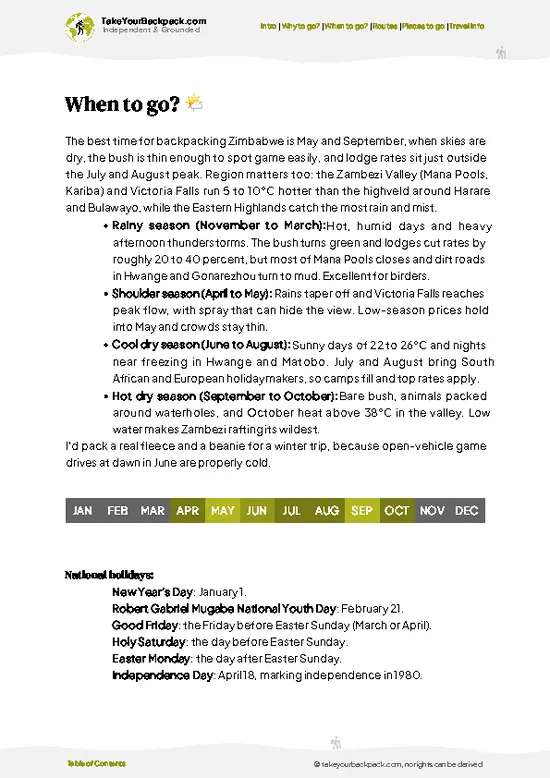
  • Topic: Weather Bulawayo’s dry season from May to October is your best bet. Expect clear skies and minimal rain, perfect for trekking and exploring without soggy boots. The wet season, November to April, brings heavy rains that can turn trails into mudslides and disrupt plans.

  • Topic: Temperature During the dry months, daytime highs hover around 24-28°C (75-82°F), with nights dropping to a crisp 7-12°C (45-54°F). The wet season heats up to 30-33°C (86-91°F), often feeling sticky and uncomfortable for long hikes.

  • Topic: Daylight Hours Bulawayo enjoys roughly 11 to 12 hours of daylight year-round, but the dry season’s clearer skies mean more usable daylight for activities. Cloud cover in the wet season can shorten effective daylight.

  • Topic: Crowds Tourist numbers peak during the dry season,
read more 👉

  • Topic: Weather Bulawayo’s dry season from May to October is your best bet. Expect clear skies and minimal rain, perfect for trekking and exploring without soggy boots. The wet season, November to April, brings heavy rains that can turn trails into mudslides and disrupt plans.

  • Topic: Temperature During the dry months, daytime highs hover around 24-28°C (75-82°F), with nights dropping to a crisp 7-12°C (45-54°F). The wet season heats up to 30-33°C (86-91°F), often feeling sticky and uncomfortable for long hikes.

  • Topic: Daylight Hours Bulawayo enjoys roughly 11 to 12 hours of daylight year-round, but the dry season’s clearer skies mean more usable daylight for activities. Cloud cover in the wet season can shorten effective daylight.

  • Topic: Crowds Tourist numbers peak during the dry season, especially July and August, coinciding with school holidays. This means more fellow backpackers but also busier accommodations and attractions.

  • Topic: Seasonal Activities Wildlife viewing is prime in the dry season as animals gather around waterholes. Cultural festivals like the annual Bulawayo Arts Festival in September add local flavor without overwhelming crowds.

  • Topic: Price Fluctuations Expect higher prices for lodging and tours during the dry season’s peak months. The wet season offers bargains but at the cost of less reliable weather and limited activities.


Pro-tip: Aim for the shoulder months of May or October—dry, cooler, fewer crowds, and better prices. You’ll feel like you’ve cracked the code on Bulawayo’s timing.


source: climatestotravel.comJANJanuary: fair for travelingFEBFebruary: fair for travelingMARMarch: fair for travelingAPRApril: fair for travelingMAYMay: highly recommended for travelingJUNJune: highly recommended for travelingJULJuly: good for travelingAUGAugust: good for travelingSEPSeptember: highly recommended for travelingOCTOctober: highly recommended for travelingNOVNovember: fair for travelingDECDecember: fair for traveling
when-to-go

✈️ The backpacker research shortcutZimbabwe Travel Guide

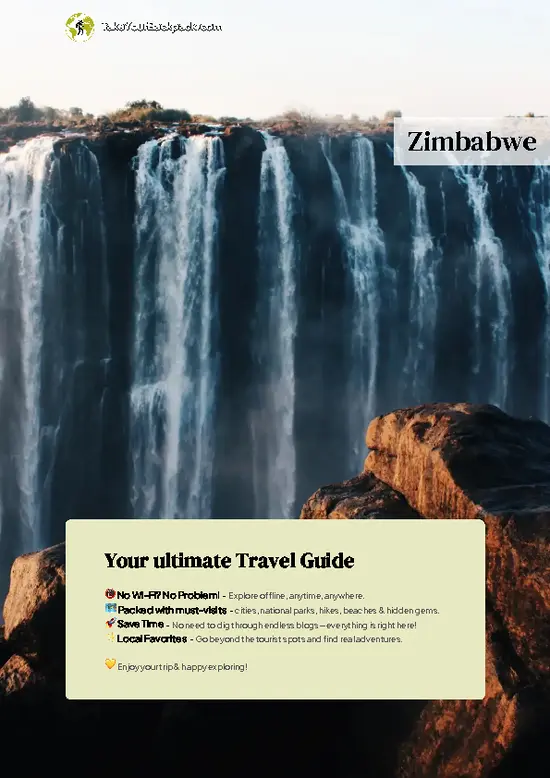
An offline-friendly backpacking guide with optimized travel routes, ranked highlights, transport advice, and the best areas to stay.
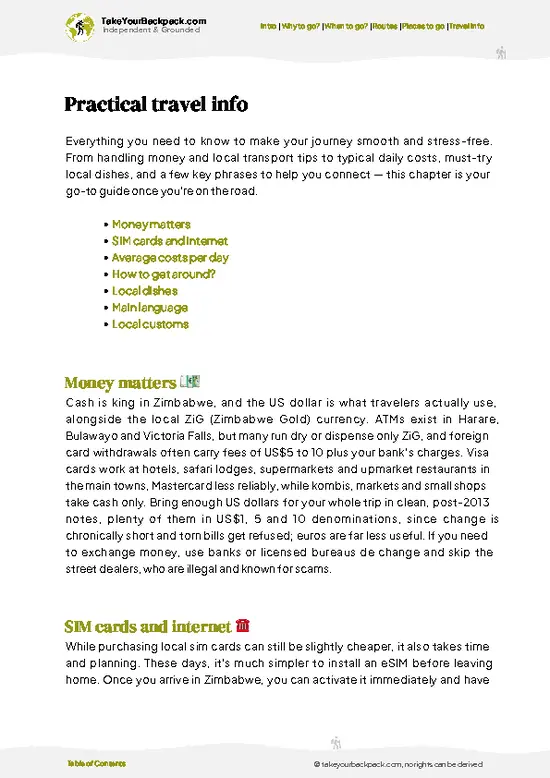
example page 0 from our offline Travel Guide for Zimbabwe
example page 1 from our offline Travel Guide for Zimbabwe
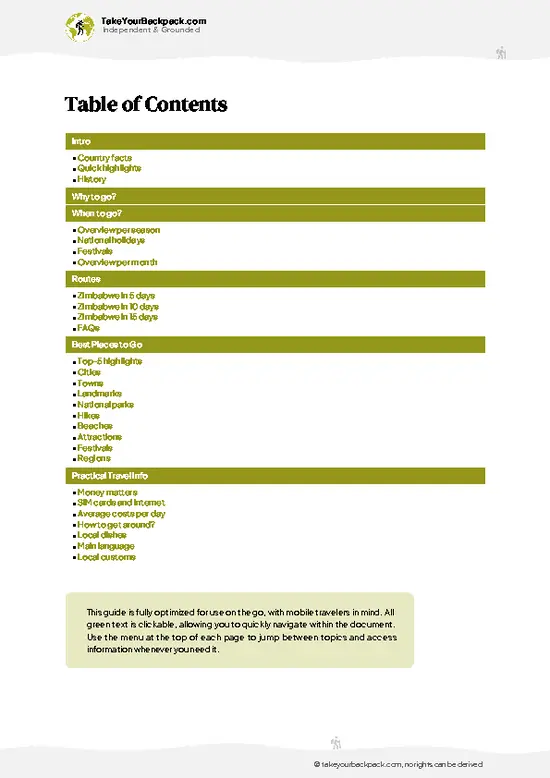
example page 2 from our offline Travel Guide for Zimbabwe
example page 3 from our offline Travel Guide for Zimbabwe
example page 4 from our offline Travel Guide for Zimbabwe
example page 5 from our offline Travel Guide for Zimbabwe
example page 6 from our offline Travel Guide for Zimbabwe
example page 7 from our offline Travel Guide for Zimbabwe
The digital guide (281 pages) contains:
72 highlights, ranked by travel appeal
Optimized 5, 10 & 15-day travel routes
Cities, national parks, landmarks, beaches
How to get around
Offline-friendly for travel without Wi-Fi
👉 Click to see all 30+ guide features

📅 Plan smarter in minutes, not weeks
Month by month travel advice
Festivals & national holidays
Budget expectations

🗺️ Go to the right places, skip the overrated ones
Honest pros & cons of destinations
Top hikes, parks & viewpoints
Lesser-known places most travelers miss
Clear “worth it vs skip it” guidance

🛏️ Travel smoothly without rookie mistakes
Best areas to stay
Transport systems explained simply
Common scams & safety advice
SIM cards, money & practical tips

🌍 Understand the country, not just visit it
Culture & traditions
52 Essential phrases & customs
Festivals worth planning around
Traveler-friendly historical context
Insights that make places more meaningful

📱 Built for real travel conditions
Fully downloadable PDF
Works completely offline
Optimized for phone use
Useful in remote areas & buses
Everything in one place
Save weeks of stressful planning
Get instant access to your full guide. 30‑day money-back guarantee.
+ Add another guide for just US$7.80

By proceeding you agree to our terms.
Sent to your inbox immediately after payment • 100% Secure Checkout
Best Backpacking Travel Advisor 2025 tourism awardBest Backpacking
Travel Advisor
2025
What others say about Take Your Backpack Guides:
⭐⭐⭐⭐⭐
Fantastic, amazing amount of information!
⭐⭐⭐⭐⭐
My goodness this is amazing, it's what I've been looking for hats off too you!
⭐⭐⭐⭐⭐
I think this is absolutely BRILLIANT
⭐⭐⭐⭐
Very complete and informative. It's still missing places, but I gotta to commend you
⭐⭐⭐⭐⭐
This is truly amazing, thank you, can't wait to explore it with my kids!
⭐⭐⭐⭐⭐
Awesome resource, thank you!
⭐⭐⭐⭐⭐
This is amazing! Can't wait to explore the ones I haven't seen
⭐⭐⭐⭐
I love this! Well done, great idea.
⭐⭐⭐⭐⭐
Thanks for taking the time to make this gem!
⭐⭐⭐⭐⭐
This might be the best website I've ever seen.
⭐⭐⭐⭐⭐
Congratulations, and thank you so much for your work; it's incredibly valuable.
⭐⭐⭐⭐
In all seriousness I think you did a great job pointing out the important spots
⭐⭐⭐⭐⭐
10/10 very good
⭐⭐⭐⭐⭐
As someone who's only just starting to visit regularly this is awesome, thank you.
⭐⭐⭐⭐
Thank you very much! I'm going to visit my dad, it's going to be very useful!
⭐⭐⭐⭐⭐
This is really cool! We'll be travelling for the first time and this definitely come in handy.
⭐⭐⭐⭐⭐
You are now our minister of culture, congratulations 👨‍💼
⭐⭐⭐⭐⭐
Just wanted to tell you that this is a pearl! Going to follow your recommendations.
⭐⭐⭐⭐⭐
This is so cool. I'll definitely be using the resource for my travels soon.
⭐⭐⭐⭐⭐
This is very impressive! Good work.
⭐⭐⭐⭐⭐
This is an amazing and informative site. Very well done!

🛏️ Where to stay?How to pick the right area

Bulawayo’s backpacker sweet spot is the city center and its immediate surroundings. This area strikes a rare balance: it’s safe enough for solo travelers, lively enough to meet others, and packed with budget-friendly hostels. Staying here means you’re plugged into the pulse of the city—cafes, markets, and local hangouts are all within walking distance. The vibe is casual but purposeful, a mix of travelers swapping stories and locals going about their day.

Venture a little beyond the core, and you hit quieter residential neighborhoods. These can be safer but less social, which might suit those … read more 👉
Bulawayo’s backpacker sweet spot is the city center and its immediate surroundings. This area strikes a rare balance: it’s safe enough for solo travelers, lively enough to meet others, and packed with budget-friendly hostels. Staying here means you’re plugged into the pulse of the city—cafes, markets, and local hangouts are all within walking distance. The vibe is casual but purposeful, a mix of travelers swapping stories and locals going about their day.

Venture a little beyond the core, and you hit quieter residential neighborhoods. These can be safer but less social, which might suit those craving downtime but not those hunting for connections. The trade-off here is comfort and calm versus the buzz of interaction. Public transport links are decent but less frequent, so factor in extra time and a bit more planning.

Compared to the outskirts, where safety and amenities drop off, the city center’s compactness means you spend less on transport and more on experiences. Hostels here tend to foster community with shared spaces and group activities, which is gold for solo backpackers. You’re trading a bit of luxury for access and atmosphere—exactly the kind of trade-off that turns a trip from “just visiting” into “living the city.”

🚌 Getting aroundTransportation options and practical tips

Bulawayo moves at its own rhythm—a blend of deliberate pace and bursts of spontaneous energy. It’s not a city where you’ll find strict timetables etched in stone, but neither is it a free-for-all of chaos. Instead, it’s a dance between the old-school reliability of shared taxis and the pedestrian’s steady, unhurried stride. Here, time is flexible, money is tight for many, and comfort is a luxury often negotiated on the fly. Understanding this flow means you’re not just getting from A to B—you’re playing the city’s game and winning by knowing when to push, when to wait, and when to walk.


  • Walking: The ultimate budget option and the best way to soak in Bulawayo’s character. Most central neighborhoods and markets are within a 20- to 30-minute walk of each other. It costs nothing, offers full
read more 👉
Bulawayo moves at its own rhythm—a blend of deliberate pace and bursts of spontaneous energy. It’s not a city where you’ll find strict timetables etched in stone, but neither is it a free-for-all of chaos. Instead, it’s a dance between the old-school reliability of shared taxis and the pedestrian’s steady, unhurried stride. Here, time is flexible, money is tight for many, and comfort is a luxury often negotiated on the fly. Understanding this flow means you’re not just getting from A to B—you’re playing the city’s game and winning by knowing when to push, when to wait, and when to walk.


  • Walking: The ultimate budget option and the best way to soak in Bulawayo’s character. Most central neighborhoods and markets are within a 20- to 30-minute walk of each other. It costs nothing, offers full control over your schedule, and lets you catch the small details—street vendors, local chatter, and the city’s architecture—that no vehicle can deliver. The trade-off? It’s slower and can be tough under the midday sun, so plan your walking tours for early morning or late afternoon.


  • Shared Taxis (Combi): The backbone of Bulawayo’s transit system. These minibuses run on semi-fixed routes but don’t stick to strict schedules—departures happen when the vehicle fills up. Fares are cheap, usually under $1 USD for short trips, making them unbeatable for budget travelers. Comfort is basic: expect crowded conditions and a bumpy ride on uneven roads. Speed varies with traffic and how quickly the taxi fills, but they cover most of the city and outskirts efficiently.


  • Private Taxis: More expensive but faster and more comfortable than shared taxis. Prices can be negotiated upfront, often starting around $3–5 USD for short trips within the city. They offer door-to-door service and run on your schedule, which is a big plus if you’re carrying gear or traveling late. The trade-off is cost—these can quickly eat into a tight budget, but they’re worth it for convenience and comfort when time is tight.


  • Bicycle Rentals: A middle ground between walking and motorized transport. Renting a bike costs around $5–10 USD per day and lets you cover more ground without the unpredictability of taxis. It’s faster than walking and gives you control over your route and timing. The downside is the city’s uneven roads and occasional traffic, which can make cycling a bit of an adventure, so it’s best if you’re confident on two wheels.


  • Intercity Buses: If your budget allows and you’re moving beyond Bulawayo, these buses connect to other major cities like Harare. They run on more fixed schedules but can be delayed by road conditions. Tickets vary but are generally affordable. Inside the city, they’re less practical due to fewer stops and longer routes, so stick to them for longer hauls rather than daily travel.

👛 Costs (as of 3 September 2026)How expensive it really is

Bulawayo, Zimbabwe, offers a backpacking experience where your spending choices clearly shape your daily rhythm. Here’s the breakdown of what you’re likely to pay, giving you the power to decide where to save and where to splurge.
  • Dorm Accommodation (High Season): Expect to pay around $10 to $15 per night. High season drives prices up due to demand, especially in well-reviewed hostels or guesthouses with reliable amenities.
  • Dorm Accommodation (Off-Season): Prices drop to about $7 to $10 per night. You might find quieter spots and better deals, but some places may have limited services or less social buzz.
  • Meals: Budget roughly $5 to $8 daily if you stick to local eateries or street food. Zimbabwean staples like sadza with vegetables or meat are filling and affordable. Western-style meals
read more 👉
Bulawayo, Zimbabwe, offers a backpacking experience where your spending choices clearly shape your daily rhythm. Here’s the breakdown of what you’re likely to pay, giving you the power to decide where to save and where to splurge.
  • Dorm Accommodation (High Season): Expect to pay around $10 to $15 per night. High season drives prices up due to demand, especially in well-reviewed hostels or guesthouses with reliable amenities.
  • Dorm Accommodation (Off-Season): Prices drop to about $7 to $10 per night. You might find quieter spots and better deals, but some places may have limited services or less social buzz.
  • Meals: Budget roughly $5 to $8 daily if you stick to local eateries or street food. Zimbabwean staples like sadza with vegetables or meat are filling and affordable. Western-style meals or dining in tourist spots can push costs higher.
  • Local Transport: Minibus taxis are the norm, costing about $0.30 to $0.50 per ride within the city. It’s cheap but expect crowded conditions and a bit of a hustle to catch the right minibus.
  • City Transport Pass: Bulawayo doesn’t have a formal city transport pass system. Budgeting for individual rides is more practical here.
  • Basic Activities/Entry Fees: Visiting local museums or cultural sites will typically cost between $2 and $5. National parks or special attractions outside the city can be pricier, but within Bulawayo, most entry fees stay modest.
  • Miscellaneous Expenses: Factor in about $2 to $4 for things like bottled water, snacks, or occasional internet access. These small costs add up but remain manageable.

All told, you’re looking at a daily budget roughly between $20 and $35. This range covers the essentials without cutting corners on comfort or missing out on the city’s character. Bulawayo rewards those who balance thrift with a willingness to engage locally—your wallet stays intact, and your experience stays rich.


source: zimbabwetourism.net
⚠️ Prices can change and everyone travels differently, so take this as a rough guide. Hope it helps you plan your adventure!

🚌 Day tripsExploring the surroundings

Bulawayo, Zimbabwe, is a fantastic base for day trips that pack a punch without draining your wallet or time. Here’s how to make the most of your adventure.

Matobo National Park
Just a short drive from Bulawayo, Matobo National Park is a treasure trove of granite hills and ancient rock art. You’ll find yourself wandering among the iconic balancing rocks and spotting wildlife like rhinos and leopards. The park is rich in history, with the burial site of Cecil Rhodes adding a layer of intrigue. Expect to spend around $10 for park entry and another $10 for transport if you share a ride. The best time to visit is during the dry season (May to October) when wildlife is easier to spot. A common mistake? Underestimating the time needed to explore; plan for a full day to soak it all in.
👉 Explore read more 👉
Bulawayo, Zimbabwe, is a fantastic base for day trips that pack a punch without draining your wallet or time. Here’s how to make the most of your adventure.

Matobo National Park
Just a short drive from Bulawayo, Matobo National Park is a treasure trove of granite hills and ancient rock art. You’ll find yourself wandering among the iconic balancing rocks and spotting wildlife like rhinos and leopards. The park is rich in history, with the burial site of Cecil Rhodes adding a layer of intrigue. Expect to spend around $10 for park entry and another $10 for transport if you share a ride. The best time to visit is during the dry season (May to October) when wildlife is easier to spot. A common mistake? Underestimating the time needed to explore; plan for a full day to soak it all in.
👉 Explore Matobo National Park

Khami Ruins
For a taste of Zimbabwe’s ancient civilizations, head to the Khami Ruins, just 30 minutes from Bulawayo. These UNESCO World Heritage Sites are remnants of the Great Zimbabwe civilization, featuring impressive stone structures that tell stories of a bygone era. Entry is about $5, and you can easily hitch a ride or take a local taxi for around $5. The dry season is ideal for visiting, as the paths can get muddy during the rainy months. Don’t rush through; take your time to appreciate the history and the surrounding landscape.


Chipangali Wildlife Orphanage
If you’re an animal lover, Chipangali is a must-visit. This wildlife orphanage is home to rescued animals, including lions and cheetahs. It’s about a 45-minute drive from Bulawayo, and entry is around $10. The best time to visit is early in the morning when the animals are most active. A common rookie mistake is to skip the guided tour; the insights from the staff make the experience richer. You’ll leave with a deeper understanding of wildlife conservation in Zimbabwe.


The Big Cave
For those who enjoy a bit of adventure, The Big Cave offers both stunning views and a chance to explore ancient rock art. Located about an hour from Bulawayo, the cave is a great spot for hiking and photography. Entry fees are around $5, and you can share transport costs with fellow travelers. The dry season is best for hiking, as the trails can be slippery otherwise. Many first-timers miss the chance to explore the surrounding trails; don’t just stick to the cave!
Want to know what more Zimbabwe offers?
The Zimbabwe Travel Guide describes 72 highlights, from cities to national parks, from beaches to hikes

Get the Travel Guide -

🍲 FoodLocal Cuisine & Drinks

In Bulawayo, the culinary scene is a vibrant tapestry of flavors that beckons you to dive in. Start with sadza, a staple made from maize meal, often served with a rich stew or grilled meat. The texture is comforting, and it’s the perfect vehicle for soaking up the savory sauces. Pair it with nyama, which is beef or goat, grilled to perfection over an open flame. The smoky aroma is irresistible.

Street food is where the heart of Bulawayo beats. Vendors line the streets with sizzling maputi (popcorn) and biltong (dried meat), both perfect for snacking as you explore. Don’t miss out on samp, a dish made from crushed corn, often mixed with beans for a hearty meal.

When it comes to drinks, maheu is a local favorite—a fermented maize drink that’s both refreshing and slightly tangy. You’ll find … read more 👉
In Bulawayo, the culinary scene is a vibrant tapestry of flavors that beckons you to dive in. Start with sadza, a staple made from maize meal, often served with a rich stew or grilled meat. The texture is comforting, and it’s the perfect vehicle for soaking up the savory sauces. Pair it with nyama, which is beef or goat, grilled to perfection over an open flame. The smoky aroma is irresistible.

Street food is where the heart of Bulawayo beats. Vendors line the streets with sizzling maputi (popcorn) and biltong (dried meat), both perfect for snacking as you explore. Don’t miss out on samp, a dish made from crushed corn, often mixed with beans for a hearty meal.

When it comes to drinks, maheu is a local favorite—a fermented maize drink that’s both refreshing and slightly tangy. You’ll find it in casual cafés and markets, where locals gather to chat and unwind.

Etiquette is simple: share your food and enjoy communal dining. It’s all about connection here. So grab a plate, dig in, and savor the flavors of Bulawayo. Each bite tells a story, and every sip brings you closer to the soul of this city.

🛡️ SafetyTraveler Safety Guide

Bulawayo is generally safe, but like any city, it has its quirks. Stay aware in crowded markets, especially around the city center. Pickpocketing can happen, so keep your valuables close. When wandering solo, especially at night, stick to well-lit areas and avoid empty streets.

Public transport is reliable, but be cautious with shared taxis; always negotiate the fare upfront. Scams can pop up, like overly friendly locals offering unsolicited help, which often leads to a request for money. A polite but firm “no, thank you” usually suffices.

Annoyances include occasional street vendors who can be persistent. A friendly smile and a shake of the head can help you move on without confrontation.

Overall, carry yourself confidently, engage with locals, and trust your instincts. This approach … read more 👉
Bulawayo is generally safe, but like any city, it has its quirks. Stay aware in crowded markets, especially around the city center. Pickpocketing can happen, so keep your valuables close. When wandering solo, especially at night, stick to well-lit areas and avoid empty streets.

Public transport is reliable, but be cautious with shared taxis; always negotiate the fare upfront. Scams can pop up, like overly friendly locals offering unsolicited help, which often leads to a request for money. A polite but firm “no, thank you” usually suffices.

Annoyances include occasional street vendors who can be persistent. A friendly smile and a shake of the head can help you move on without confrontation.

Overall, carry yourself confidently, engage with locals, and trust your instincts. This approach not only keeps you safe but also enriches your experience in this vibrant city.

FAQCommon questions from travelers

2 to 3 days are sufficient to explore Bulawayo, covering main attractions like the Natural History Museum, the Railway Museum, and the nearby Matobo National Park which is about 35 km away.
Yes, Bulawayo is generally safe for solo backpackers if standard precautions are taken, such as avoiding walking alone at night and securing valuables. Staying in well-reviewed hostels or guesthouses in central areas enhances safety.
Bulawayo is known for its colonial architecture, rich cultural heritage, and proximity to Matobo National Park, famous for its rock formations and ancient San rock art.
⚠️ Things can change over time, so always validate details locally before you go.

Other Zimbabwean cities near Bulawayo

Explore more nearby:

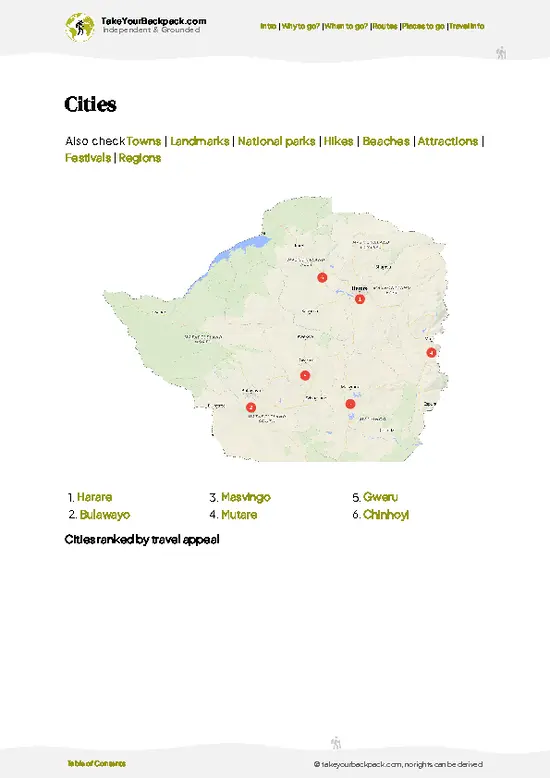
  • Gweru—military museum, university campus, central plateau, agricultural hub| 149 km away
  • Chinhoyi—limestone caves, university town, maize fields, regional transport link| 353 km away
  • Harare—urban parks, contemporary art, business district, street markets| 365 km away

💡 Not sure where to go next?
Create a personalized itinerary for Zimbabwe including Bulawayo and the places that fit your trip.

Generate my itinerary

👉 Discover all cities

Or checkout all Zimbabwe has to offer (think cities, towns, villages, national parks, hikes, beaches, festivals)
Country photo of Zimbabwe

We 💚 feedbackSumming up the experience

Bulawayo has a raw, authentic vibe that pulls you in. The history here is palpable, from the colonial architecture to the vibrant local markets. You’ll feel the pulse of Zimbabwean culture. But be prepared: the infrastructure isn’t always up to par. Public transport can be a challenge, and some areas might feel a bit rough around the edges. Embrace the imperfections; they’re part of the adventure.

✈️ When did I visit Zimbabwe?
I have backpacked Zimbabwe all the way back in 2001.

✍️ Help improve this page!
The information on this page is based on my own backpacking experience in Zimbabwe, supplemented with up-to-date research and feedback from other travelers. Travel details can change, so if you notice anything outdated or incomplete, feel free to let me know.


🙋‍♂️ Give feedback

👋 Meet the founderWho’s Behind Take Your Backpack?

Johan, backpacker and founder of TakeYourBackpackHi, I’m Johan (Netherlands 🇳🇱), the creator of TakeYourBackpack. Over the past decade, I’ve backpacked through 80+ countries across six continents, gaining extensive experience with independent travel, long-term trips, and overland routes.

This site is built on a combination of firsthand travel experience and carefully curated insights from other backpackers. Many guides are based on places I’ve personally visited, while others bring together tips, observations, and practical advice shared by trusted travelers I’ve met along the way.

The goal is to provide realistic, experience-driven guidance — not generic itineraries — so you can explore destinations with better context, clearer expectations, and more confidence.

Get full Zimbabwe guide •
Instant download • 72 highlights • Full Offline guide