×

Zimbabwe🇿🇼 | citiesMasvingoGranite ruins, mortarless walls, soapstone birds, resupply town | things to do and best time to go

Explore HarareExplore Mutare

Backpacking in Masvingo
🌟 Highlightcity ranked #2
By Johan Kruseman 🇳🇱 | Updated October 24, 2026

Masvingo is the town that gave Zimbabwe its name, since the country is named for the stone “houses” of the ruins just outside. It sits in the south-east of Zimbabwe, on the main road between Harare and the Beitbridge border with South Africa. On the minibus down, we stopped at a roadside stand where a boy shoved a hot, charred cob of maize through the window for pocket change, and I ate it before the driver finished arguing about the fare. That is Masvingo in miniature: practical, friendly, a little scruffy. The ruins deserve your best energy and a full morning. The town center is a working market town with banks, supermarkets and a good place to resupply, so treat it as a base, not a destination. Nightlife is thin, so skip any plan built around it. Your first day could go like this: drop your pack, grab a snack at Mucheke Market, then head to the stone walls early.

Discover everything you want to know in the 📖 Zimbabwe Travel Guide.


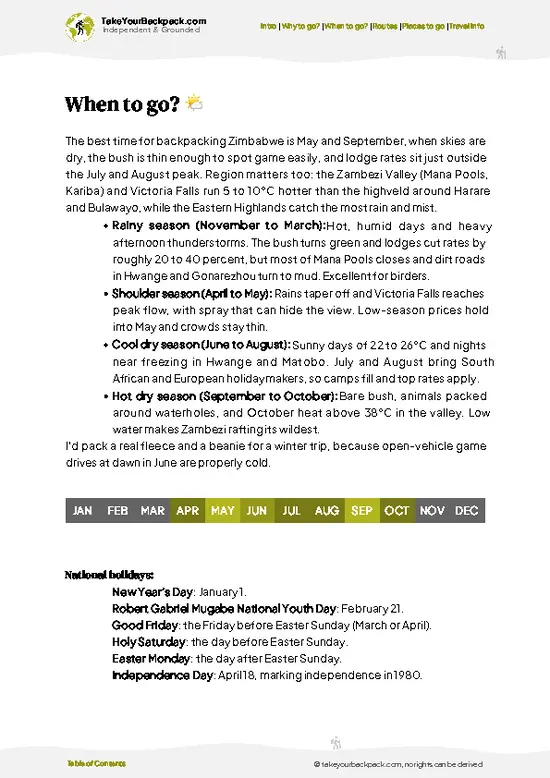
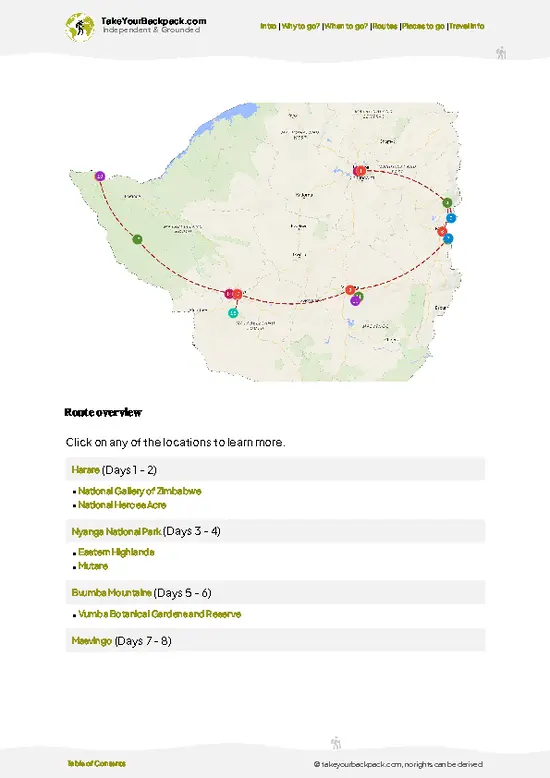
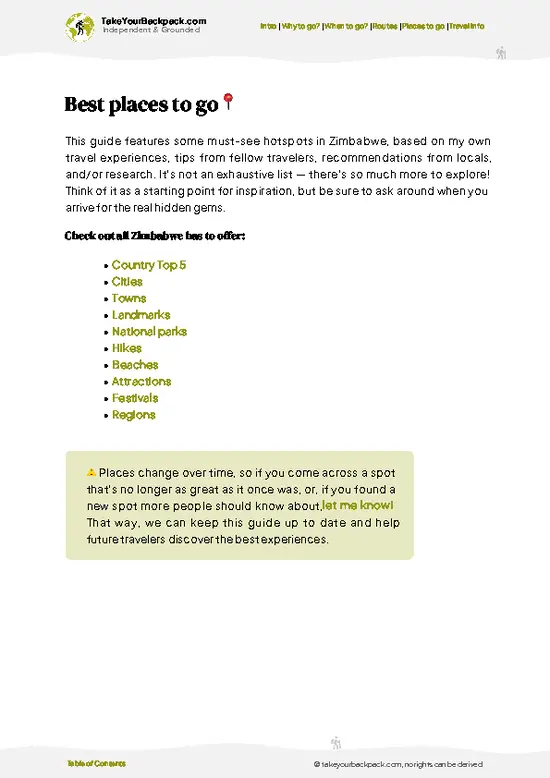
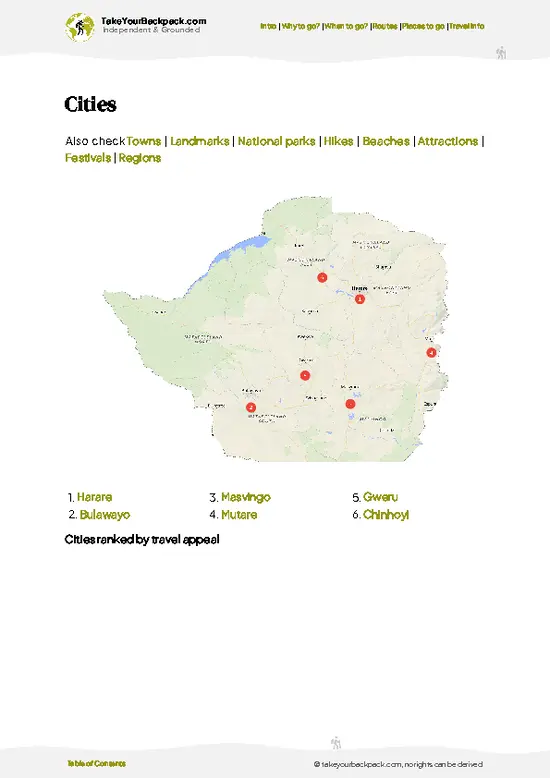
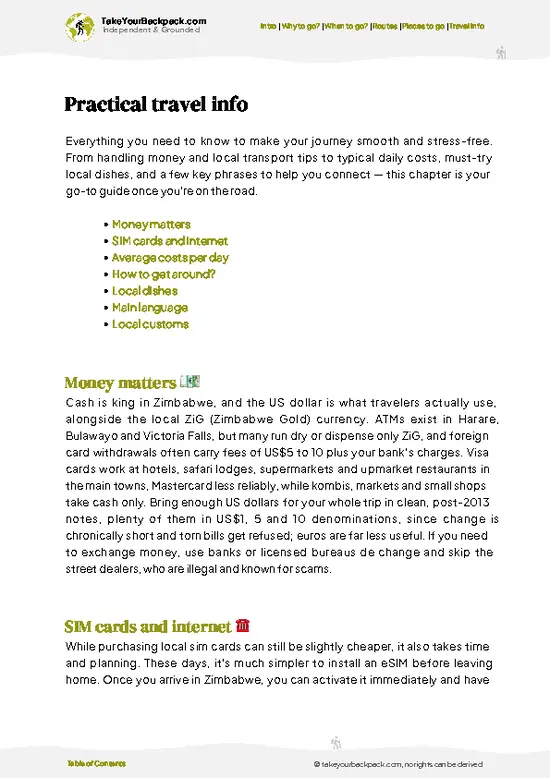
example page 0 from our offline Travel Guide for Zimbabwe
example page 1 from our offline Travel Guide for Zimbabwe
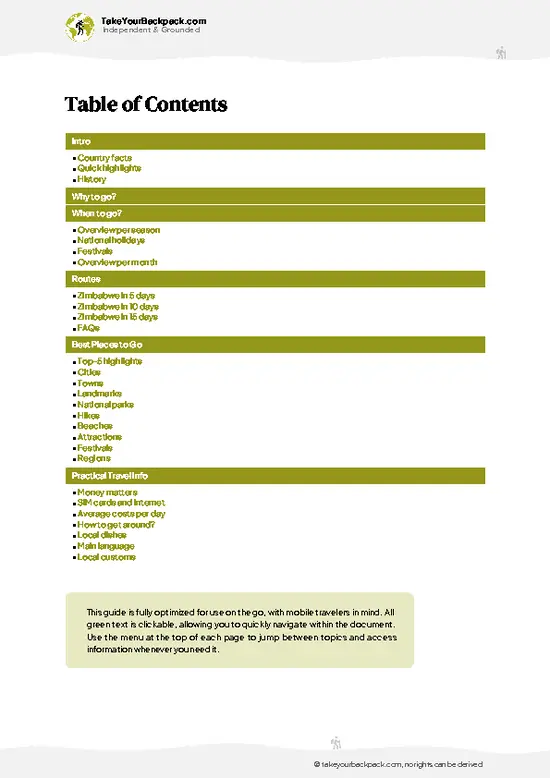
example page 2 from our offline Travel Guide for Zimbabwe
example page 3 from our offline Travel Guide for Zimbabwe
example page 4 from our offline Travel Guide for Zimbabwe
example page 5 from our offline Travel Guide for Zimbabwe
example page 6 from our offline Travel Guide for Zimbabwe
example page 7 from our offline Travel Guide for Zimbabwe
Loading the map 🌍
CLICK TO FILTER
cities
towns
landmarks
national parks
hikes
beaches
attractions
festivals
regions
SHOW COUNTRY’S BESTSHOW ALL

✨ Why go?
Ranked #2 city in Zimbabwe
What makes it a must-see city

Masvingo works for backpackers because it puts one of Africa’s great archaeological sites within easy reach of a town that has actual infrastructure. You can change money, buy food, find a bed and sort out onward transport, all without the logistics headaches that come with remote sites. The ruins are the clear reason to come, and they fill a long morning plus a slow afternoon, so plan on one full day at Great Zimbabwe and another if you like walking at your own pace. The town also sits on the Harare to Beitbridge corridor, which makes it a natural break if you are crossing between South Africa and the capital by bus. Add a lakeside side trip and you have two or three days of content without much planning. What you will not find is a big social hostel scene or late nights, so travelers who … read more 👉
Masvingo works for backpackers because it puts one of Africa’s great archaeological sites within easy reach of a town that has actual infrastructure. You can change money, buy food, find a bed and sort out onward transport, all without the logistics headaches that come with remote sites. The ruins are the clear reason to come, and they fill a long morning plus a slow afternoon, so plan on one full day at Great Zimbabwe and another if you like walking at your own pace. The town also sits on the Harare to Beitbridge corridor, which makes it a natural break if you are crossing between South Africa and the capital by bus. Add a lakeside side trip and you have two or three days of content without much planning. What you will not find is a big social hostel scene or late nights, so travelers who need a crowd may feel flat here. If you like history, quiet evenings and a town that actually works, Masvingo is a strong stop. If you only have a few days in Zimbabwe, it still earns a place ahead of most other towns in the south.

💡 HighlightsMust-see experiences and standout moments

  1. Great Zimbabwe Hill Complex: The oldest part of the site, a maze of granite walls and passages wedged between huge boulders on a steep hilltop. The climb is short but sweaty, and the views over the valley and the walls below make it worth the effort. Go in the morning when the light is soft and tour groups are few. Entry for foreign visitors is roughly US$15 to 20 for the whole site, and you should allow 1 to 2 hours here.
  2. Great Enclosure: The largest ancient stone structure south of the Sahara, with an outer wall reaching about 11 meters in places and a solid conical tower inside. Look closely at the pattern of stonework along the top of the wall. No mortar was used. Included in the same ticket, and 1 to 1.5 hours is enough. Late afternoon light makes the stone glow.
  3. Valley Ruins: Smaller clusters
… read more 👉
  1. Great Zimbabwe Hill Complex: The oldest part of the site, a maze of granite walls and passages wedged between huge boulders on a steep hilltop. The climb is short but sweaty, and the views over the valley and the walls below make it worth the effort. Go in the morning when the light is soft and tour groups are few. Entry for foreign visitors is roughly US$15 to 20 for the whole site, and you should allow 1 to 2 hours here.
  2. Great Enclosure: The largest ancient stone structure south of the Sahara, with an outer wall reaching about 11 meters in places and a solid conical tower inside. Look closely at the pattern of stonework along the top of the wall. No mortar was used. Included in the same ticket, and 1 to 1.5 hours is enough. Late afternoon light makes the stone glow.
  3. Valley Ruins: Smaller clusters of walled homes and courtyards that show how ordinary residents lived beyond the elite zones. Fewer people come this far, so it is quiet and good for slow wandering. Same ticket, about 45 minutes.
  4. Great Zimbabwe Site Museum: Home to soapstone bird carvings, pottery, iron tools and glass beads that prove trade links reaching the coast. The Zimbabwe Bird, the national symbol, started here. Start with the museum for context or finish with it as a cool, shaded break. It is covered by the site entry, and 45 minutes is plenty.
  5. Mucheke Market: The busiest local market in Masvingo, where you can buy fresh vegetables, fruit, secondhand clothes and cheap hot meals such as sadza with stew. It is best early in the day and entry is free. Allow 1 hour, keep your phone in a front pocket and bargain politely.
See the whole lot in about one long day, or comfortably in a day and a half. From Masvingo, the nearest day trips include Lake Mutirikwi with its big dam and views, Kyle Recreational Park for walking and wildlife on the lakeshore, and Mushandike Sanctuary for a quieter bush walk.
Spotted a mistake or missing something? Contact us.

🏘️ NeighborhoodsUnderstanding the local layout

Masvingo is compact, and the useful parts fit inside a few kilometers, so you can sort the town in a day and spend the rest of your time at the ruins and the lake.
  • Central Business District (Robert Mugabe Street and the grid around it): This is where you live for a day: banks with ATMs, supermarkets, minibus ranks, bakeries and phone shops. Walk it in an hour, grab a pie or a plate of sadza, then move on. There are no sights worth lingering for here.
  • Mucheke: The big high-density suburb south of the center is the real town. Go for the busy Mucheke market, the roadside braai stands and the stadium area, and expect to be one of very few visitors. Daytime only, and go with a local contact if you can, since it sprawls and has no signage for tourists.
  • Great Zimbabwe approach (Great Zimbabwe Road):
… read more 👉
Masvingo is compact, and the useful parts fit inside a few kilometers, so you can sort the town in a day and spend the rest of your time at the ruins and the lake.
  • Central Business District (Robert Mugabe Street and the grid around it): This is where you live for a day: banks with ATMs, supermarkets, minibus ranks, bakeries and phone shops. Walk it in an hour, grab a pie or a plate of sadza, then move on. There are no sights worth lingering for here.
  • Mucheke: The big high-density suburb south of the center is the real town. Go for the busy Mucheke market, the roadside braai stands and the stadium area, and expect to be one of very few visitors. Daytime only, and go with a local contact if you can, since it sprawls and has no signage for tourists.
  • Great Zimbabwe approach (Great Zimbabwe Road): Head about 30 minutes south by road and you hit the stone city. The surrounding strip has craft stalls, a few lodges and the museum. This is the area to prioritize, so give it a full morning at least.
  • Lake Mutirikwi (Kyle) shore: Fifteen minutes or so out, this is the green, quiet side of the region, with water views, game drives in the recreational park and fishing. Walkable only in small pieces, so plan on a lift.
  • Clipsham and the leafy residential streets: Quiet, shady and good for an evening stroll, but there is nothing to see. Skip unless your lodging is here.

⌛️ 1 dayWhat you can realistically do in a day

8:00 AM: Great Zimbabwe National Monument
Start here, and give it the whole morning. Walk up the Hill Complex first, before the tour groups arrive, then drop into the Great Enclosure with its curved granite walls and the tapering Conical Tower. Entry is about US$15 for foreign visitors, and a local guide at the gate adds a lot of context for a few extra dollars. Rent a taxi or a shared minibus from town for the 25-minute ride out, and agree on a return pickup before you leave.

12:30 PM: Lunch at Great Zimbabwe Hotel terrace
The old colonial-era hotel sits just outside the ruins and serves sadza with stew and cold drinks under shade. Eat slowly, because the afternoon is gentler. Then catch transport back toward town.

2:30 PM: Great Zimbabwe Museum
Only a short walk from the main gate, the site … read more 👉
8:00 AM: Great Zimbabwe National Monument
Start here, and give it the whole morning. Walk up the Hill Complex first, before the tour groups arrive, then drop into the Great Enclosure with its curved granite walls and the tapering Conical Tower. Entry is about US$15 for foreign visitors, and a local guide at the gate adds a lot of context for a few extra dollars. Rent a taxi or a shared minibus from town for the 25-minute ride out, and agree on a return pickup before you leave.

12:30 PM: Lunch at Great Zimbabwe Hotel terrace
The old colonial-era hotel sits just outside the ruins and serves sadza with stew and cold drinks under shade. Eat slowly, because the afternoon is gentler. Then catch transport back toward town.

2:30 PM: Great Zimbabwe Museum
Only a short walk from the main gate, the site museum holds the carved soapstone Zimbabwe Birds, the national emblem. Seeing them up close makes the ruins make sense. Allow 45 minutes.

4:00 PM: Masvingo town center and Mucheke market
Back in Masvingo, wander the grid of streets around Robert Mugabe Street, then walk to Mucheke township market, where traders sell tomatoes, secondhand clothes and roasted maize. This is the real working side of town, with few tourists and lots of friendly curiosity. Go with a light bag and keep your phone tucked away.

5:30 PM: Lake Mutirikwi viewpoint
Finish with a taxi to the lake shore, about 30 minutes out, where granite kopjes ring the water. Watch the sky turn orange from the dam wall area, then head back to town for dinner. The ride out is quick, so book the return pickup while the driver is still with you.

🌤️ When to go?Seasonal considerations and timing

May to August is the most comfortable window for Masvingo, with sunny days around 22 to 26°C (72 to 79°F) and cold nights that can fall to 5 to 8°C (41 to 46°F).
  • Cool Dry Season (May to August): Hiking the Great Zimbabwe hill complex is easiest now, with short days of roughly 10.5 to 11 hours of light. Pack a fleece for dawn starts. Lodge prices creep up on school holidays and around July.
  • Hot Season (September to October): Highs reach 30 to 35°C (86 to 95°F) and the lowveld haze builds. Crowds are thin and prices soft, but plan ruin climbs for the morning.
  • Rainy Season (November to March): Afternoon storms arrive, temperatures sit at 26 to 31°C (79 to 88°F), and the grass turns green around Lake Mutirikwi. Dirt roads to the park can turn slick. Days stretch to about 13.5 hours of light.
  • Shoulder
… read more 👉
May to August is the most comfortable window for Masvingo, with sunny days around 22 to 26°C (72 to 79°F) and cold nights that can fall to 5 to 8°C (41 to 46°F).
  • Cool Dry Season (May to August): Hiking the Great Zimbabwe hill complex is easiest now, with short days of roughly 10.5 to 11 hours of light. Pack a fleece for dawn starts. Lodge prices creep up on school holidays and around July.
  • Hot Season (September to October): Highs reach 30 to 35°C (86 to 95°F) and the lowveld haze builds. Crowds are thin and prices soft, but plan ruin climbs for the morning.
  • Rainy Season (November to March): Afternoon storms arrive, temperatures sit at 26 to 31°C (79 to 88°F), and the grass turns green around Lake Mutirikwi. Dirt roads to the park can turn slick. Days stretch to about 13.5 hours of light.
  • Shoulder (April): Rains fade, the air clears and visitors are few.
Book Great Zimbabwe lodging ahead for Easter and August school breaks, and travel in April or September for the quietest ruins.


source: climatestotravel.comJANJanuary: fair for travelingFEBFebruary: fair for travelingMARMarch: fair for travelingAPRApril: fair for travelingMAYMay: highly recommended for travelingJUNJune: excellent for travelingJULJuly: excellent for travelingAUGAugust: excellent for travelingSEPSeptember: highly recommended for travelingOCTOctober: highly recommended for travelingNOVNovember: fair for travelingDECDecember: fair for traveling
when-to-go

✈️ The backpacker research shortcutZimbabwe Travel Guide

An offline-friendly backpacking guide with optimized travel routes, ranked highlights, transport advice, and the best areas to stay.
example page 0 from our offline Travel Guide for Zimbabwe
example page 1 from our offline Travel Guide for Zimbabwe
example page 2 from our offline Travel Guide for Zimbabwe
example page 3 from our offline Travel Guide for Zimbabwe
example page 4 from our offline Travel Guide for Zimbabwe
example page 5 from our offline Travel Guide for Zimbabwe
example page 6 from our offline Travel Guide for Zimbabwe
example page 7 from our offline Travel Guide for Zimbabwe
The digital guide (265 pages) contains:
✅ 67 highlights, ranked by travel appeal
✅ Optimized 5, 10 & 15-day travel routes
✅ Cities, national parks, landmarks, beaches
✅ How to get around
✅ Offline-friendly for travel without Wi-Fi
👉 Click to see all 30+ guide features

📅 Plan smarter in minutes, not weeks
✅ Month by month travel advice
✅ Festivals & national holidays
✅ Budget expectations

🗺️ Go to the right places, skip the overrated ones
✅ Honest pros & cons of destinations
✅ Top hikes, parks & viewpoints
✅ Lesser-known places most travelers miss
✅ Clear “worth it vs skip it” guidance

🛏️ Travel smoothly without rookie mistakes
✅ Best areas to stay
✅ Transport systems explained simply
✅ Common scams & safety advice
✅ SIM cards, money & practical tips

🌍 Understand the country, not just visit it
✅ Culture & traditions
✅ 52 Essential phrases & customs
✅ Festivals worth planning around
✅ Traveler-friendly historical context
✅ Insights that make places more meaningful

📱 Built for real travel conditions
✅ Fully downloadable PDF
✅ Works completely offline
✅ Optimized for phone use
✅ Useful in remote areas & buses
✅ Everything in one place
Stop searching, start planning
Get instant access to your full guide. 30‑day money-back guarantee.
+ Add another guide for just

By proceeding you agree to our terms.
Sent to your inbox immediately after payment • 100% Secure Checkout
Best Backpacking Travel Advisor 2025 tourism awardBest Backpacking
Travel Advisor
2025
What others say about Take Your Backpack Guides:
⭐⭐⭐⭐⭐
Fantastic, amazing amount of information!
⭐⭐⭐⭐⭐
My goodness this is amazing, it's what I've been looking for hats off too you!
⭐⭐⭐⭐⭐
I think this is absolutely BRILLIANT
⭐⭐⭐⭐
Very complete and informative. It's still missing places, but I gotta to commend you
⭐⭐⭐⭐⭐
This is truly amazing, thank you, can't wait to explore it with my kids!
⭐⭐⭐⭐⭐
Awesome resource, thank you!
⭐⭐⭐⭐⭐
This is amazing! Can't wait to explore the ones I haven't seen
⭐⭐⭐⭐
I love this! Well done, great idea.
⭐⭐⭐⭐⭐
Thanks for taking the time to make this gem!
⭐⭐⭐⭐⭐
This might be the best website I've ever seen.
⭐⭐⭐⭐⭐
Congratulations, and thank you so much for your work; it's incredibly valuable.
⭐⭐⭐⭐
In all seriousness I think you did a great job pointing out the important spots
⭐⭐⭐⭐⭐
10/10 very good
⭐⭐⭐⭐⭐
As someone who's only just starting to visit regularly this is awesome, thank you.
⭐⭐⭐⭐
Thank you very much! I'm going to visit my dad, it's going to be very useful!
⭐⭐⭐⭐⭐
This is really cool! We'll be travelling for the first time and this definitely come in handy.
⭐⭐⭐⭐⭐
You are now our minister of culture, congratulations 👨‍💼
⭐⭐⭐⭐⭐
Just wanted to tell you that this is a pearl! Going to follow your recommendations.
⭐⭐⭐⭐⭐
This is so cool. I'll definitely be using the resource for my travels soon.
⭐⭐⭐⭐⭐
This is very impressive! Good work.
⭐⭐⭐⭐⭐
This is an amazing and informative site. Very well done!

🛏️ Where to stay?Where staying makes the most sense

The best budget base in Masvingo is near the center, close to the bus terminus and ATMs, with the Great Zimbabwe road area a strong second pick if the ruins are your priority.
Staying central keeps you within walking distance of supermarkets, cafés and every minibus rank, which matters because transport out of town dries up in the evening. Budget beds here are mostly guesthouses and small lodges with private rooms, plus a few backpacker-style dorms. Expect US$10 to 25 a night for a basic room. The center is dead quiet after dark, which suits sleeping, but a few bars along the main roads can pump … read more 👉
The best budget base in Masvingo is near the center, close to the bus terminus and ATMs, with the Great Zimbabwe road area a strong second pick if the ruins are your priority.
Staying central keeps you within walking distance of supermarkets, cafés and every minibus rank, which matters because transport out of town dries up in the evening. Budget beds here are mostly guesthouses and small lodges with private rooms, plus a few backpacker-style dorms. Expect US$10 to 25 a night for a basic room. The center is dead quiet after dark, which suits sleeping, but a few bars along the main roads can pump music into the night, so ask for a room at the back.
Near Great Zimbabwe, you trade shops and services for early access to the ruins and a calm, rural setting with birdsong rather than traffic. Camping and cheap chalets are the budget options, often US$8 to 20 for a pitch or simple bed. There is no shopping to speak of, so stock up on food in town before you go. Taxis can be scarce here at night, and you should book your return ride in advance.
Avoid the dense high-density suburbs for sleeping. They have little accommodation, poor lighting and no easy way back after dark. For a short stay of one or two nights, I would sleep centrally and visit the ruins by taxi or kombi.

🚌 Getting aroundMoving around without the hassle

From the main bus terminal on the edge of the center, the walk to the middle of Masvingo takes about 10 to 15 minutes along flat streets, and a shared taxi or rank minibus covers it for US$0.50 to 1. Masvingo is compact, the grid is easy to read, and traffic stays light compared with Harare, so you rarely wait long for anything. Public transport is informal but frequent, and it keeps running on the routes that matter to a backpacker.
  • Walking is the smartest way to cover the center. Shops, banks, markets, the bus terminal and the main street sit within about 1.5 kilometers of each other, so you can cross the whole core in 20 minutes. Go on foot in daylight and save your legs for the ruins. The streets are flat, the pavements are patchy, and the sun is strong by midday.
  • Commuter minibuses (kombis)
… read more 👉
From the main bus terminal on the edge of the center, the walk to the middle of Masvingo takes about 10 to 15 minutes along flat streets, and a shared taxi or rank minibus covers it for US$0.50 to 1. Masvingo is compact, the grid is easy to read, and traffic stays light compared with Harare, so you rarely wait long for anything. Public transport is informal but frequent, and it keeps running on the routes that matter to a backpacker.
  • Walking is the smartest way to cover the center. Shops, banks, markets, the bus terminal and the main street sit within about 1.5 kilometers of each other, so you can cross the whole core in 20 minutes. Go on foot in daylight and save your legs for the ruins. The streets are flat, the pavements are patchy, and the sun is strong by midday.
  • Commuter minibuses (kombis) are the workhorse for short hops and for the roads out of town. Fares inside town run US$0.50 to 1, and rides toward the Great Zimbabwe area cost about US$1 to 2. They leave when full, usually from around 6 am until late afternoon, and they thin out after dark. Squeeze in, hold your daypack on your lap, and ask the conductor to confirm the stop.
  • Shared and private taxis fill the gaps the kombis leave. A short ride in town costs about US$2 to 4, and a trip out to Great Zimbabwe or Lake Mutirikwi runs roughly US$8 to 20 depending on distance and your haggling. Agree the price before you get in, because meters are rare. At night this is the option I would choose over walking.
  • Intercity buses are how you get in and out, and they deserve a place in your plan. Services to Harare take about 4 to 5 hours for US$8 to 15, and to Bulawayo about 4 to 5 hours for similar money. Coaches leave from the terminal through the morning, and the best ones go early, so book a seat the day before when you can. Luggage goes in the hold, but keep valuables beside you.
  • Hitching and lifts work on the quieter routes to the lake and the national park roads, where drivers often pass tourists. Expect to contribute US$1 to 3 for fuel, and do not rely on a lift late in the day. Skip this option if you are alone after mid-afternoon, since traffic fades fast and the walk back is long.
There is no metro, tram or city pass here, so carry small US dollar notes. Drivers rarely have change for bills above US$5, and exact fares keep every ride smooth and quick.

👛 Costs (as of 24 October 2026)Travel costs and budget guide for Masvingo

Masvingo costs about US$43 to 80 a day for a backpacker, which makes it one of the cheaper bases in the country, although entry to Great Zimbabwe is the single biggest line.
CategoryBudget RangeLocal Reality
Dorm or basic bed (high season)US$12 to 20Few true dorms exist, so most travelers take a simple guesthouse room or camp near the ruins.
Dorm or basic bed (off-season)US$8 to 15Prices soften from November to March, and negotiating works.
MealsUS$8 to 14Street braai, bakery breakfasts and a sadza lunch keep this low.
Local transportUS$2 to 6Kombis cost US$0.50 to 1, and short taxis US$1 to 3.
City transport passNot availableNo pass exists, so pay per ride in cash.
Basic activities and entry feesUS$10 to 20Great Zimbabwe is around US$15 to 20 for foreigners, and the lake park adds US$5 to 10.
MiscellaneousUS$3
… read more 👉
Masvingo costs about US$43 to 80 a day for a backpacker, which makes it one of the cheaper bases in the country, although entry to Great Zimbabwe is the single biggest line.
CategoryBudget RangeLocal Reality
Dorm or basic bed (high season)US$12 to 20Few true dorms exist, so most travelers take a simple guesthouse room or camp near the ruins.
Dorm or basic bed (off-season)US$8 to 15Prices soften from November to March, and negotiating works.
MealsUS$8 to 14Street braai, bakery breakfasts and a sadza lunch keep this low.
Local transportUS$2 to 6Kombis cost US$0.50 to 1, and short taxis US$1 to 3.
City transport passNot availableNo pass exists, so pay per ride in cash.
Basic activities and entry feesUS$10 to 20Great Zimbabwe is around US$15 to 20 for foreigners, and the lake park adds US$5 to 10.
MiscellaneousUS$3 to 6Water, airtime, snacks and small tips.
Total Daily BudgetUS$43 to 80A mid-range day with a lodge and a taxi to the ruins lands near the top.
Carry small US dollar notes, as change is often short. Share a taxi to Great Zimbabwe with other travelers to halve the biggest transport cost.
⚠️ Prices can change and everyone travels differently, so take this as a rough guide. Hope it helps you plan your adventure!

🚌 Day tripsBest day trips from Masvingo

Masvingo works well as a base for day trips, since three major sights sit within an hour's drive and a few more reach out to a longer day.Great Zimbabwe National Monument: The stone city that gave the country its name is the reason most people come, and it deserves a full morning. The Hill Complex climb, the curved Great Enclosure and its 11 meter walls take 3 to 4 hours to see properly. Getting there takes 30 to 40 minutes by taxi or kombi plus a short walk, and the entry fee for foreigners is typically US$15 to 20. Go in the cooler months, and start early to avoid midday heat on the hill. First-timers often skip the museum, which actually explains the soapstone Zimbabwe Birds.
Lake Mutirikwi: This large reservoir sits about 30 minutes from town and gives a green break from dusty roads. You … read more 👉
Masvingo works well as a base for day trips, since three major sights sit within an hour's drive and a few more reach out to a longer day.Great Zimbabwe National Monument: The stone city that gave the country its name is the reason most people come, and it deserves a full morning. The Hill Complex climb, the curved Great Enclosure and its 11 meter walls take 3 to 4 hours to see properly. Getting there takes 30 to 40 minutes by taxi or kombi plus a short walk, and the entry fee for foreigners is typically US$15 to 20. Go in the cooler months, and start early to avoid midday heat on the hill. First-timers often skip the museum, which actually explains the soapstone Zimbabwe Birds.
Lake Mutirikwi: This large reservoir sits about 30 minutes from town and gives a green break from dusty roads. You can walk the lakeshore, watch hippos and birds from the water, or enter the recreational park for giraffe and zebra. A taxi round trip costs roughly US$15 to 30, and park fees run around US$5 to 10. Go between April and October when the roads are dry, since wet-season tracks get muddy. Do not expect shops or cafés near the water.
Chivhu Road ruins at Khami-style sites: For a quieter ruin without crowds, the Manyuchi and Chatsworth areas hold smaller stone sites and rock paintings that you can visit with a local guide. Plan a half day and US$20 to 40 for a driver. Roads are rough, so a taxi with decent clearance is a good idea.

🍲 FoodEating & Drinking in Masvingo

Masvingo eats the same sadza and relish as the rest of the country, but the region adds a few things worth seeking out, especially fish from Lake Mutirikwi.
Look for bream (tilapia) grilled whole or fried with a side of sadza, sold at roadside stalls and lakeside spots. It tastes smoky and fresh, and it costs around US$3 to 6. Along the highway you will also see stands selling roasted maize and dried mopane worms (madora), a salty, crunchy snack favored in the south.
For a cheap and lively meal, head to Mucheke market and the braai stands in the suburbs, where beef and pork sizzle over charcoal and you eat with your hands from a shared plate for US$2 to 4. Central bakeries and takeaway counters sell pies and fat cakes for breakfast at US$0.50 to 1.50.
For a drink, a cold Zambezi or Castle lager … read more 👉
Masvingo eats the same sadza and relish as the rest of the country, but the region adds a few things worth seeking out, especially fish from Lake Mutirikwi.
Look for bream (tilapia) grilled whole or fried with a side of sadza, sold at roadside stalls and lakeside spots. It tastes smoky and fresh, and it costs around US$3 to 6. Along the highway you will also see stands selling roasted maize and dried mopane worms (madora), a salty, crunchy snack favored in the south.
For a cheap and lively meal, head to Mucheke market and the braai stands in the suburbs, where beef and pork sizzle over charcoal and you eat with your hands from a shared plate for US$2 to 4. Central bakeries and takeaway counters sell pies and fat cakes for breakfast at US$0.50 to 1.50.
For a drink, a cold Zambezi or Castle lager in a local bar runs about US$1.50 to 2.50, and traditional maheu is sold in packets and cups from small shops. Ask before photographing food vendors, and tip small, since smiles go a long way here.

🛡️ SafetyTraveler Safety Guide

Masvingo is broadly safe for backpackers, and the most common issue is petty theft rather than anything violent. Keep phones and wallets out of sight in the central market areas and at the main bus terminus, where crowded minibus loading is the usual spot for pickpockets. Walk in the center until early evening, then take a taxi, because streets are poorly lit and quiet after dark. Solo travelers, including women, generally report friendly treatment, though a quick ride beats a long walk at night.
Touts around the bus terminus may offer to carry bags or guide you to a lodge for a fee, so say a firm no and walk on. Police checkpoints on the highway are routine, and you should carry a copy of your passport and answer politely. Agree taxi and guide prices up front, and keep small US dollar notes for change, because it is often short.

FAQTraveler FAQ

Two days is enough for Masvingo, with one full morning for Great Zimbabwe (3 to 4 hours on site) and a second half day at Lake Mutirikwi. Add a third day if you want game drives in the recreational park or the smaller ruins around Chatsworth. The town itself needs only an hour or two.
Masvingo is generally safe for solo backpackers, with petty theft at the bus terminus and markets as the main risk. Stick to the center after dark and use a taxi, which costs about US$1 to 3 for a short ride. Highway police checkpoints are routine, so carry a passport copy and stay polite.
Masvingo is known for Great Zimbabwe, the medieval stone city about 30 minutes away whose 11 meter walls gave the country its name. It is also the gateway to Lake Mutirikwi, a large reservoir with hippos and a game park. Entry to the ruins is about US$15 to 20 for foreigners.
⚠️ Things can change over time, so always validate details locally before you go.

Other Zimbabwean cities near Masvingo

Explore more nearby:

  • Gweru—Midlands rail stop, antelope park, military museum, craft stalls| 126 km away
  • Mutare—Kombi gateway, border hills, rock paintings, town reserve| 228 km away
  • Bulawayo—Railway heritage, sandstone avenues, township craft studios, natural history museum| 235 km away

💡 Not sure where to go next?
Create a personalized itinerary for Zimbabwe including Masvingo and the places that fit your trip.

Generate my itinerary

👉 Discover all cities

Or checkout all Zimbabwe has to offer (think cities, towns, villages, national parks, hikes, beaches, festivals)
Country photo of Zimbabwe

We 💚 feedbackIs it worth it?

Masvingo suits history lovers, slow walkers and anyone crossing between Harare and South Africa who wants a day that actually means something. It will frustrate you if you need nightlife or a big hostel crowd. I would start at the ruins at opening time, then spend the afternoon in town and keep a day spare for the lake.

✈️ When did I visit Zimbabwe?
I have backpacked Zimbabwe all the way back in 2001.

✍️ Help improve this page!
The information on this page is based on my own backpacking experience in Zimbabwe, supplemented with up-to-date research and feedback from other travelers. Travel details can change, so if you notice anything outdated or incomplete, feel free to let me know.


🙋‍♂️ Give feedback

👋 Meet the founderWho’s Behind Take Your Backpack?

Johan, backpacker and founder of TakeYourBackpackHi, I’m Johan (Netherlands 🇳🇱), the creator of TakeYourBackpack. Over the past 3 decades, I’ve backpacked through 90+ countries across six continents, gaining extensive experience with independent travel, long-term trips, and overland routes.

This site is built on a combination of firsthand travel experience and carefully curated insights from other backpackers. Many guides are based on places I’ve personally visited, while others bring together tips, observations, and practical advice shared by trusted travelers I’ve met along the way.

The goal is to provide realistic, experience-driven guidance — not generic itineraries — so you can explore destinations with better context, clearer expectations, and more confidence.