×

Australia Itinerary Planner

Take control of your Australia adventure from the first click, building a route that actually fits how you like to travel, not someone else’s idea of a “must‑see” trip. Choose your trip length in days, mix and match exactly what you care about most – cities & towns, villages, landmarks, national parks, hikes, beaches, attractions – then set your travel style and pace so your days feel full but never frantic. Add a starting point like Sydney, an end point, or a couple of must‑stop places such as Uluru-Kata Tjuta, and the planner instantly turns your choices into a complete, ready‑to‑go route that feels personal, balanced, and easy to follow.

Plan
your Trip


We build
your Route


Get your
Travel Plan

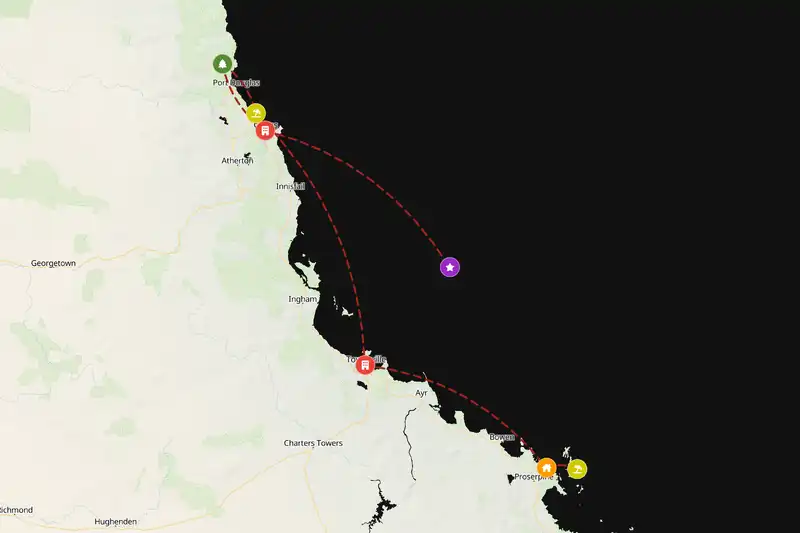
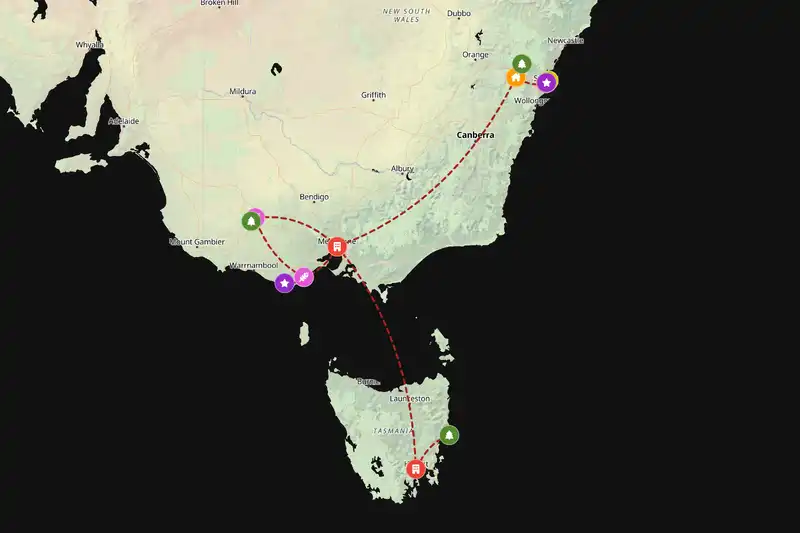
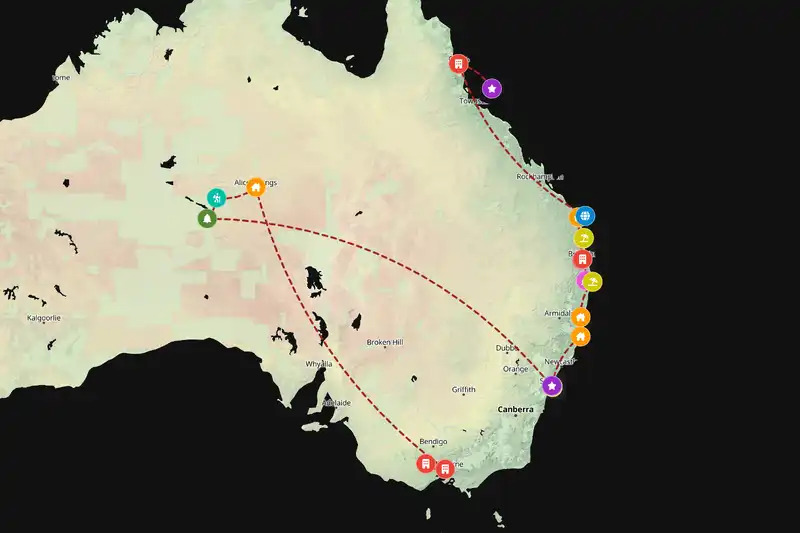
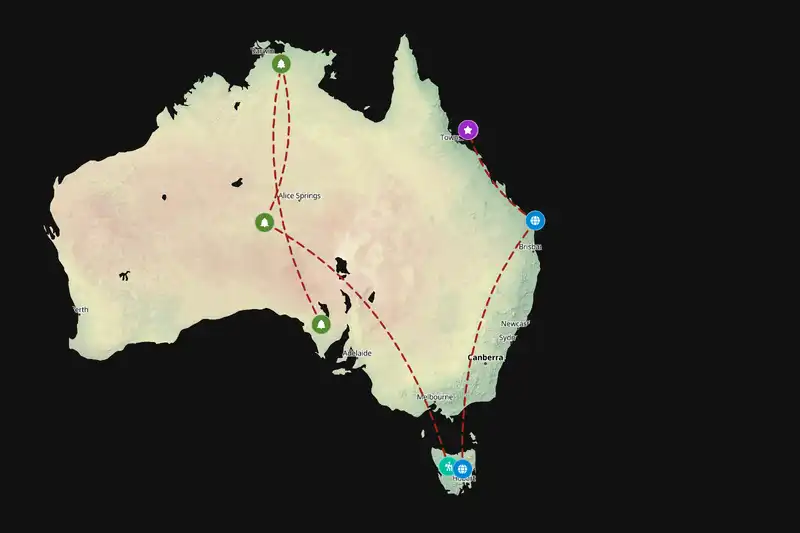
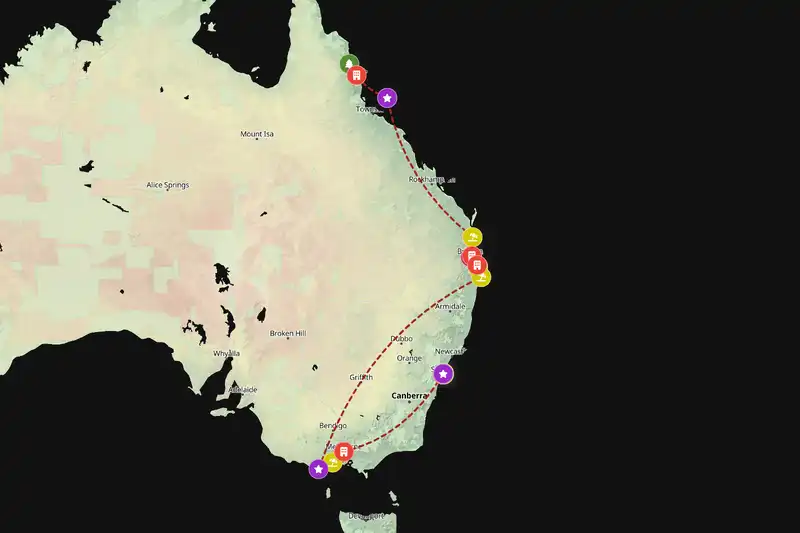
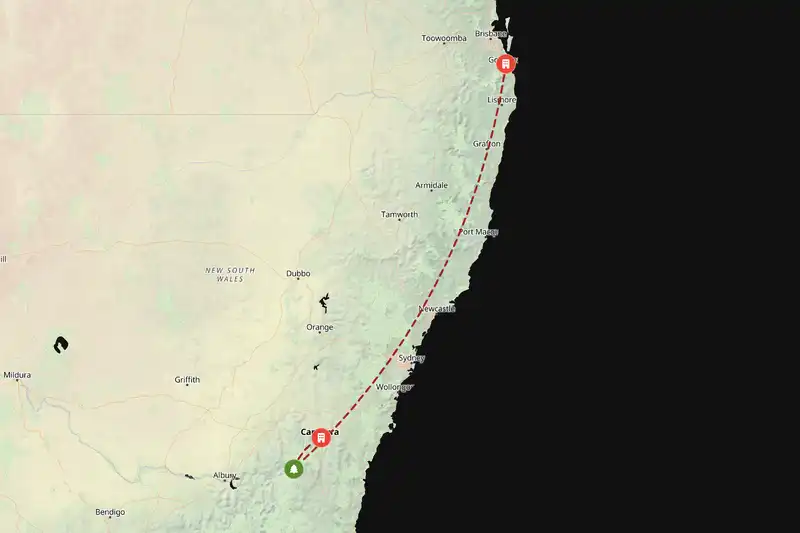
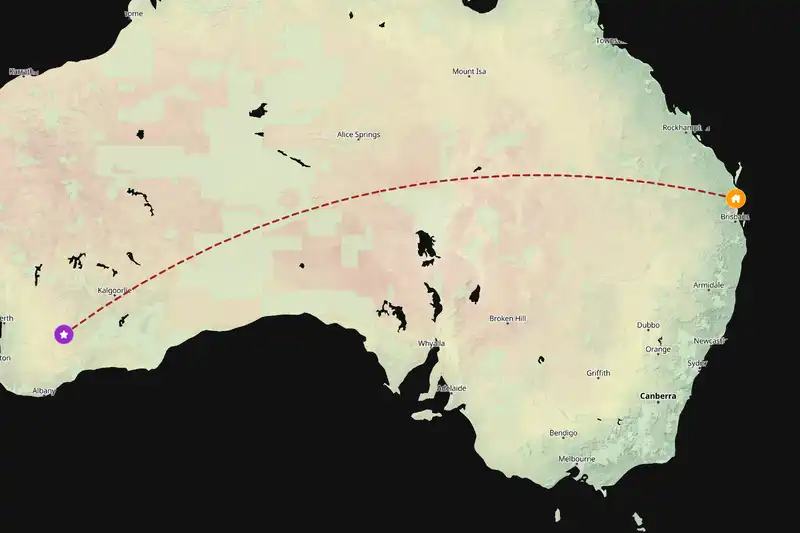
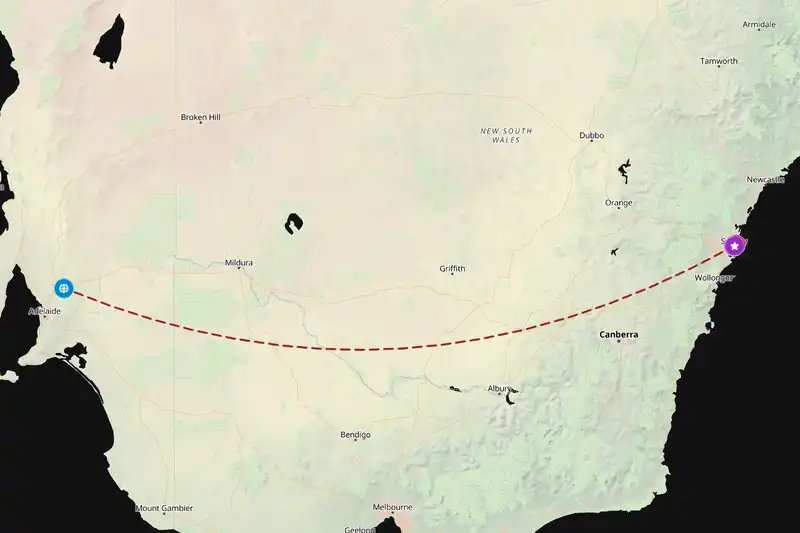
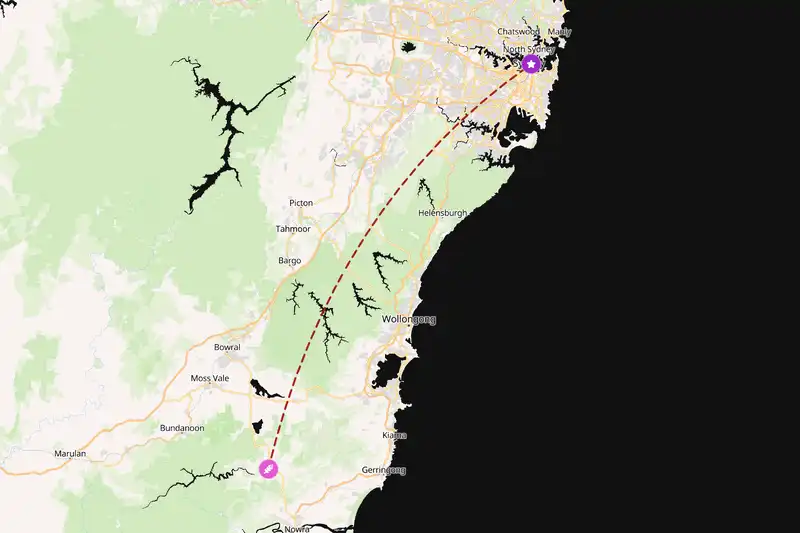
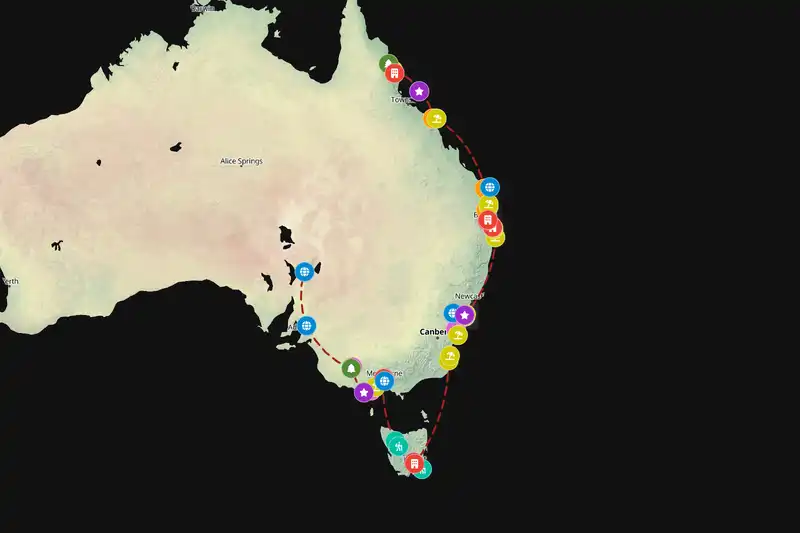
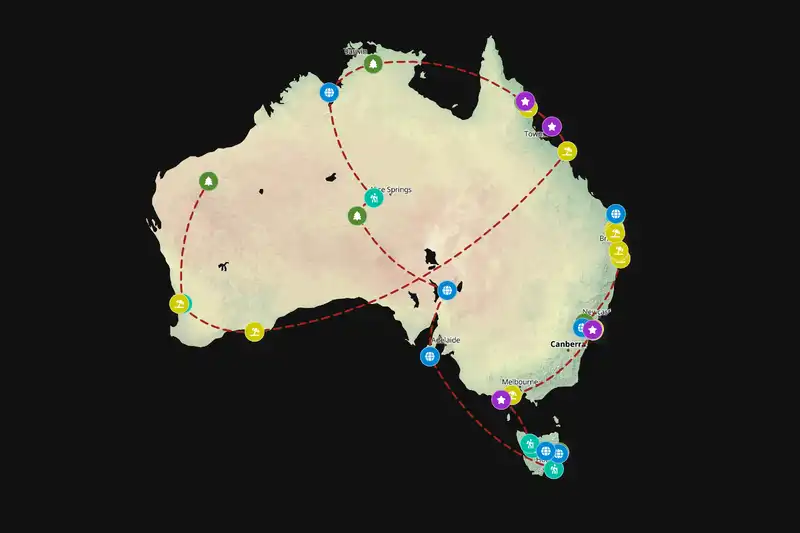
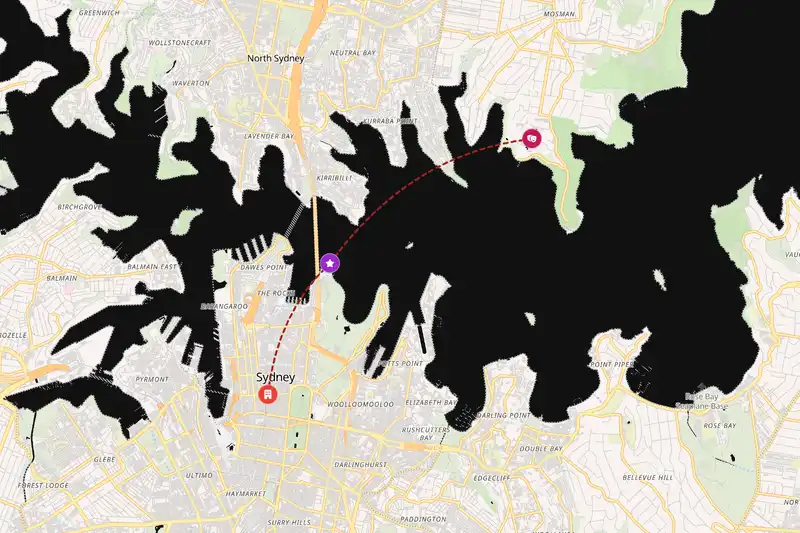
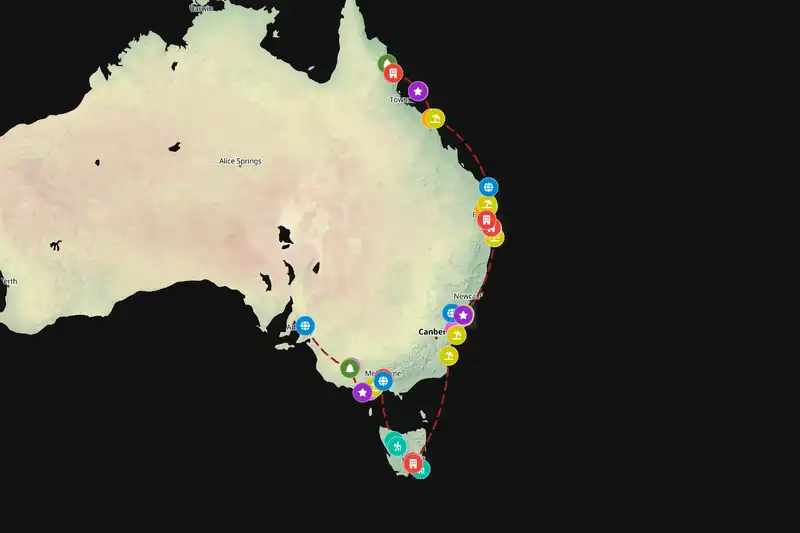
Example Australia itinerary planner route
Build your own Australia route
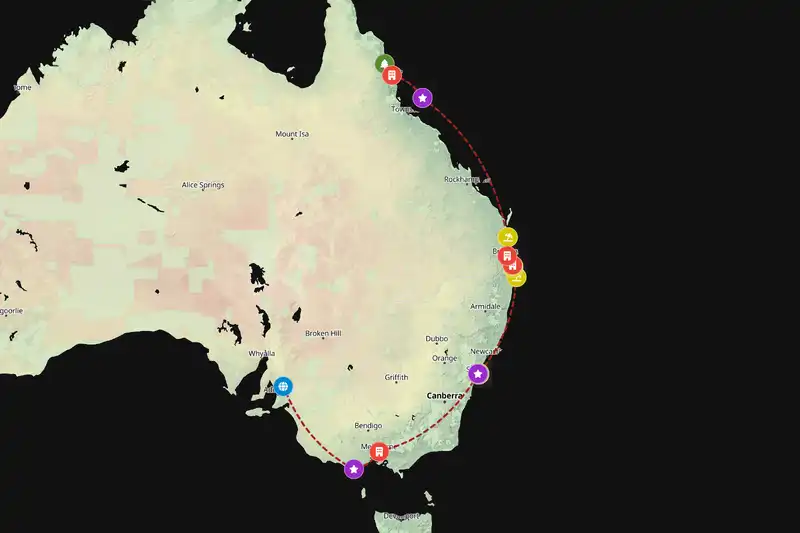
Example Australia itinerary planner route
Build your own Australia route
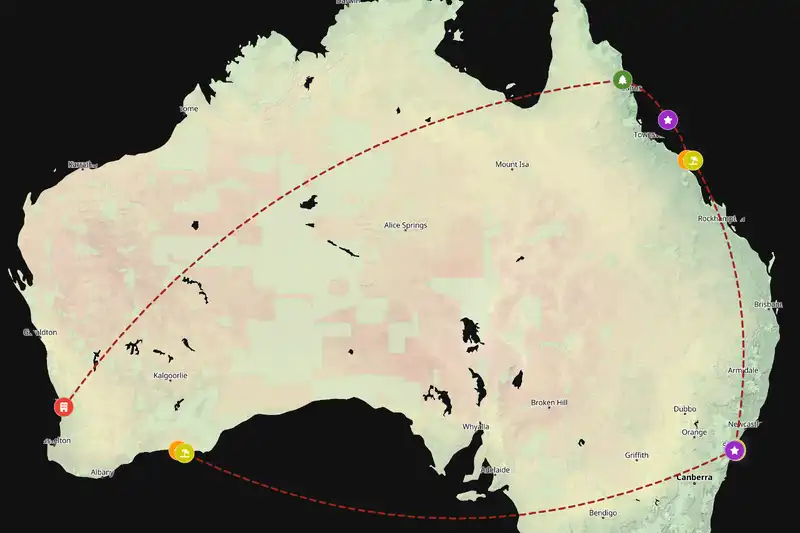
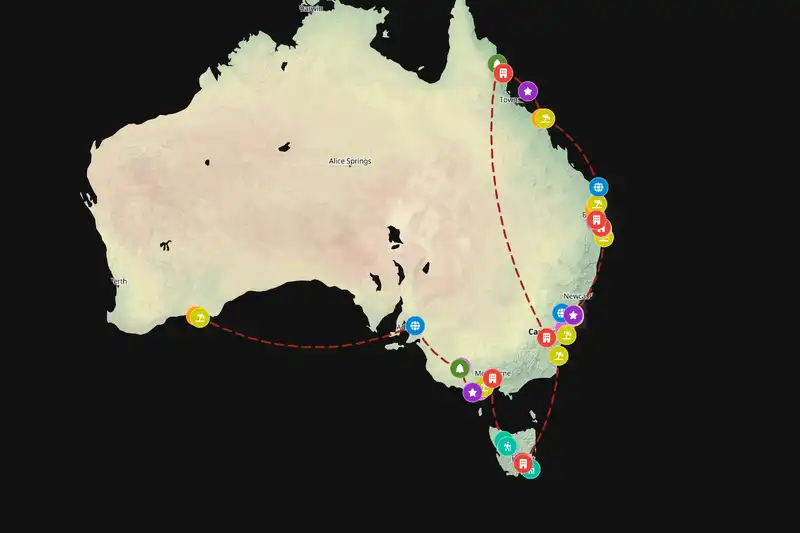
Example Australia itinerary planner route
Build your own Australia route
Example Australia itinerary planner route
Build your own Australia route
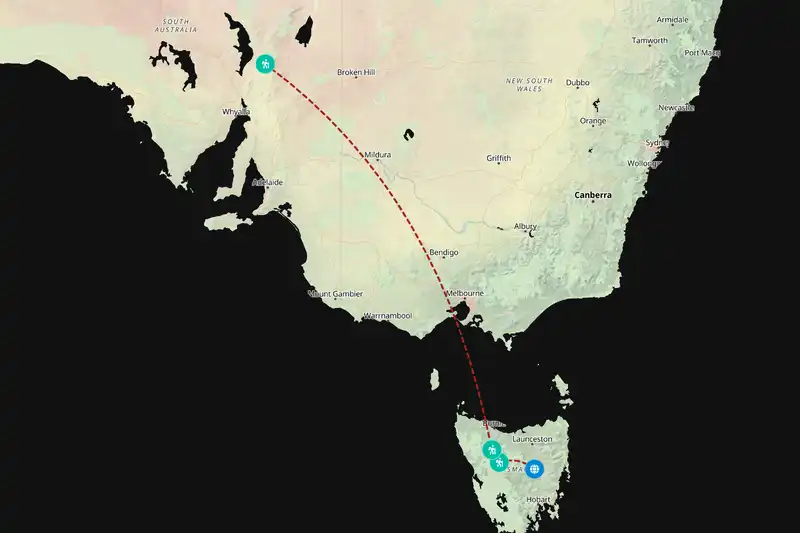
Example Australia itinerary planner route
Build your own Australia route
Example Australia itinerary planner route
Build your own Australia route
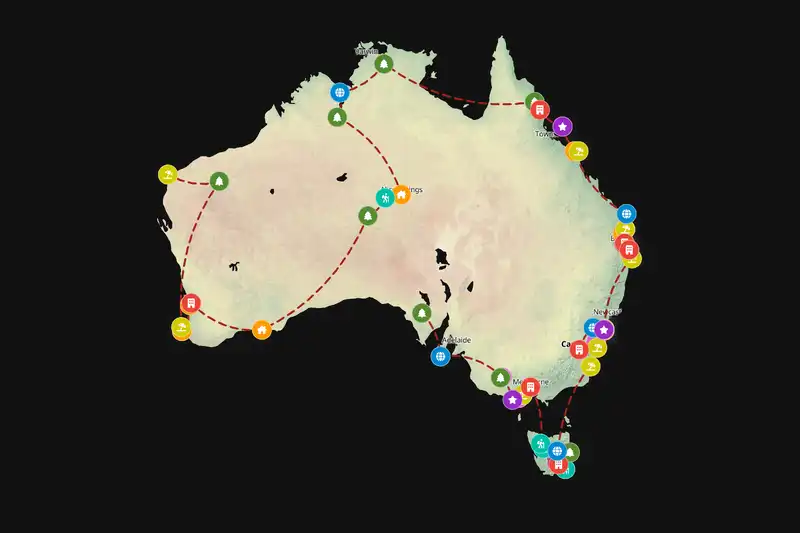
Example Australia itinerary planner route
Build your own Australia route
Example Australia itinerary planner route
Build your own Australia route

🇦🇺 AustraliaCreate Your Itinerary

1 How many days will you travel?
2 What are your interests?
3 Travel speed
⚙️ Advanced options

🙋 FAQItinerary planner questions about Australia

For most backpackers, about two weeks is the bare minimum to see a couple of regions without rushing, around three weeks lets you link a few classic routes like the east coast plus the Red Centre, and roughly a month gives you enough time to slow down, factor in long distances, and add more remote spots like Western Australia or Tasmania.
Australia is quite isolated, but it combines well with New Zealand for a longer Oceania trip, and many travelers also link it with Southeast Asian countries like Indonesia, Singapore, Malaysia, or Thailand since there are frequent flights and they sit on common backpacker routes.

Build a multi-country route
Yes. Stops are sequenced to minimize backtracking and grouped by how close they are to each other, and your chosen travel pace (fast, normal, or slow) adjusts how much ground each day covers.
Absolutely. Adjust your trip length, interests, starting point, or travel style and generate a new route in seconds.
Yes, generating and viewing your route is completely free. An offline-friendly PDF version is available as an optional purchase which gives more detailed information for each location on your route.

🗺️ RegionsWhere things are located

Australia is huge, and the places you’ve heard about are often days apart, not just a quick hop down the road. Sydney and the Great Barrier Reef, for example, sit in totally different corners of the map, and Tasmania feels like its own little world again. This planner keeps that in mind and clusters nearby spots together so you’re not bouncing back and forth across the country, helping you link places like Uluru-Kata Tjuta and the Larapinta Trail in a way that actually fits into one trip.

📈 StatisticsPlanner insights

Our set of curated travel destinations for Australia

Cities & Towns: 39      Villages: 6      Landmarks: 8      National Parks: 24      Hikes: 12      Beaches: 29      Attractions: 16     

Routes created by others

5

Routes created

35

Average trip length (days)

31

Average destinations

Most popular interests

  • ⭐️ Landmarks (100%)
  • 🏞️ National Parks (100%)
  • 🚶‍♀️ Hikes (100%)
  • 🏖️ Beaches (80%)
  • 🎡 Attractions (80%)

Most included destinations

⚙️ How it worksHow the Australia itinerary planner works

The planner starts by grouping places that sit reasonably close together on the map so you are not bouncing back and forth across Australia, which keeps travel days shorter and your route feeling natural instead of chaotic. Once it has those clusters, it strings them together in a clear overall direction, like moving steadily down a coastline or across a region, so you feel like you are progressing through the country rather than zigzagging without a pattern. Within each cluster, it looks at what you like doing and how fast you want to move, then gives more time to bigger hubs and less to quick stops, so a major spot can anchor a few days while smaller places nearby slot in around it. If you chose cities, beaches, and attractions, for example, it might turn Sydney into your base for several nights, then fold in nearby coastal walks and sights as easy day trips, which makes the whole route feel relaxed, efficient, and grounded in how people actually travel on the ground.