×

Zimbabwe Itinerary Planner

Build the Zimbabwe trip that fits you, not a tour operator’s spreadsheet. Tell us how many days you have, what pulls you in, and how fast you like to move, then add a start point or a must-see stop like Hwange National Park. Slow days cost you less per stop and leave more energy for the places you care about, so for a backpacker a relaxed pace gives you the most for your money.

Plan
your Trip


We build
your Route


Get your
Travel Plan

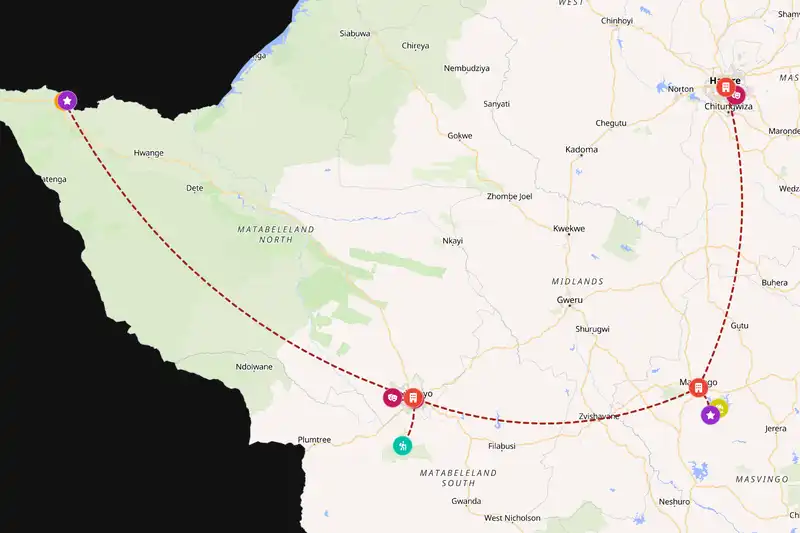
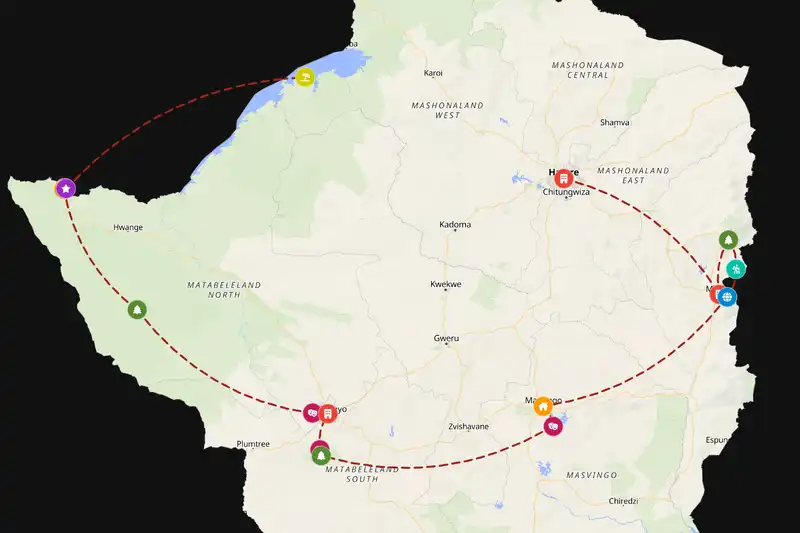
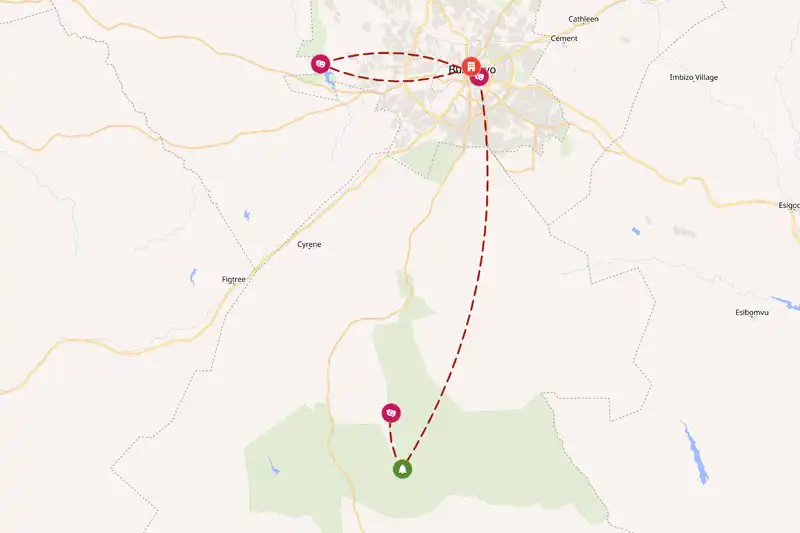
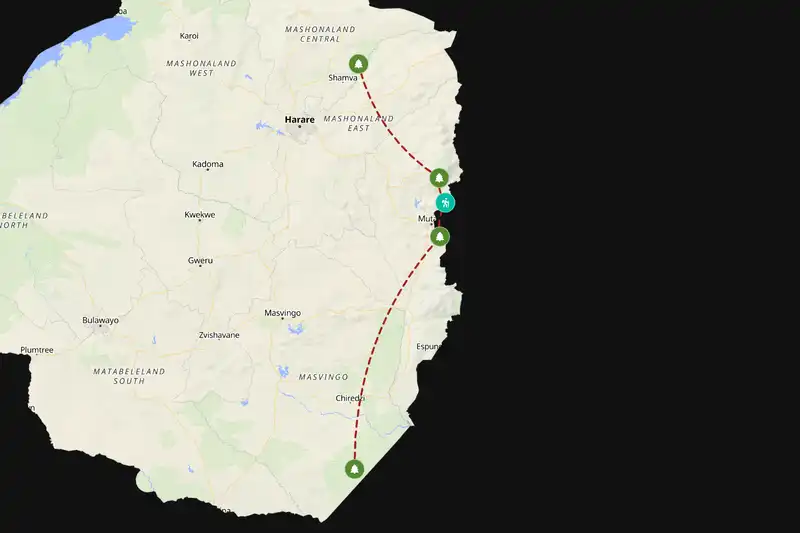
Example Zimbabwe itinerary planner route
Build your own Zimbabwe route
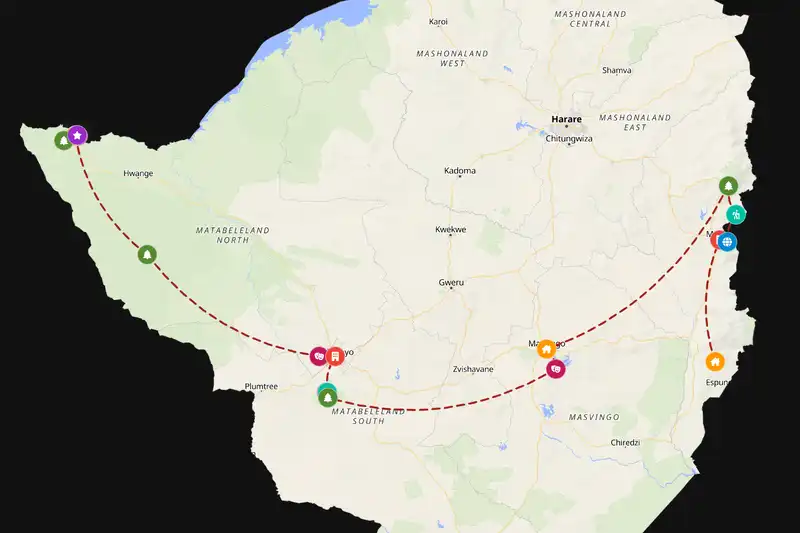
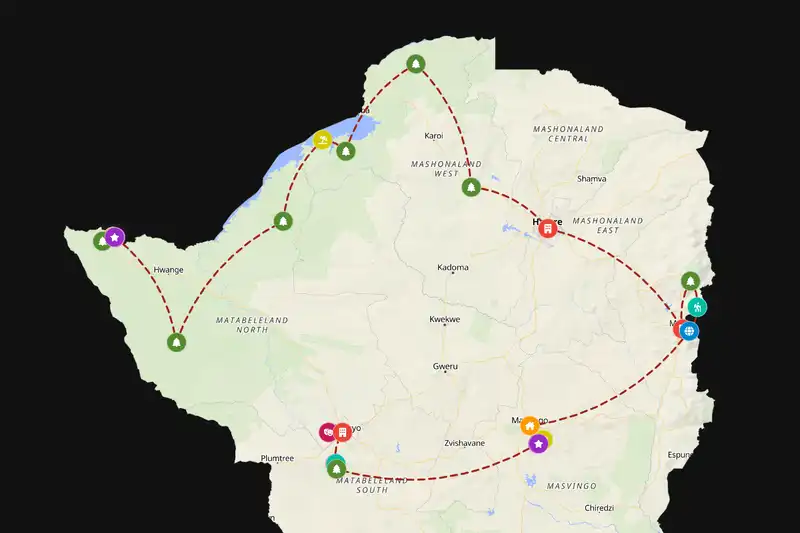
Example Zimbabwe itinerary planner route
Build your own Zimbabwe route
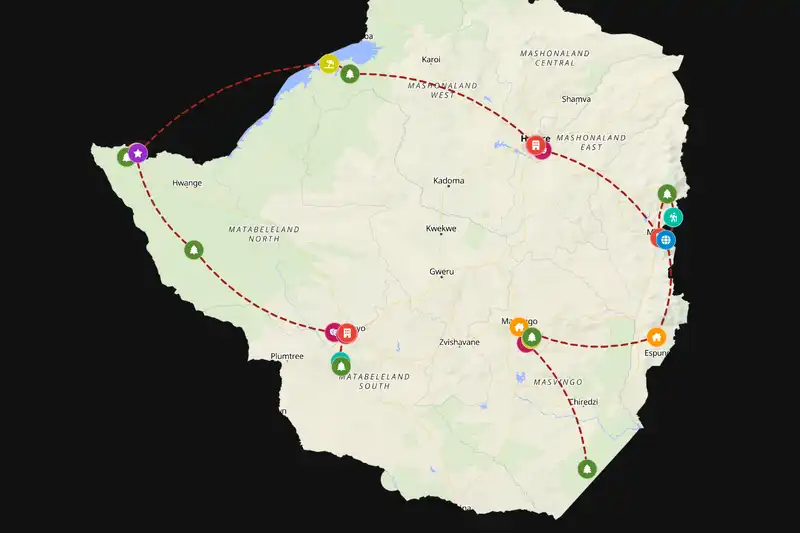
Example Zimbabwe itinerary planner route
Build your own Zimbabwe route
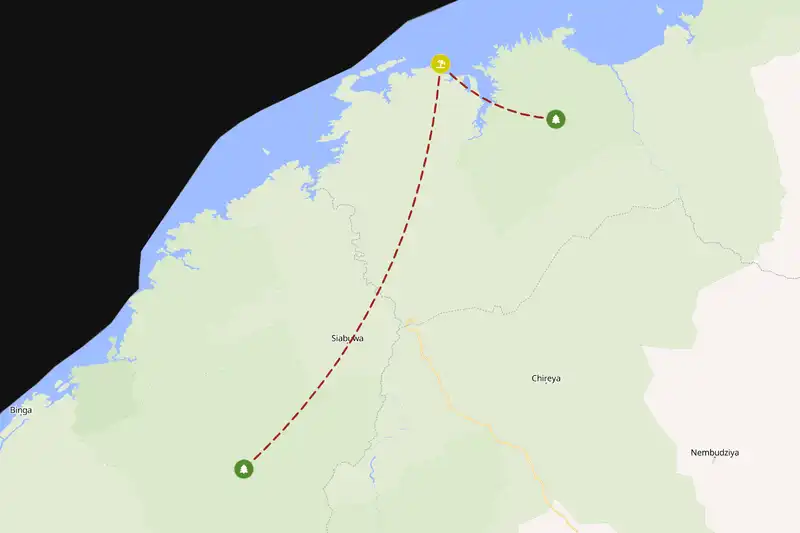
Example Zimbabwe itinerary planner route
Build your own Zimbabwe route
Example Zimbabwe itinerary planner route
Build your own Zimbabwe route
Example Zimbabwe itinerary planner route
Build your own Zimbabwe route
Example Zimbabwe itinerary planner route
Build your own Zimbabwe route
Example Zimbabwe itinerary planner route
Build your own Zimbabwe route
Example Zimbabwe itinerary planner route
Build your own Zimbabwe route
Example Zimbabwe itinerary planner route
Build your own Zimbabwe route

🇿🇼 ZimbabweCreate Your Itinerary

1 How many days will you travel?
2 What are your interests?
3 Travel speed
⚙️ Advanced options

🙋 FAQFrequently asked questions

Five days covers one or two main areas without rushing, ten days lets you add a second region at an easy pace, and fifteen days gives you room to cover the country’s highlights and still have slow days.
Yes. Zimbabwe borders Zambia, Botswana, South Africa and Mozambique, and Victoria Falls sits right on the Zambian border, which makes Zambia the easiest pairing, while Botswana’s Chobe area is close to the falls too.

Build a multi-country route
Yes. Stops are sequenced to minimize backtracking and grouped by how close they are to each other, and your chosen travel pace (fast, normal, or slow) adjusts how much ground each day covers.
Absolutely. Adjust your trip length, interests, starting point, or travel style and generate a new route in seconds.
Yes, generating and viewing your route is completely free. An offline-friendly PDF version is available as an optional purchase which gives more detailed information for each location on your route.

🗺️ RegionsHow spread out things are

Zimbabwe is a big country, and its best-known places sit far apart, so a trip that jumps between Victoria Falls in the west and Great Zimbabwe in the south-east eats days fast. Wandering that way costs you travel time and money, and it leaves less room for the stops you actually love. The planner groups nearby spots and strings the groups into one forward-moving route, so your days go to exploring rather than crossing the map again and again. For a backpacker, that’s the cheapest way to see more.

📈 StatisticsStatistics

Our set of curated travel destinations for Zimbabwe

Cities & Towns: 17      Landmarks: 3      National Parks: 20      Hikes: 3      Beaches: 3      Attractions: 14     

Routes created by others

17

Routes created

9

Average trip length (days)

9

Average destinations

Most popular interests

  • 🚶‍♀️ Hikes (94%)
  • 🏞️ National Parks (88%)
  • ⭐️ Landmarks (76%)
  • 🏖️ Beaches (76%)
  • 🎡 Attractions (76%)

Most included destinations

⚙️ How it worksFrom your choices to a finished itinerary

Pick your trip length, your interests and a pace, and the planner turns them into a day-by-day route that keeps you moving forward instead of doubling back. First, it clusters nearby places together, so you spend your days exploring one area before you leave it. Second, it picks a sensible direction through those clusters, so your route runs in one sweep and never zigzags across the country. Third, it sets the time at each stop by its type and by how much sits close by. A town with several attractions around it becomes a base where you stay longer, and the smaller spots nearby become easy day trips. Take Harare: if it’s packed with things that match your interests, you unpack once and fan out from there. That saves you the cost of constant moving and the tiredness of packing every morning, and for a backpacker it’s the best use of both money and energy.