×

Algeria🇩🇿 | citiesGhardaïaPentapolis, fortified ksour, Ibadite traditions | things to do and best time to go

Explore ConstantineExplore Khenchela

Backpacking in Ghardaïa
🏆 Top pickcity ranked #5
By Johan Kruseman 🇳🇱 | Updated June 8, 2026

Everyone says you come to Ghardaïa for the UNESCO-listed M’Zab Valley, but let’s be honest: the real test here isn’t just admiring ancient Ibadi architecture—it’s navigating the city’s rhythms and rules. Ghardaïa sits deep in Algeria’s northern Sahara, a full day’s journey south from Algiers, and it’s a world apart from the Mediterranean coast. For backpackers, Ghardaïa is a paradox: the walled ksour and palm groves are mesmerizing, but the city’s conservative pulse means you’ll need to adapt—especially if you’re used to the easygoing chaos of Algiers or Oran. Highlights like the bustling market square and the austere Grand Mosque are worth the trip, but nightlife is nearly nonexistent and solo travelers may find it tricky to connect with others. Costs are reasonable, safety is high, but comfort comes at the price of patience and cultural respect. Ghardaïa rewards curiosity, not convenience.

Discover everything you want to know in the 📖 Algeria Travel Guide.


Get your Algeria guide
91 ranked highlights, routes & tips, works offline (356 pages)
Loading the map 🌍
CLICK TO FILTER
cities
towns
landmarks
national parks
hikes
beaches
attractions
festivals
SHOW COUNTRY’S BESTSHOW ALL

✨ Why go?
Ranked #5 city in Algeria
Why visitors keep coming back

Ghardaïa is a strategic stop for backpackers weaving through Algeria. Its basecamp value is undeniable; you can easily launch day trips into the stunning M’zab Valley or the Sahara. The walkability of the city makes it a breeze to explore on foot, with winding streets that invite you to get lost in local life.

Accommodations range from cozy hostels to budget-friendly guesthouses, ensuring you won’t break the bank. When hunger strikes, the local food scene offers hearty, authentic dishes that fuel your adventures without draining your wallet.

While nightlife isn’t the main draw, you’ll find a few spots where you can unwind and mingle with fellow travelers. Plus, Ghardaïa’s easy onward travel options make it a convenient hub for your next destination. If you’re after a blend of culture, … read more 👉
Ghardaïa is a strategic stop for backpackers weaving through Algeria. Its basecamp value is undeniable; you can easily launch day trips into the stunning M’zab Valley or the Sahara. The walkability of the city makes it a breeze to explore on foot, with winding streets that invite you to get lost in local life.

Accommodations range from cozy hostels to budget-friendly guesthouses, ensuring you won’t break the bank. When hunger strikes, the local food scene offers hearty, authentic dishes that fuel your adventures without draining your wallet.

While nightlife isn’t the main draw, you’ll find a few spots where you can unwind and mingle with fellow travelers. Plus, Ghardaïa’s easy onward travel options make it a convenient hub for your next destination. If you’re after a blend of culture, convenience, and a touch of adventure, this city is worth more than just a fleeting visit.
Want to include Ghardaïa in your Algeria route?
Create a personalized Algeria itinerary that includes Ghardaïa and the places that fit your trip — based on your travel style, budget, and available time. Get your route in seconds.

Generate my trip

💡 HighlightsDon't-miss highlights and experiences

  • The Ksar (old town) of Ghardaïa — maze of mud-brick houses, narrow alleys and defensive towers that show the original M’Zab urban plan; walking the ksar is the clearest way to feel how communal life was organized around courtyards and shared spaces.
  • The Great Friday Mosque (Jama’a al-Jumu’a) — the spiritual and social heart of the town; its austere, functional architecture and courtyard are a living example of the Ibadi community’s approach to religious space (observe prayer times and photo etiquette).
  • Palmeraie and traditional irrigation (the oasis groves) — the shady palm groves that surround the old city are where date palms, old irrigation channels and foggaras (traditional water-tunnels) demonstrate how people have made desert farming sustainable for centuries.
  • The Souk (traditional
read more 👉
  • The Ksar (old town) of Ghardaïa — maze of mud-brick houses, narrow alleys and defensive towers that show the original M’Zab urban plan; walking the ksar is the clearest way to feel how communal life was organized around courtyards and shared spaces.
  • The Great Friday Mosque (Jama’a al-Jumu’a) — the spiritual and social heart of the town; its austere, functional architecture and courtyard are a living example of the Ibadi community’s approach to religious space (observe prayer times and photo etiquette).
  • Palmeraie and traditional irrigation (the oasis groves) — the shady palm groves that surround the old city are where date palms, old irrigation channels and foggaras (traditional water-tunnels) demonstrate how people have made desert farming sustainable for centuries.
  • The Souk (traditional market) — mornings are best: traders sell dates, spices, silver filigree, handwoven textiles and everyday goods; it’s where you see Ghardaïa’s economy and social rhythms up close and can taste local dates and snacks.
  • Museum of the M’Zab / Musée de Ghardaïa — small but useful ethnographic displays, traditional costumes, tools and photos that put the architecture and daily life you see in the streets into historical context.
  • Artisan quarter and workshops — clusters of family-run workshops making rugs, leather goods, pottery and silverwork; visiting a workshop gives a hands-on sense of techniques and you can buy directly from makers.
  • Panoramic viewpoints and ramparts — short climbs to the terraces above the ksar reward you with sweeping views of the compact white town, the palmeraie and the valley; great for photos and to understand the town’s defensive siting.
  • Ksar cemetery and marabout sites — local burial areas and saint-shrines offer insight into ritual life and local memory; they’re quiet, evocative places that tell stories you won’t find in guidebooks (be respectful and discreet).
  • Date cooperatives and drying depots — places where dates are sorted, dried and packed for market; a short visit shows the economic importance of palms and lets you sample many local varieties straight from the source.
  • Local cultural center and community spaces — municipal venues and neighborhood meeting places where you can sometimes catch music, lectures or temporary exhibitions about M’Zab traditions—good for connecting with contemporary life rather than only the historic core.
For day trips outside the city, the other M’Zab towns—Beni Isguen, El Atteuf and Melika—are real, visitable highlights very close by and together complete the classic M’Zab valley circuit.
Spotted a mistake or missing something? Contact us.

Things to do in Ghardaïa

Ratings based on Tripadvisor reviews. When you book through this link, you support our work at no extra cost to you.

🏘️ NeighborhoodsWhere things are and how it's laid out

Ghardaïa is a captivating city that blends history and culture, making it a unique stop for backpackers. Here’s how to navigate its neighborhoods:

El Atteuf: This area is the heart of Ghardaïa’s traditional architecture. The narrow streets are perfect for wandering, and you’ll find local markets buzzing with life. Costs are moderate, making it budget-friendly. It’s quieter at night, ideal for those who prefer a peaceful atmosphere. Great for short stays, as you can soak in the local vibe quickly.

Melika: Known for its vibrant community, Melika offers a mix of local eateries and shops. It’s slightly more upscale, so expect higher prices but also better amenities. The walkability is excellent, and the nightlife is lively, with cafes and music spilling into the streets. Perfect for longer stays … read more 👉
Ghardaïa is a captivating city that blends history and culture, making it a unique stop for backpackers. Here’s how to navigate its neighborhoods:

El Atteuf: This area is the heart of Ghardaïa’s traditional architecture. The narrow streets are perfect for wandering, and you’ll find local markets buzzing with life. Costs are moderate, making it budget-friendly. It’s quieter at night, ideal for those who prefer a peaceful atmosphere. Great for short stays, as you can soak in the local vibe quickly.

Melika: Known for its vibrant community, Melika offers a mix of local eateries and shops. It’s slightly more upscale, so expect higher prices but also better amenities. The walkability is excellent, and the nightlife is lively, with cafes and music spilling into the streets. Perfect for longer stays if you want to immerse yourself in local life.

Ghardaïa City Center: This is where the action is. It’s bustling, with easy access to transport options. Prices vary, but you can find budget accommodations if you look. The nightlife here is vibrant, with plenty of bars and restaurants. This area suits both short and longer visits, as it’s a hub for exploring the rest of the city.

Choose wisely, and you’ll unlock the best of Ghardaïa!

⌛️ 1 dayHow to make the most of one day

Ghardaïa, a captivating oasis town in Algeria’s M’zab Valley, is a blend of rich history and vibrant culture. Its unique architecture, characterized by mud-brick buildings and winding alleys, tells stories of centuries past. This city is not just a stopover; it’s a living museum where you can immerse yourself in the local way of life.

Start your morning at the bustling market in the heart of the old town, known as the ”Ksar.” Here, the air is filled with the scent of spices and fresh produce. Grab a traditional breakfast of ”mhadjeb,” a savory crepe stuffed with vegetables, from a local vendor. As you wander through the narrow streets, take in the intricate designs of the buildings and the lively chatter of the residents.

In the afternoon, head to the nearby ”Mausoleum of Sidi Brahim,” a … read more 👉
Ghardaïa, a captivating oasis town in Algeria’s M’zab Valley, is a blend of rich history and vibrant culture. Its unique architecture, characterized by mud-brick buildings and winding alleys, tells stories of centuries past. This city is not just a stopover; it’s a living museum where you can immerse yourself in the local way of life.

Start your morning at the bustling market in the heart of the old town, known as the ”Ksar.” Here, the air is filled with the scent of spices and fresh produce. Grab a traditional breakfast of ”mhadjeb,” a savory crepe stuffed with vegetables, from a local vendor. As you wander through the narrow streets, take in the intricate designs of the buildings and the lively chatter of the residents.

In the afternoon, head to the nearby ”Mausoleum of Sidi Brahim,” a site often overlooked by tourists. This serene spot offers a glimpse into local religious practices and stunning views of the surrounding landscape. Spend some time exploring the nearby neighborhoods, where you can find artisans crafting traditional goods. Engage with locals; they’re often eager to share their stories and customs.

As evening approaches, make your way to the ”Place de la Liberté.” This central square comes alive at dusk, with families gathering and street vendors setting up. Enjoy a leisurely dinner at a local restaurant, sampling dishes like ”couscous” or ”tagine.” The atmosphere is warm and inviting, making it the perfect end to your day in Ghardaïa. Embrace the rhythm of the city, and you’ll leave with memories that linger long after you’ve departed.
Turn your Ghardaïa visit into an Algeria adventure
Build a complete Algeria route with Ghardaïa, hidden gems, must-see destinations, and realistic travel times included.

Generate my trip

🌤️ When to go?Choosing the right time of year


  • Weather: Ghardaïa’s desert climate means scorching summers with highs often above 40°C (104°F), making outdoor exploration brutal. Winters are mild and dry, hovering around 15-20°C (59-68°F), ideal for trekking and wandering the old town without melting into a puddle.

  • Temperature: Spring (March to May) and autumn (September to November) offer the best balance—daytime temps between 20-30°C (68-86°F) keep you comfortable, while nights cool down enough to sleep well without a furnace.

  • Daylight Hours: Expect roughly 11-13 hours of daylight year-round, with longer days in summer. This gives plenty of time for sightseeing but remember, the midday sun in summer is relentless.

  • Crowds: Tourist traffic peaks during winter holidays and spring festivals. Visiting just outside these windows means
read more 👉

  • Weather: Ghardaïa’s desert climate means scorching summers with highs often above 40°C (104°F), making outdoor exploration brutal. Winters are mild and dry, hovering around 15-20°C (59-68°F), ideal for trekking and wandering the old town without melting into a puddle.

  • Temperature: Spring (March to May) and autumn (September to November) offer the best balance—daytime temps between 20-30°C (68-86°F) keep you comfortable, while nights cool down enough to sleep well without a furnace.

  • Daylight Hours: Expect roughly 11-13 hours of daylight year-round, with longer days in summer. This gives plenty of time for sightseeing but remember, the midday sun in summer is relentless.

  • Crowds: Tourist traffic peaks during winter holidays and spring festivals. Visiting just outside these windows means fewer crowds, letting you soak in the unique M’zab architecture without elbowing through selfie sticks.

  • Seasonal Activities: The M’zab Festival in April is a cultural highlight but draws crowds and bumps prices. If you want authenticity without the hustle, aim for late autumn when local life feels more genuine and relaxed.

  • Price Fluctuations: Accommodation and transport costs spike during peak season (December to April). Off-peak months, especially summer, offer bargains but at the cost of extreme heat and limited outdoor activity.


Pro-tip: Target late autumn or early spring for a smart balance—moderate weather, manageable crowds, and better prices. You’ll experience Ghardaïa’s soul without sweating your budget or your shirt.


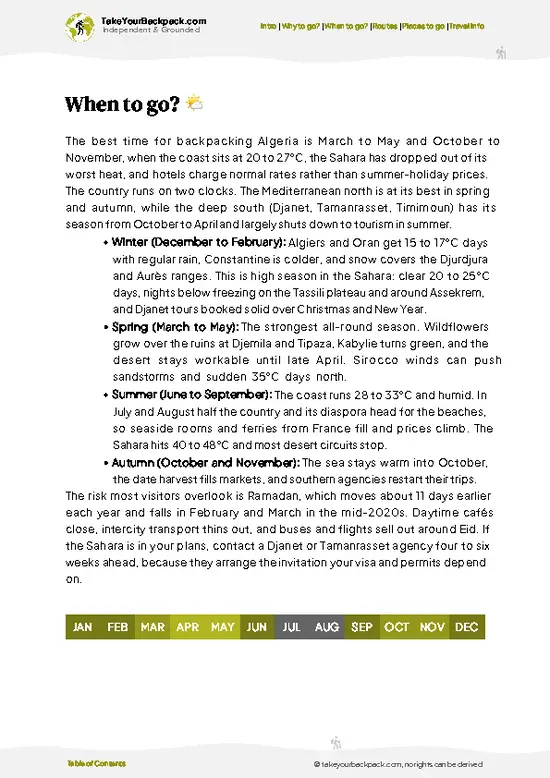
source: climatestotravel.comJANJanuary: good for travelingFEBFebruary: good for travelingMARMarch: highly recommended for travelingAPRApril: good for travelingMAYMay: highly recommended for travelingJUNJune: fair for travelingJULJuly: below average for travelingAUGAugust: below average for travelingSEPSeptember: highly recommended for travelingOCTOctober: highly recommended for travelingNOVNovember: excellent for travelingDECDecember: good for traveling
when-to-go

✈️ The backpacker research shortcutAlgeria Travel Guide

An offline-friendly backpacking guide with optimized travel routes, ranked highlights, transport advice, and the best areas to stay.
example page 0 from our offline Travel Guide for Algeria
example page 1 from our offline Travel Guide for Algeria
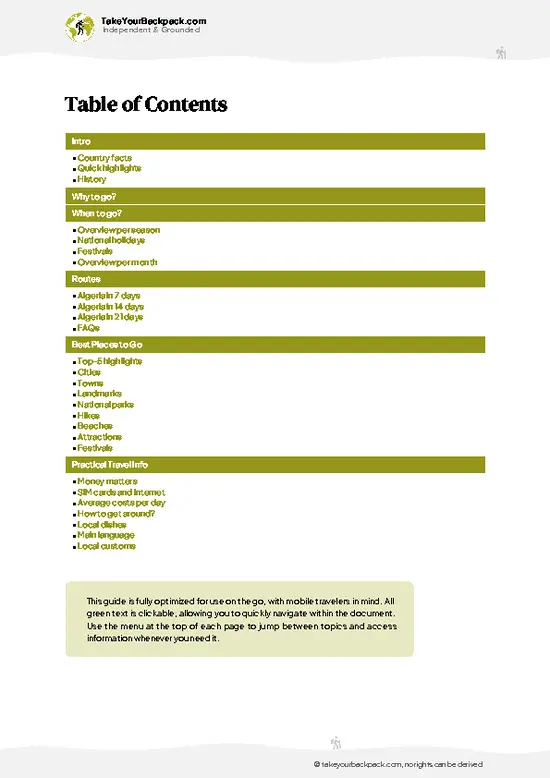
example page 2 from our offline Travel Guide for Algeria
example page 3 from our offline Travel Guide for Algeria
example page 4 from our offline Travel Guide for Algeria
example page 5 from our offline Travel Guide for Algeria
example page 6 from our offline Travel Guide for Algeria
example page 7 from our offline Travel Guide for Algeria
The digital guide (356 pages) contains:
91 highlights, ranked by travel appeal
Optimized 7, 14 & 21-day travel routes
Cities, national parks, landmarks, beaches
How to get around
Offline-friendly for travel without Wi-Fi
👉 Click to see all 30+ guide features

📅 Plan smarter in minutes, not weeks
Month by month travel advice
Festivals & national holidays
Budget expectations

🗺️ Go to the right places, skip the overrated ones
Honest pros & cons of destinations
Top hikes, parks & viewpoints
Lesser-known places most travelers miss
Clear “worth it vs skip it” guidance

🛏️ Travel smoothly without rookie mistakes
Best areas to stay
Transport systems explained simply
Common scams & safety advice
SIM cards, money & practical tips

🌍 Understand the country, not just visit it
Culture & traditions
52 Essential phrases & customs
Festivals worth planning around
Traveler-friendly historical context
Insights that make places more meaningful

📱 Built for real travel conditions
Fully downloadable PDF
Works completely offline
Optimized for phone use
Useful in remote areas & buses
Everything in one place
Save weeks of stressful planning
Get instant access to your full guide. 30‑day money-back guarantee.


By proceeding you agree to our terms.
Sent to your inbox immediately after payment • 100% Secure Checkout
Best Backpacking Travel Advisor 2025 tourism awardBest Backpacking
Travel Advisor
2025
What others say about Take Your Backpack Guides:
⭐⭐⭐⭐⭐
Fantastic, amazing amount of information!
⭐⭐⭐⭐⭐
My goodness this is amazing, it's what I've been looking for hats off too you!
⭐⭐⭐⭐⭐
I think this is absolutely BRILLIANT
⭐⭐⭐⭐
Very complete and informative. It's still missing places, but I gotta to commend you
⭐⭐⭐⭐⭐
This is truly amazing, thank you, can't wait to explore it with my kids!
⭐⭐⭐⭐⭐
Awesome resource, thank you!
⭐⭐⭐⭐⭐
This is amazing! Can't wait to explore the ones I haven't seen
⭐⭐⭐⭐
I love this! Well done, great idea.
⭐⭐⭐⭐⭐
Thanks for taking the time to make this gem!
⭐⭐⭐⭐⭐
This might be the best website I've ever seen.
⭐⭐⭐⭐⭐
Congratulations, and thank you so much for your work; it's incredibly valuable.
⭐⭐⭐⭐
In all seriousness I think you did a great job pointing out the important spots
⭐⭐⭐⭐⭐
10/10 very good
⭐⭐⭐⭐⭐
As someone who's only just starting to visit regularly this is awesome, thank you.
⭐⭐⭐⭐
Thank you very much! I'm going to visit my dad, it's going to be very useful!
⭐⭐⭐⭐⭐
This is really cool! We'll be travelling for the first time and this definitely come in handy.
⭐⭐⭐⭐⭐
You are now our minister of culture, congratulations 👨‍💼
⭐⭐⭐⭐⭐
Just wanted to tell you that this is a pearl! Going to follow your recommendations.
⭐⭐⭐⭐⭐
This is so cool. I'll definitely be using the resource for my travels soon.
⭐⭐⭐⭐⭐
This is very impressive! Good work.
⭐⭐⭐⭐⭐
This is an amazing and informative site. Very well done!

🛏️ Where to stay?Where staying makes the most sense

Ghardaïa’s charm lies in its unique M’zab Valley architecture and the rhythm of daily life in its old quarters. For backpackers, the best place to stay is around the old town, particularly near the central market area. This neighborhood strikes a balance between safety and social energy. It’s where locals gather, traders shout their wares, and you can soak in authentic interactions without the tourist bubble feeling suffocating.

Hostel options are limited but tend to cluster here, making it easier to meet fellow travelers and share tips over mint tea. The vibe is relaxed but alive, with narrow … read more 👉
Ghardaïa’s charm lies in its unique M’zab Valley architecture and the rhythm of daily life in its old quarters. For backpackers, the best place to stay is around the old town, particularly near the central market area. This neighborhood strikes a balance between safety and social energy. It’s where locals gather, traders shout their wares, and you can soak in authentic interactions without the tourist bubble feeling suffocating.

Hostel options are limited but tend to cluster here, making it easier to meet fellow travelers and share tips over mint tea. The vibe is relaxed but alive, with narrow alleys that invite exploration and spontaneous conversations. Compared to newer parts of Ghardaïa, which are quieter and more residential, this area offers a richer cultural pulse and better access to the city’s main sights on foot.

Choosing this neighborhood means sacrificing some modern comforts and polished infrastructure found in newer districts. But that trade-off pays off in immersion and connection—the kind of experience that turns a simple stay into a story you’ll tell for years.

🚌 Getting aroundHow to get from A to B

Ghardaïa moves at a rhythm that’s part tradition, part necessity. It’s not a city where you’ll find strict timetables etched in stone, but neither is it a free-for-all chaos. Instead, it’s a dance of intuition and local knowledge, where timing is flexible but never random. The market buzz peaks mid-morning, and the streets pulse with a steady flow of people and goods, but you’ll notice the ebb and flow are tied to the sun and the call to prayer more than any clock. Understanding this flow means you can navigate Ghardaïa’s transit options like a strategist, choosing when to save time, when to save money, and when to prioritize comfort.


  • Walking: The most reliable and cost-free way to get around Ghardaïa’s compact old town. Streets are narrow and winding, so walking lets you soak in the architecture
read more 👉
Ghardaïa moves at a rhythm that’s part tradition, part necessity. It’s not a city where you’ll find strict timetables etched in stone, but neither is it a free-for-all chaos. Instead, it’s a dance of intuition and local knowledge, where timing is flexible but never random. The market buzz peaks mid-morning, and the streets pulse with a steady flow of people and goods, but you’ll notice the ebb and flow are tied to the sun and the call to prayer more than any clock. Understanding this flow means you can navigate Ghardaïa’s transit options like a strategist, choosing when to save time, when to save money, and when to prioritize comfort.


  • Walking: The most reliable and cost-free way to get around Ghardaïa’s compact old town. Streets are narrow and winding, so walking lets you soak in the architecture and local life at your own pace. Expect to cover most key sites within 30-45 minutes on foot. No schedule, no cost, but prepare for uneven surfaces and some heat during midday.


  • Shared Taxis (Louages): These minibuses run between Ghardaïa and nearby towns or within the city itself. They don’t have fixed departure times; they leave when full, which means you might wait 10-30 minutes. Tickets cost just a few Algerian dinars, making them a budget favorite. Louages are faster than walking but less comfortable—expect crowded conditions and a bumpy ride on rough roads.


  • Local Buses: Limited routes and infrequent schedules define Ghardaïa’s bus system. Buses typically run from early morning until late afternoon, with fares very low. They offer a middle ground in speed and comfort but require patience and a flexible schedule. If you’re aiming to save money and don’t mind slower transit, this is your option.


  • Private Taxis: For those moments when time is tight or comfort is a priority, private taxis are the way to go. They’re available on demand but come at a higher price—expect to negotiate fares upfront. This option offers door-to-door service and air-conditioned rides, a rare luxury in Ghardaïa’s heat, but it’s a trade-off against your budget.


Mastering Ghardaïa’s transit means balancing these options against your priorities. Walk when you want immersion and zero cost. Louages and buses save money but demand patience and flexibility. Private taxis buy you comfort and speed, but at a premium. The city’s pulse rewards those who read its flow and choose their moves like a chess player, turning travel logistics into a winning strategy.

👛 Costs (as of 12 April 2025)Money, prices, and spending tips

Backpacking in Ghardaïa, Algeria, offers a unique blend of affordability and cultural immersion, but knowing where your money goes helps you play the budget game smartly.
  • Dorm Accommodation (High Season): Expect to pay around €15-20 per night. High season pushes prices up due to demand, but dorms remain basic—think simple bedding and shared facilities.
  • Dorm Accommodation (Off-Season): Prices drop to about €8-12 per night. Off-season means fewer tourists, so you can snag a quieter, cheaper spot without sacrificing safety or cleanliness.
  • Meals: Local eateries serve filling meals for €3-6. Street food and small cafes offer couscous, tagines, and fresh bread that keep costs low while delivering authentic flavors.
  • Local Transport: Short rides on shared taxis or minibuses cost roughly €0.30-0.
read more 👉
Backpacking in Ghardaïa, Algeria, offers a unique blend of affordability and cultural immersion, but knowing where your money goes helps you play the budget game smartly.
  • Dorm Accommodation (High Season): Expect to pay around €15-20 per night. High season pushes prices up due to demand, but dorms remain basic—think simple bedding and shared facilities.
  • Dorm Accommodation (Off-Season): Prices drop to about €8-12 per night. Off-season means fewer tourists, so you can snag a quieter, cheaper spot without sacrificing safety or cleanliness.
  • Meals: Local eateries serve filling meals for €3-6. Street food and small cafes offer couscous, tagines, and fresh bread that keep costs low while delivering authentic flavors.
  • Local Transport: Short rides on shared taxis or minibuses cost roughly €0.30-0.50. These are the lifeblood of Ghardaïa’s daily rhythm, cheap but sometimes crowded and irregular.
  • City Transport Pass: Not common or necessary here. Most travelers rely on shared taxis or walking; Ghardaïa’s compact layout means a pass isn’t a worthwhile investment.
  • Basic Activities/Entry Fees: Visiting local museums or cultural sites typically costs €2-5. These fees support preservation and give you a deeper understanding of the M’Zab Valley’s heritage.
  • Miscellaneous Expenses: Budget €2-4 for bottled water, snacks, or small tips. These add up but are manageable with a little planning.

In total, you’re looking at a daily budget between €20 and €35 for a no-frills but culturally rich experience in Ghardaïa. This balance lets you stretch your euros without cutting corners on the essentials that make your trip meaningful.


source: algeria.com
⚠️ Prices can change and everyone travels differently, so take this as a rough guide. Hope it helps you plan your adventure!

🚌 Day tripsShort trips worth adding

Ghardaïa is a fantastic launchpad for day trips that dive deep into Algeria’s rich culture and stunning landscapes. Each journey offers unique experiences that make the effort worthwhile.

M’Zab Valley
Just a short 30-minute drive from Ghardaïa, the M’Zab Valley is a UNESCO World Heritage site that showcases traditional Berber architecture. The five towns here, especially Ghardaïa itself, are a feast for the eyes with their mud-brick structures and winding alleys. You can easily spend a few hours exploring the local markets and soaking in the vibrant atmosphere. Budget around 200 DZD for transport and snacks. The best time to visit is in spring or fall when the weather is mild. A common mistake? Skipping the local guides who can share fascinating stories about the valley’s history.


Beni read more 👉
Ghardaïa is a fantastic launchpad for day trips that dive deep into Algeria’s rich culture and stunning landscapes. Each journey offers unique experiences that make the effort worthwhile.

M’Zab Valley
Just a short 30-minute drive from Ghardaïa, the M’Zab Valley is a UNESCO World Heritage site that showcases traditional Berber architecture. The five towns here, especially Ghardaïa itself, are a feast for the eyes with their mud-brick structures and winding alleys. You can easily spend a few hours exploring the local markets and soaking in the vibrant atmosphere. Budget around 200 DZD for transport and snacks. The best time to visit is in spring or fall when the weather is mild. A common mistake? Skipping the local guides who can share fascinating stories about the valley’s history.


Beni Isguen
A mere 15 minutes from Ghardaïa, Beni Isguen is one of the most traditional towns in the M’Zab Valley. Known for its strict adherence to Islamic customs, this town offers a glimpse into a way of life that has remained largely unchanged for centuries. The vibrant market is a must-see, filled with local crafts and spices. Expect to spend around 100 DZD on transport and a few more for snacks. Visit in the morning to catch the market at its liveliest. First-timers often miss the chance to engage with locals, who are usually welcoming and eager to share their culture.


Timimoun
About a two-hour drive from Ghardaïa, Timimoun is famous for its red ochre buildings and palm groves. This desert oasis offers a unique contrast to the rocky landscapes of the surrounding area. The journey is scenic, and once there, you can explore the ancient ksars and enjoy a local meal for about 500 DZD total. The best time to visit is during the cooler months, from October to March. A common pitfall is underestimating the travel time; plan for a full day to truly enjoy the experience.
👉 Explore Timimoun

El Golea
Roughly 90 minutes away, El Golea is another charming oasis town that feels like stepping back in time. The town is known for its stunning palm groves and traditional architecture. You can wander through the narrow streets and enjoy a leisurely lunch for around 400 DZD. The ideal time to visit is in the spring when the flowers bloom. Many first-timers overlook the opportunity to hike in the nearby hills, which offers breathtaking views of the oasis below.
Want to know what more Algeria offers?
The Algeria Travel Guide describes 91 highlights, from cities to national parks, from beaches to hikes

Get the Travel Guide -

🍲 FoodWhat to Eat & Drink

In Ghardaïa, the food scene is a vibrant tapestry of flavors and traditions. Start with the couscous, a staple that’s often served with tender lamb or chicken, infused with spices that dance on your palate. Don’t miss mechoui, slow-roasted lamb that’s crispy on the outside and melt-in-your-mouth tender inside.

Street food is where the magic happens. Stroll through bustling markets and grab a borek, a flaky pastry filled with spiced meat or vegetables. The aroma wafts through the air, pulling you in. Pair it with a glass of mint tea, a local ritual that’s as much about hospitality as it is about refreshment.

Eating here is communal. Expect to share dishes, and don’t be surprised if you find yourself seated on the floor, enjoying a meal with new friends. Remember, it’s customary to eat with … read more 👉
In Ghardaïa, the food scene is a vibrant tapestry of flavors and traditions. Start with the couscous, a staple that’s often served with tender lamb or chicken, infused with spices that dance on your palate. Don’t miss mechoui, slow-roasted lamb that’s crispy on the outside and melt-in-your-mouth tender inside.

Street food is where the magic happens. Stroll through bustling markets and grab a borek, a flaky pastry filled with spiced meat or vegetables. The aroma wafts through the air, pulling you in. Pair it with a glass of mint tea, a local ritual that’s as much about hospitality as it is about refreshment.

Eating here is communal. Expect to share dishes, and don’t be surprised if you find yourself seated on the floor, enjoying a meal with new friends. Remember, it’s customary to eat with your right hand, a nod to local etiquette. Embrace the flavors and the warmth of the people; it’s all part of the experience.

🛡️ SafetyTraveler Safety Guide

Ghardaïa is generally safe for backpackers, but a few situational awareness tips can enhance your experience. The bustling markets are vibrant, but keep an eye on your belongings; pickpockets occasionally lurk in crowded areas. If you’re traveling solo, consider sticking to well-lit streets after dark. The locals are friendly, but it’s wise to gauge the atmosphere before engaging too deeply, especially in quieter neighborhoods.

Scams are rare, but some vendors may inflate prices for tourists. A polite negotiation can often lead to a fair deal. Everyday annoyances include occasional language barriers, so learning a few Arabic phrases can go a long way in easing interactions. Carry yourself confidently, and you’ll blend in seamlessly, making your time in Ghardaïa both enjoyable and enriching.

Other Algerian cities near Ghardaïa

Explore more nearby:

  • Laghouat—Saharan plateau, stone architecture, date markets| 163 km away
  • Ouargla—Oil industry, desert university, palm-ringed city| 170 km away
  • El Bayadh—Steppe landscapes, nomadic culture, sheep markets| 278 km away

💡 Not sure where to go next?
Create a personalized itinerary for Algeria including Ghardaïa and the places that fit your trip.

Generate my itinerary

👉 Discover all cities

Or checkout all Algeria has to offer (think cities, towns, villages, national parks, hikes, beaches, festivals)
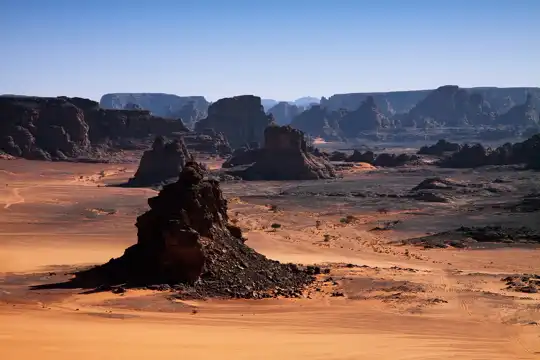
Country photo of Algeria

We 💚 feedbackFinal thoughts on visiting Ghardaïa

Ghardaïa has a pulse that’s hard to ignore. The markets buzz with life, and the architecture tells stories of centuries past. Don’t miss the sunset over the M’zab Valley; it’s a sight that sneaks up on you and leaves you breathless. Just a heads-up: the heat can be intense, so plan your explorations early or late in the day. Embrace the rhythm, and you’ll find magic in the details.

✍️ Help improve this page!
The information on this page is based on in-depth research, insights shared by experienced travelers, and feedback from the local travel community in Algeria. While every effort is made to keep the information accurate and current, conditions can change — so if you spot anything incorrect or outdated, please get in touch.


🙋‍♂️ Give feedback

👋 Meet the founderWho’s Behind Take Your Backpack?

Johan, backpacker and founder of TakeYourBackpackHi, I’m Johan (Netherlands 🇳🇱), the creator of TakeYourBackpack. Over the past decade, I’ve backpacked through 80+ countries across six continents, gaining extensive experience with independent travel, long-term trips, and overland routes.

This site is built on a combination of firsthand travel experience and carefully curated insights from other backpackers. Many guides are based on places I’ve personally visited, while others bring together tips, observations, and practical advice shared by trusted travelers I’ve met along the way.

The goal is to provide realistic, experience-driven guidance — not generic itineraries — so you can explore destinations with better context, clearer expectations, and more confidence.

Get full Algeria guide •
Instant download • 91 highlights • Full Offline guide