×

Argentina🇦🇷 | citiesSan Carlos de BarilocheLake Nahuel Huapi, chocolate shops, craft beer, alpine viewpoints | things to do and best time to go

Explore Mar del PlataExplore San Juan

Backpacking in San Carlos de Bariloche
🏆 Top pickcity ranked #3
By Johan Kruseman 🇳🇱 | Updated October 19, 2026

Twenty years ago, Bariloche was a chocolate town with a lake and a reputation as Argentina's honeymoon spot. Now it's the unofficial capital of South American backpacking, sitting in the Rio Negro province at the edge of Nahuel Huapi National Park in Patagonia. Here's the trade-off map: you save money by dorm-hopping and self-catering, but you spend time, buses to trailheads run on their own schedule, and comfort takes a hit once the wind picks up off the lake. Splurge on a real parrilla dinner once; skip the lake cruise, it's overpriced for what you get. I remember sitting on Cerro Campanario at sunset, legs aching from the climb, watching the lake fracture into a dozen shades of blue while a German backpacker next to me just laughed and said 'worth it.' It was. Safety is good, prices beat Chile's Patagonia, and the hostel scene rivals anywhere in Argentina.

Discover everything you want to know in the 📖 Argentina Travel Guide.


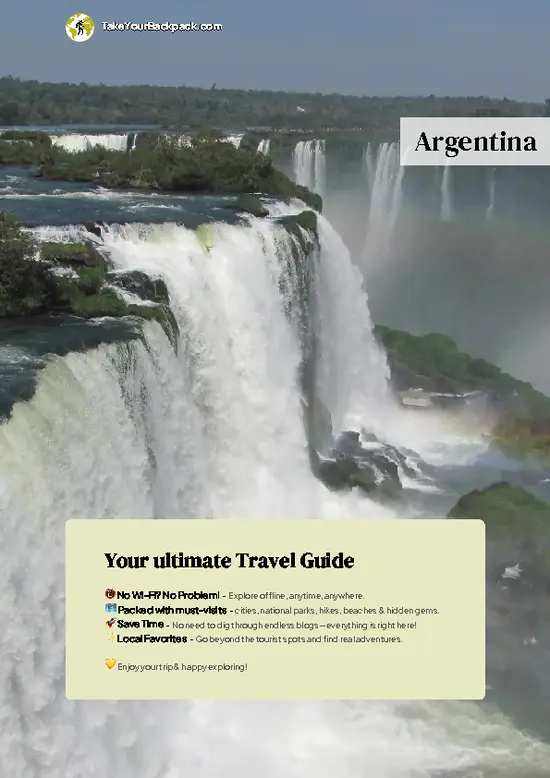
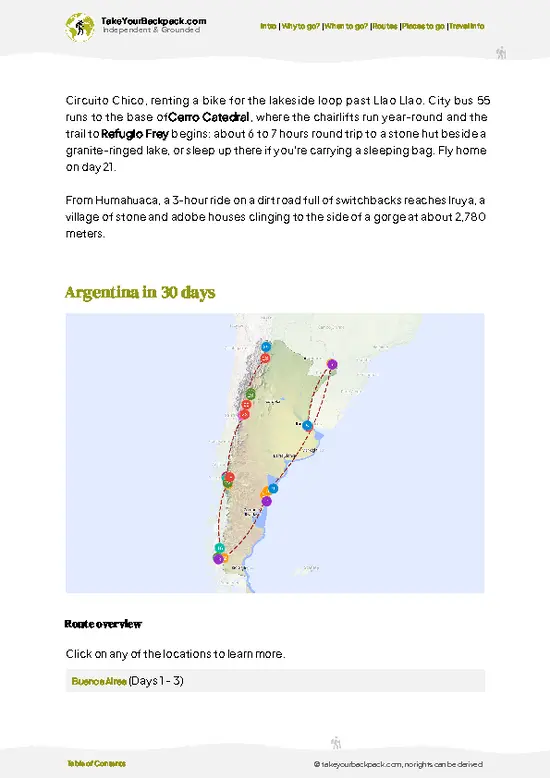
example page 0 from our offline Travel Guide for Argentina
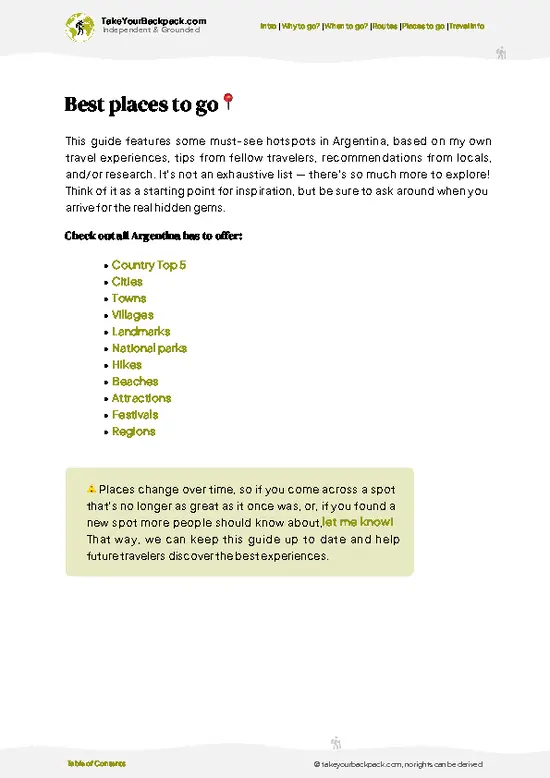
example page 1 from our offline Travel Guide for Argentina
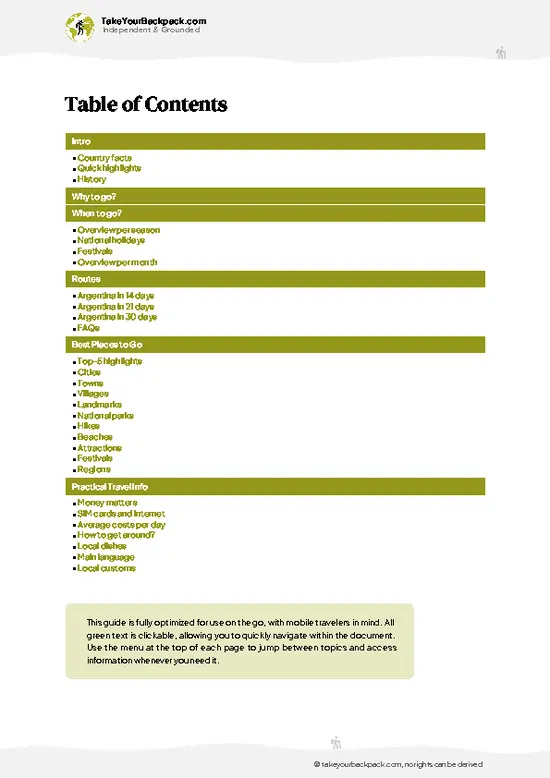
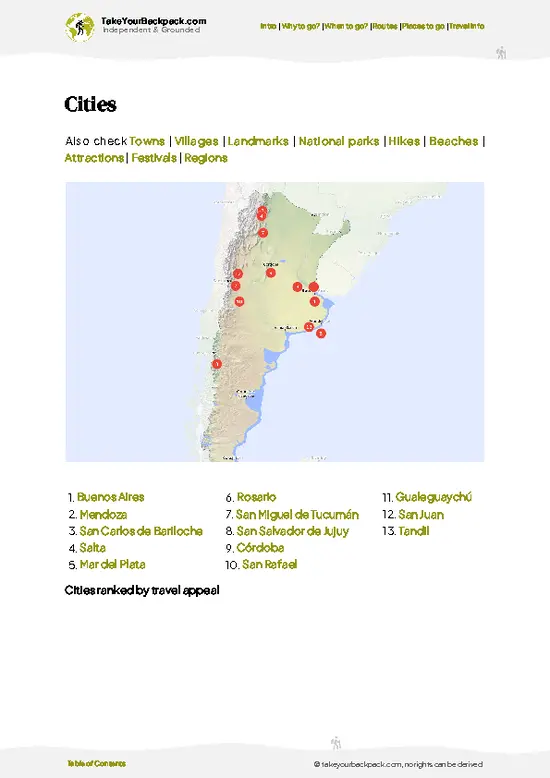
example page 2 from our offline Travel Guide for Argentina
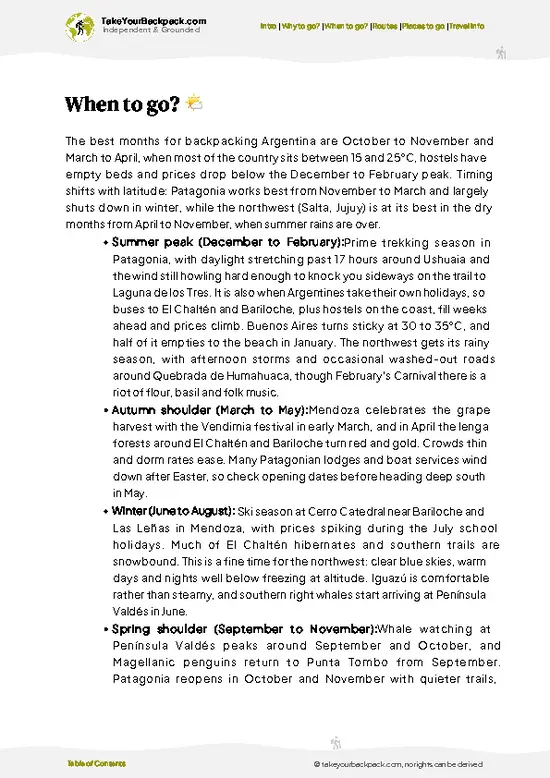
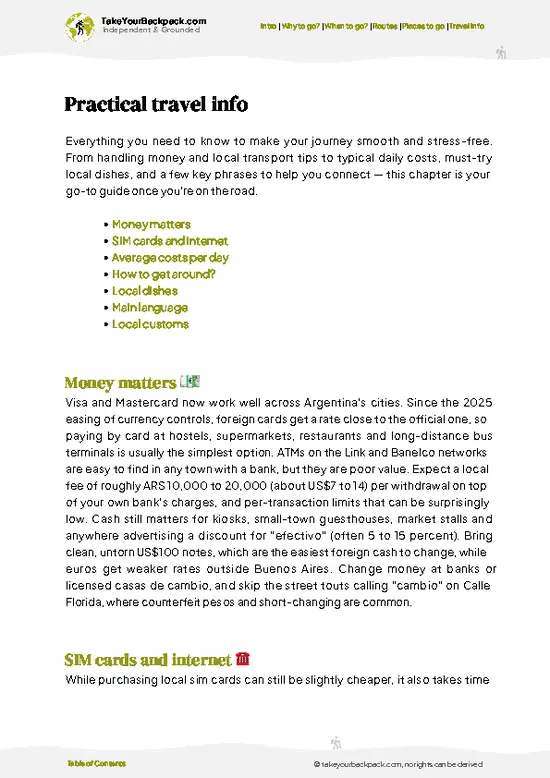
example page 3 from our offline Travel Guide for Argentina
example page 4 from our offline Travel Guide for Argentina
example page 5 from our offline Travel Guide for Argentina
example page 6 from our offline Travel Guide for Argentina
example page 7 from our offline Travel Guide for Argentina
Loading the map 🌍
CLICK TO FILTER
cities
towns
villages
landmarks
national parks
hikes
beaches
attractions
festivals
regions
SHOW COUNTRY’S BESTSHOW ALL

✨ Why go?
Ranked #3 city in Argentina
Why San Carlos de Bariloche should be on your travel list

Backpackers land in Bariloche because it's the best basecamp in Argentine Patagonia, period. The town itself is small and walkable, with a compact center built around chocolate shops and a stone Centro Cívico that photographs well but doesn't need more than an hour. What keeps people two or three nights instead of one is the hostel culture: dozens of budget-friendly spots with kitchens, bars, and communal trekking-planning chaos that makes meeting people almost automatic. The nightlife is low-key by Buenos Aires standards but solid for a mountain town, think shared bottles of Malbec over hostel dinners rather than clubs. Food is hearty and cheap if you avoid the tourist strip along the lake. Onward travel is easy: buses connect south to El Bolson and El Chalten, or north toward the Lake District … read more 👉
Backpackers land in Bariloche because it's the best basecamp in Argentine Patagonia, period. The town itself is small and walkable, with a compact center built around chocolate shops and a stone Centro Cívico that photographs well but doesn't need more than an hour. What keeps people two or three nights instead of one is the hostel culture: dozens of budget-friendly spots with kitchens, bars, and communal trekking-planning chaos that makes meeting people almost automatic. The nightlife is low-key by Buenos Aires standards but solid for a mountain town, think shared bottles of Malbec over hostel dinners rather than clubs. Food is hearty and cheap if you avoid the tourist strip along the lake. Onward travel is easy: buses connect south to El Bolson and El Chalten, or north toward the Lake District towns, making Bariloche a natural link in any Patagonia route. It suits travelers who want outdoor access without wilderness logistics, less so those chasing urban energy.

💡 HighlightsDon't-miss highlights and experiences

  1. Centro Cívico: The stone-and-wood civic square built in the 1940s, home to the small Museo de la Patagonia. Worth 45 minutes; free to wander, museum entry is a few dollars. Best visited mid-morning before tour groups arrive.
  2. Cerro Campanario: A chairlift or 40-minute hike up to a viewpoint over Nahuel Huapi Lake, often ranked among the finest panoramas in the region. Chairlift costs a modest fee round-trip; go at sunset for the light.
  3. Catedral de Bariloche: A granite Gothic-style church near the civic center, built mid-20th century. Free entry, 15-20 minutes, worth a stop while exploring downtown.
  4. Puerto San Carlos and the waterfront: The old port area where the lake meets town, good for an evening walk and watching boats head out. Free, no time limit.
  5. Museo de la Patagonia: Small but informative
… read more 👉
  1. Centro Cívico: The stone-and-wood civic square built in the 1940s, home to the small Museo de la Patagonia. Worth 45 minutes; free to wander, museum entry is a few dollars. Best visited mid-morning before tour groups arrive.
  2. Cerro Campanario: A chairlift or 40-minute hike up to a viewpoint over Nahuel Huapi Lake, often ranked among the finest panoramas in the region. Chairlift costs a modest fee round-trip; go at sunset for the light.
  3. Catedral de Bariloche: A granite Gothic-style church near the civic center, built mid-20th century. Free entry, 15-20 minutes, worth a stop while exploring downtown.
  4. Puerto San Carlos and the waterfront: The old port area where the lake meets town, good for an evening walk and watching boats head out. Free, no time limit.
  5. Museo de la Patagonia: Small but informative exhibit on indigenous Mapuche history and early settlers. Entry fee is minimal, allow 30-45 minutes.
  6. Chocolate workshops downtown: Bariloche's chocolate industry dates back to Swiss and German immigrants; several shops offer tastings or short workshops. Costs vary, plan for 30 minutes to an hour.
  7. Cervecería crawl along Av. Bustillo: The area has a strong craft beer scene tied to German brewing traditions brought by early settlers. Budget a few dollars per pint, best done in the late afternoon into evening.
  8. Playa Bonita: A small lakeside beach a short bus ride from downtown, good for an hour of sitting with feet in cold water and watching the mountains across the lake. Free.
Just outside town, Circuito Chico, Llao Llao, and Cerro Catedral all make excellent day trips easily reached by local bus. My personal favorite is Circuito Chico at golden hour, the road curves through forest and lake views that make the whole trip feel earned.
Spotted a mistake or missing something? Contact us.

Things to do in San Carlos de Bariloche

Ratings based on Tripadvisor reviews. When you book through this link, you support our work at no extra cost to you.

🏘️ NeighborhoodsNeighborhood guide to San Carlos de Bariloche

Orienting yourself here is a game of trading walkability against views and cost against quiet. Here's how the pieces fit:
  • Centro Cívico / Downtown: The stone-building heart of town. Highest walkability, cheapest hostels, closest to the bus terminal alternative (Km0), but noisiest at night and most touristy during the day. Best for short stays or your first/last night.
  • Barrio Belgrano: A quieter residential pocket a 10-15 minute walk from downtown. Trades some nightlife for peace and slightly better prices, good if you're staying three-plus nights and want a real bed's worth of sleep between treks.
  • Av. Bustillo corridor (Km 3-25): Strung along the lake toward Llao Llao, this is where comfort and scenery peak, but you sacrifice walkability entirely. You'll need buses or a bike, and prices creep
… read more 👉
Orienting yourself here is a game of trading walkability against views and cost against quiet. Here's how the pieces fit:
  • Centro Cívico / Downtown: The stone-building heart of town. Highest walkability, cheapest hostels, closest to the bus terminal alternative (Km0), but noisiest at night and most touristy during the day. Best for short stays or your first/last night.
  • Barrio Belgrano: A quieter residential pocket a 10-15 minute walk from downtown. Trades some nightlife for peace and slightly better prices, good if you're staying three-plus nights and want a real bed's worth of sleep between treks.
  • Av. Bustillo corridor (Km 3-25): Strung along the lake toward Llao Llao, this is where comfort and scenery peak, but you sacrifice walkability entirely. You'll need buses or a bike, and prices creep up the further out you go. Worth it for one or two nights if you want lake views without leaving your window.
  • Melipal / Residential outskirts: Budget-friendly and genuinely local, but far from the action and not worth the transit time unless you're on a long-term budget stay.
The winning strategy: base downtown for logistics and social energy, then day-trip out toward Bustillo for the scenery without paying to sleep there.

⌛️ 1 dayHow to make the most of one day

Bariloche rewards a day built around one big view and one slow wander, since the town itself is compact but the surroundings are the real draw.

8:30 AM: Breakfast downtown at a local panaderia for medialunas and coffee, fueling up before the day's main activity.

9:30 AM: Centro Cívico: Wander the stone square, pop into the Museo de la Patagonia for a quick history lesson on Mapuche and immigrant settlers.

11:00 AM: Bus toward Cerro Campanario: A short ride out of town, then either the chairlift or a 40-minute hike up.

1:00 PM: Lunch near the base: Grab something simple, a sandwich or empanadas, before heading back toward town.

2:30 PM: Playa Bonita: An underrated stop most tourists skip. Sit on the small beach, dip your feet in the cold lake water, and watch the mountains across the … read more 👉
Bariloche rewards a day built around one big view and one slow wander, since the town itself is compact but the surroundings are the real draw.

8:30 AM: Breakfast downtown at a local panaderia for medialunas and coffee, fueling up before the day's main activity.

9:30 AM: Centro Cívico: Wander the stone square, pop into the Museo de la Patagonia for a quick history lesson on Mapuche and immigrant settlers.

11:00 AM: Bus toward Cerro Campanario: A short ride out of town, then either the chairlift or a 40-minute hike up.

1:00 PM: Lunch near the base: Grab something simple, a sandwich or empanadas, before heading back toward town.

2:30 PM: Playa Bonita: An underrated stop most tourists skip. Sit on the small beach, dip your feet in the cold lake water, and watch the mountains across the water.

4:00 PM: Craft beer stop on Av. Bustillo: The German brewing heritage runs deep here; sample a pint while overlooking the lake.

6:00 PM: Back downtown for chocolate shopping, Bariloche's shops are genuinely good, not just tourist bait.

8:00 PM: Dinner at a parrilla for Patagonian lamb, then a relaxed hostel evening comparing trekking plans with other travelers.

🌤️ When to go?Weather, crowds, and seasonal trade-offs

  • Summer (December to February): Warmest weather, highs around 22°C (72°F), ideal for lake activities and trekking, but also peak crowds and highest hostel prices.
  • Autumn (March to May): Cooler, 10-18°C (50-64°F), fewer tourists, striking fall colors in the surrounding forest, and noticeably lower prices.
  • Winter (June to August): Cold, 0-8°C (32-46°F), snow brings ski season at Cerro Catedral, prices spike again for ski travelers, daylight shrinks to around 9 hours.
  • Spring (September to November): Mild, 8-16°C (46-61°F), wildflowers and melting snow feed the waterfalls, moderate crowds, good value before summer rush hits.
Aim for late March. The crowds thin out, the lake still holds summer warmth, and the surrounding hillsides turn a color that makes every hostel rooftop worth the climb.

source: climatestotravel.comJANJanuary: excellent for travelingFEBFebruary: excellent for travelingMARMarch: highly recommended for travelingAPRApril: highly recommended for travelingMAYMay: good for travelingJUNJune: fair for travelingJULJuly: fair for travelingAUGAugust: fair for travelingSEPSeptember: good for travelingOCTOctober: good for travelingNOVNovember: highly recommended for travelingDECDecember: excellent for traveling
argentina-city-san-carlos-de-bariloche
© Google |

✈️ The backpacker research shortcutArgentina Travel Guide

An offline-friendly backpacking guide with optimized travel routes, ranked highlights, transport advice, and the best areas to stay.
example page 0 from our offline Travel Guide for Argentina
example page 1 from our offline Travel Guide for Argentina
example page 2 from our offline Travel Guide for Argentina
example page 3 from our offline Travel Guide for Argentina
example page 4 from our offline Travel Guide for Argentina
example page 5 from our offline Travel Guide for Argentina
example page 6 from our offline Travel Guide for Argentina
example page 7 from our offline Travel Guide for Argentina
The digital guide (393 pages) contains:
✅ 131 highlights, ranked by travel appeal
✅ Optimized 14, 21 & 30-day travel routes
✅ Cities, national parks, landmarks, beaches
✅ How to get around
✅ Offline-friendly for travel without Wi-Fi
👉 Click to see all 30+ guide features

📅 Plan smarter in minutes, not weeks
✅ Month by month travel advice
✅ Festivals & national holidays
✅ Budget expectations

🗺️ Go to the right places, skip the overrated ones
✅ Honest pros & cons of destinations
✅ Top hikes, parks & viewpoints
✅ Lesser-known places most travelers miss
✅ Clear “worth it vs skip it” guidance

🛏️ Travel smoothly without rookie mistakes
✅ Best areas to stay
✅ Transport systems explained simply
✅ Common scams & safety advice
✅ SIM cards, money & practical tips

🌍 Understand the country, not just visit it
✅ Culture & traditions
✅ 52 Essential phrases & customs
✅ Festivals worth planning around
✅ Traveler-friendly historical context
✅ Insights that make places more meaningful

📱 Built for real travel conditions
✅ Fully downloadable PDF
✅ Works completely offline
✅ Optimized for phone use
✅ Useful in remote areas & buses
✅ Everything in one place
Stop searching, start planning
Get instant access to your full guide. 30‑day money-back guarantee.
+ Add another guide for just

By proceeding you agree to our terms.
Sent to your inbox immediately after payment • 100% Secure Checkout
Best Backpacking Travel Advisor 2025 tourism awardBest Backpacking
Travel Advisor
2025
What others say about Take Your Backpack Guides:
⭐⭐⭐⭐⭐
Fantastic, amazing amount of information!
⭐⭐⭐⭐⭐
My goodness this is amazing, it's what I've been looking for hats off too you!
⭐⭐⭐⭐⭐
I think this is absolutely BRILLIANT
⭐⭐⭐⭐
Very complete and informative. It's still missing places, but I gotta to commend you
⭐⭐⭐⭐⭐
This is truly amazing, thank you, can't wait to explore it with my kids!
⭐⭐⭐⭐⭐
Awesome resource, thank you!
⭐⭐⭐⭐⭐
This is amazing! Can't wait to explore the ones I haven't seen
⭐⭐⭐⭐
I love this! Well done, great idea.
⭐⭐⭐⭐⭐
Thanks for taking the time to make this gem!
⭐⭐⭐⭐⭐
This might be the best website I've ever seen.
⭐⭐⭐⭐⭐
Congratulations, and thank you so much for your work; it's incredibly valuable.
⭐⭐⭐⭐
In all seriousness I think you did a great job pointing out the important spots
⭐⭐⭐⭐⭐
10/10 very good
⭐⭐⭐⭐⭐
As someone who's only just starting to visit regularly this is awesome, thank you.
⭐⭐⭐⭐
Thank you very much! I'm going to visit my dad, it's going to be very useful!
⭐⭐⭐⭐⭐
This is really cool! We'll be travelling for the first time and this definitely come in handy.
⭐⭐⭐⭐⭐
You are now our minister of culture, congratulations 👨‍💼
⭐⭐⭐⭐⭐
Just wanted to tell you that this is a pearl! Going to follow your recommendations.
⭐⭐⭐⭐⭐
This is so cool. I'll definitely be using the resource for my travels soon.
⭐⭐⭐⭐⭐
This is very impressive! Good work.
⭐⭐⭐⭐⭐
This is an amazing and informative site. Very well done!

🛏️ Where to stay?Best areas and accommodation options

Downtown, near the Centro Cívico, is the smartest base for most backpackers. It's walkable to restaurants, bars, and the bus terminal area, with the highest concentration of hostels in town, meaning easy hostel-hopping and constant opportunities to meet other travelers. The social scene here is strong: communal kitchens, trekking meetups, and shared taxi arrangements for day trips all happen more easily when you're central. Safety is solid throughout downtown, even at night.

For a quieter alternative without losing walkability, the streets just south of the main center offer a calmer sleep while … read more 👉
Downtown, near the Centro Cívico, is the smartest base for most backpackers. It's walkable to restaurants, bars, and the bus terminal area, with the highest concentration of hostels in town, meaning easy hostel-hopping and constant opportunities to meet other travelers. The social scene here is strong: communal kitchens, trekking meetups, and shared taxi arrangements for day trips all happen more easily when you're central. Safety is solid throughout downtown, even at night.

For a quieter alternative without losing walkability, the streets just south of the main center offer a calmer sleep while still being a 10-15 minute walk from the action. This suits travelers staying longer who want a break from hostel noise.

Staying further out along the lake trades social convenience for scenery, you'll need transport to reach nightlife or the bus terminal, which adds friction for a short stay. Unless you're specifically prioritizing lake views over logistics, downtown remains the better value base for most backpacking itineraries.

🚌 Getting aroundHow to get from A to B

Bariloche runs on a hybrid rhythm: downtown moves on foot and intuition, but anything toward the lake or mountains depends on bus schedules that reward planning. Understand this split and you'll stop wasting half-days waiting at bus stops.
  • Walking: Downtown is compact enough to cover in 20 minutes end to end. Zero cost, maximum flexibility, but you sacrifice reach, anything past Km3 on Av. Bustillo is out of range.
  • Local buses (Mi Bus city lines): The workhorse for reaching Cerro Campanario, Llao Llao, and Circuito Chico. Cheap, typically running from early morning until around 9-10pm, but frequency drops outside peak season, so check timetables at the terminal rather than assuming.
  • SUBE card: Required for buses; pick one up at a kiosk downtown and load it with a small amount. It's the local
… read more 👉
Bariloche runs on a hybrid rhythm: downtown moves on foot and intuition, but anything toward the lake or mountains depends on bus schedules that reward planning. Understand this split and you'll stop wasting half-days waiting at bus stops.
  • Walking: Downtown is compact enough to cover in 20 minutes end to end. Zero cost, maximum flexibility, but you sacrifice reach, anything past Km3 on Av. Bustillo is out of range.
  • Local buses (Mi Bus city lines): The workhorse for reaching Cerro Campanario, Llao Llao, and Circuito Chico. Cheap, typically running from early morning until around 9-10pm, but frequency drops outside peak season, so check timetables at the terminal rather than assuming.
  • SUBE card: Required for buses; pick one up at a kiosk downtown and load it with a small amount. It's the local system's currency, without it you're stuck.
  • Taxis/remises: Fast and comfortable for late-night returns from Bustillo bars when buses stop running, but cost adds up fast if used daily. Worth it once or twice, not as a default.
  • Renting a bike: A smart middle ground for exploring Circuito Chico at your own pace, costs a moderate daily fee, trades comfort (hills, wind) for total schedule freedom.
The pattern here: walk for downtown, bus for day trips if you plan ahead, taxi as a backup when the schedule fails you. Master that rotation and you'll spend your pesos on empanadas instead of wasted transit time.

👛 Costs (as of 19 October 2026)Travel costs and budget guide for San Carlos de Bariloche

Daily backpacking costs in Bariloche sit slightly above the Argentine national average due to its tourist popularity, but remain reasonable compared to Chilean Patagonia.
CategoryBudget RangeLocal Reality
Dorm bed (high season)USD15 to 25December-February and July ski season command top prices
Dorm bed (off-season)USD8 to 15March-June and September-November offer better deals
MealsUSD8 to 18 per daySelf-catering keeps costs low; parrilla dinners push the higher end
Local transportUSD3 to 6 per dayBuses to Circuito Chico or Cerro Campanario add up if used daily
City transport pass (SUBE card)USD2 one-time plus top-upsRequired for all bus travel, load small amounts as needed
Basic activities/entry feesUSD5 to 20 per dayChairlifts and museum entries vary; hiking itself is free
MiscellaneousUSD5 to 10
… read more 👉
Daily backpacking costs in Bariloche sit slightly above the Argentine national average due to its tourist popularity, but remain reasonable compared to Chilean Patagonia.
CategoryBudget RangeLocal Reality
Dorm bed (high season)USD15 to 25December-February and July ski season command top prices
Dorm bed (off-season)USD8 to 15March-June and September-November offer better deals
MealsUSD8 to 18 per daySelf-catering keeps costs low; parrilla dinners push the higher end
Local transportUSD3 to 6 per dayBuses to Circuito Chico or Cerro Campanario add up if used daily
City transport pass (SUBE card)USD2 one-time plus top-upsRequired for all bus travel, load small amounts as needed
Basic activities/entry feesUSD5 to 20 per dayChairlifts and museum entries vary; hiking itself is free
MiscellaneousUSD5 to 10 per dayLaundry, snacks, chocolate tastings
Total Daily BudgetUSD30 to 55Realistic range for a budget-conscious independent traveler
⚠️ Prices can change and everyone travels differently, so take this as a rough guide. Hope it helps you plan your adventure!

🚌 Day tripsShort trips worth adding

San Carlos de Bariloche works well as a day-trip base because the best scenery sits within 30 to 90 minutes by local bus, and the city buses run from the same few stops.
Circuito Chico and Cerro Campanario:
The classic loop along Lake Nahuel Huapi covers viewpoints, small beaches and the Llao Llao peninsula. Bus 20 from the city center heads out along the lakeshore (about 45 minutes to Llao Llao, US$2 to 3 each way with a rechargeable card). The chairlift up Campanario costs roughly US$20 to 30 and gives the best 360-degree view in the area. Walk the short Llao Llao trails if your legs allow. First-timers often book a pricey tour when the public bus does the same route; just hop off where you like. Budget US$10 to 15 without the lift. Summer and early autumn give the clearest days.

Cerro Catedral: … read more 👉
San Carlos de Bariloche works well as a day-trip base because the best scenery sits within 30 to 90 minutes by local bus, and the city buses run from the same few stops.
Circuito Chico and Cerro Campanario:
The classic loop along Lake Nahuel Huapi covers viewpoints, small beaches and the Llao Llao peninsula. Bus 20 from the city center heads out along the lakeshore (about 45 minutes to Llao Llao, US$2 to 3 each way with a rechargeable card). The chairlift up Campanario costs roughly US$20 to 30 and gives the best 360-degree view in the area. Walk the short Llao Llao trails if your legs allow. First-timers often book a pricey tour when the public bus does the same route; just hop off where you like. Budget US$10 to 15 without the lift. Summer and early autumn give the clearest days.

Cerro Catedral:
The biggest ski area in South America sits about 20 km southwest, reached by bus 55 in around 40 minutes (US$2 to 3). In winter, lift passes run about US$60 to 100 a day, plus rental gear. In summer, the chairlift to the ridge is a fraction of that and the hiking is quiet. The common mistake is arriving after 11 a.m. in July and finding long lift lines; go early and bring layers, since the summit is far colder than town.
👉 Explore Cerro Catedral
Refugio Frey:
This is the day hike for people who want real mountain granite. A bus takes you to the Villa Catedral trailhead, and the trail climbs about 3 to 4 hours to a lakeside refuge below sharp spires. You need no guide in clear weather, and a hot meal at the refuge costs around US$10 to 15. The route is best from December to April. The usual error is starting after noon; leave by 9 a.m. so you are back down before the light fades.
👉 Explore Refugio Frey
Villa La Angostura:
This lakeside village about 80 km north of Bariloche suits a relaxed day of forest walks, a small beach and the arrayán woodland at Los Arrayanes National Park. Buses take 1.5 hours each way (US$8 to 12 one way). The park costs about US$10 to 20 to enter for foreigners, and the 12 km walk or a bike hire gets you to the grove. A boat back saves tired legs but costs more. Go between November and April.
👉 Explore Villa La Angostura

🍲 FoodWhat to Eat & Drink

Bariloche's food identity comes from its immigrant roots, expect German-style bakeries, Swiss chocolate, and hearty Patagonian dishes side by side. The signature splurge is cordero patagonico, slow-roasted lamb, often cooked over an open fire and best found at a proper parrilla. For something lighter, trucha (local trout) shows up on menus pulled straight from Nahuel Huapi Lake. Backpackers tend to eat at casual spots downtown or self-cater from supermarkets, since hostel kitchens are common and grocery prices are reasonable. The craft beer scene along Av. Bustillo is a genuine highlight, small breweries pour pints with lake views for not much money. Chocolate shops double as social pit stops; sampling is expected, buying is optional. Argentine eating customs apply here too: dinner runs late, … read more 👉
Bariloche's food identity comes from its immigrant roots, expect German-style bakeries, Swiss chocolate, and hearty Patagonian dishes side by side. The signature splurge is cordero patagonico, slow-roasted lamb, often cooked over an open fire and best found at a proper parrilla. For something lighter, trucha (local trout) shows up on menus pulled straight from Nahuel Huapi Lake. Backpackers tend to eat at casual spots downtown or self-cater from supermarkets, since hostel kitchens are common and grocery prices are reasonable. The craft beer scene along Av. Bustillo is a genuine highlight, small breweries pour pints with lake views for not much money. Chocolate shops double as social pit stops; sampling is expected, buying is optional. Argentine eating customs apply here too: dinner runs late, often after 9pm, and asado (barbecue) culture means meals are social, unhurried affairs. Coffee culture is strong for breakfast, pair a cortado with a medialuna and you're set for the morning.

🛡️ SafetyStaying Safe: What Travelers Should Know

Bariloche is broadly safe, and most backpackers pass through without incident. The main thing to watch is petty theft, bag-snatching or pickpocketing around the bus terminal and crowded downtown streets during peak season, so keep valuables zipped and don't leave bags unattended in hostel common areas. Solo travelers, including women, generally report feeling comfortable walking downtown after dark, though the unlit stretches along Av. Bustillo toward the lake are better done by taxi at night rather than on foot. Common annoyances are more about weather than crime, sudden wind and rain can wreck outdoor plans, so build flexibility into your schedule. Overcharging on unofficial tours is the closest thing to a scam here; book through recognized agencies or your hostel to avoid it.

FAQFrequently asked questions about San Carlos de Bariloche

Most backpackers spend three to four days in Bariloche, enough time for the main viewpoints like Cerro Campanario, a walk through Circuito Chico, and one full day trip such as Llao Llao or El Bolson. Add extra days if you plan to hike Cerro Catedral or want a slower pace between activities.
Bariloche is generally safe for solo backpackers, with low rates of violent crime and a well-established hostel network that makes meeting other travelers easy. The main risks are petty theft around the bus terminal and crowded areas, so standard precautions like watching your bags apply. Walking downtown alone at night is common and considered safe by most travelers.
Bariloche is known primarily as the gateway to Nahuel Huapi National Park and Argentina's Lake District, offering lake views, alpine scenery, and access to Cerro Catedral, one of South America's largest ski resorts. It's also famous for its chocolate industry, rooted in Swiss and German immigrant heritage from the early 1900s, and for a strong craft beer scene along Av. Bustillo.
⚠️ Things can change over time, so always validate details locally before you go.

Other Argentine cities near San Carlos de Bariloche

Explore more nearby:

  • San Rafael—Atuel canyon departures, Diamante riverside, small-town wineries, pear country| 770 km away
  • Mendoza—Wine bodegas, Andes sunsets, tiled plazas, hilltop park| 942 km away
  • San Juan—Quake-rebuilt center, Sarmiento’s birthplace, city-edge wineries, dried-fruit market| 1096 km away

💡 Not sure where to go next?
Create a personalized itinerary for Argentina including San Carlos de Bariloche and the places that fit your trip.

Generate my itinerary

👉 Discover all cities

Or checkout all Argentina has to offer (think cities, towns, villages, national parks, hikes, beaches, festivals)
Country photo of Argentina

We 💚 feedbackWhat to keep in mind

Bariloche earns its reputation as Patagonia's backpacker basecamp, the lake views from Cerro Campanario alone justify the trip. The downside is that it’s popular enough that prices spike hard in summer and ski season, and the bus terminal crowds can test your patience. Come in shoulder season if you can. It's worth the effort either way.

✈️ When did I visit Argentina?
I have visited Argentina, together with Chile, in September 2012.

✍️ Help improve this page!
The information on this page is based on my own backpacking experience in Argentina, supplemented with up-to-date research and feedback from other travelers. Travel details can change, so if you notice anything outdated or incomplete, feel free to let me know.


🙋‍♂️ Give feedback

👋 Meet the founderWho’s Behind Take Your Backpack?

Johan, backpacker and founder of TakeYourBackpackHi, I’m Johan (Netherlands 🇳🇱), the creator of TakeYourBackpack. Over the past 3 decades, I’ve backpacked through 90+ countries across six continents, gaining extensive experience with independent travel, long-term trips, and overland routes.

This site is built on a combination of firsthand travel experience and carefully curated insights from other backpackers. Many guides are based on places I’ve personally visited, while others bring together tips, observations, and practical advice shared by trusted travelers I’ve met along the way.

The goal is to provide realistic, experience-driven guidance — not generic itineraries — so you can explore destinations with better context, clearer expectations, and more confidence.