×

Armenia🇦🇲 | best beachesTop-Rated beaches in Armenia

Beaches in Armenia are lake beaches, because the country has no coastline. Nearly all of them line Lake Sevan, a freshwater lake at about 1,900 meters where the water stays cold, the light is thin and sharp, and the shore smells of wet pebbles and charcoal smoke. The northwest shore near Yerevan is busy and paid, with sunbeds, loud speakers and cafés. The southern and eastern stretches mean free pebbly shore, steady wind and very few services. For backpackers and other independent travelers, the choice is convenience against solitude, and the marshrutka from the capital costs only about US$2 to 3.

By Johan Kruseman 🇳🇱 | Updated October 18, 2026
Explore the best attractions in Armenia

Why go?Why Travelers Love These Spots

Armenia is landlocked, so a beach here is a high-altitude lake shore, and that changes everything about the experience. Sevan sits roughly 1,900 meters up, which means cold, clear water, strong ultraviolet light and a swimming season that is short. Expect pebbles and coarse gray or dark sand rather than powder, bare volcanic hills behind the water, and a wind that can turn a calm afternoon choppy within minutes.

The history matters too. During the Soviet era the lake was drawn down for irrigation and power, then partly restored, so the shoreline you walk today is not the one older locals remember. Beach culture grew out of Soviet-era holiday camps and Yerevan families escaping city heat, which is why weekends feel like a local picnic: grills smoking, music, watermelon, kids in inflatable rings. … read more 👉
Armenia is landlocked, so a beach here is a high-altitude lake shore, and that changes everything about the experience. Sevan sits roughly 1,900 meters up, which means cold, clear water, strong ultraviolet light and a swimming season that is short. Expect pebbles and coarse gray or dark sand rather than powder, bare volcanic hills behind the water, and a wind that can turn a calm afternoon choppy within minutes.

The history matters too. During the Soviet era the lake was drawn down for irrigation and power, then partly restored, so the shoreline you walk today is not the one older locals remember. Beach culture grew out of Soviet-era holiday camps and Yerevan families escaping city heat, which is why weekends feel like a local picnic: grills smoking, music, watermelon, kids in inflatable rings.

Before choosing Armenia for beaches, know what you are getting. This is a mountain country with a lake, not a sea destination. Water temperatures stay modest, infrastructure is uneven away from the main resort strips, and lifeguards and signage cannot be assumed. Prices are low by European standards, and the payoff is a swim with mountain views, fresh lake fish at the table and a monastery within an hour. Treat the beach as one part of a wider trip, and it makes sense.
Why These Made the Cut
The list of best beaches in Armenia is created based on beauty, vibe, water quality, activities, and surrounding scenery. If you feel a beach is missing in this list, please let us know.

When to go?Seasonal Guide to Visiting

Best months for lake swimming: The best months for beaches in Armenia are July and August, when Lake Sevan’s surface water reaches roughly 18 to 22°C and daytime air at the shore sits around 24 to 29°C. At 1,900 meters the sun is sharp, the evenings cool fast to 10 to 14°C, and a sweater is useful even in midsummer.

Shoulder seasons and the cold months: Mid-June and early September are the shoulder weeks. Water is closer to 15 to 18°C, crowds thin, and the light turns softer and golden. Beach cafés may keep reduced hours, and some sunbed operations only start in late June. May is brisk, with wind and water under 14°C, so it suits walking more than swimming. From October to April the shore is cold, windy and often snowy, and seasonal beach facilities are generally closed.

Crowds and prices: Weekends … read more 👉
Best months for lake swimming: The best months for beaches in Armenia are July and August, when Lake Sevan’s surface water reaches roughly 18 to 22°C and daytime air at the shore sits around 24 to 29°C. At 1,900 meters the sun is sharp, the evenings cool fast to 10 to 14°C, and a sweater is useful even in midsummer.

Shoulder seasons and the cold months: Mid-June and early September are the shoulder weeks. Water is closer to 15 to 18°C, crowds thin, and the light turns softer and golden. Beach cafés may keep reduced hours, and some sunbed operations only start in late June. May is brisk, with wind and water under 14°C, so it suits walking more than swimming. From October to April the shore is cold, windy and often snowy, and seasonal beach facilities are generally closed.

Crowds and prices: Weekends from July to mid-August are the peak on the Sevan shore near Yerevan, when roads fill and paid beaches charge their highest rates for sunbeds and entry, commonly about 1,000 to 5,000 AMD (roughly US$2.50 to 13). Weekdays are calmer and cheaper, and guesthouse rooms near the lake can cost noticeably less outside peak weeks. Afternoon thunderstorms are common in summer, usually brief, with rain showing up as a dark wall over the hills. Late summer can also bring algae in the warm shallows, so water color is worth checking.

beach hoppingTips for Visiting Multiple Destinations

How many days to plan: A trip combining several beaches in Armenia needs 3 to 5 days, because every swim stop sits on the same lake and the distances are short but the roads are slow. Yerevan works as the hub, and Sevan lies roughly 60 to 70 kilometers north, about 1 to 1.5 hours by marshrutka or taxi.

Direction and clusters: Work from the nearest shore outward. Start on the northwest side, where transport is frequent and facilities are dense. Then move along the western and southern shore, where buses thin out, and finish on the quieter eastern side, with pebbles, wind and few cafés. Dilijan, about 1 hour from the lake over the pass, makes a good forest break before or after. Allow half a day to a full day per stop, since cold water and wind limit how long most people swim, and add 30 to 90 … read more 👉
How many days to plan: A trip combining several beaches in Armenia needs 3 to 5 days, because every swim stop sits on the same lake and the distances are short but the roads are slow. Yerevan works as the hub, and Sevan lies roughly 60 to 70 kilometers north, about 1 to 1.5 hours by marshrutka or taxi.

Direction and clusters: Work from the nearest shore outward. Start on the northwest side, where transport is frequent and facilities are dense. Then move along the western and southern shore, where buses thin out, and finish on the quieter eastern side, with pebbles, wind and few cafés. Dilijan, about 1 hour from the lake over the pass, makes a good forest break before or after. Allow half a day to a full day per stop, since cold water and wind limit how long most people swim, and add 30 to 90 minutes between shore sections by road.

Planning mistakes: The first mistake is cramming too many shore stops into one day. Local buses run on fixed schedules, flag-down marshrutkas stop by late afternoon, and the final seat back to Yerevan can disappear, so build in margin. The second is treating the lake as a short loop; the shoreline is long and distances deceive. Pick two zones, hire a taxi for the remote stretch, and keep a spare evening in a lakeside guesthouse.

The ListTop beaches of Armenia

1 Gold Beach

fine sand, shallow entry, summer crowds, lakeside stalls

Swim in gentle waters where families gather, sample snacks from local vendors, and watch the shoreline fill with activity on warm days.

armenia-beach-gold-beach
© Google |
Loading the map 🌍

Expert viewExpert Commentary on beaches

How many beaches to visit: I would advise two or three beach stops in total. The water is cold, the swimming window per visit is short, and the shoreline looks similar enough that a fourth stop adds little. Two well-chosen shores give you a lively one and a quiet one, and the rest of your time is better spent at monasteries, markets and mountain trails.

Which kind for which traveler: If you want company, cafés, sunbeds and a cold beer on a Saturday, choose a developed paid shore near the capital, where families, music and grilled meat define the afternoon. If you want quiet, pick a free, undeveloped stretch farther along the lake, where you bring your own food and water and hear only wind and the slap of waves on pebbles. Budget travelers should lean toward the second, but keep one developed … read more 👉
How many beaches to visit: I would advise two or three beach stops in total. The water is cold, the swimming window per visit is short, and the shoreline looks similar enough that a fourth stop adds little. Two well-chosen shores give you a lively one and a quiet one, and the rest of your time is better spent at monasteries, markets and mountain trails.

Which kind for which traveler: If you want company, cafés, sunbeds and a cold beer on a Saturday, choose a developed paid shore near the capital, where families, music and grilled meat define the afternoon. If you want quiet, pick a free, undeveloped stretch farther along the lake, where you bring your own food and water and hear only wind and the slap of waves on pebbles. Budget travelers should lean toward the second, but keep one developed stop for a hot meal of fresh lake fish or crayfish, which pays off after a chilly swim.

What it costs: Plan on US$25 to 45 a day for a backpacker based in a guesthouse. Marshrutka from Yerevan runs roughly 1,000 to 1,500 AMD (US$2.60 to 4) each way, taxis for a day on the lake run about 15,000 to 30,000 AMD (US$40 to 78), and entry or sunbed fees at paid beaches are usually 1,000 to 5,000 AMD (US$2.60 to 13). A grilled fish meal costs about 4,000 to 9,000 AMD (US$10 to 23). Free shoreline costs nothing but needs your own shade and water.

Safety on the water: The lake is cold even in August, and cramps are the main risk. Enter slowly, stay close to shore, and never swim alone far out. Lifeguards are inconsistent, so assume none. Wind can build fast, so inflatables are a bad idea. At 1,900 meters, ultraviolet exposure is high, so use sunscreen and a hat even on cloudy days. In late summer, check for green scum in the shallows and skip the swim if the water looks cloudy.

Cultural considerations: Armenia is relaxed but conservative outside the main beach strips. Swimsuits are normal on the sand, yet cover up when walking into villages, churches or restaurants. Topless sunbathing is not accepted. Drinking is common at lakeside tables, but public drunkenness draws disapproval. Ask before photographing families at picnics, and carry your rubbish out from the free shores. Locals will often offer food or fruit, and a warm greeting in Armenian goes a long way.

✈️ The backpacker research shortcutArmenia Travel Guide

An offline-friendly backpacking guide with optimized travel routes, ranked highlights, transport advice, and the best areas to stay.
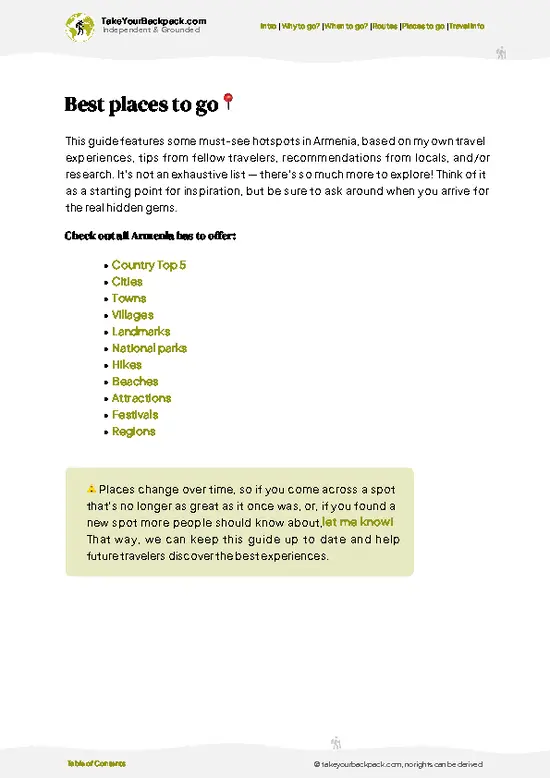
example page 0 from our offline Travel Guide for Armenia
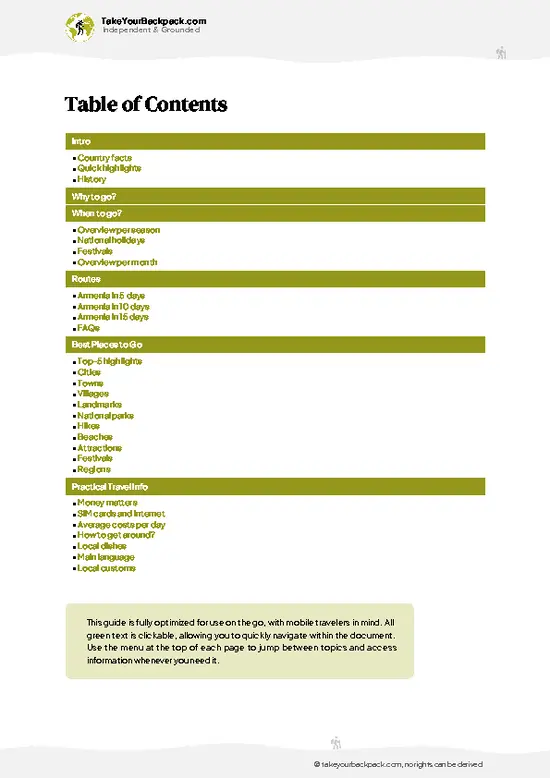
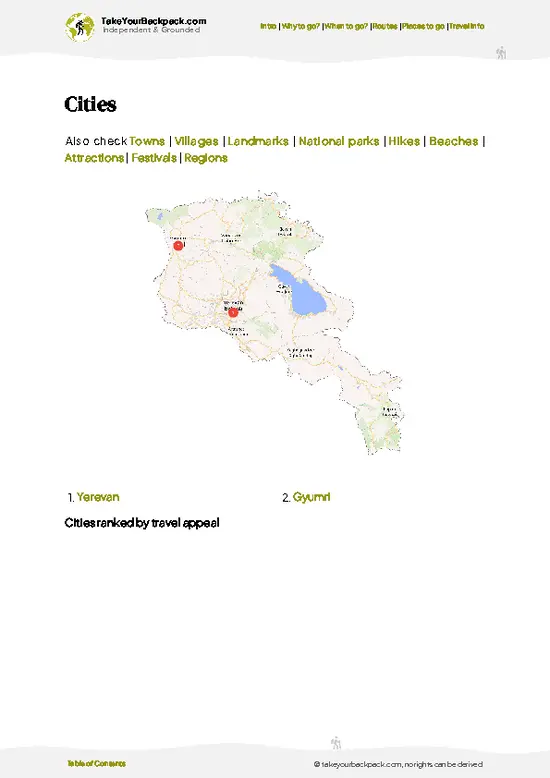
example page 1 from our offline Travel Guide for Armenia
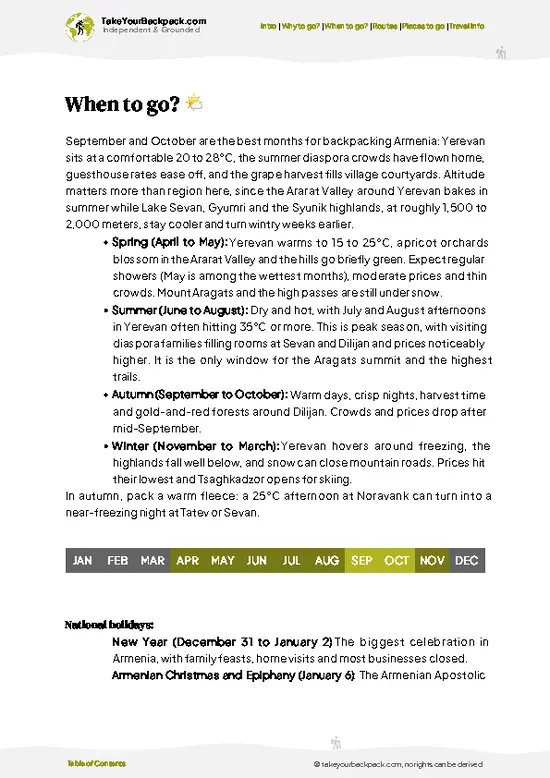
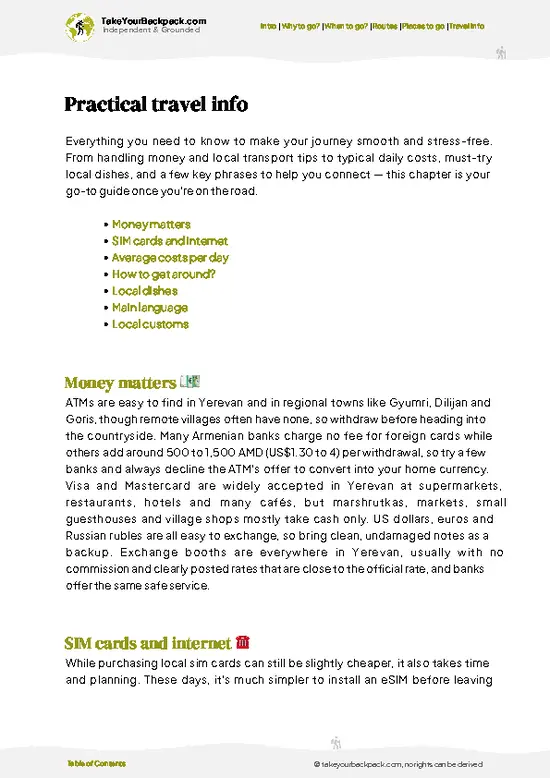
example page 2 from our offline Travel Guide for Armenia
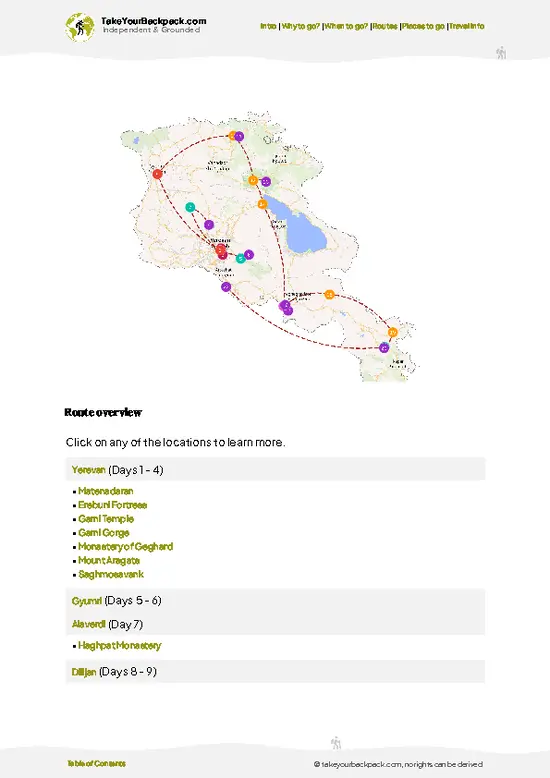
example page 3 from our offline Travel Guide for Armenia
example page 4 from our offline Travel Guide for Armenia
example page 5 from our offline Travel Guide for Armenia
example page 6 from our offline Travel Guide for Armenia
example page 7 from our offline Travel Guide for Armenia
The digital guide (257 pages) contains:
✅ 65 highlights, ranked by travel appeal
✅ Optimized 5, 10 & 15-day travel routes
✅ Cities, national parks, landmarks, beaches
✅ How to get around
✅ Offline-friendly for travel without Wi-Fi
👉 Click to see all 30+ guide features

📅 Plan smarter in minutes, not weeks
✅ Month by month travel advice
✅ Festivals & national holidays
✅ Budget expectations

🗺️ Go to the right places, skip the overrated ones
✅ Honest pros & cons of destinations
✅ Top hikes, parks & viewpoints
✅ Lesser-known places most travelers miss
✅ Clear “worth it vs skip it” guidance

🛏️ Travel smoothly without rookie mistakes
✅ Best areas to stay
✅ Transport systems explained simply
✅ Common scams & safety advice
✅ SIM cards, money & practical tips

🌍 Understand the country, not just visit it
✅ Culture & traditions
✅ 52 Essential phrases & customs
✅ Festivals worth planning around
✅ Traveler-friendly historical context
✅ Insights that make places more meaningful

📱 Built for real travel conditions
✅ Fully downloadable PDF
✅ Works completely offline
✅ Optimized for phone use
✅ Useful in remote areas & buses
✅ Everything in one place
Stop searching, start planning
Get instant access to your full guide. 30‑day money-back guarantee.
+ Add another guide for just

By proceeding you agree to our terms.
Sent to your inbox immediately after payment • 100% Secure Checkout
Best Backpacking Travel Advisor 2025 tourism awardBest Backpacking
Travel Advisor
2025
What others say about Take Your Backpack Guides:
⭐⭐⭐⭐⭐
Fantastic, amazing amount of information!
⭐⭐⭐⭐⭐
My goodness this is amazing, it's what I've been looking for hats off too you!
⭐⭐⭐⭐⭐
I think this is absolutely BRILLIANT
⭐⭐⭐⭐
Very complete and informative. It's still missing places, but I gotta to commend you
⭐⭐⭐⭐⭐
This is truly amazing, thank you, can't wait to explore it with my kids!
⭐⭐⭐⭐⭐
Awesome resource, thank you!
⭐⭐⭐⭐⭐
This is amazing! Can't wait to explore the ones I haven't seen
⭐⭐⭐⭐
I love this! Well done, great idea.
⭐⭐⭐⭐⭐
Thanks for taking the time to make this gem!
⭐⭐⭐⭐⭐
This might be the best website I've ever seen.
⭐⭐⭐⭐⭐
Congratulations, and thank you so much for your work; it's incredibly valuable.
⭐⭐⭐⭐
In all seriousness I think you did a great job pointing out the important spots
⭐⭐⭐⭐⭐
10/10 very good
⭐⭐⭐⭐⭐
As someone who's only just starting to visit regularly this is awesome, thank you.
⭐⭐⭐⭐
Thank you very much! I'm going to visit my dad, it's going to be very useful!
⭐⭐⭐⭐⭐
This is really cool! We'll be travelling for the first time and this definitely come in handy.
⭐⭐⭐⭐⭐
You are now our minister of culture, congratulations 👨‍💼
⭐⭐⭐⭐⭐
Just wanted to tell you that this is a pearl! Going to follow your recommendations.
⭐⭐⭐⭐⭐
This is so cool. I'll definitely be using the resource for my travels soon.
⭐⭐⭐⭐⭐
This is very impressive! Good work.
⭐⭐⭐⭐⭐
This is an amazing and informative site. Very well done!

🛏️ Where to stay?Best Stay Options in Armenia

Armenia has plenty of hostels and family-run guesthouses, with dorm beds in Yerevan typically running 4,000 to 8,000 AMD (US$10 to 20) a night. The densest cluster sits in central Kentron, around Republic Square, Northern Avenue and the Cascade, where you can walk to most sights and the wine bars but should expect street noise late into the night, while neighboring Arabkir is quieter, residential and still only a 15 to 20 minute walk from the center. Outside the capital, Gyumri and Dilijan lean toward homestays and small guesthouses with breakfast included, which suits slower travel but gives you little nightlife after dark.

If you enjoy meeting fellow travelers, consider choosing hostels with … read more 👉
Armenia has plenty of hostels and family-run guesthouses, with dorm beds in Yerevan typically running 4,000 to 8,000 AMD (US$10 to 20) a night. The densest cluster sits in central Kentron, around Republic Square, Northern Avenue and the Cascade, where you can walk to most sights and the wine bars but should expect street noise late into the night, while neighboring Arabkir is quieter, residential and still only a 15 to 20 minute walk from the center. Outside the capital, Gyumri and Dilijan lean toward homestays and small guesthouses with breakfast included, which suits slower travel but gives you little nightlife after dark.

If you enjoy meeting fellow travelers, consider choosing hostels with high ratings for atmosphere. On the other hand, if you prefer having your own space, a hotel might be a better option.

ArmeniaWhere to Go Next

👋 Meet the founderWho’s Behind Take Your Backpack?

Johan, backpacker and founder of TakeYourBackpackHi, I’m Johan (Netherlands 🇳🇱), the creator of TakeYourBackpack. Over the past 3 decades, I’ve backpacked through 90+ countries across six continents, gaining extensive experience with independent travel, long-term trips, and overland routes.

This site is built on a combination of firsthand travel experience and carefully curated insights from other backpackers. Many guides are based on places I’ve personally visited, while others bring together tips, observations, and practical advice shared by trusted travelers I’ve met along the way.

The goal is to provide realistic, experience-driven guidance — not generic itineraries — so you can explore destinations with better context, clearer expectations, and more confidence.