×

Bolivia🇧🇴 | landmarksLaguna Coloradared waters, mineral deposits, flamingo habitat | things to do and best time to go

Explore Lago PoopóExplore Salar de Chiquinquirá

Backpacking in Laguna Colorada
🏆 Top pickunique site ranked #2
By Johan Kruseman 🇳🇱 | Updated May 31, 2026

Everyone shows up to Laguna Colorada for that one flamingo-on-red-lake photo, like it’s a desktop wallpaper factory. Honestly, that’s the least interesting thing about it. What actually matters is how alien the place feels when you’re standing there in the wind, in the silence, in the middle of Bolivia’s remote Eduardo Avaroa Andean Fauna National Reserve, way down in the country’s far southwest near the Chilean border.

As a backpacker, you get both magic and misery. The colors are outrageous, the scale is humbling, and the photo potential is ridiculous, but you’ll share it with convoys of 4x4s and groups doing the same loop. It’s not cheap once you factor in tours, park fees, and the slog to get there, and there’s almost zero cultural or historical depth on-site—this is nature, not narrative. Still, that raw, high-altitude, Mars-on-Earth vibe? It hits hard and stays with you.

Discover everything you want to know in the 📖 Bolivia Travel Guide.


Get your Bolivia guide
82 ranked highlights, routes & tips, works offline (350 pages)
Loading the map 🌍
CLICK TO FILTER
cities
towns
landmarks
national parks
hikes
beaches
attractions
festivals
regions
SHOW COUNTRY’S BESTSHOW ALL

✨ Why go?
Ranked #2 unique site in Bolivia
What sets this place apart

Laguna Colorada is not just another pretty picture for your Instagram feed; it’s a raw experience that demands your attention. Yes, it’s popular, and yes, it can get crowded, but the vivid red waters framed by white borax islands and the backdrop of the Andes create a scene that’s worth the hustle.

Getting there isn’t a walk in the park. You’ll likely need to join a multi-day tour from Uyuni, which can feel like a logistical maze. But here’s the kicker: once you’re there, the sense of isolation and the surreal landscape make every bump in the road worthwhile.

The cost is surprisingly low for what you get. Tours can range from $150 to $200, covering meals and accommodations. This isn’t just a stop; it’s a highlight on the route through the Salar de Uyuni and the Eduardo Avaroa National read more 👉
Laguna Colorada is not just another pretty picture for your Instagram feed; it’s a raw experience that demands your attention. Yes, it’s popular, and yes, it can get crowded, but the vivid red waters framed by white borax islands and the backdrop of the Andes create a scene that’s worth the hustle.

Getting there isn’t a walk in the park. You’ll likely need to join a multi-day tour from Uyuni, which can feel like a logistical maze. But here’s the kicker: once you’re there, the sense of isolation and the surreal landscape make every bump in the road worthwhile.

The cost is surprisingly low for what you get. Tours can range from $150 to $200, covering meals and accommodations. This isn’t just a stop; it’s a highlight on the route through the Salar de Uyuni and the Eduardo Avaroa National Park.

Take the time to soak in the wildlife—flamingos wading through the shallows—and the starlit skies at night. Laguna Colorada isn’t just a destination; it’s a transformative moment in your journey through Bolivia.
Want to include Laguna Colorada in your Bolivia route?
Create a personalized Bolivia itinerary that includes Laguna Colorada and the places that fit your trip — based on your travel style, budget, and available time. Get your route in seconds.

Generate my trip

💡 HighlightsWhat this place is best known for

  • Brilliant red and pink waters — The lake’s color comes from algae, sediments and minerals; it looks unreal, like someone spilled paint across the altiplano, and it changes with light and wind.
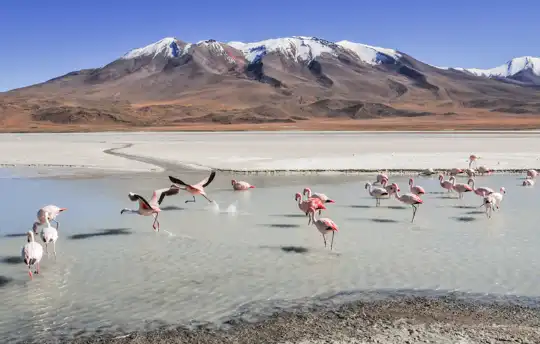
  • Masses of Andean flamingos — James’s, Andean and Chilean flamingos feed and sometimes breed here; seeing their pink against the red water is unforgettable (personal favorite — the flirting-and-feeding chaos of a flamingo flock at dawn).
  • White borax “islands” and salt crusts — Chalky borax deposits poke up through the water, giving a stark black/red/white contrast that photography and geology nerds equally savor.
  • Volcanic skyline and rugged altiplano — The lake sits beneath dark volcanic cones and ridges, so you get dramatic backdrops that feel more Mars than Bolivia.
  • Mirror-like dawn and sunset
read more 👉
  • Brilliant red and pink waters — The lake’s color comes from algae, sediments and minerals; it looks unreal, like someone spilled paint across the altiplano, and it changes with light and wind.
  • Masses of Andean flamingos — James’s, Andean and Chilean flamingos feed and sometimes breed here; seeing their pink against the red water is unforgettable (personal favorite — the flirting-and-feeding chaos of a flamingo flock at dawn).
  • White borax “islands” and salt crusts — Chalky borax deposits poke up through the water, giving a stark black/red/white contrast that photography and geology nerds equally savor.
  • Volcanic skyline and rugged altiplano — The lake sits beneath dark volcanic cones and ridges, so you get dramatic backdrops that feel more Mars than Bolivia.
  • Mirror-like dawn and sunset reflections — Calm mornings and late afternoons can give glassy reflections of the colored water and surrounding peaks — prime photo time if the wind behaves.
  • High-altitude, remote atmosphere — Over 4,000 meters and far from towns, the isolation, thin air and harsh light make the whole place feel like a proper wild, otherworldly experience.
  • Part of Eduardo Avaroa Reserve and conservation value — Laguna Colorada is protected for its unique ecosystem and wildlife; visiting supports conservation and gives a glimpse of how fragile these high-Andes habitats are.
Spotted a mistake or missing something? Contact us.

🌤️ When to go?Weather, crowds, and seasonal trade-offs


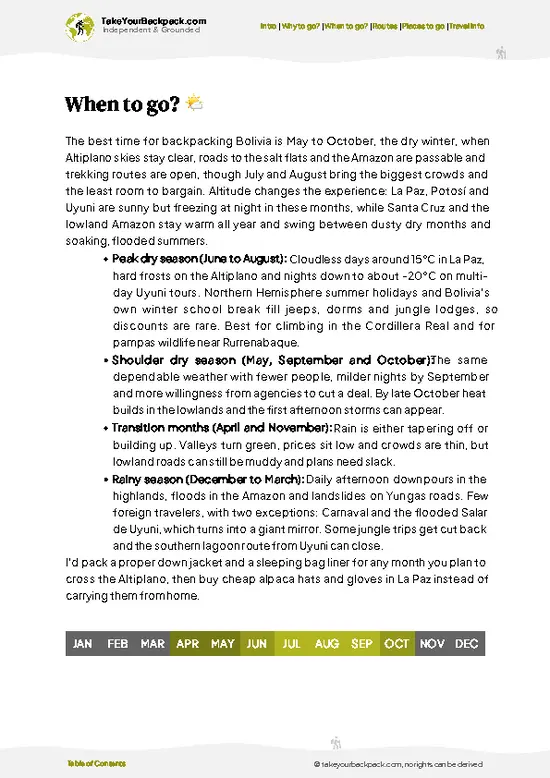
  • Weather: The dry season from May to October is your best bet. The skies clear up, and the red waters of Laguna Colorada pop against the stark landscape. The wet season (November to March) turns the area muddy and often inaccessible, with heavy rains that can kill your vibe and your plans.

  • Temperature: Expect cold nights year-round, often dipping below freezing (−5°C to 0°C / 23°F to 32°F). Days warm up to a comfortable 15°C to 20°C (59°F to 68°F), but the sun is fierce at altitude, so pack layers and sunscreen.

  • Daylight Hours: Around 10 to 12 hours of daylight, peaking in December. Shorter days in winter mean less time to explore, so plan your hikes and photo ops accordingly.

  • Crowds: The dry season draws more tourists, especially July and August. Don’t expect solitude—this place is
read more 👉

  • Weather: The dry season from May to October is your best bet. The skies clear up, and the red waters of Laguna Colorada pop against the stark landscape. The wet season (November to March) turns the area muddy and often inaccessible, with heavy rains that can kill your vibe and your plans.

  • Temperature: Expect cold nights year-round, often dipping below freezing (−5°C to 0°C / 23°F to 32°F). Days warm up to a comfortable 15°C to 20°C (59°F to 68°F), but the sun is fierce at altitude, so pack layers and sunscreen.

  • Daylight Hours: Around 10 to 12 hours of daylight, peaking in December. Shorter days in winter mean less time to explore, so plan your hikes and photo ops accordingly.

  • Crowds: The dry season draws more tourists, especially July and August. Don’t expect solitude—this place is a magnet for photographers and tour groups. If you want fewer people, aim for shoulder months like May or September.

  • Seasonal Activities: Flamingo spotting is best in the dry season when the shallow waters concentrate the birds. Wet season floods disperse them, making sightings rare and disappointing.

  • Price Fluctuations: Peak season means higher prices for tours and accommodations. Booking in shoulder seasons can save you a chunk, but be ready for fewer services and rougher conditions.


Pro-tip: Hit Laguna Colorada in late May or early September—dry enough for access, fewer crowds, and the flamingos still doing their thing. It’s the sweet spot between chaos and solitude.


source: climatestotravel.comJANJanuary: below average for travelingFEBFebruary: below average for travelingMARMarch: fair for travelingAPRApril: fair for travelingMAYMay: highly recommended for travelingJUNJune: excellent for travelingJULJuly: excellent for travelingAUGAugust: excellent for travelingSEPSeptember: highly recommended for travelingOCTOctober: good for travelingNOVNovember: fair for travelingDECDecember: below average for traveling
bolivia-unique-site-laguna-colorada
© Google | José Fernández

✈️ The backpacker research shortcutBolivia Travel Guide

An offline-friendly backpacking guide with optimized travel routes, ranked highlights, transport advice, and the best areas to stay.
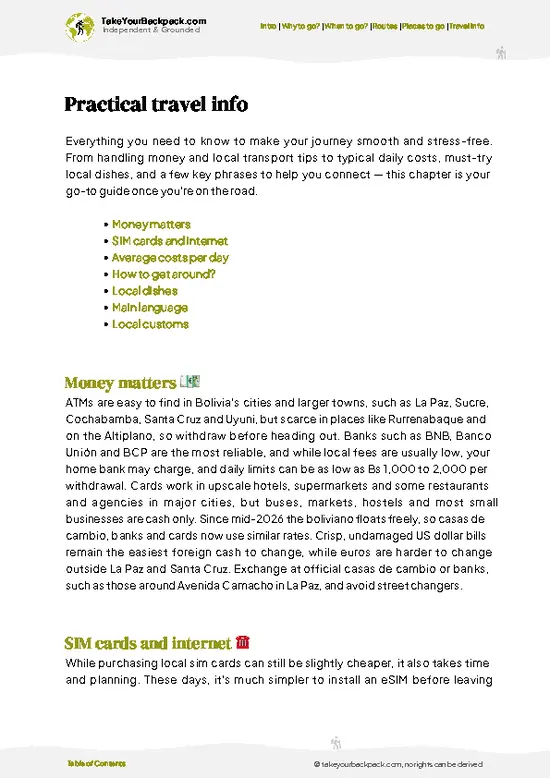
example page 0 from our offline Travel Guide for Bolivia
example page 1 from our offline Travel Guide for Bolivia
example page 2 from our offline Travel Guide for Bolivia
example page 3 from our offline Travel Guide for Bolivia
example page 4 from our offline Travel Guide for Bolivia
example page 5 from our offline Travel Guide for Bolivia
example page 6 from our offline Travel Guide for Bolivia
example page 7 from our offline Travel Guide for Bolivia
The digital guide (350 pages) contains:
82 highlights, ranked by travel appeal
Optimized 7, 14 & 21-day travel routes
Cities, national parks, landmarks, beaches
How to get around
Offline-friendly for travel without Wi-Fi
👉 Click to see all 30+ guide features

📅 Plan smarter in minutes, not weeks
Month by month travel advice
Festivals & national holidays
Budget expectations

🗺️ Go to the right places, skip the overrated ones
Honest pros & cons of destinations
Top hikes, parks & viewpoints
Lesser-known places most travelers miss
Clear “worth it vs skip it” guidance

🛏️ Travel smoothly without rookie mistakes
Best areas to stay
Transport systems explained simply
Common scams & safety advice
SIM cards, money & practical tips

🌍 Understand the country, not just visit it
Culture & traditions
52 Essential phrases & customs
Festivals worth planning around
Traveler-friendly historical context
Insights that make places more meaningful

📱 Built for real travel conditions
Fully downloadable PDF
Works completely offline
Optimized for phone use
Useful in remote areas & buses
Everything in one place
Save weeks of stressful planning
Get instant access to your full guide. 30‑day money-back guarantee.


By proceeding you agree to our terms.
Sent to your inbox immediately after payment • 100% Secure Checkout
Best Backpacking Travel Advisor 2025 tourism awardBest Backpacking
Travel Advisor
2025
What others say about Take Your Backpack Guides:
⭐⭐⭐⭐⭐
Fantastic, amazing amount of information!
⭐⭐⭐⭐⭐
My goodness this is amazing, it's what I've been looking for hats off too you!
⭐⭐⭐⭐⭐
I think this is absolutely BRILLIANT
⭐⭐⭐⭐
Very complete and informative. It's still missing places, but I gotta to commend you
⭐⭐⭐⭐⭐
This is truly amazing, thank you, can't wait to explore it with my kids!
⭐⭐⭐⭐⭐
Awesome resource, thank you!
⭐⭐⭐⭐⭐
This is amazing! Can't wait to explore the ones I haven't seen
⭐⭐⭐⭐
I love this! Well done, great idea.
⭐⭐⭐⭐⭐
Thanks for taking the time to make this gem!
⭐⭐⭐⭐⭐
This might be the best website I've ever seen.
⭐⭐⭐⭐⭐
Congratulations, and thank you so much for your work; it's incredibly valuable.
⭐⭐⭐⭐
In all seriousness I think you did a great job pointing out the important spots
⭐⭐⭐⭐⭐
10/10 very good
⭐⭐⭐⭐⭐
As someone who's only just starting to visit regularly this is awesome, thank you.
⭐⭐⭐⭐
Thank you very much! I'm going to visit my dad, it's going to be very useful!
⭐⭐⭐⭐⭐
This is really cool! We'll be travelling for the first time and this definitely come in handy.
⭐⭐⭐⭐⭐
You are now our minister of culture, congratulations 👨‍💼
⭐⭐⭐⭐⭐
Just wanted to tell you that this is a pearl! Going to follow your recommendations.
⭐⭐⭐⭐⭐
This is so cool. I'll definitely be using the resource for my travels soon.
⭐⭐⭐⭐⭐
This is very impressive! Good work.
⭐⭐⭐⭐⭐
This is an amazing and informative site. Very well done!

🛏️ Where to stay?How to pick the right area

When you’re heading to Laguna Colorada, the stunning red lagoon that looks like it’s been splashed with paint, you’ll want to set up camp in a spot that balances safety, social vibes, and budget-friendliness.

Start with Uyuni. It’s the main hub for travelers heading to the salt flats and beyond. The town has a lively atmosphere, with plenty of backpacker-friendly hostels. You’ll find a mix of solo travelers and groups, making it easy to connect. The food scene is decent, and the local markets are a feast for the senses. Just be prepared for the occasional tourist swarm—this place can get busy. … read more 👉
When you’re heading to Laguna Colorada, the stunning red lagoon that looks like it’s been splashed with paint, you’ll want to set up camp in a spot that balances safety, social vibes, and budget-friendliness.

Start with Uyuni. It’s the main hub for travelers heading to the salt flats and beyond. The town has a lively atmosphere, with plenty of backpacker-friendly hostels. You’ll find a mix of solo travelers and groups, making it easy to connect. The food scene is decent, and the local markets are a feast for the senses. Just be prepared for the occasional tourist swarm—this place can get busy.

Then there’s Laguna Colorada itself, where you can find basic accommodations. It’s remote, so expect a more rustic experience. The views are jaw-dropping, especially at sunrise and sunset. Staying here means you’re right at the heart of the action, but don’t expect luxury. It’s about the experience, not the amenities.

Lastly, consider San Pedro de Atacama in Chile. While it’s a bit of a trek, it’s a popular launching point for tours to Laguna Colorada. The vibe is chill, and you’ll find plenty of opportunities to meet fellow adventurers. Just keep an eye on your budget; it can be pricier than Bolivia.

Choose your base wisely, and you’ll unlock the real magic of this breathtaking area.

👛 Costs (as of 20 February 2026)Typical daily expenses

Visiting Laguna Colorada in Bolivia can be a breathtaking experience, but it comes with its own set of costs that you should be aware of.
  • Transportation: Getting to Laguna Colorada usually involves a multi-step journey. Expect to pay around $10-$30 for a bus from Uyuni to the town of San Pedro de Atacama, Chile, or around $50-$100 for a shared jeep tour. If you’re starting from Uyuni, a 3-day tour that includes Laguna Colorada can range from $150 to $250, depending on the operator and inclusions.
  • Accommodation: Options near Laguna Colorada are limited. Basic hostels in Uyuni start at about $10 per night. If you’re staying in a tour-organized lodge near the lagoon, prices can jump to $50-$100 per night, often including meals. Keep in mind that these lodges can be quite basic, so manage your expectations.
read more 👉
Visiting Laguna Colorada in Bolivia can be a breathtaking experience, but it comes with its own set of costs that you should be aware of.
  • Transportation: Getting to Laguna Colorada usually involves a multi-step journey. Expect to pay around $10-$30 for a bus from Uyuni to the town of San Pedro de Atacama, Chile, or around $50-$100 for a shared jeep tour. If you’re starting from Uyuni, a 3-day tour that includes Laguna Colorada can range from $150 to $250, depending on the operator and inclusions.
  • Accommodation: Options near Laguna Colorada are limited. Basic hostels in Uyuni start at about $10 per night. If you’re staying in a tour-organized lodge near the lagoon, prices can jump to $50-$100 per night, often including meals. Keep in mind that these lodges can be quite basic, so manage your expectations.
  • Food: Meals can vary widely. If you’re on a tour, meals are typically included, but if you’re buying on your own, expect to pay around $5-$15 for a meal in Uyuni. In remote areas near the lagoon, food options are limited and may cost more, around $10-$20 per meal.
  • Entrance Fees: There’s no specific entrance fee for Laguna Colorada itself, but some tours may include additional costs for visiting nearby national parks. These fees can range from $5 to $20, depending on the itinerary.
  • Extras: Don’t forget to budget for things like water, snacks, and souvenirs. A bottle of water can cost around $1-$2, while snacks might set you back another $5-$10. If you want to capture the moment, a good camera or drone can be a worthwhile investment, but that’s a different kind of cost.

Understanding these costs will help you plan better and avoid any surprises. The journey to Laguna Colorada is worth it, but being prepared will make the experience even more enjoyable.
⚠️ Prices can change and everyone travels differently, so take this as a rough guide. Hope it helps you plan your adventure!

Other Bolivian landmarks near Laguna Colorada

Explore more nearby:


💡 Not sure where to go next?
Create a personalized itinerary for Bolivia including Laguna Colorada and the places that fit your trip.

Generate my itinerary

👉 Discover all landmarks

Or checkout all Bolivia has to offer (think cities, towns, villages, national parks, hikes, beaches, festivals)
Country photo of Bolivia

We 💚 feedbackIs it worth it?

Laguna Colorada is a surreal spectacle, with its red waters and flamingos creating a scene that feels like stepping into another world. But let’s be real: the crowds can be overwhelming, especially during peak season. You’ll need to navigate through selfie sticks and tour groups. Still, the chance to witness such a bizarre, breathtaking landscape makes the trip worthwhile. Just be prepared for the hustle and bustle that comes with it.

✈️ When did I visit Bolivia?
Bolivia I visited during my half year trip through South and Central America back in 2003

✍️ Help improve this page!
The information on this page is based on my own backpacking experience in Bolivia, supplemented with up-to-date research and feedback from other travelers. Travel details can change, so if you notice anything outdated or incomplete, feel free to let me know.


🙋‍♂️ Give feedback

👋 Meet the founderWho’s Behind Take Your Backpack?

Johan, backpacker and founder of TakeYourBackpackHi, I’m Johan (Netherlands 🇳🇱), the creator of TakeYourBackpack. Over the past decade, I’ve backpacked through 80+ countries across six continents, gaining extensive experience with independent travel, long-term trips, and overland routes.

This site is built on a combination of firsthand travel experience and carefully curated insights from other backpackers. Many guides are based on places I’ve personally visited, while others bring together tips, observations, and practical advice shared by trusted travelers I’ve met along the way.

The goal is to provide realistic, experience-driven guidance — not generic itineraries — so you can explore destinations with better context, clearer expectations, and more confidence.

Get full Bolivia guide •
Instant download • 82 highlights • Full Offline guide