×

Bolivia🇧🇴 | landmarksCerro Ricosilver mines, colonial tunnels, mining history | things to do and best time to go

Explore Cañon del TuniExplore El Fuerte de Samaipata

Backpacking in Cerro Rico
🌟 Highlightunique site ranked #3
By Johan Kruseman 🇳🇱 | Updated June 2, 2026

Most online blurbs sell Cerro Rico as a “hardcore mine tour” experience; the surprise is that the real gut punch isn’t the tunnels, it’s realizing the entire mountain above Potosí is literally collapsing because of centuries of extraction that still hasn’t stopped. Cerro Rico looms over the high-altitude city of Potosí in southern Bolivia, and for backpackers it’s less a bucket-list “wow” and more a moral uppercut with a view. The pros: it’s cheap by global standards, historically massive (this hill bankrolled empires), and the photo contrast of rusted mine gear, red slopes, and thin blue sky is powerful. The cons: tours can feel exploitative, the altitude is brutal, safety standards are… flexible, and the vibe is heavy rather than “fun.” I walked out of the mine dusty, shaken, and very awake to what “resource wealth” actually means.

Discover everything you want to know in the 📖 Bolivia Travel Guide.


Get your Bolivia guide
82 ranked highlights, routes & tips, works offline (350 pages)
Loading the map 🌍
CLICK TO FILTER
cities
towns
landmarks
national parks
hikes
beaches
attractions
festivals
regions
SHOW COUNTRY’S BESTSHOW ALL

✨ Why go?
Ranked #3 unique site in Bolivia
The unique appeal for travelers

Cerro Rico isn’t just another mountain; it’s a living history of Bolivia’s mining culture. Sure, it’s crowded with tourists snapping selfies, but don’t let that deter you. The real magic lies in the stories of the miners who’ve toiled here for centuries. You can join a guided tour that takes you deep into the tunnels, where you’ll witness the grit and determination of those still working the mines today.

The cost is low, often under $10 for a tour, making it a backpacker’s dream. Plus, it fits seamlessly into a broader route through Bolivia. After exploring Potosí, you can easily head to Uyuni for the salt flats, making it a natural stop rather than a standalone destination.

The effort-to-reward ratio is solid; you’ll leave with a deeper understanding of Bolivia’s soul. It’s not just about … read more 👉
Cerro Rico isn’t just another mountain; it’s a living history of Bolivia’s mining culture. Sure, it’s crowded with tourists snapping selfies, but don’t let that deter you. The real magic lies in the stories of the miners who’ve toiled here for centuries. You can join a guided tour that takes you deep into the tunnels, where you’ll witness the grit and determination of those still working the mines today.

The cost is low, often under $10 for a tour, making it a backpacker’s dream. Plus, it fits seamlessly into a broader route through Bolivia. After exploring Potosí, you can easily head to Uyuni for the salt flats, making it a natural stop rather than a standalone destination.

The effort-to-reward ratio is solid; you’ll leave with a deeper understanding of Bolivia’s soul. It’s not just about the views; it’s about the authentic experience that connects you to the heart of the country. Embrace the crowds, soak in the history, and you’ll find Cerro Rico is worth every step.
Want to include Cerro Rico in your Bolivia route?
Create a personalized Bolivia itinerary that includes Cerro Rico and the places that fit your trip — based on your travel style, budget, and available time. Get your route in seconds.

Generate my trip

💡 HighlightsKey sights and experiences for travelers

  • Guided mine tour — Walk into the actual working tunnels with a licensed local guide and miners showing you how ore is pulled, crushed and carried out. It’s gritty, loud and eye-opening; you’ll get a real sense of why Cerro Rico shaped world history. (Personal favorite — nothing beats being down in the shaft and talking to the people who still work there.)
  • Meet the miners and see their rituals — Offerings to El Tío (the mine spirit), coca-leaf ceremonies and little shrine corners are everywhere; these beliefs and practices are a living cultural layer you won’t see in museums.
  • Summit ridge hikes and panoramic views — The trails up the mountain give sweeping views over Potosí, high-altitude plateaus and the patchwork of mine tails; sunsets and clear-morning light are spectacular if your lungs
read more 👉
  • Guided mine tour — Walk into the actual working tunnels with a licensed local guide and miners showing you how ore is pulled, crushed and carried out. It’s gritty, loud and eye-opening; you’ll get a real sense of why Cerro Rico shaped world history. (Personal favorite — nothing beats being down in the shaft and talking to the people who still work there.)
  • Meet the miners and see their rituals — Offerings to El Tío (the mine spirit), coca-leaf ceremonies and little shrine corners are everywhere; these beliefs and practices are a living cultural layer you won’t see in museums.
  • Summit ridge hikes and panoramic views — The trails up the mountain give sweeping views over Potosí, high-altitude plateaus and the patchwork of mine tails; sunsets and clear-morning light are spectacular if your lungs can handle the 4,800+m altitude.
  • Colonial-era mining remains — Ruined shafts, old ore works and collapsed galleries scattered on the slopes are tangible traces of three centuries of extraction and colonial engineering, a brutal kind of historic architecture.
  • Evidence of global impact — Cerro Rico isn’t just a mine; it’s a site that helped fund the Spanish Empire and changed global silver flows. Seeing the mountain puts the scale of that history into a physical, almost overwhelming perspective.
  • Tailings landscapes and environmental scars — The terraces of waste rock, red-stained slopes and polluted runoff are stark but important to see: they tell the full story of industrial extraction, ecological cost and why conservation discussions matter here.
  • Local markets and miner-support culture at the base — The small stalls and vendors around the mine sell supplies, snacks and miner’s charms — a lively, inexpensive place to pick up coca, a warm drink or a practical souvenir while you watch shift changes.
Spotted a mistake or missing something? Contact us.

Things to do around Cerro Rico

Ratings based on Tripadvisor reviews. When you book through this link, you support our work at no extra cost to you.

🌤️ When to go?Weather, crowds, and seasonal trade-offs


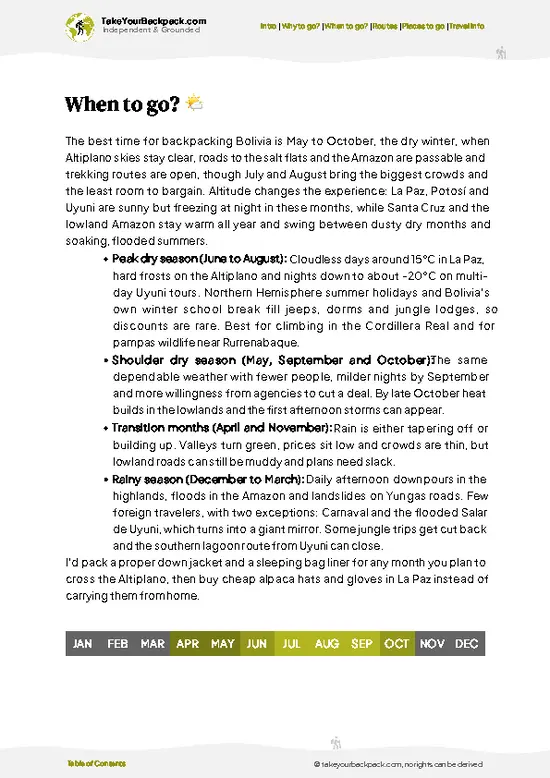
  • Weather: The dry season from May to October is your best bet. Clear skies dominate, making the grueling climb and views worth every breath. The wet season (November to March) turns trails into mud traps and clouds often swallow the summit.

  • Temperature: Days hover around 10-15°C (50-59°F) in the dry season, but nights plunge below freezing. Dress in layers—this isn’t a warm stroll; it’s high-altitude survival.

  • Daylight Hours: Expect roughly 11-12 hours of daylight year-round. The sun rises late and sets early, so start your trek early to avoid hiking in the dark.

  • Crowds: Peak months (June-August) bring a steady stream of tourists and miners alike. If you want solitude, shoulder months like April or October offer fewer people but still decent weather.

  • Seasonal Activities: Mining is
read more 👉

  • Weather: The dry season from May to October is your best bet. Clear skies dominate, making the grueling climb and views worth every breath. The wet season (November to March) turns trails into mud traps and clouds often swallow the summit.

  • Temperature: Days hover around 10-15°C (50-59°F) in the dry season, but nights plunge below freezing. Dress in layers—this isn’t a warm stroll; it’s high-altitude survival.

  • Daylight Hours: Expect roughly 11-12 hours of daylight year-round. The sun rises late and sets early, so start your trek early to avoid hiking in the dark.

  • Crowds: Peak months (June-August) bring a steady stream of tourists and miners alike. If you want solitude, shoulder months like April or October offer fewer people but still decent weather.

  • Seasonal Activities: Mining is year-round, but festivals like the August mining carnival add raw cultural intensity. It’s loud, chaotic, and unforgettable if you can handle the crowds.

  • Price Fluctuations: Accommodation and guide fees spike during the dry season and festivals. Off-season means cheaper stays but prepare for limited services and unpredictable weather.


Pro-tip: Visit just before or after peak season—weather’s still solid, crowds thin, and you’ll snag better deals without sacrificing the raw, gritty essence of Cerro Rico.


source: climatestotravel.comJANJanuary: fair for travelingFEBFebruary: fair for travelingMARMarch: fair for travelingAPRApril: highly recommended for travelingMAYMay: excellent for travelingJUNJune: excellent for travelingJULJuly: excellent for travelingAUGAugust: excellent for travelingSEPSeptember: excellent for travelingOCTOctober: highly recommended for travelingNOVNovember: fair for travelingDECDecember: fair for traveling
bolivia-unique-site-cerro-rico
© Google | Jia-wei Chiu

✈️ The backpacker research shortcutBolivia Travel Guide

An offline-friendly backpacking guide with optimized travel routes, ranked highlights, transport advice, and the best areas to stay.
example page 0 from our offline Travel Guide for Boliviaexample page 1 from our offline Travel Guide for Boliviaexample page 2 from our offline Travel Guide for Boliviaexample page 3 from our offline Travel Guide for Boliviaexample page 4 from our offline Travel Guide for Boliviaexample page 5 from our offline Travel Guide for Boliviaexample page 6 from our offline Travel Guide for Boliviaexample page 7 from our offline Travel Guide for Bolivia
The digital guide (350 pages) contains:
82 highlights, ranked by travel appeal
Optimized 7, 14 & 21-day travel routes
Cities, national parks, landmarks, beaches
How to get around
Offline-friendly for travel without Wi-Fi
👉 Click to see all 30+ guide features

📅 Plan smarter in minutes, not weeks
Month by month travel advice
Festivals & national holidays
Budget expectations

🗺️ Go to the right places, skip the overrated ones
Honest pros & cons of destinations
Top hikes, parks & viewpoints
Lesser-known places most travelers miss
Clear “worth it vs skip it” guidance

🛏️ Travel smoothly without rookie mistakes
Best areas to stay
Transport systems explained simply
Common scams & safety advice
SIM cards, money & practical tips

🌍 Understand the country, not just visit it
Culture & traditions
52 Essential phrases & customs
Festivals worth planning around
Traveler-friendly historical context
Insights that make places more meaningful

📱 Built for real travel conditions
Fully downloadable PDF
Works completely offline
Optimized for phone use
Useful in remote areas & buses
Everything in one place
Save weeks of stressful planning
Get instant access to your full guide. 30‑day money-back guarantee.


By proceeding you agree to our terms.
Sent to your inbox immediately after payment • 100% Secure Checkout
Best Backpacking Travel Advisor 2025 tourism awardBest Backpacking
Travel Advisor
2025
What others say about Take Your Backpack Guides:
⭐⭐⭐⭐⭐
Fantastic, amazing amount of information!
⭐⭐⭐⭐⭐
My goodness this is amazing, it's what I've been looking for hats off too you!
⭐⭐⭐⭐⭐
I think this is absolutely BRILLIANT
⭐⭐⭐⭐
Very complete and informative. It's still missing places, but I gotta to commend you
⭐⭐⭐⭐⭐
This is truly amazing, thank you, can't wait to explore it with my kids!
⭐⭐⭐⭐⭐
Awesome resource, thank you!
⭐⭐⭐⭐⭐
This is amazing! Can't wait to explore the ones I haven't seen
⭐⭐⭐⭐
I love this! Well done, great idea.
⭐⭐⭐⭐⭐
Thanks for taking the time to make this gem!
⭐⭐⭐⭐⭐
This might be the best website I've ever seen.
⭐⭐⭐⭐⭐
Congratulations, and thank you so much for your work; it's incredibly valuable.
⭐⭐⭐⭐
In all seriousness I think you did a great job pointing out the important spots
⭐⭐⭐⭐⭐
10/10 very good
⭐⭐⭐⭐⭐
As someone who's only just starting to visit regularly this is awesome, thank you.
⭐⭐⭐⭐
Thank you very much! I'm going to visit my dad, it's going to be very useful!
⭐⭐⭐⭐⭐
This is really cool! We'll be travelling for the first time and this definitely come in handy.
⭐⭐⭐⭐⭐
You are now our minister of culture, congratulations 👨‍💼
⭐⭐⭐⭐⭐
Just wanted to tell you that this is a pearl! Going to follow your recommendations.
⭐⭐⭐⭐⭐
This is so cool. I'll definitely be using the resource for my travels soon.
⭐⭐⭐⭐⭐
This is very impressive! Good work.
⭐⭐⭐⭐⭐
This is an amazing and informative site. Very well done!

🛏️ Where to stay?Choosing the right base

When you’re heading to Cerro Rico in Bolivia, you’ll want to stay in areas that balance safety, social vibes, and budget-friendliness.

First up, consider the heart of Potosí. This area is buzzing with backpackers and locals alike. You’ll find a mix of cozy hostels and guesthouses where you can swap stories over a cup of mate. The streets are alive with energy, and you’re just a short walk from the mine tours that give you a raw glimpse into the region’s history.

Next, check out the neighborhoods near Plaza 10 de Noviembre. This central square is a hub for travelers. It’s a great spot to meet … read more 👉
When you’re heading to Cerro Rico in Bolivia, you’ll want to stay in areas that balance safety, social vibes, and budget-friendliness.

First up, consider the heart of Potosí. This area is buzzing with backpackers and locals alike. You’ll find a mix of cozy hostels and guesthouses where you can swap stories over a cup of mate. The streets are alive with energy, and you’re just a short walk from the mine tours that give you a raw glimpse into the region’s history.

Next, check out the neighborhoods near Plaza 10 de Noviembre. This central square is a hub for travelers. It’s a great spot to meet fellow adventurers, and the local eateries serve up hearty meals without breaking the bank. Plus, you’ll feel the pulse of Potosí right outside your door.

Lastly, consider the outskirts of the city. While it’s a bit quieter, you’ll find some hidden hostels that offer stunning views of Cerro Rico. These spots often have a more laid-back atmosphere, perfect for solo travelers looking to recharge.

Stay smart, stay social, and soak in the real magic of this historic mining town.

👛 Costs (as of 25 February 2026)How expensive it really is

Visiting Cerro Rico in Bolivia isn’t just about the views; it’s about understanding the grit and history of a place that’s been a mining hub for centuries. Here’s what you can expect in terms of costs:
  • Entrance Fee: Expect to pay around $3 to $5 USD. This fee grants you access to the mine and often includes a guided tour. It’s a small price for a deep dive into the mining culture.
  • Guided Tours: Prices range from $10 to $30 USD, depending on the length and depth of the tour. A good guide will share stories that bring the harsh realities of mining to life. Choose wisely; the right guide can make all the difference.
  • Transportation: Getting to Potosí, the nearest city, can cost between $10 to $20 USD for a bus ride from Sucre or La Paz. Once in Potosí, local taxis or shared rides to Cerro Rico will
read more 👉
Visiting Cerro Rico in Bolivia isn’t just about the views; it’s about understanding the grit and history of a place that’s been a mining hub for centuries. Here’s what you can expect in terms of costs:
  • Entrance Fee: Expect to pay around $3 to $5 USD. This fee grants you access to the mine and often includes a guided tour. It’s a small price for a deep dive into the mining culture.
  • Guided Tours: Prices range from $10 to $30 USD, depending on the length and depth of the tour. A good guide will share stories that bring the harsh realities of mining to life. Choose wisely; the right guide can make all the difference.
  • Transportation: Getting to Potosí, the nearest city, can cost between $10 to $20 USD for a bus ride from Sucre or La Paz. Once in Potosí, local taxis or shared rides to Cerro Rico will set you back about $2 to $5 USD.
  • Gear Rental: If you need gear like helmets or boots, expect to pay around $5 to $10 USD. It’s worth it for safety and comfort as you navigate the mine’s narrow passages.
  • Food and Drink: Budget about $5 to $15 USD for meals in Potosí. Street food is cheap and filling, while sit-down restaurants offer more variety at a higher price. Hydration is key, so factor in a few extra bucks for water.

Cerro Rico is a place that demands respect. The costs are reasonable, but the experience is priceless.
⚠️ Prices can change and everyone travels differently, so take this as a rough guide. Hope it helps you plan your adventure!

Other Bolivian landmarks near Cerro Rico

Explore more nearby:


💡 Not sure where to go next?
Create a personalized itinerary for Bolivia including Cerro Rico and the places that fit your trip.

Generate my itinerary

👉 Discover all landmarks

Or checkout all Bolivia has to offer (think cities, towns, villages, national parks, hikes, beaches, festivals)
Country photo of Bolivia

We 💚 feedbackSumming up the experience

Cerro Rico is a raw, gritty experience that slaps you awake. The history of silver mining here is palpable; you can almost hear the whispers of those who toiled in the depths. But let’s be real: the crowds can be overwhelming, and the tours often feel commercialized. If you’re seeking authenticity, dig deeper—explore the local markets and chat with the miners. That’s where the real magic lies, beyond the Instagram filters.

✈️ When did I visit Bolivia?
Bolivia I visited during my half year trip through South and Central America back in 2003

✍️ Help improve this page!
The information on this page is based on my own backpacking experience in Bolivia, supplemented with up-to-date research and feedback from other travelers. Travel details can change, so if you notice anything outdated or incomplete, feel free to let me know.


🙋‍♂️ Give feedback

👋 Meet the founderWho’s Behind Take Your Backpack?

Johan, backpacker and founder of TakeYourBackpackHi, I’m Johan (Netherlands 🇳🇱), the creator of TakeYourBackpack. Over the past decade, I’ve backpacked through 80+ countries across six continents, gaining extensive experience with independent travel, long-term trips, and overland routes.

This site is built on a combination of firsthand travel experience and carefully curated insights from other backpackers. Many guides are based on places I’ve personally visited, while others bring together tips, observations, and practical advice shared by trusted travelers I’ve met along the way.

The goal is to provide realistic, experience-driven guidance — not generic itineraries — so you can explore destinations with better context, clearer expectations, and more confidence.

Get full Bolivia guide •
Instant download • 82 highlights • Full Offline guide