×

Bolivia🇧🇴 | landmarksYungas Roadsteep cliffs, cloud forest, narrow track | things to do and best time to go

Explore Valle de la LunaExplore Tiwanaku Archaeological Site

Backpacking in Yungas Road
👍 Recommendedunique site ranked #6
By Johan Kruseman 🇳🇱 | Updated June 4, 2026

Most people think Yungas Road is either a guaranteed death trap or some empty, misty highway where you’ll ride alone like an action hero. It’s neither. This cliff-hugging strip of dirt sits outside La Paz, dropping toward Coroico in the Bolivian Yungas, and it’s now a managed adventure route more than a functioning highway. As a backpacker, you come here for the adrenaline and the views: jungle cliffs, waterfalls splashing onto the track, clouds drifting below your wheels. You also get crowds of other riders, a mandatory tour, and a price tag that’s high by Bolivian standards but fair for the gear, guides, and transport. It’s not deeply cultural, but the history of bus crashes and local fear gives it weight. Photos are outrageous, the vibe is charged, and yes, you will probably feel more safe than the legend suggests.

Discover everything you want to know in the 📖 Bolivia Travel Guide.


Get your Bolivia guide
82 ranked highlights, routes & tips, works offline (350 pages)
Loading the map 🌍
CLICK TO FILTER
cities
towns
landmarks
national parks
hikes
beaches
attractions
festivals
regions
SHOW COUNTRY’S BESTSHOW ALL

✨ Why go?
Ranked #6 unique site in Bolivia
What makes this unique site worth visiting

Yungas Road, often dubbed ”Death Road,” is a must-see for backpackers, but not for the reasons you might think. Sure, it’s notorious for its hairpin turns and steep drops, but the real magic lies in the experience. The crowds? Yeah, they’re there, especially if you’re biking down, but that’s part of the thrill. You’re not just conquering a road; you’re sharing the adrenaline with fellow adventurers.

The cost is surprisingly low, especially when you consider the views. You’ll traverse lush jungles, misty mountains, and even cloud forests—all in one ride. It’s a unique slice of Bolivia that fits perfectly into a broader route through the country. Pair it with a visit to La Paz or the Amazon, and you’ve got a trip that’s both accessible and rewarding.

Forget the Instagram hype; this isn’t just … read more 👉
Yungas Road, often dubbed ”Death Road,” is a must-see for backpackers, but not for the reasons you might think. Sure, it’s notorious for its hairpin turns and steep drops, but the real magic lies in the experience. The crowds? Yeah, they’re there, especially if you’re biking down, but that’s part of the thrill. You’re not just conquering a road; you’re sharing the adrenaline with fellow adventurers.

The cost is surprisingly low, especially when you consider the views. You’ll traverse lush jungles, misty mountains, and even cloud forests—all in one ride. It’s a unique slice of Bolivia that fits perfectly into a broader route through the country. Pair it with a visit to La Paz or the Amazon, and you’ve got a trip that’s both accessible and rewarding.

Forget the Instagram hype; this isn’t just a photo op. It’s about the journey, the stories, and the connections you make along the way. That’s what makes Yungas Road worth every pedal stroke.
Want to include Yungas Road in your Bolivia route?
Create a personalized Bolivia itinerary that includes Yungas Road and the places that fit your trip — based on your travel style, budget, and available time. Get your route in seconds.

Generate my trip

💡 HighlightsEssential experiences to have while visiting Yungas Road

  1. La Cumbre viewpoint — The dramatic high-start where most trips begin: jagged Andean ridges, chilly wind, and the first real look at the insane altitude drop you’ll cover that day (about 3,000-4,000 meters of vertical). Sunrise shots here are worth the 4 a.m. alarm.
  2. The cliffside drop and switchbacks — The part that made it famous: narrow, carved ledges, hairpin turns and sheer drops. It’s equal parts geologic spectacle and adrenaline (historically built as a rugged mountain artery in the early 20th century), and it gives a visceral sense of the road’s real scale and danger.
  3. Cloudforest waterfalls and lush vegetation — Mossy trees, orchids, bromeliads and sudden waterfalls tumbling off the slopes as the mountain transitions into Amazon cloudforest. It’s humid, green and photogenic—my personal
read more 👉
  1. La Cumbre viewpoint — The dramatic high-start where most trips begin: jagged Andean ridges, chilly wind, and the first real look at the insane altitude drop you’ll cover that day (about 3,000-4,000 meters of vertical). Sunrise shots here are worth the 4 a.m. alarm.
  2. The cliffside drop and switchbacks — The part that made it famous: narrow, carved ledges, hairpin turns and sheer drops. It’s equal parts geologic spectacle and adrenaline (historically built as a rugged mountain artery in the early 20th century), and it gives a visceral sense of the road’s real scale and danger.
  3. Cloudforest waterfalls and lush vegetation — Mossy trees, orchids, bromeliads and sudden waterfalls tumbling off the slopes as the mountain transitions into Amazon cloudforest. It’s humid, green and photogenic—my personal favorite for the peaceful contrasts to the road’s chaos.
  4. Coroico town and its market — The tropical, laid-back village at the road’s lower end: cafés, local markets, and a visible cultural shift from highland to lowland life. Good place to stretch, eat real fruit, and soak up the contrast between altiplano and jungle living.
  5. Birdlife and wildlife viewing — A hotspot for hummingbirds, tanagers and other cloudforest species; you’ll spot more color and sound here than on most Andean ridge lines. Great for quick, rewarding wildlife stops without long hikes.
  6. Traditional farms and coca culture — Terraced plots, coffee, bananas and coca plants line parts of the route. It’s a living snapshot of local agriculture and the cultural role of coca—observe respectfully and ask before photographing people’s crops or homes.
  7. Suspension bridges and riverside villages — Tiny settlements and rickety bridges over roaring mountain streams break up the ride. They’re perfect for short walks, grabbing a snack, meeting locals, or finding a quiet spot to listen to the river.
Spotted a mistake or missing something? Contact us.

Things to do around Yungas Road

Ratings based on Tripadvisor reviews. When you book through this link, you support our work at no extra cost to you.

🌤️ When to go?Seasonal considerations and timing


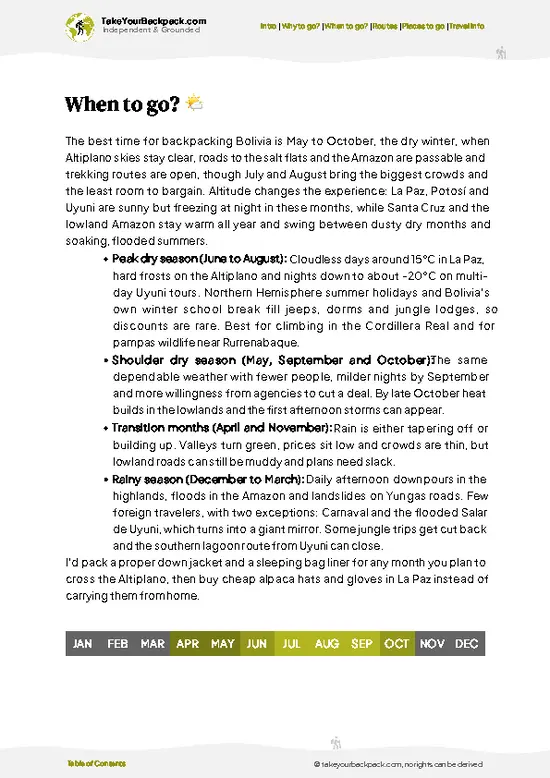
  • Weather: The dry season from May to October is your best bet. Rainfall drops significantly, cutting down mud and slippery chaos on the road. The wet season (November to April) turns Yungas Road into a muddy nightmare, not ideal for biking or hiking.

  • Temperature: Expect mild to warm days, around 18-25°C (64-77°F) during the dry season, with cooler nights dipping to 8-12°C (46-54°F). The wet season is warmer but stickier, making physical activity tougher.

  • Daylight Hours: Bolivia’s near-equatorial location means fairly consistent daylight year-round, roughly 11-12 hours daily. This steadiness helps plan your adventure without worrying about early nightfall.

  • Crowds: Peak tourist season aligns with the dry months, especially July and August. Expect more bikers and tour groups, which can
read more 👉

  • Weather: The dry season from May to October is your best bet. Rainfall drops significantly, cutting down mud and slippery chaos on the road. The wet season (November to April) turns Yungas Road into a muddy nightmare, not ideal for biking or hiking.

  • Temperature: Expect mild to warm days, around 18-25°C (64-77°F) during the dry season, with cooler nights dipping to 8-12°C (46-54°F). The wet season is warmer but stickier, making physical activity tougher.

  • Daylight Hours: Bolivia’s near-equatorial location means fairly consistent daylight year-round, roughly 11-12 hours daily. This steadiness helps plan your adventure without worrying about early nightfall.

  • Crowds: Peak tourist season aligns with the dry months, especially July and August. Expect more bikers and tour groups, which can dilute the raw edge but adds safety and social buzz.

  • Seasonal Activities: Dry season is prime for biking and trekking. The wet season offers lush greenery but at the cost of accessibility and safety.

  • Price Fluctuations: Prices for tours and accommodations spike during the dry season’s peak months. Off-season means cheaper deals but prepare for limited services and rougher conditions.


Pro-tip: Aim for late May or early October—dry enough to avoid mud, fewer crowds, and better prices. You’ll get the thrill without the hassle.


source: climatestotravel.comJANJanuary: below average for travelingFEBFebruary: below average for travelingMARMarch: below average for travelingAPRApril: fair for travelingMAYMay: highly recommended for travelingJUNJune: excellent for travelingJULJuly: excellent for travelingAUGAugust: excellent for travelingSEPSeptember: excellent for travelingOCTOctober: highly recommended for travelingNOVNovember: fair for travelingDECDecember: below average for traveling

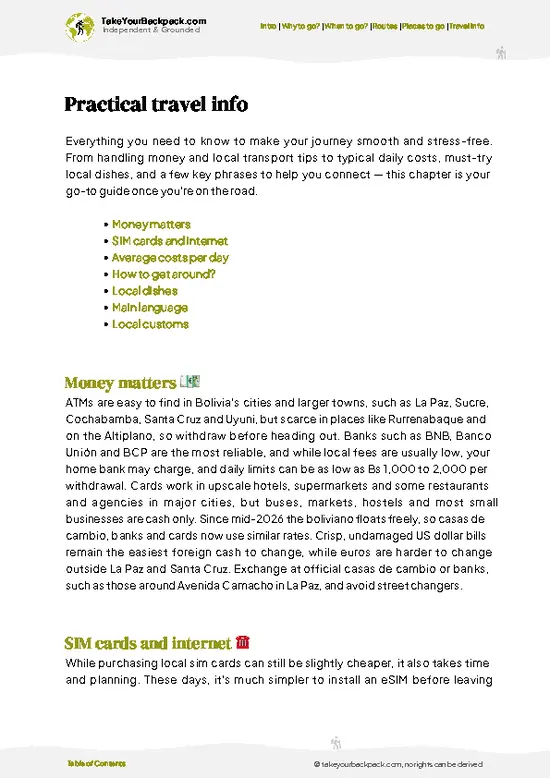
✈️ The backpacker research shortcutBolivia Travel Guide

An offline-friendly backpacking guide with optimized travel routes, ranked highlights, transport advice, and the best areas to stay.
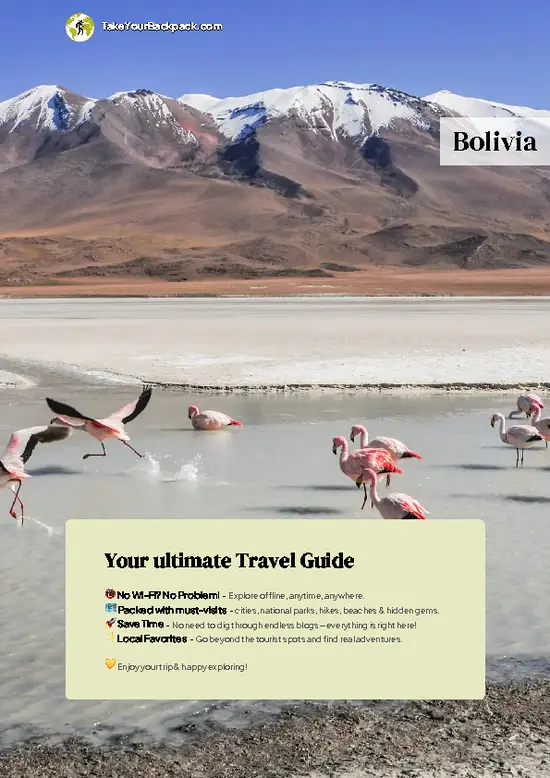
example page 0 from our offline Travel Guide for Bolivia
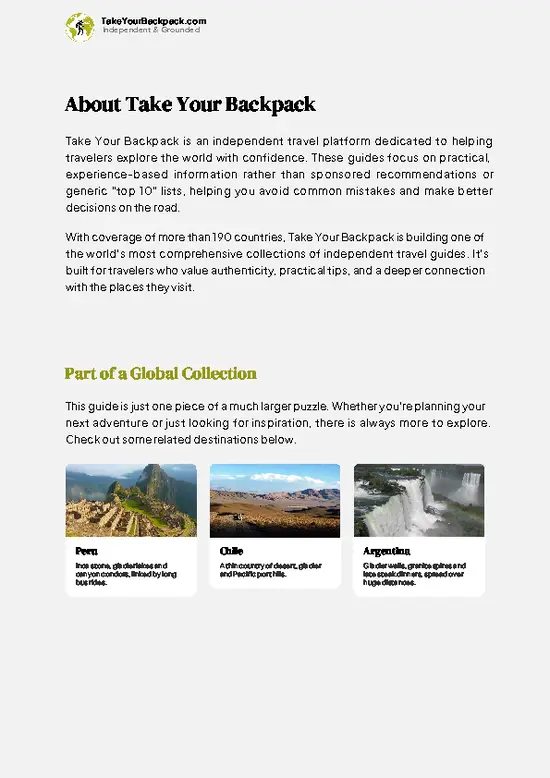
example page 1 from our offline Travel Guide for Bolivia
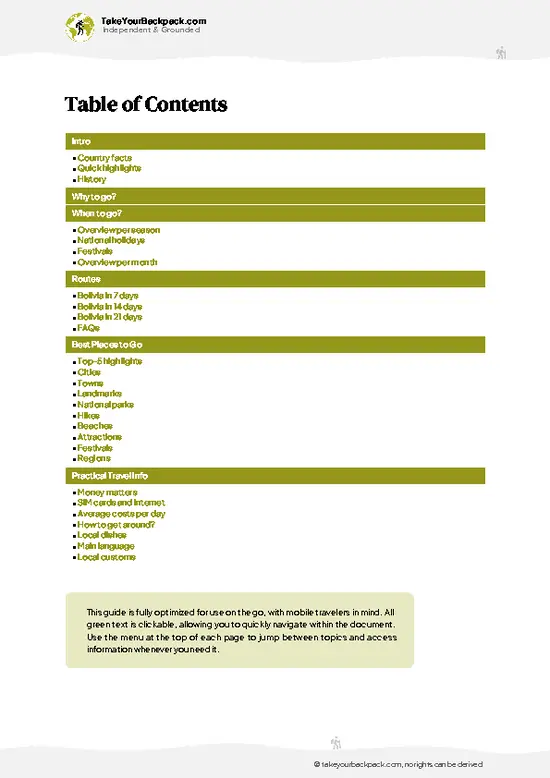
example page 2 from our offline Travel Guide for Bolivia
example page 3 from our offline Travel Guide for Bolivia
example page 4 from our offline Travel Guide for Bolivia
example page 5 from our offline Travel Guide for Bolivia
example page 6 from our offline Travel Guide for Bolivia
example page 7 from our offline Travel Guide for Bolivia
The digital guide (350 pages) contains:
82 highlights, ranked by travel appeal
Optimized 7, 14 & 21-day travel routes
Cities, national parks, landmarks, beaches
How to get around
Offline-friendly for travel without Wi-Fi
👉 Click to see all 30+ guide features

📅 Plan smarter in minutes, not weeks
Month by month travel advice
Festivals & national holidays
Budget expectations

🗺️ Go to the right places, skip the overrated ones
Honest pros & cons of destinations
Top hikes, parks & viewpoints
Lesser-known places most travelers miss
Clear “worth it vs skip it” guidance

🛏️ Travel smoothly without rookie mistakes
Best areas to stay
Transport systems explained simply
Common scams & safety advice
SIM cards, money & practical tips

🌍 Understand the country, not just visit it
Culture & traditions
52 Essential phrases & customs
Festivals worth planning around
Traveler-friendly historical context
Insights that make places more meaningful

📱 Built for real travel conditions
Fully downloadable PDF
Works completely offline
Optimized for phone use
Useful in remote areas & buses
Everything in one place
Save weeks of stressful planning
Get instant access to your full guide. 30‑day money-back guarantee.


By proceeding you agree to our terms.
Sent to your inbox immediately after payment • 100% Secure Checkout
Best Backpacking Travel Advisor 2025 tourism awardBest Backpacking
Travel Advisor
2025
What others say about Take Your Backpack Guides:
⭐⭐⭐⭐⭐
Fantastic, amazing amount of information!
⭐⭐⭐⭐⭐
My goodness this is amazing, it's what I've been looking for hats off too you!
⭐⭐⭐⭐⭐
I think this is absolutely BRILLIANT
⭐⭐⭐⭐
Very complete and informative. It's still missing places, but I gotta to commend you
⭐⭐⭐⭐⭐
This is truly amazing, thank you, can't wait to explore it with my kids!
⭐⭐⭐⭐⭐
Awesome resource, thank you!
⭐⭐⭐⭐⭐
This is amazing! Can't wait to explore the ones I haven't seen
⭐⭐⭐⭐
I love this! Well done, great idea.
⭐⭐⭐⭐⭐
Thanks for taking the time to make this gem!
⭐⭐⭐⭐⭐
This might be the best website I've ever seen.
⭐⭐⭐⭐⭐
Congratulations, and thank you so much for your work; it's incredibly valuable.
⭐⭐⭐⭐
In all seriousness I think you did a great job pointing out the important spots
⭐⭐⭐⭐⭐
10/10 very good
⭐⭐⭐⭐⭐
As someone who's only just starting to visit regularly this is awesome, thank you.
⭐⭐⭐⭐
Thank you very much! I'm going to visit my dad, it's going to be very useful!
⭐⭐⭐⭐⭐
This is really cool! We'll be travelling for the first time and this definitely come in handy.
⭐⭐⭐⭐⭐
You are now our minister of culture, congratulations 👨‍💼
⭐⭐⭐⭐⭐
Just wanted to tell you that this is a pearl! Going to follow your recommendations.
⭐⭐⭐⭐⭐
This is so cool. I'll definitely be using the resource for my travels soon.
⭐⭐⭐⭐⭐
This is very impressive! Good work.
⭐⭐⭐⭐⭐
This is an amazing and informative site. Very well done!

🛏️ Where to stay?Choosing the right base

When it comes to staying near Yungas Road, you want to be smart about your choices. The area around La Paz is your best bet. It’s buzzing with backpackers and offers a mix of safety and social vibes.

Stay in the Sopocachi neighborhood. It’s a bit hipster, with cafes and bars that cater to travelers. You’ll find plenty of fellow adventurers to swap stories with over a cheap beer. Plus, it’s a short ride to the road itself.

Don’t overlook the El Alto area, either. It’s a bit rougher around the edges, but the views of La Paz are killer. You’ll get a taste of local life, and the prices are often … read more 👉
When it comes to staying near Yungas Road, you want to be smart about your choices. The area around La Paz is your best bet. It’s buzzing with backpackers and offers a mix of safety and social vibes.

Stay in the Sopocachi neighborhood. It’s a bit hipster, with cafes and bars that cater to travelers. You’ll find plenty of fellow adventurers to swap stories with over a cheap beer. Plus, it’s a short ride to the road itself.

Don’t overlook the El Alto area, either. It’s a bit rougher around the edges, but the views of La Paz are killer. You’ll get a taste of local life, and the prices are often lower. Just keep your wits about you, especially at night.

If you’re feeling adventurous, consider the town of Coroico. It’s a gateway to Yungas and has a laid-back atmosphere. You can find budget accommodations and meet other solo travelers. The lush scenery is a bonus, making it a perfect base for exploring the road.

Skip the tourist traps and dive into these areas for a genuine experience.

👛 Costs (as of 24 February 2026)How expensive it really is

Visiting Yungas Road in Bolivia can be a wild ride, both literally and financially. Here’s the real scoop on what to expect cost-wise.
  • Transportation: Expect to pay between $30 and $100 for a guided tour. This usually includes transportation from La Paz, but if you’re feeling adventurous, you can rent a bike for around $25 to $50. Just remember, the road is notorious for its steep drops and hairpin turns.
  • Entrance Fees: There’s no official entrance fee for Yungas Road itself, but some tours may charge a small fee for access to certain viewpoints or attractions along the way. Budget around $5 to $10 for these extras.
  • Food and Drinks: If you’re on a tour, meals might be included. If not, plan to spend about $10 to $20 for a decent meal in nearby towns. Street food is cheaper, around $3 to $5, but
read more 👉
Visiting Yungas Road in Bolivia can be a wild ride, both literally and financially. Here’s the real scoop on what to expect cost-wise.
  • Transportation: Expect to pay between $30 and $100 for a guided tour. This usually includes transportation from La Paz, but if you’re feeling adventurous, you can rent a bike for around $25 to $50. Just remember, the road is notorious for its steep drops and hairpin turns.
  • Entrance Fees: There’s no official entrance fee for Yungas Road itself, but some tours may charge a small fee for access to certain viewpoints or attractions along the way. Budget around $5 to $10 for these extras.
  • Food and Drinks: If you’re on a tour, meals might be included. If not, plan to spend about $10 to $20 for a decent meal in nearby towns. Street food is cheaper, around $3 to $5, but choose wisely to avoid any stomach issues.
  • Accommodation: If you’re staying overnight, hostels in the area range from $10 to $30 per night. For a bit more comfort, look for guesthouses or hotels, which can go from $30 to $100, depending on your preferences.
  • Gear Rental: If you need to rent biking gear, expect to pay around $10 to $20 for a helmet and protective gear. Make sure everything fits well; safety first!

Yungas Road is not just about the thrill; it’s about the experience. The costs can add up, but the journey is worth every penny.
⚠️ Prices can change and everyone travels differently, so take this as a rough guide. Hope it helps you plan your adventure!

Other Bolivian landmarks near Yungas Road

Explore more nearby:

  • Valle de la Luna—eroded clay spires, lunar landscape, arid terrain| 49 km away
  • Tiwanaku—stone monoliths, ancient temples, archaeological site| 101 km away
  • Lago Poopó—shallow lake, migratory birds, salt flats| 294 km away

💡 Not sure where to go next?
Create a personalized itinerary for Bolivia including Yungas Road and the places that fit your trip.

Generate my itinerary

👉 Discover all landmarks

Or checkout all Bolivia has to offer (think cities, towns, villages, national parks, hikes, beaches, festivals)
Country photo of Bolivia

We 💚 feedbackFinal thoughts on visiting Yungas Road

Yungas Road is a wild ride, literally and figuratively. The thrill of biking down that winding path, surrounded by lush greenery and steep drops, is unmatched. But let’s be real: the crowds can be overwhelming, especially during peak season. You’ll share the road with plenty of other adventurers, which can take away from the experience. Still, if you embrace the chaos, the adrenaline and scenery make it all worthwhile.

✈️ When did I visit Bolivia?
Bolivia I visited during my half year trip through South and Central America back in 2003

✍️ Help improve this page!
The information on this page is based on my own backpacking experience in Bolivia, supplemented with up-to-date research and feedback from other travelers. Travel details can change, so if you notice anything outdated or incomplete, feel free to let me know.


🙋‍♂️ Give feedback

👋 Meet the founderWho’s Behind Take Your Backpack?

Johan, backpacker and founder of TakeYourBackpackHi, I’m Johan (Netherlands 🇳🇱), the creator of TakeYourBackpack. Over the past decade, I’ve backpacked through 80+ countries across six continents, gaining extensive experience with independent travel, long-term trips, and overland routes.

This site is built on a combination of firsthand travel experience and carefully curated insights from other backpackers. Many guides are based on places I’ve personally visited, while others bring together tips, observations, and practical advice shared by trusted travelers I’ve met along the way.

The goal is to provide realistic, experience-driven guidance — not generic itineraries — so you can explore destinations with better context, clearer expectations, and more confidence.

Get full Bolivia guide •
Instant download • 82 highlights • Full Offline guide