v2.webp)
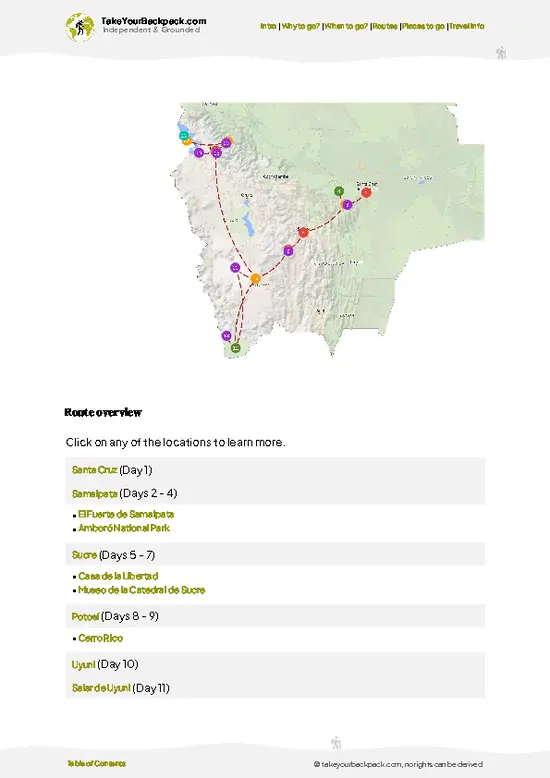
- Border bridge to La Quiaca: the town’s defining sight, where porters, shoppers and travelers cross all day. Go in the morning when activity peaks. Watching is free and takes 20 to 30 minutes.
- Mercado Central: a working market with produce, spices, clothes and hot food stalls. Come between 8 and 11 AM for the best selection. Plan 45 minutes to an hour, with snacks costing US$1 to 3.
- Plaza Principal: the shaded main square where locals gather in the late afternoon. It is free, and 20 to 30 minutes is plenty for a sit-down and people-watching.
- Railway station: the old terminus of the line from Tupiza and Uyuni, with a quiet, faded atmosphere that railway fans enjoy. Visit any time of day. It is free and takes 15 to 20 minutes.
- Food stalls along Avenida Independencia: local snacks such as salteñas
- Border bridge to La Quiaca: the town’s defining sight, where porters, shoppers and travelers cross all day. Go in the morning when activity peaks. Watching is free and takes 20 to 30 minutes.
- Mercado Central: a working market with produce, spices, clothes and hot food stalls. Come between 8 and 11 AM for the best selection. Plan 45 minutes to an hour, with snacks costing US$1 to 3.
- Plaza Principal: the shaded main square where locals gather in the late afternoon. It is free, and 20 to 30 minutes is plenty for a sit-down and people-watching.
- Railway station: the old terminus of the line from Tupiza and Uyuni, with a quiet, faded atmosphere that railway fans enjoy. Visit any time of day. It is free and takes 15 to 20 minutes.
- Food stalls along Avenida Independencia: local snacks such as salteñas and fried chicken are sold here. Mornings are best for salteñas. Expect to spend US$1 to 4 and about 30 minutes.
Spotted a mistake or missing something? Contact us.

 Best Backpacking
.jpg) Hi, I’m Johan (Netherlands 🇳🇱), the creator of TakeYourBackpack. Over the past 3 decades, I’ve backpacked through 90+ countries across six continents, gaining extensive experience with independent travel, long-term trips, and overland routes.
Hi, I’m Johan (Netherlands 🇳🇱), the creator of TakeYourBackpack. Over the past 3 decades, I’ve backpacked through 90+ countries across six continents, gaining extensive experience with independent travel, long-term trips, and overland routes.