×

Cameroon🇨🇲 | best villagesNo village found in Cameroon

Top villages elude us, but don’t let that stop your trip. Cameroon is packed with lots of other highlights and hidden gems, scenic views, and unique adventures. And, if you know of any great village to add here, just contact us.

By Johan Kruseman 🇳🇱 | Updated June 6, 2026
Explore the best landmarks in Cameroon

Why go?Key Factors That Shape the Experience

The villages of Cameroon are a tapestry of cultural richness and traditional practices that stand apart from those found in other countries. Nestled between mountains, rainforests, and savannas, these communities offer a unique glimpse into the lives of over 250 ethnic groups. Each village pulses with its own rhythm, shaped by centuries of history and a deep connection to the land.

Accessibility can be a challenge. Many villages are remote, requiring long drives on rugged roads that can test even the most seasoned traveler. However, this trade-off often leads to a more profound experience. The journey becomes part of the adventure, revealing stunning landscapes and the daily lives of locals. The infrastructure may not always be reliable, but this adds to the authenticity. Travelers often … read more 👉
The villages of Cameroon are a tapestry of cultural richness and traditional practices that stand apart from those found in other countries. Nestled between mountains, rainforests, and savannas, these communities offer a unique glimpse into the lives of over 250 ethnic groups. Each village pulses with its own rhythm, shaped by centuries of history and a deep connection to the land.

Accessibility can be a challenge. Many villages are remote, requiring long drives on rugged roads that can test even the most seasoned traveler. However, this trade-off often leads to a more profound experience. The journey becomes part of the adventure, revealing stunning landscapes and the daily lives of locals. The infrastructure may not always be reliable, but this adds to the authenticity. Travelers often find themselves immersed in the raw beauty of rural life, where modern conveniences are scarce but community spirit thrives.

The climate varies significantly across regions, influencing when to visit. The dry season, from November to February, is ideal for exploring, while the rainy season can make some areas nearly inaccessible. This seasonal variability means that planning is crucial; timing your visit can enhance the experience, allowing for deeper engagement with local customs and festivals.

Cameroon’s villages are not just places to visit; they are living histories. The cultural practices—from traditional dances to artisanal crafts—offer insights into the resilience and creativity of the people. While the journey may require patience and flexibility, the rewards are tangible. The scenic surroundings, combined with the warmth of the community, create a backdrop that transforms travel into a meaningful exploration of humanity.
How the List Was Created
The list of best villages in Cameroon is created based on authenticity, scenic beauty, community spirit, traditions, and overall character. If you feel a village is missing in this list, please let us know.

When to go?When to Plan Your Trip

Seasonality plays a crucial role in the experience of visiting villages in Cameroon. The country’s climate varies significantly, influenced by its diverse geography. Generally, the dry season, which runs from November to March, offers the most comfortable weather. During these months, the humidity drops, and the sun shines brightly, making it ideal for exploring rural life. Villagers are often busy with agricultural activities, and the landscape is lush and vibrant after the rainy season.

Optimal months for visiting align with this dry season. Travelers can witness the bustling life in villages as farmers harvest crops, and local markets brim with fresh produce. The atmosphere is lively, with community events and celebrations often occurring during this time.

Shoulder seasons—April to June … read more 👉
Seasonality plays a crucial role in the experience of visiting villages in Cameroon. The country’s climate varies significantly, influenced by its diverse geography. Generally, the dry season, which runs from November to March, offers the most comfortable weather. During these months, the humidity drops, and the sun shines brightly, making it ideal for exploring rural life. Villagers are often busy with agricultural activities, and the landscape is lush and vibrant after the rainy season.

Optimal months for visiting align with this dry season. Travelers can witness the bustling life in villages as farmers harvest crops, and local markets brim with fresh produce. The atmosphere is lively, with community events and celebrations often occurring during this time.

Shoulder seasons—April to June and September to October—present a mixed bag. The weather can be unpredictable, with occasional rains, but fewer tourists mean a more intimate experience. Costs may be lower, but accessibility can be an issue. Some trails may become muddy or impassable, and certain villages might be less active as farmers focus on planting or preparing for harvest.

Peak periods coincide with major festivals or agricultural milestones, drawing larger crowds. While these events offer a rich cultural experience, they can also lead to overcrowding and higher prices for accommodations.

Travelers should consider these seasonal constraints. The best experiences often come from timing visits to align with local rhythms, understanding that the grit of rural life is intertwined with the land’s cycles. Planning ahead can ensure access to the vibrant, authentic experiences that define village life in Cameroon.

village hoppingHow to Combine villages Into One Trip

Combining villages in Cameroon requires a keen sense of geography and timing. Start by clustering regions. The Northwest, with its lush hills and vibrant markets, contrasts sharply with the coastal charm of the Littoral region. Each area has its own rhythm, shaped by seasonal accessibility. Rainy seasons can turn roads into mudslides, while dry months reveal stunning landscapes.

Travelers should consider the direction of travel. Moving from the bustling city of Douala to the serene villages of the Southwest allows for a gradual immersion into local culture. The journey can be made via shared taxis or bush taxis, which are often the most authentic and budget-friendly options. Expect to share space with locals, their laughter punctuating the air, and the scent of street food wafting through read more 👉
Combining villages in Cameroon requires a keen sense of geography and timing. Start by clustering regions. The Northwest, with its lush hills and vibrant markets, contrasts sharply with the coastal charm of the Littoral region. Each area has its own rhythm, shaped by seasonal accessibility. Rainy seasons can turn roads into mudslides, while dry months reveal stunning landscapes.

Travelers should consider the direction of travel. Moving from the bustling city of Douala to the serene villages of the Southwest allows for a gradual immersion into local culture. The journey can be made via shared taxis or bush taxis, which are often the most authentic and budget-friendly options. Expect to share space with locals, their laughter punctuating the air, and the scent of street food wafting through the windows.

Time management is crucial. Allocate at least two to three days per village to soak in the atmosphere, engage with locals, and explore the surroundings. Rushing through can lead to missed connections and shallow experiences. Common pitfalls include over-scheduling and underestimating travel times between villages. Roads can be unpredictable, and patience is key.

Trade-offs are inevitable. Speed may offer more stops, but depth of experience often comes from lingering in one place. Budget travelers might opt for basic accommodations, sacrificing comfort for authenticity. However, investing in a local guide can enhance understanding and connection to the culture.

Flexibility is essential. Be prepared to adjust plans based on weather or local events. Embrace the unexpected; it often leads to the most rewarding moments. The beauty of Cameroon’s villages lies not just in their sights, but in the stories shared along the way.

Expert viewWhat You Should Know

Accessibility
Cameroon’s villages are a patchwork of experiences, each with its own rhythm and charm. However, getting to these spots can be a challenge. The roads vary from well-paved highways to rugged dirt paths that can turn into muddy nightmares during the rainy season. Aim for the dry months, typically from November to February, when the trails are more forgiving. This is when you’ll find the locals bustling about, their markets alive with color and sound.

Plan to visit around five to seven villages to truly soak in the diversity. Each stop should be spaced out to allow for travel time and to absorb the local culture. Expect to spend a few hours on the road between villages, which can be both exhausting and exhilarating. The journey itself often reveals the heart of Cameroon, with … read more 👉
Accessibility
Cameroon’s villages are a patchwork of experiences, each with its own rhythm and charm. However, getting to these spots can be a challenge. The roads vary from well-paved highways to rugged dirt paths that can turn into muddy nightmares during the rainy season. Aim for the dry months, typically from November to February, when the trails are more forgiving. This is when you’ll find the locals bustling about, their markets alive with color and sound.

Plan to visit around five to seven villages to truly soak in the diversity. Each stop should be spaced out to allow for travel time and to absorb the local culture. Expect to spend a few hours on the road between villages, which can be both exhausting and exhilarating. The journey itself often reveals the heart of Cameroon, with landscapes shifting from lush hills to arid plains. Just remember, the more remote the village, the more time you’ll need to allocate for travel.

Seasonal Variation
The seasons dictate not just the weather but the village vibe. The dry season brings out the best in local festivities. You’ll find vibrant ceremonies and markets bustling with fresh produce. In contrast, the rainy season can dampen spirits and accessibility. Villagers may retreat indoors, and some paths become impassable. If you’re keen on experiencing authentic cultural events, plan your visit around the harvest festivals, which vary by region but generally occur in late summer.

However, be prepared for trade-offs. While the dry season offers easier travel, it also attracts more tourists. If you’re looking for solitude and a deeper connection with locals, consider the shoulder months, but be ready for unpredictable weather and less reliable transport.

Authenticity
Authenticity in Cameroon’s villages is palpable. You’ll find communities that still practice age-old traditions, from weaving to pottery. Engage with the locals; they’re often eager to share their stories and crafts. This is where the real magic happens. You might stumble upon a family preparing a traditional meal or a group of children playing games that have been passed down for generations.

However, not every village will offer the same level of engagement. Some are more tourist-friendly, with guides and services tailored for visitors, while others may be less accustomed to outsiders. It’s essential to approach these places with respect and an open mind. Learn a few phrases in the local dialect; it goes a long way in breaking the ice.

Pacing Between Rural Stops
Pacing is crucial. You don’t want to rush through these villages; each has its own story to tell. Spend at least two nights in each village to truly immerse yourself. This allows you to explore the surroundings, participate in local activities, and savor the food.

Consider the infrastructure as well. Some villages have basic accommodations, while others may offer more comfortable lodgings. Be prepared for varying levels of amenities. In more remote areas, you might find yourself in a homestay, sharing meals with a family, which can be a rewarding experience but also means adjusting to local customs and schedules.

Safety is another factor. While Cameroon is generally safe for travelers, some areas may have political tensions or health risks. Always check local advisories and consider hiring a local guide who knows the terrain and can navigate any potential issues.

Cultural Considerations
Cultural sensitivity is paramount. Each village has its own customs and traditions, and it’s essential to respect them. Dress modestly, especially in more conservative areas, and always ask before taking photos of people or their homes. Engaging with local customs can enrich your experience, but it’s crucial to do so with humility and respect.

You might find that some villages have specific rituals or taboos that are important to their identity. Understanding these nuances can enhance your interactions and help you forge genuine connections.

In summary, the best way to experience Cameroon’s villages is to embrace the journey. Allow yourself to be swept up in the local pace, savor the flavors, and soak in the sights. Each village will offer its own unique slice of life, and the effort to reach them will reward you with experiences that linger long after you’ve left.

✈️ The backpacker research shortcutCameroon Travel Guide

An offline-friendly backpacking guide with optimized travel routes, ranked highlights, transport advice, and the best areas to stay.
example page 0 from our offline Travel Guide for Cameroon
example page 1 from our offline Travel Guide for Cameroon
example page 2 from our offline Travel Guide for Cameroon
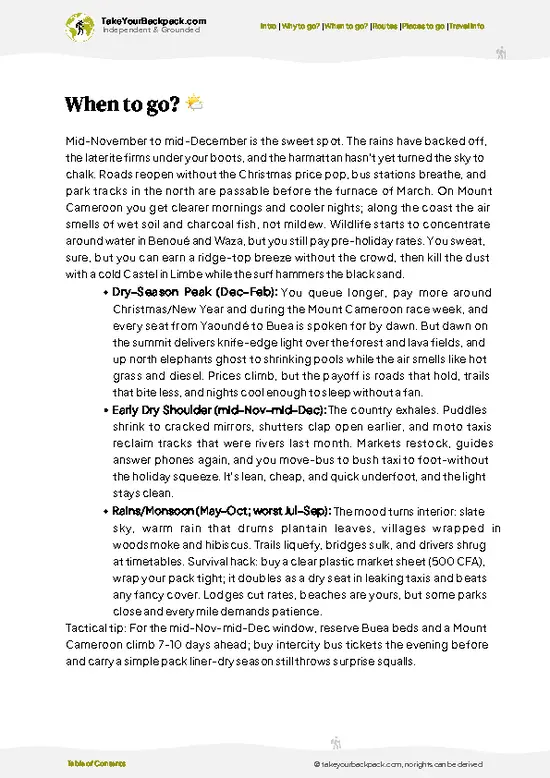
example page 3 from our offline Travel Guide for Cameroon
example page 4 from our offline Travel Guide for Cameroon
example page 5 from our offline Travel Guide for Cameroon
example page 6 from our offline Travel Guide for Cameroon
example page 7 from our offline Travel Guide for Cameroon
The digital guide (383 pages) contains:
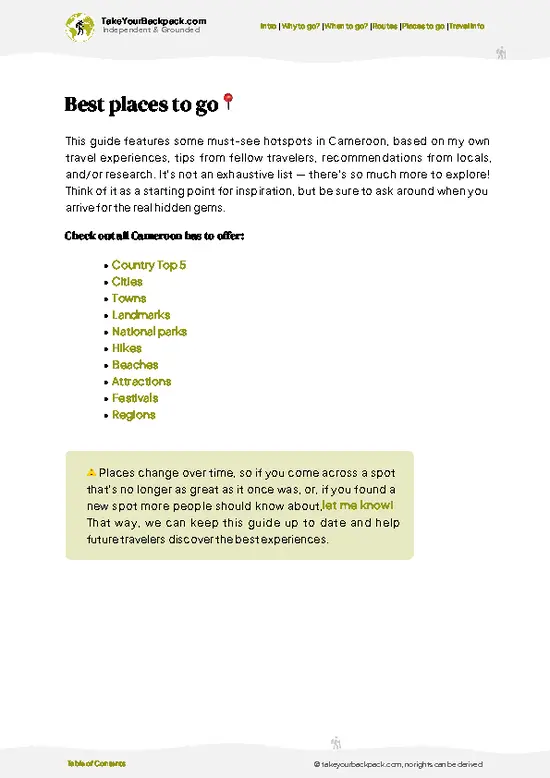
95 highlights, ranked by travel appeal
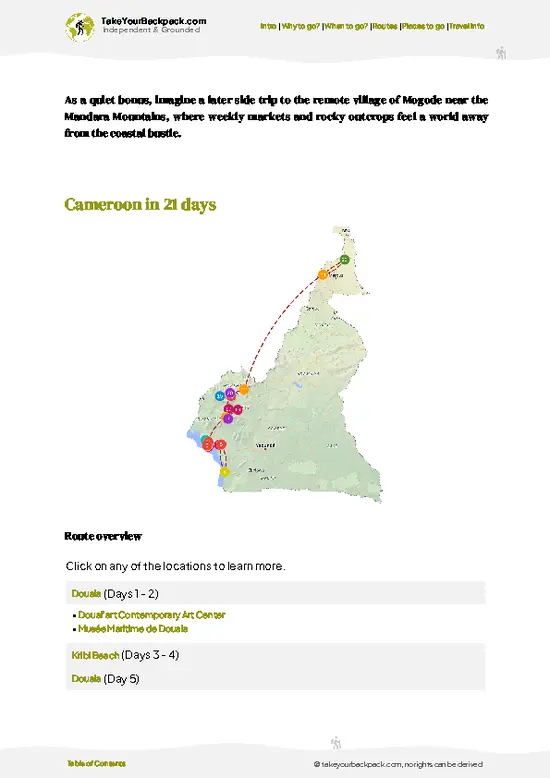
Optimized 7, 14 & 21-day travel routes
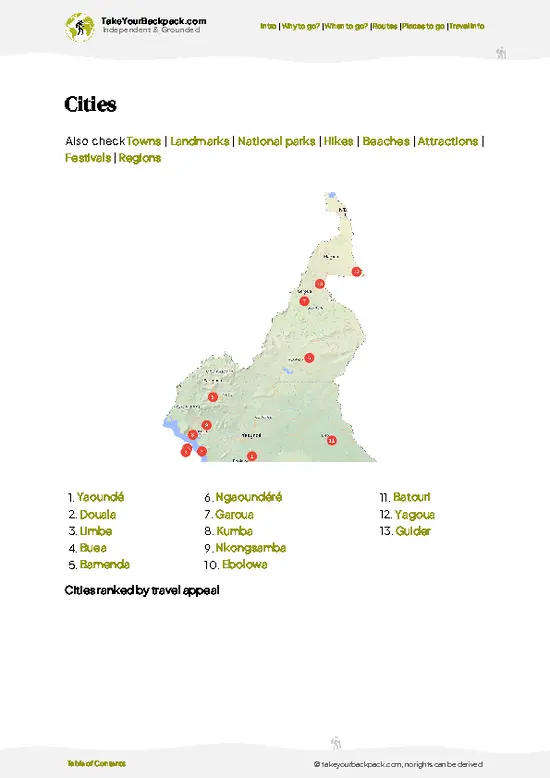
Cities, national parks, landmarks, beaches
How to get around
Offline-friendly for travel without Wi-Fi
👉 Click to see all 30+ guide features

📅 Plan smarter in minutes, not weeks
Month by month travel advice
Festivals & national holidays
Budget expectations

🗺️ Go to the right places, skip the overrated ones
Honest pros & cons of destinations
Top hikes, parks & viewpoints
Lesser-known places most travelers miss
Clear “worth it vs skip it” guidance

🛏️ Travel smoothly without rookie mistakes
Best areas to stay
Transport systems explained simply
Common scams & safety advice
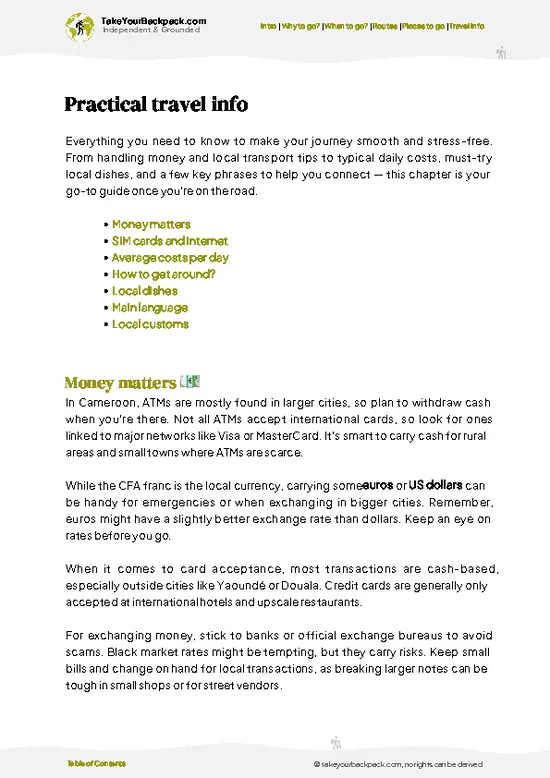
SIM cards, money & practical tips

🌍 Understand the country, not just visit it
Culture & traditions
52 Essential phrases & customs
Festivals worth planning around
Traveler-friendly historical context
Insights that make places more meaningful

📱 Built for real travel conditions
Fully downloadable PDF
Works completely offline
Optimized for phone use
Useful in remote areas & buses
Everything in one place
Save weeks of stressful planning
Get instant access to your full guide. 30‑day money-back guarantee.


By proceeding you agree to our terms.
Sent to your inbox immediately after payment • 100% Secure Checkout
Best Backpacking Travel Advisor 2025 tourism awardBest Backpacking
Travel Advisor
2025
What others say about Take Your Backpack Guides:
⭐⭐⭐⭐⭐
Fantastic, amazing amount of information!
⭐⭐⭐⭐⭐
My goodness this is amazing, it's what I've been looking for hats off too you!
⭐⭐⭐⭐⭐
I think this is absolutely BRILLIANT
⭐⭐⭐⭐
Very complete and informative. It's still missing places, but I gotta to commend you
⭐⭐⭐⭐⭐
This is truly amazing, thank you, can't wait to explore it with my kids!
⭐⭐⭐⭐⭐
Awesome resource, thank you!
⭐⭐⭐⭐⭐
This is amazing! Can't wait to explore the ones I haven't seen
⭐⭐⭐⭐
I love this! Well done, great idea.
⭐⭐⭐⭐⭐
Thanks for taking the time to make this gem!
⭐⭐⭐⭐⭐
This might be the best website I've ever seen.
⭐⭐⭐⭐⭐
Congratulations, and thank you so much for your work; it's incredibly valuable.
⭐⭐⭐⭐
In all seriousness I think you did a great job pointing out the important spots
⭐⭐⭐⭐⭐
10/10 very good
⭐⭐⭐⭐⭐
As someone who's only just starting to visit regularly this is awesome, thank you.
⭐⭐⭐⭐
Thank you very much! I'm going to visit my dad, it's going to be very useful!
⭐⭐⭐⭐⭐
This is really cool! We'll be travelling for the first time and this definitely come in handy.
⭐⭐⭐⭐⭐
You are now our minister of culture, congratulations 👨‍💼
⭐⭐⭐⭐⭐
Just wanted to tell you that this is a pearl! Going to follow your recommendations.
⭐⭐⭐⭐⭐
This is so cool. I'll definitely be using the resource for my travels soon.
⭐⭐⭐⭐⭐
This is very impressive! Good work.
⭐⭐⭐⭐⭐
This is an amazing and informative site. Very well done!

🛏️ Where to stay?Accommodation Highlights

Yes — hostels, budget guesthouses and low‑cost hotels are available in Cameroon’s main cities and tourist hubs for backpackers, but they concentrate in Douala, Yaoundé and a few regional towns so expect far fewer options in rural or highland areas and plan accordingly.
In Douala, Akwa offers the widest choice and nightlife with good transport links but only moderate nighttime security; Deïdo is cheapest and closest to markets and bus hubs yet busy and basic with lower safety after dark; Bonapriso gives quieter, safer stays at higher prices.
In Yaoundé, Bastos has safer, quieter expat‑style lodgings that cost more; Mokolo is the cheapest and most central near markets and buses but noisy and … read more 👉
Yes — hostels, budget guesthouses and low‑cost hotels are available in Cameroon’s main cities and tourist hubs for backpackers, but they concentrate in Douala, Yaoundé and a few regional towns so expect far fewer options in rural or highland areas and plan accordingly.
In Douala, Akwa offers the widest choice and nightlife with good transport links but only moderate nighttime security; Deïdo is cheapest and closest to markets and bus hubs yet busy and basic with lower safety after dark; Bonapriso gives quieter, safer stays at higher prices.
In Yaoundé, Bastos has safer, quieter expat‑style lodgings that cost more; Mokolo is the cheapest and most central near markets and buses but noisy and spartan; university areas (Ngoa‑Eké/Melen) host wallet‑friendly guesthouses and lively street food while being noisy and occasionally inconsistent on services.

If you enjoy meeting fellow travelers, consider choosing hostels with high ratings for atmosphere. On the other hand, if you prefer having your own space, a hotel might be a better option.

CameroonSee More of Cameroon

👋 Meet the founderWho’s Behind Take Your Backpack?

Johan, backpacker and founder of TakeYourBackpackHi, I’m Johan (Netherlands 🇳🇱), the creator of TakeYourBackpack. Over the past decade, I’ve backpacked through 80+ countries across six continents, gaining extensive experience with independent travel, long-term trips, and overland routes.

This site is built on a combination of firsthand travel experience and carefully curated insights from other backpackers. Many guides are based on places I’ve personally visited, while others bring together tips, observations, and practical advice shared by trusted travelers I’ve met along the way.

The goal is to provide realistic, experience-driven guidance — not generic itineraries — so you can explore destinations with better context, clearer expectations, and more confidence.

Get full Cameroon guide •
Instant download • 95 highlights • Full Offline guide