×

Cameroon🇨🇲 | citiesYaoundéhilly capital, government district, embassies, cultural institutions | things to do and best time to go

Explore LimbeExplore Garoua

Backpacking in Yaoundé
🏆 Top pickcity ranked #1
By Johan Kruseman 🇳🇱 | Updated June 7, 2026

Forget the idea that Yaoundé is just Douala’s quieter sibling or a bureaucratic stopover—this city is Cameroon’s political brain and cultural wildcard, not a dull administrative maze. Smack in the country’s green, hilly heart, Yaoundé sprawls across seven hills, giving you a skyline that’s more rolling than soaring. For backpackers, Yaoundé is a paradox: you’ll find the National Museum inside a former presidential palace, lively markets like Mfoundi where bargaining is a contact sport, and the lush Mont Fébé for panoramic city views. Nightlife is less wild than Douala but more approachable, with local bars and music joints that feel like community living rooms. It’s cheaper than Douala, but not dirt-cheap—think mid-range African capital, with decent street food and budget guesthouses, but few true hostels. Meeting other travelers is hit-or-miss; you’ll see more aid workers than backpacker crowds. Safety is manageable with street smarts, but petty theft is a reality. Yaoundé’s vibe is both official and oddly relaxed—less chaos, more slow-burn intrigue.

Discover everything you want to know in the 📖 Cameroon Travel Guide.


Get your Cameroon guide
95 ranked highlights, routes & tips, works offline (383 pages)
Loading the map 🌍
CLICK TO FILTER
cities
towns
landmarks
national parks
hikes
beaches
attractions
festivals
regions
SHOW COUNTRY’S BESTSHOW ALL

✨ Why go?
Ranked #1 city in Cameroon
Reasons people choose to visit here

Yaoundé, the capital of Cameroon, is a strategic base for backpackers navigating Central Africa. It’s not just a stopover; it’s a city that offers a blend of affordability and authenticity. Hostels here are budget-friendly and often buzzing with fellow travelers, making it easy to swap stories and tips. The food scene is a delightful mix of local and international flavors, with street vendors serving up tasty bites that won’t break the bank.

The city’s walkability is a game-changer. You can explore neighborhoods, soak in the local culture, and stumble upon markets without needing to rely on public transport. When the sun sets, the nightlife kicks in, offering everything from laid-back bars to lively music venues, perfect for unwinding after a day of exploration.

But what really sets Yaoundé … read more 👉
Yaoundé, the capital of Cameroon, is a strategic base for backpackers navigating Central Africa. It’s not just a stopover; it’s a city that offers a blend of affordability and authenticity. Hostels here are budget-friendly and often buzzing with fellow travelers, making it easy to swap stories and tips. The food scene is a delightful mix of local and international flavors, with street vendors serving up tasty bites that won’t break the bank.

The city’s walkability is a game-changer. You can explore neighborhoods, soak in the local culture, and stumble upon markets without needing to rely on public transport. When the sun sets, the nightlife kicks in, offering everything from laid-back bars to lively music venues, perfect for unwinding after a day of exploration.

But what really sets Yaoundé apart is its proximity to day trips. You can easily venture into the surrounding countryside or head to nearby attractions, making it a high-value hub for those looking to experience more of Cameroon. If you’re after a mix of culture, convenience, and camaraderie, Yaoundé is worth more than just a fleeting visit.
Want to include Yaoundé in your Cameroon route?
Create a personalized Cameroon itinerary that includes Yaoundé and the places that fit your trip — based on your travel style, budget, and available time. Get your route in seconds.

Generate my trip

💡 HighlightsMust-see experiences and standout moments

1. Musée National du Cameroun (National Museum of Cameroon)
The former presidential palace now houses Cameroon’s most comprehensive museum. You’ll walk through grand halls lined with artifacts—royal regalia, musical instruments, and everyday objects from across the country’s 250+ ethnic groups. The museum’s strength is context: displays are curated to show how Cameroon’s mosaic of cultures fits together, and the guides are genuinely passionate. Go in the morning to avoid school groups and the midday heat. Entry is usually under $5. Plan for 1.5-2 hours if you want to read and absorb, less if you’re just skimming the highlights. The trade-off: you sacrifice a bit of spontaneity for a crash course in Cameroonian identity, all in air-conditioned comfort.


2. Marché Central (Central Market)
This … read more 👉
1. Musée National du Cameroun (National Museum of Cameroon)
The former presidential palace now houses Cameroon’s most comprehensive museum. You’ll walk through grand halls lined with artifacts—royal regalia, musical instruments, and everyday objects from across the country’s 250+ ethnic groups. The museum’s strength is context: displays are curated to show how Cameroon’s mosaic of cultures fits together, and the guides are genuinely passionate. Go in the morning to avoid school groups and the midday heat. Entry is usually under $5. Plan for 1.5-2 hours if you want to read and absorb, less if you’re just skimming the highlights. The trade-off: you sacrifice a bit of spontaneity for a crash course in Cameroonian identity, all in air-conditioned comfort.


2. Marché Central (Central Market)
This is Yaoundé’s living, breathing heart. It’s chaotic, loud, and absolutely not sanitized for tourists. You’ll find everything from kente cloth to smoked fish, and the best street food in the city if you know where to look (try the grilled plantains and spicy soya skewers). Go early (before 10am) for the freshest produce and the least-crowded aisles. Entry is free, but bring small bills for purchases. Give yourself at least an hour—more if you want to bargain or people-watch. The comfort trade-off is real: it’s hot, crowded, and you’ll need to keep an eye on your belongings, but the sensory overload is pure Yaoundé.


3. Cathédrale Notre Dame des Victoires
This imposing cathedral is both a spiritual center and an architectural landmark. The stained glass and modernist lines are striking, but it’s the atmosphere during a Sunday service that’s truly electric—gospel choirs, packed pews, and a sense of community that’s palpable even if you don’t share the faith. Visit on a weekday for quiet contemplation, or Sunday morning for the full experience. Free entry. Allow 30-45 minutes, or up to two hours if you attend a service. The trade-off: you give up tourist anonymity for a window into local life.


4. Mont Fébé
Yaoundé is famously built on seven hills, and Mont Fébé is the city’s green lung. Hike or taxi up for panoramic views—on a clear day, you’ll see the city’s sprawl and the lush countryside beyond. There’s a monastery at the summit (Benedictine Monastery of Mont Fébé) with a small but fascinating museum of religious art and Cameroonian crafts. Go late afternoon for cooler air and golden light. Entry to the monastery museum is around $2. Allow 1-2 hours for the full circuit. The trade-off: you’ll spend more time and effort getting here, but the payoff is peace and perspective.


5. Musée d’Art Camerounais (Benedictine Museum of Art)
Tucked inside the Mont Fébé monastery, this museum is a compact but rich collection of masks, statues, and ritual objects from Cameroon’s many regions. The monks are knowledgeable and happy to explain the symbolism behind the pieces. It’s quieter and more intimate than the National Museum, and the setting—surrounded by forest—adds to the contemplative vibe. Open most days, with entry under $3. Budget 45-60 minutes. The trade-off: it’s a little out of the way, but you get depth and tranquility.


If you’re ready to expand your radius, day trips from Yaoundé can take you to the lush Mefou Primate Sanctuary, the ancient monoliths of Nkolandom, or the cool waterfalls at Ekom Nkam—each a different flavor of adventure just outside the city’s reach.
Spotted a mistake or missing something? Contact us.

Things to do in Yaoundé

Ratings based on Tripadvisor reviews. When you book through this link, you support our work at no extra cost to you.

🏘️ NeighborhoodsKey areas and districts to know

Yaoundé is a vibrant city where the pulse of Cameroon beats strong. Each neighborhood offers a unique flavor, catering to different backpacker needs. Here’s how they stack up:

Centre Ville: This is the heart of Yaoundé. Bustling markets, street food, and local shops create an energetic vibe. It’s walkable, with easy access to public transport. Ideal for short stays, you can soak in the local culture quickly. Nightlife is lively, but be prepared for noise.

Essos: A bit quieter, Essos offers a more laid-back atmosphere. It’s affordable, with guesthouses and local eateries. Walkability is decent, but you might need to rely on taxis for longer distances. Great for longer stays if you prefer a calmer environment, but nightlife options are limited.

Ngousso: This neighborhood is a hidden treasure … read more 👉
Yaoundé is a vibrant city where the pulse of Cameroon beats strong. Each neighborhood offers a unique flavor, catering to different backpacker needs. Here’s how they stack up:

Centre Ville: This is the heart of Yaoundé. Bustling markets, street food, and local shops create an energetic vibe. It’s walkable, with easy access to public transport. Ideal for short stays, you can soak in the local culture quickly. Nightlife is lively, but be prepared for noise.

Essos: A bit quieter, Essos offers a more laid-back atmosphere. It’s affordable, with guesthouses and local eateries. Walkability is decent, but you might need to rely on taxis for longer distances. Great for longer stays if you prefer a calmer environment, but nightlife options are limited.

Ngousso: This neighborhood is a hidden treasure for budget-conscious travelers. It’s less touristy, giving you a more authentic experience. Walkability varies, so plan your routes. Nightlife is minimal, making it perfect for those seeking peace. Ideal for longer stays, you’ll find local markets and a sense of community.

Montée d’Akwa: Known for its vibrant nightlife, this area is perfect for social butterflies. Bars and clubs line the streets, making it a lively spot after dark. Costs can be higher here, but the energy is infectious. Walkable and well-connected, it’s suitable for short stays if you want to party.

Yaoundé 6: A residential area that feels like a home away from home. It’s affordable and offers a mix of local and international cuisine. Walkability is good, and public transport is accessible. This area is best for longer stays, providing a quieter retreat from the city’s hustle.

⌛️ 1 day1-day itinerary for Yaoundé

Yaoundé, the bustling capital of Cameroon, is a vibrant blend of cultures, history, and natural beauty. It’s a city where the rhythm of life pulses through its markets, parks, and streets, offering a unique glimpse into Cameroonian life. You can easily spend a day here, soaking in the sights and sounds while uncovering its hidden treasures.

Start your morning in the lively neighborhood of Bastos. Grab a fresh baguette and some local coffee at a nearby café. The aroma of roasted beans fills the air, setting the perfect tone for your day. After breakfast, head to the National Museum of Yaoundé. It’s not just a collection of artifacts; it’s a window into the diverse cultures of Cameroon. Spend an hour or so wandering through the exhibits, absorbing the rich history.

As the sun climbs higher, … read more 👉
Yaoundé, the bustling capital of Cameroon, is a vibrant blend of cultures, history, and natural beauty. It’s a city where the rhythm of life pulses through its markets, parks, and streets, offering a unique glimpse into Cameroonian life. You can easily spend a day here, soaking in the sights and sounds while uncovering its hidden treasures.

Start your morning in the lively neighborhood of Bastos. Grab a fresh baguette and some local coffee at a nearby café. The aroma of roasted beans fills the air, setting the perfect tone for your day. After breakfast, head to the National Museum of Yaoundé. It’s not just a collection of artifacts; it’s a window into the diverse cultures of Cameroon. Spend an hour or so wandering through the exhibits, absorbing the rich history.

As the sun climbs higher, make your way to the Mvog-Betsi Zoo. This lesser-known spot is a delightful escape from the city’s hustle. You’ll find local wildlife, including monkeys and birds, in a serene setting. It’s a great place to relax and enjoy the lush greenery.

For lunch, venture to the bustling Marché Central. Here, you can sample local dishes like ndolé or grilled plantains. The vibrant atmosphere is infectious, and you’ll find yourself mingling with locals, soaking in their warmth.

In the afternoon, stroll through the picturesque Parc de la Réunification. It’s a perfect spot to unwind, with its manicured gardens and tranquil pond. Take a moment to reflect on your day while watching the locals play pétanque.

As evening approaches, head to the lively neighborhood of Nkoldongo. This area comes alive with street food vendors and music. Try some suya (spicy grilled meat) from a local stall, and let the flavors dance on your palate.

Wrap up your day with a visit to the nearby Mont Fébé. The panoramic view of the city at sunset is breathtaking. You’ll leave Yaoundé not just with memories, but with a deeper understanding of its soul.
Turn your Yaoundé visit into an Cameroon adventure
Build a complete Cameroon route with Yaoundé, hidden gems, must-see destinations, and realistic travel times included.

Generate my trip

🌤️ When to go?Choosing the right time of year


  • Topic: Weather – Yaoundé’s climate is equatorial, meaning it’s hot and humid year-round. The dry season, from November to February, offers less rain and more manageable humidity, making trekking and city exploration more pleasant. The wet season, March to October, brings heavy, frequent downpours that can turn trails into mud pits and slow your pace.

  • Topic: Temperature – Expect daytime highs around 27-30°C (81-86°F) throughout the year. Nights cool down to about 18-20°C (64-68°F). The dry season feels less oppressive because the humidity drops, even if the temperature stays steady.

  • Topic: Daylight Hours – Near the equator, daylight is consistent year-round, roughly 12 hours a day. This stability means you don’t have to juggle short days or long nights when planning your hikes or city
read more 👉

  • Topic: Weather – Yaoundé’s climate is equatorial, meaning it’s hot and humid year-round. The dry season, from November to February, offers less rain and more manageable humidity, making trekking and city exploration more pleasant. The wet season, March to October, brings heavy, frequent downpours that can turn trails into mud pits and slow your pace.

  • Topic: Temperature – Expect daytime highs around 27-30°C (81-86°F) throughout the year. Nights cool down to about 18-20°C (64-68°F). The dry season feels less oppressive because the humidity drops, even if the temperature stays steady.

  • Topic: Daylight Hours – Near the equator, daylight is consistent year-round, roughly 12 hours a day. This stability means you don’t have to juggle short days or long nights when planning your hikes or city strolls.

  • Topic: Crowds – Tourist traffic is generally low, but the dry season sees a slight uptick as travelers avoid the rain. Expect more local activity during festivals, especially in December and January.

  • Topic: Seasonal Activities – The dry season aligns with cultural events and outdoor markets, making it prime time for immersive experiences. The wet season limits outdoor options but can be a good time for budget travelers who don’t mind the rain.

  • Topic: Price Fluctuations – Accommodation and flights tend to be pricier during the dry season due to higher demand. The wet season offers better deals but at the cost of comfort and accessibility.


Pro-tip: Aim for the shoulder months of November or February to balance fewer crowds, decent weather, and better prices—your smartest move for a high-value Yaoundé visit.


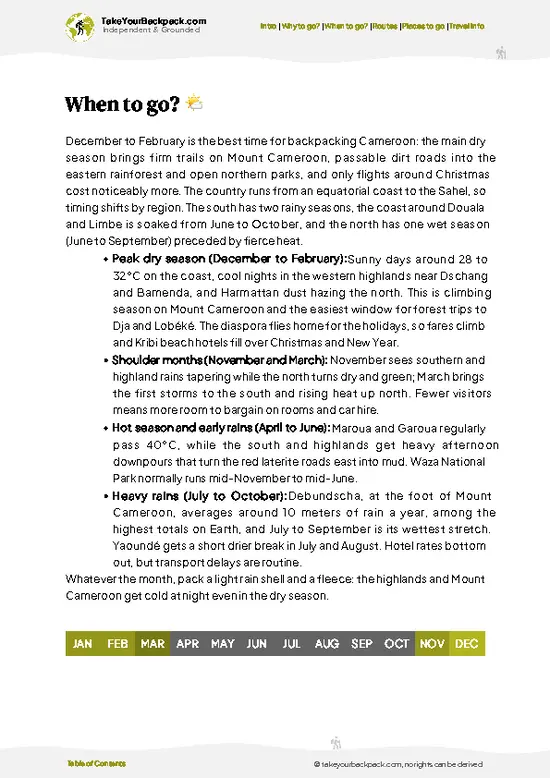
source: climatestotravel.comJANJanuary: excellent for travelingFEBFebruary: highly recommended for travelingMARMarch: fair for travelingAPRApril: fair for travelingMAYMay: fair for travelingJUNJune: fair for travelingJULJuly: fair for travelingAUGAugust: fair for travelingSEPSeptember: fair for travelingOCTOctober: fair for travelingNOVNovember: highly recommended for travelingDECDecember: excellent for traveling
when-to-go

✈️ The backpacker research shortcutCameroon Travel Guide

An offline-friendly backpacking guide with optimized travel routes, ranked highlights, transport advice, and the best areas to stay.
example page 0 from our offline Travel Guide for Cameroon
example page 1 from our offline Travel Guide for Cameroon
example page 2 from our offline Travel Guide for Cameroon
example page 3 from our offline Travel Guide for Cameroon
example page 4 from our offline Travel Guide for Cameroon
example page 5 from our offline Travel Guide for Cameroon
example page 6 from our offline Travel Guide for Cameroon
example page 7 from our offline Travel Guide for Cameroon
The digital guide (383 pages) contains:
95 highlights, ranked by travel appeal
Optimized 7, 14 & 21-day travel routes
Cities, national parks, landmarks, beaches
How to get around
Offline-friendly for travel without Wi-Fi
👉 Click to see all 30+ guide features

📅 Plan smarter in minutes, not weeks
Month by month travel advice
Festivals & national holidays
Budget expectations

🗺️ Go to the right places, skip the overrated ones
Honest pros & cons of destinations
Top hikes, parks & viewpoints
Lesser-known places most travelers miss
Clear “worth it vs skip it” guidance

🛏️ Travel smoothly without rookie mistakes
Best areas to stay
Transport systems explained simply
Common scams & safety advice
SIM cards, money & practical tips

🌍 Understand the country, not just visit it
Culture & traditions
52 Essential phrases & customs
Festivals worth planning around
Traveler-friendly historical context
Insights that make places more meaningful

📱 Built for real travel conditions
Fully downloadable PDF
Works completely offline
Optimized for phone use
Useful in remote areas & buses
Everything in one place
Save weeks of stressful planning
Get instant access to your full guide. 30‑day money-back guarantee.


By proceeding you agree to our terms.
Sent to your inbox immediately after payment • 100% Secure Checkout
Best Backpacking Travel Advisor 2025 tourism awardBest Backpacking
Travel Advisor
2025
What others say about Take Your Backpack Guides:
⭐⭐⭐⭐⭐
Fantastic, amazing amount of information!
⭐⭐⭐⭐⭐
My goodness this is amazing, it's what I've been looking for hats off too you!
⭐⭐⭐⭐⭐
I think this is absolutely BRILLIANT
⭐⭐⭐⭐
Very complete and informative. It's still missing places, but I gotta to commend you
⭐⭐⭐⭐⭐
This is truly amazing, thank you, can't wait to explore it with my kids!
⭐⭐⭐⭐⭐
Awesome resource, thank you!
⭐⭐⭐⭐⭐
This is amazing! Can't wait to explore the ones I haven't seen
⭐⭐⭐⭐
I love this! Well done, great idea.
⭐⭐⭐⭐⭐
Thanks for taking the time to make this gem!
⭐⭐⭐⭐⭐
This might be the best website I've ever seen.
⭐⭐⭐⭐⭐
Congratulations, and thank you so much for your work; it's incredibly valuable.
⭐⭐⭐⭐
In all seriousness I think you did a great job pointing out the important spots
⭐⭐⭐⭐⭐
10/10 very good
⭐⭐⭐⭐⭐
As someone who's only just starting to visit regularly this is awesome, thank you.
⭐⭐⭐⭐
Thank you very much! I'm going to visit my dad, it's going to be very useful!
⭐⭐⭐⭐⭐
This is really cool! We'll be travelling for the first time and this definitely come in handy.
⭐⭐⭐⭐⭐
You are now our minister of culture, congratulations 👨‍💼
⭐⭐⭐⭐⭐
Just wanted to tell you that this is a pearl! Going to follow your recommendations.
⭐⭐⭐⭐⭐
This is so cool. I'll definitely be using the resource for my travels soon.
⭐⭐⭐⭐⭐
This is very impressive! Good work.
⭐⭐⭐⭐⭐
This is an amazing and informative site. Very well done!

🛏️ Where to stay?Best areas to stay in Cameroon

In Yaoundé, the backpacker’s sweet spot lies primarily in the Bastos and Mvog-Mbi neighborhoods. These areas strike a smart balance between safety, social buzz, and budget-friendly options—a rare trifecta in a city where sprawling districts can feel disconnected or overwhelming. Bastos, known for its diplomatic vibe, offers a quieter, more secure base with easy access to cafes and markets where you can mingle with expats and locals alike. It’s not the cheapest, but the comfort and safety pay off, especially for solo travelers who want to avoid the hassle of constant vigilance.

Mvog-Mbi, on the … read more 👉
In Yaoundé, the backpacker’s sweet spot lies primarily in the Bastos and Mvog-Mbi neighborhoods. These areas strike a smart balance between safety, social buzz, and budget-friendly options—a rare trifecta in a city where sprawling districts can feel disconnected or overwhelming. Bastos, known for its diplomatic vibe, offers a quieter, more secure base with easy access to cafes and markets where you can mingle with expats and locals alike. It’s not the cheapest, but the comfort and safety pay off, especially for solo travelers who want to avoid the hassle of constant vigilance.

Mvog-Mbi, on the other hand, pulses with youthful energy. It’s where you’ll find more hostels and guesthouses catering to budget travelers, making it easier to meet fellow backpackers. The vibe here is more casual and lively, with street food stalls and local hangouts that invite spontaneous conversations. It’s a bit rougher around the edges than Bastos but offers a more authentic urban experience without sacrificing safety.

Other parts of Yaoundé can feel either too residential or too chaotic for newcomers. The city’s layout means transport can be a headache, so staying in these two neighborhoods minimizes time lost in traffic while maximizing your chances to connect and recharge. Choosing between Bastos and Mvog-Mbi boils down to your comfort threshold versus your craving for social immersion—both deliver solid value for the savvy backpacker.

🚌 Getting aroundMoving around without the hassle

Yaoundé moves at its own rhythm—somewhere between the pulse of a bustling market and the slow simmer of a midday siesta. It’s not a city where you’ll find strict timetables or shiny, predictable transit systems. Instead, you navigate a blend of informal networks and bursts of energy that demand a mix of patience and street smarts. The flow here is less about clockwork precision and more about reading the room—knowing when to jump on a shared taxi or when to stretch your legs and take in the city’s layers on foot. Understanding this flow is your secret weapon; it turns what looks like chaos into a game you’re winning.


  • Walking: The ultimate budget move. Yaoundé’s central neighborhoods are compact enough to explore on foot, letting you soak in street life, local markets, and unexpected corners.
read more 👉
Yaoundé moves at its own rhythm—somewhere between the pulse of a bustling market and the slow simmer of a midday siesta. It’s not a city where you’ll find strict timetables or shiny, predictable transit systems. Instead, you navigate a blend of informal networks and bursts of energy that demand a mix of patience and street smarts. The flow here is less about clockwork precision and more about reading the room—knowing when to jump on a shared taxi or when to stretch your legs and take in the city’s layers on foot. Understanding this flow is your secret weapon; it turns what looks like chaos into a game you’re winning.


  • Walking: The ultimate budget move. Yaoundé’s central neighborhoods are compact enough to explore on foot, letting you soak in street life, local markets, and unexpected corners. It costs nothing, gives you total control over your pace, and reveals details missed from a vehicle window. Just watch for uneven sidewalks and the occasional burst of traffic.


  • Shared Taxis (Taxi Collectifs): These are the backbone of Yaoundé’s transit. They run on flexible schedules—departing when full rather than on the hour—so timing is part luck, part hustle. Fares hover around 200-500 CFA francs (about 30-75 cents), making them cheap but often crowded and noisy. They’re fast compared to walking but can feel like a sardine can during rush hour. Comfort is minimal; expect close quarters and a lively atmosphere.


  • Motorcycle Taxis (Benskin): When time is tight and you want to dodge traffic snarls, motorcycle taxis are your go-to. They’re quick and nimble, weaving through jams with ease. Prices vary but generally start around 300 CFA francs for short trips. The trade-off? Safety and comfort take a backseat, so helmet use is a must, and hold on tight.


  • City Buses: Less common for tourists but worth knowing. These buses cover longer routes and are incredibly cheap (under 500 CFA francs), but schedules are irregular and stops aren’t always clearly marked. They’re slower and less comfortable than taxis but offer a genuine local experience if you’re patient and adventurous.


  • Private Taxis: More expensive and less predictable in price, private taxis offer the comfort of a personal ride and air conditioning if you negotiate well. Expect to pay several thousand CFA francs depending on distance. They’re a solid option when you want to save time and avoid the crush but don’t want to splurge on a ride-hailing app.


Mastering Yaoundé’s transit means balancing your priorities: save money by walking or hopping on a shared taxi, save time with a motorcycle taxi, or invest in comfort with a private ride. Each choice shifts your experience—whether you’re soaking in the city’s textures or racing to your next destination. The key is knowing what you’re trading off and owning that decision like a pro.

👛 Costs (as of 3 April 2025)How expensive it really is

Backpacking in Yaoundé, Cameroon, involves a clear set of trade-offs between time, money, and comfort, and knowing the average daily costs helps you play that system smartly.
  • Dorm Accommodation (High Season): Expect to pay around €10-€15 per night. High season drives prices up due to demand, but you still get basic, clean dorm beds in guesthouses or budget hostels.
  • Dorm Accommodation (Off-Season): Prices drop to about €6-€10 per night. Off-season means fewer tourists, so you can negotiate better deals or find quieter spots with the same basic comfort.
  • Meals: Street food and local eateries will cost you roughly €3-€6 per day. Think grilled fish, plantains, and fresh fruit—simple, filling, and affordable. Avoid touristy restaurants if you want to keep costs low.
  • Local Transport: Short rides
read more 👉
Backpacking in Yaoundé, Cameroon, involves a clear set of trade-offs between time, money, and comfort, and knowing the average daily costs helps you play that system smartly.
  • Dorm Accommodation (High Season): Expect to pay around €10-€15 per night. High season drives prices up due to demand, but you still get basic, clean dorm beds in guesthouses or budget hostels.
  • Dorm Accommodation (Off-Season): Prices drop to about €6-€10 per night. Off-season means fewer tourists, so you can negotiate better deals or find quieter spots with the same basic comfort.
  • Meals: Street food and local eateries will cost you roughly €3-€6 per day. Think grilled fish, plantains, and fresh fruit—simple, filling, and affordable. Avoid touristy restaurants if you want to keep costs low.
  • Local Transport: Short rides on motorbike taxis or minibuses usually run about €0.30-€0.60 each. They’re quick and cheap but can be a bit chaotic, so factor in some patience for the trade-off.
  • City Transport Pass: Yaoundé doesn’t have a formal city transport pass system like bigger metros, so budgeting for individual rides is your best bet. A daily transport budget of around €1.50 covers multiple trips.
  • Basic Activities/Entry Fees: Museums, markets, and cultural sites typically charge between €1-€3. These low fees make exploring the city’s culture accessible without breaking the bank.
  • Miscellaneous Expenses: This includes bottled water, snacks, occasional tips, or small purchases, averaging about €1-€2 daily. It’s the buffer zone for those little extras that add up.

Total daily costs for backpacking in Yaoundé generally range from €15 to €25, depending on the season and your choices. This range balances budget accommodation, local meals, and transport, giving you a solid framework to decide where to save and where to spend for comfort or convenience.
⚠️ Prices can change and everyone travels differently, so take this as a rough guide. Hope it helps you plan your adventure!

🚌 Day tripsEasy escapes and nearby places

Yaoundé is a fantastic launchpad for day trips that blend adventure with cultural immersion. Here are some standout options that make the most of your time, money, and comfort.

Mefou National Park
Just a 30-minute drive from Yaoundé, Mefou National Park is a sanctuary for wildlife enthusiasts. You’ll encounter rescued primates, including gorillas and chimpanzees, in a lush rainforest setting. The entrance fee is around 5,000 CFA, and guided tours are available for an additional cost. The best time to visit is during the dry season, from November to March, when the trails are more accessible. A common mistake is underestimating the park’s size; plan for at least half a day to fully enjoy the experience.


Bafoussam
About two hours from Yaoundé, Bafoussam offers a glimpse into the highland … read more 👉
Yaoundé is a fantastic launchpad for day trips that blend adventure with cultural immersion. Here are some standout options that make the most of your time, money, and comfort.

Mefou National Park
Just a 30-minute drive from Yaoundé, Mefou National Park is a sanctuary for wildlife enthusiasts. You’ll encounter rescued primates, including gorillas and chimpanzees, in a lush rainforest setting. The entrance fee is around 5,000 CFA, and guided tours are available for an additional cost. The best time to visit is during the dry season, from November to March, when the trails are more accessible. A common mistake is underestimating the park’s size; plan for at least half a day to fully enjoy the experience.


Bafoussam
About two hours from Yaoundé, Bafoussam offers a glimpse into the highland culture of Cameroon. The town is known for its vibrant markets and traditional handicrafts. You can grab a bus for around 2,500 CFA, making it an affordable day trip. The best time to visit is during the market days, typically on Wednesdays and Saturdays. Many first-timers miss the chance to engage with local artisans; don’t hesitate to ask questions and learn about their crafts.
👉 Explore Bafoussam

Lake Awing
A scenic two-hour journey will take you to Lake Awing, a serene spot perfect for a picnic or a leisurely hike. The lake is surrounded by rolling hills and offers a peaceful escape from the city buzz. Expect to spend around 1,000 CFA for transport and a small fee for access. The dry season is ideal for clear views and pleasant weather. A common oversight is not bringing enough water and snacks; pack wisely to enjoy your time by the lake.


Ekom-Nkam Waterfalls
Roughly an hour and a half from Yaoundé, Ekom-Nkam Waterfalls is a breathtaking natural wonder. The cascading waters create a stunning backdrop for photos and a refreshing dip. Entry is about 1,500 CFA, and the journey is best made by shared taxi for around 1,000 CFA. The rainy season can make the trails slippery, so aim for the dry months. Many visitors forget to bring swimwear; don’t miss the chance to cool off!
👉 Explore Ekom-Nkam Waterfalls

Lomé
If you’re feeling adventurous, consider a day trip to Lomé, the capital of Togo, just a few hours away. The vibrant markets and coastal views are worth the effort. Buses run regularly, costing around 5,000 CFA. The best time to visit is during the cooler months, from November to February. First-timers often overlook the border crossing; ensure you have your passport and any necessary visas ready.
Want to know what more Cameroon offers?
The Cameroon Travel Guide describes 95 highlights, from cities to national parks, from beaches to hikes

Get the Travel Guide -

🍲 FoodLocal Cuisine & Drinks

In Yaoundé, the culinary scene is a vibrant tapestry of flavors that beckons you to dive in. Start with Ndole, a rich dish made from bitter leaves, groundnuts, and fish or meat. It’s a staple that embodies the heart of Cameroonian cuisine. Pair it with plantains or fufu, and you’ve got a meal that’s both filling and flavorful.

Street food is where the magic happens. Vendors line the bustling streets, serving up suya—spicy skewers of grilled meat that sizzle with flavor. The aroma alone is enough to draw you in. Don’t miss out on Akara, deep-fried bean cakes that are crispy on the outside and soft inside, perfect for a quick snack.

For drinks, try palm wine, a local favorite that’s often served fresh from the tree. It’s sweet, slightly tangy, and best enjoyed in a communal setting. You’ll … read more 👉
In Yaoundé, the culinary scene is a vibrant tapestry of flavors that beckons you to dive in. Start with Ndole, a rich dish made from bitter leaves, groundnuts, and fish or meat. It’s a staple that embodies the heart of Cameroonian cuisine. Pair it with plantains or fufu, and you’ve got a meal that’s both filling and flavorful.

Street food is where the magic happens. Vendors line the bustling streets, serving up suya—spicy skewers of grilled meat that sizzle with flavor. The aroma alone is enough to draw you in. Don’t miss out on Akara, deep-fried bean cakes that are crispy on the outside and soft inside, perfect for a quick snack.

For drinks, try palm wine, a local favorite that’s often served fresh from the tree. It’s sweet, slightly tangy, and best enjoyed in a communal setting. You’ll find it at local bars where laughter and stories flow as freely as the drinks.

Etiquette is relaxed; sharing food is common, and it’s polite to greet vendors with a smile. Embrace the communal vibe, and don’t hesitate to strike up a conversation. In Yaoundé, every meal is a chance to connect, making each bite a part of your adventure.

🛡️ SafetyTraveler Safety Guide

Yaoundé is generally safe for backpackers, but a few situational awareness tips can enhance your experience. Stick to well-trafficked areas, especially in neighborhoods like Bastos and Messa, where the vibe is lively and locals are friendly. Solo travelers should avoid wandering too far after dark; the streets can feel quieter, and it’s best to stick to groups or use trusted transport options.

Common scams are minimal, but be cautious around markets. Vendors may inflate prices for tourists, so don’t hesitate to haggle. A friendly smile and a firm “no” can go a long way in deflecting unwanted attention.

Annoyances like aggressive taxi drivers can pop up, so agree on fares before getting in. Carrying a small amount of cash helps, as many places don’t accept cards. Overall, keep your belongings … read more 👉
Yaoundé is generally safe for backpackers, but a few situational awareness tips can enhance your experience. Stick to well-trafficked areas, especially in neighborhoods like Bastos and Messa, where the vibe is lively and locals are friendly. Solo travelers should avoid wandering too far after dark; the streets can feel quieter, and it’s best to stick to groups or use trusted transport options.

Common scams are minimal, but be cautious around markets. Vendors may inflate prices for tourists, so don’t hesitate to haggle. A friendly smile and a firm “no” can go a long way in deflecting unwanted attention.

Annoyances like aggressive taxi drivers can pop up, so agree on fares before getting in. Carrying a small amount of cash helps, as many places don’t accept cards. Overall, keep your belongings secure and maintain a confident demeanor. With these strategies, you’ll navigate Yaoundé like a pro, soaking in the local culture without unnecessary stress.

Other Cameroonian cities near Yaoundé

Explore more nearby:

  • Ebolowa—South Region forests, cocoa plantations, colonial architecture| 114 km away
  • Douala—Atlantic port, economic center, industrial zones, urban sprawl| 197 km away
  • Nkongsamba—Manengouba Mountains, agricultural basin, railway terminus| 215 km away

💡 Not sure where to go next?
Create a personalized itinerary for Cameroon including Yaoundé and the places that fit your trip.

Generate my itinerary

👉 Discover all cities

Or checkout all Cameroon has to offer (think cities, towns, villages, national parks, hikes, beaches, festivals)
Country photo of Cameroon

We 💚 feedbackFinal thoughts on visiting Yaoundé

Yaoundé has a pulse that’s hard to ignore. The blend of bustling markets and laid-back cafes creates a unique rhythm. You might stumble upon a local music scene that’ll surprise you—live bands in intimate venues, where the energy is electric. Just a heads-up: traffic can be a nightmare, so plan your outings wisely. Embrace the chaos; it’s part of the charm. Dive into the street food, especially the grilled plantains. They’re a revelation. Enjoy the ride; it’s all part of the adventure.

✍️ Help improve this page!
The information on this page is based on in-depth research, insights shared by experienced travelers, and feedback from the local travel community in Cameroon. While every effort is made to keep the information accurate and current, conditions can change — so if you spot anything incorrect or outdated, please get in touch.


🙋‍♂️ Give feedback

👋 Meet the founderWho’s Behind Take Your Backpack?

Johan, backpacker and founder of TakeYourBackpackHi, I’m Johan (Netherlands 🇳🇱), the creator of TakeYourBackpack. Over the past decade, I’ve backpacked through 80+ countries across six continents, gaining extensive experience with independent travel, long-term trips, and overland routes.

This site is built on a combination of firsthand travel experience and carefully curated insights from other backpackers. Many guides are based on places I’ve personally visited, while others bring together tips, observations, and practical advice shared by trusted travelers I’ve met along the way.

The goal is to provide realistic, experience-driven guidance — not generic itineraries — so you can explore destinations with better context, clearer expectations, and more confidence.

Get full Cameroon guide •
Instant download • 95 highlights • Full Offline guide