×

Canada🇨🇦 | national parksAuyuittuqArctic peaks, glaciers, tundra valleys | things to do and best time to go

Explore Chilkoot TrailExplore Banff National Park

Backpacking in Auyuittuq
👍 Recommendednational park ranked #14
By Johan Kruseman 🇳🇱 | Updated June 14, 2026

Your first real decision in Auyuittuq is brutal but simple: commit to a serious backcountry traverse (like the Akshayuk Pass) or stick to short out‑and‑back hikes from Pangnirtung or Qikiqtarjuaq. That choice controls your costs, risk, and how much of your energy gets burned on logistics instead of the land itself. Auyuittuq sits on Baffin Island in Nunavut, far above the tree line, and it feels like a stone-and-ice cathedral: huge granite walls, glaciers, river crossings that can end your trip if you misjudge them. Hiking is phenomenal but unforgiving; there’s almost no wildlife compared with parks in the south, and you’re paying serious money just to reach the trailhead, before you even touch the park entrance fees or mandatory gear. Camping is wild, windy, and completely exposed—no hostels, no cheap cabins, just your tent and whatever you carried in. Crowds are minimal, which sounds romantic until you realize it also means no easy rescue and no one to borrow fuel from. Compared with places like Aulavik or Sirmilik, Auyuittuq is more accessible by Arctic standards and more famous, but also more regulated and less “choose-your-own-adventure” than they are. It’s not the place to dabble in backpacking; it’s where you go once you already know exactly what you’re doing and why you’re willing to pay this much to walk through rock and silence.

Discover everything you want to know in the 📖 Canada Travel Guide.


Get your Canada guide
133 ranked highlights, routes & tips, works offline (518 pages)
Loading the map 🌍
CLICK TO FILTER
cities
towns
villages
landmarks
national parks
hikes
beaches
attractions
festivals
regions
SHOW COUNTRY’S BESTSHOW ALL

✨ Why go?
Ranked #14 national park in Canada
Reasons people choose to explore here

Auyuittuq National Park attracts backpackers for its independent exploration opportunities. The rugged terrain invites you to carve your own path, making it ideal for those who prefer to wander without a guide. Budget camping is a major draw; you can pitch your tent in designated areas without breaking the bank. Nearby hostels offer affordable options for those who want a roof over their heads before or after their adventures. The trail variety is impressive, catering to both seasoned hikers and those looking for a leisurely stroll. This park is particularly suited for self-guided travelers, allowing you to set your own pace and immerse yourself in the stunning landscapes without the constraints of a tour group.
Want to include Auyuittuq in your Canada route?
Create a personalized Canada itinerary that includes Auyuittuq and the places that fit your trip — based on your travel style, budget, and available time. Get your route in seconds.

Generate my trip

💡 HighlightsWhat this place is best known for

  • Akshayuk Pass — The backbone of the park and my personal favorite: a multi-day, glacially carved corridor that threads between towering peaks, moraine fields, and meltwater streams. It’s the classic backpacking route here—long, remote, and spectacularly varied terrain that rewards good planning and patience.
  • Mount Thor — Famous for an enormous near-vertical cliff (about a 1,250 m drop) that draws climbers and gawkers alike. Even if you’re not climbing, the sheer face and the bowl of the surrounding valley make for jaw-dropping photos and an unforgettable viewpoint.
  • Mount Asgard — Those twin, cylindrical rock towers with a flat top are instantly recognizable and popular with technical climbers and photographers. Hike to the ridgelines around it for dramatic panoramas and the feeling of
read more 👉
  • Akshayuk Pass — The backbone of the park and my personal favorite: a multi-day, glacially carved corridor that threads between towering peaks, moraine fields, and meltwater streams. It’s the classic backpacking route here—long, remote, and spectacularly varied terrain that rewards good planning and patience.
  • Mount Thor — Famous for an enormous near-vertical cliff (about a 1,250 m drop) that draws climbers and gawkers alike. Even if you’re not climbing, the sheer face and the bowl of the surrounding valley make for jaw-dropping photos and an unforgettable viewpoint.
  • Mount Asgard — Those twin, cylindrical rock towers with a flat top are instantly recognizable and popular with technical climbers and photographers. Hike to the ridgelines around it for dramatic panoramas and the feeling of standing in a place that looks almost otherworldly.
  • Penny Ice Cap and outlet glaciers — A massive icefield that feeds the park’s glaciers; you’ll see crevassed glaciers, blue ice, and glacial polish on valley walls. From higher passes the scale of the ice cap and the patterns of flow are staggering—bring a good camera and a head for altitude.
  • Pangnirtung Fjord and village — The southwestern gateway to the park: dramatic fjord scenery, turquoise water against steep cliffs, and a small Inuit community where you can resupply, catch a boat, or buy local art. It’s also the practical starting/ending point for many trips into the park.
  • Seabird cliffs and marine wildlife — Look for nesting seabirds, seals in the fjords, and the occasional whale or polar bear along the coast; on land you might spot arctic foxes and caribou. Wildlife sightings are seasonal and patchy, so treat them as a wonderful bonus rather than a guarantee—and always keep a safe distance.
  • Glacial cirques, waterfalls, and alpine tundra — The park is full of U-shaped valleys, hanging glaciers that feed dramatic waterfalls, and surprising patches of tundra wildflowers in summer. Those tiny alpine blooms against massive granite walls are one of those small-scale contrasts that make Auyuittuq feel alive.
Spotted a mistake or missing something? Contact us.
🌤️ When to go?Choosing the right time of year


  • Weather: The park’s brutal Arctic climate means summer is your only real option. From June to August, temperatures hover between 5°C and 15°C (41°F to 59°F), which is mild but still chilly, especially at night.

  • Daylight Hours: Expect nearly 24-hour daylight in mid-summer, giving you maximum hiking time but also demanding good sleep strategies.

  • Crowds: Despite its remoteness, summer draws the most visitors. Early June and late August see fewer people, offering a quieter experience.

  • Seasonal Activities: Summer is the only season for safe trekking; winter trails are inaccessible due to extreme cold and darkness.

  • Price Fluctuations: Costs for flights and permits peak in July. Booking early can save you a significant chunk, especially on charter flights to the park.


Pro-tip: Aim for … read more 👉

  • Weather: The park’s brutal Arctic climate means summer is your only real option. From June to August, temperatures hover between 5°C and 15°C (41°F to 59°F), which is mild but still chilly, especially at night.

  • Daylight Hours: Expect nearly 24-hour daylight in mid-summer, giving you maximum hiking time but also demanding good sleep strategies.

  • Crowds: Despite its remoteness, summer draws the most visitors. Early June and late August see fewer people, offering a quieter experience.

  • Seasonal Activities: Summer is the only season for safe trekking; winter trails are inaccessible due to extreme cold and darkness.

  • Price Fluctuations: Costs for flights and permits peak in July. Booking early can save you a significant chunk, especially on charter flights to the park.


Pro-tip: Aim for early June or late August to dodge the crowds and snag better deals, while still enjoying the park’s full accessibility.


source: climatestotravel.comJANJanuary: below average for travelingFEBFebruary: below average for travelingMARMarch: below average for travelingAPRApril: below average for travelingMAYMay: fair for travelingJUNJune: highly recommended for travelingJULJuly: good for travelingAUGAugust: highly recommended for travelingSEPSeptember: fair for travelingOCTOctober: below average for travelingNOVNovember: below average for travelingDECDecember: below average for traveling
canada-national-park-auyuittuq
© Google | Scott Elliott

✈️ The backpacker research shortcutCanada Travel Guide

An offline-friendly backpacking guide with optimized travel routes, ranked highlights, transport advice, and the best areas to stay.
example page 0 from our offline Travel Guide for Canada
example page 1 from our offline Travel Guide for Canada
example page 2 from our offline Travel Guide for Canada
example page 3 from our offline Travel Guide for Canada
example page 4 from our offline Travel Guide for Canada
example page 5 from our offline Travel Guide for Canada
example page 6 from our offline Travel Guide for Canada
example page 7 from our offline Travel Guide for Canada
The digital guide (518 pages) contains:
133 highlights, ranked by travel appeal
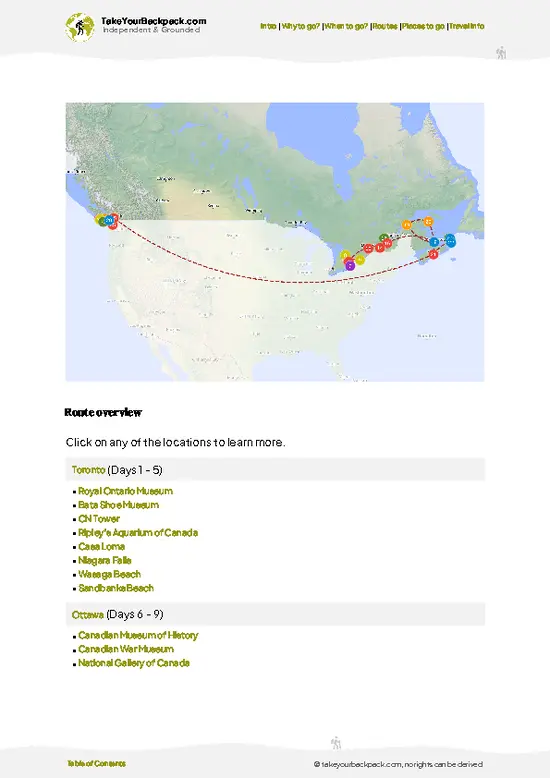
Optimized 14, 21 & 30-day travel routes
Cities, national parks, landmarks, beaches
How to get around
Offline-friendly for travel without Wi-Fi
👉 Click to see all 30+ guide features

📅 Plan smarter in minutes, not weeks
Month by month travel advice
Festivals & national holidays
Budget expectations

🗺️ Go to the right places, skip the overrated ones
Honest pros & cons of destinations
Top hikes, parks & viewpoints
Lesser-known places most travelers miss
Clear “worth it vs skip it” guidance

🛏️ Travel smoothly without rookie mistakes
Best areas to stay
Transport systems explained simply
Common scams & safety advice
SIM cards, money & practical tips

🌍 Understand the country, not just visit it
Culture & traditions
Local customs
Festivals worth planning around
Traveler-friendly historical context
Insights that make places more meaningful

📱 Built for real travel conditions
Fully downloadable PDF
Works completely offline
Optimized for phone use
Useful in remote areas & buses
Everything in one place
Save weeks of stressful planning
Get instant access to your full guide. 30‑day money-back guarantee.


By proceeding you agree to our terms.
Sent to your inbox immediately after payment • 100% Secure Checkout
Best Backpacking Travel Advisor 2025 tourism awardBest Backpacking
Travel Advisor
2025
What others say about Take Your Backpack Guides:
⭐⭐⭐⭐⭐
Fantastic, amazing amount of information!
⭐⭐⭐⭐⭐
My goodness this is amazing, it's what I've been looking for hats off too you!
⭐⭐⭐⭐⭐
I think this is absolutely BRILLIANT
⭐⭐⭐⭐
Very complete and informative. It's still missing places, but I gotta to commend you
⭐⭐⭐⭐⭐
This is truly amazing, thank you, can't wait to explore it with my kids!
⭐⭐⭐⭐⭐
Awesome resource, thank you!
⭐⭐⭐⭐⭐
This is amazing! Can't wait to explore the ones I haven't seen
⭐⭐⭐⭐
I love this! Well done, great idea.
⭐⭐⭐⭐⭐
Thanks for taking the time to make this gem!
⭐⭐⭐⭐⭐
This might be the best website I've ever seen.
⭐⭐⭐⭐⭐
Congratulations, and thank you so much for your work; it's incredibly valuable.
⭐⭐⭐⭐
In all seriousness I think you did a great job pointing out the important spots
⭐⭐⭐⭐⭐
10/10 very good
⭐⭐⭐⭐⭐
As someone who's only just starting to visit regularly this is awesome, thank you.
⭐⭐⭐⭐
Thank you very much! I'm going to visit my dad, it's going to be very useful!
⭐⭐⭐⭐⭐
This is really cool! We'll be travelling for the first time and this definitely come in handy.
⭐⭐⭐⭐⭐
You are now our minister of culture, congratulations 👨‍💼
⭐⭐⭐⭐⭐
Just wanted to tell you that this is a pearl! Going to follow your recommendations.
⭐⭐⭐⭐⭐
This is so cool. I'll definitely be using the resource for my travels soon.
⭐⭐⭐⭐⭐
This is very impressive! Good work.
⭐⭐⭐⭐⭐
This is an amazing and informative site. Very well done!

🛏️ Where to stay?Best areas and accommodation options

For backpackers heading to Auyuittuq National Park, options are limited but solid. Inside the park, there are no formal accommodations. Instead, you’ll find designated camping areas. Bring your own gear, as the park is all about embracing the wild.

The nearest town is Pangnirtung, about a 30-minute boat ride away. Here, you can find a few guesthouses and lodges, like the Auyuittuq Lodge, which offers basic amenities and a chance to recharge before or after your trek.

Be prepared for higher prices due to the remote location. Stock up on food and supplies in Pangnirtung; options are sparse in … read more 👉
For backpackers heading to Auyuittuq National Park, options are limited but solid. Inside the park, there are no formal accommodations. Instead, you’ll find designated camping areas. Bring your own gear, as the park is all about embracing the wild.

The nearest town is Pangnirtung, about a 30-minute boat ride away. Here, you can find a few guesthouses and lodges, like the Auyuittuq Lodge, which offers basic amenities and a chance to recharge before or after your trek.

Be prepared for higher prices due to the remote location. Stock up on food and supplies in Pangnirtung; options are sparse in the park. Understanding these logistics will help you focus your energy on the breathtaking landscapes rather than logistical headaches.

👛 Costs (as of 30 December 2025)How expensive it really is

Visiting Auyuittuq National Park in Canada requires some planning, especially when it comes to costs.

Entry fees are straightforward. A day pass typically runs around $9.80 CAD (about $7.50 USD). If you’re staying longer, consider the annual pass for about $70 CAD (around $53 USD).

Accommodation options vary widely. Camping is the most budget-friendly choice. Expect to pay around $20 CAD (about $15 USD) per night for a campsite. If you prefer a more comfortable stay, lodges in nearby communities can range from $100 to $200 CAD (approximately $75 to $150 USD) per night.

Transportation is another key factor. If you’re flying into Iqaluit, expect flights to be pricey, often exceeding $1,000 CAD (around $750 USD) round-trip from major Canadian cities. Once in Iqaluit, local transport options … read more 👉
Visiting Auyuittuq National Park in Canada requires some planning, especially when it comes to costs.

Entry fees are straightforward. A day pass typically runs around $9.80 CAD (about $7.50 USD). If you’re staying longer, consider the annual pass for about $70 CAD (around $53 USD).

Accommodation options vary widely. Camping is the most budget-friendly choice. Expect to pay around $20 CAD (about $15 USD) per night for a campsite. If you prefer a more comfortable stay, lodges in nearby communities can range from $100 to $200 CAD (approximately $75 to $150 USD) per night.

Transportation is another key factor. If you’re flying into Iqaluit, expect flights to be pricey, often exceeding $1,000 CAD (around $750 USD) round-trip from major Canadian cities. Once in Iqaluit, local transport options are limited, so renting a vehicle or booking a guided tour can add another $100 to $300 CAD (about $75 to $225 USD) to your budget.

Food costs can also add up. Grocery prices in remote areas are higher. Budget around $15 to $30 CAD (approximately $11 to $22 USD) per day for basic supplies if you’re self-catering. Dining out can push that figure to $50 CAD (about $38 USD) or more per meal.

Plan for additional costs like gear rentals if you’re not bringing your own. Expect to pay around $50 to $100 CAD (about $38 to $75 USD) for items like canoes or camping equipment.

In summary, a trip to Auyuittuq can range from a few hundred to several thousand dollars, depending on your choices. Being aware of these costs will help you allocate your budget wisely, ensuring you have the energy and resources for the experiences that truly matter.


source: pc.gc.ca
⚠️ Prices can change and everyone travels differently, so take this as a rough guide. Hope it helps you plan your adventure!

🥾 TrailsHiking Auyuittuq national park: highlights and difficulty

Auyuittuq National Park is a true gem for those looking to immerse themselves in the wild beauty of Canada’s Arctic. The scenery is jaw-dropping, with towering cliffs, deep fjords, and glaciers that seem to stretch on forever. The terrain is rugged, so be prepared for a mix of rocky paths, ice fields, and the occasional stream crossing. Wildlife is a treat here; you might spot Arctic foxes, caribou, or even a polar bear if you’re lucky. Just remember, this isn’t a walk in the park—some trails can be quite challenging.

One of the standout routes is the Akshayuk Pass. Here’s the lowdown:
  • Length:
read more 👉
Auyuittuq National Park is a true gem for those looking to immerse themselves in the wild beauty of Canada’s Arctic. The scenery is jaw-dropping, with towering cliffs, deep fjords, and glaciers that seem to stretch on forever. The terrain is rugged, so be prepared for a mix of rocky paths, ice fields, and the occasional stream crossing. Wildlife is a treat here; you might spot Arctic foxes, caribou, or even a polar bear if you’re lucky. Just remember, this isn’t a walk in the park—some trails can be quite challenging.

One of the standout routes is the Akshayuk Pass. Here’s the lowdown:
  • Length: 97 km
  • Estimated Duration: 7-10 days
  • Difficulty Level: Moderate to Challenging
  • Key Features: Stunning views of the Penny Ice Cap, unique geological formations, and opportunities for wildlife spotting
  • Terrain: Varied, with rocky sections, glacial areas, and some river crossings

Getting to Auyuittuq can be a bit of an adventure itself. The closest community is Pangnirtung, which you can reach by a flight from Iqaluit. Public transport options are limited, so be prepared for some planning. As for crowds, don’t expect bustling trails; this park is more about solitude and the vastness of nature. There’s no entrance fee, but you’ll want to check for any camping permits or regulations before you head out. Pack wisely, respect the environment, and enjoy the wild!
⚠️ Hiking info can sometimes be outdated or inaccurate. Before you hit the trail, check the latest conditions with locals. If you do spot anything that's off, I'd love to hear from you, so I can update it for fellow travelers.

🛡️ SafetySafety Tips and Common Scams in Auyuittuq

Auyuittuq National Park offers a stunning backdrop for backpackers, but it’s essential to be prepared. Weather can shift rapidly; pack layers to adapt to sudden changes. The terrain varies from flat tundra to steep, rocky sections. Good navigation skills are crucial, especially in foggy conditions.

Wildlife encounters are rare but possible. Keep a respectful distance from any animals you spot. When it comes to river crossings, assess water levels carefully; they can rise quickly.

First-timers often underestimate the park’s remoteness. Ensure your gear is reliable and your food supply ample. Plan your days wisely to avoid fatigue.

Other Canadian national parks near Auyuittuq

Explore more nearby:


💡 Not sure where to go next?
Create a personalized itinerary for Canada including Auyuittuq and the places that fit your trip.

Generate my itinerary

👉 Discover all national parks

Or checkout all Canada has to offer (think cities, towns, villages, national parks, hikes, beaches, festivals)
Country photo of Canada

We 💚 feedbackFinal thoughts on exploring Auyuittuq

Auyuittuq is a wild playground for those who crave raw nature. The breathtaking glaciers and rugged peaks are worth every ounce of effort. But be prepared: the weather can turn on a dime. Pack wisely and stay flexible. Embrace the unpredictability, and you’ll find the real magic in this remote paradise.

✈️ When did I visit Canada?
As part of my 1.5 year travel around the world trip, I visited Canada in 2016.

✍️ Help improve this page!
The information on this page is based on my own backpacking experience in Canada, supplemented with up-to-date research and feedback from other travelers. Travel details can change, so if you notice anything outdated or incomplete, feel free to let me know.


🙋‍♂️ Give feedback

👋 Meet the founderWho’s Behind Take Your Backpack?

Johan, backpacker and founder of TakeYourBackpackHi, I’m Johan (Netherlands 🇳🇱), the creator of TakeYourBackpack. Over the past decade, I’ve backpacked through 80+ countries across six continents, gaining extensive experience with independent travel, long-term trips, and overland routes.

This site is built on a combination of firsthand travel experience and carefully curated insights from other backpackers. Many guides are based on places I’ve personally visited, while others bring together tips, observations, and practical advice shared by trusted travelers I’ve met along the way.

The goal is to provide realistic, experience-driven guidance — not generic itineraries — so you can explore destinations with better context, clearer expectations, and more confidence.

Get full Canada guide •
Instant download • 133 highlights • Full Offline guide