×

Chile🇨🇱 | citiesAricadesert coastline, surfing spots, border culture | things to do and best time to go

Explore ValdiviaExplore Iquique

Backpacking in Arica
👍 Recommendedcity ranked #10
By Johan Kruseman 🇳🇱 | Updated July 28, 2026

You land in Arica and hit your first real fork: do you burn time and money chasing deeper into Chile, or slow down here on the edge of the Atacama and squeeze value out of a “small” city that quietly rewards patience? Arica sits in Chile’s far north, right by the Peruvian border, a dry, sunny outpost between desert and Pacific. For backpackers, it’s cheap for Chile, easy to navigate, and relaxed to the point of sleepy; the Morro viewpoint, the cathedral, and the coastal malecón are pleasant rather than mind‑blowing. Nightlife is modest, safety feels decent if you use normal street sense, and meeting other travelers is hit‑or‑miss compared with San Pedro or Iquique. But as a layover hub for border runs and surfy downtime, it punches above its weight.

Discover everything you want to know in the 📖 Chile Travel Guide.


Get your Chile guide
114 ranked highlights, routes & tips, works offline (449 pages)
Loading the map 🌍
CLICK TO FILTER
cities
towns
villages
landmarks
national parks
hikes
beaches
attractions
festivals
regions
SHOW COUNTRY’S BESTSHOW ALL

✨ Why go?
Ranked #10 city in Chile
Why visitors keep coming back

Arica is a strategic stop for backpackers weaving through Chile. It offers a unique blend of affordability and comfort, making it a solid basecamp for day trips to nearby attractions. The hostel scene is vibrant, with options that cater to every budget, often featuring communal spaces that spark connections with fellow travelers.

The walkability of the city means you can easily explore local markets and enjoy fresh seafood without breaking the bank. When the sun sets, the nightlife comes alive, offering everything from laid-back bars to lively dance spots. Plus, its location makes onward travel to Peru a breeze, allowing you to keep your adventure rolling. If you’re after a place that balances high-value experiences with a laid-back vibe, Arica is worth more than just a quick stop.
Want to include Arica in your Chile route?
Create a personalized Chile itinerary that includes Arica and the places that fit your trip — based on your travel style, budget, and available time. Get your route in seconds.

Generate my trip

💡 HighlightsKey sights and experiences for travelers

  • El Morro de Arica — The huge basalt hill that dominates the city: battlefield monument, old cannons and superb 360° views of Arica and the Pacific. Go up for sunset and picture the town from the spot every local mentions.
  • Paseo 21 de Mayo — A seafront promenade and mirador with murals, sculptures and benches facing the ocean. Great for a relaxed walk, people-watching and catching panoramic photos without much effort.
  • Iglesia San Marcos (Cathedral) — The distinctive iron church in the historic center, often attributed to late-19th-century French engineering. It’s an architectural oddball in the north and a peaceful place to step inside and cool off.
  • Plaza Colón / Plaza de Armas — The city’s social heart: shaded palms, old buildings and cafés. Useful for feeling the local rhythm and as
read more 👉
  • El Morro de Arica — The huge basalt hill that dominates the city: battlefield monument, old cannons and superb 360° views of Arica and the Pacific. Go up for sunset and picture the town from the spot every local mentions.
  • Paseo 21 de Mayo — A seafront promenade and mirador with murals, sculptures and benches facing the ocean. Great for a relaxed walk, people-watching and catching panoramic photos without much effort.
  • Iglesia San Marcos (Cathedral) — The distinctive iron church in the historic center, often attributed to late-19th-century French engineering. It’s an architectural oddball in the north and a peaceful place to step inside and cool off.
  • Plaza Colón / Plaza de Armas — The city’s social heart: shaded palms, old buildings and cafés. Useful for feeling the local rhythm and as a starting point for wandering the downtown streets.
  • Mercado Central (Central Market) — No-frills seafood stalls, ceviche stands and produce — perfect for trying fresh pescado a la plancha or a quick, cheap meal and watching fishermen bring in the catch.
  • Playa Chinchorro — Arica’s main urban beach: wide sand, decent waves for bodyboarding and a relaxed vibe. It’s where locals hang out on hot afternoons and where you can mix sun time with street food.
  • El Laucho — A small cove and boatyard with colorful fishing boats, local character and excellent sunset views. It’s intimate, photogenic and a good spot to observe everyday coastal life.
  • Cerro La Cruz — The hill with the big white cross overlooking the city; a short climb (or drive) leads to a simple but stunning lookout. Visitors often get clearer, quieter views than from the busier Morro.
  • Museo del Mar / Museo Marítimo de Arica — Small maritime museum near the port covering local fishing culture, shells and sea history. Compact but useful for context about Arica’s relationship with the Pacific.
  • Parque Vicuña Mackenna & waterfront esplanade — A shady green belt and seaside paths that locals use for jogging, picnics and weekend markets. Good for an easy afternoon stroll connecting beaches, cafés and viewpoints.
A few excellent day-trip options just outside Arica: the Azapa Valley (olive groves and the San Miguel de Azapa archaeology sites with Chinchorro culture artifacts), the Lluta Valley for rural landscapes and small towns, and the high-altitude scenery around Putre and Lauca National Park (long day but spectacular). My personal favorite for a quick, local hit is the Azapa Valley — easy to reach and full of food, history and weirdly good roadside olive stands.
Spotted a mistake or missing something? Contact us.

Things to do in Arica

Ratings based on Tripadvisor reviews. When you book through this link, you support our work at no extra cost to you.

🏘️ NeighborhoodsNeighborhood guide to Arica

Arica, a coastal city in northern Chile, offers a unique blend of culture, beach life, and accessibility. Here’s how its neighborhoods stack up for backpackers:

Centro Histórico: This is the heart of Arica. You’ll find charming colonial architecture and a bustling market scene. It’s walkable, with plenty of budget-friendly hostels. Nightlife is vibrant here, with bars and restaurants lining the streets. Perfect for short stays where you want to soak up local culture.

La Lisera: A quieter beach area, ideal for those seeking relaxation. The vibe is laid-back, with fewer tourists. Accommodations are slightly pricier, but the ocean views are worth it. Great for longer stays if you want to unwind and enjoy the sun.

Alto de la Virgen: This neighborhood offers a more local experience. It’s a … read more 👉
Arica, a coastal city in northern Chile, offers a unique blend of culture, beach life, and accessibility. Here’s how its neighborhoods stack up for backpackers:

Centro Histórico: This is the heart of Arica. You’ll find charming colonial architecture and a bustling market scene. It’s walkable, with plenty of budget-friendly hostels. Nightlife is vibrant here, with bars and restaurants lining the streets. Perfect for short stays where you want to soak up local culture.

La Lisera: A quieter beach area, ideal for those seeking relaxation. The vibe is laid-back, with fewer tourists. Accommodations are slightly pricier, but the ocean views are worth it. Great for longer stays if you want to unwind and enjoy the sun.

Alto de la Virgen: This neighborhood offers a more local experience. It’s a bit hilly, so expect some walking. Costs are lower here, and you’ll find authentic eateries. It’s less touristy, making it suitable for longer stays where you can immerse yourself in daily life.

El Morro: Known for its iconic hill, this area has stunning views and a mix of hostels and hotels. It’s a bit touristy but offers easy access to transport. Ideal for short stays focused on sightseeing and beach activities.

⌛️ 1 day1-day itinerary for Arica

Arica, Chile, is a coastal treasure where the desert meets the Pacific. It’s a city rich in history, culture, and stunning landscapes, making it a perfect spot for a one-day adventure.

Start your morning at the Mercado Central, where the aroma of fresh seafood and local produce fills the air. Grab a hearty breakfast of empanadas and coffee from one of the vendors. The vibrant atmosphere is a great way to immerse yourself in local life. After fueling up, stroll over to the nearby Morro de Arica. The climb is steep, but the panoramic views of the city and ocean are worth every step.

In the afternoon, head to the historic downtown area, particularly the Plaza Colón. Here, you can admire the architecture of the San Marcos Cathedral and take a moment to relax under the palm trees. For a unique … read more 👉
Arica, Chile, is a coastal treasure where the desert meets the Pacific. It’s a city rich in history, culture, and stunning landscapes, making it a perfect spot for a one-day adventure.

Start your morning at the Mercado Central, where the aroma of fresh seafood and local produce fills the air. Grab a hearty breakfast of empanadas and coffee from one of the vendors. The vibrant atmosphere is a great way to immerse yourself in local life. After fueling up, stroll over to the nearby Morro de Arica. The climb is steep, but the panoramic views of the city and ocean are worth every step.

In the afternoon, head to the historic downtown area, particularly the Plaza Colón. Here, you can admire the architecture of the San Marcos Cathedral and take a moment to relax under the palm trees. For a unique experience, visit the Museo de Sitio Colon 10, a lesser-known archaeological site that showcases the region’s rich pre-Columbian history. It’s a bit off the beaten path, but the insights into ancient cultures are fascinating.

As the sun sets, make your way to the beach at La Lisera. This spot is perfect for unwinding with a local pisco sour in hand while watching the waves crash against the shore. The evening wraps up with a casual dinner at a seaside restaurant, where you can savor fresh ceviche. This day in Arica blends culture, history, and relaxation, leaving you with a sense of connection to this vibrant city.
Turn your Arica visit into an Chile adventure
Build a complete Chile route with Arica, hidden gems, must-see destinations, and realistic travel times included.

Generate my trip

🌤️ When to go?Choosing the right time of year


  • Topic: Weather – Arica boasts a desert climate, meaning dry and sunny most of the year. The summer months (December to February) hit highs around 25-30°C (77-86°F), while winter (June to August) cools down to 18-22°C (64-72°F). Rain is rare, so weather won’t often dictate your plans.

  • Topic: Temperature – Nights can be surprisingly cool, especially in winter, dropping to 12°C (54°F). Pack layers if you’re camping or trekking early mornings or evenings.

  • Topic: Daylight Hours – Long daylight stretches in summer offer up to 14 hours of light, perfect for extended hikes or beach time. Winter days shrink to about 10 hours, which tightens your daily schedule.

  • Topic: Crowds – Peak tourist season aligns with summer holidays, so expect more visitors and higher prices. Shoulder seasons (spring
read more 👉

  • Topic: Weather – Arica boasts a desert climate, meaning dry and sunny most of the year. The summer months (December to February) hit highs around 25-30°C (77-86°F), while winter (June to August) cools down to 18-22°C (64-72°F). Rain is rare, so weather won’t often dictate your plans.

  • Topic: Temperature – Nights can be surprisingly cool, especially in winter, dropping to 12°C (54°F). Pack layers if you’re camping or trekking early mornings or evenings.

  • Topic: Daylight Hours – Long daylight stretches in summer offer up to 14 hours of light, perfect for extended hikes or beach time. Winter days shrink to about 10 hours, which tightens your daily schedule.

  • Topic: Crowds – Peak tourist season aligns with summer holidays, so expect more visitors and higher prices. Shoulder seasons (spring and fall) balance fewer crowds with still-pleasant weather.

  • Topic: Seasonal Activities – Summer unlocks water sports and vibrant local festivals, while winter is quieter, ideal for exploring cultural sites without the buzz.

  • Topic: Price Fluctuations – Accommodation and tours spike in summer. Booking in shoulder seasons can save you a solid chunk of cash without sacrificing much comfort or experience.


Pro-tip: Aim for spring or fall to maximize your budget and avoid crowds, while still enjoying warm days and long light—smart timing turns Arica from a simple stop into a highlight.


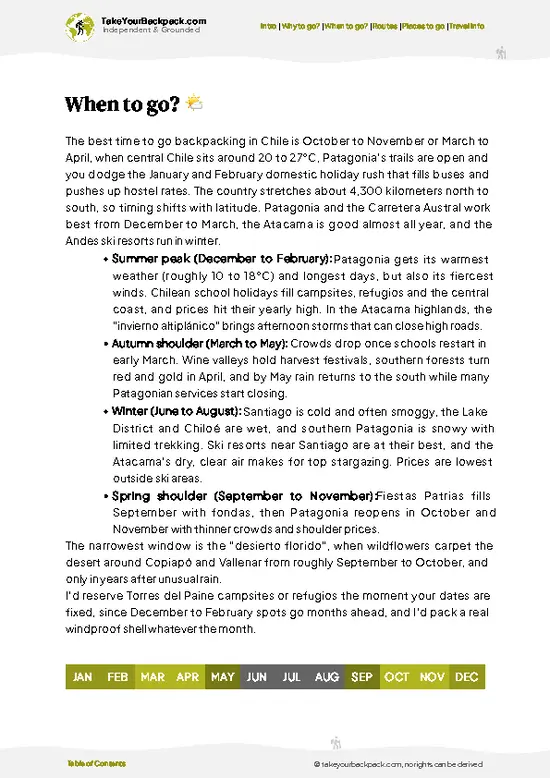
source: climatestotravel.comJANJanuary: highly recommended for travelingFEBFebruary: highly recommended for travelingMARMarch: excellent for travelingAPRApril: excellent for travelingMAYMay: highly recommended for travelingJUNJune: good for travelingJULJuly: good for travelingAUGAugust: good for travelingSEPSeptember: excellent for travelingOCTOctober: excellent for travelingNOVNovember: highly recommended for travelingDECDecember: highly recommended for traveling
chile-city-arica
© Google |

✈️ The backpacker research shortcutChile Travel Guide

An offline-friendly backpacking guide with optimized travel routes, ranked highlights, transport advice, and the best areas to stay.
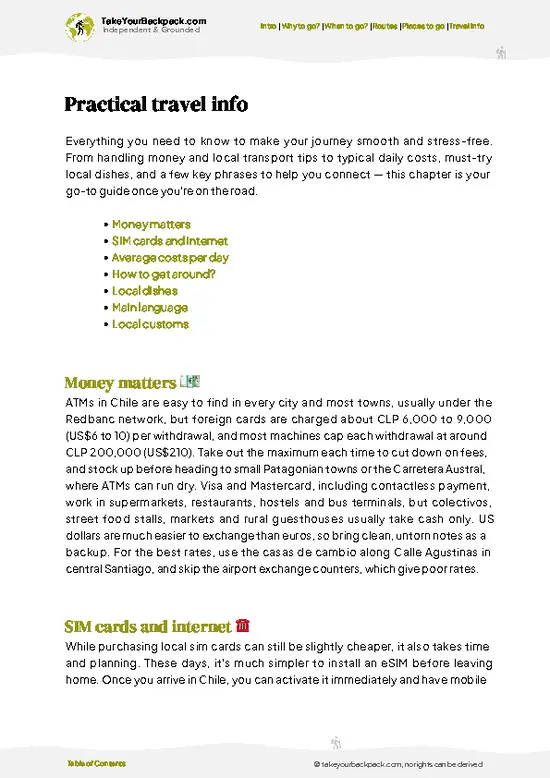
example page 0 from our offline Travel Guide for Chile
example page 1 from our offline Travel Guide for Chile
example page 2 from our offline Travel Guide for Chile
example page 3 from our offline Travel Guide for Chile
example page 4 from our offline Travel Guide for Chile
example page 5 from our offline Travel Guide for Chile
example page 6 from our offline Travel Guide for Chile
example page 7 from our offline Travel Guide for Chile
The digital guide (449 pages) contains:
114 highlights, ranked by travel appeal
Optimized 7, 14 & 21-day travel routes
Cities, national parks, landmarks, beaches
How to get around
Offline-friendly for travel without Wi-Fi
👉 Click to see all 30+ guide features

📅 Plan smarter in minutes, not weeks
Month by month travel advice
Festivals & national holidays
Budget expectations

🗺️ Go to the right places, skip the overrated ones
Honest pros & cons of destinations
Top hikes, parks & viewpoints
Lesser-known places most travelers miss
Clear “worth it vs skip it” guidance

🛏️ Travel smoothly without rookie mistakes
Best areas to stay
Transport systems explained simply
Common scams & safety advice
SIM cards, money & practical tips

🌍 Understand the country, not just visit it
Culture & traditions
52 Essential phrases & customs
Festivals worth planning around
Traveler-friendly historical context
Insights that make places more meaningful

📱 Built for real travel conditions
Fully downloadable PDF
Works completely offline
Optimized for phone use
Useful in remote areas & buses
Everything in one place
Save weeks of stressful planning
Get instant access to your full guide. 30‑day money-back guarantee.


By proceeding you agree to our terms.
Sent to your inbox immediately after payment • 100% Secure Checkout
Best Backpacking Travel Advisor 2025 tourism awardBest Backpacking
Travel Advisor
2025
What others say about Take Your Backpack Guides:
⭐⭐⭐⭐⭐
Fantastic, amazing amount of information!
⭐⭐⭐⭐⭐
My goodness this is amazing, it's what I've been looking for hats off too you!
⭐⭐⭐⭐⭐
I think this is absolutely BRILLIANT
⭐⭐⭐⭐
Very complete and informative. It's still missing places, but I gotta to commend you
⭐⭐⭐⭐⭐
This is truly amazing, thank you, can't wait to explore it with my kids!
⭐⭐⭐⭐⭐
Awesome resource, thank you!
⭐⭐⭐⭐⭐
This is amazing! Can't wait to explore the ones I haven't seen
⭐⭐⭐⭐
I love this! Well done, great idea.
⭐⭐⭐⭐⭐
Thanks for taking the time to make this gem!
⭐⭐⭐⭐⭐
This might be the best website I've ever seen.
⭐⭐⭐⭐⭐
Congratulations, and thank you so much for your work; it's incredibly valuable.
⭐⭐⭐⭐
In all seriousness I think you did a great job pointing out the important spots
⭐⭐⭐⭐⭐
10/10 very good
⭐⭐⭐⭐⭐
As someone who's only just starting to visit regularly this is awesome, thank you.
⭐⭐⭐⭐
Thank you very much! I'm going to visit my dad, it's going to be very useful!
⭐⭐⭐⭐⭐
This is really cool! We'll be travelling for the first time and this definitely come in handy.
⭐⭐⭐⭐⭐
You are now our minister of culture, congratulations 👨‍💼
⭐⭐⭐⭐⭐
Just wanted to tell you that this is a pearl! Going to follow your recommendations.
⭐⭐⭐⭐⭐
This is so cool. I'll definitely be using the resource for my travels soon.
⭐⭐⭐⭐⭐
This is very impressive! Good work.
⭐⭐⭐⭐⭐
This is an amazing and informative site. Very well done!

🛏️ Where to stay?Best areas and accommodation options

In Arica, the sweet spot for backpackers is the area around the city center, especially near Avenida 21 de Mayo. This zone nails the balance between safety, social buzz, and budget options. It’s where you’ll find a cluster of hostels catering to solo travelers and groups alike, making it easy to meet others without sacrificing your peace of mind. The streets here are lively but not overwhelming, with plenty of cafes and local eateries that won’t drain your wallet.

Compared to the quieter, more residential neighborhoods farther from downtown, this area keeps you plugged into the city’s pulse. … read more 👉
In Arica, the sweet spot for backpackers is the area around the city center, especially near Avenida 21 de Mayo. This zone nails the balance between safety, social buzz, and budget options. It’s where you’ll find a cluster of hostels catering to solo travelers and groups alike, making it easy to meet others without sacrificing your peace of mind. The streets here are lively but not overwhelming, with plenty of cafes and local eateries that won’t drain your wallet.

Compared to the quieter, more residential neighborhoods farther from downtown, this area keeps you plugged into the city’s pulse. You’re close enough to the beach for sunset strolls and the markets for fresh snacks, but not stuck in tourist traps. The vibe is relaxed but engaging—think casual mingling over pisco sours rather than forced party scenes. If you stray too far north or south, you’ll either lose that social energy or face fewer budget stays, so this central corridor is your best bet for a smart, comfortable base in Arica.

🚌 Getting aroundHow to get from A to B

Arica moves at its own rhythm—neither strictly regimented nor wildly unpredictable. The city’s pulse is a blend of laid-back coastal vibes and the practical hustle of a border town. You’ll find that schedules exist, but they’re flexible, bending to the flow of daily life rather than dictating it. This means your travel choices here are a dance between patience and savvy timing. Knowing when to push for speed, when to save cash, and when to accept a bit of discomfort is your ticket to mastering Arica’s transit game.


  • Walking: Arica’s compact downtown and waterfront areas are best explored on foot. It costs nothing, keeps you in tune with the city’s textures, and often beats waiting for transport during peak hours. Expect to cover most key spots within 30-45 minutes, depending on your pace.
read more 👉
Arica moves at its own rhythm—neither strictly regimented nor wildly unpredictable. The city’s pulse is a blend of laid-back coastal vibes and the practical hustle of a border town. You’ll find that schedules exist, but they’re flexible, bending to the flow of daily life rather than dictating it. This means your travel choices here are a dance between patience and savvy timing. Knowing when to push for speed, when to save cash, and when to accept a bit of discomfort is your ticket to mastering Arica’s transit game.


  • Walking: Arica’s compact downtown and waterfront areas are best explored on foot. It costs nothing, keeps you in tune with the city’s textures, and often beats waiting for transport during peak hours. Expect to cover most key spots within 30-45 minutes, depending on your pace.


  • Microbuses: These minibuses are the backbone of local transit. Running roughly from 6:00 AM to 10:00 PM, fares hover around 400-600 CLP (less than a dollar). They’re cheap and frequent but can get cramped and slow during rush hour. Perfect if you want to stretch your budget and don’t mind a bit of elbow room sacrifice.


  • Colectivos: Shared taxis that follow semi-fixed routes, colectivos offer a faster alternative to microbuses, especially for trips to the outskirts or the beach. Prices are higher—around 1,000-1,500 CLP—but you gain speed and a bit more comfort. They leave when full, so timing can be unpredictable, but the trade-off is worth it if you’re in a hurry.


  • Regular Taxis: For door-to-door convenience, taxis are your go-to. They’re pricier, with short rides starting around 2,000 CLP, but they save time and hassle, especially late at night when other options dwindle. Negotiate fares upfront to avoid surprises.


  • Bicycle Rentals: If you want to blend speed, cost-efficiency, and a bit of exercise, renting a bike is a smart move. Daily rates start at about 5,000 CLP. It’s a flexible way to cover more ground than walking without the constraints of schedules or traffic jams.


Understanding these trade-offs—time saved versus money spent, comfort gained versus patience exercised—lets you tailor your Arica experience. You’re not just getting from point A to B; you’re playing the city’s transit system like a pro, choosing the moves that maximize your trip’s value.

👛 Costs (as of 26 January 2026)Travel costs and budget guide for Arica

Backpacking in Arica, Chile, offers a clear trade-off between cost and comfort, with prices reflecting the city’s laid-back vibe and growing tourist infrastructure. Here’s the breakdown to help you navigate your budget like a pro:
  • Dorm Accommodation (High Season): Expect to pay around $12 to $18 USD per night. High season, typically summer months, pushes prices up as demand spikes, especially in popular hostels near the beach or city center.
  • Dorm Accommodation (Off-Season): Drop to about $8 to $12 USD per night. Off-season rates are friendlier, with fewer tourists and more room to negotiate or find last-minute deals.
  • Meals: Street food and local markets are your best bet, averaging $3 to $6 USD per meal. A sit-down meal at a modest restaurant will run $7 to $12 USD. Cooking your own food
read more 👉
Backpacking in Arica, Chile, offers a clear trade-off between cost and comfort, with prices reflecting the city’s laid-back vibe and growing tourist infrastructure. Here’s the breakdown to help you navigate your budget like a pro:
  • Dorm Accommodation (High Season): Expect to pay around $12 to $18 USD per night. High season, typically summer months, pushes prices up as demand spikes, especially in popular hostels near the beach or city center.
  • Dorm Accommodation (Off-Season): Drop to about $8 to $12 USD per night. Off-season rates are friendlier, with fewer tourists and more room to negotiate or find last-minute deals.
  • Meals: Street food and local markets are your best bet, averaging $3 to $6 USD per meal. A sit-down meal at a modest restaurant will run $7 to $12 USD. Cooking your own food can cut costs significantly if you have access to a kitchen.
  • Local Transport: Short rides on local buses or colectivos typically cost $0.70 to $1.00 USD. These are the backbone of getting around town cheaply but require a bit of local savvy to navigate routes.
  • City Transport Pass: If you plan to move around extensively, a monthly or weekly pass can save money, usually around $15 to $25 USD for a week, depending on the coverage. This is a smart move if you want to explore beyond the city center frequently.
  • Basic Activities/Entry Fees: Museums and cultural sites generally charge $2 to $5 USD. Outdoor activities like visiting nearby beaches or natural parks are often free or have minimal fees under $3 USD.
  • Miscellaneous Expenses: Budget $2 to $5 USD daily for essentials like bottled water, snacks, or small personal items. This category is flexible but easy to underestimate.

In total, a realistic daily budget for backpacking in Arica ranges from about $20 on the leanest days to $45 if you lean towards more comfort and convenience. This range lets you decide where to tighten or loosen the purse strings, turning your trip into a strategic game of balancing time, money, and comfort.


source: chile.travel
⚠️ Prices can change and everyone travels differently, so take this as a rough guide. Hope it helps you plan your adventure!

🚌 Day tripsBest day trips from Arica

Arica, Chile, is a fantastic launchpad for day trips that blend adventure with cultural immersion. Here’s how to make the most of your time while keeping your budget in check.

Putre
A trip to Putre is like stepping into a postcard of the Andes. Just a two-hour drive from Arica, this charming village sits at over 3,500 meters, offering breathtaking views and a taste of local Aymara culture. The altitude can hit hard, so hydrate and take it slow. Expect to spend around $10 on transport and a few bucks more for a hearty meal. The best time to visit is during the dry season from May to October. First-timers often underestimate the altitude; don’t rush your ascent.


Parinacota and Pomerape Volcanoes
For the adventurous spirit, the Parinacota and Pomerape Volcanoes are a must. About three … read more 👉
Arica, Chile, is a fantastic launchpad for day trips that blend adventure with cultural immersion. Here’s how to make the most of your time while keeping your budget in check.

Putre
A trip to Putre is like stepping into a postcard of the Andes. Just a two-hour drive from Arica, this charming village sits at over 3,500 meters, offering breathtaking views and a taste of local Aymara culture. The altitude can hit hard, so hydrate and take it slow. Expect to spend around $10 on transport and a few bucks more for a hearty meal. The best time to visit is during the dry season from May to October. First-timers often underestimate the altitude; don’t rush your ascent.


Parinacota and Pomerape Volcanoes
For the adventurous spirit, the Parinacota and Pomerape Volcanoes are a must. About three hours from Arica, this area is a paradise for hikers and photographers. The stunning twin peaks and the surrounding lagoons create a surreal landscape. You can tackle a day hike for free, but budget around $15 for transport. The ideal months are from June to September when the weather is cooler. A common mistake? Not packing enough layers; it gets chilly up there!


Codpa Valley
Just an hour and a half from Arica, Codpa Valley is a hidden treasure. Known for its lush vineyards and ancient petroglyphs, it’s a perfect spot for a leisurely day of wine tasting and exploring. You can easily spend about $20 on transport and tastings. The best time to visit is during the grape harvest from March to April. Many first-timers miss the petroglyphs; make sure to ask locals for directions.


Azapa Valley
Only 30 minutes from Arica, Azapa Valley is famous for its archaeological sites and olive groves. You can explore ancient ruins and sample local olives for around $10. The best time to visit is in spring when the valley is in bloom. A common pitfall is rushing through; take your time to soak in the history and flavors.


Each of these trips offers a unique slice of Chilean life, making your Arica base a strategic choice for exploration.
Want to know what more Chile offers?
The Chile Travel Guide describes 114 highlights, from cities to national parks, from beaches to hikes

Get the Travel Guide -

🍲 FoodLocal Flavors for Backpackers

In Arica, food is a celebration of the coast and the Andes. Dive into ceviche, where fresh fish meets zesty lime and cilantro, a dish that sings of the sea. Don’t miss pastel de choclo, a corn pie layered with meat and spices, offering a taste of home-cooked warmth.

Street vendors are your best friends here. They serve up empanadas bursting with flavor, perfect for a quick bite between explorations. Markets buzz with life; grab a mote con huesillo, a sweet drink made from wheat and peaches, to cool off in the sun.

When it comes to drinking, the local bars offer a laid-back vibe. Sip on pisco sour, a tangy cocktail that packs a punch. Remember, sharing is key; it’s common to toast and pass drinks among friends. Embrace the communal spirit, and let the flavors of Arica guide your journey.

🛡️ SafetyTraveler Safety Guide

Arica is generally safe, but like any city, it has its quirks. Stay alert in crowded areas like the markets; pickpockets can be a nuisance. If you’re solo, avoid wandering too far from the main streets after dark. The waterfront is lively, but stick to well-lit areas.

Scams are rare, but be cautious of overly friendly locals offering unsolicited help. They might expect a tip or lead you to overpriced shops. Carry your belongings close and keep your phone out of sight when not in use. Trust your instincts; if something feels off, it probably is. A confident demeanor goes a long way in keeping annoyances at bay.

Other Chilean cities near Arica

Explore more nearby:

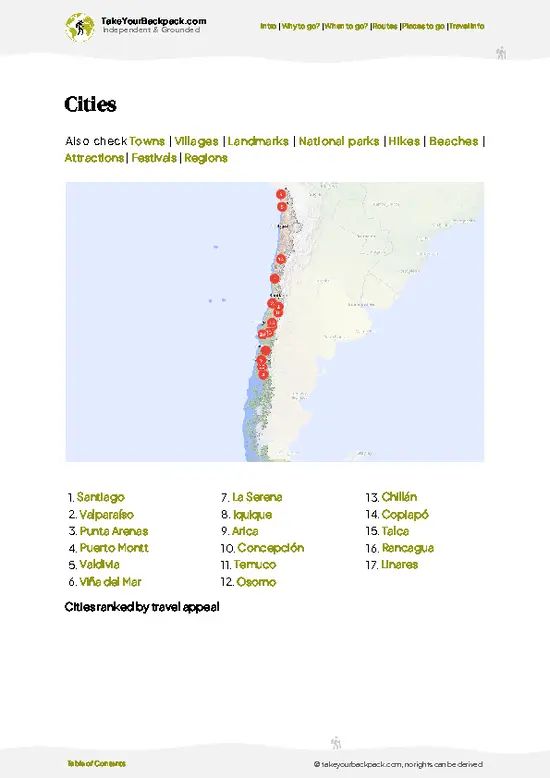
  • Iquique—dune landscapes, duty-free zone, paragliding| 197 km away
  • Calama—copper mines, desert plateau, gateway to Atacama| 465 km away
  • Copiapó—oasis valley, mining past, arid hills| 988 km away

💡 Not sure where to go next?
Create a personalized itinerary for Chile including Arica and the places that fit your trip.

Generate my itinerary

👉 Discover all cities

Or checkout all Chile has to offer (think cities, towns, villages, national parks, hikes, beaches, festivals)
Country photo of Chile

We 💚 feedbackKey takeaways before you go

Arica’s coastal vibe is infectious, with its warm sun and laid-back atmosphere. You’ll find incredible seafood and a rich cultural blend that’s hard to resist. But be prepared: the city can feel a bit isolated, with limited public transport options. It’s a trade-off, but if you embrace the slower pace, you’ll uncover some real treasures.

✈️ When did I visit Chile?
I have visited Chile, together with Argentina, in September 2012.

✍️ Help improve this page!
The information on this page is based on my own backpacking experience in Chile, supplemented with up-to-date research and feedback from other travelers. Travel details can change, so if you notice anything outdated or incomplete, feel free to let me know.


🙋‍♂️ Give feedback

👋 Meet the founderWho’s Behind Take Your Backpack?

Johan, backpacker and founder of TakeYourBackpackHi, I’m Johan (Netherlands 🇳🇱), the creator of TakeYourBackpack. Over the past decade, I’ve backpacked through 80+ countries across six continents, gaining extensive experience with independent travel, long-term trips, and overland routes.

This site is built on a combination of firsthand travel experience and carefully curated insights from other backpackers. Many guides are based on places I’ve personally visited, while others bring together tips, observations, and practical advice shared by trusted travelers I’ve met along the way.

The goal is to provide realistic, experience-driven guidance — not generic itineraries — so you can explore destinations with better context, clearer expectations, and more confidence.

Get full Chile guide •
Instant download • 114 highlights • Full Offline guide