×

Chile🇨🇱 | citiesCalamacopper mines, desert plateau, gateway to Atacama | things to do and best time to go

Explore Viña del MarExplore Copiapó

Backpacking in Calama
👌 Worth visitingcity ranked #16
By Johan Kruseman 🇳🇱 | Updated June 17, 2026

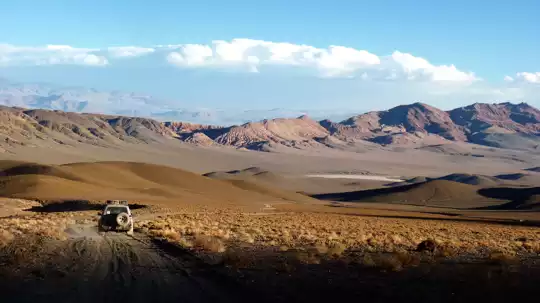
Most people only realize after landing that Calama is the cheapest, most time-efficient launchpad for the Atacama—buses, flights, and tours all pivot through here, so you can hack your route and budget if you plan around it. Calama sits in northern Chile’s Antofagasta Region, a dry mining city rather than a desert fantasy. It’s rough-edged but practical: solid bus connections, low to mid-range prices, decent safety if you use city sense, and easy logistics for San Pedro and the altiplano. Nightlife is functional, plazas and malls are fine, but nearby San Pedro wins on charm; Calama wins on efficiency.

Discover everything you want to know in the 📖 Chile Travel Guide.


Get your Chile guide
120 ranked highlights, routes & tips, works offline (471 pages)
Loading the map 🌍
CLICK TO FILTER
cities
towns
villages
landmarks
national parks
hikes
beaches
attractions
festivals
regions
SHOW COUNTRY’S BESTSHOW ALL

✨ Why go?
Ranked #16 city in Chile
The unique appeal for travelers

Calama is a strategic pit stop for backpackers, balancing time, money, and comfort. It’s not just a transit hub; it offers a solid base for day trips to stunning landscapes. The hostels here are budget-friendly and often buzzing with fellow travelers, making it easy to swap stories and tips. You’ll find decent food options that won’t break the bank, from local joints to international fare. The city is walkable, allowing you to explore its unique vibe without needing a taxi. While the nightlife isn’t wild, it’s laid-back and perfect for unwinding after a day of adventure. Plus, with easy onward travel connections, you can seamlessly continue your journey. If you’re after a quick, efficient stopover, Calama fits the bill perfectly.
Want to include Calama in your Chile route?
Create a personalized Chile itinerary that includes Calama and the places that fit your trip — based on your travel style, budget, and available time. Get your route in seconds.

Generate my trip

💡 HighlightsWhat this place is best known for

  1. Plaza 23 de Marzo (Plaza de Armas) — The social heart of Calama: shady trees, benches where locals gather, municipal buildings and a good starting point to feel the city’s tempo and spot street vendors selling local snacks.
  2. Iglesia San Francisco — The main parish church with simple, desert-hardened architecture; it’s a local spiritual anchor and worth a quiet visit to see community life and religious art up close.
  3. Museo del Cobre y la Minería — Small but focused museum about the region’s copper economy: tools, old photos, and exhibits that explain how mining has shaped Calama socially and physically.
  4. Monumento al Minero — A prominent sculpture/monument honoring miners; more than a photo-op, it’s a local symbol that clues you into the town’s identity and mining pride.
  5. Mercado Municipal
read more 👉
  1. Plaza 23 de Marzo (Plaza de Armas) — The social heart of Calama: shady trees, benches where locals gather, municipal buildings and a good starting point to feel the city’s tempo and spot street vendors selling local snacks.
  2. Iglesia San Francisco — The main parish church with simple, desert-hardened architecture; it’s a local spiritual anchor and worth a quiet visit to see community life and religious art up close.
  3. Museo del Cobre y la Minería — Small but focused museum about the region’s copper economy: tools, old photos, and exhibits that explain how mining has shaped Calama socially and physically.
  4. Monumento al Minero — A prominent sculpture/monument honoring miners; more than a photo-op, it’s a local symbol that clues you into the town’s identity and mining pride.
  5. Mercado Municipal de Calama — Bustling indoor market where you can eat cheap, honest food, buy local produce and see everyday life; great for sampling empanadas, anticuchos, or buying a wool hat.
  6. Cementerio Topáter — Historic cemetery on the town’s edge with weathered tombstones, stories of early settlers and miners, and a surprisingly good viewpoint over the Loa valley at sunset.
  7. Estadio Zorros del Desierto — Modern stadium that’s worth visiting on a match day: loud, local, and a real way to experience regional culture and the fierce local support for football.
  8. Parque El Loa / Paseo Ribereño — Riverside park along the Loa River where the desert and water meet; an easy stroll here shows the oasis side of Calama and gives nice picnic/backpacker downtime.
  9. Casa de la Cultura (Centro Cultural) — The municipal cultural center hosts rotating exhibits, workshops and small performances — a good spot to catch local art and community events without leaving town.
  10. Feria Artesanal y puestos callejeros — The local artisan stalls (often near the plaza or market) sell Andean textiles, jewelry and small crafts; great for bargaining, talking with makers, and taking home something genuinely regional.
A few great day trips from Calama: the Chuquicamata open-pit mine and its viewpoints/museum, the landscapes around San Pedro de Atacama (Valle de la Luna, Salar de Atacama / Laguna Chaxa), and the Tatio Geysers — my personal favorite for a close-in Calama outing is the Chuquicamata mirador, because seeing the scale of the pit and the mining history from a viewpoint sticks with you.
Spotted a mistake or missing something? Contact us.

Things to do in Calama

Ratings based on Tripadvisor reviews. When you book through this link, you support our work at no extra cost to you.

🏘️ NeighborhoodsHow different areas shape the experience

Calama, a gateway to the Atacama Desert, offers backpackers a mix of practicality and local flavor. Here’s how the neighborhoods stack up:

Centro: This is the heart of Calama. It’s bustling, with shops and eateries lining the streets. Affordable hostels are plentiful, making it ideal for budget travelers. The vibe is lively, especially at night, but you can find quiet corners if you need a break. Everything is walkable, and public transport is easily accessible for day trips.

El Loa: A residential area that feels more local. It’s quieter, perfect for longer stays if you want to immerse yourself in daily life. Prices are slightly lower here, and you’ll find fewer tourists. Walkability is decent, but you might need to rely on buses for longer distances.

Chiu-Chiu: A bit further out, this … read more 👉
Calama, a gateway to the Atacama Desert, offers backpackers a mix of practicality and local flavor. Here’s how the neighborhoods stack up:

Centro: This is the heart of Calama. It’s bustling, with shops and eateries lining the streets. Affordable hostels are plentiful, making it ideal for budget travelers. The vibe is lively, especially at night, but you can find quiet corners if you need a break. Everything is walkable, and public transport is easily accessible for day trips.

El Loa: A residential area that feels more local. It’s quieter, perfect for longer stays if you want to immerse yourself in daily life. Prices are slightly lower here, and you’ll find fewer tourists. Walkability is decent, but you might need to rely on buses for longer distances.

Chiu-Chiu: A bit further out, this area is known for its historical significance. It’s a peaceful retreat, ideal for those seeking a slower pace. Accommodations are limited, so it’s best for short stays. Transport options are less frequent, but the scenery is worth the effort.

⌛️ 1 daySeeing the highlights in 24 hours

Calama, Chile, is often overlooked, but it’s a gateway to the Atacama Desert, offering a unique blend of mining history and local culture. Start your day in the bustling Plaza de Armas, where you can sip a strong coffee at a nearby café while soaking in the morning sun. The plaza is surrounded by colorful buildings and the striking San Juan Bautista Church, which is worth a quick peek.

As the sun climbs, head to the nearby Chuquicamata Mine, one of the largest open-pit copper mines in the world. It’s a bit off the typical tourist path, but the scale is mind-boggling. You can take a guided tour to learn about its history and impact on the region. Just be sure to check the tour times in advance.

In the afternoon, wander through the historic neighborhood of El Loa. Here, you’ll find local artisans … read more 👉
Calama, Chile, is often overlooked, but it’s a gateway to the Atacama Desert, offering a unique blend of mining history and local culture. Start your day in the bustling Plaza de Armas, where you can sip a strong coffee at a nearby café while soaking in the morning sun. The plaza is surrounded by colorful buildings and the striking San Juan Bautista Church, which is worth a quick peek.

As the sun climbs, head to the nearby Chuquicamata Mine, one of the largest open-pit copper mines in the world. It’s a bit off the typical tourist path, but the scale is mind-boggling. You can take a guided tour to learn about its history and impact on the region. Just be sure to check the tour times in advance.

In the afternoon, wander through the historic neighborhood of El Loa. Here, you’ll find local artisans and small shops selling handmade crafts. Grab lunch at a local eatery—try the pastel de choclo, a corn pie that’s a comforting staple.

As evening approaches, make your way to the viewpoint at Cerro de la Cruz. The sunset over the desert is breathtaking, painting the sky in hues you won’t forget. Wind down your day with dinner at a local restaurant, enjoying the flavors of northern Chile. You’ll leave Calama with a deeper appreciation for its character and charm.
Turn your Calama visit into an Chile adventure
Build a complete Chile route with Calama, hidden gems, must-see destinations, and realistic travel times included.

Generate my trip

🌤️ When to go?Weather, crowds, and seasonal trade-offs


  • Weather: Calama sits in the Atacama Desert, so expect dry conditions year-round. Summers (December to February) can hit 25-30°C (77-86°F), while winters (June to August) drop to 10-15°C (50-59°F) during the day, with chilly nights near freezing.

  • Daylight Hours: Longer days in summer offer up to 14 hours of light, perfect for extended trekking. Winter days shrink to about 10 hours, limiting daylight but providing cooler hiking conditions.

  • Crowds: Peak tourist season aligns with summer and school holidays, so expect more visitors and higher prices. Off-season months see fewer travelers, giving you more space to explore.

  • Seasonal Activities: Summer is ideal for stargazing tours and desert festivals, while winter offers crisp air for exploring salt flats and geysers without the heat stress.
read more 👉

  • Weather: Calama sits in the Atacama Desert, so expect dry conditions year-round. Summers (December to February) can hit 25-30°C (77-86°F), while winters (June to August) drop to 10-15°C (50-59°F) during the day, with chilly nights near freezing.

  • Daylight Hours: Longer days in summer offer up to 14 hours of light, perfect for extended trekking. Winter days shrink to about 10 hours, limiting daylight but providing cooler hiking conditions.

  • Crowds: Peak tourist season aligns with summer and school holidays, so expect more visitors and higher prices. Off-season months see fewer travelers, giving you more space to explore.

  • Seasonal Activities: Summer is ideal for stargazing tours and desert festivals, while winter offers crisp air for exploring salt flats and geysers without the heat stress.

  • Price Fluctuations: Accommodation and tours spike in summer; booking ahead is crucial. Winter brings better deals but some services may reduce frequency.


Pro-tip: Visit shoulder months like March or September to balance mild weather, manageable crowds, and reasonable prices—your sweet spot for smart backpacking in Calama.


source: climatestotravel.comJANJanuary: highly recommended for travelingFEBFebruary: highly recommended for travelingMARMarch: excellent for travelingAPRApril: good for travelingMAYMay: good for travelingJUNJune: good for travelingJULJuly: good for travelingAUGAugust: good for travelingSEPSeptember: excellent for travelingOCTOctober: highly recommended for travelingNOVNovember: highly recommended for travelingDECDecember: highly recommended for traveling
when-to-go

✈️ The backpacker research shortcutChile Travel Guide

An offline-friendly backpacking guide with optimized travel routes, ranked highlights, transport advice, and the best areas to stay.
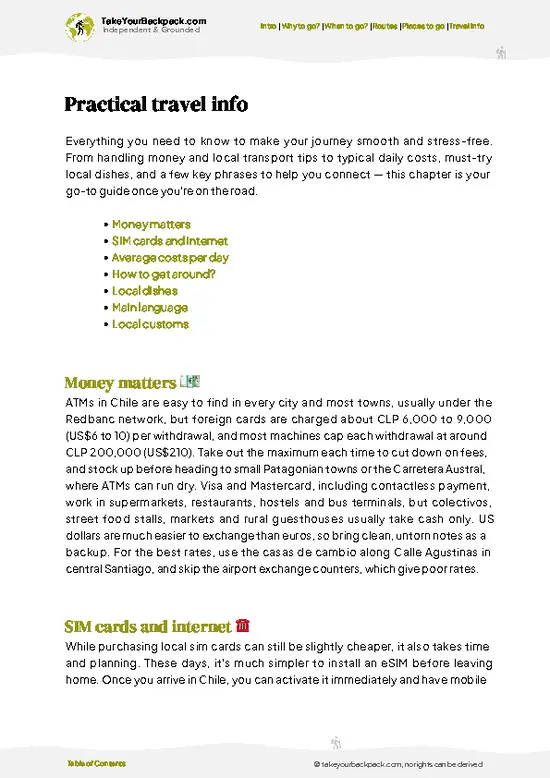
example page 0 from our offline Travel Guide for Chile
example page 1 from our offline Travel Guide for Chile
example page 2 from our offline Travel Guide for Chile
example page 3 from our offline Travel Guide for Chile
example page 4 from our offline Travel Guide for Chile
example page 5 from our offline Travel Guide for Chile
example page 6 from our offline Travel Guide for Chile
example page 7 from our offline Travel Guide for Chile
The digital guide (471 pages) contains:
120 highlights, ranked by travel appeal
Optimized 7, 14 & 21-day travel routes
Cities, national parks, landmarks, beaches
How to get around
Offline-friendly for travel without Wi-Fi
👉 Click to see all 30+ guide features

📅 Plan smarter in minutes, not weeks
Month by month travel advice
Festivals & national holidays
Budget expectations

🗺️ Go to the right places, skip the overrated ones
Honest pros & cons of destinations
Top hikes, parks & viewpoints
Lesser-known places most travelers miss
Clear “worth it vs skip it” guidance

🛏️ Travel smoothly without rookie mistakes
Best areas to stay
Transport systems explained simply
Common scams & safety advice
SIM cards, money & practical tips

🌍 Understand the country, not just visit it
Culture & traditions
52 Essential phrases & customs
Festivals worth planning around
Traveler-friendly historical context
Insights that make places more meaningful

📱 Built for real travel conditions
Fully downloadable PDF
Works completely offline
Optimized for phone use
Useful in remote areas & buses
Everything in one place
Save weeks of stressful planning
Get instant access to your full guide. 30‑day money-back guarantee.


By proceeding you agree to our terms.
Sent to your inbox immediately after payment • 100% Secure Checkout
Best Backpacking Travel Advisor 2025 tourism awardBest Backpacking
Travel Advisor
2025
What others say about Take Your Backpack Guides:
⭐⭐⭐⭐⭐
Fantastic, amazing amount of information!
⭐⭐⭐⭐⭐
My goodness this is amazing, it's what I've been looking for hats off too you!
⭐⭐⭐⭐⭐
I think this is absolutely BRILLIANT
⭐⭐⭐⭐
Very complete and informative. It's still missing places, but I gotta to commend you
⭐⭐⭐⭐⭐
This is truly amazing, thank you, can't wait to explore it with my kids!
⭐⭐⭐⭐⭐
Awesome resource, thank you!
⭐⭐⭐⭐⭐
This is amazing! Can't wait to explore the ones I haven't seen
⭐⭐⭐⭐
I love this! Well done, great idea.
⭐⭐⭐⭐⭐
Thanks for taking the time to make this gem!
⭐⭐⭐⭐⭐
This might be the best website I've ever seen.
⭐⭐⭐⭐⭐
Congratulations, and thank you so much for your work; it's incredibly valuable.
⭐⭐⭐⭐
In all seriousness I think you did a great job pointing out the important spots
⭐⭐⭐⭐⭐
10/10 very good
⭐⭐⭐⭐⭐
As someone who's only just starting to visit regularly this is awesome, thank you.
⭐⭐⭐⭐
Thank you very much! I'm going to visit my dad, it's going to be very useful!
⭐⭐⭐⭐⭐
This is really cool! We'll be travelling for the first time and this definitely come in handy.
⭐⭐⭐⭐⭐
You are now our minister of culture, congratulations 👨‍💼
⭐⭐⭐⭐⭐
Just wanted to tell you that this is a pearl! Going to follow your recommendations.
⭐⭐⭐⭐⭐
This is so cool. I'll definitely be using the resource for my travels soon.
⭐⭐⭐⭐⭐
This is very impressive! Good work.
⭐⭐⭐⭐⭐
This is an amazing and informative site. Very well done!

🛏️ Where to stay?Where staying makes the most sense

In Calama, the best spot for backpackers is the downtown area, especially around Avenida Balmaceda and Avenida Granaderos. This zone strikes a smart balance: it’s safe, lively, and packed with budget hostels that cater to solo travelers and groups alike. You’ll find a social vibe here—cafés, small markets, and local eateries where you can connect with other backpackers or locals without the touristy gloss. Compared to the outskirts or industrial zones, downtown offers walkability and easy access to transport for your Atacama Desert adventures, saving you time and taxi fares. The trade-off is a … read more 👉
In Calama, the best spot for backpackers is the downtown area, especially around Avenida Balmaceda and Avenida Granaderos. This zone strikes a smart balance: it’s safe, lively, and packed with budget hostels that cater to solo travelers and groups alike. You’ll find a social vibe here—cafés, small markets, and local eateries where you can connect with other backpackers or locals without the touristy gloss. Compared to the outskirts or industrial zones, downtown offers walkability and easy access to transport for your Atacama Desert adventures, saving you time and taxi fares. The trade-off is a bit more noise and bustle, but that’s part of the charm—comfort takes a backseat to authentic interaction and convenience, making it a high-value choice for those who want to maximize experience over luxury.

🚌 Getting aroundGetting around like a local

Calama moves at its own pace—neither frantic nor sluggish, but a steady hum of purposeful activity shaped by its mining roots and desert surroundings. The city’s rhythm is a blend of rigid schedules for work shifts and a laid-back, almost intuitive flow for daily life. You’ll find that timing here isn’t about precision to the second but about catching the general wave of movement. The streets pulse with a mix of locals heading to jobs, markets, or bus stops, and travelers weaving through this desert hub. Understanding how time, money, and comfort interplay in Calama’s transit options is your key to mastering the city’s flow without wasting a peso or a minute.


  • Walking: Calama’s compact center makes walking the default for budget travelers—free, flexible, and perfect for soaking in the local
read more 👉
Calama moves at its own pace—neither frantic nor sluggish, but a steady hum of purposeful activity shaped by its mining roots and desert surroundings. The city’s rhythm is a blend of rigid schedules for work shifts and a laid-back, almost intuitive flow for daily life. You’ll find that timing here isn’t about precision to the second but about catching the general wave of movement. The streets pulse with a mix of locals heading to jobs, markets, or bus stops, and travelers weaving through this desert hub. Understanding how time, money, and comfort interplay in Calama’s transit options is your key to mastering the city’s flow without wasting a peso or a minute.


  • Walking: Calama’s compact center makes walking the default for budget travelers—free, flexible, and perfect for soaking in the local vibe. Expect dry heat and dusty streets, so plan for early mornings or late afternoons to avoid the sun’s peak.

  • Local Buses: Running roughly from 6:00 AM to 9:00 PM, these buses cost under $1 USD and cover most neighborhoods. They’re slow and crowded but unbeatable for price. Comfort is minimal—think hard plastic seats and occasional dust storms through open windows.

  • Shared Taxis (Colectivos): Operating on fixed routes with flexible stops, these run from dawn until about 10:00 PM. They cost a bit more than buses but save time by cutting corners and avoiding bus stops. Expect a tighter squeeze but quicker trips.

  • Private Taxis: Available 24/7 but pricey for budget travelers, fares start around $5 USD within the city. They offer door-to-door comfort and speed but eat into your budget fast—best reserved for late-night or urgent rides.

  • Airport Shuttle: If you’re connecting to or from El Loa Airport, shuttles run on a schedule aligned with flights, costing about $7 USD. They balance comfort and cost well but require syncing your plans tightly with flight times.

👛 Costs (as of 25 January 2026)Typical daily expenses

Backpacking in Calama, Chile, is a balancing act between the stark desert environment and the practical costs of staying comfortable and mobile. Here’s how your daily expenses typically break down:
  • Dorm Accommodation (High Season): Expect to pay around $15 to $25 USD per night. High season, usually during Chilean summer months, pushes prices up due to increased tourist flow.
  • Dorm Accommodation (Off-Season): Prices drop to about $10 to $18 USD. The quieter months offer better deals but fewer options, so booking ahead can pay off.
  • Meals: Budget about $8 to $15 USD per day if you stick to local eateries and street food. Calama’s food scene is straightforward—think hearty, filling meals rather than gourmet dining.
  • Local Transport: Single bus rides or short taxi trips typically cost $0.50 to
read more 👉
Backpacking in Calama, Chile, is a balancing act between the stark desert environment and the practical costs of staying comfortable and mobile. Here’s how your daily expenses typically break down:
  • Dorm Accommodation (High Season): Expect to pay around $15 to $25 USD per night. High season, usually during Chilean summer months, pushes prices up due to increased tourist flow.
  • Dorm Accommodation (Off-Season): Prices drop to about $10 to $18 USD. The quieter months offer better deals but fewer options, so booking ahead can pay off.
  • Meals: Budget about $8 to $15 USD per day if you stick to local eateries and street food. Calama’s food scene is straightforward—think hearty, filling meals rather than gourmet dining.
  • Local Transport: Single bus rides or short taxi trips typically cost $0.50 to $1.50 USD. It’s cheap but plan your routes carefully; distances can be deceptive in the desert city layout.
  • City Transport Pass: A daily or multi-day pass can run around $2 to $4 USD, offering unlimited rides. This is a smart move if you’re hopping around frequently.
  • Basic Activities/Entry Fees: Most local museums or cultural sites charge between $2 and $5 USD. The real draw is the nearby Atacama Desert tours, which are pricier and usually booked separately.
  • Miscellaneous Expenses: Factor in $3 to $7 USD for water, snacks, or small essentials. The desert climate means hydration is non-negotiable, so don’t skimp here.

Altogether, you’re looking at roughly $30 to $55 USD per day for a no-frills backpacking experience in Calama. This range gives you the freedom to choose between tighter budgeting and a bit more comfort without breaking the bank. The key is knowing where to save and where to spend—Calama’s straightforward costs reward the traveler who plans with both time and money in mind.


source: chile.travel
⚠️ Prices can change and everyone travels differently, so take this as a rough guide. Hope it helps you plan your adventure!

🚌 Day tripsEasy escapes and nearby places

Calama is your launchpad for some of northern Chile’s most exhilarating day trips. With its strategic location, you can dive into breathtaking landscapes without the hassle of overnight stays. Here’s how to make the most of your time, money, and comfort.

San Pedro de Atacama
Just a two-hour bus ride from Calama, San Pedro is the gateway to the Atacama Desert’s surreal beauty. Spend your day exploring the Valle de la Luna, where the moon-like landscape will leave you in awe. Don’t miss the sunset at the salt flats; it’s a sight that feels almost otherworldly. Budget around $15 for the bus and $10 for entry fees. The best time to visit is during the dry season from May to September, when the skies are clear. A common mistake? Underestimating the altitude; drink plenty of water.
👉 Explore read more 👉
Calama is your launchpad for some of northern Chile’s most exhilarating day trips. With its strategic location, you can dive into breathtaking landscapes without the hassle of overnight stays. Here’s how to make the most of your time, money, and comfort.

San Pedro de Atacama
Just a two-hour bus ride from Calama, San Pedro is the gateway to the Atacama Desert’s surreal beauty. Spend your day exploring the Valle de la Luna, where the moon-like landscape will leave you in awe. Don’t miss the sunset at the salt flats; it’s a sight that feels almost otherworldly. Budget around $15 for the bus and $10 for entry fees. The best time to visit is during the dry season from May to September, when the skies are clear. A common mistake? Underestimating the altitude; drink plenty of water.
👉 Explore San Pedro de Atacama

El Tatio Geysers
An early start is essential for this trip, about a 90-minute drive from Calama. Arrive before sunrise to witness the geysers erupting in a mystical fog. The experience is surreal, with steam rising against the backdrop of the Andes. Expect to pay around $30 for a tour that includes transportation and breakfast. The ideal months are June to August for the best steam displays. Many first-timers forget to dress warmly; it’s freezing at dawn!


Cerro Blanco
For a unique adventure, head to Cerro Blanco, the tallest sand dune in the world, just a short drive from Calama. This trip is perfect for sandboarding or simply soaking in the vast desert views. Plan for a half-day excursion, costing about $20 for transport and gear rental. The best time is during the cooler months of April to October. A rookie error? Not bringing enough water; the sun can be relentless.


Chiu Chiu Village
A quick 30-minute bus ride takes you to Chiu Chiu, a charming village rich in history. Visit the ancient church and the nearby ruins of Pukara de Lasana. This trip is a cultural delight, costing around $10 for transport and entry fees. Anytime is good, but spring (September to November) brings vibrant wildflowers. First-timers often overlook the local cuisine; don’t miss trying the empanadas!
Want to know what more Chile offers?
The Chile Travel Guide describes 120 highlights, from cities to national parks, from beaches to hikes

Get the Travel Guide -

🍲 FoodLocal Cuisine & Drinks

In Calama, local cuisine is a vibrant reflection of the Atacama Desert’s culture. Don’t miss out on pastel de choclo, a corn pie layered with meat, olives, and hard-boiled eggs. It’s hearty and packed with flavor. Pair it with a glass of pisco sour, a tangy cocktail that’s a staple in Chilean drinking culture.

Backpackers often find their meals at bustling markets or from street vendors. The aroma of empanadas sizzling on a grill is irresistible. Grab one and enjoy it while mingling with locals; it’s a casual affair here.

Dining customs lean towards sharing and community. Expect to see families gathered around tables, laughter filling the air. Don’t rush; savor the moment. When it comes to drinks, toasting with “¡Salud!” is a must, signaling camaraderie and good cheer. Embrace the flavors … read more 👉
In Calama, local cuisine is a vibrant reflection of the Atacama Desert’s culture. Don’t miss out on pastel de choclo, a corn pie layered with meat, olives, and hard-boiled eggs. It’s hearty and packed with flavor. Pair it with a glass of pisco sour, a tangy cocktail that’s a staple in Chilean drinking culture.

Backpackers often find their meals at bustling markets or from street vendors. The aroma of empanadas sizzling on a grill is irresistible. Grab one and enjoy it while mingling with locals; it’s a casual affair here.

Dining customs lean towards sharing and community. Expect to see families gathered around tables, laughter filling the air. Don’t rush; savor the moment. When it comes to drinks, toasting with “¡Salud!” is a must, signaling camaraderie and good cheer. Embrace the flavors and the warmth of Calama; it’s all part of the adventure.

🛡️ SafetySafety Tips and Common Scams in Calama

Calama is generally safe for backpackers, but a few situational awareness tips can enhance your experience. Stick to well-lit areas at night, especially around the bus terminal and main square, where things can get a bit sketchy after dark. Solo travelers should trust their instincts; if something feels off, it probably is.

Common scams are rare, but be cautious of overly friendly locals offering unsolicited help. They might expect a tip or lead you to shops with inflated prices. Carry your belongings close and avoid flashy displays of wealth. A confident demeanor goes a long way in blending in and enjoying this unique desert town.

Other Chilean cities near Calama

Explore more nearby:

  • Antofagasta—mineral exports, rocky shoreline, industrial port| 201 km away
  • Iquique—dune landscapes, duty-free zone, paragliding| 276 km away
  • Arica—desert coastline, surfing spots, border culture| 465 km away

💡 Not sure where to go next?
Create a personalized itinerary for Chile including Calama and the places that fit your trip.

Generate my itinerary

👉 Discover all cities

Or checkout all Chile has to offer (think cities, towns, villages, national parks, hikes, beaches, festivals)
Country photo of Chile

We 💚 feedbackWhat to keep in mind

Calama is a gateway to the surreal landscapes of the Atacama Desert. The salt flats and geysers are jaw-dropping and worth every minute. But be ready: the altitude can hit hard, and the town itself isn’t much to write home about. Embrace the trade-off; the real magic lies just beyond the city limits.

✈️ When did I visit Chile?
I have visited Chile, together with Argentina, in September 2012.

✍️ Help improve this page!
The information on this page is based on my own backpacking experience in Chile, supplemented with up-to-date research and feedback from other travelers. Travel details can change, so if you notice anything outdated or incomplete, feel free to let me know.


🙋‍♂️ Give feedback

👋 Meet the founderWho’s Behind Take Your Backpack?

Johan, backpacker and founder of TakeYourBackpackHi, I’m Johan (Netherlands 🇳🇱), the creator of TakeYourBackpack. Over the past decade, I’ve backpacked through 80+ countries across six continents, gaining extensive experience with independent travel, long-term trips, and overland routes.

This site is built on a combination of firsthand travel experience and carefully curated insights from other backpackers. Many guides are based on places I’ve personally visited, while others bring together tips, observations, and practical advice shared by trusted travelers I’ve met along the way.

The goal is to provide realistic, experience-driven guidance — not generic itineraries — so you can explore destinations with better context, clearer expectations, and more confidence.

Get full Chile guide •
Instant download • 120 highlights • Full Offline guide