×

Cuba🇨🇺 | citiesGuantánamoChangüí music, Salcines palace, stone animals, Baracoa gateway | things to do and best time to go

Explore CárdenasExplore Ciego de Ávila

Backpacking in Guantánamo
👍 Recommendedcity ranked #12
By Johan Kruseman 🇳🇱 | Updated October 22, 2026

Guantánamo is the city where you can book a shared taxi to Baracoa and see the real Cuba without a single tour bus in sight. It sits in the southeast of Cuba, inland from the bay that gave the province its notoriety. I stood in Parque Martí one evening and asked a pedicab driver which casa particular served dinner; he walked me two blocks to a family kitchen, and you can do the same. Come for a few hours of provincial Cuba, not for beaches or nightlife, because there are none. Skip the naval base talk, since you cannot see it. Unlike Santiago de Cuba, it has no crowds and fewer sights, but everything feels unperformed.

Discover everything you want to know in the 📖 Cuba Travel Guide.


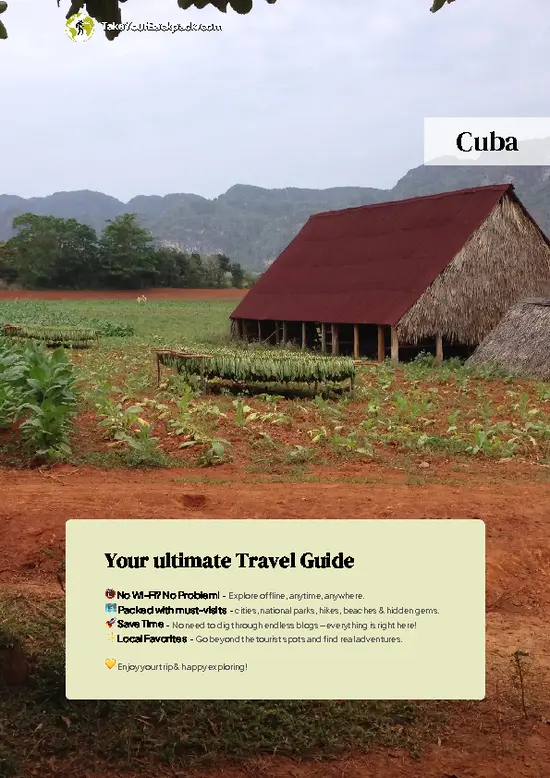
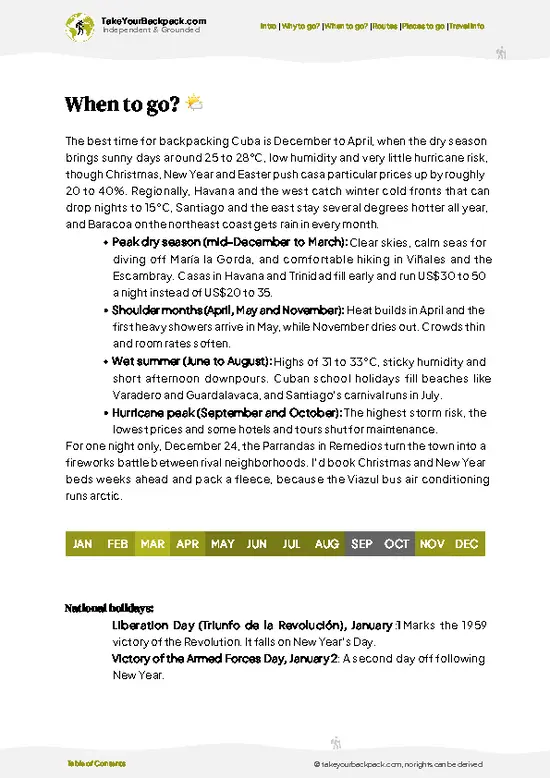
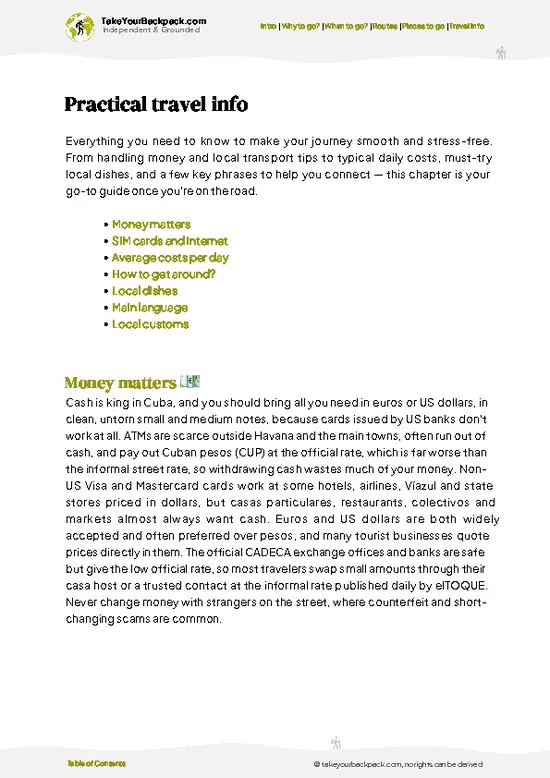
example page 0 from our offline Travel Guide for Cuba
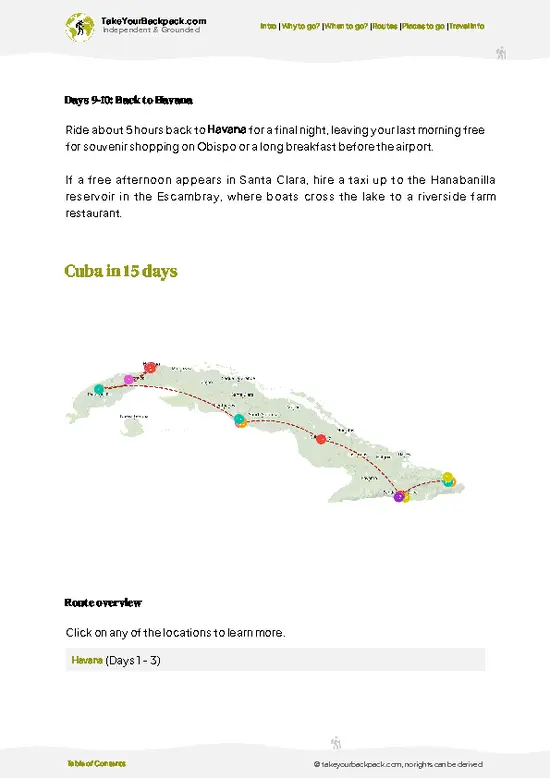
example page 1 from our offline Travel Guide for Cuba
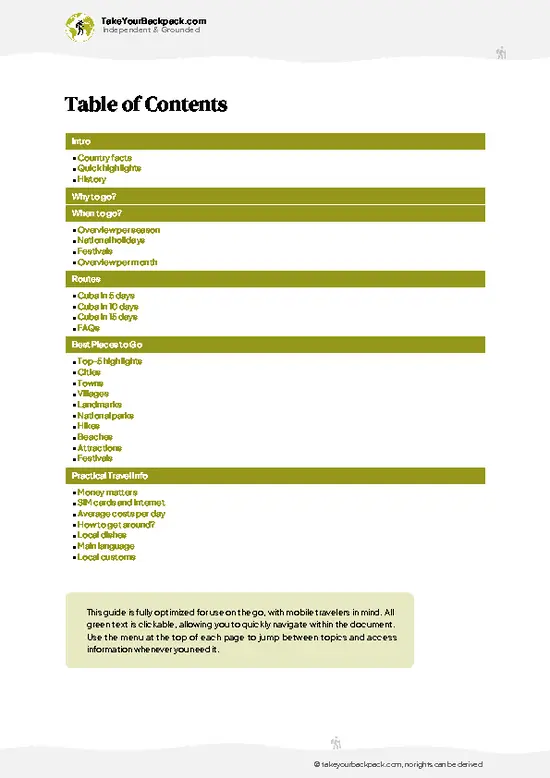
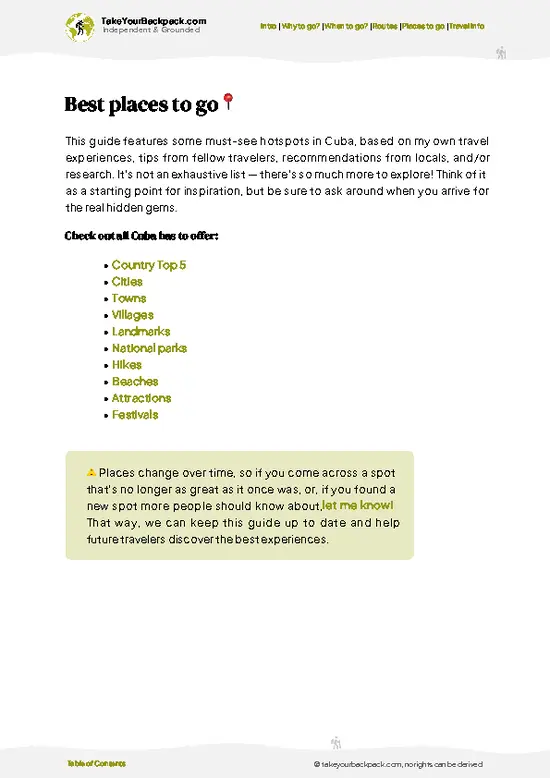
example page 2 from our offline Travel Guide for Cuba
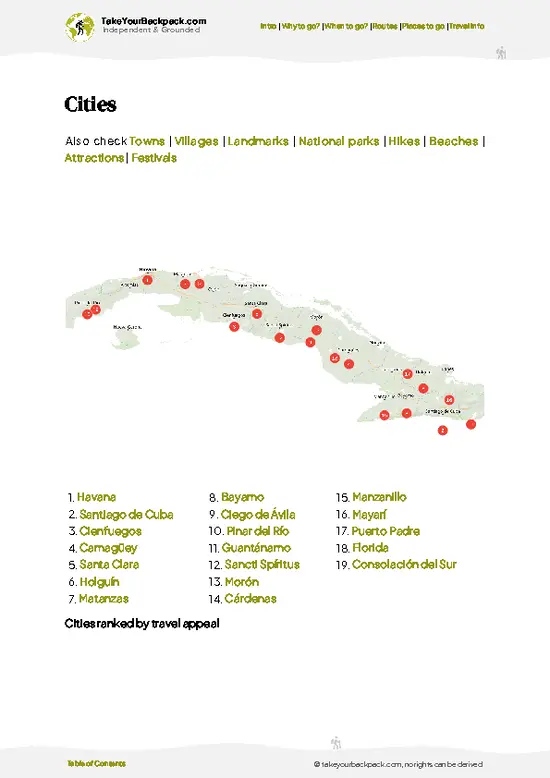
example page 3 from our offline Travel Guide for Cuba
example page 4 from our offline Travel Guide for Cuba
example page 5 from our offline Travel Guide for Cuba
example page 6 from our offline Travel Guide for Cuba
example page 7 from our offline Travel Guide for Cuba
Loading the map 🌍
CLICK TO FILTER
cities
towns
villages
landmarks
national parks
hikes
beaches
attractions
festivals
SHOW COUNTRY’S BESTSHOW ALL

✨ Why go?
Ranked #12 city in Cuba
What makes this city worth visiting

Guantánamo works for backpackers as a pause on the long road between Santiago and Baracoa, and that is its main job. The city has a compact grid centered on Parque Martí, so you can walk everywhere in an afternoon. Casas particulares are few but friendly, and you will often be the only foreigner at the table. Music matters here: the city is the home of changüí, the rural son style that predates the Havana sound, and you can hear it live at local cultural houses. The trade-off is limited nightlife and thin tourist infrastructure. Stay one night if you like unscripted places, and skip it if you need a checklist of sights.

💡 HighlightsMust-see experiences and standout moments

  1. Parque Martí and the Santa Catalina de Ricci church: the city’s main square, with a pale church and locals playing dominoes and chatting. Go at dusk when the benches fill. Free, about 45 minutes.
  2. Palacio de Salcines: an eclectic early 20th-century building on the square with a tiled facade and a small tower. Best admired in morning light from outside. Free, 20 minutes.
  3. Museo Provincial: a modest collection on regional history, indigenous heritage and local figures. Go in the morning. Entry roughly US$1 to 2, about 45 minutes.
  4. Casa de la Trova and changüí venues: the place to hear the local son style on guitar, tres and bongos. Evenings are best. Usually a small cover of US$1 to 3, 1 to 2 hours.
  5. Mercado Agropecuario: the produce market where locals shop for fruit, pork, and street snacks. Go before
… read more 👉
  1. Parque Martí and the Santa Catalina de Ricci church: the city’s main square, with a pale church and locals playing dominoes and chatting. Go at dusk when the benches fill. Free, about 45 minutes.
  2. Palacio de Salcines: an eclectic early 20th-century building on the square with a tiled facade and a small tower. Best admired in morning light from outside. Free, 20 minutes.
  3. Museo Provincial: a modest collection on regional history, indigenous heritage and local figures. Go in the morning. Entry roughly US$1 to 2, about 45 minutes.
  4. Casa de la Trova and changüí venues: the place to hear the local son style on guitar, tres and bongos. Evenings are best. Usually a small cover of US$1 to 3, 1 to 2 hours.
  5. Mercado Agropecuario: the produce market where locals shop for fruit, pork, and street snacks. Go before 10 AM. Free to wander, 30 to 45 minutes.
  6. Zoológico de Piedras: a sculpture park about 20 km northeast of the city, at Boquerón in Yateras, with large stone animals carved by the artist Ángel Íñigo. Go in the cooler morning. Entry around US$1 to 3, 1 hour.
Beyond the city, Baracoa, the Yumurí valley, and the viewpoints toward Guantánamo Bay (the Mirador de Malones) make good day trips from Guantánamo. Start with Parque Martí, since it orients you and the evening crowd shows the city at its best.
Spotted a mistake or missing something? Contact us.

🏘️ NeighborhoodsHow different areas shape the experience

Guantánamo city is compact and flat, and you can cover its useful parts on foot in a day. Skip any idea of a military-base visit; the base is closed to tourists and you can’t get near it from here.
  • Parque Martí and the center: The only area that deserves real time. The park has the Santa Catalina de Riccis church, a cluster of eclectic buildings, and evening crowds on benches. Walk it in an hour, then stay for dusk when the plaza fills with families and music.
  • Calle Pedro A. Pérez: The main commercial strip running off the park. Worth it for state shops, peso pizza counters, and the Provincial Museum nearby, but nothing here is polished.
  • Zoológico de Piedras (Boquerón, Yateras): A quirky stone-sculpture park about 20 km northeast of the city, reached by taxi. Fine for an hour, skippable if you
… read more 👉
Guantánamo city is compact and flat, and you can cover its useful parts on foot in a day. Skip any idea of a military-base visit; the base is closed to tourists and you can’t get near it from here.
  • Parque Martí and the center: The only area that deserves real time. The park has the Santa Catalina de Riccis church, a cluster of eclectic buildings, and evening crowds on benches. Walk it in an hour, then stay for dusk when the plaza fills with families and music.
  • Calle Pedro A. Pérez: The main commercial strip running off the park. Worth it for state shops, peso pizza counters, and the Provincial Museum nearby, but nothing here is polished.
  • Zoológico de Piedras (Boquerón, Yateras): A quirky stone-sculpture park about 20 km northeast of the city, reached by taxi. Fine for an hour, skippable if you are short on time.
  • Outer reparto districts: Residential grids of low houses with little to see. Not worth a detour, except to find a casa particular or a bicitaxi ride.

⌛️ 1 dayA smart one-day plan

8:30 AM, Parque Martí: Start here because the whole grid radiates from the square and the church and Palacio de Salcines look best in soft morning light. Wander for 45 minutes, then walk a few blocks to the market.
10:00 AM, Mercado Agropecuario: Browse fruit stalls and try a fresh juice or a pork sandwich where locals eat. It shows how daily life works, far from tourist menus.
11:30 AM, Museo Provincial: A short walk takes you to the regional history collection. It gives context for the sugar, Haitian and independence stories you will hear about.
1:00 PM, Lunch at a casa particular: Ask your host to cook, since restaurant options are limited. Rest during the midday heat.
3:30 PM, Zoológico de Piedras: Take a taxi to this off-route stone sculpture park, a quirky place few foreigners visit. Wander … read more 👉
8:30 AM, Parque Martí: Start here because the whole grid radiates from the square and the church and Palacio de Salcines look best in soft morning light. Wander for 45 minutes, then walk a few blocks to the market.
10:00 AM, Mercado Agropecuario: Browse fruit stalls and try a fresh juice or a pork sandwich where locals eat. It shows how daily life works, far from tourist menus.
11:30 AM, Museo Provincial: A short walk takes you to the regional history collection. It gives context for the sugar, Haitian and independence stories you will hear about.
1:00 PM, Lunch at a casa particular: Ask your host to cook, since restaurant options are limited. Rest during the midday heat.
3:30 PM, Zoológico de Piedras: Take a taxi to this off-route stone sculpture park, a quirky place few foreigners visit. Wander the animals, then ride back.
7:30 PM, Casa de la Trova: Finish with live changüí, the music this city invented. Sit near the musicians and buy a cheap drink.

🌤️ When to go?Weather, crowds, and seasonal trade-offs

November to April is the best window: dry, sunny, and tolerably warm.
  • Dry Season (Nov to Apr): Highs of 28 to 31°C (82 to 88°F), lows of 18 to 21°C (64 to 70°F), about 11 hours of daylight in winter. Fewer downpours and the easiest road conditions.
  • Hot and Wet Season (May to Oct): Highs of 32 to 35°C (90 to 95°F) with heavy humidity and afternoon thunderstorms. Hurricane risk peaks August to October.
  • Crowds and Prices: Guantánamo sees few tourists in any month. Casa rates move little, though December and January are the busiest.
Plan outdoor trips for mornings, since the afternoon heat stalls everything.

source: climatestotravel.comJANJanuary: highly recommended for travelingFEBFebruary: highly recommended for travelingMARMarch: excellent for travelingAPRApril: highly recommended for travelingMAYMay: fair for travelingJUNJune: fair for travelingJULJuly: fair for travelingAUGAugust: fair for travelingSEPSeptember: fair for travelingOCTOctober: fair for travelingNOVNovember: highly recommended for travelingDECDecember: highly recommended for traveling
when-to-go

✈️ The backpacker research shortcutCuba Travel Guide

An offline-friendly backpacking guide with optimized travel routes, ranked highlights, transport advice, and the best areas to stay.
example page 0 from our offline Travel Guide for Cuba
example page 1 from our offline Travel Guide for Cuba
example page 2 from our offline Travel Guide for Cuba
example page 3 from our offline Travel Guide for Cuba
example page 4 from our offline Travel Guide for Cuba
example page 5 from our offline Travel Guide for Cuba
example page 6 from our offline Travel Guide for Cuba
example page 7 from our offline Travel Guide for Cuba
The digital guide (327 pages) contains:
✅ 113 highlights, ranked by travel appeal
✅ Optimized 5, 10 & 15-day travel routes
✅ Cities, national parks, landmarks, beaches
✅ How to get around
✅ Offline-friendly for travel without Wi-Fi
👉 Click to see all 30+ guide features

📅 Plan smarter in minutes, not weeks
✅ Month by month travel advice
✅ Festivals & national holidays
✅ Budget expectations

🗺️ Go to the right places, skip the overrated ones
✅ Honest pros & cons of destinations
✅ Top hikes, parks & viewpoints
✅ Lesser-known places most travelers miss
✅ Clear “worth it vs skip it” guidance

🛏️ Travel smoothly without rookie mistakes
✅ Best areas to stay
✅ Transport systems explained simply
✅ Common scams & safety advice
✅ SIM cards, money & practical tips

🌍 Understand the country, not just visit it
✅ Culture & traditions
✅ 52 Essential phrases & customs
✅ Festivals worth planning around
✅ Traveler-friendly historical context
✅ Insights that make places more meaningful

📱 Built for real travel conditions
✅ Fully downloadable PDF
✅ Works completely offline
✅ Optimized for phone use
✅ Useful in remote areas & buses
✅ Everything in one place
Stop searching, start planning
Get instant access to your full guide. 30‑day money-back guarantee.
+ Add another guide for just

By proceeding you agree to our terms.
Sent to your inbox immediately after payment • 100% Secure Checkout
Best Backpacking Travel Advisor 2025 tourism awardBest Backpacking
Travel Advisor
2025
What others say about Take Your Backpack Guides:
⭐⭐⭐⭐⭐
Fantastic, amazing amount of information!
⭐⭐⭐⭐⭐
My goodness this is amazing, it's what I've been looking for hats off too you!
⭐⭐⭐⭐⭐
I think this is absolutely BRILLIANT
⭐⭐⭐⭐
Very complete and informative. It's still missing places, but I gotta to commend you
⭐⭐⭐⭐⭐
This is truly amazing, thank you, can't wait to explore it with my kids!
⭐⭐⭐⭐⭐
Awesome resource, thank you!
⭐⭐⭐⭐⭐
This is amazing! Can't wait to explore the ones I haven't seen
⭐⭐⭐⭐
I love this! Well done, great idea.
⭐⭐⭐⭐⭐
Thanks for taking the time to make this gem!
⭐⭐⭐⭐⭐
This might be the best website I've ever seen.
⭐⭐⭐⭐⭐
Congratulations, and thank you so much for your work; it's incredibly valuable.
⭐⭐⭐⭐
In all seriousness I think you did a great job pointing out the important spots
⭐⭐⭐⭐⭐
10/10 very good
⭐⭐⭐⭐⭐
As someone who's only just starting to visit regularly this is awesome, thank you.
⭐⭐⭐⭐
Thank you very much! I'm going to visit my dad, it's going to be very useful!
⭐⭐⭐⭐⭐
This is really cool! We'll be travelling for the first time and this definitely come in handy.
⭐⭐⭐⭐⭐
You are now our minister of culture, congratulations 👨‍💼
⭐⭐⭐⭐⭐
Just wanted to tell you that this is a pearl! Going to follow your recommendations.
⭐⭐⭐⭐⭐
This is so cool. I'll definitely be using the resource for my travels soon.
⭐⭐⭐⭐⭐
This is very impressive! Good work.
⭐⭐⭐⭐⭐
This is an amazing and informative site. Very well done!

🛏️ Where to stay?Where staying makes the most sense

Stay in a casa particular near Parque Martí, the one area that makes sense for budget travelers. Rooms there typically run US$15 to 30 a night, and hosts will arrange breakfast, colectivos, and onward taxis. Hostels barely exist in Guantánamo, so private rooms in family homes are the standard budget bed.
The streets around the park are central, lit in the evening, and walkable at night, with the occasional noise from music and passing bicitaxis. Your host is also your best source for transport and local contacts.
A second option is the residential repartos outside the center, where houses are quieter … read more 👉
Stay in a casa particular near Parque Martí, the one area that makes sense for budget travelers. Rooms there typically run US$15 to 30 a night, and hosts will arrange breakfast, colectivos, and onward taxis. Hostels barely exist in Guantánamo, so private rooms in family homes are the standard budget bed.
The streets around the park are central, lit in the evening, and walkable at night, with the occasional noise from music and passing bicitaxis. Your host is also your best source for transport and local contacts.
A second option is the residential repartos outside the center, where houses are quieter and rooms often a few dollars cheaper. The tradeoff is a longer walk to restaurants and the need for a bicitaxi after dark.

🚌 Getting aroundTransportation options and practical tips

From the main bus and train stations on the edge of town, a bicitaxi or shared taxi reaches Parque Martí in about 10 to 15 minutes for US$1 to 3, and walking takes roughly 30 minutes in the heat. Guantánamo is flat, small, and quiet on traffic, but public transport is thin and unreliable, so expect to improvise.
  • Walking: Best choice in the center. Everything of interest around the park sits within 15 minutes, and you will see more on foot than from any vehicle.
  • Bicitaxi: Pedal-powered cabs for short hops, about US$0.50 to 2 per ride. Slow but cheap and fun, and worth using for the outer districts. Agree the price before getting in.
  • Shared taxis (colectivos): Old American cars on fixed routes, including to Baracoa and Santiago de Cuba. Roughly US$8 to 15 a seat to Santiago, 2 to 3 hours, and US$10
… read more 👉
From the main bus and train stations on the edge of town, a bicitaxi or shared taxi reaches Parque Martí in about 10 to 15 minutes for US$1 to 3, and walking takes roughly 30 minutes in the heat. Guantánamo is flat, small, and quiet on traffic, but public transport is thin and unreliable, so expect to improvise.
  • Walking: Best choice in the center. Everything of interest around the park sits within 15 minutes, and you will see more on foot than from any vehicle.
  • Bicitaxi: Pedal-powered cabs for short hops, about US$0.50 to 2 per ride. Slow but cheap and fun, and worth using for the outer districts. Agree the price before getting in.
  • Shared taxis (colectivos): Old American cars on fixed routes, including to Baracoa and Santiago de Cuba. Roughly US$8 to 15 a seat to Santiago, 2 to 3 hours, and US$10 to 20 to Baracoa, about 2.5 to 3 hours. This is the most practical way out, though cars leave when full.
  • Viazul and state buses: Cheap on paper, but schedules shift, seats are scarce, and trains are even less dependable. Only plan around them if you have days to spare.
  • Private taxi: Pricey at US$20 to 40 for outlying sights, but the only sensible way to reach farther spots in a single morning.

👛 Costs (as of 22 October 2026)Money, prices, and spending tips

Guantánamo costs a backpacker about US$38 a day in high season. Prices are low, but supplies and choices are limited, so cash matters.
CategoryBudget RangeLocal Reality
Dorm accommodation (high season)US$15 to 20Private casa room, split if sharing
Dorm accommodation (off-season)US$12 to 15Little price change, easy to haggle
MealsUS$10 to 15Casa breakfast, peso pizza, simple dinner
Local transportUS$2 to 4Bicitaxi hops, occasional shared cab
City transport passUS$0No pass exists, pay per ride
Basic activities/entry feesUS$2 to 5Museums and the stone zoo park are cheap
MiscellaneousUS$3 to 5Water, snacks, tips
Total Daily BudgetUS$37 to 49About US$38 using the lower high season figures
Eat dinner at your casa, since host meals cost less than most restaurants and are larger.
⚠️ Prices can change and everyone travels differently, so take this as a rough guide. Hope it helps you plan your adventure!

🚌 Day tripsExploring the surroundings

Guantánamo works well as a base for one or two outings, though transport is slow and you need patience.Baracoa: Cuba’s most remote and green corner is about 2.5 to 3 hours by colectivo along the La Farola mountain road, which climbs through coffee and cacao slopes. Seats cost roughly US$10 to 20 each way. It is long for a day, so leave at dawn and expect a late return. Most travelers wisely sleep there instead.
👉 Explore Baracoa
Mirador de Malones: A lookout from which you can see across the base fence to the American enclave and Guantánamo Bay. Reaching it takes a taxi of about 1 to 1.5 hours and a permit through a state agency, so book the day before. Costs run US$20 to 40. The common mistake is arriving without a reservation and being turned away.

Yateras and Cuchillas del Toa: Highland … read more 👉
Guantánamo works well as a base for one or two outings, though transport is slow and you need patience.Baracoa: Cuba’s most remote and green corner is about 2.5 to 3 hours by colectivo along the La Farola mountain road, which climbs through coffee and cacao slopes. Seats cost roughly US$10 to 20 each way. It is long for a day, so leave at dawn and expect a late return. Most travelers wisely sleep there instead.
👉 Explore Baracoa
Mirador de Malones: A lookout from which you can see across the base fence to the American enclave and Guantánamo Bay. Reaching it takes a taxi of about 1 to 1.5 hours and a permit through a state agency, so book the day before. Costs run US$20 to 40. The common mistake is arriving without a reservation and being turned away.

Yateras and Cuchillas del Toa: Highland villages and forest reached in about 1 to 2 hours by taxi, with cool air, birds, and coffee farms. Hiring a driver costs roughly US$30 to 50 for the day. Go in the dry months, as rain wrecks the dirt roads.
👉 Explore Cuchillas del Toa

🍲 FoodWhat to Eat & Drink

Guantánamo’s signature is changüí, a local rhythm and music style, and its food culture leans toward the eastern Cuban kitchen: bacán, a green banana tamale wrapped in leaves, and tamales en cazuela sold by street vendors. Sweet treats include coconut-based dulces and fresh guarapo, pressed sugarcane juice, sold cold from carts.
For casual meals, look for peso pizza counters and state cafeterias along the main avenues, where a meal can cost US$1 to 3. Paladares, the private restaurants, run US$5 to 10 for a plate of pork, rice, and beans. Many casa particular hosts cook a generous dinner for around US$6 to 10, and it is often the best meal in town.
Drinking is simple: bottled water, cold beer, and rum in the evening around Parque Martí.

🛡️ SafetyScams, Hazards, and Annoyances

Guantánamo is calm and low-crime for visitors, and the main annoyances are persistent offers from touts and jineteros pushing taxis, rooms, or restaurants for a commission. A polite no and a firm walk-on works fine. Keep your phone and cash tucked away in crowds around Parque Martí, and use bicitaxis only after agreeing the fare. Solo travelers, including women, usually find evenings relaxed, though side streets are dark since lighting is patchy, so stick to the main avenues after 10 pm. Foreigners are rare, so expect curiosity. Do not photograph military sites or approach the base perimeter, as officials take that seriously.

FAQCommon questions from travelers

One to two days covers Guantánamo city: a morning around Parque Martí and the Provincial Museum, plus an afternoon at the stone zoo park. Add a third day if you want a trip into the Yateras highlands or the Malones lookout. Most travelers use Guantánamo only as a one-night stop before Baracoa, about 2.5 to 3 hours away.
Yes, Guantánamo is considered calm for solo backpackers, and violent crime against visitors is rare. The main nuisances are touts pushing rooms and taxis, and poorly lit side streets after 10 pm. Stay on main avenues at night, agree bicitaxi fares first (US$0.50 to 2), and avoid photographing military areas.
Guantánamo is known worldwide for the US naval base on its bay, which visitors cannot enter. Locally it is known for the song Guantanamera, changüí music, and the stone sculptures of the zoo park. It is also the gateway to the La Farola road to Baracoa, about 2.5 to 3 hours away.
⚠️ Things can change over time, so always validate details locally before you go.

Other Cuban cities near Guantánamo

Explore more nearby:

  • Santiago de Cuba—Sea fortress, Santa Ifigenia, son and bolero, carnival drums| 67 km away
  • Mayarí—Sierra Cristal foothills, Guayabo waterfall, river banks, orchid trails| 75 km away
  • Holguín—458 steps, Taíno axe, trova house, shell museum| 138 km away

💡 Not sure where to go next?
Create a personalized itinerary for Cuba including Guantánamo and the places that fit your trip.

Generate my itinerary

👉 Discover all cities

Or checkout all Cuba has to offer (think cities, towns, villages, national parks, hikes, beaches, festivals)
Country photo of Cuba

We 💚 feedbackKey takeaways before you go

Guantánamo suits travelers who like their Cuba unpolished: music nerds, slow walkers and anyone happy to chat with strangers in a park. Sightseers chasing big monuments will be bored. I would stay one night, book dinner at your casa, and spend the evening hunting for live changüí.

✈️ When did I visit Cuba?
As part of my 1.5 year travel around the world trip, I visited Cuba for 6 weeks in February, March 2016, being extremely lucky that that coincided with the free concert of The Rolling Stones.

✍️ Help improve this page!
The information on this page is based on my own backpacking experience in Cuba, supplemented with up-to-date research and feedback from other travelers. Travel details can change, so if you notice anything outdated or incomplete, feel free to let me know.


🙋‍♂️ Give feedback

👋 Meet the founderWho’s Behind Take Your Backpack?

Johan, backpacker and founder of TakeYourBackpackHi, I’m Johan (Netherlands 🇳🇱), the creator of TakeYourBackpack. Over the past 3 decades, I’ve backpacked through 90+ countries across six continents, gaining extensive experience with independent travel, long-term trips, and overland routes.

This site is built on a combination of firsthand travel experience and carefully curated insights from other backpackers. Many guides are based on places I’ve personally visited, while others bring together tips, observations, and practical advice shared by trusted travelers I’ve met along the way.

The goal is to provide realistic, experience-driven guidance — not generic itineraries — so you can explore destinations with better context, clearer expectations, and more confidence.