×

Cuba🇨🇺 | citiesSantiago de CubaSea fortress, Santa Ifigenia, son and bolero, carnival drums | things to do and best time to go

Explore Sancti SpíritusExplore Matanzas

Backpacking in Santiago de Cuba
🏆 Top pickcity ranked #2
By Johan Kruseman 🇳🇱 | Updated October 22, 2026

Santiago de Cuba suits travelers who want music, Afro-Cuban culture and steep, noisy streets more than polished colonial postcards. If you need smooth logistics, reliable wifi and a quiet night, you will find it tiring, and beach seekers should skip the city itself. It sits in the southeast of Cuba, in a bay ringed by the Sierra Maestra foothills. I arrived on an overnight Viazul coach from Havana, and at a 4 a.m. stop a vendor passed pastries through the window while the driver argued with a ticket checker about my seat number. It was sorted in minutes, but I learned that reserving days ahead matters. Buy bus tickets early because seats are limited and walk-up sales often sell out. Book a casa particular rather than a hotel, since hosts arrange taxis, meals and tours at fair prices. Skip the souvenir stalls near Parque Céspedes. Spend that time in the Tivolí and Santa Lucía neighborhoods.

Discover everything you want to know in the 📖 Cuba Travel Guide.


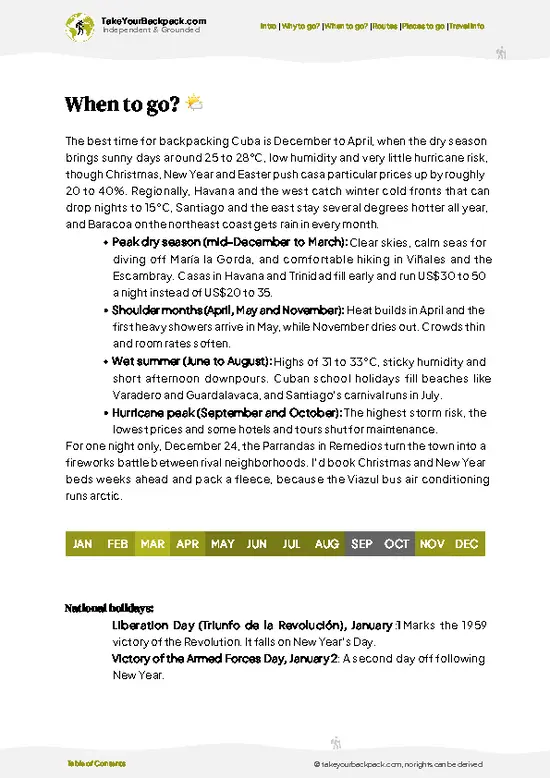
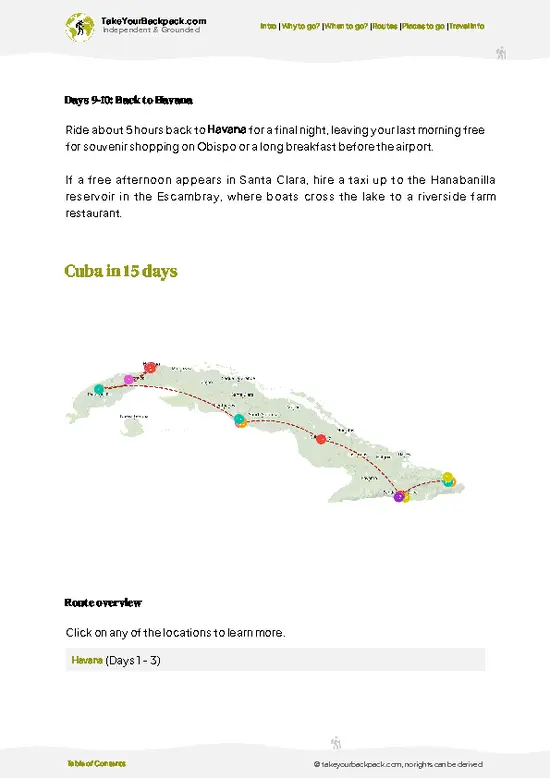
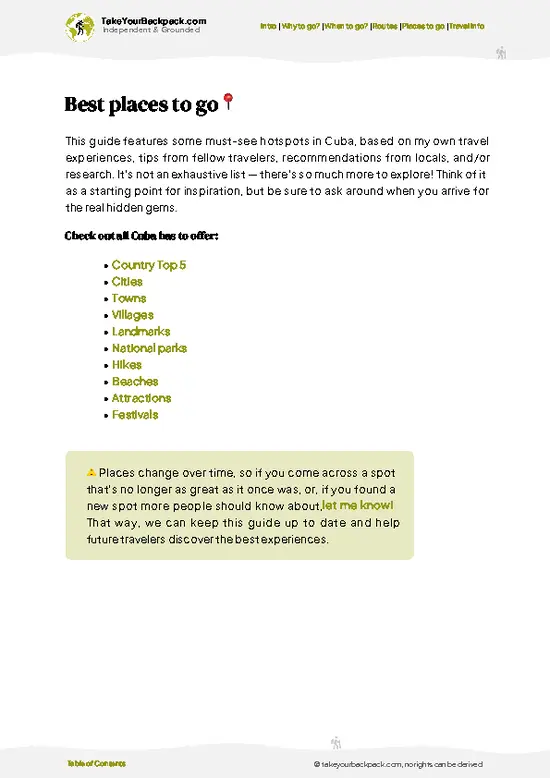
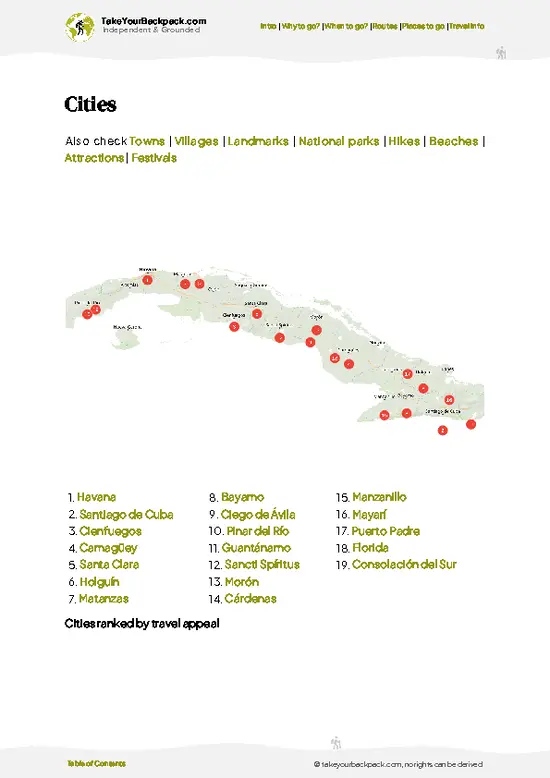
example page 0 from our offline Travel Guide for Cuba
example page 1 from our offline Travel Guide for Cuba
example page 2 from our offline Travel Guide for Cuba
example page 3 from our offline Travel Guide for Cuba
example page 4 from our offline Travel Guide for Cuba
example page 5 from our offline Travel Guide for Cuba
example page 6 from our offline Travel Guide for Cuba
example page 7 from our offline Travel Guide for Cuba
Loading the map 🌍
CLICK TO FILTER
cities
towns
villages
landmarks
national parks
hikes
beaches
attractions
festivals
SHOW COUNTRY’S BESTSHOW ALL

✨ Why go?
Ranked #2 city in Cuba
The unique appeal for travelers

Santiago de Cuba earns its place on a Cuba route because it feels like a different country from Havana: hotter, louder, more Caribbean and Afro-Cuban in its music and religion. The city is the home of son, and live music runs daily in places like the Casa de la Trova on Heredia Street, where locals outnumber tourists on a good night. It also anchors the eastern end of the island, so it works as a base for the mountains, the pilgrimage town of El Cobre and the road toward Baracoa. Casas particulares are plentiful and hosts cook big breakfasts and dinners, which saves hunting for restaurants that often run out of menu items. The center is walkable but hilly, so expect sweat and good calves. Come for the culture and carnival heritage, with the July carnival as the peak. Give it two or three full … read more 👉
Santiago de Cuba earns its place on a Cuba route because it feels like a different country from Havana: hotter, louder, more Caribbean and Afro-Cuban in its music and religion. The city is the home of son, and live music runs daily in places like the Casa de la Trova on Heredia Street, where locals outnumber tourists on a good night. It also anchors the eastern end of the island, so it works as a base for the mountains, the pilgrimage town of El Cobre and the road toward Baracoa. Casas particulares are plentiful and hosts cook big breakfasts and dinners, which saves hunting for restaurants that often run out of menu items. The center is walkable but hilly, so expect sweat and good calves. Come for the culture and carnival heritage, with the July carnival as the peak. Give it two or three full days. Any less and you only skim it; much more and you may start to feel the logistics grind.

💡 HighlightsPlaces and moments you shouldn't skip

  1. Castillo del Morro (Castillo de San Pedro de la Roca): The 17th-century fortress on a cliff at the bay mouth is the city’s signature sight, with sea views from its terraces and a small pirate museum. Go late afternoon for the cooler light and the nightly cannon ceremony. Entry about US$6 to 8, 1.5 to 2 hours.
  2. Cementerio Santa Ifigenia: The resting place of José Martí, Fidel Castro and Carlos Manuel de Céspedes. Martí’s hexagonal mausoleum has a guard change every 30 minutes. Go in the morning. Entry about US$2 to 5, 1 to 1.5 hours.
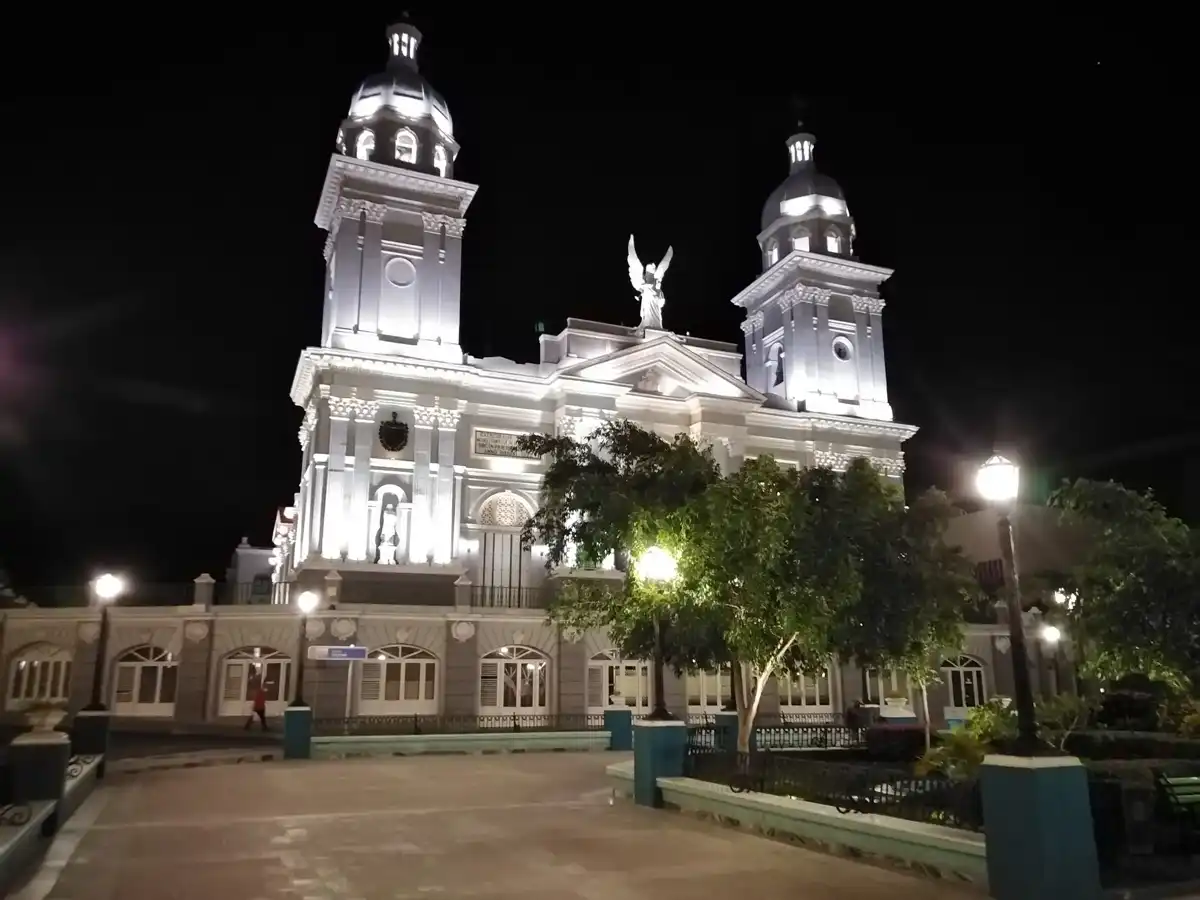
  3. Parque Céspedes: The main square, with the cathedral, the Casa de Diego Velázquez (Cuba’s oldest house) and the Hotel Casa Granda terrace. Evening is best for people-watching. Square is free, the house museum about US$2 to 5, allow 1 to 2 hours.
  4. Casa de la Trova: A
… read more 👉
  1. Castillo del Morro (Castillo de San Pedro de la Roca): The 17th-century fortress on a cliff at the bay mouth is the city’s signature sight, with sea views from its terraces and a small pirate museum. Go late afternoon for the cooler light and the nightly cannon ceremony. Entry about US$6 to 8, 1.5 to 2 hours.
  2. Cementerio Santa Ifigenia: The resting place of José Martí, Fidel Castro and Carlos Manuel de Céspedes. Martí’s hexagonal mausoleum has a guard change every 30 minutes. Go in the morning. Entry about US$2 to 5, 1 to 1.5 hours.
  3. Parque Céspedes: The main square, with the cathedral, the Casa de Diego Velázquez (Cuba’s oldest house) and the Hotel Casa Granda terrace. Evening is best for people-watching. Square is free, the house museum about US$2 to 5, allow 1 to 2 hours.
  4. Casa de la Trova: A classic venue for son and bolero, with afternoon and evening sets. Go around 9 p.m. Cover is often US$2 to 5 and drinks are cheap. Stay 1 to 2 hours.
  5. Cuartel Moncada: The barracks Fidel Castro attacked in 1953, now a school with a museum where bullet holes were preserved. Go in the morning. Entry about US$2 to 3, 45 minutes.
  6. Museo del Carnaval: Costumes, drums and photographs explain the carnival tradition that defines the city. Visit in the morning. Entry about US$2 to 3, 45 minutes.
  7. Tivolí and the Padre Pico Steps: Climb the stepped street through the old Haitian-French quarter to see tiled roofs and balconies. Go early evening. Free, about 1 hour.
  8. Calle Heredia: A lively street of live music, bookshops and the Museo Provincial Emilio Bacardí, where you can see Cuba’s oldest museum collections. Entry about US$2 to 5, 1 to 1.5 hours.
Nearby, you can take day trips to the Basílica del Cobre, Baconao Park and the Gran Piedra. The Padre Pico Steps and the Parque Céspedes square cost nothing, so they are the cheapest way to spend time in Santiago de Cuba.
Spotted a mistake or missing something? Contact us.
🏘️ NeighborhoodsWhere things are and how it's laid out

Santiago spreads over hills above a bay, so knowing which pocket suits your day saves sweat and taxi money.
  • Centro Histórico (around Parque Céspedes): The core of the city, and the one area worth a full morning on foot. Colonial streets, the cathedral, the Casa de Diego Velázquez and Calle Heredia with its live trova are all within about ten minutes of each other. Streets are steep, so start at the top and walk down. Skip the tour carriages; nothing here needs one.
  • Tivolí: The old Haitian-French quarter on a hillside just south of the center, known for the Padre Pico Stairs and house-front balconies. It is a short walk, free, and best before 10am when it is cooler. Local life here is quiet and residential, so don’t expect cafés.
  • Vista Alegre: Leafy, spacious and 2 to 3 km from the center, with
… read more 👉
Santiago spreads over hills above a bay, so knowing which pocket suits your day saves sweat and taxi money.
  • Centro Histórico (around Parque Céspedes): The core of the city, and the one area worth a full morning on foot. Colonial streets, the cathedral, the Casa de Diego Velázquez and Calle Heredia with its live trova are all within about ten minutes of each other. Streets are steep, so start at the top and walk down. Skip the tour carriages; nothing here needs one.
  • Tivolí: The old Haitian-French quarter on a hillside just south of the center, known for the Padre Pico Stairs and house-front balconies. It is a short walk, free, and best before 10am when it is cooler. Local life here is quiet and residential, so don’t expect cafés.
  • Vista Alegre: Leafy, spacious and 2 to 3 km from the center, with Bacardí-era mansions, the Casa del Caribe and a few of the better paladares. Take a shared taxi, because walking there is dull and hot. Evenings are calm.
  • Punta Gorda and the bay: A seaside strip at the end of the peninsula with small bars and a breeze. It is a taxi ride from Centro, and worth it at sunset, not midday.
  • Santa Ifigenia and Moncada districts: The cemetery (Martí, Céspedes and Fidel Castro are buried there) is a half-day highlight. The Moncada Barracks area is a quick look for history fans, and most others can skip the interior.

⌛️ 1 dayA smart one-day plan

8:30 AM, Cementerio Santa Ifigenia: Start here before the heat. Walk to Martí’s mausoleum, then find Céspedes and the Castro stone, a large boulder with a plaque. Catch the guard change on the half hour, then take a taxi back to the center.

10:30 AM, Parque Céspedes and Casa de Diego Velázquez: Look at the cathedral, then tour the oldest house in Cuba, with its wooden balconies and carved ceilings. It is a short walk from the square.

12:30 PM, Lunch near Calle Heredia: Eat at a paladar or casa and rest in the shade. Walk up Heredia to the Emilio Bacardí museum if you want an hour of art and archaeology.

3:00 PM, Tivolí and the Padre Pico Steps: Wander the hillside streets above the center, where the French-Haitian influence shows in the ironwork. Locals sit on doorsteps and kids play on … read more 👉
8:30 AM, Cementerio Santa Ifigenia: Start here before the heat. Walk to Martí’s mausoleum, then find Céspedes and the Castro stone, a large boulder with a plaque. Catch the guard change on the half hour, then take a taxi back to the center.

10:30 AM, Parque Céspedes and Casa de Diego Velázquez: Look at the cathedral, then tour the oldest house in Cuba, with its wooden balconies and carved ceilings. It is a short walk from the square.

12:30 PM, Lunch near Calle Heredia: Eat at a paladar or casa and rest in the shade. Walk up Heredia to the Emilio Bacardí museum if you want an hour of art and archaeology.

3:00 PM, Tivolí and the Padre Pico Steps: Wander the hillside streets above the center, where the French-Haitian influence shows in the ironwork. Locals sit on doorsteps and kids play on the stairs, so move quietly and say hello.

4:30 PM, Santa Lucía neighborhood walk: Few tourists make it to this working district. Follow local streets past small workshops and corner stands, and let the afternoon cool.

7:00 PM, Dinner: Eat at your casa or a nearby paladar, as places fill quickly.

9:00 PM, Casa de la Trova: Finish with the son band and a rum. Arrive early for a seat, and ask your host for a taxi home.

🌤️ When to go?Weather, crowds, and seasonal trade-offs

November to April is the easiest window for Santiago de Cuba, with highs of 28 to 31°C (82 to 88°F) and lower humidity.
  • Dry Season (Nov to Apr): Nights drop to 20 to 23°C (68 to 73°F) and rain is rare. Days are about 11 to 12 hours long. Casas particulares raise prices and book up around Christmas and Easter.
  • Carnival (July): The city’s biggest party, with conga parades and packed streets in the last half of the month. Expect heat of 33 to 35°C (91 to 95°F), full lodging and higher prices.
  • Wet and Hurricane Season (May to Oct): Afternoon downpours are common, humidity is heavy and highs reach 32 to 35°C (90 to 95°F). Hurricane risk peaks from August to October, though rooms are cheaper and sights quieter.
Book a room at least a month ahead for July or the festive weeks, and sightsee before noon whenever you come.

source: climatestotravel.comJANJanuary: excellent for travelingFEBFebruary: excellent for travelingMARMarch: excellent for travelingAPRApril: highly recommended for travelingMAYMay: fair for travelingJUNJune: fair for travelingJULJuly: good for travelingAUGAugust: good for travelingSEPSeptember: fair for travelingOCTOctober: fair for travelingNOVNovember: highly recommended for travelingDECDecember: excellent for traveling
cuba-city-santiago-de-cuba
© Google | Marcelo Cirilo

✈️ The backpacker research shortcutCuba Travel Guide

An offline-friendly backpacking guide with optimized travel routes, ranked highlights, transport advice, and the best areas to stay.
example page 0 from our offline Travel Guide for Cuba
example page 1 from our offline Travel Guide for Cuba
example page 2 from our offline Travel Guide for Cuba
example page 3 from our offline Travel Guide for Cuba
example page 4 from our offline Travel Guide for Cuba
example page 5 from our offline Travel Guide for Cuba
example page 6 from our offline Travel Guide for Cuba
example page 7 from our offline Travel Guide for Cuba
The digital guide (327 pages) contains:
✅ 113 highlights, ranked by travel appeal
✅ Optimized 5, 10 & 15-day travel routes
✅ Cities, national parks, landmarks, beaches
✅ How to get around
✅ Offline-friendly for travel without Wi-Fi
👉 Click to see all 30+ guide features

📅 Plan smarter in minutes, not weeks
✅ Month by month travel advice
✅ Festivals & national holidays
✅ Budget expectations

🗺️ Go to the right places, skip the overrated ones
✅ Honest pros & cons of destinations
✅ Top hikes, parks & viewpoints
✅ Lesser-known places most travelers miss
✅ Clear “worth it vs skip it” guidance

🛏️ Travel smoothly without rookie mistakes
✅ Best areas to stay
✅ Transport systems explained simply
✅ Common scams & safety advice
✅ SIM cards, money & practical tips

🌍 Understand the country, not just visit it
✅ Culture & traditions
✅ 52 Essential phrases & customs
✅ Festivals worth planning around
✅ Traveler-friendly historical context
✅ Insights that make places more meaningful

📱 Built for real travel conditions
✅ Fully downloadable PDF
✅ Works completely offline
✅ Optimized for phone use
✅ Useful in remote areas & buses
✅ Everything in one place
Stop searching, start planning
Get instant access to your full guide. 30‑day money-back guarantee.
+ Add another guide for just

By proceeding you agree to our terms.
Sent to your inbox immediately after payment • 100% Secure Checkout
Best Backpacking Travel Advisor 2025 tourism awardBest Backpacking
Travel Advisor
2025
What others say about Take Your Backpack Guides:
⭐⭐⭐⭐⭐
Fantastic, amazing amount of information!
⭐⭐⭐⭐⭐
My goodness this is amazing, it's what I've been looking for hats off too you!
⭐⭐⭐⭐⭐
I think this is absolutely BRILLIANT
⭐⭐⭐⭐
Very complete and informative. It's still missing places, but I gotta to commend you
⭐⭐⭐⭐⭐
This is truly amazing, thank you, can't wait to explore it with my kids!
⭐⭐⭐⭐⭐
Awesome resource, thank you!
⭐⭐⭐⭐⭐
This is amazing! Can't wait to explore the ones I haven't seen
⭐⭐⭐⭐
I love this! Well done, great idea.
⭐⭐⭐⭐⭐
Thanks for taking the time to make this gem!
⭐⭐⭐⭐⭐
This might be the best website I've ever seen.
⭐⭐⭐⭐⭐
Congratulations, and thank you so much for your work; it's incredibly valuable.
⭐⭐⭐⭐
In all seriousness I think you did a great job pointing out the important spots
⭐⭐⭐⭐⭐
10/10 very good
⭐⭐⭐⭐⭐
As someone who's only just starting to visit regularly this is awesome, thank you.
⭐⭐⭐⭐
Thank you very much! I'm going to visit my dad, it's going to be very useful!
⭐⭐⭐⭐⭐
This is really cool! We'll be travelling for the first time and this definitely come in handy.
⭐⭐⭐⭐⭐
You are now our minister of culture, congratulations 👨‍💼
⭐⭐⭐⭐⭐
Just wanted to tell you that this is a pearl! Going to follow your recommendations.
⭐⭐⭐⭐⭐
This is so cool. I'll definitely be using the resource for my travels soon.
⭐⭐⭐⭐⭐
This is very impressive! Good work.
⭐⭐⭐⭐⭐
This is an amazing and informative site. Very well done!

🛏️ Where to stay?Choosing the right base

The best budget base is Centro Histórico, within a few blocks of Parque Céspedes, where casas particulares (private rooms in family homes) cost roughly US$15 to 30 a night. You will find the greatest choice here, and nearly everything you want to see is on foot. Streets are lively until late, with live music from Calle Heredia carrying into the evening, so ask for a back room or an upstairs one if you sleep lightly. Dorm-style hostels are rare in Cuba, so a private room split between two people is the usual budget route. Late-night walking is comfortable in this area, with people sitting out on … read more 👉
The best budget base is Centro Histórico, within a few blocks of Parque Céspedes, where casas particulares (private rooms in family homes) cost roughly US$15 to 30 a night. You will find the greatest choice here, and nearly everything you want to see is on foot. Streets are lively until late, with live music from Calle Heredia carrying into the evening, so ask for a back room or an upstairs one if you sleep lightly. Dorm-style hostels are rare in Cuba, so a private room split between two people is the usual budget route. Late-night walking is comfortable in this area, with people sitting out on doorsteps well into the night.

Vista Alegre is the calmer second choice, about 2 to 3 km from the center. Rooms run US$20 to 35 in large old houses, often with terraces, quiet streets and decent breakfast. You trade walkability for peace and will need shared taxis or a short ride, at around US$3 to 5, to reach the old town. It suits travelers who want to recover from the heat and noise, and several paladares are nearby for dinner.

Book the first night ahead and arrange the rest face to face. Hosts are well connected and will call a cousin down the road if they are full.

🚌 Getting aroundGetting around like a local

Taking the first taxi that stops outside the airport or the bus station costs visitors the most, because unmetered drivers quote tourist rates, often US$10 to 15 for a ride that a shared or negotiated local fare covers for far less. Santiago de Cuba is hilly, hot and spread out, but the old center around Parque Céspedes and Calle Heredia is compact enough to cover on foot. Buses are crowded and irregular, so most backpackers combine walking with cheap shared rides and agree on every price before getting in. Pay in the currency the driver asks for, and carry small bills.
  • Walking: Free, and the best way to see the historic core, where Plaza de Marte, Calle Heredia and the Tivolí stairs sit within about 1 km of each other. Steep slopes are the reason to start early, since midday heat from May
… read more 👉
Taking the first taxi that stops outside the airport or the bus station costs visitors the most, because unmetered drivers quote tourist rates, often US$10 to 15 for a ride that a shared or negotiated local fare covers for far less. Santiago de Cuba is hilly, hot and spread out, but the old center around Parque Céspedes and Calle Heredia is compact enough to cover on foot. Buses are crowded and irregular, so most backpackers combine walking with cheap shared rides and agree on every price before getting in. Pay in the currency the driver asks for, and carry small bills.
  • Walking: Free, and the best way to see the historic core, where Plaza de Marte, Calle Heredia and the Tivolí stairs sit within about 1 km of each other. Steep slopes are the reason to start early, since midday heat from May to October is punishing. Skip walking after dark on unlit side streets and take a ride instead.
  • Colectivo taxis (shared old cars): These run fixed routes along main roads such as Avenida Garzón and toward Siboney, and cost roughly US$0.50 to 2 per seat for city hops. They are cheaper because you share, and they leave when full, so ask a local which stand serves your direction. Not worth using for luggage-heavy trips, where a private car is easier.
  • Private taxis and bici-taxis: A private car within the center usually runs US$3 to 6, and a bicycle taxi US$1 to 3 for short hops. There is no reliable meter, so name the price first and confirm it covers all passengers. Experienced travelers ask the casa owner to call a trusted driver, which avoids the haggling and the inflated first offer.
  • City buses: Fares are a few cents, but routes are unmarked, vehicles are packed and schedules are unreliable, often running roughly 5 am to 9 pm when they run at all. They suit only short trips if you already know your stop. For most visitors the time lost waiting outweighs the savings, so skip them unless you enjoy the adventure.
  • Intercity buses and shared cars: The Viazul bus station on Avenida de Los Libertadores connects to Havana (about 13 to 14 hours, roughly US$50 to 62), Trinidad and Camagüey. Book a seat a day or two ahead, since services are limited and fill quickly. Shared taxis to Baracoa or Guantánamo cost about US$10 to 20 per person and save hours compared with waiting for buses.

👛 Costs (as of 22 October 2026)Money, prices, and spending tips

Santiago de Cuba costs a backpacker roughly US$40 to 60 a day, and the table below adds up to US$52 with a high-season bed. Cuba’s economy is unusual: official rates and street rates differ widely, and most independent travelers pay in cash (euros or US dollars are changed at the informal rate), so figures here are realistic ranges at current street values.
CategoryBudget RangeLocal Reality
Dorm or shared room, high season (Dec to Apr)US$12 to 18Dorms are rare. Most budget travelers rent a room in a private family home, often with breakfast extra.
Dorm or shared room, off-season (May to Nov)US$8 to 14Hosts bargain readily when the city is quiet, especially for stays of several nights.
MealsUS$12 to 20Home-cooked dinners at your host’s run US$6 to 10. Street snacks and pizza stands cost US$1 to
… read more 👉
Santiago de Cuba costs a backpacker roughly US$40 to 60 a day, and the table below adds up to US$52 with a high-season bed. Cuba’s economy is unusual: official rates and street rates differ widely, and most independent travelers pay in cash (euros or US dollars are changed at the informal rate), so figures here are realistic ranges at current street values.
CategoryBudget RangeLocal Reality
Dorm or shared room, high season (Dec to Apr)US$12 to 18Dorms are rare. Most budget travelers rent a room in a private family home, often with breakfast extra.
Dorm or shared room, off-season (May to Nov)US$8 to 14Hosts bargain readily when the city is quiet, especially for stays of several nights.
MealsUS$12 to 20Home-cooked dinners at your host’s run US$6 to 10. Street snacks and pizza stands cost US$1 to 3.
Local transportUS$2 to 6Shared taxis on fixed routes are cheap. Bicycle taxis and private cabs cost more for short hops.
City transport passNone availableNo pass exists. Buses are crowded and unreliable, so most people pay per ride.
Basic activities and entry feesUS$3 to 10Museums and the Castillo del Morro cost roughly US$2 to 8 each. Live music in a casa de la trova often has a small cover.
MiscellaneousUS$3 to 6Bottled water, toiletries, a few drinks and tips for musicians or guides.
Total Daily BudgetUS$52Comfortable for one traveler who eats mostly at home or at street stands.
Bring more cash than you expect, since card machines and ATMs are unreliable for foreign cards. Eating dinner at your casa and sharing taxis with other travelers trims the daily total noticeably.


source: cubatravel.cu
⚠️ Prices can change and everyone travels differently, so take this as a rough guide. Hope it helps you plan your adventure!

🚌 Day tripsExploring the surroundings

Santiago works well as a base, since the sights around it are close enough to see in a day and hosts can arrange the transport.
Castillo del Morro: The 17th-century fortress sits on a cliff at the mouth of the bay, about 10 km from the center. It is worth the effort for the sea views and the daily cannon ceremony at dusk. Allow 30 minutes by taxi (US$8 to 12 round trip with a wait) plus entry of about US$5 to 8. Go late afternoon and book a driver for the return, because cars thin out after dark.

Basílica del Cobre: The yellow pilgrimage church of Cuba’s patron saint, Virgen de la Caridad, rises from green hills about 20 km west. A shared taxi or private ride takes 40 minutes and costs US$5 to 15 depending on how you go. It is busiest around September 8, her feast day. A frequent first-timer … read more 👉
Santiago works well as a base, since the sights around it are close enough to see in a day and hosts can arrange the transport.
Castillo del Morro: The 17th-century fortress sits on a cliff at the mouth of the bay, about 10 km from the center. It is worth the effort for the sea views and the daily cannon ceremony at dusk. Allow 30 minutes by taxi (US$8 to 12 round trip with a wait) plus entry of about US$5 to 8. Go late afternoon and book a driver for the return, because cars thin out after dark.

Basílica del Cobre: The yellow pilgrimage church of Cuba’s patron saint, Virgen de la Caridad, rises from green hills about 20 km west. A shared taxi or private ride takes 40 minutes and costs US$5 to 15 depending on how you go. It is busiest around September 8, her feast day. A frequent first-timer mistake is arriving after lunch, when the light is flat and tour groups are leaving.

Gran Piedra: A giant boulder atop a 1,225 m ridge, reached by a staircase of about 450 steps, with views to the coast on clear days. The road from the city is about 25 km and takes around an hour by taxi, costing roughly US$20 to 30 for a car with a wait. Go early before clouds roll in, ideally November to April.

Siboney and Playa Siboney: A small beach village about 20 km east, with a rocky strip of shore and the farmhouse where the Moncada attack began. Taxis take 40 minutes and cost US$10 to 15, and a seafood lunch costs about US$6 to 10. Weekdays are quieter.
👉 Explore Playa Siboney

🍲 FoodLocal Flavors for Backpackers

Santiago’s cooking leans toward the east Cuban style, with more spice and sweetness than Havana. Look for ron Santiago, the local rum tradition tied to Bacardí’s birthplace, and sip a rum with ice at a corner bar. Congrí oriental (rice cooked together with red beans) is the regional version of the national rice and beans, and it is smokier here. Try tamales wrapped in corn husk and cucurucho, a sweet of coconut, guava and honey wrapped in a palm leaf, which you will find in the east and not much in Havana. Street stalls sell pan con lechón (roast pork rolls) for about US$1 to 2.

Most backpackers eat at casa particular dinners (usually US$6 to 10, generous and often with lobster or fish) and at small paladares around the center and Vista Alegre. Pizza hatches and peso cafés near Parque Céspedes … read more 👉
Santiago’s cooking leans toward the east Cuban style, with more spice and sweetness than Havana. Look for ron Santiago, the local rum tradition tied to Bacardí’s birthplace, and sip a rum with ice at a corner bar. Congrí oriental (rice cooked together with red beans) is the regional version of the national rice and beans, and it is smokier here. Try tamales wrapped in corn husk and cucurucho, a sweet of coconut, guava and honey wrapped in a palm leaf, which you will find in the east and not much in Havana. Street stalls sell pan con lechón (roast pork rolls) for about US$1 to 2.

Most backpackers eat at casa particular dinners (usually US$6 to 10, generous and often with lobster or fish) and at small paladares around the center and Vista Alegre. Pizza hatches and peso cafés near Parque Céspedes serve quick snacks. For a drink, the terrace of the Casa Granda gets you a view over the plaza at about US$3 to 5 a cocktail, while Calle Heredia has the trova music. Fresh guarapo (pressed sugarcane juice) from street carts costs well under US$1 and is the best cooler on a hot afternoon.

🛡️ SafetyTraveler Safety Guide

Santiago de Cuba is a safe city for backpackers, and violent crime against visitors is rare. The everyday issues are jineteros, touts who approach on Parque Céspedes and Calle Heredia offering cigars, rooms, restaurants or a ride. A friendly chat usually ends in a commission added to your bill, so a polite “no, gracias” and keeping walking works well. Taxis quote high prices to foreigners, so set the fare first. Pickpocketing and bag-snatching happen in crowded spots like carnival nights and around the market, so carry only the cash you need and leave your passport at your casa (carry a copy). Solo travelers, including women, will get plenty of attention and catcalls, which is annoying but seldom threatening. Stay on lit main streets after dark and take a taxi back from Tivolí or Vista Alegre. … read more 👉
Santiago de Cuba is a safe city for backpackers, and violent crime against visitors is rare. The everyday issues are jineteros, touts who approach on Parque Céspedes and Calle Heredia offering cigars, rooms, restaurants or a ride. A friendly chat usually ends in a commission added to your bill, so a polite “no, gracias” and keeping walking works well. Taxis quote high prices to foreigners, so set the fare first. Pickpocketing and bag-snatching happen in crowded spots like carnival nights and around the market, so carry only the cash you need and leave your passport at your casa (carry a copy). Solo travelers, including women, will get plenty of attention and catcalls, which is annoying but seldom threatening. Stay on lit main streets after dark and take a taxi back from Tivolí or Vista Alegre. Power cuts can leave streets very dark, so carry a headlamp or phone light.

FAQTraveler FAQ

Two to three days is enough for Santiago de Cuba. One day covers the colonial center, Calle Heredia and Tivolí, a second takes in Castillo del Morro, Santa Ifigenia cemetery and Vista Alegre, and a third lets you reach Basílica del Cobre or Gran Piedra for US$5 to 30. Add a day if you want Playa Siboney or plan to visit during July’s carnival.
Yes, Santiago de Cuba is considered safe for solo backpackers, including women, with violent crime rare. Expect persistent touts around Parque Céspedes and inflated taxi fares, so agree on the price first and use a taxi after dark between neighborhoods. Keep your passport at your casa and carry only small cash, particularly during the July carnival crowds.
Santiago de Cuba is known as the cradle of the Cuban Revolution, with the Moncada Barracks and Santa Ifigenia cemetery where José Martí and Fidel Castro are buried. It is also famous for its Afro-Cuban music, from trova on Calle Heredia to the July carnival, and for Bacardí rum, which began here in 1862. The pilgrimage church of Basílica del Cobre, about 20 km away, draws visitors every September 8.
⚠️ Things can change over time, so always validate details locally before you go.

Other Cuban cities near Santiago de Cuba

Explore more nearby:

  • Guantánamo—Changüí music, Salcines palace, stone animals, Baracoa gateway| 67 km away
  • Mayarí—Sierra Cristal foothills, Guayabo waterfall, river banks, orchid trails| 72 km away
  • Bayamo—Anthem birthplace, car-free core, horse coaches, Céspedes house| 92 km away

💡 Not sure where to go next?
Create a personalized itinerary for Cuba including Santiago de Cuba and the places that fit your trip.

Generate my itinerary

👉 Discover all cities

Or checkout all Cuba has to offer (think cities, towns, villages, national parks, hikes, beaches, festivals)
Country photo of Cuba

We 💚 feedbackFinal thoughts on visiting Santiago de Cuba

Many people treat Santiago de Cuba as a one-night stop between Havana and Baracoa, then spend most of it dealing with bus tickets. Stay at least two nights and book onward transport on day one. I would skip the souvenir stalls, bring small bills, and keep every evening free for live music.

✈️ When did I visit Cuba?
As part of my 1.5 year travel around the world trip, I visited Cuba for 6 weeks in February, March 2016, being extremely lucky that that coincided with the free concert of The Rolling Stones.

✍️ Help improve this page!
The information on this page is based on my own backpacking experience in Cuba, supplemented with up-to-date research and feedback from other travelers. Travel details can change, so if you notice anything outdated or incomplete, feel free to let me know.


🙋‍♂️ Give feedback

👋 Meet the founderWho’s Behind Take Your Backpack?

Johan, backpacker and founder of TakeYourBackpackHi, I’m Johan (Netherlands 🇳🇱), the creator of TakeYourBackpack. Over the past 3 decades, I’ve backpacked through 90+ countries across six continents, gaining extensive experience with independent travel, long-term trips, and overland routes.

This site is built on a combination of firsthand travel experience and carefully curated insights from other backpackers. Many guides are based on places I’ve personally visited, while others bring together tips, observations, and practical advice shared by trusted travelers I’ve met along the way.

The goal is to provide realistic, experience-driven guidance — not generic itineraries — so you can explore destinations with better context, clearer expectations, and more confidence.