×

Curaçao🇨🇼 | best townsExplore the 2 Best towns in Curaçao

Towns in Curaçao are small, Dutch-colonial and pastel, spread along a 60-kilometer island where nothing sits more than about an hour from anything else. The capital area has the buses, hostels and cheapest food. The west trades that for quiet villages, beaches and rental-car logic. If you’re traveling independently, pick one base, go early, and leave the heat of midday for a swim.

By Johan Kruseman 🇳🇱 | Updated October 23, 2026
Explore the best villages in Curaçao

Why go?Key Factors That Shape the Experience

Curaçao suits towns because the island’s history is compact and still visible. Four centuries of Dutch rule, a major Atlantic trade port and a large Afro-Caribbean population gave it Papiamentu, a Dutch-Iberian-African language, plus architecture and food found nowhere else in the region. The climate is dry and sunny, with cactus country instead of rainforest, so towns feel open and walkable in the mornings, then go quiet at midday heat.

Before choosing Curaçao for its towns, know that distances are short but public transport is thin. Buses run mainly around the capital area and are sparse on Sundays and evenings. Most towns are small, so expect an hour or two of wandering rather than a full day. Many shops close on Sunday, and prices run higher than in the rest of the Caribbean backpacker trail because most goods are imported.
Our Approach to Ranking
The list of best towns in Curaçao is created based on charm, local culture, atmosphere, hidden gems, and visitor appeal. If you feel a town is missing in this list, please let us know.

When to go?Optimal Periods for Travel

Best months: The best months for towns are April to June and September to November, when crowds thin and prices ease, while daytime highs hover around 30°C (86°F) year-round. Curaçao sits outside the main hurricane belt, so rainfall is light, roughly 450 to 600 millimeters a year, with most of it falling between October and January in short showers.
Peak and shoulder: The peak season runs from mid-December through April, when rooms can cost 30 to 60 percent more and the easy-to-book hostels fill first. Book at least a month ahead then. Carnival season, from January to the pre-Lent weekend, brings parades and road closures that suit festival fans and frustrate everyone else. Trade winds keep the north and east coasts breezier, so the afternoon is easier to bear there. Plan walks for before 10 a.m. or after 4 p.m.

town hoppingPlanning Your Route Efficiently

Days needed: A trip combining several towns needs 4 to 6 days, because the island is small and the limiting factor is transport, not distance. Divide it into two clusters: the capital area and the west. Start in the capital area, where the airport and most buses are, then move west once you have a rental car or a taxi arranged. Between the two, allow 45 to 75 minutes by road.
Pacing: Give each town 2 to 4 hours and pair no more than two per day. A common mistake is trying to cover the island by bus alone, which wastes hours on infrequent routes and Sunday gaps. Rent a car for two days, or split a taxi, and use buses for the capital area. Another is arriving at midday, when heat and closed shops flatten everything. Start by 8 a.m.

The ListHighly Recommended towns of Curaçao

1 Punda

Gabled waterfront, pontoon bridge, floating market, sand-floor synagogue

Cross the swinging footbridge, browse Venezuelan boats selling fish and fruit, then follow the lanes to a 1634 fort and an 1732 synagogue.

curacao-city-punda
© Google |

2 Barber

Kunuku lanes, cactus fences, goat pastures, silent evenings

Walk quiet Bandabou lanes lined with stone walls and faded pastel houses, then look out over farmland toward the north coast hills.

Loading the map 🌍

Expert viewTips and Advice from Travelers

How many towns: Visit three to four towns. Curaçao is small enough that a fourth rarely adds new information, and the extra transport time eats beach and snorkeling hours, which are the island’s main draw. Choose one urban center for history and food, one quieter west-side village for slow days, and add a fourth only if you have a car.
Which kind for your style: Budget travelers should favor the capital area, where hostels, local snack counters and buses cluster. Those seeking calm should pick the west, where evenings are quiet and a car is almost required. Anyone who likes architecture and markets should lean urban and go early, since shops thin out by mid-afternoon and on Sundays.
What it costs: Expect US$60 to 100 a day on a tight budget: dorm beds run about US$25 to 40, local meals at snack … read more 👉
How many towns: Visit three to four towns. Curaçao is small enough that a fourth rarely adds new information, and the extra transport time eats beach and snorkeling hours, which are the island’s main draw. Choose one urban center for history and food, one quieter west-side village for slow days, and add a fourth only if you have a car.
Which kind for your style: Budget travelers should favor the capital area, where hostels, local snack counters and buses cluster. Those seeking calm should pick the west, where evenings are quiet and a car is almost required. Anyone who likes architecture and markets should lean urban and go early, since shops thin out by mid-afternoon and on Sundays.
What it costs: Expect US$60 to 100 a day on a tight budget: dorm beds run about US$25 to 40, local meals at snack counters US$8 to 15, and a bus ride about US$1.50 to 2. Taxis are unmetered and expensive, often US$25 to 50 for cross-island trips, so agree on a price first. A rental car costs about US$40 to 70 a day. Most town wandering is free, while museums and guided walks are about US$5 to 20 per visit. The Netherlands Antillean guilder is being replaced by the Caribbean guilder, but US dollars are widely accepted, and cards work almost everywhere.
Safety and etiquette: Towns are generally safe by day, but cars left at beaches and viewpoints are a theft target, so leave nothing visible and carry little cash. Quiet backstreets after dark call for a taxi rather than a walk. Greet people with bon dia or bon tardi, which locals notice and appreciate, and ask before photographing people. Dress properly when entering churches, and cover up in town after beach time. Sun is intense, so bring a hat, water and reef-safe sunscreen.

✈️ The backpacker research shortcutCuraçao Travel Guide

An offline-friendly backpacking guide with optimized travel routes, ranked highlights, transport advice, and the best areas to stay.
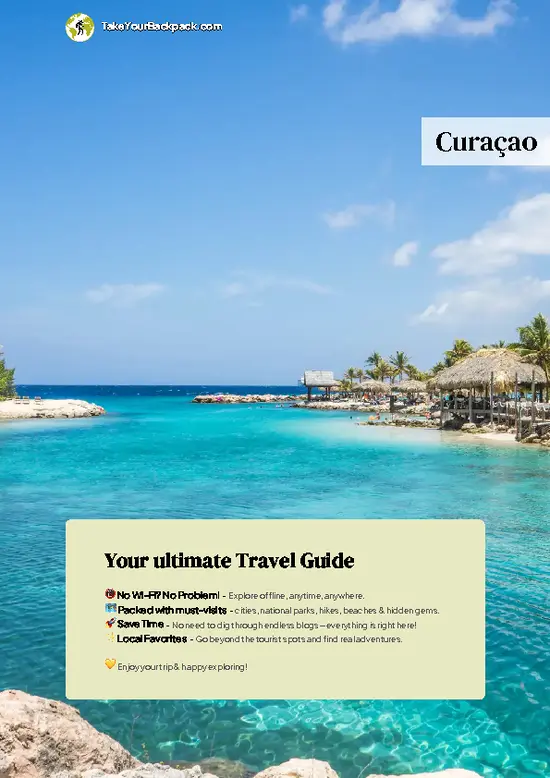
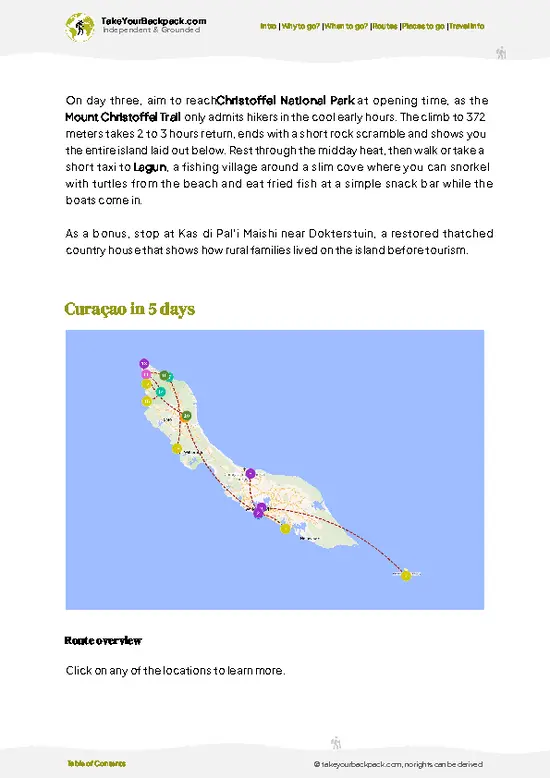
example page 0 from our offline Travel Guide for Curaçao
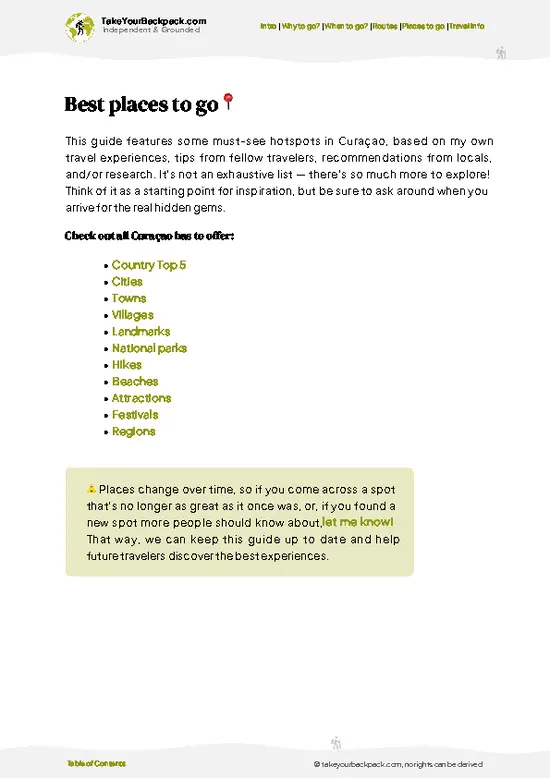
example page 1 from our offline Travel Guide for Curaçao
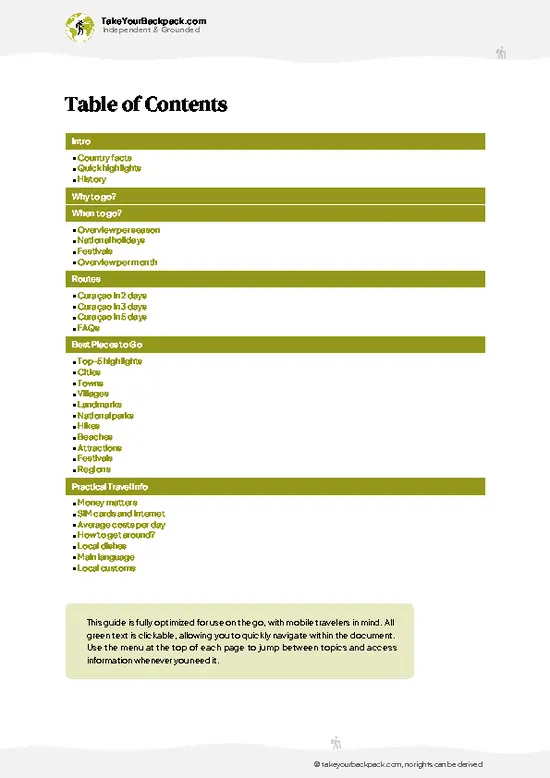
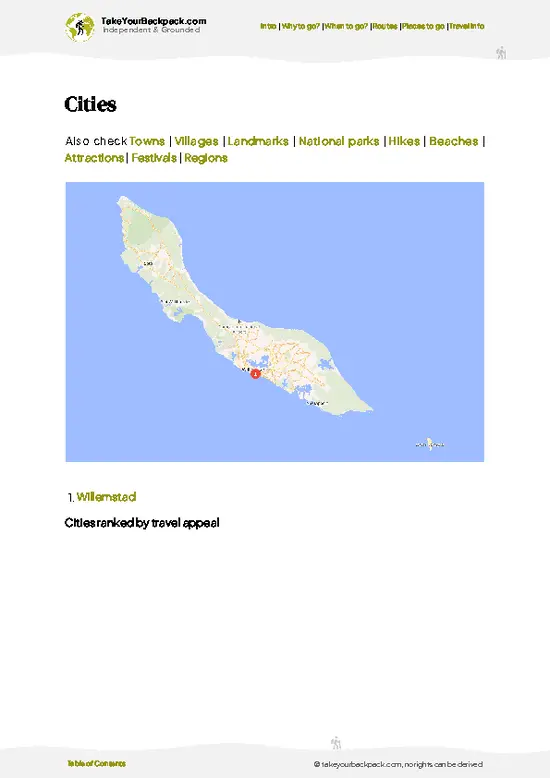
example page 2 from our offline Travel Guide for Curaçao
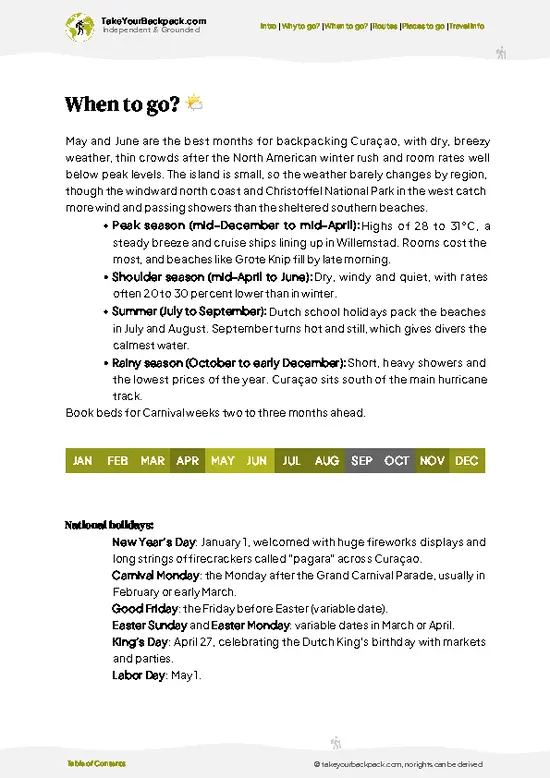
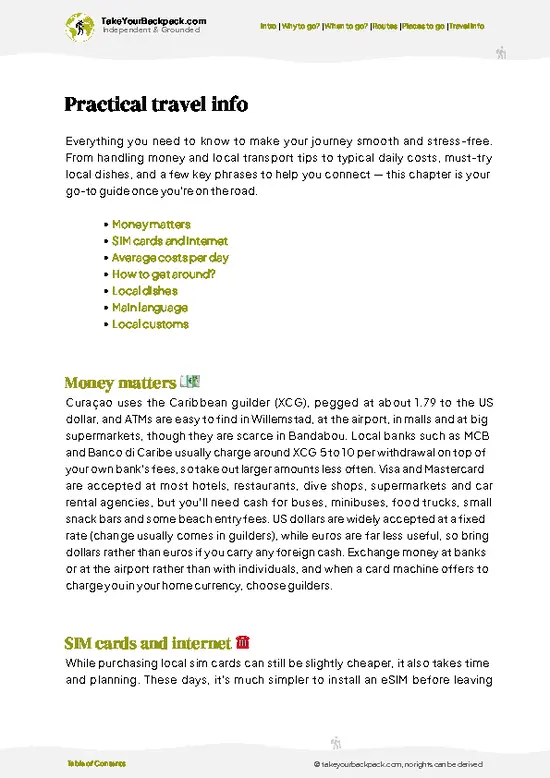
example page 3 from our offline Travel Guide for Curaçao
example page 4 from our offline Travel Guide for Curaçao
example page 5 from our offline Travel Guide for Curaçao
example page 6 from our offline Travel Guide for Curaçao
example page 7 from our offline Travel Guide for Curaçao
The digital guide (126 pages) contains:
✅ 33 highlights, ranked by travel appeal
✅ Optimized 2, 3 & 5-day travel routes
✅ Cities, national parks, landmarks, beaches
✅ How to get around
✅ Offline-friendly for travel without Wi-Fi
👉 Click to see all 30+ guide features

📅 Plan smarter in minutes, not weeks
✅ Month by month travel advice
✅ Festivals & national holidays
✅ Budget expectations

🗺️ Go to the right places, skip the overrated ones
✅ Honest pros & cons of destinations
✅ Top hikes, parks & viewpoints
✅ Lesser-known places most travelers miss
✅ Clear “worth it vs skip it” guidance

🛏️ Travel smoothly without rookie mistakes
✅ Best areas to stay
✅ Transport systems explained simply
✅ Common scams & safety advice
✅ SIM cards, money & practical tips

🌍 Understand the country, not just visit it
✅ Culture & traditions
✅ 52 Essential phrases & customs
✅ Festivals worth planning around
✅ Traveler-friendly historical context
✅ Insights that make places more meaningful

📱 Built for real travel conditions
✅ Fully downloadable PDF
✅ Works completely offline
✅ Optimized for phone use
✅ Useful in remote areas & buses
✅ Everything in one place
Stop searching, start planning
Get instant access to your full guide. 30‑day money-back guarantee.
+ Add another guide for just

By proceeding you agree to our terms.
Sent to your inbox immediately after payment • 100% Secure Checkout
Best Backpacking Travel Advisor 2025 tourism awardBest Backpacking
Travel Advisor
2025
What others say about Take Your Backpack Guides:
⭐⭐⭐⭐⭐
Fantastic, amazing amount of information!
⭐⭐⭐⭐⭐
My goodness this is amazing, it's what I've been looking for hats off too you!
⭐⭐⭐⭐⭐
I think this is absolutely BRILLIANT
⭐⭐⭐⭐
Very complete and informative. It's still missing places, but I gotta to commend you
⭐⭐⭐⭐⭐
This is truly amazing, thank you, can't wait to explore it with my kids!
⭐⭐⭐⭐⭐
Awesome resource, thank you!
⭐⭐⭐⭐⭐
This is amazing! Can't wait to explore the ones I haven't seen
⭐⭐⭐⭐
I love this! Well done, great idea.
⭐⭐⭐⭐⭐
Thanks for taking the time to make this gem!
⭐⭐⭐⭐⭐
This might be the best website I've ever seen.
⭐⭐⭐⭐⭐
Congratulations, and thank you so much for your work; it's incredibly valuable.
⭐⭐⭐⭐
In all seriousness I think you did a great job pointing out the important spots
⭐⭐⭐⭐⭐
10/10 very good
⭐⭐⭐⭐⭐
As someone who's only just starting to visit regularly this is awesome, thank you.
⭐⭐⭐⭐
Thank you very much! I'm going to visit my dad, it's going to be very useful!
⭐⭐⭐⭐⭐
This is really cool! We'll be travelling for the first time and this definitely come in handy.
⭐⭐⭐⭐⭐
You are now our minister of culture, congratulations 👨‍💼
⭐⭐⭐⭐⭐
Just wanted to tell you that this is a pearl! Going to follow your recommendations.
⭐⭐⭐⭐⭐
This is so cool. I'll definitely be using the resource for my travels soon.
⭐⭐⭐⭐⭐
This is very impressive! Good work.
⭐⭐⭐⭐⭐
This is an amazing and informative site. Very well done!

🛏️ Where to stay?Accommodation Highlights

Curaçao has only a handful of true hostels, with dorm beds around Cg 55 to 80 (US$30 to 45), so most backpackers end up in guesthouses, small apartments or private rooms at Cg 125 to 215 (US$70 to 120) a night. In Willemstad, Pietermaai has the best mix of budget guesthouses, bars and late-night restaurants within walking distance of the old town, while Punda puts you beside the shopping streets and waterfront but goes quiet after dark, and Otrobanda is cheaper and right by the main bus terminal, though some of its back streets feel sketchy at night. Outside the capital, Jan Thiel trades city access for beaches and a calmer, resort-like feel, and Westpunt is the pick for snorkeling and silence … read more 👉
Curaçao has only a handful of true hostels, with dorm beds around Cg 55 to 80 (US$30 to 45), so most backpackers end up in guesthouses, small apartments or private rooms at Cg 125 to 215 (US$70 to 120) a night. In Willemstad, Pietermaai has the best mix of budget guesthouses, bars and late-night restaurants within walking distance of the old town, while Punda puts you beside the shopping streets and waterfront but goes quiet after dark, and Otrobanda is cheaper and right by the main bus terminal, though some of its back streets feel sketchy at night. Outside the capital, Jan Thiel trades city access for beaches and a calmer, resort-like feel, and Westpunt is the pick for snorkeling and silence if you have a rental car, since buses there are infrequent.

If you enjoy meeting fellow travelers, consider choosing hostels with high ratings for atmosphere. On the other hand, if you prefer having your own space, a hotel might be a better option.

CuraçaoSee More of Curaçao

👋 Meet the founderWho’s Behind Take Your Backpack?

Johan, backpacker and founder of TakeYourBackpackHi, I’m Johan (Netherlands 🇳🇱), the creator of TakeYourBackpack. Over the past 3 decades, I’ve backpacked through 90+ countries across six continents, gaining extensive experience with independent travel, long-term trips, and overland routes.

This site is built on a combination of firsthand travel experience and carefully curated insights from other backpackers. Many guides are based on places I’ve personally visited, while others bring together tips, observations, and practical advice shared by trusted travelers I’ve met along the way.

The goal is to provide realistic, experience-driven guidance — not generic itineraries — so you can explore destinations with better context, clearer expectations, and more confidence.