×

Denmark🇩🇰 | best festivalsDiscover the 10 Best festivals Across Denmark

Festivals in Denmark are mostly outdoor, community-run affairs built around music, food and local habit, and they run almost entirely between May and September. The big names cluster on Zealand and Funen, where trains are frequent, camping is organized and tickets run into the hundreds of dollars. Jutland offers smaller, quieter events in harbor towns and fields, often cheaper and reached by regional bus or a short taxi ride. The islands, Bornholm especially, add ferry time and higher accommodation costs. Backpackers and other independent travelers will find the system orderly: on-site camping is standard, and bikes and public transport carry you most of the way.

By Johan Kruseman 🇳🇱 | Updated October 18, 2026
Explore the best regions in Denmark

Why go?Why These festival Stand Out

Denmark suits festivals because of how the country is organized. It is small, flat and densely connected, so a traveler can reach most event sites by train, regional bus or bicycle without a car. A strong association culture (foreningsliv) means many events are run by volunteers and nonprofit groups, which keeps the atmosphere orderly, family-friendly and unusually well managed. Camping areas, recycling systems, free drinking water and clean toilets are the norm at larger sites. The long summer light helps too. In June and July the sun sets after 10 p.m. in much of the country, so programs stretch late without the cold that comes after dark farther north.

The country is less suited to travelers wanting cheap, spontaneous nights. Denmark is among the most expensive countries in Europe for … read more 👉
Denmark suits festivals because of how the country is organized. It is small, flat and densely connected, so a traveler can reach most event sites by train, regional bus or bicycle without a car. A strong association culture (foreningsliv) means many events are run by volunteers and nonprofit groups, which keeps the atmosphere orderly, family-friendly and unusually well managed. Camping areas, recycling systems, free drinking water and clean toilets are the norm at larger sites. The long summer light helps too. In June and July the sun sets after 10 p.m. in much of the country, so programs stretch late without the cold that comes after dark farther north.

The country is less suited to travelers wanting cheap, spontaneous nights. Denmark is among the most expensive countries in Europe for food, drink and tickets, and a beer on site often costs US$7 to 9. Popular events sell out months ahead, and the weather is changeable even in midsummer, so waterproofs and mud-ready footwear are practical needs. Cash is rarely used. Cards and mobile payments dominate, and many sites run on wristband or cashless systems. Festival culture here is also law-abiding: noise curfews, strict rules on glass and drug enforcement are real, and the tone is polite rather than rowdy.
Evaluating the Top Choices
The list of best festivals in Denmark is created based on energy, traditions, crowd experience, activities, and overall excitement. If you feel a festival is missing in this list, please let us know.

When to go?Optimal Periods for Travel

Best months: The best months for festivals in Denmark are June to August, when daytime highs average 17 to 22°C, daylight lasts 16 to 18 hours and the great majority of outdoor events take place. Late June and early July are the busiest weeks, with the largest gatherings and the fullest campsites.
Shoulder seasons: May and September are quieter, with highs of 12 to 17°C, cooler nights near 5 to 9°C and fewer events, though smaller regional and food-focused ones continue. Accommodation in these months is often 15 to 30 percent cheaper than in July, particularly in Copenhagen and on Bornholm. October to April is largely indoor season, with short days, temperatures from about 0 to 8°C and only a handful of winter or Christmas-themed events.
Weather and regions: Rain is spread evenly through the … read more 👉
Best months: The best months for festivals in Denmark are June to August, when daytime highs average 17 to 22°C, daylight lasts 16 to 18 hours and the great majority of outdoor events take place. Late June and early July are the busiest weeks, with the largest gatherings and the fullest campsites.
Shoulder seasons: May and September are quieter, with highs of 12 to 17°C, cooler nights near 5 to 9°C and fewer events, though smaller regional and food-focused ones continue. Accommodation in these months is often 15 to 30 percent cheaper than in July, particularly in Copenhagen and on Bornholm. October to April is largely indoor season, with short days, temperatures from about 0 to 8°C and only a handful of winter or Christmas-themed events.
Weather and regions: Rain is spread evenly through the summer, with roughly 50 to 70 mm in a typical month, so showers are likely at any multi-day event. West Jutland is windier and a few degrees cooler on the North Sea coast, while Bornholm is sunnier and slightly milder in summer. Eastern Zealand and Copenhagen are the warmest and driest areas. Book camping and transport 2 to 4 months ahead for late June to mid-July, and expect the cheapest tickets to be early-bird releases sold months earlier.

festival hoppingOptimizing Your Multi-Stop Itinerary

Trip length: A trip combining several festivals in Denmark needs 7 to 14 days, depending on how many regions you add. The country is compact, so distances are short, but events cluster in summer weekends and need buffer days.
Grouping and direction: Zealand and Funen pair well: Copenhagen to Odense is about 1.5 hours by train over the Great Belt bridge. Jutland sits farther west, with Aarhus about 3 hours from Copenhagen and Roskilde-area sites under 30 minutes from the capital. Moving east to west works best, starting in Copenhagen, crossing Funen, then finishing in Jutland, so you end near Aarhus or Aalborg airports. Bornholm needs its own block. The ferry from Ystad in Sweden takes about 1.5 hours and the fast ferry from Køge about 3 hours, so allow at least 3 days there.
Time per stop: Plan … read more 👉
Trip length: A trip combining several festivals in Denmark needs 7 to 14 days, depending on how many regions you add. The country is compact, so distances are short, but events cluster in summer weekends and need buffer days.
Grouping and direction: Zealand and Funen pair well: Copenhagen to Odense is about 1.5 hours by train over the Great Belt bridge. Jutland sits farther west, with Aarhus about 3 hours from Copenhagen and Roskilde-area sites under 30 minutes from the capital. Moving east to west works best, starting in Copenhagen, crossing Funen, then finishing in Jutland, so you end near Aarhus or Aalborg airports. Bornholm needs its own block. The ferry from Ystad in Sweden takes about 1.5 hours and the fast ferry from Køge about 3 hours, so allow at least 3 days there.
Time per stop: Plan 2 to 4 days per festival including arrival and recovery, and 1 day of buffer between regions. Rail trips between major cities run 1.5 to 4 hours.
Common mistakes: Travelers often schedule festivals on back-to-back days and arrive exhausted or late. Leave a gap of at least one night. Another error is booking trains on departure day after events end, when services fill and last connections leave early. Reserve seats or leave the next morning instead. Many forget that small towns near sites have limited late buses, so check timetables on Rejseplanen before you commit.

The ListMust-Visit festivals in Denmark

1 Roskilde Festival

camping fields, large-scale stages, volunteer-driven

Camp with thousands and experience diverse music, communal living, and a non-profit ethos at Denmark’s largest open-air festival.

2 Copenhagen Jazz Festival

live jazz, urban venues, international musicians

Hear jazz legends and emerging artists in intimate clubs and outdoor stages across Copenhagen, with spontaneous concerts shaping the city’s rhythm.

3 Distortion

street parties, electronic music, urban nightlife

Move through Copenhagen’s neighborhoods as DJs, pop-up bars, and crowds turn city streets into a multi-day celebration of club culture.

4 Tinderbox

mainstream pop, festival park, large crowds

See major international acts and Danish favorites in a purpose-built park, with multiple stages and a lively, youthful audience.

5 Northside

eco-conscious, indie rock, urban festival site

Discover new music and sustainable initiatives at a compact festival focused on green practices and a curated lineup near Aarhus.

6 Aarhus Festuge

citywide installations, public art, multidisciplinary events

Experience Aarhus as it transforms with site-specific art, open-air performances, and collaborative projects that draw locals and visitors into creative spaces.

7 Copenhell

heavy metal, industrial site, alternative culture

Join metal fans at a repurposed industrial ground for intense performances, subcultural gatherings, and a raw, communal festival environment.

8 Tønder Festival

roots music, international artists, tent concerts

Immerse yourself in folk and Americana sounds from around the world, with performances in tents and a focus on acoustic traditions.

9 Heartland Festival

manor park, talks and debates, contemporary art

Attend concerts, art installations, and thought-provoking talks in the landscaped grounds of Egeskov Castle, blending music with cultural exploration.

10 SPOT Festival

emerging acts, industry focus, city venues

Catch up-and-coming Scandinavian artists in compact venues, with music professionals and fans scouting the next big names in Aarhus.

11 Skagen Festival

folk music, coastal town, maritime venues

Listen to folk and roots artists in intimate settings along Denmark’s northern tip, where sea views and local history frame every performance.

12 Christmas market in Vallekilde

artisan stalls, Danish holiday treats, rural setting

Browse handmade crafts and seasonal foods in a countryside village atmosphere, where local traditions shape the festive market experience.

13 Summer market in Vallekilde

seasonal produce, open-air stalls, village life

Shop for fresh local foods and handmade goods in a rural setting, where summer traditions and community gatherings define the market.

Think you know Denmark?

Prove you’re a true local — uncover 3 lesser-known festivals in Denmark that locals tend to keep to themselves.
Loading the map 🌍

Expert viewTips and Advice from Travelers

How many to attend: For most backpackers I would advise two festivals in a single trip, three at most. Each large event costs 3 to 4 days once travel and recovery are counted, and the price of a ticket plus camping usually matches a week of ordinary travel in Denmark. Two lets you see different regional moods without burning budget or energy, and it leaves slack for the weather to change your plans.
Choosing the kind: Travelers on a tight budget get the most from small regional events in Jutland or on Funen. Tickets are often US$20 to 80 for a weekend, crowds are manageable and local volunteers tend to be generous with advice. Music fans who want the scale and lineup should pick one major multi-day event and accept the cost, typically US$250 to 450 for a ticket with camping. Travelers more … read more 👉
How many to attend: For most backpackers I would advise two festivals in a single trip, three at most. Each large event costs 3 to 4 days once travel and recovery are counted, and the price of a ticket plus camping usually matches a week of ordinary travel in Denmark. Two lets you see different regional moods without burning budget or energy, and it leaves slack for the weather to change your plans.
Choosing the kind: Travelers on a tight budget get the most from small regional events in Jutland or on Funen. Tickets are often US$20 to 80 for a weekend, crowds are manageable and local volunteers tend to be generous with advice. Music fans who want the scale and lineup should pick one major multi-day event and accept the cost, typically US$250 to 450 for a ticket with camping. Travelers more interested in food, folk or maritime culture should choose town-based, daytime festivals, which cost less, require no tent and fit around ordinary hostel stays. Comfort-minded travelers should favor events near Copenhagen or Aarhus, where you can sleep in a hostel and avoid wet camping altogether.
What it costs: Plan US$90 to 150 a day overall in summer. Dorm beds run US$35 to 60 in cities, festival camping is often included in or adds US$20 to 50 to the ticket, meals cost US$12 to 20 for cheap takeaway and supermarket food, and on-site meals and drinks push the daily figure up quickly. Per visit, budget another US$20 to 60 for transport such as trains, shuttle buses or bike rental. Bringing your own food and filling a refillable bottle at free water points saves the most. Carrying a tent is cheaper than paying for a hostel near a major site, but only if you accept the rain risk.
Safety and culture: Denmark is very safe, and violent crime at festivals is rare. The usual problems are theft from tents and unattended phones, so carry valuables on you and use a padlock. Drug enforcement is strict, and police do spot checks around some events, so do not assume leniency. Alcohol is part of the culture but visible aggression is frowned on, and quiet hours at campsites are enforced. Respect the recycling and deposit system (pant) by returning cups and bottles, as a lot of festival funding and volunteer income depends on it. Pack waterproof gear, ear protection and a power bank, since cashless payments need a charged phone or card.

✈️ The backpacker research shortcutDenmark Travel Guide

An offline-friendly backpacking guide with optimized travel routes, ranked highlights, transport advice, and the best areas to stay.
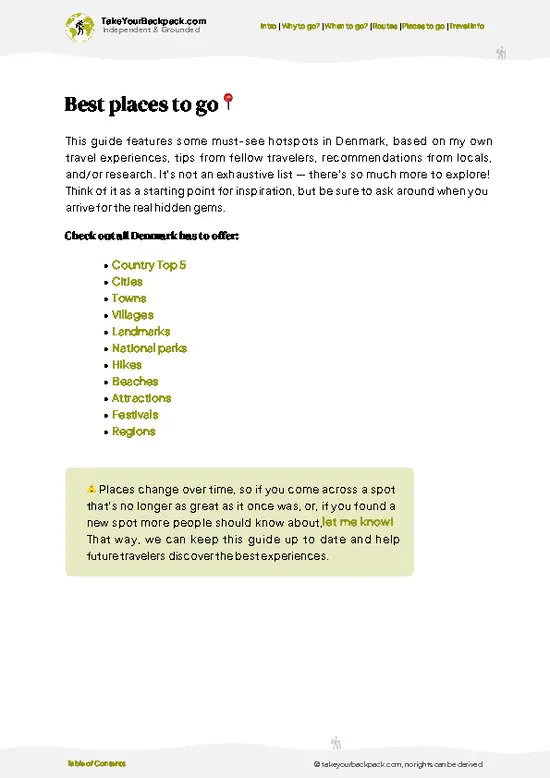
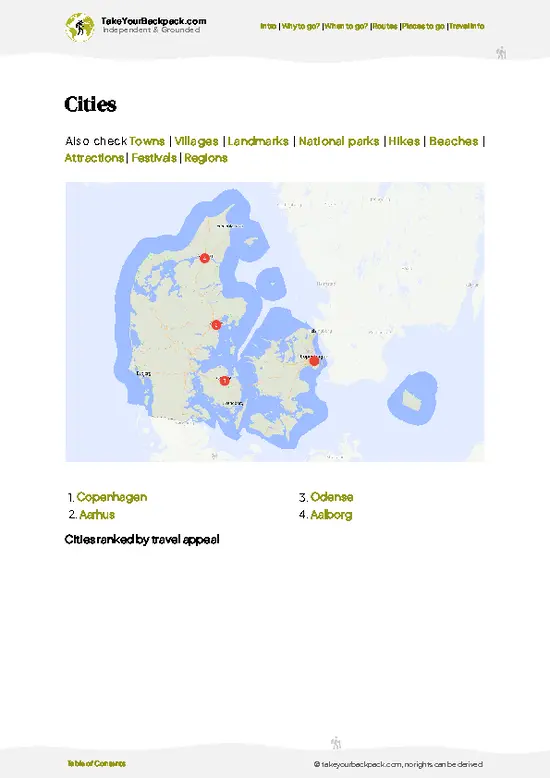
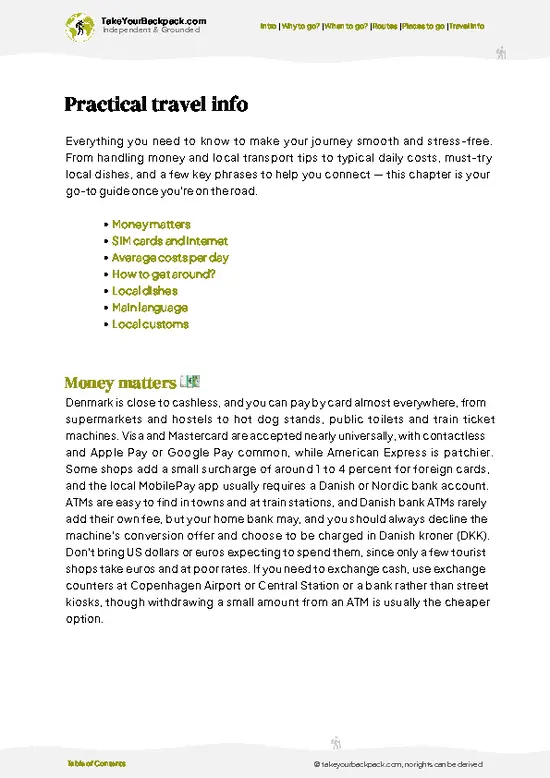
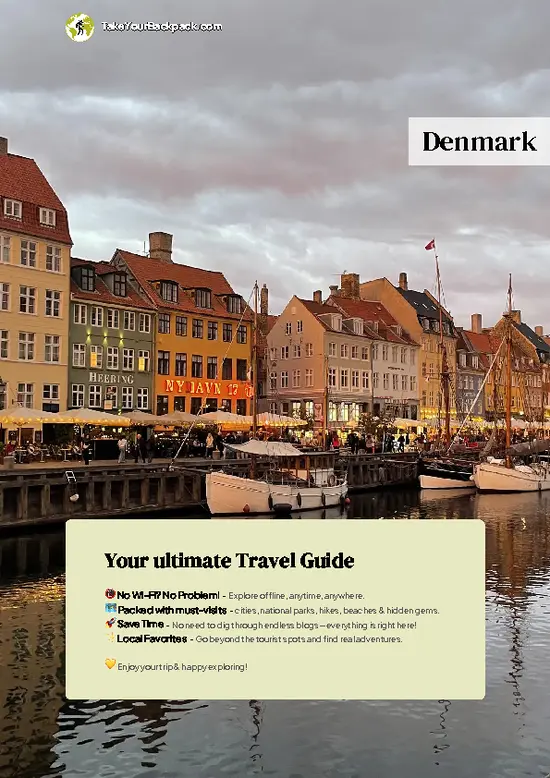
example page 0 from our offline Travel Guide for Denmark
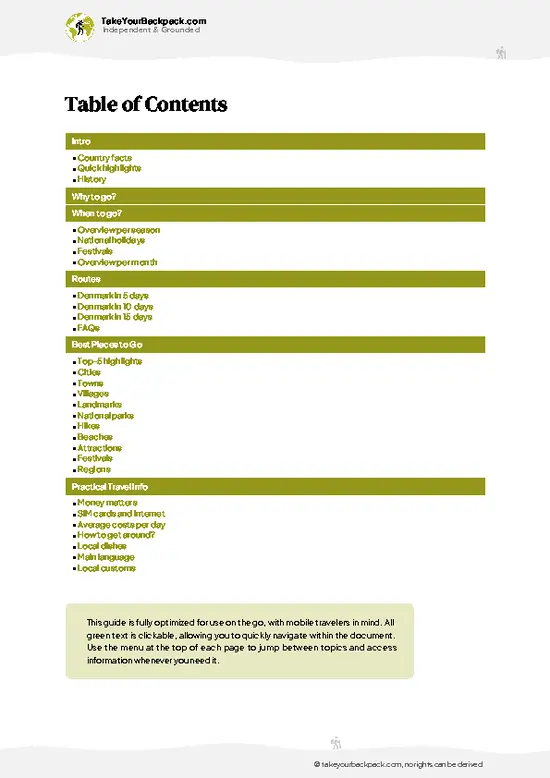
example page 1 from our offline Travel Guide for Denmark
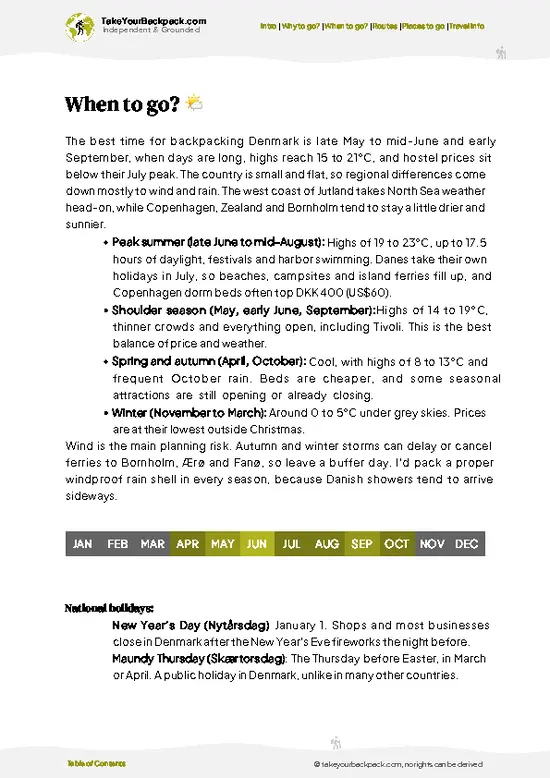
example page 2 from our offline Travel Guide for Denmark
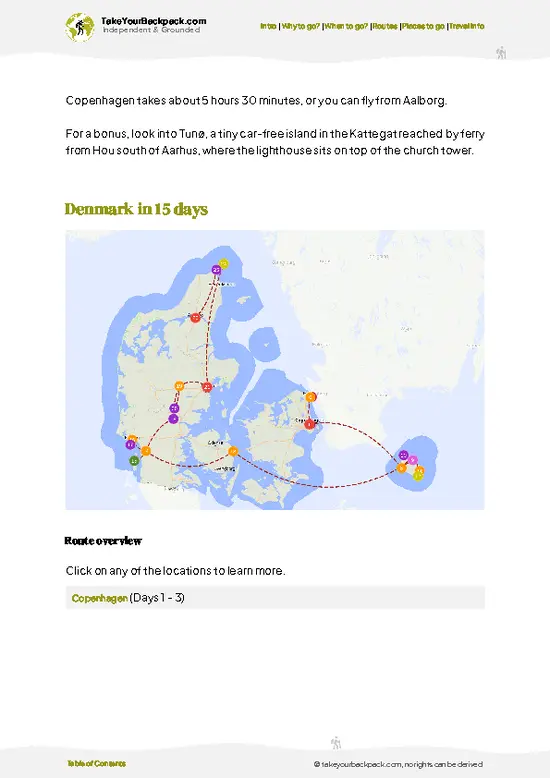
example page 3 from our offline Travel Guide for Denmark
example page 4 from our offline Travel Guide for Denmark
example page 5 from our offline Travel Guide for Denmark
example page 6 from our offline Travel Guide for Denmark
example page 7 from our offline Travel Guide for Denmark
The digital guide (359 pages) contains:
✅ 97 highlights, ranked by travel appeal
✅ Optimized 5, 10 & 15-day travel routes
✅ Cities, national parks, landmarks, beaches
✅ How to get around
✅ Offline-friendly for travel without Wi-Fi
👉 Click to see all 30+ guide features

📅 Plan smarter in minutes, not weeks
✅ Month by month travel advice
✅ Festivals & national holidays
✅ Budget expectations

🗺️ Go to the right places, skip the overrated ones
✅ Honest pros & cons of destinations
✅ Top hikes, parks & viewpoints
✅ Lesser-known places most travelers miss
✅ Clear “worth it vs skip it” guidance

🛏️ Travel smoothly without rookie mistakes
✅ Best areas to stay
✅ Transport systems explained simply
✅ Common scams & safety advice
✅ SIM cards, money & practical tips

🌍 Understand the country, not just visit it
✅ Culture & traditions
✅ 52 Essential phrases & customs
✅ Festivals worth planning around
✅ Traveler-friendly historical context
✅ Insights that make places more meaningful

📱 Built for real travel conditions
✅ Fully downloadable PDF
✅ Works completely offline
✅ Optimized for phone use
✅ Useful in remote areas & buses
✅ Everything in one place
Stop searching, start planning
Get instant access to your full guide. 30‑day money-back guarantee.
+ Add another guide for just

By proceeding you agree to our terms.
Sent to your inbox immediately after payment • 100% Secure Checkout
Best Backpacking Travel Advisor 2025 tourism awardBest Backpacking
Travel Advisor
2025
What others say about Take Your Backpack Guides:
⭐⭐⭐⭐⭐
Fantastic, amazing amount of information!
⭐⭐⭐⭐⭐
My goodness this is amazing, it's what I've been looking for hats off too you!
⭐⭐⭐⭐⭐
I think this is absolutely BRILLIANT
⭐⭐⭐⭐
Very complete and informative. It's still missing places, but I gotta to commend you
⭐⭐⭐⭐⭐
This is truly amazing, thank you, can't wait to explore it with my kids!
⭐⭐⭐⭐⭐
Awesome resource, thank you!
⭐⭐⭐⭐⭐
This is amazing! Can't wait to explore the ones I haven't seen
⭐⭐⭐⭐
I love this! Well done, great idea.
⭐⭐⭐⭐⭐
Thanks for taking the time to make this gem!
⭐⭐⭐⭐⭐
This might be the best website I've ever seen.
⭐⭐⭐⭐⭐
Congratulations, and thank you so much for your work; it's incredibly valuable.
⭐⭐⭐⭐
In all seriousness I think you did a great job pointing out the important spots
⭐⭐⭐⭐⭐
10/10 very good
⭐⭐⭐⭐⭐
As someone who's only just starting to visit regularly this is awesome, thank you.
⭐⭐⭐⭐
Thank you very much! I'm going to visit my dad, it's going to be very useful!
⭐⭐⭐⭐⭐
This is really cool! We'll be travelling for the first time and this definitely come in handy.
⭐⭐⭐⭐⭐
You are now our minister of culture, congratulations 👨‍💼
⭐⭐⭐⭐⭐
Just wanted to tell you that this is a pearl! Going to follow your recommendations.
⭐⭐⭐⭐⭐
This is so cool. I'll definitely be using the resource for my travels soon.
⭐⭐⭐⭐⭐
This is very impressive! Good work.
⭐⭐⭐⭐⭐
This is an amazing and informative site. Very well done!

🛏️ Where to stay?Where to Stay in Denmark

Denmark has plenty of hostels, with dorm beds usually running DKK 200 to 400 (about US$30 to 60) a night and the widest choice in Copenhagen, plus smaller clusters in Aarhus and Odense. In Copenhagen, Vesterbro next to the Central Station has the most beds and the Meatpacking District’s late bars, though stretches of Istedgade feel scruffy after dark, while Indre By puts you within walking distance of Nyhavn and Strøget at higher prices, and Nørrebro trades a 15 to 20 minute bike ride from the center for cheaper food and lively bars along Jægersborggade and Blågårdsgade. In Aarhus, the Latin Quarter keeps you close to cafés and the old town, but rooms book out fast around university terms and … read more 👉
Denmark has plenty of hostels, with dorm beds usually running DKK 200 to 400 (about US$30 to 60) a night and the widest choice in Copenhagen, plus smaller clusters in Aarhus and Odense. In Copenhagen, Vesterbro next to the Central Station has the most beds and the Meatpacking District’s late bars, though stretches of Istedgade feel scruffy after dark, while Indre By puts you within walking distance of Nyhavn and Strøget at higher prices, and Nørrebro trades a 15 to 20 minute bike ride from the center for cheaper food and lively bars along Jægersborggade and Blågårdsgade. In Aarhus, the Latin Quarter keeps you close to cafés and the old town, but rooms book out fast around university terms and festival weeks.

If you enjoy meeting fellow travelers, consider choosing hostels with high ratings for atmosphere. On the other hand, if you prefer having your own space, a hotel might be a better option.

DenmarkMore of Denmark

👋 Meet the founderWho’s Behind Take Your Backpack?

Johan, backpacker and founder of TakeYourBackpackHi, I’m Johan (Netherlands 🇳🇱), the creator of TakeYourBackpack. Over the past 3 decades, I’ve backpacked through 90+ countries across six continents, gaining extensive experience with independent travel, long-term trips, and overland routes.

This site is built on a combination of firsthand travel experience and carefully curated insights from other backpackers. Many guides are based on places I’ve personally visited, while others bring together tips, observations, and practical advice shared by trusted travelers I’ve met along the way.

The goal is to provide realistic, experience-driven guidance — not generic itineraries — so you can explore destinations with better context, clearer expectations, and more confidence.