×

Denmark🇩🇰 | best landmarksDiscover the 10 Best landmarks Across Denmark

Landmarks in Denmark are mostly modest in scale and close together, which suits independent travel well. Castles, Viking ring fortresses, runestones, round churches and coastal lighthouses sit within a small, flat country, and most are reached by train and a short bus or bike ride. Copenhagen and North Zealand hold the royal sites, with the highest prices and the heaviest crowds. Funen and Jutland offer quieter medieval and prehistoric sites at lower cost. The islands, Bornholm among them, trade easy access for ferries and a slower pace. Expect clear signage, tidy upkeep and few queues outside summer.

By Johan Kruseman 🇳🇱 | Updated October 18, 2026
Explore the best national parks in Denmark

Why go?Why These unique site Stand Out

Denmark’s landmarks reflect a small country with an unusually continuous history. The Viking Age left earthworks, burial mounds and runestones, and the medieval church and the monarchy, one of the oldest in Europe, left brick churches and castles across the islands. Because the land is flat and low, sites are often defined by water: moats, fjords, sea cliffs and harbors. Scale is the first thing to adjust for. There are no mountain-top citadels or vast ruins here, and many sites are compact, understated and built for people rather than spectacle.

Infrastructure is a strength. Trains, buses and ferries are punctual, cycling routes are extensive, and nearly every site has English information. Public transport is expensive by European standards, so the cost of reaching sites matters as much … read more 👉
Denmark’s landmarks reflect a small country with an unusually continuous history. The Viking Age left earthworks, burial mounds and runestones, and the medieval church and the monarchy, one of the oldest in Europe, left brick churches and castles across the islands. Because the land is flat and low, sites are often defined by water: moats, fjords, sea cliffs and harbors. Scale is the first thing to adjust for. There are no mountain-top citadels or vast ruins here, and many sites are compact, understated and built for people rather than spectacle.

Infrastructure is a strength. Trains, buses and ferries are punctual, cycling routes are extensive, and nearly every site has English information. Public transport is expensive by European standards, so the cost of reaching sites matters as much as the entry fee. Many national monuments and sites run by the state or by foundations charge modest fees, and some outdoor ones are free to walk around at any hour.

Travelers should also know that weather shapes the experience more than anywhere with a drier climate. Wind, rain and short winter days affect what can be visited comfortably, and several smaller sites keep reduced hours outside the main season. Danes value restraint, quiet and order, and that tone carries over to how landmarks are presented.
How the List Was Created
The list of best unique sites in Denmark is created based on history or culture, wow factor, atmosphere, quirks, and memorability. If you feel a unique site is missing in this list, please let us know.

When to go?Optimal Periods for Travel

Best months and seasonal weather: May to early September is the best window for landmarks in Denmark, because most castles, museums and island sites are fully open and daylight lasts 16 to 17 hours around midsummer. Daytime highs run about 15 to 22°C (59 to 72°F) from June to August, with occasional days above 25°C. Rain is spread through the year at roughly 600 to 800 mm annually, so a waterproof layer is sensible at any time.
Shoulder seasons and winter: May, early June and September are the sweet spot for backpackers. Temperatures sit around 12 to 18°C (54 to 64°F), crowds are thinner and accommodation prices in Copenhagen drop noticeably compared with July and August. Some seasonal sites run shorter hours in these months, though the main ones stay open.

From November to March, highs are … read more 👉
Best months and seasonal weather: May to early September is the best window for landmarks in Denmark, because most castles, museums and island sites are fully open and daylight lasts 16 to 17 hours around midsummer. Daytime highs run about 15 to 22°C (59 to 72°F) from June to August, with occasional days above 25°C. Rain is spread through the year at roughly 600 to 800 mm annually, so a waterproof layer is sensible at any time.
Shoulder seasons and winter: May, early June and September are the sweet spot for backpackers. Temperatures sit around 12 to 18°C (54 to 64°F), crowds are thinner and accommodation prices in Copenhagen drop noticeably compared with July and August. Some seasonal sites run shorter hours in these months, though the main ones stay open.

From November to March, highs are around 0 to 6°C (32 to 43°F), daylight can fall to about 7 hours in December, and many smaller castles, windmills and island attractions close or open only on weekends. Wind off the North Sea makes the west coast of Jutland feel colder than the thermometer suggests. Larger sites in Copenhagen, Odense and Aarhus stay open year-round.
Peak periods: July is the busiest month, especially on Bornholm and in North Zealand, where ferry places and hostel beds should be booked early. Danish school holidays run roughly from late June to early August. Midsummer Eve on June 23 closes some businesses for a day.

unique site hoppingOptimizing Your Multi-Stop Itinerary

How long to allow: A trip linking several landmarks in Denmark works well in 7 to 10 days, and 5 days is enough if you stay east of the Great Belt. Distances are short, but trains, bridges and ferries add transfers, so the time goes on connections more than on the sites themselves.
Grouping and direction: Start in Copenhagen, which has the main international airport and the densest rail network. North Zealand and Roskilde are day trips of 30 to 60 minutes by train, so they pair with a Copenhagen base. From there, head west across the Great Belt to Funen (about 1.5 hours to Odense), then onward into Jutland (Odense to Aarhus roughly 1.5 hours, Aarhus to Aalborg about 1.5 hours). Heading north to south in Jutland and then returning is less efficient than a one-way line ending at a western or … read more 👉
How long to allow: A trip linking several landmarks in Denmark works well in 7 to 10 days, and 5 days is enough if you stay east of the Great Belt. Distances are short, but trains, bridges and ferries add transfers, so the time goes on connections more than on the sites themselves.
Grouping and direction: Start in Copenhagen, which has the main international airport and the densest rail network. North Zealand and Roskilde are day trips of 30 to 60 minutes by train, so they pair with a Copenhagen base. From there, head west across the Great Belt to Funen (about 1.5 hours to Odense), then onward into Jutland (Odense to Aarhus roughly 1.5 hours, Aarhus to Aalborg about 1.5 hours). Heading north to south in Jutland and then returning is less efficient than a one-way line ending at a western or northern gateway. Bornholm sits apart, with a ferry of about 3 hours from Ystad in Sweden or a short flight from Copenhagen, and needs 2 to 3 days of its own.
Pacing and common mistakes: Allow 1.5 to 3 hours for most castles and museums, and half a day for sites with large grounds or a coastal walk. The usual mistake is treating Denmark as a one-day country because it looks small on a map, which leads to rushed transfers. Another is booking sites in Jutland’s rural west without checking bus frequency, which can drop to a few departures a day. Choose a base town per region, and use a rental bike or regional bus for the last stretch.

The ListMust-Visit landmarks in Denmark

1 Møns Klint

chalk cliffs, beech forest, fossil hunting

Hike along dramatic white cliffs rising above turquoise water, searching for fossils and rare orchids in sheltered woods.

denmark-unique-site-mons-klint
© Google | Marco Ludovico

2 Jelling Stones

Viking runestones, burial mounds, UNESCO site

Examine rune-carved stones and earthworks that mark the transition from Norse paganism to Christianity in Danish history.

3 Hammershus

medieval fortress, granite outcrop, Baltic panorama

Climb through weathered ramparts and towers, tracing centuries of island power struggles against a backdrop of open sea.

denmark-unique-site-hammershus
© Google |

4 Ny Carlsberg Glyptotek

sculpture galleries, winter garden, ancient art

Wander marble halls filled with classical statues and lush greenery, surrounded by collections spanning Egypt to Impressionism.

denmark-unique-site-ny-carlsberg-glyptotek
© Google | Anthony Withum

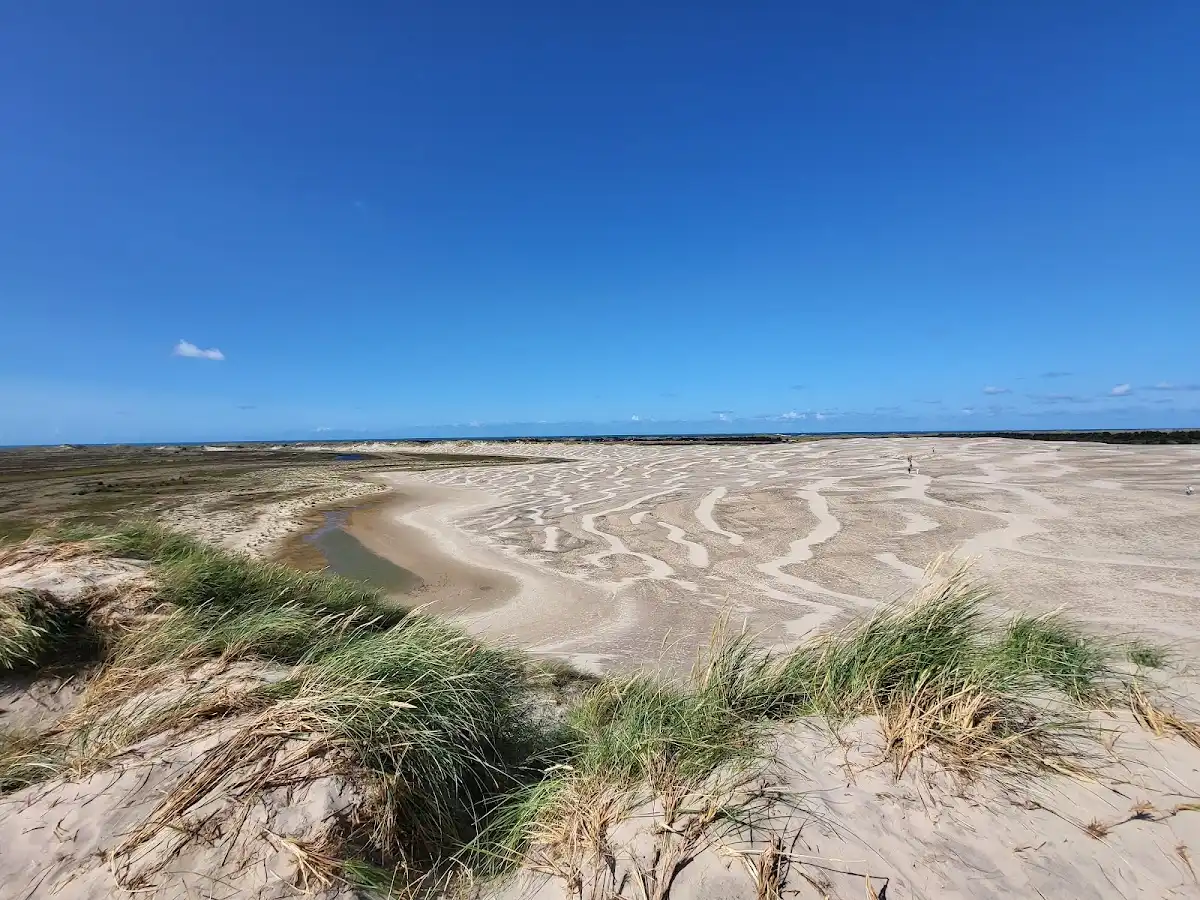
5 Råbjerg Mile

wandering sand dune, open heath, shifting landscape

Cross Denmark’s largest migrating dune, where wind-sculpted sand drifts steadily over fields and trails each year.

denmark-unique-site-rabjerg-mile
© Google |

6 Mønsted Kalkgruber

limestone mines, underground tunnels, bat colonies

Descend into cool, echoing caverns, exploring a labyrinth of passageways home to hibernating bats and mining history.

denmark-unique-site-monsted-kalkgruber
© Google |

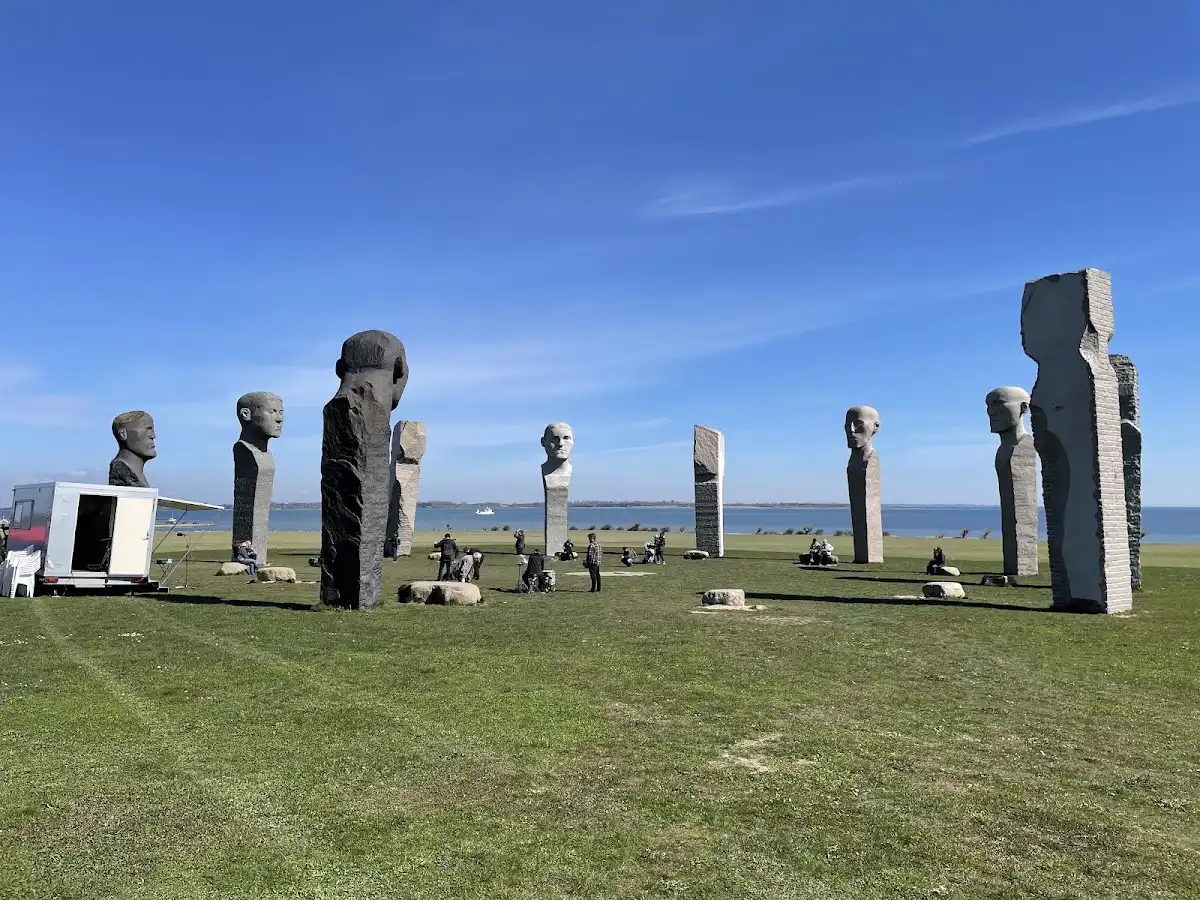
7 Dodekalitten

stone sculptures, open field, sound installation

Walk among monumental granite figures on Lolland, where sculpted faces and ambient music create a contemplative landscape.

denmark-unique-site-dodekalitten
© Google |

8 Spøttrup Borg

moated castle, medieval interiors, herb gardens

Step inside thick-walled rooms and courtyards, exploring Denmark’s best-preserved fortress surrounded by tranquil water.

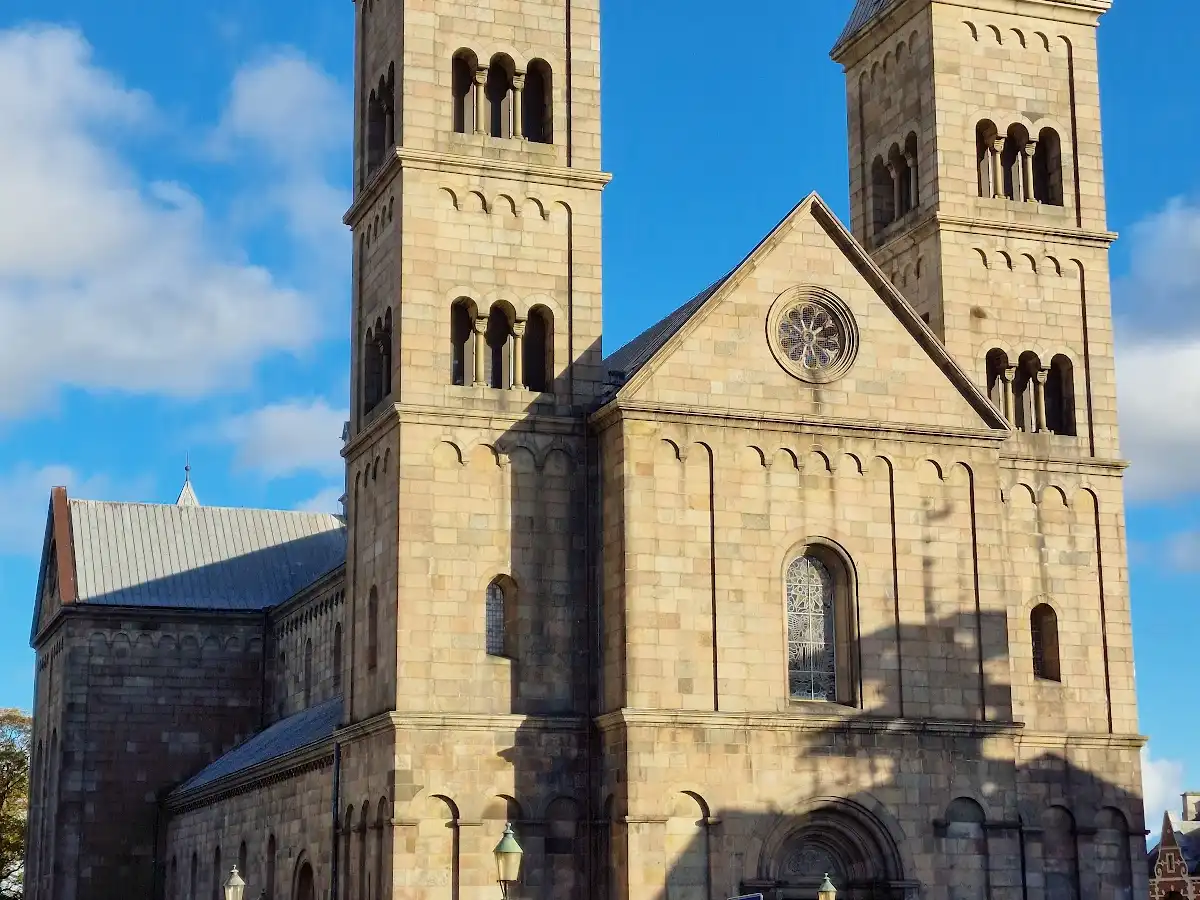
9 Viborg Domkirke

Romanesque cathedral, frescoes, twin towers

Enter a centuries-old church adorned with biblical murals, standing at the heart of one of Denmark’s oldest towns.

denmark-unique-site-viborg-domkirke
© Google |

10 Silkeborg Lakes

lake district, forest trails, riverboats

Cycle or hike through wooded hills and lakes, then board a steamer for a slow journey along winding waterways.

11 Gudenåen

river canoeing, lakes, forested banks

Paddle Denmark’s longest river, drifting past quiet woods, small villages, and open water ideal for multi-day journeys.

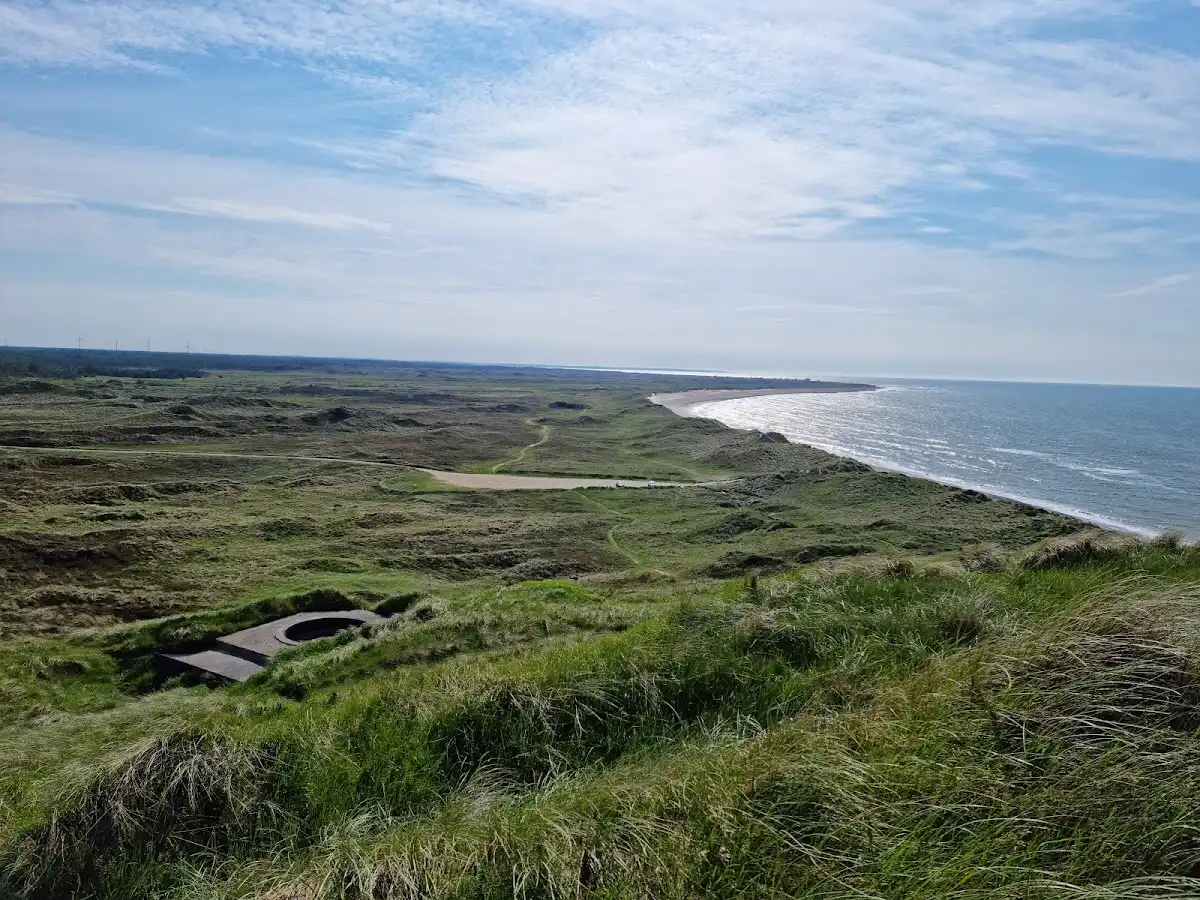
12 Bulbjerg

limestone cliff, seabird colony, North Sea views

Stand atop Denmark’s only bird cliff, watching kittiwakes nest above crashing waves and windswept coastal heath.

denmark-unique-site-bulbjerg
© Google |

13 Æbleø

island orchard, coastal meadows, wildlife reserve

Stroll through apple groves and salt marshes, encountering grazing sheep and diverse birdlife on a car-free island.

Think you know Denmark?

Prove you’re a true local — uncover 3 lesser-known landmarks in Denmark that locals tend to keep to themselves.
Loading the map 🌍

Expert viewTips and Advice from Travelers

How many landmarks to visit: Plan on one or two landmarks a day, and 6 to 10 across a full trip. Danish sites are compact, so you can see a castle in about two hours, but travel between them eats the rest of the day. Beyond two a day, entry fees and transit costs rise while attention falls. For a backpacker, fewer stops with time to walk the grounds gives more than a long checklist.
Choosing between kinds: Royal castles and palaces cost the most in time and money, often DKK 100 to 200 (US$15 to 30) per entry, and they are busiest in summer. Prehistoric and Viking sites cost less, frequently DKK 0 to 120 (US$0 to 18), and suit people who like open air and low crowds. Churches and lighthouses are usually free or a few dozen kroner and give the best value per hour. On a tight budget, put outdoor … read more 👉
How many landmarks to visit: Plan on one or two landmarks a day, and 6 to 10 across a full trip. Danish sites are compact, so you can see a castle in about two hours, but travel between them eats the rest of the day. Beyond two a day, entry fees and transit costs rise while attention falls. For a backpacker, fewer stops with time to walk the grounds gives more than a long checklist.
Choosing between kinds: Royal castles and palaces cost the most in time and money, often DKK 100 to 200 (US$15 to 30) per entry, and they are busiest in summer. Prehistoric and Viking sites cost less, frequently DKK 0 to 120 (US$0 to 18), and suit people who like open air and low crowds. Churches and lighthouses are usually free or a few dozen kroner and give the best value per hour. On a tight budget, put outdoor and free sites first and pick one or two paid castles. If you like history in depth, a museum pass or a combined ticket can cut per-site costs, but only if you will visit at least three included sites.
What it costs per day: A backpacker doing landmarks should budget roughly DKK 700 to 1,100 (US$100 to 160) a day, covering a hostel dorm bed at DKK 250 to 450, food from supermarkets and bakeries at DKK 150 to 250, local transport at DKK 100 to 250, and one paid entry. Regional train tickets between cities run about DKK 100 to 250 a leg, with cheaper “Orange” fares when booked ahead through DSB. Guided tours are rarely necessary, as signage and audio guides are in English, and when they are offered they run DKK 100 to 250. Cycling is the cheapest way to reach rural sites, with rentals around DKK 100 to 200 a day.
Safety and etiquette: Denmark is very safe, and the main risks are practical: pickpocketing in central Copenhagen and on trains, wind and slippery stones at coastal sites, and rising tides on west coast beaches. Cyclists have priority on separate lanes, so look both ways before crossing them. Churches are active places of worship, so keep voices low and ask before photographing during services. Drones are restricted near many castles and royal residences. Cash is rarely accepted, so carry a card, and respect queues and quiet, which Danes take seriously.

✈️ The backpacker research shortcutDenmark Travel Guide

An offline-friendly backpacking guide with optimized travel routes, ranked highlights, transport advice, and the best areas to stay.
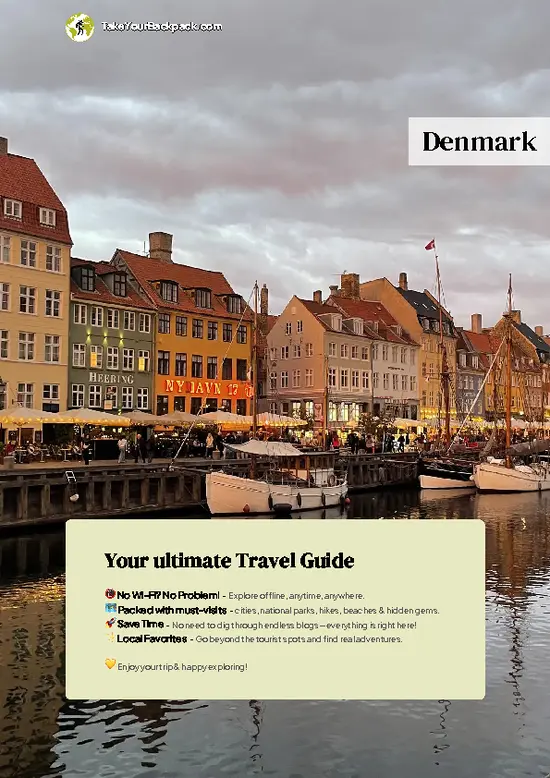
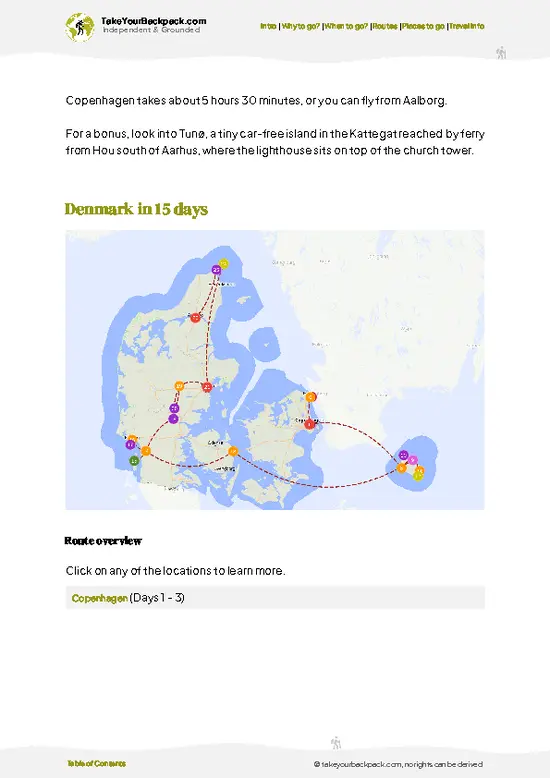
example page 0 from our offline Travel Guide for Denmark
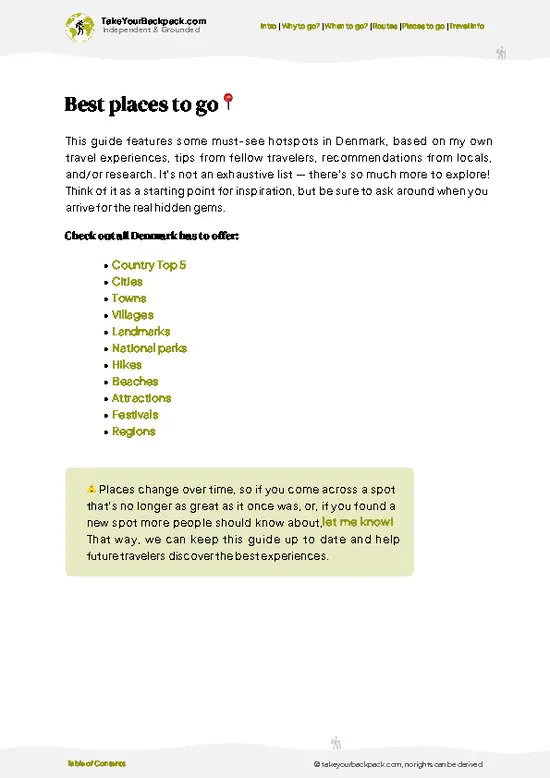
example page 1 from our offline Travel Guide for Denmark
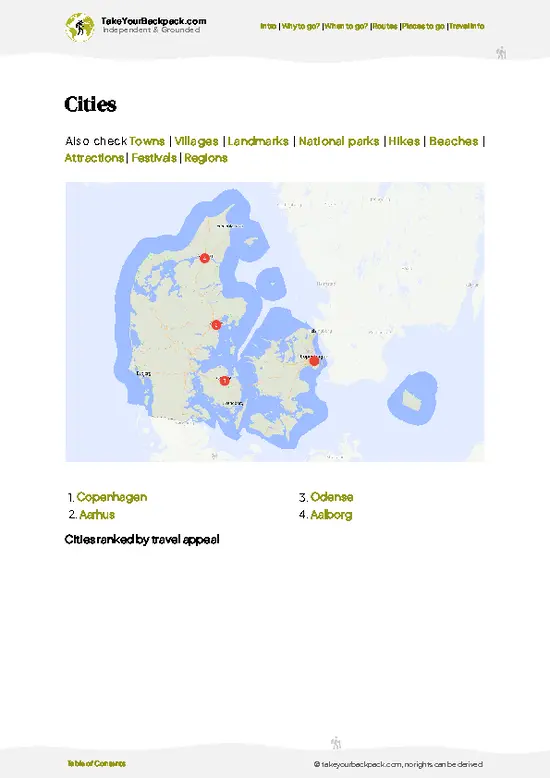
example page 2 from our offline Travel Guide for Denmark
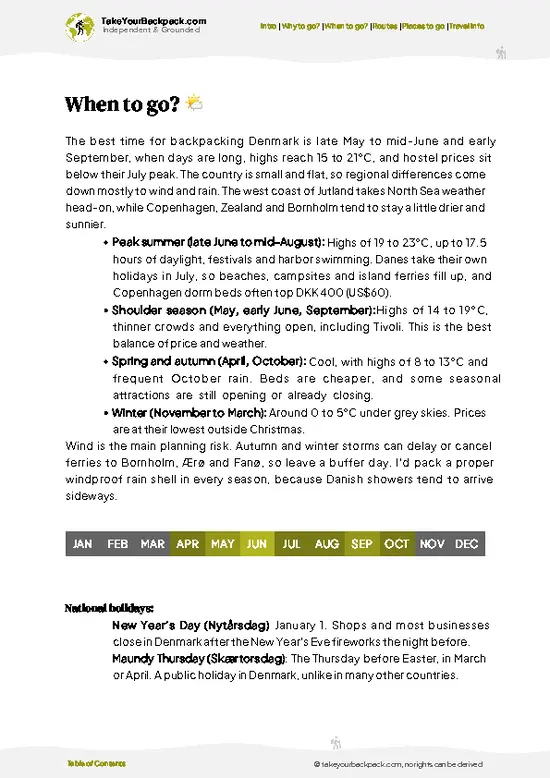
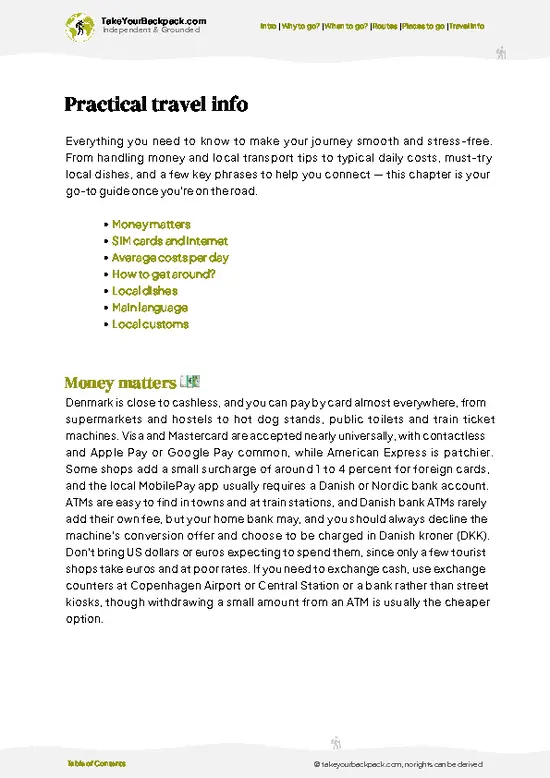
example page 3 from our offline Travel Guide for Denmark
example page 4 from our offline Travel Guide for Denmark
example page 5 from our offline Travel Guide for Denmark
example page 6 from our offline Travel Guide for Denmark
example page 7 from our offline Travel Guide for Denmark
The digital guide (359 pages) contains:
✅ 97 highlights, ranked by travel appeal
✅ Optimized 5, 10 & 15-day travel routes
✅ Cities, national parks, landmarks, beaches
✅ How to get around
✅ Offline-friendly for travel without Wi-Fi
👉 Click to see all 30+ guide features

📅 Plan smarter in minutes, not weeks
✅ Month by month travel advice
✅ Festivals & national holidays
✅ Budget expectations

🗺️ Go to the right places, skip the overrated ones
✅ Honest pros & cons of destinations
✅ Top hikes, parks & viewpoints
✅ Lesser-known places most travelers miss
✅ Clear “worth it vs skip it” guidance

🛏️ Travel smoothly without rookie mistakes
✅ Best areas to stay
✅ Transport systems explained simply
✅ Common scams & safety advice
✅ SIM cards, money & practical tips

🌍 Understand the country, not just visit it
✅ Culture & traditions
✅ 52 Essential phrases & customs
✅ Festivals worth planning around
✅ Traveler-friendly historical context
✅ Insights that make places more meaningful

📱 Built for real travel conditions
✅ Fully downloadable PDF
✅ Works completely offline
✅ Optimized for phone use
✅ Useful in remote areas & buses
✅ Everything in one place
Stop searching, start planning
Get instant access to your full guide. 30‑day money-back guarantee.
+ Add another guide for just

By proceeding you agree to our terms.
Sent to your inbox immediately after payment • 100% Secure Checkout
Best Backpacking Travel Advisor 2025 tourism awardBest Backpacking
Travel Advisor
2025
What others say about Take Your Backpack Guides:
⭐⭐⭐⭐⭐
Fantastic, amazing amount of information!
⭐⭐⭐⭐⭐
My goodness this is amazing, it's what I've been looking for hats off too you!
⭐⭐⭐⭐⭐
I think this is absolutely BRILLIANT
⭐⭐⭐⭐
Very complete and informative. It's still missing places, but I gotta to commend you
⭐⭐⭐⭐⭐
This is truly amazing, thank you, can't wait to explore it with my kids!
⭐⭐⭐⭐⭐
Awesome resource, thank you!
⭐⭐⭐⭐⭐
This is amazing! Can't wait to explore the ones I haven't seen
⭐⭐⭐⭐
I love this! Well done, great idea.
⭐⭐⭐⭐⭐
Thanks for taking the time to make this gem!
⭐⭐⭐⭐⭐
This might be the best website I've ever seen.
⭐⭐⭐⭐⭐
Congratulations, and thank you so much for your work; it's incredibly valuable.
⭐⭐⭐⭐
In all seriousness I think you did a great job pointing out the important spots
⭐⭐⭐⭐⭐
10/10 very good
⭐⭐⭐⭐⭐
As someone who's only just starting to visit regularly this is awesome, thank you.
⭐⭐⭐⭐
Thank you very much! I'm going to visit my dad, it's going to be very useful!
⭐⭐⭐⭐⭐
This is really cool! We'll be travelling for the first time and this definitely come in handy.
⭐⭐⭐⭐⭐
You are now our minister of culture, congratulations 👨‍💼
⭐⭐⭐⭐⭐
Just wanted to tell you that this is a pearl! Going to follow your recommendations.
⭐⭐⭐⭐⭐
This is so cool. I'll definitely be using the resource for my travels soon.
⭐⭐⭐⭐⭐
This is very impressive! Good work.
⭐⭐⭐⭐⭐
This is an amazing and informative site. Very well done!

🛏️ Where to stay?Top Places to Consider Staying

Denmark has plenty of hostels, with dorm beds usually running DKK 200 to 400 (about US$30 to 60) a night and the widest choice in Copenhagen, plus smaller clusters in Aarhus and Odense. In Copenhagen, Vesterbro next to the Central Station has the most beds and the Meatpacking District’s late bars, though stretches of Istedgade feel scruffy after dark, while Indre By puts you within walking distance of Nyhavn and Strøget at higher prices, and Nørrebro trades a 15 to 20 minute bike ride from the center for cheaper food and lively bars along Jægersborggade and Blågårdsgade. In Aarhus, the Latin Quarter keeps you close to cafés and the old town, but rooms book out fast around university terms and … read more 👉
Denmark has plenty of hostels, with dorm beds usually running DKK 200 to 400 (about US$30 to 60) a night and the widest choice in Copenhagen, plus smaller clusters in Aarhus and Odense. In Copenhagen, Vesterbro next to the Central Station has the most beds and the Meatpacking District’s late bars, though stretches of Istedgade feel scruffy after dark, while Indre By puts you within walking distance of Nyhavn and Strøget at higher prices, and Nørrebro trades a 15 to 20 minute bike ride from the center for cheaper food and lively bars along Jægersborggade and Blågårdsgade. In Aarhus, the Latin Quarter keeps you close to cafés and the old town, but rooms book out fast around university terms and festival weeks.

If you enjoy meeting fellow travelers, consider choosing hostels with high ratings for atmosphere. On the other hand, if you prefer having your own space, a hotel might be a better option.

DenmarkMore Places Across Denmark

👋 Meet the founderWho’s Behind Take Your Backpack?

Johan, backpacker and founder of TakeYourBackpackHi, I’m Johan (Netherlands 🇳🇱), the creator of TakeYourBackpack. Over the past 3 decades, I’ve backpacked through 90+ countries across six continents, gaining extensive experience with independent travel, long-term trips, and overland routes.

This site is built on a combination of firsthand travel experience and carefully curated insights from other backpackers. Many guides are based on places I’ve personally visited, while others bring together tips, observations, and practical advice shared by trusted travelers I’ve met along the way.

The goal is to provide realistic, experience-driven guidance — not generic itineraries — so you can explore destinations with better context, clearer expectations, and more confidence.