×

Denmark🇩🇰 | best regionsDiscover the 4 Best regions Across Denmark

Denmark’s regions are defined by their unique climate, landscapes, and cultural character, each offering distinct experiences for backpackers and independent travelers. From the coastal beauty of Jutland to the vibrant urban life of Copenhagen, your choice of region shapes your journey. Seasonal nuances play a significant role; summer brings festivals and outdoor activities, while winter offers cozy atmospheres and holiday markets.

Understanding these differences impacts your budget, safety, and ease of travel. For instance, rural areas may provide lower costs but fewer amenities, while cities offer rich cultural immersion at a premium. Choosing wisely enhances your overall vibe and adventure in Denmark.

By Johan Kruseman 🇳🇱 | Updated September 5, 2026
Explore the best cities in Denmark

Why go?Why These region Stand Out

Denmark’s regions offer a climatic diversity that is rare for a country of its size. From the coastal breezes of the North Sea to the temperate warmth of the southern islands, each area presents unique weather patterns that shape local lifestyles and activities. This variety allows travelers to experience everything from sun-soaked beaches to brisk, invigorating winds, making the timing of your visit crucial for maximizing enjoyment.

Culturally, Denmark is a tapestry of historical influences and modern innovation. Each region reflects its own character, shaped by centuries of trade, Viking heritage, and a strong sense of community. This cultural richness is complemented by a well-developed infrastructure, making it relatively easy to traverse the country. However, the trade-off lies in the … read more 👉
Denmark’s regions offer a climatic diversity that is rare for a country of its size. From the coastal breezes of the North Sea to the temperate warmth of the southern islands, each area presents unique weather patterns that shape local lifestyles and activities. This variety allows travelers to experience everything from sun-soaked beaches to brisk, invigorating winds, making the timing of your visit crucial for maximizing enjoyment.

Culturally, Denmark is a tapestry of historical influences and modern innovation. Each region reflects its own character, shaped by centuries of trade, Viking heritage, and a strong sense of community. This cultural richness is complemented by a well-developed infrastructure, making it relatively easy to traverse the country. However, the trade-off lies in the distance between regions; while Denmark is compact, the time spent traveling can limit the depth of exploration.

Travelers must consider the balance between accessibility and immersive experiences. Some regions may be more accessible but offer a shallower dive into local culture, while others require more travel time but reward with authentic encounters. Understanding these trade-offs is essential for crafting a meaningful journey through Denmark, where each region holds its own distinct charm and story.
Evaluating the Top Choices
The list of best regions in Denmark is created based on landscapes, local culture, attractions, vibes, and overall appeal. If you feel a region is missing in this list, please let us know.

When to go?Optimal Periods for Travel

Climate Variation

Denmark experiences a temperate maritime climate, characterized by mild summers and cool winters. Average temperatures range from about 0°C in winter to 20°C in summer. Rainfall is fairly evenly distributed throughout the year, but summer months tend to be drier.

Optimal Months

The best time to visit is during late spring to early autumn. This period offers the most pleasant weather, ideal for outdoor activities and cultural events. Summer attracts the largest crowds, which can lead to higher accommodation costs and busy attractions.

Shoulder Seasons

Spring and autumn serve as shoulder seasons, presenting a balanced trade-off. Visiting in these months means fewer tourists and lower prices, but weather can be unpredictable. Spring blooms bring vibrant landscapes, while … read more 👉

Climate Variation

Denmark experiences a temperate maritime climate, characterized by mild summers and cool winters. Average temperatures range from about 0°C in winter to 20°C in summer. Rainfall is fairly evenly distributed throughout the year, but summer months tend to be drier.

Optimal Months

The best time to visit is during late spring to early autumn. This period offers the most pleasant weather, ideal for outdoor activities and cultural events. Summer attracts the largest crowds, which can lead to higher accommodation costs and busy attractions.

Shoulder Seasons

Spring and autumn serve as shoulder seasons, presenting a balanced trade-off. Visiting in these months means fewer tourists and lower prices, but weather can be unpredictable. Spring blooms bring vibrant landscapes, while autumn offers stunning foliage.

Peak Periods

Summer is peak season, with festivals and events that showcase Danish culture. However, this comes with the trade-off of crowded spaces and inflated prices. Winter, while less popular, offers unique experiences like Christmas markets and cozy atmospheres, but cold temperatures can limit outdoor activities.

Seasonal Constraints

Travelers should consider that daylight hours vary significantly. Long summer days allow for extended exploration, while winter days are short, impacting sightseeing opportunities. Balancing comfort, experience, and timing is crucial for a fulfilling trip.

region hoppingOptimizing Your Multi-Stop Itinerary

Denmark’s regions offer a rich tapestry of experiences, but combining them requires strategic planning. Start by clustering regions based on proximity. For instance, consider grouping Zealand and Funen together, as they are easily accessible via the Great Belt Bridge. This allows for a smooth transition from the capital, Copenhagen, to the charming towns of Odense and Middelfart.

Travel infrastructure is robust, with trains and buses connecting major cities efficiently. Expect to spend around 1.5 to 2 hours traveling between key stops. This pacing allows for meaningful exploration without feeling rushed. Allocate at least half a day for each major attraction to truly absorb the local culture and history.

Common mistakes include over-scheduling and underestimating travel times. Prioritize … read more 👉
Denmark’s regions offer a rich tapestry of experiences, but combining them requires strategic planning. Start by clustering regions based on proximity. For instance, consider grouping Zealand and Funen together, as they are easily accessible via the Great Belt Bridge. This allows for a smooth transition from the capital, Copenhagen, to the charming towns of Odense and Middelfart.

Travel infrastructure is robust, with trains and buses connecting major cities efficiently. Expect to spend around 1.5 to 2 hours traveling between key stops. This pacing allows for meaningful exploration without feeling rushed. Allocate at least half a day for each major attraction to truly absorb the local culture and history.

Common mistakes include over-scheduling and underestimating travel times. Prioritize depth over breadth; it’s better to fully experience a couple of regions than to skim the surface of many. Be flexible with your plans. Weather can be unpredictable, and local events might alter your itinerary.

Trade-offs are inevitable. Speed may sacrifice comfort, especially if relying on public transport. Budget constraints can limit accommodation choices, impacting overall comfort. Balancing these factors is crucial for a rewarding trip. Aim for a mix of urban and rural experiences to enrich your understanding of Danish life.

The ListMust-Visit regions in Denmark

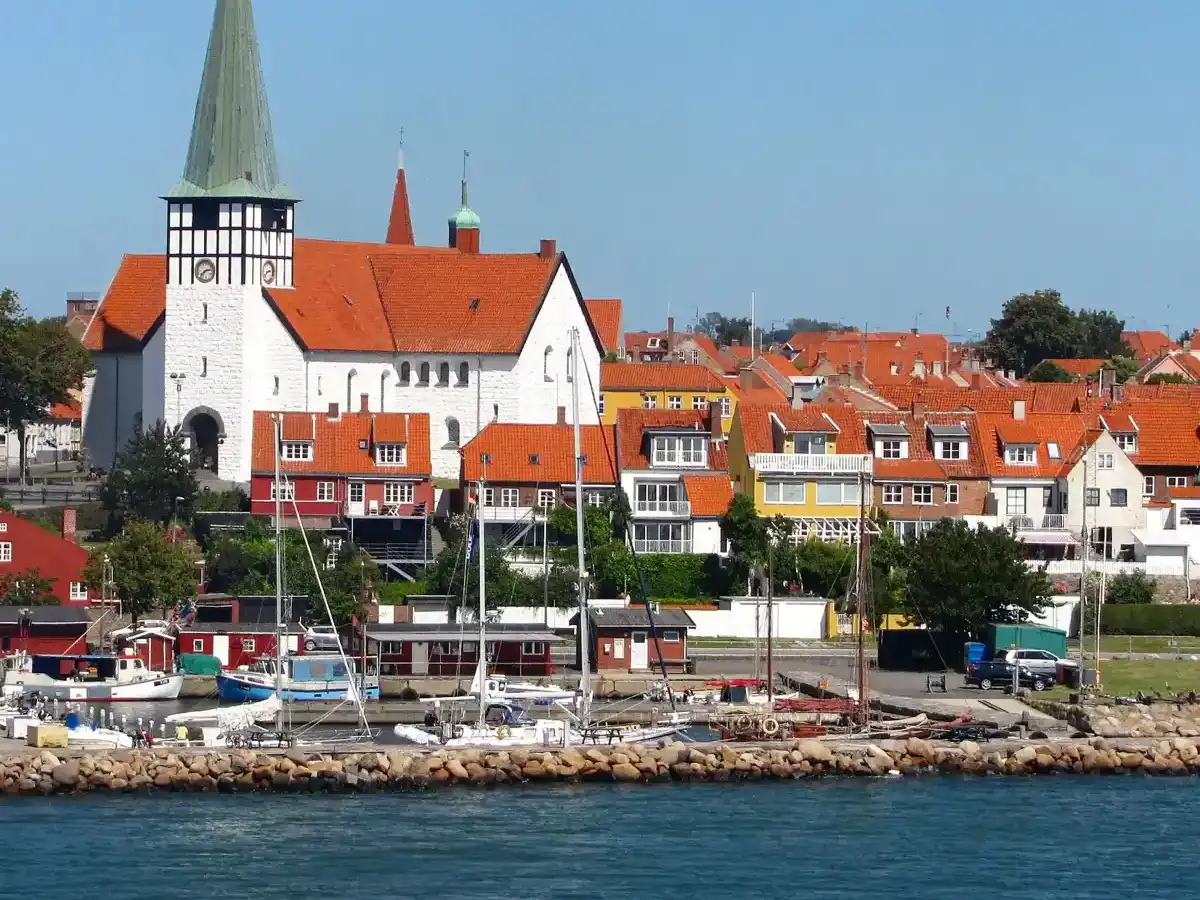
1 Bornholm

granite cliffs, smokehouses, round churches, Baltic Sea views

Cycle through pine forests, sample smoked herring in fishing villages, and discover medieval fortresses set against dramatic coastal scenery.

denmark-region-bornholm
© Google | Henryk Musiał

2 Samsø

organic farms, wind turbines, coastal trails, village markets

Experience a rural island where local produce fills market stalls, renewable energy powers daily life, and quiet paths hug the shoreline.

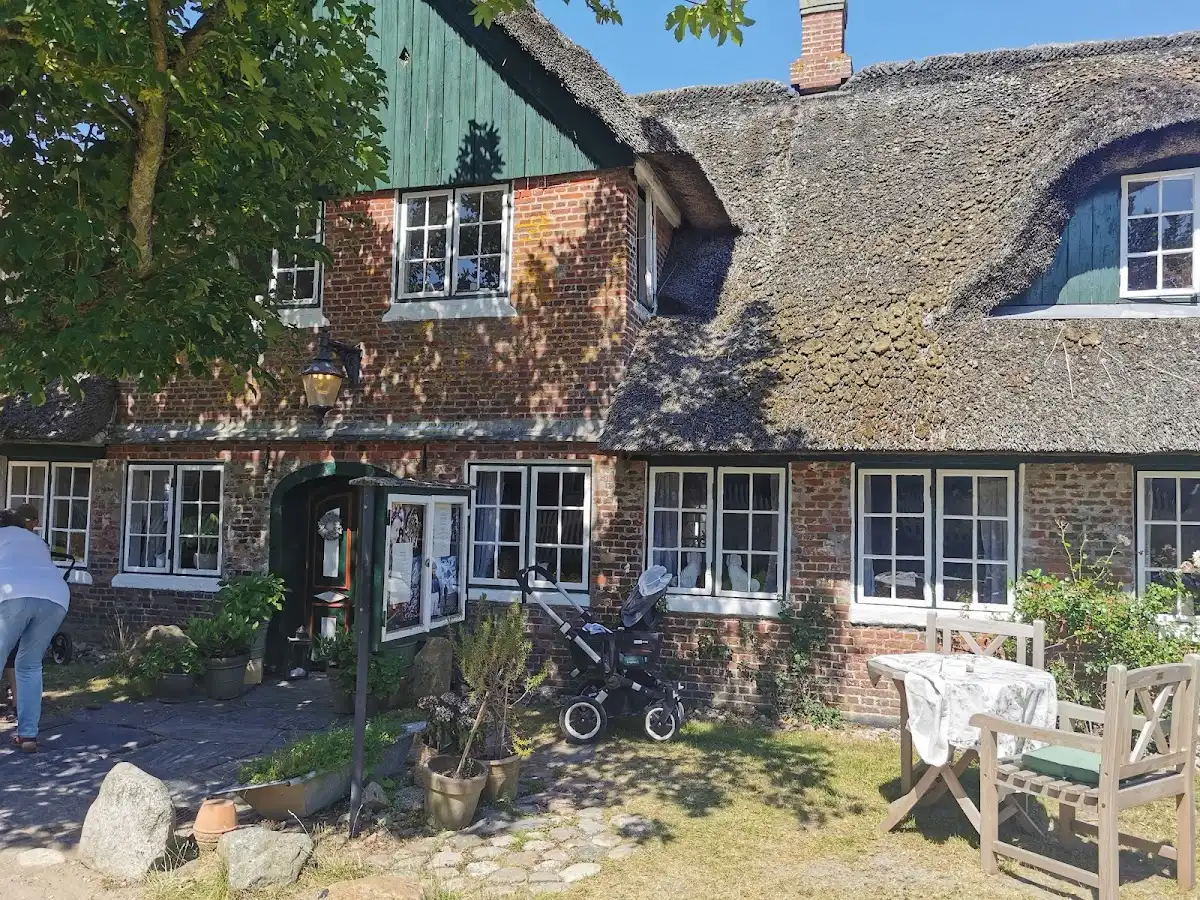
3 Fur Island

fossil cliffs, clay hills, Limfjord shoreline, microbreweries

Walk exposed clay slopes layered with fossils, taste local beer, and watch tidal changes shape the quiet Limfjord landscape.

denmark-region-fur-island
© Google | Marina Justesen

4 Langeland

wild horses, rolling meadows, manor estates, southern archipelago

Spot herds of wild horses, wander through open fields, and visit stately homes scattered across a long, narrow island chain.

Loading the map 🌍

Expert viewTips and Advice from Travelers

Regions in Denmark offer a rich tapestry of experiences, each with its own character and charm. To truly appreciate the country, aim to explore at least three to four regions. This allows for a balanced view of Denmark’s diverse landscapes, from coastal beauty to urban vibrancy. However, be mindful of the trade-offs involved in your choices.

Time is a crucial factor. Traveling between regions can take longer than expected, especially if you’re relying on public transport. Trains and buses are generally efficient, but they can also be subject to delays. If you’re short on time, consider focusing on regions that are geographically closer together. This way, you can maximize your experience without spending too much time in transit. For instance, the journey from one end of the country to the … read more 👉
Regions in Denmark offer a rich tapestry of experiences, each with its own character and charm. To truly appreciate the country, aim to explore at least three to four regions. This allows for a balanced view of Denmark’s diverse landscapes, from coastal beauty to urban vibrancy. However, be mindful of the trade-offs involved in your choices.

Time is a crucial factor. Traveling between regions can take longer than expected, especially if you’re relying on public transport. Trains and buses are generally efficient, but they can also be subject to delays. If you’re short on time, consider focusing on regions that are geographically closer together. This way, you can maximize your experience without spending too much time in transit. For instance, the journey from one end of the country to the other can consume a significant portion of your day, so plan accordingly.

Money is another consideration. Denmark is known for its high cost of living, and this extends to travel expenses. Accommodations, dining, and even entry fees can add up quickly. If you choose to visit more remote regions, you might find lower prices, but the trade-off is often a lack of amenities or services. Prioritize regions that offer a mix of cultural experiences and budget-friendly options. For example, urban areas may have higher costs but also more free or low-cost attractions, while rural areas might offer stunning landscapes at a fraction of the price.

Comfort varies significantly across regions. Urban centers like Copenhagen provide a wealth of modern conveniences, while rural areas may require a more rugged approach. If you’re accustomed to certain comforts, be prepared for a shift when venturing into less populated areas. This might mean fewer dining options or limited public transport. If you’re willing to sacrifice some comfort for authenticity, the rewards can be immense. Engaging with local communities often leads to the most memorable experiences.

Cultural variation is another essential aspect to consider. Each region has its own traditions, dialects, and culinary specialties. For instance, the Jutland Peninsula is known for its hearty cuisine and agricultural roots, while the islands offer a more maritime culture. Understanding these differences can enhance your experience and help you connect with locals. However, be aware that cultural nuances may require a bit of adjustment. What’s considered polite or appropriate in one region may not hold true in another.

Infrastructure plays a significant role in your travel experience. While Denmark boasts a well-developed transport network, rural areas may not have the same frequency of services as urban centers. If you plan to explore less accessible regions, consider renting a bike or a car. This adds flexibility but also requires more planning and effort. Evaluate how much time you’re willing to invest in getting from one place to another versus the experiences you’ll gain.

Safety is generally not a major concern in Denmark, but it’s wise to remain aware of your surroundings, especially in crowded areas. Cultural considerations also come into play; Danes value personal space and may not engage in small talk as readily as in other cultures. Respecting these social norms will enhance your interactions and help you blend in.

In summary, the key to a fulfilling experience in Denmark lies in balancing time, money, and comfort. By thoughtfully selecting regions and understanding the trade-offs involved, you can create a trip that resonates with your interests and values. Each choice you make will shape your journey, so take the time to consider what matters most to you.

✈️ The backpacker research shortcutDenmark Travel Guide

An offline-friendly backpacking guide with optimized travel routes, ranked highlights, transport advice, and the best areas to stay.
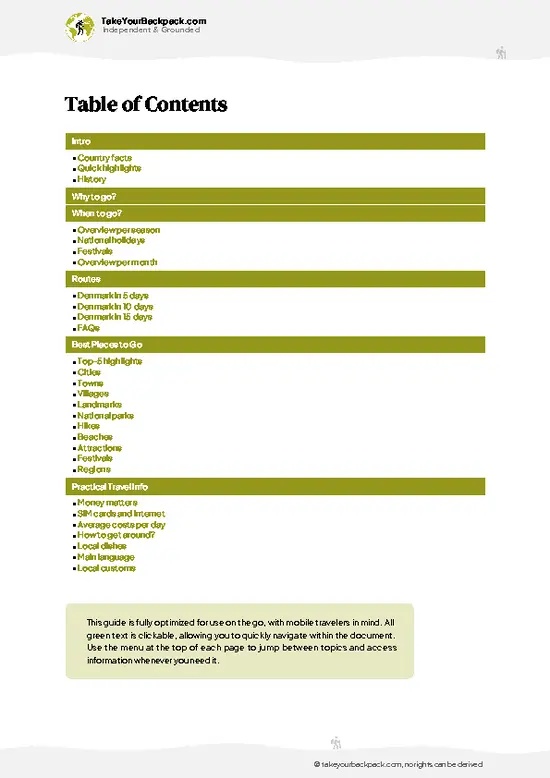
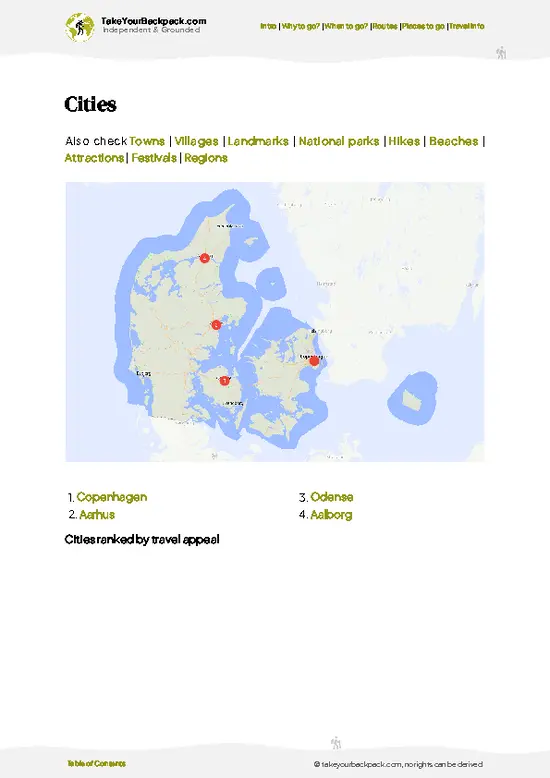
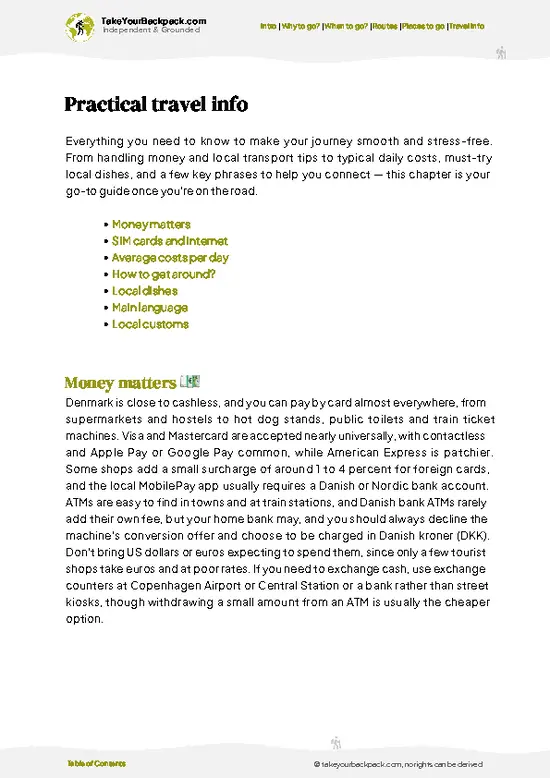
example page 0 from our offline Travel Guide for Denmark
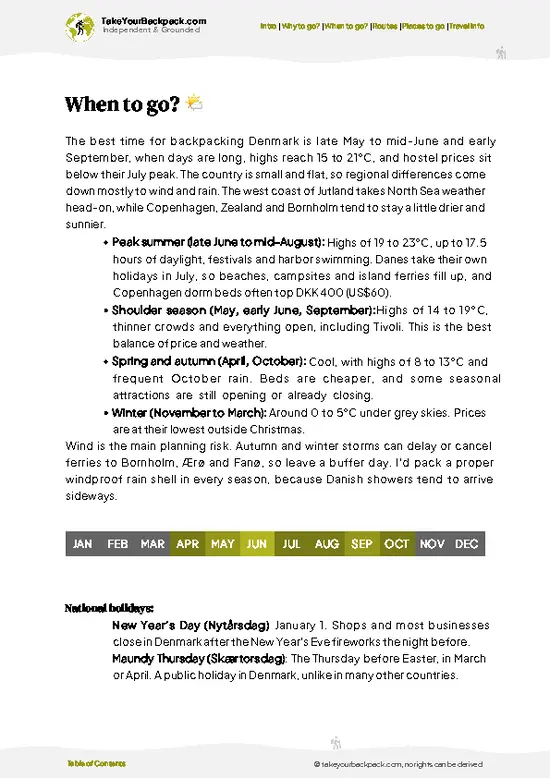
example page 1 from our offline Travel Guide for Denmark
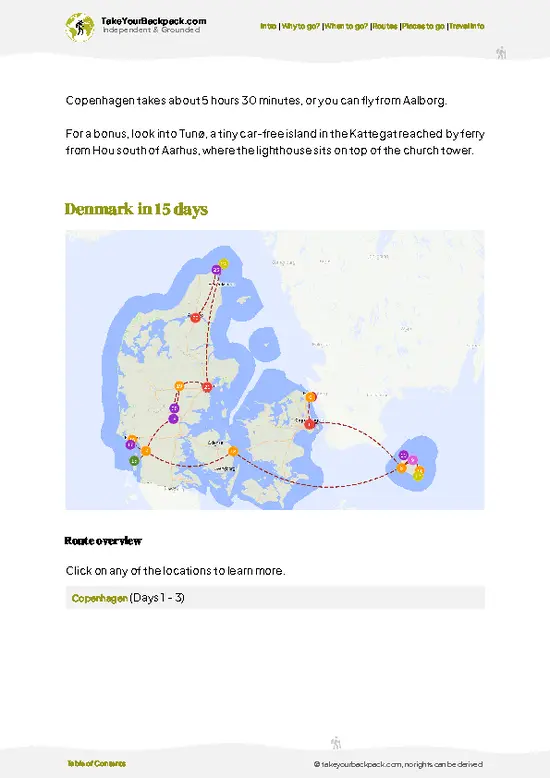
example page 2 from our offline Travel Guide for Denmark
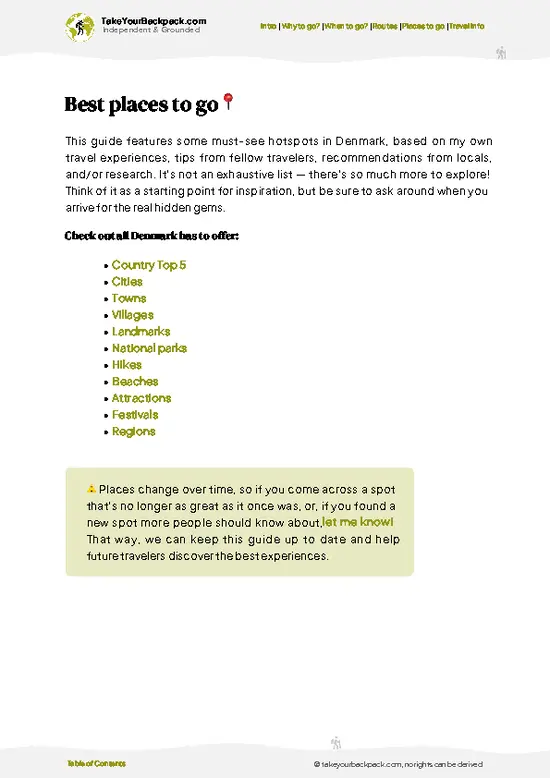
example page 3 from our offline Travel Guide for Denmark
example page 4 from our offline Travel Guide for Denmark
example page 5 from our offline Travel Guide for Denmark
example page 6 from our offline Travel Guide for Denmark
example page 7 from our offline Travel Guide for Denmark
The digital guide (361 pages) contains:
98 highlights, ranked by travel appeal
Optimized 5, 10 & 15-day travel routes
Cities, national parks, landmarks, beaches
How to get around
Offline-friendly for travel without Wi-Fi
👉 Click to see all 30+ guide features

📅 Plan smarter in minutes, not weeks
Month by month travel advice
Festivals & national holidays
Budget expectations

🗺️ Go to the right places, skip the overrated ones
Honest pros & cons of destinations
Top hikes, parks & viewpoints
Lesser-known places most travelers miss
Clear “worth it vs skip it” guidance

🛏️ Travel smoothly without rookie mistakes
Best areas to stay
Transport systems explained simply
Common scams & safety advice
SIM cards, money & practical tips

🌍 Understand the country, not just visit it
Culture & traditions
52 Essential phrases & customs
Festivals worth planning around
Traveler-friendly historical context
Insights that make places more meaningful

📱 Built for real travel conditions
Fully downloadable PDF
Works completely offline
Optimized for phone use
Useful in remote areas & buses
Everything in one place
Save weeks of stressful planning
Get instant access to your full guide. 30‑day money-back guarantee.
+ Add another guide for just US$7.80

By proceeding you agree to our terms.
Sent to your inbox immediately after payment • 100% Secure Checkout
Best Backpacking Travel Advisor 2025 tourism awardBest Backpacking
Travel Advisor
2025
What others say about Take Your Backpack Guides:
⭐⭐⭐⭐⭐
Fantastic, amazing amount of information!
⭐⭐⭐⭐⭐
My goodness this is amazing, it's what I've been looking for hats off too you!
⭐⭐⭐⭐⭐
I think this is absolutely BRILLIANT
⭐⭐⭐⭐
Very complete and informative. It's still missing places, but I gotta to commend you
⭐⭐⭐⭐⭐
This is truly amazing, thank you, can't wait to explore it with my kids!
⭐⭐⭐⭐⭐
Awesome resource, thank you!
⭐⭐⭐⭐⭐
This is amazing! Can't wait to explore the ones I haven't seen
⭐⭐⭐⭐
I love this! Well done, great idea.
⭐⭐⭐⭐⭐
Thanks for taking the time to make this gem!
⭐⭐⭐⭐⭐
This might be the best website I've ever seen.
⭐⭐⭐⭐⭐
Congratulations, and thank you so much for your work; it's incredibly valuable.
⭐⭐⭐⭐
In all seriousness I think you did a great job pointing out the important spots
⭐⭐⭐⭐⭐
10/10 very good
⭐⭐⭐⭐⭐
As someone who's only just starting to visit regularly this is awesome, thank you.
⭐⭐⭐⭐
Thank you very much! I'm going to visit my dad, it's going to be very useful!
⭐⭐⭐⭐⭐
This is really cool! We'll be travelling for the first time and this definitely come in handy.
⭐⭐⭐⭐⭐
You are now our minister of culture, congratulations 👨‍💼
⭐⭐⭐⭐⭐
Just wanted to tell you that this is a pearl! Going to follow your recommendations.
⭐⭐⭐⭐⭐
This is so cool. I'll definitely be using the resource for my travels soon.
⭐⭐⭐⭐⭐
This is very impressive! Good work.
⭐⭐⭐⭐⭐
This is an amazing and informative site. Very well done!

🛏️ Where to stay?Where to Stay in Denmark

Denmark has hostels and budget accommodation across its main cities — choices are densest in Copenhagen and also available in Aarhus and Odense.

In Copenhagen focus on Indre By for immediate access to landmarks (more expensive and busy), Vesterbro for nightlife and transport links (can be noisy), Nørrebro for cheaper, diverse options and stronger nightlife (variable street noise), and Østerbro for quieter, family-friendly stays near parks and museums; in Aarhus aim for the city centre/Latin Quarter or Frederiksbjerg for walkable museum access and calmer nights, while Odense has fewer budget beds concentrated near the central station.

Book ahead in summer and around festivals because low-cost … read more 👉
Denmark has hostels and budget accommodation across its main cities — choices are densest in Copenhagen and also available in Aarhus and Odense.

In Copenhagen focus on Indre By for immediate access to landmarks (more expensive and busy), Vesterbro for nightlife and transport links (can be noisy), Nørrebro for cheaper, diverse options and stronger nightlife (variable street noise), and Østerbro for quieter, family-friendly stays near parks and museums; in Aarhus aim for the city centre/Latin Quarter or Frederiksbjerg for walkable museum access and calmer nights, while Odense has fewer budget beds concentrated near the central station.

Book ahead in summer and around festivals because low-cost beds fill fast, choose central neighborhoods to save on transit costs, and prefer quieter districts if sleep and safety matter more than being in the thick of nightlife.

If you enjoy meeting fellow travelers, consider choosing hostels with high ratings for atmosphere. On the other hand, if you prefer having your own space, a hotel might be a better option.

DenmarkMore of Denmark

👋 Meet the founderWho’s Behind Take Your Backpack?

Johan, backpacker and founder of TakeYourBackpackHi, I’m Johan (Netherlands 🇳🇱), the creator of TakeYourBackpack. Over the past decade, I’ve backpacked through 80+ countries across six continents, gaining extensive experience with independent travel, long-term trips, and overland routes.

This site is built on a combination of firsthand travel experience and carefully curated insights from other backpackers. Many guides are based on places I’ve personally visited, while others bring together tips, observations, and practical advice shared by trusted travelers I’ve met along the way.

The goal is to provide realistic, experience-driven guidance — not generic itineraries — so you can explore destinations with better context, clearer expectations, and more confidence.

Get full Denmark guide •
Instant download • 98 highlights • Full Offline guide