

×

Ecuador🇪🇨 | citiesOtavalotextile market, indigenous culture, Andean music | things to do and best time to go

Explore GuayaquilExplore Quito

Backpacking in Otavalo
🌟 Highlightcity ranked #3
By Johan Kruseman 🇳🇱 | Updated June 11, 2026

Most people online talk about Otavalo like it’s just “the market town,” but the surprise is that the real payoff for backpackers is outside the stalls: crater lakes, quiet villages, and farm tracks where you’ll barely see another traveler. Otavalo sits in northern Ecuador, in the Andean highlands about two hours by bus from Quito, ringed by volcanoes and patchwork fields. As a destination, it’s a solid base rather than a long-term hangout: perfect for day trips to Laguna Cuicocha, Peguche waterfall, and surrounding indigenous communities, then back to a hot meal and a cheap bed. The town itself is compact and walkable, with enough hostels and cafés to feel social without turning into a party bubble; nights are calm, not wild. Buses are frequent and cheap, food and rooms are good value, and safety feels better than Quito, though markets and buses still demand basic street smarts. Compared to nearby Ibarra, Otavalo is more scenic and tourist-oriented, but still feels like a working Andean town first and a souvenir stop second.

Discover everything you want to know in the 📖 Ecuador Travel Guide.


Get your Ecuador guide
94 ranked highlights, routes & tips, works offline (362 pages)
Loading the map 🌍
CLICK TO FILTER
cities
towns
landmarks
national parks
hikes
beaches
attractions
festivals
regions
SHOW COUNTRY’S BESTSHOW ALL

✨ Why go?
Ranked #3 city in Ecuador
What sets this place apart

Otavalo is a backpacker’s hub that serves as a perfect launchpad for exploring the Andes and beyond. Nestled in a valley, it’s a convenient stop for those heading to nearby hikes like the Cascada de Peguche or the stunning Laguna de Cuicocha. The walkable streets are lined with small-scale hostels and guesthouses, offering a cozy atmosphere where you can easily strike up conversations with fellow travelers.

The local food scene is a treat, with markets bursting with the scent of fresh produce and traditional dishes like llapingachos. You’ll find that many backpackers linger here for a few days, soaking in the friendly social vibe while also enjoying the chance to recharge before heading to the beaches of the coast or the cloud forests of Mindo.

This town attracts a mix of slow travelers, … read more 👉
Otavalo is a backpacker’s hub that serves as a perfect launchpad for exploring the Andes and beyond. Nestled in a valley, it’s a convenient stop for those heading to nearby hikes like the Cascada de Peguche or the stunning Laguna de Cuicocha. The walkable streets are lined with small-scale hostels and guesthouses, offering a cozy atmosphere where you can easily strike up conversations with fellow travelers.

The local food scene is a treat, with markets bursting with the scent of fresh produce and traditional dishes like llapingachos. You’ll find that many backpackers linger here for a few days, soaking in the friendly social vibe while also enjoying the chance to recharge before heading to the beaches of the coast or the cloud forests of Mindo.

This town attracts a mix of slow travelers, hikers, and solo adventurers looking for a balance of activity and relaxation. It’s not a party town, so if you’re seeking a lively nightlife, you might want to keep moving. Instead, embrace the laid-back charm of Otavalo; it’s a place where the journey feels as rewarding as the destination.
Want to include Otavalo in your Ecuador route?
Create a personalized Ecuador itinerary that includes Otavalo and the places that fit your trip — based on your travel style, budget, and available time. Get your route in seconds.

Generate my trip

💡 HighlightsThe experiences that define the visit

  1. Plaza de los Ponchos (the textile market) — The beating heart of Otavalo: rows of woven blankets, indigo dyes, alpaca garments and stalls run by local families. Best place to see—and buy—traditional Otavaleño weaving in person.
  2. Mercado Municipal (central food market) — Raw, local, loud and delicious: fresh produce, Andean cheeses, roasted guinea pig stalls and steaming hornado. Great for breakfast and to watch everyday life up close.
  3. Iglesia Matriz (the main parish church) — The white stone church by the main plaza is a local landmark and a calm counterpoint to the market bustle; pop in for architecture, photos and to see how faith fits into town life.
  4. Museo de los Ponchos — Small, focused museum tracing the history and techniques behind Otavalo textiles. It’s compact but adds real context
read more 👉
  1. Plaza de los Ponchos (the textile market) — The beating heart of Otavalo: rows of woven blankets, indigo dyes, alpaca garments and stalls run by local families. Best place to see—and buy—traditional Otavaleño weaving in person.
  2. Mercado Municipal (central food market) — Raw, local, loud and delicious: fresh produce, Andean cheeses, roasted guinea pig stalls and steaming hornado. Great for breakfast and to watch everyday life up close.
  3. Iglesia Matriz (the main parish church) — The white stone church by the main plaza is a local landmark and a calm counterpoint to the market bustle; pop in for architecture, photos and to see how faith fits into town life.
  4. Museo de los Ponchos — Small, focused museum tracing the history and techniques behind Otavalo textiles. It’s compact but adds real context to what you’ll see on market stalls.
  5. Parque Central (central park) — Where locals gather, kids play and musicians or impromptu vendors set up. Good spot to sit with a coffee, people-watch and catch cultural performances on market days.
  6. Weaving workshops and cooperatives — Not one single museum piece but dozens of working studios around the plaza where you can watch backstrap looms, learn about natural dyes and often buy directly from the maker.
  7. Casa de la Cultura (local cultural center) — Hosts exhibitions, talks and community events about Otavalo’s indigenous traditions and contemporary art — a useful stop for deeper cultural context and occasional live events.
  8. Animal market (market days) — A traditional market for livestock and birds held on certain days—no tourist spectacle, just an authentic slice of rural-Andean commerce and a photographer’s find if you’re respectful.
  9. Small artisan galleries and studios along Calle Bolívar — A compact strip of independent makers showing modern takes on Otavaleño craft: jewelry, contemporary textiles and ceramics worth exploring beyond the main stalls.
  10. Local food stalls and cafés around the Plaza — The town’s best “slow” experiences happen here: try traditional soups, corn cakes and local coffee while chatting with shopkeepers who’ll happily tell stories about Otavalo’s festivals and markets.
A few great day trips just outside Otavalo are the Peguche Waterfall, the leather workshops and small-town vibe of Cotacachi, and the spectacular Cuicocha crater lake—my personal favorite is Cuicocha.
Spotted a mistake or missing something? Contact us.

Things to do in Otavalo

Ratings based on Tripadvisor reviews. When you book through this link, you support our work at no extra cost to you.

🏘️ NeighborhoodsHow different areas shape the experience

Otavalo is a vibrant town that pulses with culture, making it a must-visit for backpackers. Each neighborhood offers a unique flavor, so let’s break down where to stay for the best experience.

Centro Histórico: This is the heart of Otavalo, where you’ll find the famous market. The vibe is lively, with locals and travelers mingling. Prices are reasonable, and you can easily walk to shops, cafes, and attractions. Nightlife is low-key, perfect for those who want to unwind after a day of exploring. Ideal for short stays, as everything is within reach.

El Jordán: A bit quieter, this neighborhood offers a more local feel. It’s less touristy, which means you can soak in the authentic atmosphere. Accommodations are affordable, and the walkability is decent, though you might need to rely on local … read more 👉
Otavalo is a vibrant town that pulses with culture, making it a must-visit for backpackers. Each neighborhood offers a unique flavor, so let’s break down where to stay for the best experience.

Centro Histórico: This is the heart of Otavalo, where you’ll find the famous market. The vibe is lively, with locals and travelers mingling. Prices are reasonable, and you can easily walk to shops, cafes, and attractions. Nightlife is low-key, perfect for those who want to unwind after a day of exploring. Ideal for short stays, as everything is within reach.

El Jordán: A bit quieter, this neighborhood offers a more local feel. It’s less touristy, which means you can soak in the authentic atmosphere. Accommodations are affordable, and the walkability is decent, though you might need to rely on local transport for some spots. Great for longer stays if you want to immerse yourself in daily life.

San Pablo del Lago: Just a short ride from the center, this area is known for its stunning lake views. It’s a bit more spread out, so having a bike or using local transport is handy. The vibe is serene, making it perfect for those seeking peace. While nightlife is minimal, the natural beauty here is a worthy trade-off for a longer retreat.

La Plaza de los Ponchos: This area is bustling with energy, especially during market days. It’s a prime spot for shopping and people-watching. Prices can vary, but you’ll find plenty of budget options. Walkability is excellent, and the atmosphere is vibrant, making it suitable for both short and extended visits.

⌛️ 1 dayA smart one-day plan

Otavalo, Ecuador, is a vibrant tapestry of culture, color, and community. Known for its bustling market, it offers a sensory feast that goes beyond the typical tourist experience. The air is rich with the scent of fresh produce and woven textiles, and the backdrop of the Andes adds a majestic touch.

Start your day early at the famous Plaza de los Ponchos. The market comes alive with vendors showcasing handmade crafts, textiles, and local produce. As you wander through the stalls, let the vibrant colors wash over you. Don’t miss the chance to chat with artisans; their stories add depth to the beautiful items they sell. Grab a breakfast of fresh empanadas from a nearby vendor—warm, flaky, and bursting with flavor.

In the afternoon, take a short walk to the nearby neighborhood of Peguche. … read more 👉
Otavalo, Ecuador, is a vibrant tapestry of culture, color, and community. Known for its bustling market, it offers a sensory feast that goes beyond the typical tourist experience. The air is rich with the scent of fresh produce and woven textiles, and the backdrop of the Andes adds a majestic touch.

Start your day early at the famous Plaza de los Ponchos. The market comes alive with vendors showcasing handmade crafts, textiles, and local produce. As you wander through the stalls, let the vibrant colors wash over you. Don’t miss the chance to chat with artisans; their stories add depth to the beautiful items they sell. Grab a breakfast of fresh empanadas from a nearby vendor—warm, flaky, and bursting with flavor.

In the afternoon, take a short walk to the nearby neighborhood of Peguche. This area is often overlooked by tourists but is home to a stunning waterfall and a community of weavers. The trail to the waterfall is lined with eucalyptus trees, and the sound of rushing water creates a serene atmosphere. Spend some time here, soaking in the natural beauty and perhaps even dipping your toes in the cool water.

As evening approaches, head back to the town center and explore the local eateries. Try a traditional dish like cuy (guinea pig) or locro de papa (potato soup) at a family-run restaurant. The warmth of the locals and the hearty food will make you feel right at home.

Finally, if you have the energy, stroll through the quieter streets of Otavalo. The soft glow of street lamps illuminates the charming colonial architecture, and you might just stumble upon a local music performance. This is where the heart of Otavalo truly beats, away from the crowds, allowing you to appreciate the town’s spirit. Each moment spent here feels like a piece of a larger story, one that you’ll carry with you long after you leave.
Turn your Otavalo visit into an Ecuador adventure
Build a complete Ecuador route with Otavalo, hidden gems, must-see destinations, and realistic travel times included.

Generate my trip

🌤️ When to go?Best time to visit Otavalo


  • Weather: Otavalo sits high in the Andes, so expect cool, crisp air year-round. The dry season from June to September offers clearer skies and less mud on trails, making it the prime time for hiking and market visits. The wet season (October to May) brings frequent afternoon showers, turning the streets slick and the air heavy with the scent of damp earth and pine.

  • Temperature: Daytime highs hover around 18-20°C (64-68°F) during the dry months, dropping to 8-10°C (46-50°F) at night. In the rainy season, temperatures dip slightly, and the chill can bite after sunset, so layers are essential.

  • Daylight Hours: Near the equator, daylight stays steady year-round—roughly 12 hours of light. This consistency means you can plan your days without worrying about early nightfall cutting your adventures
read more 👉

  • Weather: Otavalo sits high in the Andes, so expect cool, crisp air year-round. The dry season from June to September offers clearer skies and less mud on trails, making it the prime time for hiking and market visits. The wet season (October to May) brings frequent afternoon showers, turning the streets slick and the air heavy with the scent of damp earth and pine.

  • Temperature: Daytime highs hover around 18-20°C (64-68°F) during the dry months, dropping to 8-10°C (46-50°F) at night. In the rainy season, temperatures dip slightly, and the chill can bite after sunset, so layers are essential.

  • Daylight Hours: Near the equator, daylight stays steady year-round—roughly 12 hours of light. This consistency means you can plan your days without worrying about early nightfall cutting your adventures short.

  • Crowds: The dry season draws more tourists, especially around the Saturday market, so expect a lively, bustling atmosphere but also higher prices and packed hostels. The rainy months see fewer visitors, offering a quieter, more intimate experience if you don’t mind the drizzle.

  • Seasonal Activities: June’s Inti Raymi festival lights up the town with traditional music and dance, a cultural highlight worth timing your visit for. The rainy season nurtures lush green landscapes, perfect for photographers chasing vibrant, saturated colors.

  • Price Fluctuations: Accommodation and tours spike in the dry season due to demand. Booking ahead is smart. In the wet months, prices drop noticeably, giving budget travelers a chance to stretch their dollars while enjoying a more relaxed pace.


Pro-tip: Aim for late May or early June—just before the dry season crowds swell—to catch clear skies, manageable prices, and the first hints of festival energy without the full tourist rush.


source: climatestotravel.comJANJanuary: fair for travelingFEBFebruary: fair for travelingMARMarch: fair for travelingAPRApril: fair for travelingMAYMay: good for travelingJUNJune: excellent for travelingJULJuly: excellent for travelingAUGAugust: excellent for travelingSEPSeptember: excellent for travelingOCTOctober: fair for travelingNOVNovember: fair for travelingDECDecember: fair for traveling
ecuador-city-otavalo
© Google | Andres Salazar

✈️ The backpacker research shortcutEcuador Travel Guide

An offline-friendly backpacking guide with optimized travel routes, ranked highlights, transport advice, and the best areas to stay.
example page 0 from our offline Travel Guide for Ecuador
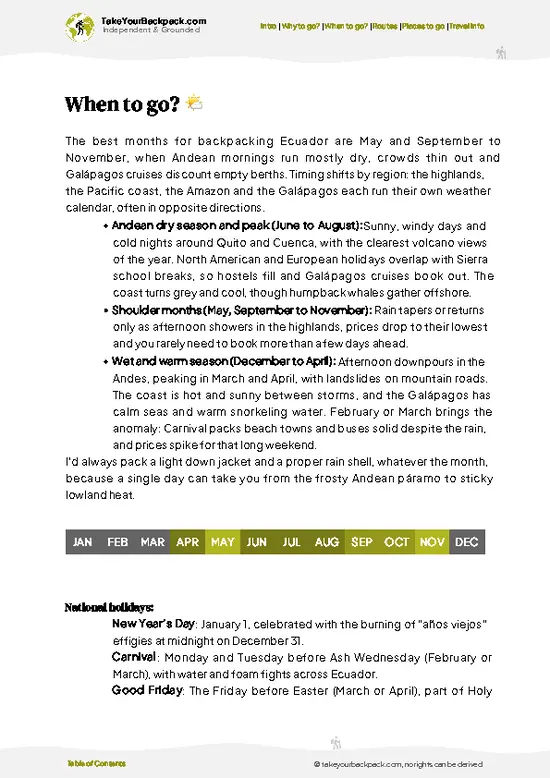
example page 1 from our offline Travel Guide for Ecuador
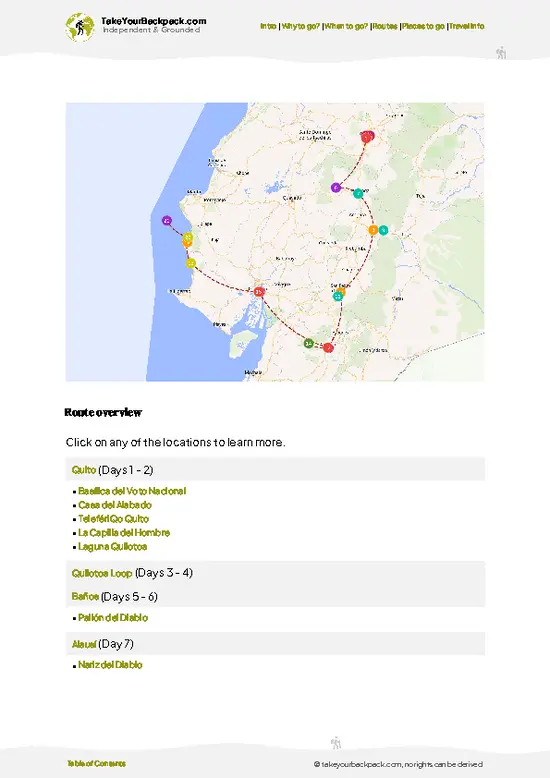
example page 2 from our offline Travel Guide for Ecuador
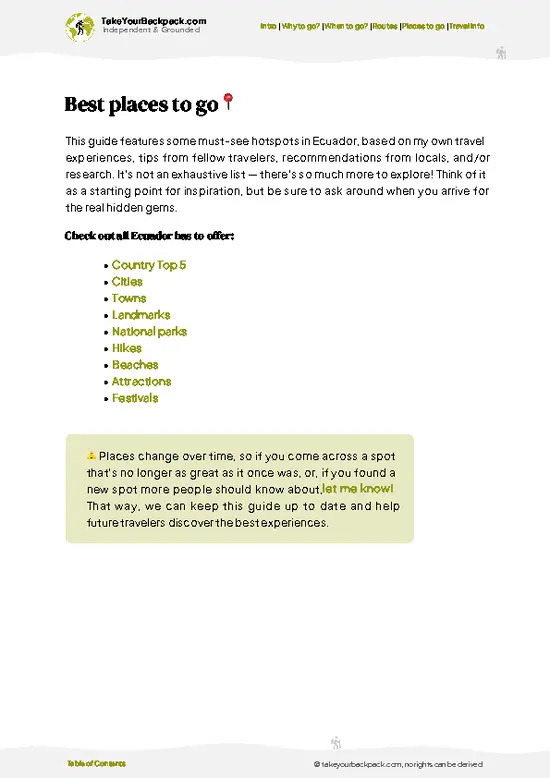
example page 3 from our offline Travel Guide for Ecuador
example page 4 from our offline Travel Guide for Ecuador
example page 5 from our offline Travel Guide for Ecuador
example page 6 from our offline Travel Guide for Ecuador
example page 7 from our offline Travel Guide for Ecuador
The digital guide (362 pages) contains:
94 highlights, ranked by travel appeal
Optimized 5, 10 & 15-day travel routes
Cities, national parks, landmarks, beaches
How to get around
Offline-friendly for travel without Wi-Fi
👉 Click to see all 30+ guide features

📅 Plan smarter in minutes, not weeks
Month by month travel advice
Festivals & national holidays
Budget expectations

🗺️ Go to the right places, skip the overrated ones
Honest pros & cons of destinations
Top hikes, parks & viewpoints
Lesser-known places most travelers miss
Clear “worth it vs skip it” guidance

🛏️ Travel smoothly without rookie mistakes
Best areas to stay
Transport systems explained simply
Common scams & safety advice
SIM cards, money & practical tips

🌍 Understand the country, not just visit it
Culture & traditions
52 Essential phrases & customs
Festivals worth planning around
Traveler-friendly historical context
Insights that make places more meaningful

📱 Built for real travel conditions
Fully downloadable PDF
Works completely offline
Optimized for phone use
Useful in remote areas & buses
Everything in one place
Save weeks of stressful planning
Get instant access to your full guide. 30‑day money-back guarantee.


By proceeding you agree to our terms.
Sent to your inbox immediately after payment • 100% Secure Checkout
Best Backpacking Travel Advisor 2025 tourism awardBest Backpacking
Travel Advisor
2025
What others say about Take Your Backpack Guides:
⭐⭐⭐⭐⭐
Fantastic, amazing amount of information!
⭐⭐⭐⭐⭐
My goodness this is amazing, it's what I've been looking for hats off too you!
⭐⭐⭐⭐⭐
I think this is absolutely BRILLIANT
⭐⭐⭐⭐
Very complete and informative. It's still missing places, but I gotta to commend you
⭐⭐⭐⭐⭐
This is truly amazing, thank you, can't wait to explore it with my kids!
⭐⭐⭐⭐⭐
Awesome resource, thank you!
⭐⭐⭐⭐⭐
This is amazing! Can't wait to explore the ones I haven't seen
⭐⭐⭐⭐
I love this! Well done, great idea.
⭐⭐⭐⭐⭐
Thanks for taking the time to make this gem!
⭐⭐⭐⭐⭐
This might be the best website I've ever seen.
⭐⭐⭐⭐⭐
Congratulations, and thank you so much for your work; it's incredibly valuable.
⭐⭐⭐⭐
In all seriousness I think you did a great job pointing out the important spots
⭐⭐⭐⭐⭐
10/10 very good
⭐⭐⭐⭐⭐
As someone who's only just starting to visit regularly this is awesome, thank you.
⭐⭐⭐⭐
Thank you very much! I'm going to visit my dad, it's going to be very useful!
⭐⭐⭐⭐⭐
This is really cool! We'll be travelling for the first time and this definitely come in handy.
⭐⭐⭐⭐⭐
You are now our minister of culture, congratulations 👨‍💼
⭐⭐⭐⭐⭐
Just wanted to tell you that this is a pearl! Going to follow your recommendations.
⭐⭐⭐⭐⭐
This is so cool. I'll definitely be using the resource for my travels soon.
⭐⭐⭐⭐⭐
This is very impressive! Good work.
⭐⭐⭐⭐⭐
This is an amazing and informative site. Very well done!

🛏️ Where to stay?Best areas and accommodation options

Otavalo’s best backpacker base is the area around the central Plaza de Ponchos. This neighborhood pulses with the town’s heartbeat—early morning market stalls spilling vibrant textiles and fresh produce into the streets, the scent of roasting corn and toasted coffee beans hanging in the air. Staying here means you’re steps from the action, where locals haggle and musicians play, and the energy never feels forced. It’s safe, thanks to a steady police presence and a community used to welcoming travelers, which lets you wander freely even as dusk softens the light.

Hostels cluster around this plaza, … read more 👉
Otavalo’s best backpacker base is the area around the central Plaza de Ponchos. This neighborhood pulses with the town’s heartbeat—early morning market stalls spilling vibrant textiles and fresh produce into the streets, the scent of roasting corn and toasted coffee beans hanging in the air. Staying here means you’re steps from the action, where locals haggle and musicians play, and the energy never feels forced. It’s safe, thanks to a steady police presence and a community used to welcoming travelers, which lets you wander freely even as dusk softens the light.

Hostels cluster around this plaza, creating a natural social hub. You’ll find communal kitchens and common rooms where stories flow as easily as the local chicha. This proximity to the market means you can grab a quick snack or a full meal without breaking stride. Compared to quieter, more residential parts of Otavalo, this area keeps you plugged into the town’s rhythm and makes meeting fellow backpackers effortless.

If you drift a little farther out, the vibe shifts—calmer, but less immediate. You’ll trade the buzz for quiet streets and fewer social opportunities. For solo travelers or those chasing connection and convenience, the Plaza de Ponchos neighborhood is where Otavalo’s soul meets practical comfort.

🚌 Getting aroundMoving around without the hassle

Otavalo moves at its own rhythm—less a clock-driven town and more a pulse you catch by tuning into its streets. The air carries the scent of fresh corn roasting on open fires and the sharp tang of mountain air, mixing with the chatter of vendors setting up their stalls before dawn. Here, time bends around the market’s heartbeat, where schedules blur into the flow of people bargaining, laughing, and weaving through the colorful chaos. It’s not about rigid timetables but about syncing with the town’s natural tempo—early risers get the best deals, and the day unfolds in layers of sound, color, and movement. Understanding this flow means you’re not just passing through; you’re stepping into a living rhythm that rewards patience and presence.


  • Walking: The best way to soak in Otavalo’s vibe
read more 👉
Otavalo moves at its own rhythm—less a clock-driven town and more a pulse you catch by tuning into its streets. The air carries the scent of fresh corn roasting on open fires and the sharp tang of mountain air, mixing with the chatter of vendors setting up their stalls before dawn. Here, time bends around the market’s heartbeat, where schedules blur into the flow of people bargaining, laughing, and weaving through the colorful chaos. It’s not about rigid timetables but about syncing with the town’s natural tempo—early risers get the best deals, and the day unfolds in layers of sound, color, and movement. Understanding this flow means you’re not just passing through; you’re stepping into a living rhythm that rewards patience and presence.


  • Walking: The best way to soak in Otavalo’s vibe is on foot. The town center is compact, with cobblestone streets that invite slow exploration. Walking costs nothing, lets you catch the scent of fresh bread from local bakeries, and offers spontaneous encounters with artisans. It’s the most flexible option—no schedules, just your pace.


  • Local Buses (Colectivos): These shared minibuses run frequently from Otavalo to nearby towns like Cotacachi and Ibarra, starting around 6:00 AM and tapering off by 7:00 PM. Fares hover around $0.50 to $1, making them the cheapest way to cover longer distances. They’re not the most comfortable—expect tight seating and occasional stops—but they’re a direct line into local life, with the driver’s radio often playing Andean music.


  • Taxi Services: Taxis are plentiful but unmetered, so always agree on a fare before hopping in. Short rides within town typically cost $1 to $2, while trips to the market outskirts or nearby villages can run $5 to $10. They offer speed and shelter from sudden mountain showers, making them a smart choice when time is tight or the weather turns.


  • Motorcycle Taxis (Motos): For a quick, budget-friendly dash through Otavalo’s narrow streets, motos are a local favorite. They’re faster than walking and cheaper than taxis, usually costing under $1 for short hops. The trade-off is exposure to the elements and a bit of a thrill as you zip past slower traffic—perfect if you’re comfortable with a bit of adventure.


  • Intercity Buses: For journeys beyond the immediate region, buses depart from the main terminal early in the morning, with services to Quito and other major cities running until early evening. Tickets range from $3 to $7 depending on the destination and bus class. These buses are more spacious and reliable than colectivos, offering a smoother ride for longer hauls.

👛 Costs (as of 1 January 2026)Money, prices, and spending tips

Backpacking in Otavalo, Ecuador, offers a rich cultural experience with costs that reflect its blend of traditional markets and growing tourism. Here’s a realistic breakdown of what you’ll spend daily as an independent traveler.
  • Dorm Accommodation: Expect to pay between $8 and $15 per night for a bed in a shared dorm. Hostels here are basic but clean, often with communal kitchens and a social vibe. The price depends on location—closer to the market or town center tends to be pricier.
  • Meals: Street food and local eateries serve hearty meals for $2 to $5. A typical plate might be rice, beans, plantains, and a protein like chicken or fish. If you opt for a sit-down meal in a tourist-friendly café, prices rise to around $6 to $10. Fresh fruit juices and coffee are cheap and refreshing, usually
read more 👉
Backpacking in Otavalo, Ecuador, offers a rich cultural experience with costs that reflect its blend of traditional markets and growing tourism. Here’s a realistic breakdown of what you’ll spend daily as an independent traveler.
  • Dorm Accommodation: Expect to pay between $8 and $15 per night for a bed in a shared dorm. Hostels here are basic but clean, often with communal kitchens and a social vibe. The price depends on location—closer to the market or town center tends to be pricier.
  • Meals: Street food and local eateries serve hearty meals for $2 to $5. A typical plate might be rice, beans, plantains, and a protein like chicken or fish. If you opt for a sit-down meal in a tourist-friendly café, prices rise to around $6 to $10. Fresh fruit juices and coffee are cheap and refreshing, usually under $1.50.
  • Local Transport: Getting around Otavalo is straightforward and affordable. Shared taxis or buses cost about $0.25 to $0.50 per ride within town. For trips to nearby attractions like Cuicocha Lake, expect to pay $3 to $5 for a colectivo or shared van.
  • Basic Activities/Entry Fees: Most cultural sites and markets are free to explore, but guided tours or entry to places like Cuicocha crater lake run between $5 and $15. Hiring a local guide for the market or nearby hikes can add value and costs around $10 to $20 depending on the length and depth of the tour.
  • Miscellaneous Expenses: Budget around $2 to $5 for extras like bottled water, snacks, or small souvenirs. Internet cafes or SIM cards with data cost roughly $5 to $10, depending on your needs.

All told, you’re looking at roughly $20 to $40 per day to cover the essentials without cutting corners. Otavalo’s charm comes from its vibrant market and surrounding nature, and spending a bit more on a guide or a good meal enhances the experience without breaking the bank. The scent of fresh corn roasting at market stalls and the chatter of bargaining locals make every dollar spent feel like an investment in the day’s story.


source: ecuador.travel
⚠️ Prices can change and everyone travels differently, so take this as a rough guide. Hope it helps you plan your adventure!

🚌 Day tripsBest day trips from Otavalo

Otavalo, Ecuador, is a backpacker’s dream base, offering easy access to stunning landscapes and rich culture. The town itself buzzes with life, especially on market days, but the real magic lies just beyond its borders. Here are some day trips that will elevate your experience.

Laguna de Cuicocha
A short bus ride from Otavalo, this crater lake is a feast for the senses. The deep blue waters are framed by lush greenery and towering peaks. Hike the 12-kilometer loop around the lake for breathtaking views and the chance to spot local wildlife. The trail can be muddy, so sturdy shoes are a must. Expect to spend around $2 for the bus and a few dollars more for snacks. Early morning is best to catch the mist rising off the water. Many first-timers miss the chance to explore the lesser-known trails … read more 👉
Otavalo, Ecuador, is a backpacker’s dream base, offering easy access to stunning landscapes and rich culture. The town itself buzzes with life, especially on market days, but the real magic lies just beyond its borders. Here are some day trips that will elevate your experience.

Laguna de Cuicocha
A short bus ride from Otavalo, this crater lake is a feast for the senses. The deep blue waters are framed by lush greenery and towering peaks. Hike the 12-kilometer loop around the lake for breathtaking views and the chance to spot local wildlife. The trail can be muddy, so sturdy shoes are a must. Expect to spend around $2 for the bus and a few dollars more for snacks. Early morning is best to catch the mist rising off the water. Many first-timers miss the chance to explore the lesser-known trails that branch off the main path, which offer solitude and unique perspectives.
👉 Explore Laguna de Cuicocha

Peguche Waterfall
Just a 30-minute ride from Otavalo, Peguche is a serene escape. The sound of rushing water fills the air as you approach the falls, surrounded by vibrant flora. The hike is easy and takes about an hour round trip, making it perfect for a quick getaway. Entrance is free, but consider bringing a small donation for the local community. Visit in the late afternoon when the sun casts a golden glow on the falls. A common mistake is to rush through without taking the time to enjoy the peaceful surroundings—bring a book or a snack to savor the moment.


Imbabura Volcano
For the adventurous, Imbabura offers a rewarding challenge. The hike to the summit takes about 5-6 hours, but the panoramic views of the surrounding valleys and lakes are worth every step. Expect to pay around $5 for transportation and a small fee for park entry. The best time to hike is during the dry season, from June to September. Many first-timers underestimate the weather; it can change quickly, so pack layers and be prepared for wind.


Otavalo Market
While technically not a day trip, the Otavalo Market deserves a mention. It’s a vibrant tapestry of colors and sounds, with local artisans showcasing their crafts. Arrive early to beat the crowds and snag the best deals on textiles and jewelry. Budget around $10 for a hearty breakfast at a local café and some shopping. Many visitors overlook the nearby food stalls, where you can sample traditional dishes like llapingachos (potato cakes) that are a must-try.


Quilotoa Loop
Though a bit further afield, the Quilotoa Loop is a stunning day trip for those willing to wake up early. The turquoise crater lake is a sight to behold, and the hike around the rim offers various viewpoints. Plan for a long day, as it takes about 2.5 hours to reach the lake, with costs around $10 for transport. The best time to visit is during the dry season, but be aware that the altitude can be challenging. Many first-timers underestimate the hike’s difficulty; acclimatize properly and take your time to enjoy the scenery.
👉 Explore Quilotoa Loop
Want to know what more Ecuador offers?
The Ecuador Travel Guide describes 94 highlights, from cities to national parks, from beaches to hikes

Get the Travel Guide -

🍲 FoodLocal Cuisine & Drinks

In Otavalo, food is a vibrant expression of the highland’s rich culture, and as a backpacker, you’re stepping into a world where every bite tells a story. The hornado—slow-roasted pork with crispy skin—is a must-try, often served with mote (hominy) and llapingachos, those cheesy potato patties that melt in your mouth. For something lighter, the empanadas de viento—airy, fried turnovers filled with cheese—are perfect street snacks, especially when paired with a cup of steaming canelazo, a warm spiced drink made from sugarcane alcohol and cinnamon, ideal for chilly evenings.

Backpackers will find themselves drawn to the bustling markets, where food stalls offer an authentic, no-frills taste of Otavalo’s culinary soul. These spots are lively, with locals chatting over plates of hearty soups … read more 👉
In Otavalo, food is a vibrant expression of the highland’s rich culture, and as a backpacker, you’re stepping into a world where every bite tells a story. The hornado—slow-roasted pork with crispy skin—is a must-try, often served with mote (hominy) and llapingachos, those cheesy potato patties that melt in your mouth. For something lighter, the empanadas de viento—airy, fried turnovers filled with cheese—are perfect street snacks, especially when paired with a cup of steaming canelazo, a warm spiced drink made from sugarcane alcohol and cinnamon, ideal for chilly evenings.

Backpackers will find themselves drawn to the bustling markets, where food stalls offer an authentic, no-frills taste of Otavalo’s culinary soul. These spots are lively, with locals chatting over plates of hearty soups or fresh fruit juices squeezed on the spot. Casual eateries and cafés around the plaza provide a relaxed vibe, where you can sip on coffee brewed strong and black, a regional staple that fuels the day’s adventures.

Eating here is informal but respectful—sharing dishes is common, and meals often stretch into social moments. Don’t rush; the pace of dining matches the rhythm of the town. Toast with a friendly “Salud!” and savor the flavors that connect you to Otavalo’s heart.

🛡️ SafetyScams, Hazards, and Annoyances

Otavalo is generally safe, but like any vibrant town, it has its quirks. The bustling market is a feast for the senses, but keep your belongings close. Pickpockets can lurk in crowded areas, especially during peak hours. When you’re haggling for that colorful poncho, be aware of your surroundings.

Solo travelers should stick to well-lit streets after dark. The town has a friendly vibe, but it’s wise to avoid quiet alleys. If you’re out late, grab a taxi rather than walking; it’s a small investment for peace of mind.

Scams are rare, but some vendors may inflate prices for tourists. Always ask for a price before you engage. If something feels off, trust your instincts. Everyday annoyances include persistent street vendors; a polite “no, gracias” usually does the trick. Carry yourself confidently, … read more 👉
Otavalo is generally safe, but like any vibrant town, it has its quirks. The bustling market is a feast for the senses, but keep your belongings close. Pickpockets can lurk in crowded areas, especially during peak hours. When you’re haggling for that colorful poncho, be aware of your surroundings.

Solo travelers should stick to well-lit streets after dark. The town has a friendly vibe, but it’s wise to avoid quiet alleys. If you’re out late, grab a taxi rather than walking; it’s a small investment for peace of mind.

Scams are rare, but some vendors may inflate prices for tourists. Always ask for a price before you engage. If something feels off, trust your instincts. Everyday annoyances include persistent street vendors; a polite “no, gracias” usually does the trick. Carry yourself confidently, and you’ll blend in with the locals, making your experience richer and more authentic.

Other Ecuadorian cities near Otavalo

Explore more nearby:

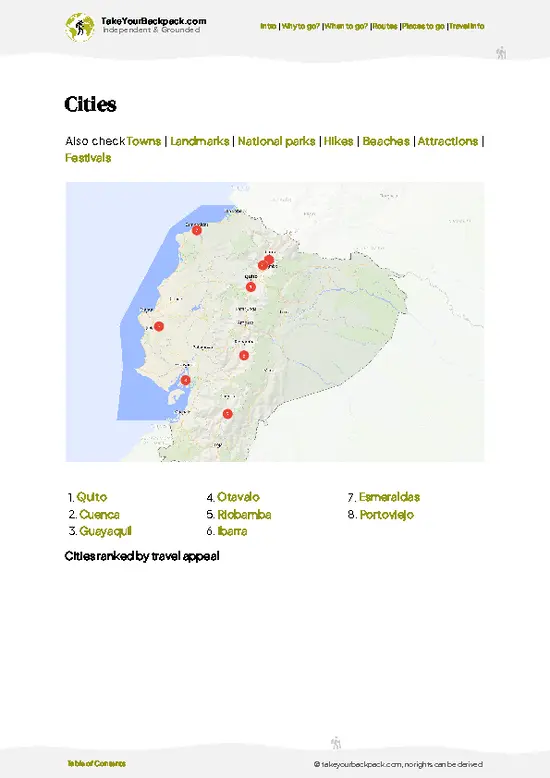
  • Ibarra—Whitewashed facades, lakeside access, mild climate| 19 km away
  • Quito—High-altitude core, steep streets, panoramic viewpoints| 58 km away
  • Ambato—Fruit orchards, flower trade, hillside parks| 170 km away

💡 Not sure where to go next?
Create a personalized itinerary for Ecuador including Otavalo and the places that fit your trip.

Generate my itinerary

👉 Discover all cities

Or checkout all Ecuador has to offer (think cities, towns, villages, national parks, hikes, beaches, festivals)
Country photo of Ecuador

We 💚 feedbackFinal thoughts on visiting Otavalo

Otavalo’s market is a sensory feast—colors pop, textiles whisper stories, and the scent of fresh empanadas fills the air. It’s a place where you can truly connect with local culture. But be ready for the crowds; weekends can feel like a bustling hive. Embrace the chaos, though. It’s part of the experience. Navigate it with patience, and you’ll unlock the heart of this vibrant town.

✈️ When did I visit Ecuador?
Ecuador I visited during my half year trip through South and Central America back in 2003

✍️ Help improve this page!
The information on this page is based on my own backpacking experience in Ecuador, supplemented with up-to-date research and feedback from other travelers. Travel details can change, so if you notice anything outdated or incomplete, feel free to let me know.


🙋‍♂️ Give feedback

👋 Meet the founderWho’s Behind Take Your Backpack?

Johan, backpacker and founder of TakeYourBackpackHi, I’m Johan (Netherlands 🇳🇱), the creator of TakeYourBackpack. Over the past decade, I’ve backpacked through 80+ countries across six continents, gaining extensive experience with independent travel, long-term trips, and overland routes.

This site is built on a combination of firsthand travel experience and carefully curated insights from other backpackers. Many guides are based on places I’ve personally visited, while others bring together tips, observations, and practical advice shared by trusted travelers I’ve met along the way.

The goal is to provide realistic, experience-driven guidance — not generic itineraries — so you can explore destinations with better context, clearer expectations, and more confidence.

Get full Ecuador guide •
Instant download • 94 highlights • Full Offline guide