×

Eswatini🇸🇿 | townsSimunyesugar estates, company town layout, local sports fields | things to do and best time to go

Explore LavumisaExplore Ngwenya Glass Village

Backpacking in Simunye
👍 Recommendedtown ranked #9
By Johan Kruseman 🇳🇱 | Updated June 11, 2026

You’ll face a real fork in the road at Simunye: do you pause here, or push on to the wilder corners of Eswatini? Simunye sits in the humid, sugarcane-rich east, close to the Mozambique border—think lowland heat, the sweet scent of cane, and a horizon that glows gold at dusk. For backpackers, Simunye is less a destination than a functional waypoint. It’s a practical base for exploring Hlane Royal National Park’s wildlife or breaking up the long, dusty haul between Mbabane and Mozambique. The town itself is compact, with a few shops and a market, but nightlife is nearly non-existent and hostels are rare—expect quiet evenings and a local crowd, not a backpacker buzz. Public minibuses connect you, but you’ll need patience and a sense of humor. Simunye is cheaper and more relaxed than touristy Ezulwini, but don’t expect postcard charm—just the honest, working rhythm of a Swazi town. Safety is solid if you keep your wits, but the real reward is the feeling of being somewhere real, not curated.

Discover everything you want to know in the 📖 Eswatini Travel Guide.


Get your Eswatini guide
46 ranked highlights, routes & tips, works offline (202 pages)
Loading the map 🌍
CLICK TO FILTER
cities
towns
landmarks
national parks
hikes
attractions
festivals
regions
SHOW COUNTRY’S BESTSHOW ALL

✨ Why go?
Ranked #9 town in Eswatini
Reasons people choose to visit here

Simunye is a strategic stop for backpackers weaving through Eswatini. Its proximity to hikes like the nearby Malolotja Nature Reserve makes it a launching pad for those craving adventure. The local guesthouses and small-scale hostels offer a cozy, intimate vibe, perfect for solo travelers or small groups looking to connect. You’ll find walkable streets lined with friendly faces, where the scent of grilled meat and spices wafts from local eateries, inviting you to dive into authentic Swazi cuisine.

Travelers often linger here for a few days, soaking in the laid-back atmosphere and sharing stories with fellow adventurers. While it’s not a nightlife hub, the social scene is vibrant enough to foster connections. Whether you’re a slow traveler wanting to savor the culture or a hiker eager to … read more 👉
Simunye is a strategic stop for backpackers weaving through Eswatini. Its proximity to hikes like the nearby Malolotja Nature Reserve makes it a launching pad for those craving adventure. The local guesthouses and small-scale hostels offer a cozy, intimate vibe, perfect for solo travelers or small groups looking to connect. You’ll find walkable streets lined with friendly faces, where the scent of grilled meat and spices wafts from local eateries, inviting you to dive into authentic Swazi cuisine.

Travelers often linger here for a few days, soaking in the laid-back atmosphere and sharing stories with fellow adventurers. While it’s not a nightlife hub, the social scene is vibrant enough to foster connections. Whether you’re a slow traveler wanting to savor the culture or a hiker eager to explore, Simunye provides a welcoming base. It’s a place where the journey feels as rewarding as the destination, making every moment count.
Want to include Simunye in your Eswatini route?
Create a personalized Eswatini itinerary that includes Simunye and the places that fit your trip — based on your travel style, budget, and available time. Get your route in seconds.

Generate my trip

💡 HighlightsWhat this place is best known for

  • Royal Swazi Sugar Company mill & estate — The heartbeat of Simunye. Arrange a visit or a talk with the estate office to see the mill, loaded cane trucks, and get a hands-on sense of how sugar shaped the town’s economy and daily rhythms.
  • Simunye central market — A morning swirl of fresh maize, veggies, roasted groundnuts and home-cooked snacks. It’s where you’ll meet vendors, try local food, and pick up small, honest crafts without the tourist markup.
  • Cane-train sidings and loading points — Watching the long sugar wagons and cane trains being marshalled is unexpectedly hypnotic and very Simunye: industrial choreography you can safely observe from designated viewing spots or with a guide.
  • Community walks and homestay visits — Not a single building, but a set of real exchanges: spend time
read more 👉
  • Royal Swazi Sugar Company mill & estate — The heartbeat of Simunye. Arrange a visit or a talk with the estate office to see the mill, loaded cane trucks, and get a hands-on sense of how sugar shaped the town’s economy and daily rhythms.
  • Simunye central market — A morning swirl of fresh maize, veggies, roasted groundnuts and home-cooked snacks. It’s where you’ll meet vendors, try local food, and pick up small, honest crafts without the tourist markup.
  • Cane-train sidings and loading points — Watching the long sugar wagons and cane trains being marshalled is unexpectedly hypnotic and very Simunye: industrial choreography you can safely observe from designated viewing spots or with a guide.
  • Community walks and homestay visits — Not a single building, but a set of real exchanges: spend time in a family compound, help with a meal, hear stories. Organise these through local contacts or the estate’s community office for an authentic day with residents.
  • Main-street shebeens and taverns — These are the social living rooms of Simunye. Pop in for a beer, live music or a weekend dance to see how locals socialize — just be respectful, ask before photographing, and follow local etiquette.
  • Simunye sports ground — Catch a football match or a community athletics meet. The energy at local games gives a direct window into town pride, youth culture and weekend life.
  • Roadside craft sellers and basket weavers — Small, informal stalls where you can watch artisans weave sisal baskets or bead simple jewelry. Buying direct supports families and connects you with a craft tradition rooted in everyday Swazi life.
  • Local churches and gospel choirs — Attend a Sunday service if you can. The music and communal singing are powerful, revealing faith’s role in social life and offering a warm welcome from congregations.
  • Walking the irrigation canals and field edges — Take a guided stroll along the canals and between cane fields to see the irrigation systems, meet farmworkers, and learn the agricultural techniques that keep the estates running.
  • Community hall events and market days — Check the bulletin at the town centre: the civic hall hosts dances, meetings, small shows and craft markets. Timing your visit for one of these gives you a front-row seat to local culture.
A few good day trips nearby: Hlane Royal National Park for big wildlife, the wetlands and sugar-country scenery around Big Bend, and the low Lubombo mountains for short hikes and views — all easily reached from Simunye.
Spotted a mistake or missing something? Contact us.
🏘️ NeighborhoodsWhere things are and how it's laid out

Simunye is a small town in Eswatini that offers a unique blend of culture and nature, making it a rewarding stop for backpackers. Here’s how to navigate its neighborhoods:

Town Center: This is the heartbeat of Simunye. You’ll find local shops, markets, and eateries that serve authentic Swazi dishes. The vibe is lively but not overwhelming. It’s walkable, so you can easily explore on foot. Ideal for short stays, as you can soak in the local culture quickly. Nightlife is minimal, but you can find a few bars where locals gather.

Simunye Nature Reserve Area: If you’re after tranquility, this area is your go-to. It’s slightly removed from the hustle, surrounded by lush landscapes. Perfect for longer stays, especially if you want to hike or bird-watch. Transport options are limited, so a rental … read more 👉
Simunye is a small town in Eswatini that offers a unique blend of culture and nature, making it a rewarding stop for backpackers. Here’s how to navigate its neighborhoods:

Town Center: This is the heartbeat of Simunye. You’ll find local shops, markets, and eateries that serve authentic Swazi dishes. The vibe is lively but not overwhelming. It’s walkable, so you can easily explore on foot. Ideal for short stays, as you can soak in the local culture quickly. Nightlife is minimal, but you can find a few bars where locals gather.

Simunye Nature Reserve Area: If you’re after tranquility, this area is your go-to. It’s slightly removed from the hustle, surrounded by lush landscapes. Perfect for longer stays, especially if you want to hike or bird-watch. Transport options are limited, so a rental bike or car is recommended. The atmosphere is serene, with the scent of wildflowers in the air.

Residential Districts: These neighborhoods offer a glimpse into daily life in Simunye. They’re quieter and more laid-back, making them suitable for longer stays. You’ll find homestays and guesthouses that are budget-friendly. Walkability varies, so be prepared for some longer treks. This area is less about nightlife and more about connecting with the community.

⌛️ 1 dayA smart one-day plan

Simunye, a small town in Eswatini, offers a blend of local culture and stunning landscapes. It’s not on every tourist’s radar, but that’s what makes it special. You’ll find a warm community, vibrant markets, and the nearby Hlane Royal National Park, where the wild calls to you.

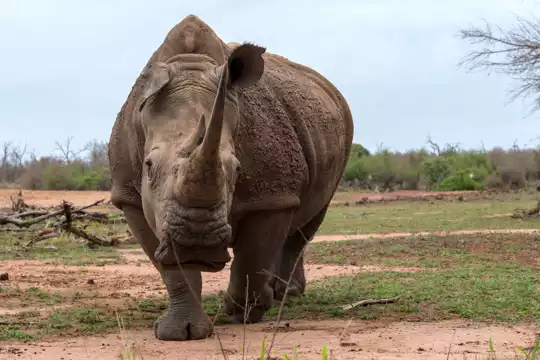
Start your morning at the Simunye Market. The air is rich with the scent of fresh produce and spices. Grab a local breakfast of ‘putu’ (maize porridge) and some ripe mango slices. Engage with the vendors; their stories add depth to your experience. After fueling up, take a short walk to the nearby Hlane Royal National Park. The early light filters through the trees, casting playful shadows. Here, you can spot white rhinos and a variety of birds. A guided walk is worth it; the guides share insights that make the wildlife … read more 👉
Simunye, a small town in Eswatini, offers a blend of local culture and stunning landscapes. It’s not on every tourist’s radar, but that’s what makes it special. You’ll find a warm community, vibrant markets, and the nearby Hlane Royal National Park, where the wild calls to you.

Start your morning at the Simunye Market. The air is rich with the scent of fresh produce and spices. Grab a local breakfast of ‘putu’ (maize porridge) and some ripe mango slices. Engage with the vendors; their stories add depth to your experience. After fueling up, take a short walk to the nearby Hlane Royal National Park. The early light filters through the trees, casting playful shadows. Here, you can spot white rhinos and a variety of birds. A guided walk is worth it; the guides share insights that make the wildlife come alive.

In the afternoon, head back to town and explore the local craft shops. Look for traditional Swazi beadwork and wooden carvings. These aren’t just souvenirs; they’re pieces of culture. If you’re feeling adventurous, visit the Simunye Golf Club. Even if you don’t play, the views from the course are breathtaking.

As the sun sets, find a spot at a local eatery. The aroma of grilled meat fills the air. Try ‘braai’ (barbecue) with a side of ‘pap’ (maize). Share a table with locals; their laughter and stories will enrich your evening.

Simunye isn’t just a stop; it’s a chance to connect, learn, and savor the essence of Eswatini.
Turn your Simunye visit into an Eswatini adventure
Build a complete Eswatini route with Simunye, hidden gems, must-see destinations, and realistic travel times included.

Generate my trip

🌤️ When to go?Best time to visit Simunye


  • Weather: Simunye’s climate swings between a wet summer (Nov-Mar) and a dry winter (May-Sep). The rains bring lush greenery but also muddy trails and humidity that can sap your energy. Dry months offer crisp air and clearer skies, perfect for trekking and wildlife spotting.

  • Temperature: Summer highs hover around 28-32°C (82-90°F), often sticky and warm. Winter days are cooler, ranging from 18-24°C (64-75°F), with chilly nights dipping to 7°C (45°F). Layering is your friend for early mornings and evenings.

  • Daylight Hours: Longer days in summer stretch to about 13 hours, giving you more daylight for adventures. Winter shortens to roughly 11 hours, so plan hikes and activities accordingly to avoid dusk on the trail.

  • Crowds: Tourist flow peaks during the dry season when conditions are
read more 👉

  • Weather: Simunye’s climate swings between a wet summer (Nov-Mar) and a dry winter (May-Sep). The rains bring lush greenery but also muddy trails and humidity that can sap your energy. Dry months offer crisp air and clearer skies, perfect for trekking and wildlife spotting.

  • Temperature: Summer highs hover around 28-32°C (82-90°F), often sticky and warm. Winter days are cooler, ranging from 18-24°C (64-75°F), with chilly nights dipping to 7°C (45°F). Layering is your friend for early mornings and evenings.

  • Daylight Hours: Longer days in summer stretch to about 13 hours, giving you more daylight for adventures. Winter shortens to roughly 11 hours, so plan hikes and activities accordingly to avoid dusk on the trail.

  • Crowds: Tourist flow peaks during the dry season when conditions are ideal for outdoor activities. Expect more visitors from June to August, which can mean busier campsites but also a livelier atmosphere.

  • Seasonal Activities: Dry months unlock game drives and birdwatching with better visibility. The wet season, while trickier, is when the landscape bursts with wildflowers and newborn wildlife, rewarding those willing to brave the elements.

  • Price Fluctuations: Accommodation and tours tend to cost more during the dry season’s peak months. Off-peak wet season offers better deals but requires flexibility with weather disruptions.


Pro-tip: Aim for the shoulder months of April or September—enjoy fewer crowds, moderate weather, and a sweet spot between lush scenery and dry trails.


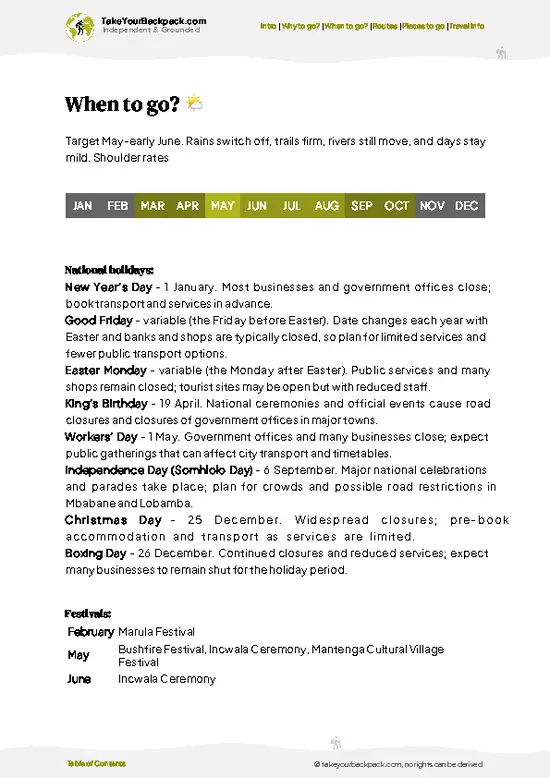
source: climatestotravel.comJANJanuary: good for travelingFEBFebruary: good for travelingMARMarch: good for travelingAPRApril: highly recommended for travelingMAYMay: highly recommended for travelingJUNJune: excellent for travelingJULJuly: excellent for travelingAUGAugust: excellent for travelingSEPSeptember: highly recommended for travelingOCTOctober: fair for travelingNOVNovember: fair for travelingDECDecember: fair for traveling
when-to-go

✈️ The backpacker research shortcutEswatini Travel Guide

An offline-friendly backpacking guide with optimized travel routes, ranked highlights, transport advice, and the best areas to stay.
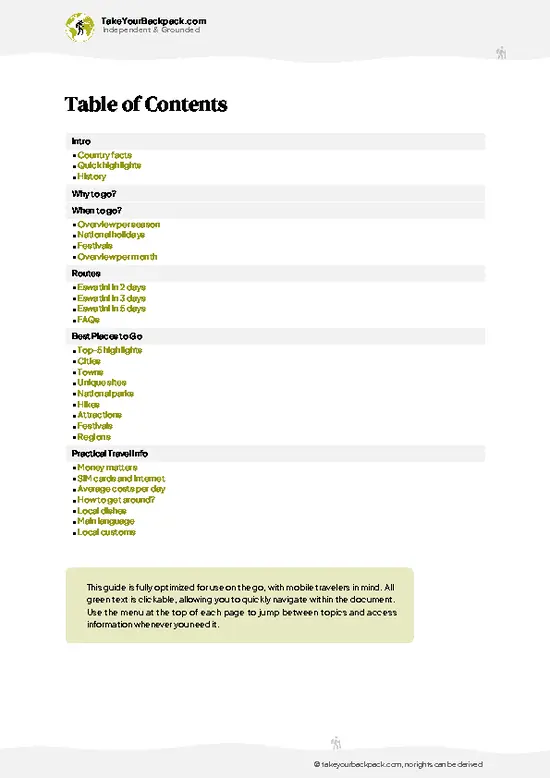
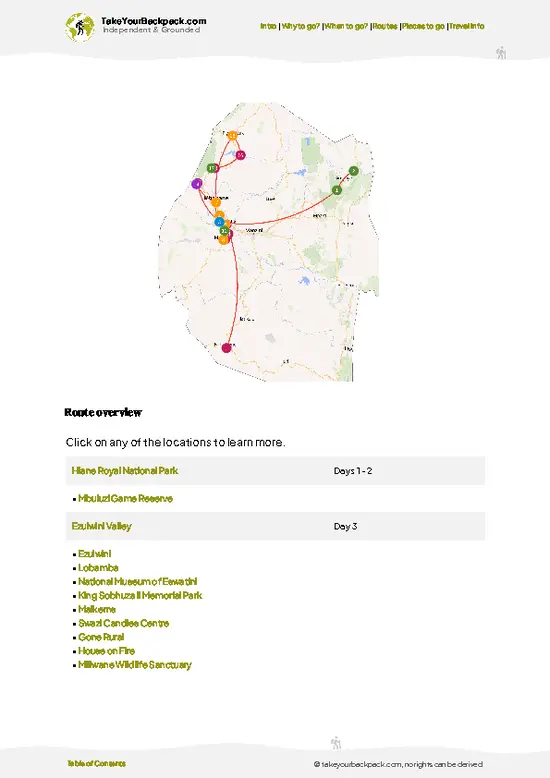
example page 0 from our offline Travel Guide for Eswatini
example page 1 from our offline Travel Guide for Eswatini
example page 2 from our offline Travel Guide for Eswatini
example page 3 from our offline Travel Guide for Eswatini
example page 4 from our offline Travel Guide for Eswatini
example page 5 from our offline Travel Guide for Eswatini
example page 6 from our offline Travel Guide for Eswatini
example page 7 from our offline Travel Guide for Eswatini
The digital guide (202 pages) contains:
46 highlights, ranked by travel appeal
Optimized 2, 3 & 5-day travel routes
Cities, national parks, landmarks, beaches
How to get around
Offline-friendly for travel without Wi-Fi
👉 Click to see all 30+ guide features

📅 Plan smarter in minutes, not weeks
Month by month travel advice
Festivals & national holidays
Budget expectations

🗺️ Go to the right places, skip the overrated ones
Honest pros & cons of destinations
Top hikes, parks & viewpoints
Lesser-known places most travelers miss
Clear “worth it vs skip it” guidance

🛏️ Travel smoothly without rookie mistakes
Best areas to stay
Transport systems explained simply
Common scams & safety advice
SIM cards, money & practical tips

🌍 Understand the country, not just visit it
Culture & traditions
52 Essential phrases & customs
Festivals worth planning around
Traveler-friendly historical context
Insights that make places more meaningful

📱 Built for real travel conditions
Fully downloadable PDF
Works completely offline
Optimized for phone use
Useful in remote areas & buses
Everything in one place
Save weeks of stressful planning
Get instant access to your full guide. 30‑day money-back guarantee.


By proceeding you agree to our terms.
Sent to your inbox immediately after payment • 100% Secure Checkout
Best Backpacking Travel Advisor 2025 tourism awardBest Backpacking
Travel Advisor
2025
What others say about Take Your Backpack Guides:
⭐⭐⭐⭐⭐
Fantastic, amazing amount of information!
⭐⭐⭐⭐⭐
My goodness this is amazing, it's what I've been looking for hats off too you!
⭐⭐⭐⭐⭐
I think this is absolutely BRILLIANT
⭐⭐⭐⭐
Very complete and informative. It's still missing places, but I gotta to commend you
⭐⭐⭐⭐⭐
This is truly amazing, thank you, can't wait to explore it with my kids!
⭐⭐⭐⭐⭐
Awesome resource, thank you!
⭐⭐⭐⭐⭐
This is amazing! Can't wait to explore the ones I haven't seen
⭐⭐⭐⭐
I love this! Well done, great idea.
⭐⭐⭐⭐⭐
Thanks for taking the time to make this gem!
⭐⭐⭐⭐⭐
This might be the best website I've ever seen.
⭐⭐⭐⭐⭐
Congratulations, and thank you so much for your work; it's incredibly valuable.
⭐⭐⭐⭐
In all seriousness I think you did a great job pointing out the important spots
⭐⭐⭐⭐⭐
10/10 very good
⭐⭐⭐⭐⭐
As someone who's only just starting to visit regularly this is awesome, thank you.
⭐⭐⭐⭐
Thank you very much! I'm going to visit my dad, it's going to be very useful!
⭐⭐⭐⭐⭐
This is really cool! We'll be travelling for the first time and this definitely come in handy.
⭐⭐⭐⭐⭐
You are now our minister of culture, congratulations 👨‍💼
⭐⭐⭐⭐⭐
Just wanted to tell you that this is a pearl! Going to follow your recommendations.
⭐⭐⭐⭐⭐
This is so cool. I'll definitely be using the resource for my travels soon.
⭐⭐⭐⭐⭐
This is very impressive! Good work.
⭐⭐⭐⭐⭐
This is an amazing and informative site. Very well done!

🛏️ Where to stay?Best areas and accommodation options

Simunye’s heart for backpackers beats strongest near the town center, where the pulse of daily life hums with approachable energy. This area is your best bet—not just because it’s safe, but because it’s where you’ll find the few budget-friendly hostels that double as social hubs. The streets here catch the late afternoon light just right, warming the rough edges of the town with a golden glow that invites lingering conversations over local brews.

Staying closer to the center means you’re steps away from markets and small eateries where the scent of grilled maize and spices fills the air, grounding … read more 👉
Simunye’s heart for backpackers beats strongest near the town center, where the pulse of daily life hums with approachable energy. This area is your best bet—not just because it’s safe, but because it’s where you’ll find the few budget-friendly hostels that double as social hubs. The streets here catch the late afternoon light just right, warming the rough edges of the town with a golden glow that invites lingering conversations over local brews.

Staying closer to the center means you’re steps away from markets and small eateries where the scent of grilled maize and spices fills the air, grounding you in the local rhythm. It’s a place where solo travelers naturally bump into each other, sharing stories under the shade of acacia trees or around communal fire pits at night.

Venture too far out, and you lose that easy access to both safety and social connection. The outskirts are quieter, yes, but also less welcoming for those traveling light on cash and heavy on curiosity. In Simunye, the center isn’t just geography—it’s your launchpad for a genuine, grounded experience.

🚌 Getting aroundGetting around like a local

Simunye moves at the pace of the sun climbing over the sugarcane fields—steady, deliberate, and unhurried. The town’s rhythm isn’t dictated by strict timetables but by the ebb and flow of daily life, where the scent of fresh maize and earth lingers in the air, and locals greet each other with a relaxed nod rather than a rushed glance. You won’t find a clock obsessively ticking here; instead, you’ll navigate by intuition, the warmth of the morning light, and the occasional honk of a passing minibus. This is a place where transit isn’t just about getting from A to B but about soaking in the atmosphere between stops.


  • Walking: The heart of Simunye is compact enough to explore on foot. Streets are shaded by acacia trees, and the air carries the faint sweetness of sugarcane. Walking lets you
read more 👉
Simunye moves at the pace of the sun climbing over the sugarcane fields—steady, deliberate, and unhurried. The town’s rhythm isn’t dictated by strict timetables but by the ebb and flow of daily life, where the scent of fresh maize and earth lingers in the air, and locals greet each other with a relaxed nod rather than a rushed glance. You won’t find a clock obsessively ticking here; instead, you’ll navigate by intuition, the warmth of the morning light, and the occasional honk of a passing minibus. This is a place where transit isn’t just about getting from A to B but about soaking in the atmosphere between stops.


  • Walking: The heart of Simunye is compact enough to explore on foot. Streets are shaded by acacia trees, and the air carries the faint sweetness of sugarcane. Walking lets you catch the small details—the chatter from market stalls, the rhythm of local life—and it’s free. Pace yourself to the slow, steady pulse of the town; this is how you truly absorb its character.


  • Minibus Taxis: These are the lifeblood of local transit, weaving through the town and out to nearby villages. They don’t run on a strict schedule but start filling up around 6:30 AM and taper off by 6 PM. Expect a fare under 10 Emalangeni, and prepare for a lively, sometimes cramped ride where the driver’s skill is measured by how smoothly they navigate narrow, dusty roads.


  • Bicycle Rentals: For a budget-friendly, flexible option, renting a bicycle is a smart move. You can cover more ground than walking but still feel the breeze and the sun on your skin. Rentals typically cost around 50 Emalangeni per day. Early morning rides are best—cool air, fewer cars, and the light filtering through the cane fields makes for a memorable commute.


  • Shared Taxis: Slightly more comfortable than minibuses, shared taxis operate on fixed routes to larger hubs like Siteki or Manzini. They leave when full, usually between 7 AM and 5 PM, and cost about 30-40 Emalangeni. This option balances speed and comfort, making it ideal for day trips or errands beyond town limits.

👛 Costs (as of 7 May 2026)Typical daily expenses

Backpacking in Simunye, Eswatini, offers a straightforward, no-frills experience where costs stay modest but reflect the local pace and lifestyle. Here’s what you can expect to spend day-to-day.
  • Dorm Accommodation: Dorm beds in Simunye typically run between $8 and $15 per night. These are basic setups—think simple beds, shared bathrooms, and a chance to mingle with other travelers or locals. The lighting is often soft and natural during the day, but evenings rely on modest electric lighting, so bring a headlamp if you’re a night reader.
  • Meals: Eating local means sticking to small eateries or street vendors where meals cost around $3 to $6. Expect hearty portions of maize-based dishes, fresh greens, and occasionally grilled meats. The air carries the scent of wood smoke and spices, grounding
read more 👉
Backpacking in Simunye, Eswatini, offers a straightforward, no-frills experience where costs stay modest but reflect the local pace and lifestyle. Here’s what you can expect to spend day-to-day.
  • Dorm Accommodation: Dorm beds in Simunye typically run between $8 and $15 per night. These are basic setups—think simple beds, shared bathrooms, and a chance to mingle with other travelers or locals. The lighting is often soft and natural during the day, but evenings rely on modest electric lighting, so bring a headlamp if you’re a night reader.
  • Meals: Eating local means sticking to small eateries or street vendors where meals cost around $3 to $6. Expect hearty portions of maize-based dishes, fresh greens, and occasionally grilled meats. The air carries the scent of wood smoke and spices, grounding you in the everyday rhythm of the town.
  • Local Transport: Minibus taxis are the norm here, with fares usually between $0.50 and $1.50 per trip. They’re crowded and lively, with windows down to catch the warm breeze and the chatter of passengers. For short distances, walking is often the best way to soak in the town’s atmosphere.
  • Basic Activities/Entry Fees: Most local attractions or community events charge minimal fees, often $2 to $5. This might get you into a cultural site or a small nature reserve nearby. The experience is raw and authentic, without the polish of tourist traps.
  • Miscellaneous Expenses: Budget around $2 to $4 for essentials like bottled water, snacks, or a local SIM card top-up. These small purchases keep you connected and hydrated in the warm, sometimes dusty air.

All told, a daily budget in Simunye comfortably fits between $15 and $30. This range covers the essentials without cutting corners, letting you move through the town with ease and a genuine sense of place.


source: thekingdomofeswatini.com
⚠️ Prices can change and everyone travels differently, so take this as a rough guide. Hope it helps you plan your adventure!

🚌 Day tripsEasy escapes and nearby places

Simunye, Eswatini, is a backpacker’s dream base for day trips, offering a blend of culture, wildlife, and stunning landscapes. The town itself has a laid-back vibe, with friendly locals and a few cozy spots to grab a bite. Here are some day trips that truly capture the essence of this beautiful region.

Hlane Royal National Park
Just a 30-minute drive from Simunye, Hlane is a wildlife haven. Picture yourself wandering through savannahs, where the air is thick with the scent of acacia trees and the distant calls of birds. You might spot elephants and lions roaming freely. The park has a modest entrance fee, around $10, making it budget-friendly. Early mornings are best for wildlife sightings, so set off at dawn to maximize your experience. A common mistake? Many first-timers underestimate … read more 👉
Simunye, Eswatini, is a backpacker’s dream base for day trips, offering a blend of culture, wildlife, and stunning landscapes. The town itself has a laid-back vibe, with friendly locals and a few cozy spots to grab a bite. Here are some day trips that truly capture the essence of this beautiful region.

Hlane Royal National Park
Just a 30-minute drive from Simunye, Hlane is a wildlife haven. Picture yourself wandering through savannahs, where the air is thick with the scent of acacia trees and the distant calls of birds. You might spot elephants and lions roaming freely. The park has a modest entrance fee, around $10, making it budget-friendly. Early mornings are best for wildlife sightings, so set off at dawn to maximize your experience. A common mistake? Many first-timers underestimate the park’s size; bring plenty of water and snacks for a full day of exploration.
👉 Explore Hlane Royal National Park

Mbuluzi Game Reserve
Only about 20 minutes from Simunye, Mbuluzi offers a more intimate wildlife experience. The reserve’s winding trails lead you through lush vegetation, where the earthy scent of damp soil fills the air after a rain. For around $15, you can enjoy a self-guided walk or join a guided tour. The best time to visit is during the dry season, when animals congregate around waterholes. A tip: don’t rush; take your time to soak in the sights and sounds.
👉 Explore Mbuluzi Game Reserve

Ngwenya Glass Village
A 45-minute drive from Simunye, this unique spot showcases local artisans crafting beautiful glassware. The vibrant colors and intricate designs reflect the spirit of Eswatini. You can spend a few hours here, watching the glassblowers at work and picking up a one-of-a-kind souvenir. Entry is free, but budget around $10 for a small piece. The best time to visit is in the morning when the workshops are most active. First-timers often miss the chance to chat with the artisans; don’t hesitate to ask questions!
👉 Explore Ngwenya Glass Village

Malolotja Nature Reserve
About an hour’s drive from Simunye, Malolotja is a paradise for hikers. The views from the top of the cliffs are breathtaking, with rolling hills and valleys stretching as far as the eye can see. The entrance fee is around $5, and you can spend the day exploring various trails. The best time to hike is during the cooler months, from May to September. A common mistake is not checking trail conditions; always ask at the entrance for the latest updates.
👉 Explore Malolotja Nature Reserve
Want to know what more Eswatini offers?
The Eswatini Travel Guide describes 46 highlights, from cities to national parks, from beaches to hikes

Get the Travel Guide -

🛡️ SafetyTraveler Safety Guide

Simunye is generally safe, but a few practical tips can enhance your experience. Stay aware in crowded markets; keep your belongings close. When wandering alone, especially at night, stick to well-lit areas and avoid empty streets. The local vibe is friendly, but it’s wise to be cautious around overly eager vendors.

Common scams are rare, but some may try to sell you overpriced souvenirs or offer unsolicited help that leads to a hefty fee. A polite but firm “no, thank you” usually suffices.

Embrace the local culture, but trust your instincts. If something feels off, it probably is. Carry yourself with confidence, and you’ll find that the beauty of Simunye unfolds in its warmth and community, making the small challenges worthwhile.

Other Swazi towns near Simunye

Explore more nearby:

  • Siteki—hilltop location, regional market, border access| 26 km away
  • Siphofaneni—railway junction, sugar transport, river crossing| 58 km away
  • Big Bend—sugar mill, riverside setting, game reserve access| 63 km away

💡 Not sure where to go next?
Create a personalized itinerary for Eswatini including Simunye and the places that fit your trip.

Generate my itinerary

👉 Discover all towns

Or checkout all Eswatini has to offer (think cities, towns, villages, national parks, hikes, beaches, festivals)
Country photo of Eswatini

We 💚 feedbackIs it worth it?

Simunye has a pulse that’s hard to ignore. The air is thick with the scent of wild sage and the distant sound of drums. You’ll stumble upon locals who genuinely want to share their stories, which is the best surprise. Just be ready for the heat—stay hydrated and pace yourself. Embrace the slower rhythm here; it’s where the real magic happens. Trust me, it’s worth every step.

✍️ Help improve this page!
The information on this page is based on in-depth research, insights shared by experienced travelers, and feedback from the local travel community in Eswatini. While every effort is made to keep the information accurate and current, conditions can change — so if you spot anything incorrect or outdated, please get in touch.


🙋‍♂️ Give feedback

👋 Meet the founderWho’s Behind Take Your Backpack?

Johan, backpacker and founder of TakeYourBackpackHi, I’m Johan (Netherlands 🇳🇱), the creator of TakeYourBackpack. Over the past decade, I’ve backpacked through 80+ countries across six continents, gaining extensive experience with independent travel, long-term trips, and overland routes.

This site is built on a combination of firsthand travel experience and carefully curated insights from other backpackers. Many guides are based on places I’ve personally visited, while others bring together tips, observations, and practical advice shared by trusted travelers I’ve met along the way.

The goal is to provide realistic, experience-driven guidance — not generic itineraries — so you can explore destinations with better context, clearer expectations, and more confidence.

Get full Eswatini guide •
Instant download • 46 highlights • Full Offline guide