×

Ethiopia🇪🇹 | citiesHararWalled old city, hyena feeding, colorful markets | things to do and best time to go

Explore AmboExplore Enkutatash

Backpacking in Harar
🏆 Top pickcity ranked #4
By Johan Kruseman 🇳🇱 | Updated June 21, 2026

If you crave polished infrastructure, seamless Wi-Fi, and a conveyor belt of backpacker bars, Harar will test your patience. But if you’re the kind who finds beauty in chaos and stories in every alley, Harar rewards you with a sensory overload you won’t find anywhere else in Ethiopia. Tucked in the country’s east, far from the tourist conveyor belt of Lalibela or Addis, Harar is a living maze of ancient walls, hyena-feeding rituals, and a swirl of Islamic, Christian, and Oromo cultures. The old city’s 82 mosques and rainbow-painted alleyways feel like a fever dream—intense, sometimes overwhelming, but never dull. It’s not the cheapest spot in Ethiopia, but it’s still a bargain by global standards. Safety is solid if you keep your wits about you. Meeting other travelers is hit-or-miss; you might be the only foreigner in a café, but that’s half the thrill. Harar is for those who want to feel like explorers, not just visitors.

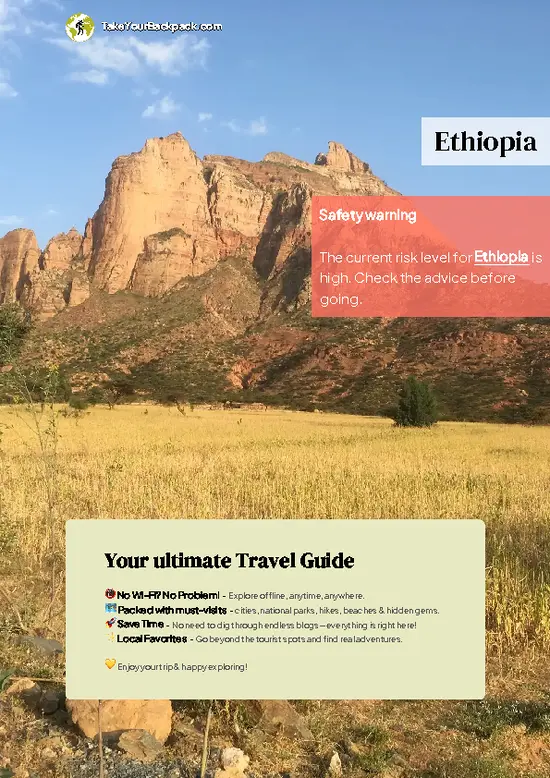
Discover everything you want to know in the 📖 Ethiopia Travel Guide.
Safety warning

The current risk level for Ethiopia is high. Check the advice before going.


Get your Ethiopia guide
101 ranked highlights, routes & tips, works offline (395 pages)
Loading the map 🌍
CLICK TO FILTER
cities
towns
landmarks
national parks
hikes
attractions
festivals
regions
SHOW COUNTRY’S BESTSHOW ALL

✨ Why go?
Ranked #4 city in Ethiopia
The unique appeal for travelers

Harar is a backpacker’s haven in Ethiopia, perfectly positioned for those seeking a blend of culture and adventure. The city serves as a basecamp for day trips into the surrounding landscapes, making it easy to explore without the hassle of constant travel. You’ll find a variety of hostels that cater to budget-conscious travelers, offering a chance to meet fellow adventurers while keeping costs low.

The food scene is vibrant, with local dishes that are both delicious and affordable, fueling your explorations. Harar’s walkability is a major plus; you can easily navigate its winding streets, soaking in the rich history and colorful markets. When the sun sets, the nightlife offers a laid-back vibe, perfect for unwinding after a day of exploration.

As for onward travel, Harar is well-connected, … read more 👉
Harar is a backpacker’s haven in Ethiopia, perfectly positioned for those seeking a blend of culture and adventure. The city serves as a basecamp for day trips into the surrounding landscapes, making it easy to explore without the hassle of constant travel. You’ll find a variety of hostels that cater to budget-conscious travelers, offering a chance to meet fellow adventurers while keeping costs low.

The food scene is vibrant, with local dishes that are both delicious and affordable, fueling your explorations. Harar’s walkability is a major plus; you can easily navigate its winding streets, soaking in the rich history and colorful markets. When the sun sets, the nightlife offers a laid-back vibe, perfect for unwinding after a day of exploration.

As for onward travel, Harar is well-connected, allowing you to seamlessly continue your journey through Ethiopia. Whether you’re planning a longer stay or just a quick stop, Harar provides a unique blend of experiences that can enrich your backpacking route without overwhelming your itinerary.
Want to include Harar in your Ethiopia route?
Create a personalized Ethiopia itinerary that includes Harar and the places that fit your trip — based on your travel style, budget, and available time. Get your route in seconds.

Generate my trip

💡 HighlightsKey sights and experiences for travelers

  • Harar Jugol (the Walled Old City) — The compact, labyrinthine core of Harar where centuries of daily life, trade and architecture are still lived-in; narrow alleys, painted façades and rooftop views make wandering here feel like stepping into a living museum (and yes, it’s a UNESCO site for good reason).
  • The Five Gates of Harar — The original entry points through the city walls (each with its own story); walking between them gives a sense of how Harar regulated trade and visitors over the centuries and offers different perspectives on local neighborhood life.
  • Grand Jami (Great) Mosque — One of Harar’s oldest and most important mosques; you can admire its historic courtyard and the surrounding streets even if non-Muslims can’t enter the prayer hall during services, and the area is central
read more 👉
  • Harar Jugol (the Walled Old City) — The compact, labyrinthine core of Harar where centuries of daily life, trade and architecture are still lived-in; narrow alleys, painted façades and rooftop views make wandering here feel like stepping into a living museum (and yes, it’s a UNESCO site for good reason).
  • The Five Gates of Harar — The original entry points through the city walls (each with its own story); walking between them gives a sense of how Harar regulated trade and visitors over the centuries and offers different perspectives on local neighborhood life.
  • Grand Jami (Great) Mosque — One of Harar’s oldest and most important mosques; you can admire its historic courtyard and the surrounding streets even if non-Muslims can’t enter the prayer hall during services, and the area is central to the city’s spiritual life.
  • Maison Rimbaud (Rimbaud’s House) — The former residence of French poet Arthur Rimbaud, now a small museum and evocative spot for anyone interested in the town’s quirky connection to global literary history and its 19th-century trading past.
  • Harar Cultural/City Museum — Small but rich: artifacts, traditional costumes, weapons and everyday objects that explain Harari social structure, crafts and history; a short visit here gives context that makes wandering the old town much more meaningful.
  • Traditional Harari Courtyard Houses — These inward-facing homes with decorated interiors are a window into family life and local aesthetics; several are open to visitors or can be seen on guided walks, showcasing woodcarving, painted motifs and courtyard rituals.
  • Hyena-feeding at the City Walls — Harar’s famous nightly hyena-feeding ritual (the “hyena men”) is a uniquely local spectacle—part folklore, part practical relationship with wildlife—and visiting after dark is memorable and safe when done with a local guide.
  • Harar Central Market — A busy, colorful market where you can watch (and taste) Hararghe coffee, spices, khat, leather goods and baskets being traded; it’s where the city’s everyday economy and flavors are most on display.
  • Painted Houses and Alleyways — The individually painted façades and tiny shrines tucked into lanes are Harar’s visual signature; slow walking here rewards you with photo ops and moments of small, surprising details—door knockers, wall scripts, and rooftop views into courtyard life.
  • Traditional Crafts Workshops — Small shops where basket weavers, embroiderers and potters still make goods by hand; visiting a workshop is a hands-on way to see craft techniques, hear local stories, and buy authentic souvenirs that fund local families.
A few nice day-trip options outside Harar: the Babile Elephant Sanctuary (wild elephants in the lowlands), the nearby city of Dire Dawa for its market and railway history, and small Hararghe highland coffee farms for a farm-and-coffee experience — Babile is my personal favorite.
Spotted a mistake or missing something? Contact us.

Things to do near Harar

Ratings based on Tripadvisor reviews. When you book through this link, you support our work at no extra cost to you.

🏘️ NeighborhoodsWhere things are and how it's laid out

Harar is a captivating blend of history and culture, perfect for backpackers seeking authentic experiences. Here’s how the neighborhoods stack up:

Old Town: This is the heart of Harar, where the ancient walls whisper stories. The vibe is lively, with narrow streets filled with local vendors. Costs are reasonable, and you can find budget accommodations easily. Walkability is excellent; everything is within reach. Nightlife is low-key, with a few cafes offering traditional music. Ideal for short stays, as you can soak in the essence of Harar quickly.

New Town: A contrast to Old Town, this area is more modern and spacious. It’s quieter, making it suitable for those who prefer a more relaxed atmosphere. Prices here can be slightly higher, but you’ll find more amenities. Transport access is good, … read more 👉
Harar is a captivating blend of history and culture, perfect for backpackers seeking authentic experiences. Here’s how the neighborhoods stack up:

Old Town: This is the heart of Harar, where the ancient walls whisper stories. The vibe is lively, with narrow streets filled with local vendors. Costs are reasonable, and you can find budget accommodations easily. Walkability is excellent; everything is within reach. Nightlife is low-key, with a few cafes offering traditional music. Ideal for short stays, as you can soak in the essence of Harar quickly.

New Town: A contrast to Old Town, this area is more modern and spacious. It’s quieter, making it suitable for those who prefer a more relaxed atmosphere. Prices here can be slightly higher, but you’ll find more amenities. Transport access is good, with easy connections to other parts of the city. Great for longer stays if you want a mix of comfort and local life.

Gurage: This neighborhood offers a unique cultural experience, with a focus on the Gurage people. The vibe is friendly and welcoming. Costs are low, and you’ll find local eateries serving delicious food. Walkability is decent, but be prepared for some uneven paths. Nightlife is minimal, making it perfect for those who want to unwind. Best for longer stays to truly immerse yourself in the local culture.

Market Area: Bustling and vibrant, this area is a sensory overload. Prices are low, and you can haggle for everything from spices to textiles. Walkability is high, but be ready for crowds. Nightlife is vibrant, with street food stalls and local music. Ideal for short visits to experience the hustle and bustle of Harar.

⌛️ 1 dayWhat you can realistically do in a day

Harar, Ethiopia, is a city that pulses with history and culture, often overlooked by travelers in favor of more popular destinations. Its winding alleys, vibrant markets, and the unique tradition of hyena feeding create an atmosphere that feels both ancient and alive. You can easily spend a day here, immersing yourself in its rich tapestry.

Start your morning in the heart of the old town, where the colorful walls of the Harar Jugol, the old walled city, beckon. Grab a coffee at a local café—Ethiopian coffee is a ritual, and you’ll want to savor it. As you sip, wander through the narrow streets, taking in the intricate architecture and vibrant murals. Don’t miss the Rimbaud House, where the famous poet lived; it’s a small but fascinating glimpse into the city’s literary past.

In the afternoon, … read more 👉
Harar, Ethiopia, is a city that pulses with history and culture, often overlooked by travelers in favor of more popular destinations. Its winding alleys, vibrant markets, and the unique tradition of hyena feeding create an atmosphere that feels both ancient and alive. You can easily spend a day here, immersing yourself in its rich tapestry.

Start your morning in the heart of the old town, where the colorful walls of the Harar Jugol, the old walled city, beckon. Grab a coffee at a local café—Ethiopian coffee is a ritual, and you’ll want to savor it. As you sip, wander through the narrow streets, taking in the intricate architecture and vibrant murals. Don’t miss the Rimbaud House, where the famous poet lived; it’s a small but fascinating glimpse into the city’s literary past.

In the afternoon, head to the bustling market in the Tinsae neighborhood. Here, you’ll find everything from spices to handmade crafts. Engage with the locals; they’re friendly and eager to share their stories. For a unique experience, visit the nearby Harar Genet, a lesser-known area where you can see traditional homes and perhaps catch a glimpse of daily life away from the tourist trail.

As evening approaches, make your way to the outskirts for the hyena feeding ritual. This isn’t just a spectacle; it’s a centuries-old tradition that connects you to the local culture in a visceral way. Watching these creatures up close is thrilling, and the guides often share tales that add depth to the experience.

Wrap up your day with dinner at a local eatery, where you can try dishes like injera and doro wat. Reflect on your day as the sun sets, knowing you’ve not just visited Harar, but truly experienced its soul.
Turn your Harar visit into an Ethiopia adventure
Build a complete Ethiopia route with Harar, hidden gems, must-see destinations, and realistic travel times included.

Generate my trip

🌤️ When to go?Choosing the right time of year


  • Weather: Harar’s climate is semi-arid, so the dry season from October to March offers clear skies and minimal rain, ideal for trekking and exploring. The wet season, April to September, brings sporadic showers that can turn dirt paths muddy and slow you down.

  • Temperature: Daytime temps in the dry season hover around 20-25°C (68-77°F), comfortable for hiking without overheating. Nights can dip to 10°C (50°F), so pack a light jacket. The wet season is warmer but more humid, often climbing to 28°C (82°F), which can sap your energy.

  • Daylight Hours: Near the equator, daylight is steady year-round—about 12 hours daily. This consistency means you won’t lose daylight to seasonal shifts, so plan your days around local sunrise (~6 AM) and sunset (~6 PM).

  • Crowds: Tourist numbers peak during
read more 👉

  • Weather: Harar’s climate is semi-arid, so the dry season from October to March offers clear skies and minimal rain, ideal for trekking and exploring. The wet season, April to September, brings sporadic showers that can turn dirt paths muddy and slow you down.

  • Temperature: Daytime temps in the dry season hover around 20-25°C (68-77°F), comfortable for hiking without overheating. Nights can dip to 10°C (50°F), so pack a light jacket. The wet season is warmer but more humid, often climbing to 28°C (82°F), which can sap your energy.

  • Daylight Hours: Near the equator, daylight is steady year-round—about 12 hours daily. This consistency means you won’t lose daylight to seasonal shifts, so plan your days around local sunrise (~6 AM) and sunset (~6 PM).

  • Crowds: Tourist numbers peak during the dry season, especially December and January, when international visitors flock in. If you prefer solitude, shoulder months like October or March offer a quieter experience without sacrificing weather quality.

  • Seasonal Activities: The dry season aligns with cultural festivals and market days, giving you a richer local experience. The wet season sees fewer events but bursts of lush greenery, which can be a different kind of charm if you’re into photography or birdwatching.

  • Price Fluctuations: Expect higher accommodation and tour prices during the dry season’s peak months. The wet season offers better deals but at the cost of less predictable conditions and fewer services running.


Pro-tip: Aim for late October or early March to balance good weather, manageable crowds, and better prices—this sweet spot lets you play the timing game like a pro.


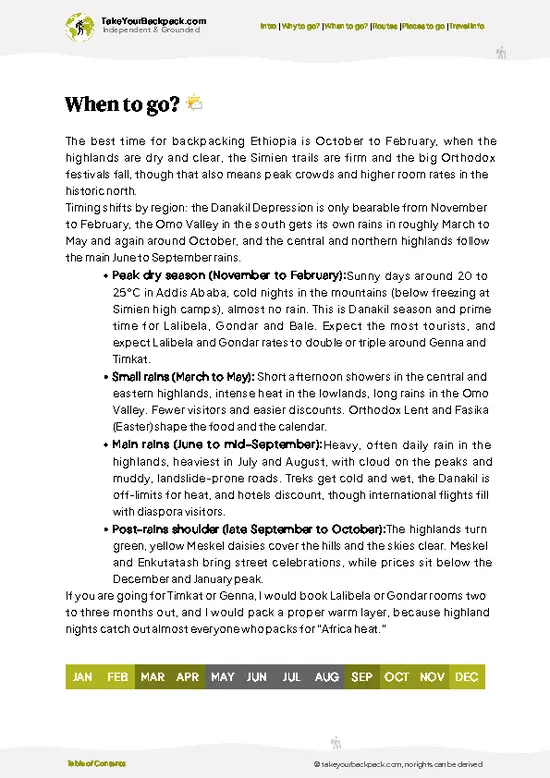
source: climatestotravel.comJANJanuary: excellent for travelingFEBFebruary: excellent for travelingMARMarch: highly recommended for travelingAPRApril: fair for travelingMAYMay: fair for travelingJUNJune: fair for travelingJULJuly: fair for travelingAUGAugust: fair for travelingSEPSeptember: good for travelingOCTOctober: highly recommended for travelingNOVNovember: excellent for travelingDECDecember: excellent for traveling
when-to-go

✈️ The backpacker research shortcutEthiopia Travel Guide

An offline-friendly backpacking guide with optimized travel routes, ranked highlights, transport advice, and the best areas to stay.
example page 0 from our offline Travel Guide for Ethiopia
example page 1 from our offline Travel Guide for Ethiopia
example page 2 from our offline Travel Guide for Ethiopia
example page 3 from our offline Travel Guide for Ethiopia
example page 4 from our offline Travel Guide for Ethiopia
example page 5 from our offline Travel Guide for Ethiopia
example page 6 from our offline Travel Guide for Ethiopia
example page 7 from our offline Travel Guide for Ethiopia
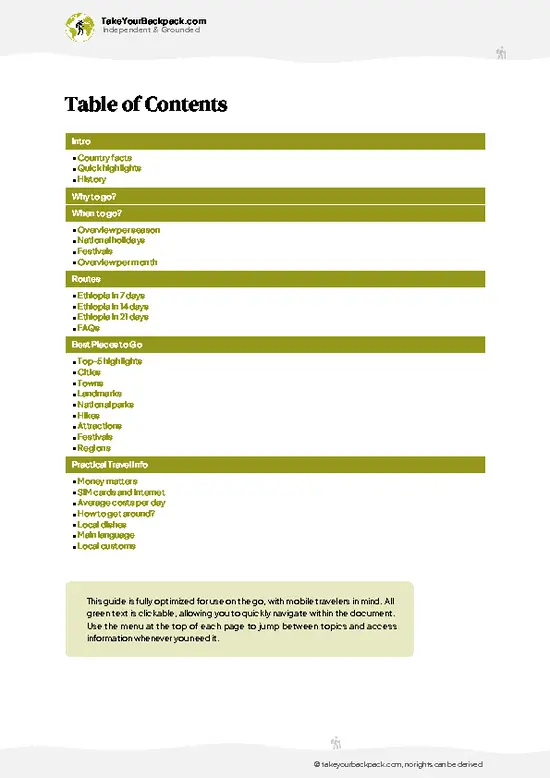
The digital guide (395 pages) contains:
101 highlights, ranked by travel appeal
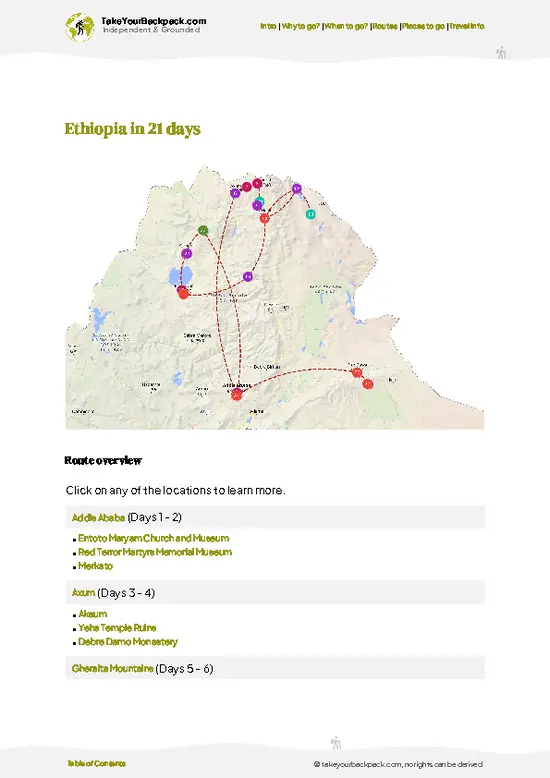
Optimized 7, 14 & 21-day travel routes
Cities, national parks, landmarks, beaches
How to get around
Offline-friendly for travel without Wi-Fi
👉 Click to see all 30+ guide features

📅 Plan smarter in minutes, not weeks
Month by month travel advice
Festivals & national holidays
Budget expectations

🗺️ Go to the right places, skip the overrated ones
Honest pros & cons of destinations
Top hikes, parks & viewpoints
Lesser-known places most travelers miss
Clear “worth it vs skip it” guidance

🛏️ Travel smoothly without rookie mistakes
Best areas to stay
Transport systems explained simply
Common scams & safety advice
SIM cards, money & practical tips

🌍 Understand the country, not just visit it
Culture & traditions
52 Essential phrases & customs
Festivals worth planning around
Traveler-friendly historical context
Insights that make places more meaningful

📱 Built for real travel conditions
Fully downloadable PDF
Works completely offline
Optimized for phone use
Useful in remote areas & buses
Everything in one place
Save weeks of stressful planning
Get instant access to your full guide. 30‑day money-back guarantee.


By proceeding you agree to our terms.
Sent to your inbox immediately after payment • 100% Secure Checkout
Best Backpacking Travel Advisor 2025 tourism awardBest Backpacking
Travel Advisor
2025
What others say about Take Your Backpack Guides:
⭐⭐⭐⭐⭐
Fantastic, amazing amount of information!
⭐⭐⭐⭐⭐
My goodness this is amazing, it's what I've been looking for hats off too you!
⭐⭐⭐⭐⭐
I think this is absolutely BRILLIANT
⭐⭐⭐⭐
Very complete and informative. It's still missing places, but I gotta to commend you
⭐⭐⭐⭐⭐
This is truly amazing, thank you, can't wait to explore it with my kids!
⭐⭐⭐⭐⭐
Awesome resource, thank you!
⭐⭐⭐⭐⭐
This is amazing! Can't wait to explore the ones I haven't seen
⭐⭐⭐⭐
I love this! Well done, great idea.
⭐⭐⭐⭐⭐
Thanks for taking the time to make this gem!
⭐⭐⭐⭐⭐
This might be the best website I've ever seen.
⭐⭐⭐⭐⭐
Congratulations, and thank you so much for your work; it's incredibly valuable.
⭐⭐⭐⭐
In all seriousness I think you did a great job pointing out the important spots
⭐⭐⭐⭐⭐
10/10 very good
⭐⭐⭐⭐⭐
As someone who's only just starting to visit regularly this is awesome, thank you.
⭐⭐⭐⭐
Thank you very much! I'm going to visit my dad, it's going to be very useful!
⭐⭐⭐⭐⭐
This is really cool! We'll be travelling for the first time and this definitely come in handy.
⭐⭐⭐⭐⭐
You are now our minister of culture, congratulations 👨‍💼
⭐⭐⭐⭐⭐
Just wanted to tell you that this is a pearl! Going to follow your recommendations.
⭐⭐⭐⭐⭐
This is so cool. I'll definitely be using the resource for my travels soon.
⭐⭐⭐⭐⭐
This is very impressive! Good work.
⭐⭐⭐⭐⭐
This is an amazing and informative site. Very well done!

🛏️ Where to stay?Where staying makes the most sense

In Harar, the real backpacker action centers around the Old City, or Jugol. This walled quarter is where history and daily life collide, and it’s the safest bet for solo travelers craving both security and social buzz. The narrow alleys here are alive with street vendors, coffee spots, and local chatter, making it easy to strike up conversations and find fellow backpackers. Hostels and guesthouses cluster near the main gates, offering budget-friendly digs that prioritize communal spaces over luxury—perfect for meeting others without breaking the bank.

Compared to the newer parts of Harar, which … read more 👉
In Harar, the real backpacker action centers around the Old City, or Jugol. This walled quarter is where history and daily life collide, and it’s the safest bet for solo travelers craving both security and social buzz. The narrow alleys here are alive with street vendors, coffee spots, and local chatter, making it easy to strike up conversations and find fellow backpackers. Hostels and guesthouses cluster near the main gates, offering budget-friendly digs that prioritize communal spaces over luxury—perfect for meeting others without breaking the bank.

Compared to the newer parts of Harar, which spread out beyond the walls and lean more residential or commercial, Jugol’s compactness means less time lost in transit and more time soaking in the city’s unique vibe. The Old City’s pedestrian-friendly layout also means you’re not reliant on taxis or buses, which can be a hassle and expense for budget travelers. While the newer neighborhoods might offer more modern amenities, they lack the immersive atmosphere and social density that make a stay memorable.

Choosing to stay in Jugol means accepting a trade-off: you sacrifice some comfort and modern conveniences for safety, social energy, and a front-row seat to Harar’s cultural heartbeat. For backpackers, that’s a winning formula.

🚌 Getting aroundMoving around without the hassle

Harar moves at its own rhythm—part ancient market pulse, part unpredictable street chatter. It’s not a city where you’ll find neat timetables or orderly queues. Instead, the flow is a dance of intuition and local know-how. You’ll quickly learn that timing here isn’t about clocks but about reading the mood of the street, the readiness of the driver, and the ebb and flow of the crowd. This is a place where patience and flexibility pay off, and where the best travel moves come from understanding the subtle trade-offs between time, money, and comfort.


  • Walking: The most reliable and immersive way to get around Harar’s compact old city. It costs nothing, lets you soak in the vibrant street life, and navigate narrow alleys inaccessible to vehicles. Expect to spend more time on foot, but you gain
read more 👉
Harar moves at its own rhythm—part ancient market pulse, part unpredictable street chatter. It’s not a city where you’ll find neat timetables or orderly queues. Instead, the flow is a dance of intuition and local know-how. You’ll quickly learn that timing here isn’t about clocks but about reading the mood of the street, the readiness of the driver, and the ebb and flow of the crowd. This is a place where patience and flexibility pay off, and where the best travel moves come from understanding the subtle trade-offs between time, money, and comfort.


  • Walking: The most reliable and immersive way to get around Harar’s compact old city. It costs nothing, lets you soak in the vibrant street life, and navigate narrow alleys inaccessible to vehicles. Expect to spend more time on foot, but you gain a front-row seat to the city’s character.


  • Minibus: The budget traveler’s go-to for longer distances within and just outside Harar. Runs roughly from 6:00 AM to 7:00 PM, fares hover around 10–20 ETB ($0.20–$0.40). It’s slow and crowded, with no fixed schedule—departures happen when the bus fills up. Comfort is minimal, but it’s unbeatable for price and local interaction.


  • Shared Taxi: Faster and more comfortable than minibuses, shared taxis operate on popular routes and leave when full. Expect to pay about 50–100 ETB ($1–$2). They run from early morning until late evening. This option balances speed and cost but sacrifices some predictability since departure depends on passenger count.


  • Motorcycle Taxi (Bajaj): For quick hops across town or to reach spots minibuses don’t serve, bajajs are nimble and available 24/7. Prices vary by distance but generally start around 20 ETB ($0.40). They offer speed and door-to-door convenience at the expense of comfort and safety, especially on rough roads.


  • Private Taxi: The most comfortable and flexible option, ideal if you’re traveling in a group or want to save time. Rates start around 300 ETB ($6) for short trips and can be negotiated. Available anytime, but this choice demands a bigger budget and careful bargaining to avoid tourist premiums.


Understanding these options is your key to mastering Harar’s transit game. You’re constantly balancing the clock against your wallet and your tolerance for crowding or discomfort. Choose wisely, and you’ll turn what looks like chaos into a strategic advantage, unlocking more of the city’s soul without overspending or wasting time.

👛 Costs (as of 25 June 2026)Money, prices, and spending tips

Backpacking in Harar, Ethiopia, is a study in balancing modest costs with authentic experiences. Here’s how your daily expenses typically stack up:
  • Dorm Accommodation (High Season): Expect to pay around $8 to $12 per night. High season sees a slight bump due to demand, but it’s still very affordable compared to many other destinations.
  • Dorm Accommodation (Off-Season): Prices drop to about $5 to $8 per night. Off-season travel here rewards you with quieter streets and better bargaining power on lodging.
  • Meals: Local eateries offer hearty meals for $2 to $4 each. Street food and small cafes serve traditional dishes like injera with stews, which are filling and budget-friendly.
  • Local Transport: Short rides on minibuses or shared taxis typically cost between $0.20 and $0.50. It’s a cheap way
read more 👉
Backpacking in Harar, Ethiopia, is a study in balancing modest costs with authentic experiences. Here’s how your daily expenses typically stack up:
  • Dorm Accommodation (High Season): Expect to pay around $8 to $12 per night. High season sees a slight bump due to demand, but it’s still very affordable compared to many other destinations.
  • Dorm Accommodation (Off-Season): Prices drop to about $5 to $8 per night. Off-season travel here rewards you with quieter streets and better bargaining power on lodging.
  • Meals: Local eateries offer hearty meals for $2 to $4 each. Street food and small cafes serve traditional dishes like injera with stews, which are filling and budget-friendly.
  • Local Transport: Short rides on minibuses or shared taxis typically cost between $0.20 and $0.50. It’s a cheap way to get around, though expect a bit of a squeeze during peak times.
  • City Transport Pass: Harar doesn’t have a formal city transport pass system, so budgeting for individual rides is necessary. Factor in around $1 to $2 daily if you plan multiple trips.
  • Basic Activities/Entry Fees: Visiting the Harar Jugol (the old walled city) and local markets is often free, but guided tours or entry to specific sites can cost $3 to $7. The famous night feeding of hyenas is a must-see, usually around $5.
  • Miscellaneous Expenses: Budget $1 to $3 for water, snacks, or small purchases like souvenirs. Harar’s markets are great for bargaining, so keep some small bills handy.

All told, you’re looking at roughly $12 to $25 per day, depending on your season and activity choices. This range gives you the freedom to stretch for comfort or tighten the belt without losing the essence of what makes Harar unique.


source: ethiopia.travel
⚠️ Prices can change and everyone travels differently, so take this as a rough guide. Hope it helps you plan your adventure!

🚌 Day tripsBest day trips from Harar

Harar, Ethiopia, is a backpacker’s dream base for day trips, offering a mix of culture, nature, and adventure without breaking the bank. Here’s how to make the most of your time.

The Awash National Park Adventure
Just a couple of hours from Harar, Awash National Park is a wildlife haven. Picture yourself spotting herds of gazelles and the occasional baboon while surrounded by stunning landscapes. The park is accessible via shared minibus, costing around 50 birr. Bring a packed lunch to enjoy amidst the scenery. The best time to visit is during the dry season, from October to April, when animals are easier to spot. A common mistake is underestimating the park’s size; plan for a full day to explore.


The Ancient City of Harar Jugol
You don’t have to go far to dive into history. Spend … read more 👉
Harar, Ethiopia, is a backpacker’s dream base for day trips, offering a mix of culture, nature, and adventure without breaking the bank. Here’s how to make the most of your time.

The Awash National Park Adventure
Just a couple of hours from Harar, Awash National Park is a wildlife haven. Picture yourself spotting herds of gazelles and the occasional baboon while surrounded by stunning landscapes. The park is accessible via shared minibus, costing around 50 birr. Bring a packed lunch to enjoy amidst the scenery. The best time to visit is during the dry season, from October to April, when animals are easier to spot. A common mistake is underestimating the park’s size; plan for a full day to explore.


The Ancient City of Harar Jugol
You don’t have to go far to dive into history. Spend a day wandering the narrow alleys of Harar Jugol, the old walled city, a UNESCO World Heritage site. The vibrant markets and colorful houses tell stories of centuries past. Entry is free, but consider hiring a local guide for about 100 birr to enrich your experience. Early mornings or late afternoons are ideal for cooler temperatures and fewer crowds. Many first-timers miss the chance to try local snacks at the market—don’t skip the fresh sambusas!
👉 Explore Harar Jugol

The Sof Omar Caves Expedition
For a more adventurous day, head to the Sof Omar Caves, about three hours from Harar. These caves are among the largest in Africa, featuring stunning rock formations and a river running through them. The entrance fee is around 50 birr, and you can hire a local guide for about 200 birr. The best time to visit is during the dry season, as heavy rains can make the caves slippery. A common oversight is not bringing a flashlight; the caves can be dark and disorienting.
👉 Explore Sof Omar Caves

The Bale Mountains Day Trip
If you’re up for a longer journey, the Bale Mountains are worth the trek. Approximately five hours from Harar, this national park offers breathtaking views and diverse wildlife, including the rare Ethiopian wolf. Expect to spend around 100 birr for transport and another 50 birr for park entry. The ideal time to visit is during the dry season, from October to May. Many travelers underestimate the cold; pack layers to stay warm at higher elevations.
👉 Explore Bale Mountains
Want to know what more Ethiopia offers?
The Ethiopia Travel Guide describes 101 highlights, from cities to national parks, from beaches to hikes

Get the Travel Guide -

🍲 FoodLocal Flavors for Backpackers

In Harar, the culinary scene is a vibrant tapestry of flavors that beckons you to dive in. Start with doro wat, a spicy chicken stew simmered with berbere spice, served with injera, the sourdough flatbread that’s a staple here. The tangy taste of injera perfectly balances the heat, making each bite a delightful experience.

Street food is where the magic happens. Vendors line the bustling markets, offering sambusas—crispy pastries stuffed with lentils or meat. The aroma wafts through the air, drawing you closer. Pair these with a cup of buna, the traditional Ethiopian coffee, brewed right in front of you. The ritual of coffee preparation is as much about the drink as it is about the social connection.

Eating in Harar is communal. You’ll often find locals sharing platters, emphasizing the … read more 👉
In Harar, the culinary scene is a vibrant tapestry of flavors that beckons you to dive in. Start with doro wat, a spicy chicken stew simmered with berbere spice, served with injera, the sourdough flatbread that’s a staple here. The tangy taste of injera perfectly balances the heat, making each bite a delightful experience.

Street food is where the magic happens. Vendors line the bustling markets, offering sambusas—crispy pastries stuffed with lentils or meat. The aroma wafts through the air, drawing you closer. Pair these with a cup of buna, the traditional Ethiopian coffee, brewed right in front of you. The ritual of coffee preparation is as much about the drink as it is about the social connection.

Eating in Harar is communal. You’ll often find locals sharing platters, emphasizing the importance of togetherness. Don’t be surprised if you’re invited to join in; it’s a sign of hospitality.

As for drinks, try the local tej, a honey wine that’s sweet and slightly fizzy. It’s often enjoyed in casual settings, where laughter and conversation flow as freely as the drinks. Embrace the local customs, and you’ll find that every meal is not just about food, but about forging connections.

🛡️ SafetyScams, Hazards, and Annoyances

Harar is generally safe, but like any city, it has its quirks. Stay aware in crowded markets, especially around the bustling Harar Jugol, where pickpockets might lurk. If you’re solo, keep your wits about you after dark. The streets can be quiet, so stick to well-lit areas and consider heading back to your accommodation early.

Scams are rare, but some locals might try to sell you overpriced souvenirs or guide services. A friendly smile and a firm “no, thank you” usually do the trick. Everyday annoyances include persistent street vendors; they’re just trying to make a living, but if you’re not interested, a polite wave can help you move on.

Carry yourself confidently, and engage with locals when you feel comfortable. Building rapport can often lead to genuine interactions and insights that enrich your experience.

Other Ethiopian cities near Harar

Explore more nearby:

  • Dire Dawa—French-built railway, Kafira market, old quarter alleys| 43 km away
  • Debre Berhan—Highland plateau, wool markets, Orthodox churches| 287 km away
  • Adama—Hot springs, transport hub, modern hotels| 326 km away

💡 Not sure where to go next?
Create a personalized itinerary for Ethiopia including Harar and the places that fit your trip.

Generate my itinerary

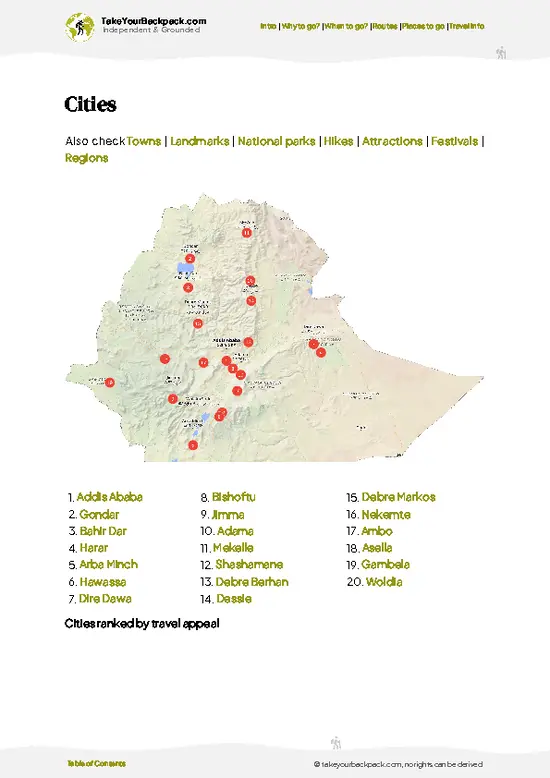
👉 Discover all cities

Or checkout all Ethiopia has to offer (think cities, towns, villages, national parks, hikes, beaches, festivals)
Country photo of Ethiopia

We 💚 feedbackFinal thoughts on visiting Harar

Harar is a sensory feast, with its labyrinthine streets and vibrant markets that pulse with life. You’ll feel the history in every corner, especially in the old city, where the blend of cultures is palpable. But be prepared: the heat can be relentless, and the infrastructure isn’t always smooth. Embrace the chaos, and you’ll find that the quirks only add to its charm. It’s a place that rewards those willing to dig deeper.

✈️ When did I visit Ethiopia?
Ethiopia I visited back in October 2017. I combined the trip with a visit to Sudan. Ethiopia was a pure suprise with the magical scenery like the Danikal Depression and the Simien Mountains.

✍️ Help improve this page!
The information on this page is based on my own backpacking experience in Ethiopia, supplemented with up-to-date research and feedback from other travelers. Travel details can change, so if you notice anything outdated or incomplete, feel free to let me know.


🙋‍♂️ Give feedback

👋 Meet the founderWho’s Behind Take Your Backpack?

Johan, backpacker and founder of TakeYourBackpackHi, I’m Johan (Netherlands 🇳🇱), the creator of TakeYourBackpack. Over the past decade, I’ve backpacked through 80+ countries across six continents, gaining extensive experience with independent travel, long-term trips, and overland routes.

This site is built on a combination of firsthand travel experience and carefully curated insights from other backpackers. Many guides are based on places I’ve personally visited, while others bring together tips, observations, and practical advice shared by trusted travelers I’ve met along the way.

The goal is to provide realistic, experience-driven guidance — not generic itineraries — so you can explore destinations with better context, clearer expectations, and more confidence.

Get full Ethiopia guide •
Instant download • 101 highlights • Full Offline guide