×

Ethiopia🇪🇹 | townsBongaKaffa highlands, rainforest trails, wild coffee origin | things to do and best time to go

Explore MetuExplore Goba

Backpacking in Bonga
🌟 Highlighttown ranked #5
By Johan Kruseman 🇳🇱 | Updated June 19, 2026

A decade ago, Bonga was the kind of place where the forest pressed right up to the edge of town, and the only travelers were NGO workers or coffee obsessives tracing the bean to its birthplace. Today, you’ll still catch the scent of wet earth after rain and hear the low hum of market chatter, but there’s a new trickle of backpackers—drawn by the Kafa Biosphere’s misty trails and the promise of real, unhurried Ethiopia. Bonga sits in the southwest, deep in the green highlands, a half-day’s bus ride from Jimma and a world away from the chaos of Addis. It’s not a nightlife hub or a café-crawling scene; think more slow evenings, simple guesthouses, and the kind of market where you’ll be the only foreigner. It’s a base for forest hikes, coffee tours, and birdwatching, not a destination for urban thrills. Getting here takes patience—buses are reliable but slow, and once you arrive, you’ll walk most places or hop a bajaj. Costs are low, safety is good, and the vibe is relaxed—especially compared to busier towns like Jimma. If you want a social hostel scene, look elsewhere; if you want to swap stories over injera with locals, Bonga is your move.

Discover everything you want to know in the 📖 Ethiopia Travel Guide.
Safety warning

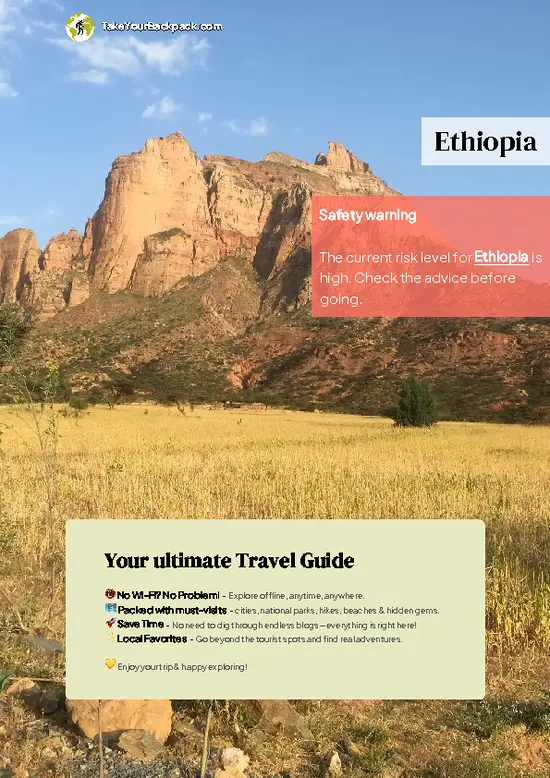
The current risk level for Ethiopia is high. Check the advice before going.


Get your Ethiopia guide
101 ranked highlights, routes & tips, works offline (395 pages)
Loading the map 🌍
CLICK TO FILTER
cities
towns
landmarks
national parks
hikes
attractions
festivals
regions
SHOW COUNTRY’S BESTSHOW ALL

✨ Why go?
Ranked #5 town in Ethiopia
What makes it a must-see town

Bonga is a backpacker’s waypoint in Ethiopia, offering a blend of convenience and authenticity. Nestled between lush hills, it’s a launchpad for nearby hikes and cultural sites. The walkable streets are lined with small-scale guesthouses and hostels, where you can swap stories over a plate of spicy doro wat. The atmosphere is friendly and inviting, perfect for solo travelers or small groups looking to connect. Most backpackers stay a couple of days, soaking in the local vibe before heading out. It’s not a party town, but the social scene is warm, making it easy to meet fellow adventurers. If you’re after a slow travel experience, Bonga’s charm lies in its simplicity and the richness of the surrounding nature.
Want to include Bonga in your Ethiopia route?
Create a personalized Ethiopia itinerary that includes Bonga and the places that fit your trip — based on your travel style, budget, and available time. Get your route in seconds.

Generate my trip

💡 HighlightsWhat this place is best known for

  • Bonga Market (Main Market) — The town’s beating heart: early-morning chaos of fresh produce, sacks of roasted and green coffee, spices, and local traders. Great for people-watching and picking up inexpensive snacks and souvenirs.
  • Traditional Coffee Ceremonies — You can sit in a local home or a small café and watch the full Ethiopian coffee ritual, from roasting green beans over coals to the three rounds of brewing and tasting. It’s the most authentic way to feel Kaffa’s coffee culture up close.
  • Kaffa (Kafa) Coffee Museum / Interpretation Corner — A small, local display about Coffea arabica’s origins and Kaffa history. Not a glossy national museum, but compact, informative, and run by people who know the coffee stories first-hand.
  • Former Kingdom of Kaffa Royal Site (town compound/ruins)
read more 👉
  • Bonga Market (Main Market) — The town’s beating heart: early-morning chaos of fresh produce, sacks of roasted and green coffee, spices, and local traders. Great for people-watching and picking up inexpensive snacks and souvenirs.
  • Traditional Coffee Ceremonies — You can sit in a local home or a small café and watch the full Ethiopian coffee ritual, from roasting green beans over coals to the three rounds of brewing and tasting. It’s the most authentic way to feel Kaffa’s coffee culture up close.
  • Kaffa (Kafa) Coffee Museum / Interpretation Corner — A small, local display about Coffea arabica’s origins and Kaffa history. Not a glossy national museum, but compact, informative, and run by people who know the coffee stories first-hand.
  • Former Kingdom of Kaffa Royal Site (town compound/ruins) — Scattered old compounds and stones tied to the pre-annexation kingdom. It’s low-key, but valuable if you want tangible connections to the area’s political and cultural past rather than just hearsay.
  • Kafa Biosphere Reserve Visitor Point (Bonga gateway facilities) — The town’s practical starting point for permits, local guides, and short nature walks into the surrounding Afromontane forest. Handy for arranging day hikes without heading out blind.
  • Local Handicraft Cooperatives and Weavers — Small workshops and stalls where women’s groups weave baskets, make textiles, and process coffee by hand. Good place to support locals and see traditional skills in action.
  • Town Ridge / Overlook — A short walk up from the center gets you a simple but rewarding panorama over Bonga and the coffee-covered hills. Best at sunset when the valley colors shift and you can spot smoke from roasting beans.
  • Bonga Orthodox Church (Main Parish) — The local church is a living site of community ritual: festivals, processions, and daily worship offer a window into spiritual life here. Dress respectfully and ask before taking photos.
  • Coffee Traders’ Quarter / Wholesale Lots — Areas where local collectors and traders weigh, sort, and bag coffee — the commercial side of the town’s claim to fame. It’s earthy, noisy, and illuminating about how coffee gets from farm to market.
  • Short, Community-run Coffee Farm Walks (within town limits) — Several small farms and plots are reachable on short walks from town; hosts will show you how coffee is grown, picked, and processed by family units. Practical, hands-on, and often led by the farmers themselves.
A few easy day trips just outside Bonga: the wild coffee forests of the Kafa Biosphere Reserve, nearby waterfalls and short forest trails, and the small coffee-growing villages around the zone — my personal favorite is hiking into the wild coffee forest to see the original Coffea arabica habitat.
Spotted a mistake or missing something? Contact us.
🏘️ NeighborhoodsUnderstanding the local layout

Bonga, a vibrant town in Ethiopia, offers a unique blend of culture and nature, perfect for backpackers seeking authenticity.

Downtown Bonga: This is the heart of the town. Expect a lively atmosphere with bustling markets and local eateries. It’s walkable, making it easy to explore on foot. Prices are reasonable, and you’ll find a mix of budget accommodations. Nightlife is low-key, with cafes and bars that close early, ideal for those who prefer a quieter evening.

Bonga Forest Area: For nature lovers, this area is a must. It’s slightly removed from the hustle, offering a serene vibe. Accommodations here may be pricier, but the lush surroundings are worth it. Perfect for longer stays, you can hike and immerse yourself in the local flora and fauna. Transport options are limited, so plan ahead. … read more 👉
Bonga, a vibrant town in Ethiopia, offers a unique blend of culture and nature, perfect for backpackers seeking authenticity.

Downtown Bonga: This is the heart of the town. Expect a lively atmosphere with bustling markets and local eateries. It’s walkable, making it easy to explore on foot. Prices are reasonable, and you’ll find a mix of budget accommodations. Nightlife is low-key, with cafes and bars that close early, ideal for those who prefer a quieter evening.

Bonga Forest Area: For nature lovers, this area is a must. It’s slightly removed from the hustle, offering a serene vibe. Accommodations here may be pricier, but the lush surroundings are worth it. Perfect for longer stays, you can hike and immerse yourself in the local flora and fauna. Transport options are limited, so plan ahead.

Kebele 01: This neighborhood is more residential and offers a glimpse into daily life. It’s quieter, making it suitable for those looking to recharge. Prices are lower, and you can find homestays that provide a more personal experience. Walkability is decent, but public transport is your best bet for longer distances.

⌛️ 1 dayHow to make the most of one day

Bonga, Ethiopia, is a vibrant tapestry of coffee culture and lush landscapes, where the air is thick with the earthy aroma of roasting beans. This town, often overlooked by travelers, offers a genuine glimpse into Ethiopian life, making it a rewarding stop.

Start your morning at the local market in the heart of Bonga. The sun filters through the vibrant stalls, illuminating fresh produce and handmade crafts. Grab a cup of the local coffee; it’s not just a drink here, it’s a ritual. The rich, smoky flavor will wake you up better than any alarm clock.

In the afternoon, head to the nearby Bonga Forest. The trails wind through towering trees, and the sounds of chirping birds create a serene backdrop. This isn’t just a hike; it’s a chance to connect with nature and see the unique flora and fauna … read more 👉
Bonga, Ethiopia, is a vibrant tapestry of coffee culture and lush landscapes, where the air is thick with the earthy aroma of roasting beans. This town, often overlooked by travelers, offers a genuine glimpse into Ethiopian life, making it a rewarding stop.

Start your morning at the local market in the heart of Bonga. The sun filters through the vibrant stalls, illuminating fresh produce and handmade crafts. Grab a cup of the local coffee; it’s not just a drink here, it’s a ritual. The rich, smoky flavor will wake you up better than any alarm clock.

In the afternoon, head to the nearby Bonga Forest. The trails wind through towering trees, and the sounds of chirping birds create a serene backdrop. This isn’t just a hike; it’s a chance to connect with nature and see the unique flora and fauna of the region. Keep an eye out for the rare Ethiopian wolf; spotting one is a thrill.

As evening approaches, stroll through the streets of the Guraferda neighborhood. Here, you’ll find a local eatery where the scent of injera wafts through the air. Share a meal with locals, swapping stories over spicy stews. This isn’t just dinner; it’s an invitation into the community.

Bonga may not be on every tourist’s radar, but its charm lies in its authenticity. Embrace the rhythm of the town, and you’ll leave with memories that linger long after the trip ends.
Turn your Bonga visit into an Ethiopia adventure
Build a complete Ethiopia route with Bonga, hidden gems, must-see destinations, and realistic travel times included.

Generate my trip

🌤️ When to go?Choosing the right time of year


  • Weather: Bonga’s climate swings between a wet season from June to September and a dry season from October to May. The dry months offer clear skies and less mud, making trails easier and the air crisp with the scent of eucalyptus and coffee blossoms.

  • Temperature: Expect daytime highs around 25-28°C (77-82°F) during the dry season, perfect for hiking without overheating. Nights can dip to 10-12°C (50-54°F), so pack layers. The wet season is cooler but soggier, with highs closer to 22°C (72°F).

  • Daylight Hours: Near the equator, daylight stays steady year-round, roughly 12 hours. This consistency means you can plan hikes and explorations without worrying about early sunsets cutting your day short.

  • Crowds: Tourist traffic peaks during the dry months, especially December to February, when
read more 👉

  • Weather: Bonga’s climate swings between a wet season from June to September and a dry season from October to May. The dry months offer clear skies and less mud, making trails easier and the air crisp with the scent of eucalyptus and coffee blossoms.

  • Temperature: Expect daytime highs around 25-28°C (77-82°F) during the dry season, perfect for hiking without overheating. Nights can dip to 10-12°C (50-54°F), so pack layers. The wet season is cooler but soggier, with highs closer to 22°C (72°F).

  • Daylight Hours: Near the equator, daylight stays steady year-round, roughly 12 hours. This consistency means you can plan hikes and explorations without worrying about early sunsets cutting your day short.

  • Crowds: Tourist traffic peaks during the dry months, especially December to February, when international visitors escape colder climates. Visiting just before or after this window means fewer people on trails and more authentic interactions.

  • Seasonal Activities: The dry season aligns with coffee harvest time (October to December), a sensory-rich experience with fresh beans drying under the sun and local festivals celebrating the crop’s importance.

  • Price Fluctuations: Accommodation and guide fees tend to rise during peak dry months due to demand. Traveling in shoulder seasons like late September or early March can save money without sacrificing much on weather or access.


Pro-tip: Aim for late October to early December—dry trails, coffee aromas in the air, and a quieter vibe before the real tourist rush hits.


source: climatestotravel.comJANJanuary: excellent for travelingFEBFebruary: excellent for travelingMARMarch: highly recommended for travelingAPRApril: highly recommended for travelingMAYMay: highly recommended for travelingJUNJune: fair for travelingJULJuly: fair for travelingAUGAugust: fair for travelingSEPSeptember: good for travelingOCTOctober: excellent for travelingNOVNovember: excellent for travelingDECDecember: excellent for traveling
when-to-go

✈️ The backpacker research shortcutEthiopia Travel Guide

An offline-friendly backpacking guide with optimized travel routes, ranked highlights, transport advice, and the best areas to stay.
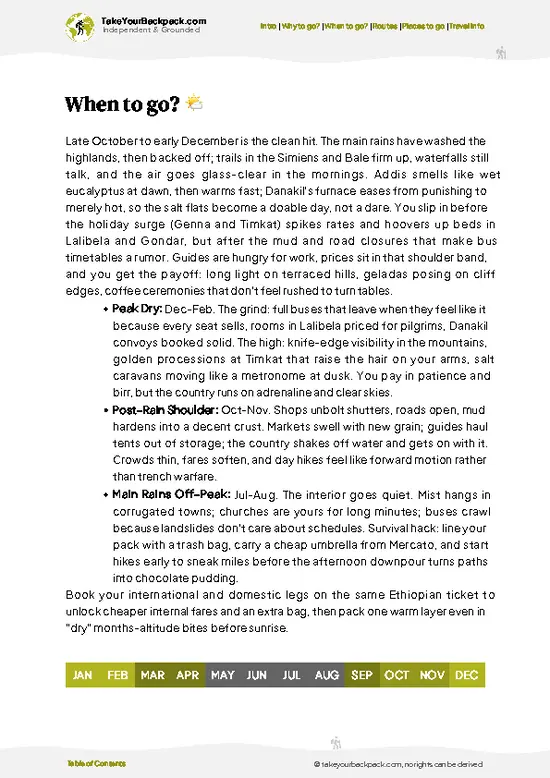
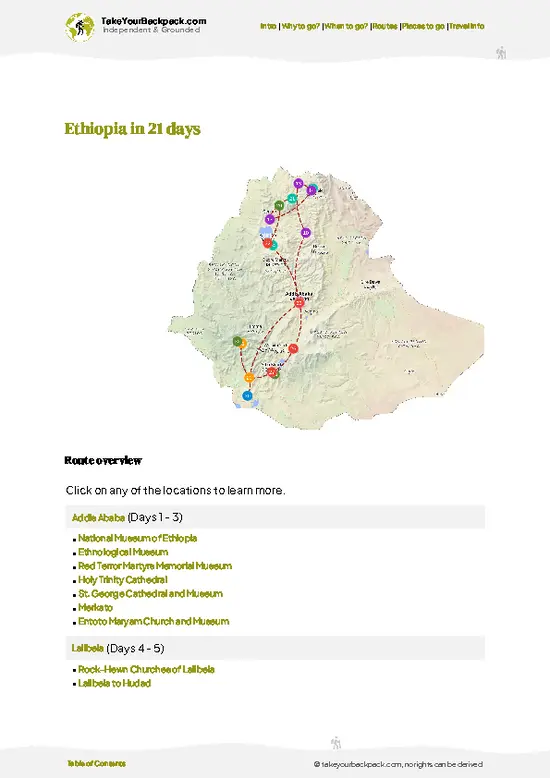
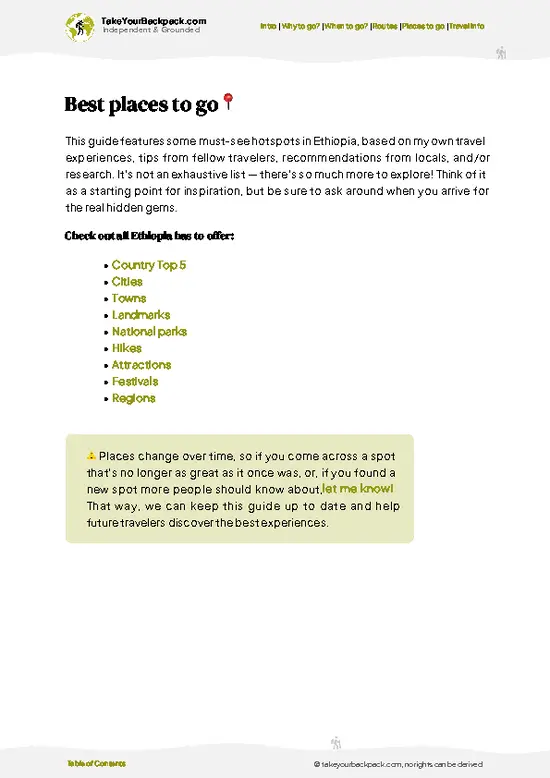
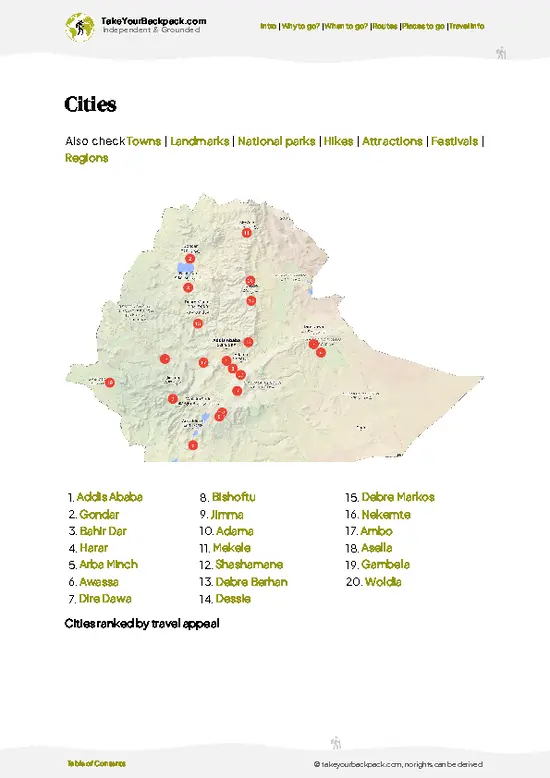
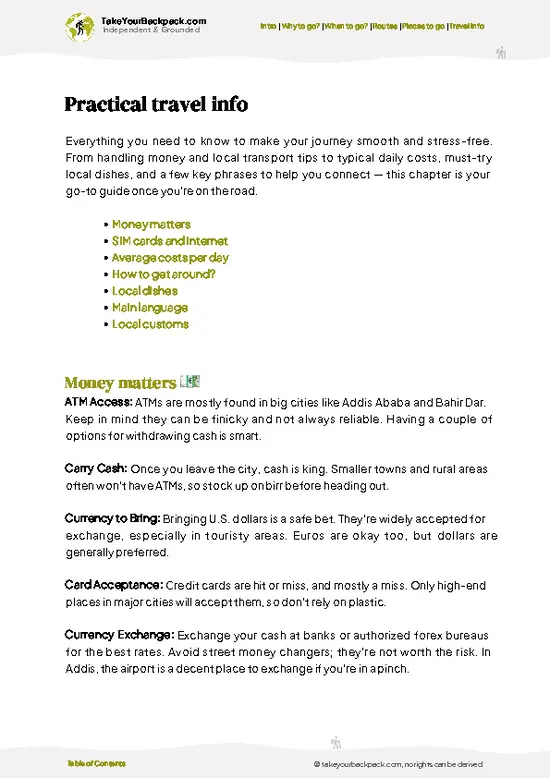
example page 0 from our offline Travel Guide for Ethiopia
example page 1 from our offline Travel Guide for Ethiopia
example page 2 from our offline Travel Guide for Ethiopia
example page 3 from our offline Travel Guide for Ethiopia
example page 4 from our offline Travel Guide for Ethiopia
example page 5 from our offline Travel Guide for Ethiopia
example page 6 from our offline Travel Guide for Ethiopia
example page 7 from our offline Travel Guide for Ethiopia
The digital guide (395 pages) contains:
101 highlights, ranked by travel appeal
Optimized 7, 14 & 21-day travel routes
Cities, national parks, landmarks, beaches
How to get around
Offline-friendly for travel without Wi-Fi
👉 Click to see all 30+ guide features

📅 Plan smarter in minutes, not weeks
Month by month travel advice
Festivals & national holidays
Budget expectations

🗺️ Go to the right places, skip the overrated ones
Honest pros & cons of destinations
Top hikes, parks & viewpoints
Lesser-known places most travelers miss
Clear “worth it vs skip it” guidance

🛏️ Travel smoothly without rookie mistakes
Best areas to stay
Transport systems explained simply
Common scams & safety advice
SIM cards, money & practical tips

🌍 Understand the country, not just visit it
Culture & traditions
52 Essential phrases & customs
Festivals worth planning around
Traveler-friendly historical context
Insights that make places more meaningful

📱 Built for real travel conditions
Fully downloadable PDF
Works completely offline
Optimized for phone use
Useful in remote areas & buses
Everything in one place
Save weeks of stressful planning
Get instant access to your full guide. 30‑day money-back guarantee.


By proceeding you agree to our terms.
Sent to your inbox immediately after payment • 100% Secure Checkout
Best Backpacking Travel Advisor 2025 tourism awardBest Backpacking
Travel Advisor
2025
What others say about Take Your Backpack Guides:
⭐⭐⭐⭐⭐
Fantastic, amazing amount of information!
⭐⭐⭐⭐⭐
My goodness this is amazing, it's what I've been looking for hats off too you!
⭐⭐⭐⭐⭐
I think this is absolutely BRILLIANT
⭐⭐⭐⭐
Very complete and informative. It's still missing places, but I gotta to commend you
⭐⭐⭐⭐⭐
This is truly amazing, thank you, can't wait to explore it with my kids!
⭐⭐⭐⭐⭐
Awesome resource, thank you!
⭐⭐⭐⭐⭐
This is amazing! Can't wait to explore the ones I haven't seen
⭐⭐⭐⭐
I love this! Well done, great idea.
⭐⭐⭐⭐⭐
Thanks for taking the time to make this gem!
⭐⭐⭐⭐⭐
This might be the best website I've ever seen.
⭐⭐⭐⭐⭐
Congratulations, and thank you so much for your work; it's incredibly valuable.
⭐⭐⭐⭐
In all seriousness I think you did a great job pointing out the important spots
⭐⭐⭐⭐⭐
10/10 very good
⭐⭐⭐⭐⭐
As someone who's only just starting to visit regularly this is awesome, thank you.
⭐⭐⭐⭐
Thank you very much! I'm going to visit my dad, it's going to be very useful!
⭐⭐⭐⭐⭐
This is really cool! We'll be travelling for the first time and this definitely come in handy.
⭐⭐⭐⭐⭐
You are now our minister of culture, congratulations 👨‍💼
⭐⭐⭐⭐⭐
Just wanted to tell you that this is a pearl! Going to follow your recommendations.
⭐⭐⭐⭐⭐
This is so cool. I'll definitely be using the resource for my travels soon.
⭐⭐⭐⭐⭐
This is very impressive! Good work.
⭐⭐⭐⭐⭐
This is an amazing and informative site. Very well done!

🛏️ Where to stay?How to pick the right area

In Bonga, the heart of backpacker life pulses strongest around the town center, where the market and main roads converge. This area is your best bet for safety and social energy. The streets here are alive with vendors selling fresh coffee beans and spices, the air thick with the scent of earth and roasting firewood. Staying close to this hub means you’re never far from the pulse of daily life, and it’s where budget travelers naturally gravitate. You’ll find simple guesthouses and hostels that cater to solo adventurers, offering a chance to swap stories over shared meals or a cup of locally brewed … read more 👉
In Bonga, the heart of backpacker life pulses strongest around the town center, where the market and main roads converge. This area is your best bet for safety and social energy. The streets here are alive with vendors selling fresh coffee beans and spices, the air thick with the scent of earth and roasting firewood. Staying close to this hub means you’re never far from the pulse of daily life, and it’s where budget travelers naturally gravitate. You’ll find simple guesthouses and hostels that cater to solo adventurers, offering a chance to swap stories over shared meals or a cup of locally brewed coffee.

Venture too far into the quieter residential neighborhoods, and you lose that buzz—plus, fewer options for meeting fellow travelers or grabbing a quick bite. The outskirts can feel isolated, with less reliable access to transport or basic amenities. The town center’s compact layout means you can walk everywhere, soaking in the fading light over the hills while feeling secure in a community that’s used to welcoming outsiders. This blend of accessibility, social vibe, and practical convenience makes the central area the smartest choice for backpackers aiming to dive into Bonga’s rhythm without the hassle.

🚌 Getting aroundGetting around like a local

Bonga moves at its own rhythm—neither frantic nor slow, but deliberate, like the steady drip of coffee into a clay cup. The air carries the scent of wet earth and fresh coffee cherries, a reminder that this town’s pulse is tied to the land and its harvest. You won’t find rigid timetables here; instead, transport flows with a mix of local intuition and practical necessity. The sun’s angle matters more than any clock, and the chatter of vendors or the rumble of engines signals when it’s time to move. This isn’t a place for the impatient, but for those who read the subtle cues—the shifting shadows, the gathering crowds, the scent of diesel mixed with wood smoke. Mastering Bonga’s transit means syncing with this rhythm, turning what might feel like chaos into a smooth, almost choreographed dance. … read more 👉
Bonga moves at its own rhythm—neither frantic nor slow, but deliberate, like the steady drip of coffee into a clay cup. The air carries the scent of wet earth and fresh coffee cherries, a reminder that this town’s pulse is tied to the land and its harvest. You won’t find rigid timetables here; instead, transport flows with a mix of local intuition and practical necessity. The sun’s angle matters more than any clock, and the chatter of vendors or the rumble of engines signals when it’s time to move. This isn’t a place for the impatient, but for those who read the subtle cues—the shifting shadows, the gathering crowds, the scent of diesel mixed with wood smoke. Mastering Bonga’s transit means syncing with this rhythm, turning what might feel like chaos into a smooth, almost choreographed dance.


  • Walking: The heart of Bonga is compact enough to explore on foot, with dirt and cobblestone streets that curve around market stalls and coffee farms. Walking is free, immersive, and the best way to catch the town’s scent and sounds—expect uneven paths and occasional muddy patches after rain, so sturdy shoes are a must.


  • Minibus Taxis: These shared rides are the backbone of local transit, running from dawn until dusk (roughly 6 AM to 6 PM). They cost a fraction of a private taxi, usually under 20 birr, and follow flexible routes based on passenger demand. Expect a lively, sometimes cramped ride with frequent stops—perfect for budget travelers who want to blend in and save.


  • Motorcycle Taxis (Bajaj): For quick hops or routes less served by minibuses, bajajs zip through narrow alleys and steep hills. They operate all day but slow down after sunset due to limited street lighting. Prices vary but are negotiable—always agree before you ride. The wind in your face and the hum of the engine make this a visceral way to experience Bonga’s pulse.


  • Private Taxis: Less common and pricier, private taxis offer comfort and speed, especially for early morning or late-night travel when other options dwindle. Expect to pay 3-4 times the minibus fare. Use these sparingly if you’re on a budget but need reliability or luggage space.

👛 Costs (as of 25 June 2026)What things cost and how to budget

Backpacking in Bonga, Ethiopia, means stepping into a place where every birr spent feels like an investment in local culture and flavor. Here’s what you can expect to budget for a day on the ground.
  • Dorm Accommodation: Budget guesthouses and simple hostels in Bonga typically charge around $5 to $10 per night. These places are basic but clean, often with shared bathrooms and a fan or two to cut through the humid air. Expect a no-frills setup that’s perfect for resting after a day exploring coffee farms or the nearby forest.
  • Meals: Local eateries serve hearty Ethiopian staples like injera with spicy wot for about $2 to $4 per meal. Breakfast might be a simple bread and coffee combo for under $1.50. Street food options are even cheaper, but sticking to small restaurants ensures you get fresh,
read more 👉
Backpacking in Bonga, Ethiopia, means stepping into a place where every birr spent feels like an investment in local culture and flavor. Here’s what you can expect to budget for a day on the ground.
  • Dorm Accommodation: Budget guesthouses and simple hostels in Bonga typically charge around $5 to $10 per night. These places are basic but clean, often with shared bathrooms and a fan or two to cut through the humid air. Expect a no-frills setup that’s perfect for resting after a day exploring coffee farms or the nearby forest.
  • Meals: Local eateries serve hearty Ethiopian staples like injera with spicy wot for about $2 to $4 per meal. Breakfast might be a simple bread and coffee combo for under $1.50. Street food options are even cheaper, but sticking to small restaurants ensures you get fresh, filling food without risking your stomach.
  • Local Transport: Getting around Bonga is mostly on foot or by bajaj (three-wheeled taxis). Bajaj rides cost roughly $0.50 to $1 for short trips within town. If you’re heading to nearby villages or coffee plantations, expect to pay around $3 to $5 for a shared minibus or hired vehicle.
  • Basic Activities/Entry Fees: Entrance to local attractions like the Kafa Biosphere Reserve or coffee farm tours usually runs between $2 and $7. These fees support conservation and community projects, so it’s money well spent. Guided tours might add a few dollars but enrich the experience with local stories and insights.
  • Miscellaneous Expenses: Budget around $1 to $3 for bottled water, snacks, or small souvenirs like coffee beans. Internet access is limited and often slow, with cafes charging about $0.50 per hour if you need to stay connected.

All told, a realistic daily budget for backpacking in Bonga falls between $12 and $25. This range covers basic comfort without cutting corners on safety or experience. The town’s laid-back pace and earthy scents of coffee roasting make every dollar feel like part of a genuine adventure, not just a line item on a budget sheet.


source: ethiopia.travel
⚠️ Prices can change and everyone travels differently, so take this as a rough guide. Hope it helps you plan your adventure!

🚌 Day tripsShort trips worth adding

Bonga, Ethiopia, is a backpacker’s dream base, offering a gateway to lush landscapes and rich culture. The town itself buzzes with the aroma of freshly roasted coffee and the sounds of lively market chatter. From here, you can dive into unforgettable day trips that reveal the heart of this stunning region.

Coffee Plantations of Bonga
Just a short drive from town, the coffee plantations are a must-visit. Spend your morning wandering through verdant fields, where the air is thick with the sweet scent of ripening coffee cherries. Engage with local farmers, learn about the intricate process of coffee production, and enjoy a tasting session that will redefine your coffee experience. The trip takes about 30 minutes and costs around $5 for transportation. Aim for the dry season (October to March) … read more 👉
Bonga, Ethiopia, is a backpacker’s dream base, offering a gateway to lush landscapes and rich culture. The town itself buzzes with the aroma of freshly roasted coffee and the sounds of lively market chatter. From here, you can dive into unforgettable day trips that reveal the heart of this stunning region.

Coffee Plantations of Bonga
Just a short drive from town, the coffee plantations are a must-visit. Spend your morning wandering through verdant fields, where the air is thick with the sweet scent of ripening coffee cherries. Engage with local farmers, learn about the intricate process of coffee production, and enjoy a tasting session that will redefine your coffee experience. The trip takes about 30 minutes and costs around $5 for transportation. Aim for the dry season (October to March) for the best weather. A common mistake? Skipping the chance to chat with the farmers; their stories are as rich as the coffee itself.


Kafa Biosphere Reserve
A bit further afield, the Kafa Biosphere Reserve is a treasure trove of biodiversity. This UNESCO site is home to unique flora and fauna, including rare birds and ancient trees. The journey takes about an hour, and you can expect to pay around $10 for transport. The best time to visit is during the dry season when trails are more accessible. Many first-timers underestimate the reserve’s size; plan for a full day to truly soak in the beauty.
👉 Explore Kafa Biosphere Reserve

Bonga Waterfalls
For a refreshing escape, head to the Bonga Waterfalls, about 45 minutes away. The sound of cascading water is a siren call, inviting you to take a dip in the cool pools below. The trip costs around $7 for transport, and the best time to visit is during the rainy season when the falls are at their most powerful. A common oversight is not bringing a swimsuit; trust me, you’ll want to jump in!


Local Markets
Don’t miss the vibrant local markets in Bonga, where you can immerse yourself in the daily life of the community. The market is just a short walk from the town center and is free to explore. Visit in the morning for the freshest produce and the liveliest atmosphere. Many travelers overlook the chance to engage with vendors; a simple “hello” can lead to delightful conversations and local insights.
Want to know what more Ethiopia offers?
The Ethiopia Travel Guide describes 101 highlights, from cities to national parks, from beaches to hikes

Get the Travel Guide -

🛡️ SafetySafety Tips and Common Scams in Bonga

Bonga is generally safe, but staying aware enhances your experience. Stick to well-lit areas at night; the streets can be quiet, and a little caution goes a long way. If you’re solo, blend in—dress modestly and engage with locals. They’re friendly, but don’t share too much personal info too quickly.

Watch for common scams, like overly eager guides offering unsolicited help. Politely decline and keep moving. Street vendors can be persistent, but a firm “no, thank you” usually does the trick. Embrace the local vibe, but trust your instincts. A confident demeanor and a genuine smile can turn potential annoyances into authentic interactions.

Other Ethiopian towns near Bonga

Explore more nearby:

  • Metu—forest edge, coffee region, Baro River| 136 km away
  • Mursi Village—lip plate tradition, Mago National Park, remote settlement| 157 km away
  • Jinka—Omo Valley gateway, tribal markets, ethnographic museum| 168 km away

💡 Not sure where to go next?
Create a personalized itinerary for Ethiopia including Bonga and the places that fit your trip.

Generate my itinerary

👉 Discover all towns

Or checkout all Ethiopia has to offer (think cities, towns, villages, national parks, hikes, beaches, festivals)
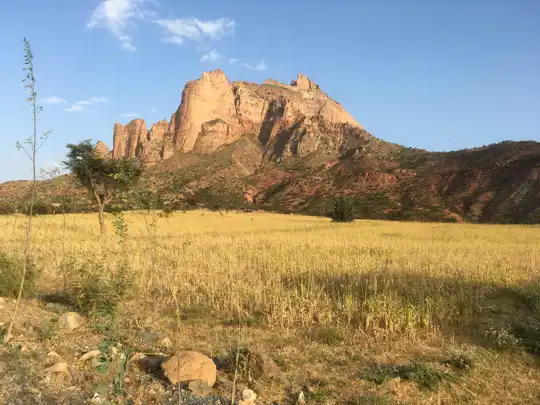
Country photo of Ethiopia

We 💚 feedbackKey takeaways before you go

Bonga’s coffee scene is a game-changer. The rich aroma wafting through the air as you sip a fresh brew is pure bliss. But, be ready for the roads. They can be rough, making travel slow and bumpy. Embrace the journey; it’s part of Bonga’s charm. The payoff? A deeper connection to the land and its people.

✈️ When did I visit Ethiopia?
Ethiopia I visited back in October 2017. I combined the trip with a visit to Sudan. Ethiopia was a pure suprise with the magical scenery like the Danikal Depression and the Simien Mountains.

✍️ Help improve this page!
The information on this page is based on my own backpacking experience in Ethiopia, supplemented with up-to-date research and feedback from other travelers. Travel details can change, so if you notice anything outdated or incomplete, feel free to let me know.


🙋‍♂️ Give feedback

👋 Meet the founderWho’s Behind Take Your Backpack?

Johan, backpacker and founder of TakeYourBackpackHi, I’m Johan (Netherlands 🇳🇱), the creator of TakeYourBackpack. Over the past decade, I’ve backpacked through 80+ countries across six continents, gaining extensive experience with independent travel, long-term trips, and overland routes.

This site is built on a combination of firsthand travel experience and carefully curated insights from other backpackers. Many guides are based on places I’ve personally visited, while others bring together tips, observations, and practical advice shared by trusted travelers I’ve met along the way.

The goal is to provide realistic, experience-driven guidance — not generic itineraries — so you can explore destinations with better context, clearer expectations, and more confidence.

Get full Ethiopia guide •
Instant download • 101 highlights • Full Offline guide