×

Ethiopia🇪🇹 | citiesSodoWolaita plateau, university town, regional commerce | things to do and best time to go

Explore KombolchaExplore Ambo

Backpacking in Sodo
🌟 Highlightcity ranked #9
By Johan Kruseman 🇳🇱 | Updated June 1, 2026

Everyone hears about Sodo as the “gateway to the Wolaita region,” but let’s be honest: most travelers don’t come for a grand monument or a legendary festival. What actually matters here is the rhythm of real Ethiopian life—market mornings thick with the scent of spices, the hum of bajaj engines, and the slow reveal of green hills on the town’s edge. Sodo sits in southern Ethiopia, about halfway between Addis Ababa and Arba Minch, making it a practical stopover rather than a destination you’d circle on a map. For backpackers, it’s a launchpad for exploring the lush countryside or breaking up a long bus journey. The town itself is functional—walkable in parts, but you’ll need tuk-tuks for most errands. Social life is low-key: expect a few guesthouses and local cafés, not hostels packed with travelers. Costs are low, safety is decent if you keep your wits about you, and compared to Arba Minch’s lakeside buzz, Sodo feels more relaxed, less scenic, but refreshingly unpolished.

Discover everything you want to know in the 📖 Ethiopia Travel Guide.
Safety warning

The current risk level for Ethiopia is high. Check the advice before going.


Get your Ethiopia guide
101 ranked highlights, routes & tips, works offline (398 pages)
Loading the map 🌍
CLICK TO FILTER
cities
towns
landmarks
national parks
hikes
attractions
festivals
regions
SHOW COUNTRY’S BESTSHOW ALL

✨ Why go?
Ranked #9 city in Ethiopia
What sets this place apart

Sodo serves as a gateway for backpackers exploring Ethiopia’s stunning landscapes and rich culture. Nestled between the Simien Mountains and the Omo Valley, it’s a strategic stop for those gearing up for hikes or cultural immersions. The walkable streets are lined with small-scale guesthouses and hostels, offering a cozy, communal vibe that invites interaction among travelers. You’ll find local eateries serving up injera and spicy stews, where the aroma of fresh spices fills the air, making every meal an experience.

Most backpackers tend to linger a few days, soaking in the laid-back atmosphere and connecting with fellow adventurers. It’s particularly appealing to slow travelers and solo explorers who appreciate a friendly social scene without the chaos of nightlife. While Sodo isn’t a party … read more 👉
Sodo serves as a gateway for backpackers exploring Ethiopia’s stunning landscapes and rich culture. Nestled between the Simien Mountains and the Omo Valley, it’s a strategic stop for those gearing up for hikes or cultural immersions. The walkable streets are lined with small-scale guesthouses and hostels, offering a cozy, communal vibe that invites interaction among travelers. You’ll find local eateries serving up injera and spicy stews, where the aroma of fresh spices fills the air, making every meal an experience.

Most backpackers tend to linger a few days, soaking in the laid-back atmosphere and connecting with fellow adventurers. It’s particularly appealing to slow travelers and solo explorers who appreciate a friendly social scene without the chaos of nightlife. While Sodo isn’t a party town, its charm lies in the authentic interactions and the ease of accessing nearby hikes and cultural sites. If you’re looking for a place to recharge and plan your next move, Sodo is a solid choice.
Get the complete Travel Guide for Ethiopia
Everything organized for offline planning — routes, highlights, costs & tips

See what’s inside 👉

Get the Travel Guide -

💡 HighlightsEssential experiences to have while visiting Sodo

  • Sodo Main Market — the city’s busiest hub for fresh produce, spices, textiles and everyday goods; perfect for people-watching, bargaining for Wolaita handicrafts and tasting street coffee and snacks amid real local commerce.
  • Wolaita Sodo University — a compact, active campus where you can catch student cultural performances, visit lecture halls and mingle in the cafés; it’s the best place to see contemporary Wolaita youth culture and public events in town.
  • Sodo Stadium (home of Wolaitta Dicha) — catch a football match for an unbeatable local atmosphere: loud, friendly fans, roadside food stalls and an authentic slice of community life that stays with you long after the final whistle.
  • Wolaita Zone Administration / Central Square — the civic heart of Sodo where regional government buildings,
read more 👉
  • Sodo Main Market — the city’s busiest hub for fresh produce, spices, textiles and everyday goods; perfect for people-watching, bargaining for Wolaita handicrafts and tasting street coffee and snacks amid real local commerce.
  • Wolaita Sodo University — a compact, active campus where you can catch student cultural performances, visit lecture halls and mingle in the cafés; it’s the best place to see contemporary Wolaita youth culture and public events in town.
  • Sodo Stadium (home of Wolaitta Dicha) — catch a football match for an unbeatable local atmosphere: loud, friendly fans, roadside food stalls and an authentic slice of community life that stays with you long after the final whistle.
  • Wolaita Zone Administration / Central Square — the civic heart of Sodo where regional government buildings, regular public gatherings and everyday street life converge; useful for observing local politics, festivals and the city’s pulse.
A few real, visitable highlights just outside Sodo worth day trips are the Bilate River valley for rural scenery, nearby Wolaita highland villages and coffee farms for hands-on cultural experiences, and Arbaminch with the twin lakes (Lake Abaya and Lake Chamo) for big views and wildlife — my personal favorite is exploring the Wolaita highland villages and coffee farms.
Spotted a mistake or missing something? Contact us.

Things to do near Sodo

Ratings based on Tripadvisor reviews. When you book through this link, you support our work at no extra cost to you.

🏘️ NeighborhoodsKey areas and districts to know

Sodo is a vibrant hub in Ethiopia, where the pulse of local life meets the rhythm of backpacker exploration. Each neighborhood offers a unique flavor, making it essential to choose wisely.

Downtown Sodo: This area is the heart of the city. Expect a lively atmosphere with bustling markets and street vendors. It’s walkable, with plenty of budget-friendly accommodations. The nightlife is modest but enjoyable, with local bars offering a taste of Ethiopian beer. Perfect for short stays, as you can easily explore the main attractions on foot.

Kebele 01: A quieter neighborhood, Kebele 01 is ideal for those seeking a more laid-back vibe. The streets are lined with trees, and the pace slows down. Accommodations here are slightly pricier but offer a more comfortable stay. It’s a great spot for longer … read more 👉
Sodo is a vibrant hub in Ethiopia, where the pulse of local life meets the rhythm of backpacker exploration. Each neighborhood offers a unique flavor, making it essential to choose wisely.

Downtown Sodo: This area is the heart of the city. Expect a lively atmosphere with bustling markets and street vendors. It’s walkable, with plenty of budget-friendly accommodations. The nightlife is modest but enjoyable, with local bars offering a taste of Ethiopian beer. Perfect for short stays, as you can easily explore the main attractions on foot.

Kebele 01: A quieter neighborhood, Kebele 01 is ideal for those seeking a more laid-back vibe. The streets are lined with trees, and the pace slows down. Accommodations here are slightly pricier but offer a more comfortable stay. It’s a great spot for longer visits, especially if you want to immerse yourself in local culture. Public transport is accessible, but walking is the best way to soak in the surroundings.

Bole: Known for its cafes and eateries, Bole is where you can indulge in both local and international cuisine. The area has a youthful energy, making it popular among travelers. While it’s a bit more expensive, the variety of options makes it worth it. Nightlife here is vibrant, with live music spots that keep the energy high. This is a great choice for those looking to blend relaxation with socializing.

⌛️ 1 daySeeing the highlights in 24 hours

Sodo, Ethiopia, is a vibrant town that pulses with life and culture, often overlooked by travelers. It’s a place where the scent of fresh injera wafts through the air, mingling with the earthy aroma of coffee being roasted on the street. The colorful markets and friendly locals create an atmosphere that feels both welcoming and authentic.

Start your morning at the bustling Sodo Market. The sun filters through the awnings, casting playful shadows as vendors call out their wares. Dive into the local breakfast scene with a plate of firfir, a spicy mix of shredded injera and sautéed vegetables. Grab a cup of buna, the traditional coffee, and soak in the lively chatter around you. This is where you’ll feel the town’s heartbeat.

In the afternoon, head to the nearby Gamo Gofa region. It’s not on … read more 👉
Sodo, Ethiopia, is a vibrant town that pulses with life and culture, often overlooked by travelers. It’s a place where the scent of fresh injera wafts through the air, mingling with the earthy aroma of coffee being roasted on the street. The colorful markets and friendly locals create an atmosphere that feels both welcoming and authentic.

Start your morning at the bustling Sodo Market. The sun filters through the awnings, casting playful shadows as vendors call out their wares. Dive into the local breakfast scene with a plate of firfir, a spicy mix of shredded injera and sautéed vegetables. Grab a cup of buna, the traditional coffee, and soak in the lively chatter around you. This is where you’ll feel the town’s heartbeat.

In the afternoon, head to the nearby Gamo Gofa region. It’s not on the typical tourist path, but the lush landscapes and rolling hills are breathtaking. Take a short hike to the nearby waterfalls, where the sound of rushing water is a refreshing backdrop. The locals here are eager to share stories, and you might even find a guide who can show you hidden trails. This experience feels like a secret shared among friends.

As evening approaches, return to Sodo and wander through the streets of the Gofa neighborhood. The golden hour casts a warm glow on the colorful houses, and the air is filled with laughter and music. Stop by a local eatery for dinner; try doro wat, a spicy chicken stew, and enjoy the communal vibe.

End your day with a stroll through the town square, where the stars begin to twinkle above. You’ll leave Sodo not just with memories, but with a deeper understanding of its soul.
Build the Right Itinerary
Use the Ethiopia Travel Guide’s 7, 14 & 21-day routes as a starting point to plan a trip that actually works on the ground.

Get the Travel Guide -

🌤️ When to go?When to go for the best experience


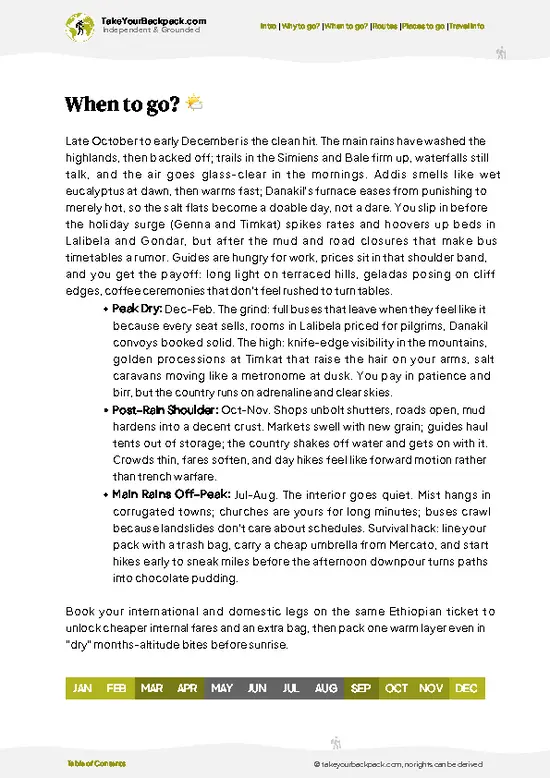
  • Topic: Weather and Temperature — Sodo’s climate swings between a wet season from June to September and a dry season from October to May. Daytime temps hover around 20-25°C (68-77°F) in the dry months, perfect for trekking without sweating buckets. The wet season brings heavy rains and muddy trails, which can slow you down and soak your gear.

  • Topic: Daylight Hours — Near the equator, daylight stays steady year-round, roughly 12 hours. This means you don’t have to rush your hikes or sightseeing; mornings and evenings offer consistent light to explore without feeling rushed.

  • Topic: Crowds — Sodo isn’t a tourist hotspot, so crowds are minimal year-round. However, local festivals during the dry season can bring a burst of activity, giving you a chance to dive into authentic cultural experiences
read more 👉

  • Topic: Weather and Temperature — Sodo’s climate swings between a wet season from June to September and a dry season from October to May. Daytime temps hover around 20-25°C (68-77°F) in the dry months, perfect for trekking without sweating buckets. The wet season brings heavy rains and muddy trails, which can slow you down and soak your gear.

  • Topic: Daylight Hours — Near the equator, daylight stays steady year-round, roughly 12 hours. This means you don’t have to rush your hikes or sightseeing; mornings and evenings offer consistent light to explore without feeling rushed.

  • Topic: Crowds — Sodo isn’t a tourist hotspot, so crowds are minimal year-round. However, local festivals during the dry season can bring a burst of activity, giving you a chance to dive into authentic cultural experiences without the usual backpacker swarm.

  • Topic: Seasonal Activities — Dry months are prime for trekking and village visits, while the wet season transforms the landscape into lush green, ideal for photographers chasing dramatic skies and vibrant flora.

  • Topic: Price Fluctuations — Accommodation and transport costs dip during the rainy season due to fewer visitors, but the trade-off is tougher travel conditions. Dry season prices rise slightly but reward you with easier access and more reliable services.


Pro-tip: Aim for the shoulder months—October or May—when the rains taper off or just begin, so you catch fresh landscapes without the full mud slog or peak-season prices.


source: climatestotravel.comJANJanuary: excellent for travelingFEBFebruary: excellent for travelingMARMarch: excellent for travelingAPRApril: excellent for travelingMAYMay: highly recommended for travelingJUNJune: fair for travelingJULJuly: fair for travelingAUGAugust: fair for travelingSEPSeptember: fair for travelingOCTOctober: highly recommended for travelingNOVNovember: excellent for travelingDECDecember: excellent for traveling
when-to-go

✈️ The backpacker research shortcutEthiopia Travel Guide

An offline-friendly backpacking guide with optimized travel routes, ranked highlights, transport advice, and the best areas to stay.
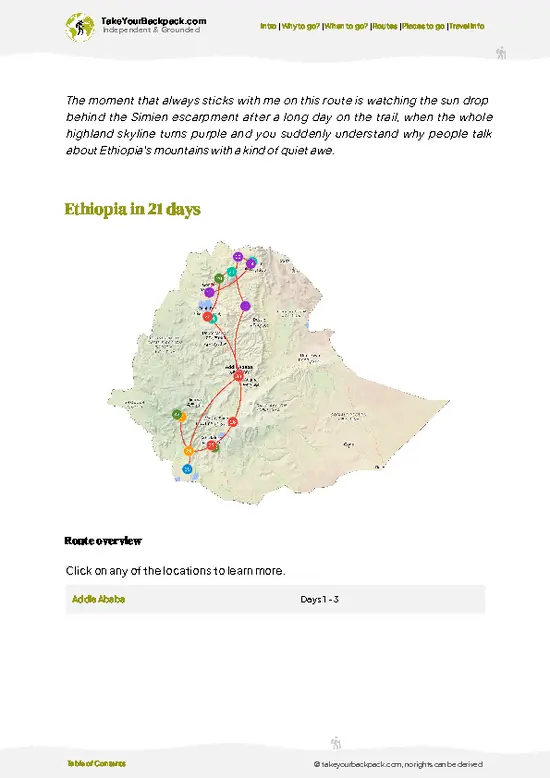
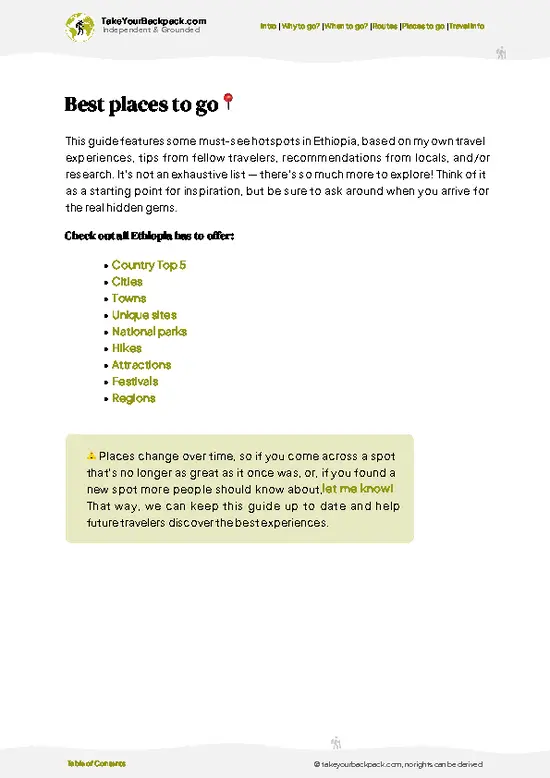
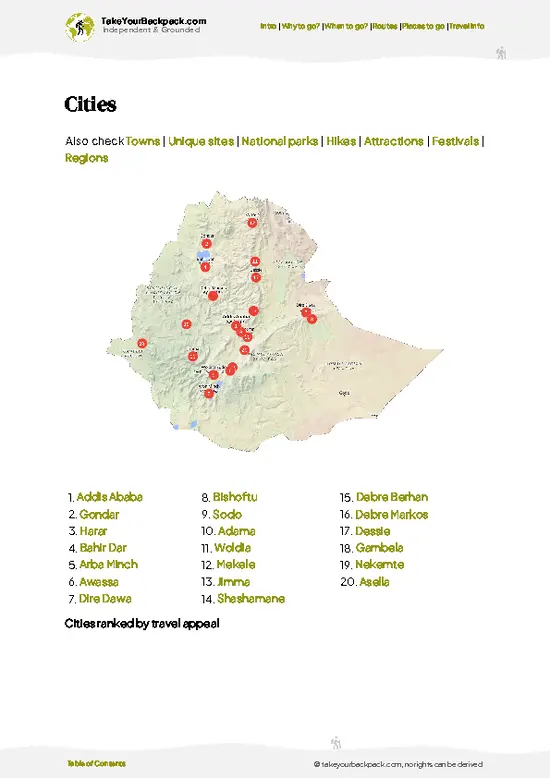
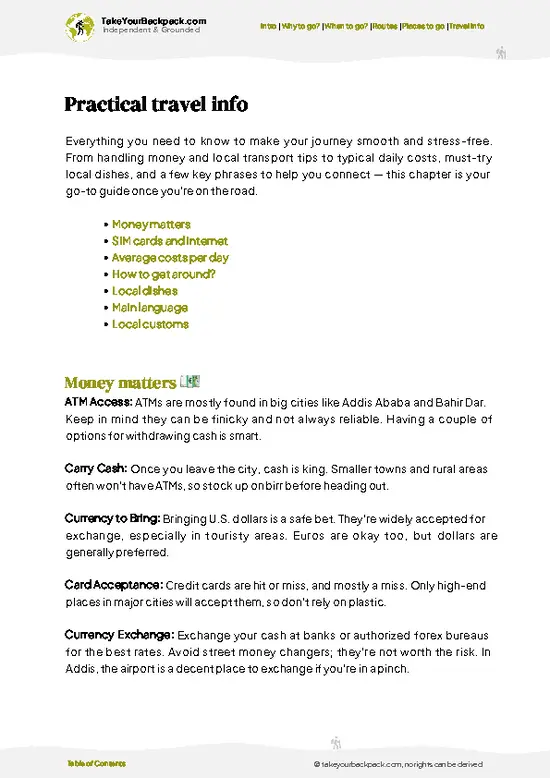
example page 0 from our offline Travel Guide for Ethiopiaexample page 1 from our offline Travel Guide for Ethiopiaexample page 2 from our offline Travel Guide for Ethiopiaexample page 3 from our offline Travel Guide for Ethiopiaexample page 4 from our offline Travel Guide for Ethiopiaexample page 5 from our offline Travel Guide for Ethiopiaexample page 6 from our offline Travel Guide for Ethiopiaexample page 7 from our offline Travel Guide for Ethiopia
The digital guide (398 pages) contains:
101 highlights, ranked by travel appeal
Optimized 7, 14 & 21-day travel routes
Cities, national parks, beaches, historical sites, ...
How to get around
Offline-friendly for travel without Wi-Fi
👉 Click to see all 30+ guide features

📅 Plan smarter in minutes, not weeks
Month by month travel advice
Festivals & national holidays
Budget expectations

🗺️ Go to the right places, skip the overrated ones
Honest pros & cons of destinations
Top hikes, parks & viewpoints
Lesser-known places most travelers miss
Clear “worth it vs skip it” guidance

🛏️ Travel smoothly without rookie mistakes
Best areas to stay
Transport systems explained simply
Common scams & safety advice
SIM cards, money & practical tips

🌍 Understand the country, not just visit it
Culture & traditions
52 Essential phrases & customs
Festivals worth planning around
Traveler-friendly historical context
Insights that make places more meaningful

📱 Built for real travel conditions
Fully downloadable PDF
Works completely offline
Optimized for phone use
Useful in remote areas & buses
Everything in one place
Save weeks of stressful planning
Get instant access to the full guide directly. 30-day money-back guarantee.


Sent to your inbox immediately after payment • 100% Secure Checkout
Best Backpacking Travel Advisor 2025 tourism awardBest Backpacking
Travel Advisor
2025
What others say about Take Your Backpack Guides:
⭐⭐⭐⭐⭐
Fantastic, amazing amount of information!
⭐⭐⭐⭐⭐
My goodness this is amazing, it's what I've been looking for hats off too you!
⭐⭐⭐⭐⭐
I think this is absolutely BRILLIANT
⭐⭐⭐⭐
Very complete and informative. It's still missing places, but I gotta to commend you
⭐⭐⭐⭐⭐
This is truly amazing, thank you, can't wait to explore it with my kids!
⭐⭐⭐⭐⭐
Awesome resource, thank you!
⭐⭐⭐⭐⭐
This is amazing! Can't wait to explore the ones I haven't seen
⭐⭐⭐⭐
I love this! Well done, great idea.
⭐⭐⭐⭐⭐
Thanks for taking the time to make this gem!
⭐⭐⭐⭐⭐
This might be the best website I've ever seen.
⭐⭐⭐⭐⭐
Congratulations, and thank you so much for your work; it's incredibly valuable.
⭐⭐⭐⭐
In all seriousness I think you did a great job pointing out the important spots
⭐⭐⭐⭐⭐
10/10 very good
⭐⭐⭐⭐⭐
As someone who's only just starting to visit regularly this is awesome, thank you.
⭐⭐⭐⭐
Thank you very much! I'm going to visit my dad, it's going to be very useful!
⭐⭐⭐⭐⭐
This is really cool! We'll be travelling for the first time and this definitely come in handy.
⭐⭐⭐⭐⭐
You are now our minister of culture, congratulations 👨‍💼
⭐⭐⭐⭐⭐
Just wanted to tell you that this is a pearl! Going to follow your recommendations.
⭐⭐⭐⭐⭐
This is so cool. I'll definitely be using the resource for my travels soon.
⭐⭐⭐⭐⭐
This is very impressive! Good work.
⭐⭐⭐⭐⭐
This is an amazing and informative site. Very well done!

🛏️ Where to stay?Choosing the right base

In Sodo, the heartbeat for backpackers pulses strongest around the central market district. This area isn’t just a place to crash; it’s where the city’s rhythm is most palpable. Streets hum with vendors selling fresh injera and coffee beans, and the air carries a mix of spices and earth after a rain. Staying here means you’re steps away from lively cafes and informal meeting spots where solo travelers and locals mingle. It’s safe, thanks to the steady flow of people and the watchful eyes of shopkeepers who know every face.

Compared to the quieter residential zones on the outskirts, the central … read more 👉
In Sodo, the heartbeat for backpackers pulses strongest around the central market district. This area isn’t just a place to crash; it’s where the city’s rhythm is most palpable. Streets hum with vendors selling fresh injera and coffee beans, and the air carries a mix of spices and earth after a rain. Staying here means you’re steps away from lively cafes and informal meeting spots where solo travelers and locals mingle. It’s safe, thanks to the steady flow of people and the watchful eyes of shopkeepers who know every face.

Compared to the quieter residential zones on the outskirts, the central district offers a social vibe that’s hard to beat. Hostels here cater to budget travelers, often with communal spaces that invite conversation and shared stories. The light in the late afternoon filters through narrow alleys, casting long shadows that invite you to slow down and soak in the city’s pulse. Choosing this area means embracing Sodo’s raw, unfiltered character while staying connected and secure.

🚌 Getting aroundGetting around like a local

Sodo moves at its own rhythm—less a clockwork town and more a pulse you catch by tuning in. The air carries the scent of fresh coffee and earth, mingling with the chatter of vendors and the occasional honk of a bajaj weaving through narrow streets. Here, timetables exist but flex like the branches of a tree in the wind. You’ll find that patience and a keen eye for local cues unlock the best rides and routes. The town’s flow is a dance between the predictable and the spontaneous, where knowing when to wait and when to move fast makes all the difference.


  • Walking: The heart of Sodo is compact and walkable, with most markets, eateries, and guesthouses within a 20-minute stroll. Walking costs nothing and lets you soak in the town’s textures—the cracked pavement, the smell of roasting grains,
read more 👉
Sodo moves at its own rhythm—less a clockwork town and more a pulse you catch by tuning in. The air carries the scent of fresh coffee and earth, mingling with the chatter of vendors and the occasional honk of a bajaj weaving through narrow streets. Here, timetables exist but flex like the branches of a tree in the wind. You’ll find that patience and a keen eye for local cues unlock the best rides and routes. The town’s flow is a dance between the predictable and the spontaneous, where knowing when to wait and when to move fast makes all the difference.


  • Walking: The heart of Sodo is compact and walkable, with most markets, eateries, and guesthouses within a 20-minute stroll. Walking costs nothing and lets you soak in the town’s textures—the cracked pavement, the smell of roasting grains, the vibrant street life—at your own pace.


  • Bajaj (Auto Rickshaw): These three-wheeled workhorses dart through traffic with surprising agility. Fares are negotiable but expect to pay around 10–20 ETB for short hops. Bajajs run from dawn until late evening, offering a quick, affordable way to cover distances that feel too long on foot but don’t justify a taxi.


  • Minibus Taxi: The backbone of local transit, minibuses connect Sodo to nearby towns and neighborhoods. They leave when full, so timing is flexible but unpredictable. Fares hover around 15–30 ETB depending on distance. It’s a budget-friendly option if you’re ready to embrace the local hustle and a bit of crowding.


  • Shared Taxis: For longer trips or faster travel, shared taxis offer a middle ground between minibuses and private cars. They depart once all seats are filled, usually during daylight hours. Expect to pay 50–100 ETB depending on the route. They’re faster and more comfortable but less frequent.


  • Private Taxi: If you want door-to-door convenience without the wait, private taxis are available but pricier—around 150–300 ETB for typical town rides. Best reserved for early mornings, late nights, or when you’re hauling heavy gear.

👛 Costs (as of 29 July 2025)Travel costs and budget guide for Sodo

Backpacking in Sodo, Ethiopia, means embracing a raw, authentic pace where every birr spent feels like a step deeper into local life. Here’s what your daily costs will look like, broken down so you can plan with confidence.
  • Dorm Accommodation: Expect to pay around $5 to $10 USD per night for a basic dorm bed. These places are simple—think thin mattresses, shared bathrooms, and the occasional power outage—but they’re clean and offer a chance to meet fellow travelers or locals.
  • Meals: Street food and small local eateries dominate here. A hearty injera meal with stew will set you back about $1 to $3 USD. If you opt for something a bit more substantial or a café-style meal, budget closer to $4 to $6 USD. Fresh fruit and coffee are cheap and plentiful, perfect for quick snacks or breakfast.
read more 👉
Backpacking in Sodo, Ethiopia, means embracing a raw, authentic pace where every birr spent feels like a step deeper into local life. Here’s what your daily costs will look like, broken down so you can plan with confidence.
  • Dorm Accommodation: Expect to pay around $5 to $10 USD per night for a basic dorm bed. These places are simple—think thin mattresses, shared bathrooms, and the occasional power outage—but they’re clean and offer a chance to meet fellow travelers or locals.
  • Meals: Street food and small local eateries dominate here. A hearty injera meal with stew will set you back about $1 to $3 USD. If you opt for something a bit more substantial or a café-style meal, budget closer to $4 to $6 USD. Fresh fruit and coffee are cheap and plentiful, perfect for quick snacks or breakfast.
  • Local Transport: Getting around Sodo usually means hopping on a bajaj (three-wheeled taxi) or a shared minibus. Fares are low, typically $0.20 to $0.50 USD per trip within town. Walking is also a solid option given the town’s manageable size and the chance to soak in the street scenes.
  • Basic Activities/Entry Fees: Sodo isn’t a tourist hotspot, so formal entry fees are rare. Visiting local markets or cultural spots is mostly free, though you might want to set aside $1 to $3 USD for small donations or guides if you want a richer experience.
  • Miscellaneous Expenses: Think bottled water, snacks, phone credit, or a cold soda. These add up to about $1 to $2 USD daily. Internet access can be patchy, so plan accordingly if you need to stay connected.

All told, you’re looking at roughly $8 to $20 USD per day to cover the essentials in Sodo. This range gives you the flexibility to stretch for a bit more comfort or keep it lean and local. The town’s pace and simplicity mean your money goes far, but the real reward is in the unfiltered encounters and the chance to see Ethiopia beyond the usual tourist trail.


source: ethiopia.travel
⚠️ Prices can change and everyone travels differently, so take this as a rough guide. Hope it helps you plan your adventure!

🚌 Day tripsShort trips worth adding

Sodo, Ethiopia, is a backpacker’s dream base, offering a gateway to stunning landscapes and rich culture. The town itself buzzes with life, from the scent of freshly roasted coffee wafting through the streets to the vibrant chatter of locals. Here are some day trips that will elevate your experience.

Trip to the Bale Mountains
A trek into the Bale Mountains National Park is a must. The air is crisp, filled with the earthy scent of pine and wildflowers. Expect a 2-3 hour drive from Sodo, and once you arrive, the trails beckon. You’ll encounter endemic wildlife like the Ethiopian wolf and breathtaking views that make every uphill step worthwhile. Budget around $15 for transport and park fees. The best time to visit is during the dry season, from October to May. A common mistake? Underestimating … read more 👉
Sodo, Ethiopia, is a backpacker’s dream base, offering a gateway to stunning landscapes and rich culture. The town itself buzzes with life, from the scent of freshly roasted coffee wafting through the streets to the vibrant chatter of locals. Here are some day trips that will elevate your experience.

Trip to the Bale Mountains
A trek into the Bale Mountains National Park is a must. The air is crisp, filled with the earthy scent of pine and wildflowers. Expect a 2-3 hour drive from Sodo, and once you arrive, the trails beckon. You’ll encounter endemic wildlife like the Ethiopian wolf and breathtaking views that make every uphill step worthwhile. Budget around $15 for transport and park fees. The best time to visit is during the dry season, from October to May. A common mistake? Underestimating the chill at higher altitudes; pack layers to stay warm.
👉 Explore Bale Mountains

Trip to Lake Abijatta
Just an hour away, Lake Abijatta offers a serene escape. The lake’s shallow waters shimmer under the sun, attracting a variety of bird species. Bring your binoculars! The journey is short and sweet, costing about $10 for a shared taxi. Visit in the early morning to catch the sunrise and the birds at their most active. Many first-timers miss the chance to explore the nearby hot springs; don’t skip this unique experience.


Trip to Wondo Genet
Wondo Genet is famous for its hot springs and lush surroundings. A 1.5-hour drive will take you to this relaxing oasis. The entrance fee is around $5, and you can soak in the warm waters while surrounded by fragrant eucalyptus trees. The best time to go is during the dry season, but avoid weekends when it gets crowded. A common rookie error? Forgetting to bring a swimsuit; you’ll want to dive right in!
👉 Explore Wondo Genet

Trip to the Coffee Farms
Experience the heart of Ethiopian culture with a visit to local coffee farms. Just a short drive from Sodo, you can spend a few hours learning about the coffee-making process, from bean to cup. Costs are minimal, usually around $5 for a guided tour. The best time to go is during the harvest season, from November to January. Many travelers overlook the chance to participate in a traditional coffee ceremony; don’t miss this authentic experience.
Want to know what more Ethiopia offers?
The Ethiopia Travel Guide describes 101 highlights, from cities to national parks, from beaches to hikes

Get the Travel Guide -

🍲 FoodLocal Cuisine & Drinks

In Sodo, food is a lively negotiation between tradition and daily hustle. The must-try is definitely kitfo, minced raw beef seasoned with mitmita spice and niter kibbeh butter—rich, fiery, and a real test of your palate’s courage. If raw isn’t your speed, doro wat—a thick, spicy chicken stew simmered with berbere—is a comforting fallback, especially when scooped up with injera, the sourdough flatbread that’s both utensil and flavor base.

Backpackers will find themselves drawn to the open-air markets and street stalls where the air is thick with the scent of roasting coffee beans and sizzling meat. These spots are where locals gather, making them perfect for soaking in the social rhythm while grabbing a quick bite. Casual eateries offer a no-frills setting, often with communal seating that … read more 👉
In Sodo, food is a lively negotiation between tradition and daily hustle. The must-try is definitely kitfo, minced raw beef seasoned with mitmita spice and niter kibbeh butter—rich, fiery, and a real test of your palate’s courage. If raw isn’t your speed, doro wat—a thick, spicy chicken stew simmered with berbere—is a comforting fallback, especially when scooped up with injera, the sourdough flatbread that’s both utensil and flavor base.

Backpackers will find themselves drawn to the open-air markets and street stalls where the air is thick with the scent of roasting coffee beans and sizzling meat. These spots are where locals gather, making them perfect for soaking in the social rhythm while grabbing a quick bite. Casual eateries offer a no-frills setting, often with communal seating that invites conversation and shared stories.

Drinking culture here revolves around coffee ceremonies, a ritual that’s as much about connection as caffeine. Expect to be invited to join, where patience is part of the experience—three rounds of coffee, each stronger than the last, served with popcorn or roasted barley. It’s a slow, deliberate pause in the day, a chance to step into local life and savor more than just the drink.

🛡️ SafetyStaying Safe: What Travelers Should Know

Sodo, Ethiopia, is generally safe for backpackers, but a few practical tips can enhance your experience. The bustling market areas are vibrant but can feel overwhelming. Keep your belongings close, especially in crowded spots.

If you’re traveling solo, daylight is your friend. The streets are lively, filled with the scent of fresh injera and coffee, but after dark, it’s wise to stick to well-lit areas. Trust your instincts; if something feels off, it probably is.

Scams are rare, but some locals might approach you with overly friendly offers for guided tours or transportation. Politely decline if you’re not interested, and always agree on prices beforehand.

Overall, carry yourself with confidence, engage with locals, and soak in the atmosphere. The warmth of the community will make your journey rewarding.

Other Ethiopian cities near Sodo

Explore more nearby:

  • Awassa—Lake Awassa, fish market, lakeside parks| 83 km away
  • Arba Minch—Nechisar National Park, twin lakes, Dorze villages| 95 km away
  • Shashamane—Rastafarian community, multicultural markets, Rift Valley location| 99 km away

👉 Discover all cities

Or checkout all Ethiopia has to offer (think cities, towns, villages, national parks, hikes, beaches, festivals)
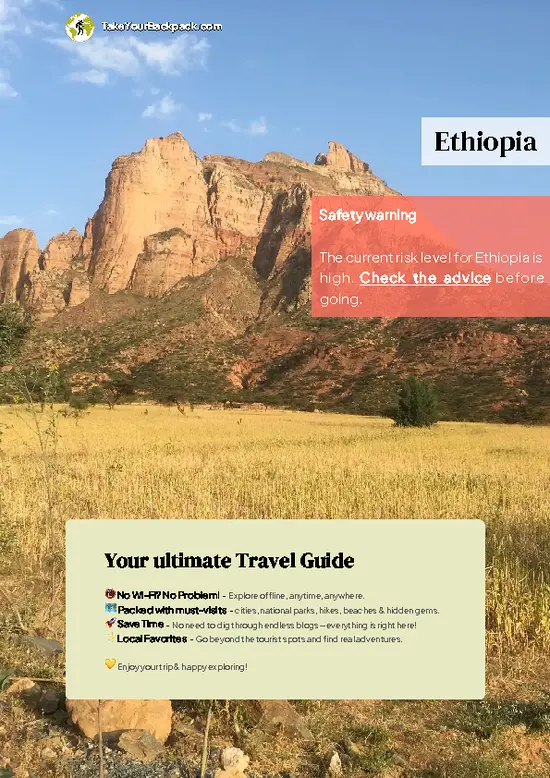
Country photo of Ethiopia

We 💚 feedbackIs it worth it?

Sodo’s charm lies in its vibrant market scene, where the air is thick with the scent of spices and fresh injera. You’ll feel the pulse of local life as you navigate the stalls. But be prepared: the roads can be rough, and the infrastructure isn’t always reliable. Embrace the bumps; they’re part of the adventure. The payoff? Authentic connections and experiences that make every jolt worthwhile.

✈️ When did I visit Ethiopia?
Ethiopia I visited back in October 2017. I combined the trip with a visit to Sudan. Ethiopia was a pure suprise with the magical scenery like the Danikal Depression and the Simien Mountains.

✍️ Help improve this page!
The information on this page is based on my own backpacking experience in Ethiopia, supplemented with up-to-date research and feedback from other travelers. Travel details can change, so if you notice anything outdated or incomplete, feel free to let me know.


🙋‍♂️ Give feedback

👋 Meet the founderWho’s Behind Take Your Backpack?

Johan, backpacker and founder of TakeYourBackpackHi, I’m Johan (Netherlands 🇳🇱), the creator of TakeYourBackpack. Over the past decade, I’ve backpacked through 80+ countries across six continents, gaining extensive experience with independent travel, long-term trips, and overland routes.

This site is built on a combination of firsthand travel experience and carefully curated insights from other backpackers. Many guides are based on places I’ve personally visited, while others bring together tips, observations, and practical advice shared by trusted travelers I’ve met along the way.

The goal is to provide realistic, experience-driven guidance — not generic itineraries — so you can explore destinations with better context, clearer expectations, and more confidence.

Get full Ethiopia guide •
Instant download • 101 highlights • Full Offline guide