×
French Polynesia🇵🇫 | 5 days itinerary

A Complete 5-Day Plan for French Polynesia

By Johan Kruseman 🇳🇱 | Updated April 30, 2026
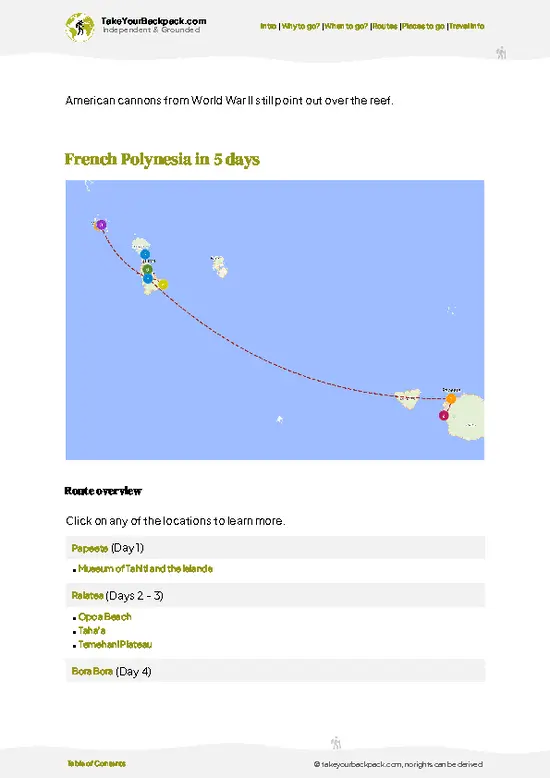
This 5-day route is for travelers who want to go beyond the honeymoon clichés and actually feel the range of French Polynesia: capital bustle, high-island peaks, and atoll-blue lagoons, moving at a steady but not frantic pace with one domestic flight, ferries, and local transfers. You’ll hit the big names like Bora Bora while still carving out time for quieter villages and less-polished corners that show how people really live on these islands.

Day 1: Tahiti Foundations - City, Culture & Valley

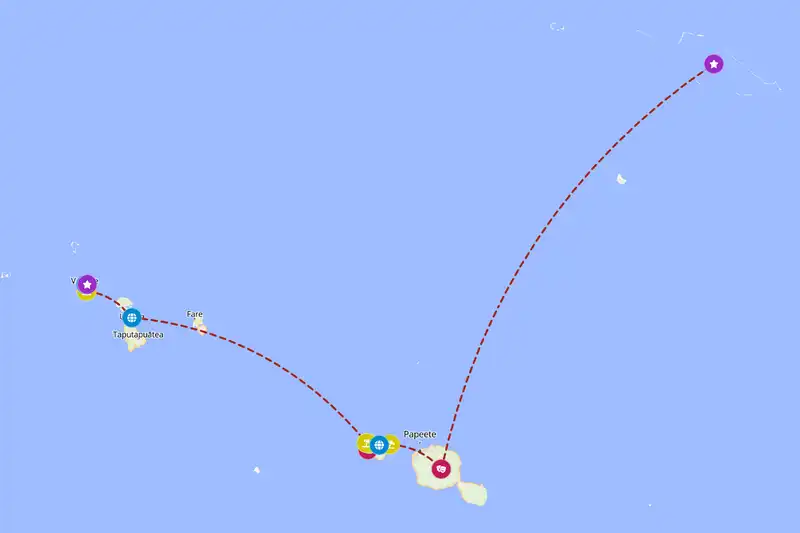
Start in Papeete, dropping your bag and walking the waterfront and central streets to shake off the flight and see the working side of French Polynesia: ferries loading, kids in school uniforms, food trucks setting up for the night. Late morning, head to the Museum of Tahiti and the Islands, where the exhibits on navigation, marae, and daily tools give you a mental map for everything you’ll see later on the outer islands. In the afternoon, ride into Papenoo Valley for a half-day exploration of … read more 👉
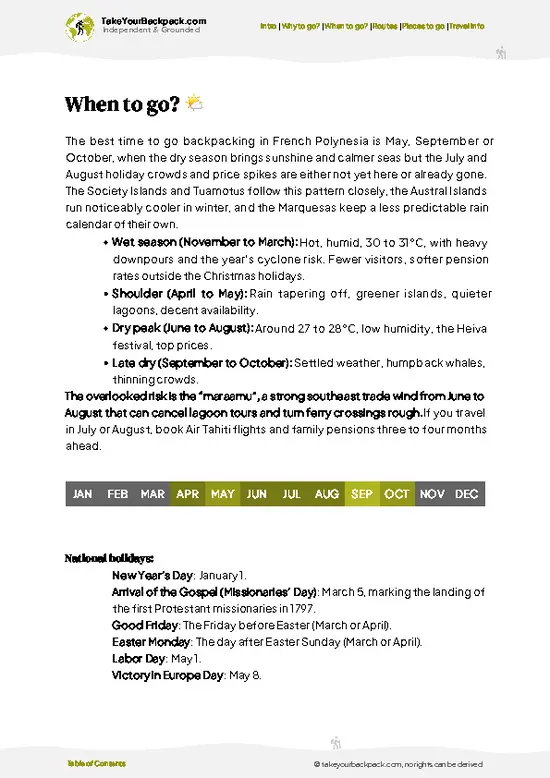
This 5-day route is for travelers who want to go beyond the honeymoon clichés and actually feel the range of French Polynesia: capital bustle, high-island peaks, and atoll-blue lagoons, moving at a steady but not frantic pace with one domestic flight, ferries, and local transfers. You’ll hit the big names like Bora Bora while still carving out time for quieter villages and less-polished corners that show how people really live on these islands.

Day 1: Tahiti Foundations - City, Culture & Valley

Start in Papeete, dropping your bag and walking the waterfront and central streets to shake off the flight and see the working side of French Polynesia: ferries loading, kids in school uniforms, food trucks setting up for the night. Late morning, head to the Museum of Tahiti and the Islands, where the exhibits on navigation, marae, and daily tools give you a mental map for everything you’ll see later on the outer islands. In the afternoon, ride into Papenoo Valley for a half-day exploration of waterfalls, steep ridges, and old terraces; it’s a quick immersion into Tahiti’s interior that balances the urban start. Return to Papeete for dinner, maybe detouring by the Robert Wan Pearl Museum if you want a fast, focused lesson in pearl culture before you start seeing them everywhere else.

Day 2: Moorea Peaks & Lagoon Life

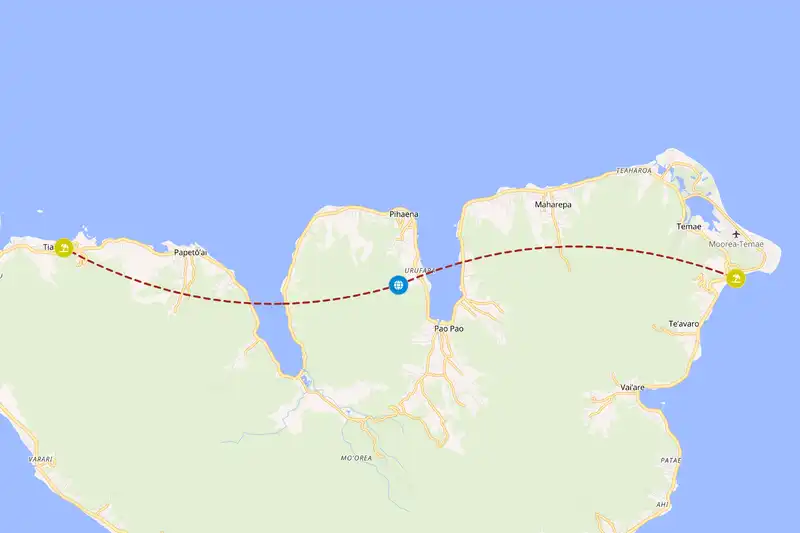
Take the morning ferry from Papeete to Moorea, a short crossing that still feels like a reset as the skyline shifts from city blocks to jagged peaks. Head first to the Belvedere Lookout Trail area, where even a modest walk around the viewpoint gives you huge views over Cook’s and Opunohu Bays and a sense of how the reef, lagoon, and mountains all lock together. After lunch, drop down to Temae Beach for an easy afternoon of snorkeling and swimming in clear, shallow water that’s ideal for first-timers and tired travelers alike. As the light softens, swing by Tiahura Beach for a different stretch of coast and a more low-key, local feel before overnighting on Moorea so you can catch the early ferry back to Tahiti the next morning without rushing.

Day 3: Tahiti Highlands & Flight to Bora Bora

Take a morning ferry back to Papeete, then head inland toward Mount Aorai for a taste of Tahiti’s high ridges; you don’t need to summit to feel it, even a partial hike or viewpoint stop gives you cooler air, cloud-wrapped peaks, and a sharp contrast to the beaches. Keep this as a half-day outing so you’re not wrecked, then return to town, grab your bag, and transfer to Faa’a airport for an afternoon flight to Bora Bora. Arrive in Vaitape, the island’s main town, and keep your first evening simple: a walk through Vaitape, a casual dinner, and a quiet early night so you’re rested for lagoon time instead of jet-lagged on a boat.

Day 4: Bora Bora Lagoon & Beach Time

This is your full immersion day in Bora Bora Lagoon, the reason the island’s reputation is so outsized. Spend the morning on a lagoon tour or DIY outing that gets you into the shallow, electric-blue water, with time to snorkel over coral gardens and drift above rays and reef sharks if you’re comfortable. In the afternoon, head to Matira Beach, Bora Bora’s public-access classic, where you can walk the long sandbar, swim in calm water, and watch the light change on the lagoon without needing an overwater bungalow budget. Overnight again around Vaitape, giving yourself time for a slow dinner and maybe a short stroll under the stars instead of cramming in more activities.

Day 5: Maupiti’s Quiet Village & Lagoon Escape

On your final day, take a short hop to Maupiti Island if flight schedules allow, trading Bora Bora’s buzz for a smaller, sleepier world. Spend your time in the village of Maupiti, walking its simple streets, watching daily life, and feeling how different the pace is when there are fewer resorts and more family guesthouses. If you can squeeze it in, arrange a boat out to the reef side for a look back at the island’s central peak and a last swim in water that feels far removed from the crowds, then head back to the tiny airstrip for your return toward Tahiti and onward flights.

When you’re ready to go even further off script on a future trip, pencil in the remote atoll of Makemo, where the lagoon feels endless and the night skies are so dark you can trace the Milky Way from reef to reef.
Loading the map 🌍
film
0
0
0a
Papeete
Georges Guillarm
film
1
1
1a
Museum of Tahiti and the Islands
film
2
2
2a
Robert Wan Pearl Museum
film
3
3
3a
Mount Aorai
Dusan H.
film
4
4
4a
Faa’a
Didier Lamielle
film
5
5
5a
Moorea
Efg Consulting
film
6
6
6a
Belvedere Lookout Trail
Gerald
film
7
7
7a
Temae Beach
film
8
8
8a
Tiahura Beach
Sylvie Dutot
film
9
9
9a
Bora Bora
I Kt “becol” Ariana
film
10
10
10a
Vaitape
I Kt “becol” Ariana
film
11
11
11a
Matira Beach
Ajleeblog
film
12
12
12a
Maupiti Island
Tommarik Explorer
film
13
13
13a
Maupiti

🛏️ Where to stay?5 Days of Adventure

✈️ The backpacker research shortcutFrench Polynesia Travel Guide

An offline-friendly backpacking guide with optimized travel routes, ranked highlights, transport advice, and the best areas to stay.
example page 0 from our offline Travel Guide for French Polynesiaexample page 1 from our offline Travel Guide for French Polynesiaexample page 2 from our offline Travel Guide for French Polynesiaexample page 3 from our offline Travel Guide for French Polynesiaexample page 4 from our offline Travel Guide for French Polynesiaexample page 5 from our offline Travel Guide for French Polynesia
The digital guide (159 pages) contains:
45 highlights, ranked by travel appeal
Optimized 2, 3 & 5-day travel routes
Best neighborhoods to stay
How to get around
Offline-friendly for travel without Wi-Fi
👉 See all 30+ guide features

📅 Plan smarter in minutes, not weeks
Month by month travel advice
Festivals & national holidays
Budget expectations

🗺️ Go to the right places, skip the overrated ones
Honest pros & cons of destinations
Top hikes, parks & viewpoints
Lesser-known places most travelers miss
Clear “worth it vs skip it” guidance

🛏️ Travel smoothly without rookie mistakes
Best areas to stay
Transport systems explained simply
Common scams & safety advice
SIM cards, money & practical tips

🌍 Understand the country, not just visit it
Culture & traditions
52 Essential phrases & customs
Festivals worth planning around
Traveler-friendly historical context
Insights that make places more meaningful

📱 Built for real travel conditions
Fully downloadable PDF
Works completely offline
Optimized for phone use
Useful in remote areas & buses
Everything in one place
Save weeks of stressful planning
Get instant access to the full guide directly. 30-day money-back guarantee.


Sent to your inbox immediately after payment • 100% Secure Checkout
Best Backpacking Travel Advisor 2025 tourism awardBest Backpacking
Travel Advisor
2025
What others say about Take Your Backpack Guides:
⭐⭐⭐⭐⭐
Fantastic, amazing amount of information!
⭐⭐⭐⭐⭐
My goodness this is amazing, it's what I've been looking for hats off too you!
⭐⭐⭐⭐⭐
I think this is absolutely BRILLIANT
⭐⭐⭐⭐
Very complete and informative. It's still missing places, but I gotta to commend you
⭐⭐⭐⭐⭐
This is truly amazing, thank you, can't wait to explore it with my kids!
⭐⭐⭐⭐⭐
Awesome resource, thank you!
⭐⭐⭐⭐⭐
This is amazing! Can't wait to explore the ones I haven't seen
⭐⭐⭐⭐
I love this! Well done, great idea.
⭐⭐⭐⭐⭐
Thanks for taking the time to make this gem!
⭐⭐⭐⭐⭐
This might be the best website I've ever seen.
⭐⭐⭐⭐⭐
Congratulations, and thank you so much for your work; it's incredibly valuable.
⭐⭐⭐⭐
In all seriousness I think you did a great job pointing out the important spots
⭐⭐⭐⭐⭐
10/10 very good
⭐⭐⭐⭐⭐
As someone who's only just starting to visit regularly this is awesome, thank you.
⭐⭐⭐⭐
Thank you very much! I'm going to visit my dad, it's going to be very useful!
⭐⭐⭐⭐⭐
This is really cool! We'll be travelling for the first time and this definitely come in handy.
⭐⭐⭐⭐⭐
You are now our minister of culture, congratulations 👨‍💼
⭐⭐⭐⭐⭐
Just wanted to tell you that this is a pearl! Going to follow your recommendations.
⭐⭐⭐⭐⭐
This is so cool. I'll definitely be using the resource for my travels soon.
⭐⭐⭐⭐⭐
This is very impressive! Good work.
⭐⭐⭐⭐⭐
This is an amazing and informative site. Very well done!

🧭 RouteMore Ways to Explore

Travel French Polynesia your way — from a quick highlights trip to a slow-paced adventure.

🙋 FAQGood to Know

Short version: yes, you can backpack French Polynesia independently, but it’s not Southeast Asia. It’s safe, friendly, and logistically doable, just more expensive and slower to move around.

The good news: locals are warm, hitchhiking is common on the main islands, and basic French plus a few Tahitian words go a long way. Crime against travelers is low, tap water is usually safe on the main islands, and wild camping is possible in some areas if you ask landowners first. You don’t need a tour for every activity; you can DIY hikes, lagoon swims, and a lot of snorkeling from shore.

The catch: ferries and flights between islands are limited and pricey, and there’s not a dense hostel network. You’ll rely on small pensions, homestays, and sometimes camping. Booking ahead is smart on popular islands (Moorea, Bora Bora, Huahine) and during school holidays. Cash is still important on outer islands, and ATMs can be scarce.

If you’re comfortable with basic French, flexible plans, and a higher daily budget than typical backpacker circuits, independent travel works very well. If you need rigid schedules, ultra-cheap dorms, and constant public transport, it will feel frustrating.

Backpacker-friendly tips: base yourself on fewer islands, use ferries instead of flights when possible, cook some of your own meals, and lean into homestays where meals are included. That’s how you keep costs and stress under control.
For a budget traveler, the sweet spot is 10–14 days. Less than a week and you’ll burn too much time and money just getting there and hopping islands; more than two weeks is fantastic if your wallet can handle it.

Rough time guidelines:

• 5–7 days: Focus on 1–2 islands only. Example: 2–3 nights on Tahiti (for logistics, hikes, and surf) + 3–4 nights on Moorea (lagoons and easy adventure). This works if you’re tacking French Polynesia onto a longer Pacific trip.

• 10–14 days: Ideal backpacker window. Hit 3 islands without rushing. Example: Tahiti + Moorea + one Society Island (Huahine or Raiatea/Taha’a) or a Tuamotu atoll (Rangiroa or Fakarava if diving is your priority). You’ll have time to slow down, find cheaper food options, and not pay last-minute premiums.

• 3+ weeks: Great if you’re already in the region or have flight deals. You can add more remote islands (Maupiti, the Tuamotus, or the Marquesas) and negotiate better long-stay rates with pensions and homestays.

Because transport is expensive and infrequent, it’s smarter to spend more days on fewer islands than to chase a long list. Every extra island usually means another pricey flight or ferry and at least half a day of transit. For most backpackers, 2–3 islands in 10–14 days gives the best balance of variety, cost, and sanity.
You can absolutely get around without renting a car, but how easy it feels depends on the island and your patience level.

On Tahiti:
• There are public buses (le truck-style and regular buses) around the main ring road, but they’re slow and not always frequent.
• Hitchhiking is common and generally safe; locals are used to picking people up.
• For specific hikes or late-night returns, you might need to coordinate with your guesthouse or pay for a transfer.

On Moorea:
• Hitchhiking is very normal and often the main budget option.
• Some pensions offer bikes; cycling is doable on the coastal road but hot and exposed.
• There are occasional buses tied to the ferry schedule, but don’t rely on them for detailed sightseeing.

On other Society Islands (Huahine, Raiatea, Taha’a, Maupiti):
• Hitchhiking + walking is again the budget combo.
• Some islands have informal minibuses or school buses you can sometimes use if you ask.
• Boats are the “bus” between main island and motus (small islets); these are usually arranged through your pension or directly with boat owners.

On the Tuamotus and Marquesas:
• There’s often no real public transport. You’ll walk, hitch, or arrange rides with locals and your accommodation.

Island-to-island:
• Ferries: Tahiti–Moorea is cheap and frequent. There are also ferries to some Society Islands (like Huahine, Raiatea, Bora Bora) but schedules can be limited and crossings long.
• Flights: The main way to hop between archipelagos. They’re expensive, so plan your route carefully and avoid backtracking.

If you’re willing to hitchhike, walk a lot, and plan around limited schedules, you don’t need a car. If you want total freedom on a tight schedule, renting a car for a day or two on specific islands (Tahiti, Moorea) can be worth the splurge.
For backpackers, “must-visit” means places that give you maximum nature and culture per dollar, not just the postcard shot.

Tahiti (2–3 days):
• Why it’s worth it: It’s more than just the airport. You get waterfalls, black-sand beaches, cheap-ish local food, and real everyday life.
• Highlights: The Papenoo Valley (lush interior, waterfalls), coastal hikes, local food trucks (roulottes) in Papeete, and the market for fruit and snacks.

Moorea (3–5 days):
• Why it’s a top pick: Easiest island to reach, huge payoff. You get lagoons, mountains, and backpacker-friendly options without Bora Bora prices.
• Highlights: Snorkeling from shore (especially near public beaches), hiking to viewpoints like the Belvedere, biking or hitching the coastal road, and cheap(er) fruit stands.

Huahine (3–4 days):
• Why it’s gold for budget travelers: Laid-back, less resort-heavy, strong local culture, and easier to feel like you’re in a village, not a resort bubble.
• Highlights: Archaeological sites, lagoon tours that feel personal rather than mass-market, and good hitchhiking around the island.

Raiatea & Taha’a (3–4 days combined):
• Why they matter: Raiatea is a cultural heartland with important marae (sacred sites), and Taha’a has vanilla plantations and quiet motus.
• Highlights: Visiting Marae Taputapuātea, kayaking or boating in the lagoon, and staying in small pensions instead of big resorts.

One Tuamotu atoll (3–5 days):
• Best for: Divers and snorkel addicts.
• Rangiroa: Big lagoon, famous for sharks and dolphins.
• Fakarava: Legendary drift dives and a very relaxed vibe.
• Even if you’re not diving, the water clarity and remoteness feel special compared to the Society Islands.

If you have limited time and money, a strong route is: Tahiti + Moorea + one of Huahine/Raiatea/Taha’a or a Tuamotu. That gives you city/market life, mountains, lagoons, and either deep culture or world-class underwater time without trying to see everything.
If you’re short on time or cash, skip anything that costs a lot but doesn’t add a new kind of experience.

Bora Bora (for most backpackers):
• It’s famous for overwater bungalows and honeymoon packages, not budget travel.
• The lagoon is beautiful, but you can get very similar water and views on Moorea, Huahine, or the Tuamotus for less.
• If you’re not staying in a high-end place, you’ll pay a premium just to be near people who are.

Too many islands in one trip:
• Every extra island means another flight or long ferry and at least half a day of logistics.
• Instead of 4–5 islands in 10 days, do 2–3 properly. You’ll spend more time in the water and less time in airports.

Expensive, short boat tours that duplicate what you can do from shore:
• If a tour is just “snorkel on a reef + picnic” and you already have good shore snorkeling, you can skip or choose only one really solid lagoon tour.

Overpriced resort day passes:
• Paying big money to use a luxury resort’s pool and beach for a day rarely makes sense on a backpacker budget when public beaches and local pensions give you the same ocean.

Ultra-remote islands on a tight schedule:
• The Marquesas, Gambier, or very small atolls are incredible but time- and money-heavy. If you only have 10–14 days, focus on the Societies + maybe one Tuamotu instead of burning days on long flights for a rushed visit.

In short: skip Bora Bora unless you have a specific reason, avoid over-splitting your itinerary, and say no to pricey experiences that don’t add something genuinely different from what you’re already seeing.

🇵🇫 French PolynesiaDiscover the Country

Ready to build a truly unique trip? Predefined routes are perfect for first-time visitors, but there is so much more to discover. Whether you are chasing a city trip, pristine national parks, local food scenes, or quiet beaches, pick a category to design your own path.