×

Ghana🇬🇭 | townsHomountain views, craft markets, Ewe culture, quiet streets | things to do and best time to go

Explore ElminaExplore Bolgatanga

Backpacking in Ho
🏆 Top picktown ranked #6
By Johan Kruseman 🇳🇱 | Updated June 19, 2026

If you crave the chaos of Accra’s nightlife or the Instagram sheen of Cape Coast’s castles, Ho is not your city. But that’s exactly why it works for backpackers who want to see Ghana’s real daily rhythm—without the tourist markup or the crowds. Ho sits quietly in the Volta Region, a few hours northeast of Accra, surrounded by rolling hills and the kind of green that makes you forget you’re anywhere near a capital. The city itself is compact, safe, and easy to navigate on foot or by shared taxi. You won’t find blockbuster museums or a bar scene that rages past midnight, but you will find a lively central market, colonial-era churches, and easy access to the lush Wli Waterfalls and Mount Afadja. It’s affordable, friendly, and refreshingly low-pressure—think more “slow conversations with locals” than “hostel pub crawl.” Ho is where you go to catch your breath and remember why you travel.

Discover everything you want to know in the 📖 Ghana Travel Guide.


Get your Ghana guide
111 ranked highlights, routes & tips, works offline (424 pages)
Loading the map 🌍
CLICK TO FILTER
cities
towns
villages
landmarks
national parks
hikes
beaches
attractions
festivals
regions
SHOW COUNTRY’S BESTSHOW ALL

✨ Why go?
Ranked #6 town in Ghana
What makes it a must-see town

In the heart of Ghana, Ho serves as a strategic base for backpackers seeking a blend of culture and adventure. The city offers a rich tapestry of highlights and activities that cater to various interests, making it a worthwhile stop. Its walkability allows you to explore local markets, vibrant street life, and historical sites without the hassle of transportation.

When it comes to accommodation, Ho boasts a range of hostels that are budget-friendly and filled with fellow travelers, fostering a sense of community. The food scene is another draw, with local eateries serving up delicious, authentic dishes that won’t break the bank.

For those looking to venture beyond the city, Ho is an excellent launchpad for day trips to stunning landscapes and cultural experiences. Plus, the nightlife is … read more 👉
In the heart of Ghana, Ho serves as a strategic base for backpackers seeking a blend of culture and adventure. The city offers a rich tapestry of highlights and activities that cater to various interests, making it a worthwhile stop. Its walkability allows you to explore local markets, vibrant street life, and historical sites without the hassle of transportation.

When it comes to accommodation, Ho boasts a range of hostels that are budget-friendly and filled with fellow travelers, fostering a sense of community. The food scene is another draw, with local eateries serving up delicious, authentic dishes that won’t break the bank.

For those looking to venture beyond the city, Ho is an excellent launchpad for day trips to stunning landscapes and cultural experiences. Plus, the nightlife is laid-back yet lively, offering a chance to unwind after a day of exploration. If you’re weighing your options, Ho is more than just a pit stop; it’s a place that enriches your journey through Ghana.
Want to include Ho in your Ghana route?
Create a personalized Ghana itinerary that includes Ho and the places that fit your trip — based on your travel style, budget, and available time. Get your route in seconds.

Generate my trip

💡 HighlightsDon't-miss highlights and experiences

  • Asogli Palace (Asogli State) — The political and spiritual heart of Ho: the palace compound, stools and durbar grounds give a real sense of Ewe chieftaincy. Best to visit during a festival or arrange a local escort for access and stories.
  • Ho Central Market — A proper sensory hit: fresh produce, spices, batik and clothes, palm-wine sellers and street food. Great for bargain hunting and everyday life photography.
  • Volta Regional Museum — Small but useful: displays on Ewe culture, colonial-era objects and regional history that put the Volta into context. Handy stop to make sense of what you’ll see around town.
  • University of Health and Allied Sciences (UHAS) campus — A pleasant, modern campus with active student life, neat architecture and quiet walks; good for meeting locals, grabbing tea
read more 👉
  • Asogli Palace (Asogli State) — The political and spiritual heart of Ho: the palace compound, stools and durbar grounds give a real sense of Ewe chieftaincy. Best to visit during a festival or arrange a local escort for access and stories.
  • Ho Central Market — A proper sensory hit: fresh produce, spices, batik and clothes, palm-wine sellers and street food. Great for bargain hunting and everyday life photography.
  • Volta Regional Museum — Small but useful: displays on Ewe culture, colonial-era objects and regional history that put the Volta into context. Handy stop to make sense of what you’ll see around town.
  • University of Health and Allied Sciences (UHAS) campus — A pleasant, modern campus with active student life, neat architecture and quiet walks; good for meeting locals, grabbing tea and seeing research/health projects in the area.
  • Volta Regional Cultural Centre — Where local dance troupes, drumming and craft exhibitions happen. If there’s a performance or workshop on, it’s an efficient and lively way to absorb regional culture.
  • Ho Municipal Stadium — Attend a local football match or community event to feel genuine local energy; the stadium also hosts durbars and public celebrations, which are fun and loud in the best way.
  • Traditional shrines and durbar grounds — Scattered around the town are small, active sacred sites and meeting places where rituals and drum/call-and-response music happen. Visit respectfully with a guide to understand meaning and protocol.
  • Old High Street and colonial-era buildings — A relaxed walking route through Ho’s historic center: municipal buildings, old shops and street scenes that reveal the city’s colonial and commercial past.
  • Street-food corridor and local eateries — Real value and flavor: try banku, akple, pepper sauces, soups and local snacks from modest stalls and family-run spots where Ho people actually eat.
  • Community craft and tailoring workshops — Small woodcarvers, bead makers and tailors who’ll show you techniques and often do on-the-spot commissions; better than a tourist shop for authentic souvenirs and conversation.
A few top day-trip highlights outside Ho: Wli (Agumatsa) Waterfalls, Mount Afadja (Afadjato), the Tafi Atome Monkey Sanctuary, and the kente-weaving town of Agotime-Kpetoe.
Spotted a mistake or missing something? Contact us.

🏘️ NeighborhoodsNeighborhood guide to Ho

Ho, Ghana, is a vibrant hub that offers a rich tapestry of culture and experiences for backpackers. Here’s a breakdown of key neighborhoods to help you navigate your stay.

Ho Central: This is the heartbeat of the city. You’ll find local markets, street food, and a lively atmosphere. It’s walkable, making it easy to explore. Costs are moderate, with budget accommodations available. Nightlife is buzzing, especially on weekends, but it quiets down during the week. Perfect for short stays where you want to soak in the local vibe.

Hohoe: A bit further out, this area is known for its stunning landscapes and proximity to attractions like Mount Afadja. It’s less urban, offering a more tranquil experience. Costs can be lower here, especially for guesthouses. While public transport is available, it’s … read more 👉
Ho, Ghana, is a vibrant hub that offers a rich tapestry of culture and experiences for backpackers. Here’s a breakdown of key neighborhoods to help you navigate your stay.

Ho Central: This is the heartbeat of the city. You’ll find local markets, street food, and a lively atmosphere. It’s walkable, making it easy to explore. Costs are moderate, with budget accommodations available. Nightlife is buzzing, especially on weekends, but it quiets down during the week. Perfect for short stays where you want to soak in the local vibe.

Hohoe: A bit further out, this area is known for its stunning landscapes and proximity to attractions like Mount Afadja. It’s less urban, offering a more tranquil experience. Costs can be lower here, especially for guesthouses. While public transport is available, it’s less frequent, so plan accordingly. Ideal for longer stays if you want to immerse yourself in nature.

Adaklu: This neighborhood is a hidden treasure for those seeking a quieter retreat. It’s less touristy, with a strong sense of community. Accommodations are affordable, and the area is walkable, though you might need a taxi for longer distances. Nightlife is minimal, making it perfect for relaxation. Great for both short and extended visits if you want to recharge.

Gbi Blengo: Known for its cultural richness, this area is home to traditional festivals and local artisans. Costs are reasonable, and it’s fairly walkable. The nightlife is low-key, focusing more on cultural experiences than bars. Suitable for short stays to dive into local traditions.

⌛️ 1 daySeeing the highlights in 24 hours

Ho, Ghana, is a vibrant tapestry of culture, history, and natural beauty, nestled in the lush Volta Region. It’s a place where the rhythm of life pulses through the markets and the warmth of the people invites you to linger. Spend a day here, and you’ll find that every moment is a chance to connect with the local spirit.

Start your morning at the bustling Ho Central Market. The aroma of fresh produce and spices fills the air as you weave through stalls. Grab a breakfast of kelewele—spicy fried plantains—paired with a hot cup of Ghanaian cocoa. This is not just food; it’s a taste of local life. Afterward, stroll over to the nearby St. Joseph’s Cathedral, a striking piece of architecture that tells stories of the past.

In the afternoon, head to the serene Wli Waterfalls, about a 30-minute … read more 👉
Ho, Ghana, is a vibrant tapestry of culture, history, and natural beauty, nestled in the lush Volta Region. It’s a place where the rhythm of life pulses through the markets and the warmth of the people invites you to linger. Spend a day here, and you’ll find that every moment is a chance to connect with the local spirit.

Start your morning at the bustling Ho Central Market. The aroma of fresh produce and spices fills the air as you weave through stalls. Grab a breakfast of kelewele—spicy fried plantains—paired with a hot cup of Ghanaian cocoa. This is not just food; it’s a taste of local life. Afterward, stroll over to the nearby St. Joseph’s Cathedral, a striking piece of architecture that tells stories of the past.

In the afternoon, head to the serene Wli Waterfalls, about a 30-minute drive from the city. The hike to the falls is invigorating, surrounded by lush greenery and the sounds of nature. Take a dip in the cool waters; it’s a refreshing escape that most tourists miss. The locals often come here to unwind, and you’ll feel like part of the community.

As the sun begins to set, return to Ho and explore the vibrant neighborhood of Sokode. Here, you can find local artisans showcasing their crafts. Stop by a small workshop where you can watch traditional kente weaving. It’s a unique experience that connects you to the rich cultural heritage of the area.

Wrap up your day with dinner at a local eatery, savoring jollof rice and grilled tilapia. The flavors are bold, just like the city itself. Ho may not be on every tourist’s radar, but that’s exactly what makes it special. You’ll leave with a deeper understanding of Ghanaian culture and a heart full of memories.
Turn your Ho visit into an Ghana adventure
Build a complete Ghana route with Ho, hidden gems, must-see destinations, and realistic travel times included.

Generate my trip

🌤️ When to go?Choosing the right time of year


  • Topic: Weather – Ho experiences a tropical climate with a distinct wet season from April to October. Expect heavy rains and humidity during these months, which can slow down travel and outdoor activities. The dry season, November to March, offers clearer skies and less moisture, making it the prime time for backpacking.

  • Topic: Temperature – Temperatures hover between 24°C and 32°C (75°F to 90°F) year-round. The dry season tends to be slightly cooler and more comfortable, especially in the mornings and evenings, while the wet season feels hotter and stickier due to humidity.

  • Topic: Daylight Hours – Daylight remains fairly consistent, around 12 hours daily, with sunrise near 6:00 AM and sunset around 6:00 PM. This steady rhythm means you can plan hikes and explorations without worrying
read more 👉

  • Topic: Weather – Ho experiences a tropical climate with a distinct wet season from April to October. Expect heavy rains and humidity during these months, which can slow down travel and outdoor activities. The dry season, November to March, offers clearer skies and less moisture, making it the prime time for backpacking.

  • Topic: Temperature – Temperatures hover between 24°C and 32°C (75°F to 90°F) year-round. The dry season tends to be slightly cooler and more comfortable, especially in the mornings and evenings, while the wet season feels hotter and stickier due to humidity.

  • Topic: Daylight Hours – Daylight remains fairly consistent, around 12 hours daily, with sunrise near 6:00 AM and sunset around 6:00 PM. This steady rhythm means you can plan hikes and explorations without worrying about drastic changes in daylight.

  • Topic: Crowds – Tourist traffic peaks during the dry season, especially December and January, coinciding with holiday travel. If you prefer fewer people and a more local vibe, aim for shoulder months like November or February.

  • Topic: Seasonal Activities – The dry season hosts cultural festivals and outdoor markets, offering rich local interaction. The wet season limits outdoor events but brings lush landscapes if you’re into photography or nature walks.

  • Topic: Price Fluctuations – Accommodation and transport costs rise during the dry season due to demand. Booking early can secure better rates. The wet season sees lower prices but factor in potential delays and less predictable conditions.


Pro-tip: Target the dry season for comfort and activity options, but if you’re flexible and want to save money while enjoying a greener landscape, the shoulder months just before or after the rains are your sweet spot.


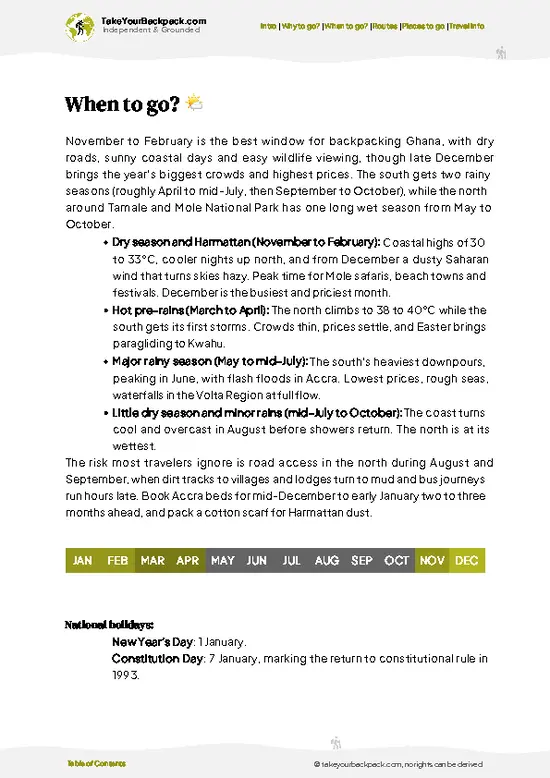
source: climatestotravel.comJANJanuary: excellent for travelingFEBFebruary: highly recommended for travelingMARMarch: highly recommended for travelingAPRApril: fair for travelingMAYMay: fair for travelingJUNJune: fair for travelingJULJuly: fair for travelingAUGAugust: fair for travelingSEPSeptember: fair for travelingOCTOctober: fair for travelingNOVNovember: highly recommended for travelingDECDecember: excellent for traveling
when-to-go

✈️ The backpacker research shortcutGhana Travel Guide

An offline-friendly backpacking guide with optimized travel routes, ranked highlights, transport advice, and the best areas to stay.
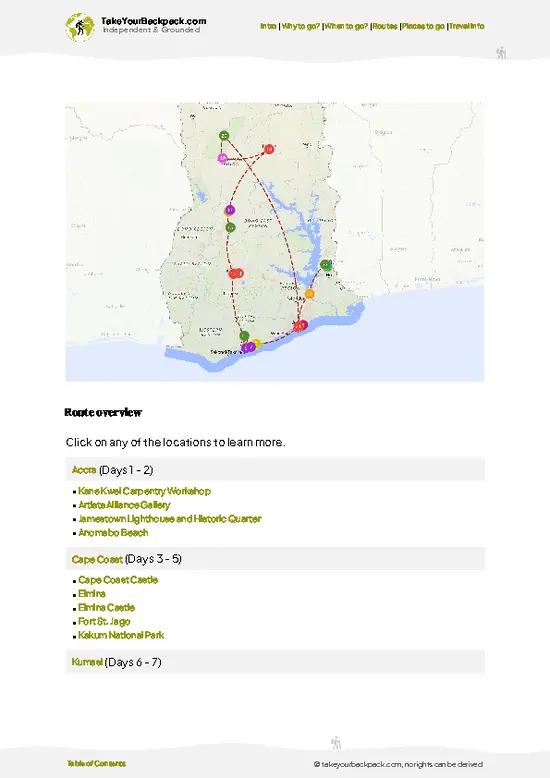
example page 0 from our offline Travel Guide for Ghana
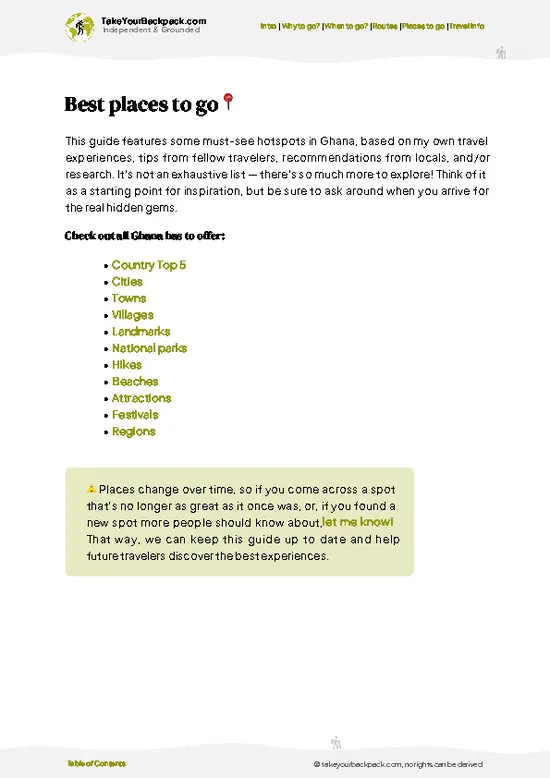
example page 1 from our offline Travel Guide for Ghana
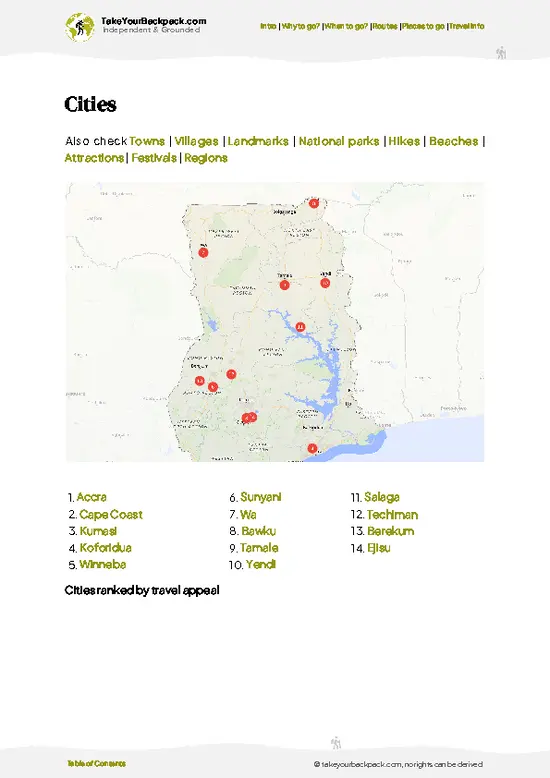
example page 2 from our offline Travel Guide for Ghana
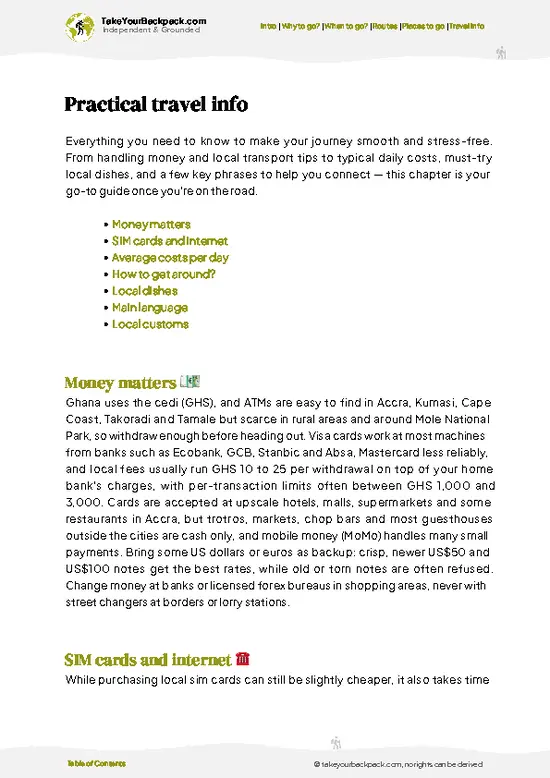
example page 3 from our offline Travel Guide for Ghana
example page 4 from our offline Travel Guide for Ghana
example page 5 from our offline Travel Guide for Ghana
example page 6 from our offline Travel Guide for Ghana
example page 7 from our offline Travel Guide for Ghana
The digital guide (424 pages) contains:
111 highlights, ranked by travel appeal
Optimized 5, 10 & 15-day travel routes
Cities, national parks, landmarks, beaches
How to get around
Offline-friendly for travel without Wi-Fi
👉 Click to see all 30+ guide features

📅 Plan smarter in minutes, not weeks
Month by month travel advice
Festivals & national holidays
Budget expectations

🗺️ Go to the right places, skip the overrated ones
Honest pros & cons of destinations
Top hikes, parks & viewpoints
Lesser-known places most travelers miss
Clear “worth it vs skip it” guidance

🛏️ Travel smoothly without rookie mistakes
Best areas to stay
Transport systems explained simply
Common scams & safety advice
SIM cards, money & practical tips

🌍 Understand the country, not just visit it
Culture & traditions
52 Essential phrases & customs
Festivals worth planning around
Traveler-friendly historical context
Insights that make places more meaningful

📱 Built for real travel conditions
Fully downloadable PDF
Works completely offline
Optimized for phone use
Useful in remote areas & buses
Everything in one place
Save weeks of stressful planning
Get instant access to your full guide. 30‑day money-back guarantee.


By proceeding you agree to our terms.
Sent to your inbox immediately after payment • 100% Secure Checkout
Best Backpacking Travel Advisor 2025 tourism awardBest Backpacking
Travel Advisor
2025
What others say about Take Your Backpack Guides:
⭐⭐⭐⭐⭐
Fantastic, amazing amount of information!
⭐⭐⭐⭐⭐
My goodness this is amazing, it's what I've been looking for hats off too you!
⭐⭐⭐⭐⭐
I think this is absolutely BRILLIANT
⭐⭐⭐⭐
Very complete and informative. It's still missing places, but I gotta to commend you
⭐⭐⭐⭐⭐
This is truly amazing, thank you, can't wait to explore it with my kids!
⭐⭐⭐⭐⭐
Awesome resource, thank you!
⭐⭐⭐⭐⭐
This is amazing! Can't wait to explore the ones I haven't seen
⭐⭐⭐⭐
I love this! Well done, great idea.
⭐⭐⭐⭐⭐
Thanks for taking the time to make this gem!
⭐⭐⭐⭐⭐
This might be the best website I've ever seen.
⭐⭐⭐⭐⭐
Congratulations, and thank you so much for your work; it's incredibly valuable.
⭐⭐⭐⭐
In all seriousness I think you did a great job pointing out the important spots
⭐⭐⭐⭐⭐
10/10 very good
⭐⭐⭐⭐⭐
As someone who's only just starting to visit regularly this is awesome, thank you.
⭐⭐⭐⭐
Thank you very much! I'm going to visit my dad, it's going to be very useful!
⭐⭐⭐⭐⭐
This is really cool! We'll be travelling for the first time and this definitely come in handy.
⭐⭐⭐⭐⭐
You are now our minister of culture, congratulations 👨‍💼
⭐⭐⭐⭐⭐
Just wanted to tell you that this is a pearl! Going to follow your recommendations.
⭐⭐⭐⭐⭐
This is so cool. I'll definitely be using the resource for my travels soon.
⭐⭐⭐⭐⭐
This is very impressive! Good work.
⭐⭐⭐⭐⭐
This is an amazing and informative site. Very well done!

🛏️ Where to stay?Best areas to stay in Ghana

In Ho, Ghana, the real backpacker sweet spot is the central neighborhoods around the main market and the University of Health and Allied Sciences. This area nails the balance between safety, social buzz, and budget-friendly options. You’re close enough to the pulse of the city to catch local life without diving into chaotic traffic or sketchy zones. Hostels and guesthouses cluster here, offering simple but clean digs where you’ll bump into fellow travelers and locals alike. It’s the kind of place where you can swap stories over a shared meal or plan a day trip with new friends.

Venture too far … read more 👉
In Ho, Ghana, the real backpacker sweet spot is the central neighborhoods around the main market and the University of Health and Allied Sciences. This area nails the balance between safety, social buzz, and budget-friendly options. You’re close enough to the pulse of the city to catch local life without diving into chaotic traffic or sketchy zones. Hostels and guesthouses cluster here, offering simple but clean digs where you’ll bump into fellow travelers and locals alike. It’s the kind of place where you can swap stories over a shared meal or plan a day trip with new friends.

Venture too far east or south, and you’ll find quieter residential areas that feel safe but lack the social vibe and easy access to amenities. North of the city center, the scene thins out, and transport options get trickier, which eats into your time and comfort. Staying central means you’re not just saving money on taxis—you’re also investing in experiences that happen spontaneously, like street food stalls popping up or impromptu music sessions. In Ho, the trade-off is clear: choose the lively, central neighborhoods for a backpacker’s blend of safety, social life, and wallet-friendly comfort.

🚌 Getting aroundHow to get around Ho

Ho moves at its own rhythm—neither frantic nor sluggish, but a steady pulse that blends the predictability of routine with the looseness of local improvisation. The city’s flow is a dance between fixed schedules and spontaneous detours, where timing matters but flexibility wins. You’ll find that punctuality is respected but not obsessively enforced, and the streets hum with a mix of motorbikes darting through traffic and pedestrians weaving their way with purpose. Understanding this balance is your first step to mastering Ho’s transit game: it’s about knowing when to plan and when to embrace the unexpected.


  • Walking: The ultimate budget choice and the best way to soak in Ho’s street life. Most central spots are within a 20-30 minute stroll. No cost, full control over your pace, and the
read more 👉
Ho moves at its own rhythm—neither frantic nor sluggish, but a steady pulse that blends the predictability of routine with the looseness of local improvisation. The city’s flow is a dance between fixed schedules and spontaneous detours, where timing matters but flexibility wins. You’ll find that punctuality is respected but not obsessively enforced, and the streets hum with a mix of motorbikes darting through traffic and pedestrians weaving their way with purpose. Understanding this balance is your first step to mastering Ho’s transit game: it’s about knowing when to plan and when to embrace the unexpected.


  • Walking: The ultimate budget choice and the best way to soak in Ho’s street life. Most central spots are within a 20-30 minute stroll. No cost, full control over your pace, and the chance to discover tucked-away markets or street food stalls you’d miss otherwise.


  • Local Minibuses: These are the backbone of Ho’s public transit. They run roughly from 6:00 AM to 9:00 PM, cost about 2,000 to 3,000 VND per ride, and cover most main routes. They’re slow and crowded but unbeatable for price and local flavor. Expect frequent stops and a bit of a squeeze during rush hours.


  • Motorbike Taxis (Xe Om): Quick and flexible, these are perfect for short hops or when you’re pressed for time. Prices start around 10,000 VND, but always negotiate upfront. They offer a comfortable, wind-in-your-hair experience but require you to be comfortable with a bit of risk and the city’s traffic chaos.


  • Grab Motorbike: The app-based motorbike taxi service combines convenience with real-time pricing. Available 24/7, fares vary but generally stay affordable for budget travelers. It’s a safer bet than street-hail motorbikes, with upfront pricing and driver ratings, making it a smart choice when you want speed without the hassle of bargaining.


  • Bicycle Rentals: For the adventurous, renting a bike costs around 50,000 to 70,000 VND per day. It’s slower than motorbikes but offers unmatched freedom to explore at your own pace. Ideal for neighborhoods with less traffic and for those who want a bit of exercise mixed with their sightseeing.

👛 Costs (as of 29 October 2025)What things cost and how to budget

Backpacking in Ho, Ghana, offers a clear trade-off between cost and comfort, with prices that reflect its status as a smaller, less tourist-heavy city. Here’s how your daily budget breaks down:
  • Dorm Accommodation (High Season): Expect to pay around $8 to $12 per night. High season can push prices up slightly due to demand, but options remain basic and functional rather than luxurious.
  • Dorm Accommodation (Off-Season): Prices drop to about $5 to $8. Fewer travelers mean better deals, but don’t expect major upgrades in facilities—think simple, clean, and practical.
  • Meals: Local eateries serve filling meals for $2 to $4. Street food is even cheaper, around $1 to $2, but if you want a mix of local and occasional Western-style dishes, budget closer to $5 per day.
  • Local Transport: Tro-tros (shared
read more 👉
Backpacking in Ho, Ghana, offers a clear trade-off between cost and comfort, with prices that reflect its status as a smaller, less tourist-heavy city. Here’s how your daily budget breaks down:
  • Dorm Accommodation (High Season): Expect to pay around $8 to $12 per night. High season can push prices up slightly due to demand, but options remain basic and functional rather than luxurious.
  • Dorm Accommodation (Off-Season): Prices drop to about $5 to $8. Fewer travelers mean better deals, but don’t expect major upgrades in facilities—think simple, clean, and practical.
  • Meals: Local eateries serve filling meals for $2 to $4. Street food is even cheaper, around $1 to $2, but if you want a mix of local and occasional Western-style dishes, budget closer to $5 per day.
  • Local Transport: Tro-tros (shared minibuses) and taxis cost between $0.30 and $1 per trip. Budget about $2 daily if you’re moving around town frequently.
  • City Transport Pass: Ho doesn’t have a formal city transport pass system, so individual fares apply. This means you pay per ride, which can add up if you’re hopping around a lot.
  • Basic Activities/Entry Fees: Most local attractions and cultural sites charge minimal fees, typically $1 to $3. Budget $3 to $5 daily if you plan to explore museums, markets, or community events.
  • Miscellaneous Expenses: This covers bottled water, snacks, occasional phone credit, or small tips. Around $2 to $4 daily keeps you covered without surprises.

All told, a realistic daily budget for backpacking in Ho ranges from about $15 on a shoestring to $30 if you lean toward a bit more comfort or activity. The city’s low-key vibe means you’re paying for authenticity and simplicity rather than polished tourist infrastructure. Knowing where to save and where to spend lets you craft a trip that’s both affordable and rich in local flavor.


source: ghana.travel
⚠️ Prices can change and everyone travels differently, so take this as a rough guide. Hope it helps you plan your adventure!

🚌 Day tripsWhere to go beyond the main area

Using Ho, Ghana as your base for day trips opens up a world of vibrant experiences. The region is rich in culture, nature, and history, making it a backpacker’s playground. Here are some day trips that are genuinely worth your time and energy.

Aburi Botanical Gardens
Just a short 45-minute drive from Ho, the Aburi Botanical Gardens offer a serene escape. You’ll wander through lush greenery, marvel at exotic plants, and enjoy the cooler mountain air. It’s a perfect spot for a picnic or a leisurely stroll. The entrance fee is minimal, making it a budget-friendly option. The best time to visit is during the dry season, when the gardens are in full bloom. A common mistake is underestimating the time needed to explore; plan for at least half a day to soak it all in.
👉 Explore Aburi Botanical read more 👉
Using Ho, Ghana as your base for day trips opens up a world of vibrant experiences. The region is rich in culture, nature, and history, making it a backpacker’s playground. Here are some day trips that are genuinely worth your time and energy.

Aburi Botanical Gardens
Just a short 45-minute drive from Ho, the Aburi Botanical Gardens offer a serene escape. You’ll wander through lush greenery, marvel at exotic plants, and enjoy the cooler mountain air. It’s a perfect spot for a picnic or a leisurely stroll. The entrance fee is minimal, making it a budget-friendly option. The best time to visit is during the dry season, when the gardens are in full bloom. A common mistake is underestimating the time needed to explore; plan for at least half a day to soak it all in.
👉 Explore Aburi Botanical Gardens

Tafi Atome Monkey Sanctuary
About an hour from Ho, this sanctuary is home to playful Mona monkeys. You can take a guided tour to learn about the local ecosystem and the monkeys’ role in it. The experience is intimate and educational, with the chance to feed the monkeys. Expect to spend around $5 for the entrance and guide. The dry season is ideal, as the monkeys are more active. First-timers often miss the chance to engage with the guides; they have fascinating stories that enhance the experience.
👉 Explore Tafi Atome Monkey Sanctuary

Wli Waterfalls
A 30-minute ride from Ho leads you to Wli Waterfalls, the highest in West Africa. The hike to the falls is invigorating, with stunning views along the way. The entrance fee is around $3, making it accessible for budget travelers. The best time to visit is during the rainy season when the falls are at their most powerful. Many newcomers underestimate the hike’s intensity; wear sturdy shoes and bring plenty of water.
👉 Explore Wli Waterfalls

Kpando
Just 30 minutes away, Kpando is known for its rich history and local crafts. You can visit the Kpando Pottery Village to see artisans at work and even try your hand at pottery. The experience is immersive and costs next to nothing. The dry season is best for visiting, as the roads can get muddy during the rains. A common oversight is not checking the pottery schedule; some artisans may not be available every day.
Want to know what more Ghana offers?
The Ghana Travel Guide describes 111 highlights, from cities to national parks, from beaches to hikes

Get the Travel Guide -

🍲 FoodLocal Flavors for Backpackers

In Ho, Ghana, food is a vibrant tapestry of flavors and communal experiences. Dive into fufu, a starchy staple made from cassava and plantains, often paired with rich light soup or groundnut stew. The texture is unique, and the taste is a comforting embrace. Don’t miss banku, a fermented corn dish served with spicy pepper sauce and grilled fish—it’s a local favorite that packs a punch.

Street food is where the magic happens. Vendors line the streets, sizzling kebabs and frying plantain chips that fill the air with mouthwatering aromas. Markets are bustling with energy, and you’ll find locals enjoying waakye, a rice and bean dish, often topped with fried eggs and spicy sauce. Eating here is a social affair; expect to share tables and stories with fellow diners.

When it comes to drinks, try … read more 👉
In Ho, Ghana, food is a vibrant tapestry of flavors and communal experiences. Dive into fufu, a starchy staple made from cassava and plantains, often paired with rich light soup or groundnut stew. The texture is unique, and the taste is a comforting embrace. Don’t miss banku, a fermented corn dish served with spicy pepper sauce and grilled fish—it’s a local favorite that packs a punch.

Street food is where the magic happens. Vendors line the streets, sizzling kebabs and frying plantain chips that fill the air with mouthwatering aromas. Markets are bustling with energy, and you’ll find locals enjoying waakye, a rice and bean dish, often topped with fried eggs and spicy sauce. Eating here is a social affair; expect to share tables and stories with fellow diners.

When it comes to drinks, try sobolo, a refreshing hibiscus drink that’s both tart and sweet. It’s a popular choice, especially in the heat. Remember, in local culture, sharing food and drinks is a sign of friendship, so don’t hesitate to join in the communal spirit. Embrace the flavors, and let the experience linger long after the last bite.

🛡️ SafetyStaying Safe: What Travelers Should Know

Ho, Ghana, is generally safe for backpackers, but a few situational awareness tips can enhance your experience. Stick to well-lit areas at night, especially if you’re solo. The town is friendly, but it’s wise to keep your belongings close, particularly in crowded markets where distractions can lead to petty theft.

Common scams are rare, but be cautious of overly eager vendors who may inflate prices. Always negotiate and trust your instincts. If someone offers unsolicited help, politely decline; they might expect a tip.

Annoyances can include persistent street hawkers, but a firm “no, thank you” usually suffices. Embrace the local culture, engage with the community, and you’ll find that most interactions are genuine. By staying aware and confident, you’ll navigate Ho with ease and enjoy its vibrant atmosphere.

Other Ghanaian towns near Ho

Explore more nearby:

  • Amedzofe—Mountain vistas, cool climate, colonial church| 27 km away
  • Kpandu—Volta Lake port, Ewe settlements, market town| 47 km away
  • Akwamufie—Royal palace, Volta River views, Akwamu heritage| 58 km away

💡 Not sure where to go next?
Create a personalized itinerary for Ghana including Ho and the places that fit your trip.

Generate my itinerary

👉 Discover all towns

Or checkout all Ghana has to offer (think cities, towns, villages, national parks, hikes, beaches, festivals)
Country photo of Ghana

We 💚 feedbackWhat to keep in mind

Ho offers a vibrant slice of Ghanaian culture, especially at the local markets where you can taste authentic dishes and connect with welcoming locals. But be prepared: the infrastructure isn’t as developed as in bigger cities. Roads can be bumpy, and amenities might not always meet Western standards. Embrace the quirks, and you’ll find that the experience is rich and rewarding, even if it requires a bit of patience.

✈️ When did I visit Ghana?
Ghana I visited in December 2024, starting in Accra following the coast, then up north to Mole National park to finish in the Volta Region.

✍️ Help improve this page!
The information on this page is based on my own backpacking experience in Ghana, supplemented with up-to-date research and feedback from other travelers. Travel details can change, so if you notice anything outdated or incomplete, feel free to let me know.


🙋‍♂️ Give feedback

👋 Meet the founderWho’s Behind Take Your Backpack?

Johan, backpacker and founder of TakeYourBackpackHi, I’m Johan (Netherlands 🇳🇱), the creator of TakeYourBackpack. Over the past decade, I’ve backpacked through 80+ countries across six continents, gaining extensive experience with independent travel, long-term trips, and overland routes.

This site is built on a combination of firsthand travel experience and carefully curated insights from other backpackers. Many guides are based on places I’ve personally visited, while others bring together tips, observations, and practical advice shared by trusted travelers I’ve met along the way.

The goal is to provide realistic, experience-driven guidance — not generic itineraries — so you can explore destinations with better context, clearer expectations, and more confidence.

Get full Ghana guide •
Instant download • 111 highlights • Full Offline guide