×

Ghana🇬🇭 | citiesKoforiduabead markets, waterfalls, cocoa farms, forested hills | things to do and best time to go

Explore TakoradiExplore Wa

Backpacking in Koforidua
🌟 Highlightcity ranked #7
By Johan Kruseman 🇳🇱 | Updated June 5, 2026

Here’s what most travelers only realize after leaving Koforidua: it’s the rare Ghanaian city where you can slow down without feeling stranded. Tucked in the lush Eastern Region, about two hours from Accra, Koforidua is a crossroads town that feels both accessible and off the main tourist radar. The city’s Boti Falls and the bead markets are the obvious draws, but the real charm is in the everyday rhythm—morning walks through leafy neighborhoods, the easy banter at roadside chop bars, and the sense that you’re not just passing through, but pausing. It’s safer and less hectic than Kumasi, cheaper than Accra, and friendlier than most. Don’t expect a backpacker scene or wild nightlife; you’ll meet more locals than travelers, and that’s the point. Koforidua rewards curiosity, not checklist tourism.

Discover everything you want to know in the 📖 Ghana Travel Guide.


Get your Ghana guide
111 ranked highlights, routes & tips, works offline (424 pages)
Loading the map 🌍
CLICK TO FILTER
cities
towns
villages
landmarks
national parks
hikes
beaches
attractions
festivals
regions
SHOW COUNTRY’S BESTSHOW ALL

✨ Why go?
Ranked #7 city in Ghana
The unique appeal for travelers

Koforidua is a strategic basecamp for backpackers exploring Ghana. It’s not just about the highlights; it’s the value you get from being here. The city is walkable, making it easy to navigate between local markets and eateries. You’ll find a range of hostels that cater to different budgets, offering a chance to meet fellow travelers and swap stories. The food scene is vibrant, with street vendors serving up local dishes that won’t break the bank.

Koforidua also serves as a launchpad for day trips to nearby attractions, allowing you to experience the lush landscapes without the hassle of constant packing. The nightlife is laid-back but lively, perfect for unwinding after a day of exploration. Plus, onward travel is straightforward, connecting you to other key destinations in Ghana. If you’re … read more 👉
Koforidua is a strategic basecamp for backpackers exploring Ghana. It’s not just about the highlights; it’s the value you get from being here. The city is walkable, making it easy to navigate between local markets and eateries. You’ll find a range of hostels that cater to different budgets, offering a chance to meet fellow travelers and swap stories. The food scene is vibrant, with street vendors serving up local dishes that won’t break the bank.

Koforidua also serves as a launchpad for day trips to nearby attractions, allowing you to experience the lush landscapes without the hassle of constant packing. The nightlife is laid-back but lively, perfect for unwinding after a day of exploration. Plus, onward travel is straightforward, connecting you to other key destinations in Ghana. If you’re looking for a place that balances comfort and affordability while providing a taste of local life, Koforidua is worth considering, whether for a short stop or a longer stay.
Want to include Koforidua in your Ghana route?
Create a personalized Ghana itinerary that includes Koforidua and the places that fit your trip — based on your travel style, budget, and available time. Get your route in seconds.

Generate my trip

💡 HighlightsWhat this place is best known for

  • Koforidua Central Market — The city’s busiest heart: a maze of stalls selling fresh produce, spices, fabrics, second-hand clothing and everyday goods. Great for people-watching, bargaining practice, and sampling street food like waakye or kebabs while soaking up genuine market life.
  • Akwantukese Festival and Durbar Grounds — The signature cultural moment for New Juaben people, commemorating their migration and communal history. Visiting during the festival (usually in the autumn) delivers drumming, dancing, royal durbar, processionals and vividly dressed chiefs and elders — a direct lesson in local identity and ceremony.
  • New Juaben Palace (Omanhene’s Palace) — The traditional seat of the New Juaben paramount chief and a living link to local governance and customs. The compound, regalia
read more 👉
  • Koforidua Central Market — The city’s busiest heart: a maze of stalls selling fresh produce, spices, fabrics, second-hand clothing and everyday goods. Great for people-watching, bargaining practice, and sampling street food like waakye or kebabs while soaking up genuine market life.
  • Akwantukese Festival and Durbar Grounds — The signature cultural moment for New Juaben people, commemorating their migration and communal history. Visiting during the festival (usually in the autumn) delivers drumming, dancing, royal durbar, processionals and vividly dressed chiefs and elders — a direct lesson in local identity and ceremony.
  • New Juaben Palace (Omanhene’s Palace) — The traditional seat of the New Juaben paramount chief and a living link to local governance and customs. The compound, regalia and occasional public events give a clear sense of chieftaincy’s role in community life and history.
Boti Falls, Umbrella Rock and the Bunso Arboretum are excellent day trips from Koforidua; my personal favorite is Boti Falls.
Spotted a mistake or missing something? Contact us.

Things to do near Koforidua

Ratings based on Tripadvisor reviews. When you book through this link, you support our work at no extra cost to you.

🏘️ NeighborhoodsKey areas and districts to know

Koforidua, the capital of the Eastern Region of Ghana, offers a unique blend of culture and accessibility for backpackers. Here’s a breakdown of key neighborhoods to help you navigate your stay.

Central Koforidua
This area buzzes with local life. You’ll find markets, street food, and shops. It’s affordable, with plenty of budget accommodations. Walkability is high, making it easy to explore on foot. Nightlife is modest, with a few bars and local hangouts. Perfect for short stays where you want to soak in the local vibe.

New Town
A bit quieter, New Town is ideal for those seeking a more relaxed atmosphere. It’s slightly more upscale, so expect higher prices for lodging. The area is well-connected by public transport, making it easy to reach other parts of the city. Great for longer stays … read more 👉
Koforidua, the capital of the Eastern Region of Ghana, offers a unique blend of culture and accessibility for backpackers. Here’s a breakdown of key neighborhoods to help you navigate your stay.

Central Koforidua
This area buzzes with local life. You’ll find markets, street food, and shops. It’s affordable, with plenty of budget accommodations. Walkability is high, making it easy to explore on foot. Nightlife is modest, with a few bars and local hangouts. Perfect for short stays where you want to soak in the local vibe.

New Town
A bit quieter, New Town is ideal for those seeking a more relaxed atmosphere. It’s slightly more upscale, so expect higher prices for lodging. The area is well-connected by public transport, making it easy to reach other parts of the city. Great for longer stays if you prefer a peaceful environment.

Old Town
Rich in history, Old Town has a charming, laid-back feel. It’s walkable, with a mix of local eateries and shops. Prices are reasonable, and you can find some hidden spots for authentic Ghanaian cuisine. Nightlife is minimal, making it suitable for those who want to unwind after a day of exploration.

Koforidua Township
This area is a hub for transport, connecting you to nearby attractions. It’s bustling and slightly chaotic, but that’s part of its charm. Accommodations range from budget to mid-range. Ideal for backpackers who want to use Koforidua as a base for day trips while enjoying a lively atmosphere.

⌛️ 1 daySeeing the highlights in 24 hours

Koforidua, the capital of the Eastern Region of Ghana, is a vibrant hub known for its rich culture and lush landscapes. It’s a place where the pulse of local life beats strong, and the warmth of the people is palpable. You can dive into the heart of Ghanaian culture without the overwhelming tourist crowds.

Start your morning at the Koforidua Central Market. The market is a sensory overload in the best way—colors, sounds, and the aroma of fresh produce fill the air. Grab a breakfast of kelewele (spicy fried plantains) from a local vendor. It’s a delicious way to fuel up while mingling with locals. Afterward, stroll through the nearby neighborhoods, taking in the vibrant street art and the rhythm of daily life.

In the afternoon, head to the Boti Falls, a short drive from the city. This spot … read more 👉
Koforidua, the capital of the Eastern Region of Ghana, is a vibrant hub known for its rich culture and lush landscapes. It’s a place where the pulse of local life beats strong, and the warmth of the people is palpable. You can dive into the heart of Ghanaian culture without the overwhelming tourist crowds.

Start your morning at the Koforidua Central Market. The market is a sensory overload in the best way—colors, sounds, and the aroma of fresh produce fill the air. Grab a breakfast of kelewele (spicy fried plantains) from a local vendor. It’s a delicious way to fuel up while mingling with locals. Afterward, stroll through the nearby neighborhoods, taking in the vibrant street art and the rhythm of daily life.

In the afternoon, head to the Boti Falls, a short drive from the city. This spot is often overlooked by tourists, but it’s a stunning natural escape. The falls cascade into a serene pool, perfect for a refreshing dip. You can hike the surrounding trails, where the lush greenery offers a peaceful contrast to the bustling market.

As the sun begins to set, return to Koforidua and explore the local dining scene. Try a traditional Ghanaian meal at a local eatery, where you can savor jollof rice and grilled tilapia. The evening can be spent at the Koforidua Botanical Gardens, a tranquil spot to unwind and reflect on your day.

This itinerary balances time, money, and comfort, allowing you to experience the essence of Koforidua without feeling rushed. Each choice enriches your journey, making it a day well spent.
Turn your Koforidua visit into an Ghana adventure
Build a complete Ghana route with Koforidua, hidden gems, must-see destinations, and realistic travel times included.

Generate my trip

🌤️ When to go?Weather, crowds, and seasonal trade-offs


  • Topic: Weather – Koforidua experiences a tropical climate with two rainy seasons: April to June and September to November. The dry season, from December to March, offers clearer skies and less humidity, making it ideal for trekking and outdoor exploration.

  • Topic: Temperature – Expect daily highs around 28-32°C (82-90°F) year-round. Nights cool to 22-24°C (72-75°F), which is comfortable for sleeping. The dry season feels less sticky, while the rainy months bring higher humidity.

  • Topic: Daylight Hours – Daylight remains steady throughout the year, roughly 12 hours daily. Sunrise is around 6:00 AM and sunset near 6:00 PM, giving you a reliable window for activities regardless of season.

  • Topic: Crowds – Tourist traffic peaks during the dry season, especially December to February, when
read more 👉

  • Topic: Weather – Koforidua experiences a tropical climate with two rainy seasons: April to June and September to November. The dry season, from December to March, offers clearer skies and less humidity, making it ideal for trekking and outdoor exploration.

  • Topic: Temperature – Expect daily highs around 28-32°C (82-90°F) year-round. Nights cool to 22-24°C (72-75°F), which is comfortable for sleeping. The dry season feels less sticky, while the rainy months bring higher humidity.

  • Topic: Daylight Hours – Daylight remains steady throughout the year, roughly 12 hours daily. Sunrise is around 6:00 AM and sunset near 6:00 PM, giving you a reliable window for activities regardless of season.

  • Topic: Crowds – Tourist traffic peaks during the dry season, especially December to February, when locals and visitors alike escape the rains. Expect more competition for budget accommodations and guided tours.

  • Topic: Seasonal Activities – Festivals like the Ohum Festival in December offer rich cultural immersion but attract crowds. The dry season also aligns with better hiking conditions in nearby hills.

  • Topic: Price Fluctuations – Accommodation and transport costs rise during the dry season and festival periods. The rainy months see lower prices but come with the trade-off of disrupted plans due to weather.


Pro-tip: Aim for late November or early March—just before or after peak rains—to snag lower prices, avoid crowds, and still enjoy mostly dry, comfortable conditions.


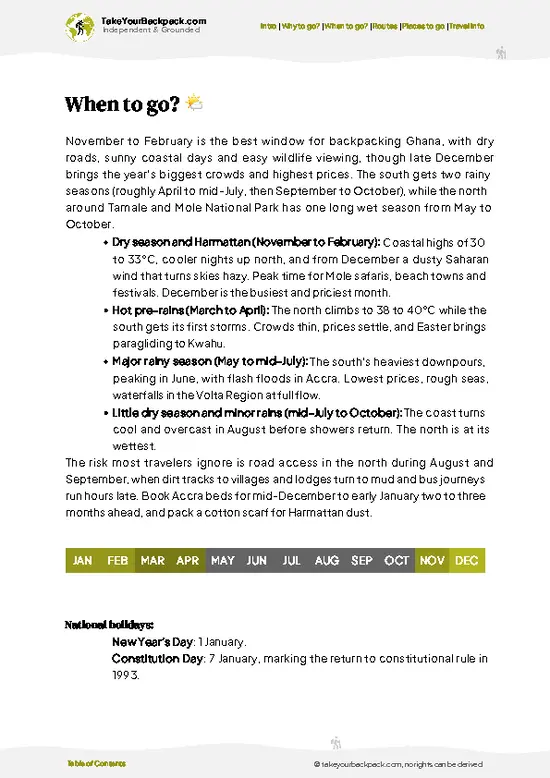
source: climatestotravel.comJANJanuary: highly recommended for travelingFEBFebruary: highly recommended for travelingMARMarch: highly recommended for travelingAPRApril: fair for travelingMAYMay: fair for travelingJUNJune: fair for travelingJULJuly: good for travelingAUGAugust: good for travelingSEPSeptember: fair for travelingOCTOctober: fair for travelingNOVNovember: good for travelingDECDecember: highly recommended for traveling
when-to-go

✈️ The backpacker research shortcutGhana Travel Guide

An offline-friendly backpacking guide with optimized travel routes, ranked highlights, transport advice, and the best areas to stay.
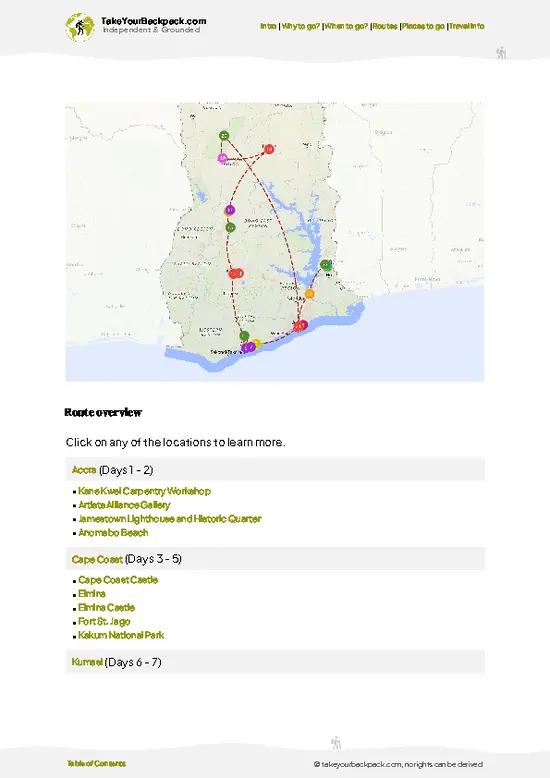
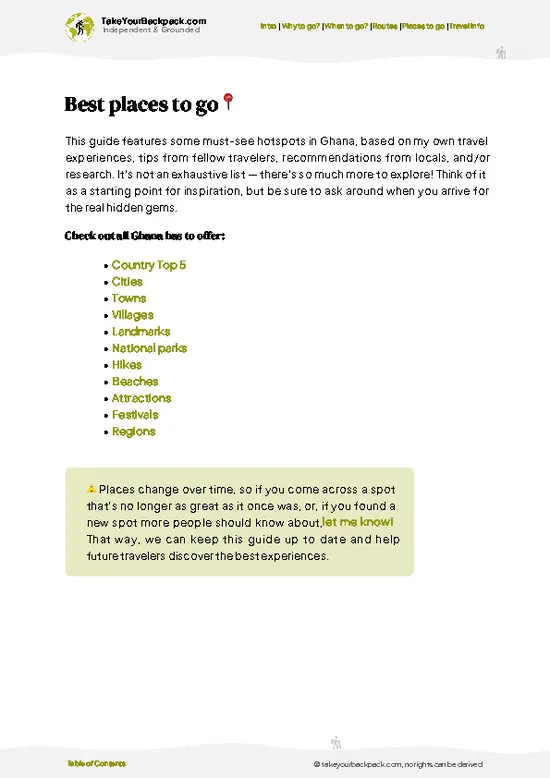
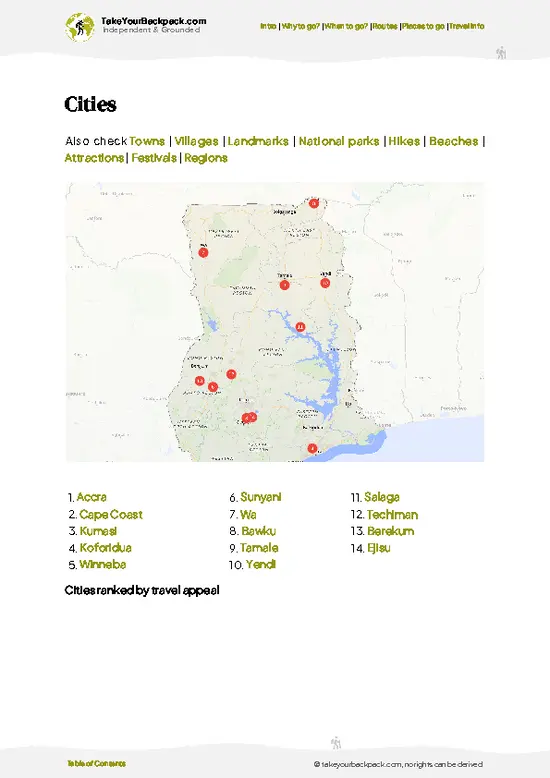
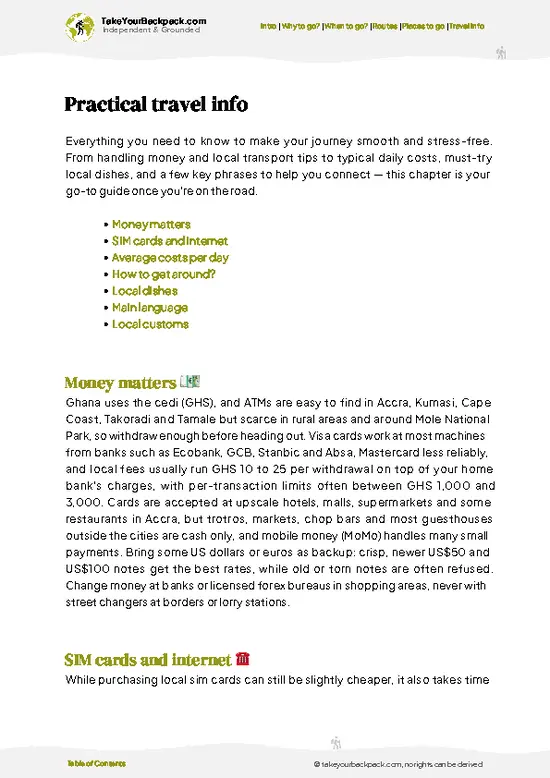
example page 0 from our offline Travel Guide for Ghanaexample page 1 from our offline Travel Guide for Ghanaexample page 2 from our offline Travel Guide for Ghanaexample page 3 from our offline Travel Guide for Ghanaexample page 4 from our offline Travel Guide for Ghanaexample page 5 from our offline Travel Guide for Ghanaexample page 6 from our offline Travel Guide for Ghanaexample page 7 from our offline Travel Guide for Ghana
The digital guide (424 pages) contains:
111 highlights, ranked by travel appeal
Optimized 5, 10 & 15-day travel routes
Cities, national parks, landmarks, beaches
How to get around
Offline-friendly for travel without Wi-Fi
👉 Click to see all 30+ guide features

📅 Plan smarter in minutes, not weeks
Month by month travel advice
Festivals & national holidays
Budget expectations

🗺️ Go to the right places, skip the overrated ones
Honest pros & cons of destinations
Top hikes, parks & viewpoints
Lesser-known places most travelers miss
Clear “worth it vs skip it” guidance

🛏️ Travel smoothly without rookie mistakes
Best areas to stay
Transport systems explained simply
Common scams & safety advice
SIM cards, money & practical tips

🌍 Understand the country, not just visit it
Culture & traditions
52 Essential phrases & customs
Festivals worth planning around
Traveler-friendly historical context
Insights that make places more meaningful

📱 Built for real travel conditions
Fully downloadable PDF
Works completely offline
Optimized for phone use
Useful in remote areas & buses
Everything in one place
Save weeks of stressful planning
Get instant access to your full guide. 30‑day money-back guarantee.


By proceeding you agree to our terms.
Sent to your inbox immediately after payment • 100% Secure Checkout
Best Backpacking Travel Advisor 2025 tourism awardBest Backpacking
Travel Advisor
2025
What others say about Take Your Backpack Guides:
⭐⭐⭐⭐⭐
Fantastic, amazing amount of information!
⭐⭐⭐⭐⭐
My goodness this is amazing, it's what I've been looking for hats off too you!
⭐⭐⭐⭐⭐
I think this is absolutely BRILLIANT
⭐⭐⭐⭐
Very complete and informative. It's still missing places, but I gotta to commend you
⭐⭐⭐⭐⭐
This is truly amazing, thank you, can't wait to explore it with my kids!
⭐⭐⭐⭐⭐
Awesome resource, thank you!
⭐⭐⭐⭐⭐
This is amazing! Can't wait to explore the ones I haven't seen
⭐⭐⭐⭐
I love this! Well done, great idea.
⭐⭐⭐⭐⭐
Thanks for taking the time to make this gem!
⭐⭐⭐⭐⭐
This might be the best website I've ever seen.
⭐⭐⭐⭐⭐
Congratulations, and thank you so much for your work; it's incredibly valuable.
⭐⭐⭐⭐
In all seriousness I think you did a great job pointing out the important spots
⭐⭐⭐⭐⭐
10/10 very good
⭐⭐⭐⭐⭐
As someone who's only just starting to visit regularly this is awesome, thank you.
⭐⭐⭐⭐
Thank you very much! I'm going to visit my dad, it's going to be very useful!
⭐⭐⭐⭐⭐
This is really cool! We'll be travelling for the first time and this definitely come in handy.
⭐⭐⭐⭐⭐
You are now our minister of culture, congratulations 👨‍💼
⭐⭐⭐⭐⭐
Just wanted to tell you that this is a pearl! Going to follow your recommendations.
⭐⭐⭐⭐⭐
This is so cool. I'll definitely be using the resource for my travels soon.
⭐⭐⭐⭐⭐
This is very impressive! Good work.
⭐⭐⭐⭐⭐
This is an amazing and informative site. Very well done!

🛏️ Where to stay?Choosing the right base

In Koforidua, the sweet spot for backpackers is the central area around the New Town and the vicinity of the Koforidua Market. This zone strikes a balance between safety and social buzz, making it a natural magnet for solo travelers and budget-conscious visitors. You’ll find a handful of hostels and guesthouses here, modest but clean, offering the essentials without the fluff. The vibe is low-key but lively enough to meet other travelers or locals, especially around the market where daily life unfolds in full color.

Compared to the quieter, more residential suburbs, this central cluster puts … read more 👉
In Koforidua, the sweet spot for backpackers is the central area around the New Town and the vicinity of the Koforidua Market. This zone strikes a balance between safety and social buzz, making it a natural magnet for solo travelers and budget-conscious visitors. You’ll find a handful of hostels and guesthouses here, modest but clean, offering the essentials without the fluff. The vibe is low-key but lively enough to meet other travelers or locals, especially around the market where daily life unfolds in full color.

Compared to the quieter, more residential suburbs, this central cluster puts you within walking distance of eateries, transport hubs, and cultural spots—saving you time and transport costs. It’s not luxury, but that’s the point: you’re trading off plush comfort for authentic immersion and easy social connections. Avoid the outskirts where options thin out and safety can be less predictable. In Koforidua, staying central means you’re plugged into the city’s rhythm without overspending or sacrificing your peace of mind. It’s a practical, smart choice for the savvy backpacker who wants to maximize experience over indulgence.

🚌 Getting aroundTransportation options and practical tips

Koforidua moves at its own rhythm—neither a frantic rush nor a slow crawl, but a pulse that blends the predictability of schedules with the improvisation of local know-how. Here, time is a flexible concept, shaped by the ebb and flow of daily life rather than strict timetables. You’ll find that the city’s transit options reflect this balance: some run on the clock, others on the street’s intuition. Understanding this dynamic is your key to mastering movement without wasting cash or patience.


  • Tro-Tros: The backbone of budget travel here. These shared minibuses run from dawn until late evening, roughly 5:30 AM to 9 PM. Fares hover around 1 to 3 Ghanaian cedis depending on distance. They’re fast enough to get you across town but expect crowding and frequent stops. Comfort is minimal, but
read more 👉
Koforidua moves at its own rhythm—neither a frantic rush nor a slow crawl, but a pulse that blends the predictability of schedules with the improvisation of local know-how. Here, time is a flexible concept, shaped by the ebb and flow of daily life rather than strict timetables. You’ll find that the city’s transit options reflect this balance: some run on the clock, others on the street’s intuition. Understanding this dynamic is your key to mastering movement without wasting cash or patience.


  • Tro-Tros: The backbone of budget travel here. These shared minibuses run from dawn until late evening, roughly 5:30 AM to 9 PM. Fares hover around 1 to 3 Ghanaian cedis depending on distance. They’re fast enough to get you across town but expect crowding and frequent stops. Comfort is minimal, but the price and frequency make them unbeatable for budget travelers.


  • Shared Taxis: A step up in comfort and speed, shared taxis operate on flexible routes and leave when full. Prices are higher than tro-tros, around 5 to 10 cedis, but you gain a bit more personal space and quicker trips. They’re less predictable on timing, so plan some buffer if you’re on a tight schedule.


  • Walking: Don’t underestimate your own two feet. Koforidua’s core is compact enough to explore on foot, especially if you’re sticking to the central markets and landmarks. Walking costs nothing, gives you full control over your pace, and lets you soak in the city’s textures—sounds, smells, and street life—that no vehicle can deliver.


  • Motorbike Taxis (Okada): For those moments when time is tight and you’re willing to trade comfort for speed, okadas zip through traffic with ease. Fares vary widely but expect to pay around 3 to 7 cedis for short hops. They’re quick but less safe and less comfortable, so use them selectively, especially if you’re carrying gear.


  • Private Car Hire: The priciest option, usually reserved for groups or those with a flexible budget. Rates start at about 150 cedis per day. This offers maximum comfort and control over your schedule but sacrifices the local immersion and budget-friendliness that make Koforidua’s charm accessible.


Mastering Koforidua’s transit means balancing your priorities: save money and embrace the tro-tro’s communal chaos, or spend more for speed and comfort. Walk when you want to slow down and absorb the city’s pulse. Each choice is a trade-off in time, money, and comfort—your job is to pick the combination that turns travel logistics into your personal advantage.

👛 Costs (as of 22 October 2025)How expensive it really is

Backpacking in Koforidua, Ghana, offers a clear-cut trade-off between cost, convenience, and comfort. Understanding the daily expenses here lets you play the system smartly, choosing where to save and where to splurge for maximum value.
  • Dorm Accommodation (High Season): Expect to pay around $10 to $15 per night. High season pushes prices up slightly due to demand, but dorms remain basic—think simple beds, shared bathrooms, and minimal extras.
  • Dorm Accommodation (Off-Season): Prices drop to about $6 to $10 per night. Off-season is your chance to snag quieter, cheaper stays without sacrificing the essentials.
  • Meals: Street food and local eateries dominate here. Budget roughly $3 to $6 per day if you stick to traditional Ghanaian dishes like waakye or banku. Eating at tourist-oriented spots
read more 👉
Backpacking in Koforidua, Ghana, offers a clear-cut trade-off between cost, convenience, and comfort. Understanding the daily expenses here lets you play the system smartly, choosing where to save and where to splurge for maximum value.
  • Dorm Accommodation (High Season): Expect to pay around $10 to $15 per night. High season pushes prices up slightly due to demand, but dorms remain basic—think simple beds, shared bathrooms, and minimal extras.
  • Dorm Accommodation (Off-Season): Prices drop to about $6 to $10 per night. Off-season is your chance to snag quieter, cheaper stays without sacrificing the essentials.
  • Meals: Street food and local eateries dominate here. Budget roughly $3 to $6 per day if you stick to traditional Ghanaian dishes like waakye or banku. Eating at tourist-oriented spots can double that, so choose wisely.
  • Local Transport: Tro-tros (shared minibuses) are the backbone of getting around town, costing about $0.20 to $0.50 per ride. Budget $1 to $2 daily if you’re hopping on and off frequently.
  • City Transport Pass: Koforidua doesn’t have a formal city transport pass system. Your best bet is to budget for individual tro-tro rides or occasional taxis, which run around $1 to $3 depending on distance.
  • Basic Activities/Entry Fees: Most local attractions, like the nearby waterfalls or cultural sites, charge minimal fees—usually under $2. Budget $2 to $5 daily if you plan to explore actively.
  • Miscellaneous Expenses: This covers bottled water, snacks, phone credit, and small tips. Around $2 to $4 daily keeps you covered without surprises.

Total daily costs for backpacking in Koforidua typically range from $15 to $30. This spread reflects your choices: tighter budgets lean on off-season dorms and street food, while a bit more comfort or activity pushes you toward the upper end. Knowing these numbers lets you control your experience instead of being controlled by it.


source: ghana.travel
⚠️ Prices can change and everyone travels differently, so take this as a rough guide. Hope it helps you plan your adventure!

🚌 Day tripsBest day trips from Koforidua

Koforidua, Ghana, is a backpacker’s dream base for day trips, offering a mix of culture, nature, and adventure. Here are some standout options that make the most of your time and money.

Boti Falls
Just a 30-minute drive from Koforidua, Boti Falls is a refreshing escape into nature. The twin waterfalls cascade dramatically, and you can swim in the cool pools below. The entrance fee is minimal, usually around 5 GHS, making it a budget-friendly choice. Aim for the rainy season (April to June) for the fullest flow, but be cautious of slippery paths. A common mistake is underestimating the hike; wear sturdy shoes to navigate the terrain.
👉 Explore Boti Falls

Aburi Botanical Gardens
A mere 45-minute ride will take you to the lush Aburi Botanical Gardens. This serene spot is perfect for a … read more 👉
Koforidua, Ghana, is a backpacker’s dream base for day trips, offering a mix of culture, nature, and adventure. Here are some standout options that make the most of your time and money.

Boti Falls
Just a 30-minute drive from Koforidua, Boti Falls is a refreshing escape into nature. The twin waterfalls cascade dramatically, and you can swim in the cool pools below. The entrance fee is minimal, usually around 5 GHS, making it a budget-friendly choice. Aim for the rainy season (April to June) for the fullest flow, but be cautious of slippery paths. A common mistake is underestimating the hike; wear sturdy shoes to navigate the terrain.
👉 Explore Boti Falls

Aburi Botanical Gardens
A mere 45-minute ride will take you to the lush Aburi Botanical Gardens. This serene spot is perfect for a leisurely stroll among exotic plants and towering trees. The entrance fee is around 10 GHS, and you can easily spend a few hours soaking in the tranquility. The best time to visit is early morning when the air is crisp and the crowds are thin. First-timers often miss the guided tours, which offer fascinating insights into the flora.
👉 Explore Aburi Botanical Gardens

Akuapem Ridge
For a bit of adventure, head to the Akuapem Ridge, about an hour away. The views are breathtaking, and you can hike various trails that cater to different skill levels. Costs are minimal, mainly transportation and perhaps a small fee for a local guide. The dry season (November to March) is ideal for clear skies. Many backpackers overlook the local eateries; don’t skip the chance to try some traditional dishes after your hike.


Koforidua Market
If you want to dive into local culture without venturing far, the Koforidua Market is a must. It’s right in town and offers a vibrant atmosphere filled with colorful stalls selling everything from textiles to fresh produce. A few cedis will get you a delicious street snack. The market is busiest on Saturdays, so plan accordingly. First-timers often miss the chance to haggle; it’s part of the experience!
Want to know what more Ghana offers?
The Ghana Travel Guide describes 111 highlights, from cities to national parks, from beaches to hikes

Get the Travel Guide -

🍲 FoodEating & Drinking in Koforidua

In Koforidua, the local cuisine is a vibrant tapestry of flavors that beckons you to dive in. Start with fufu, a starchy staple made from cassava or plantains, often paired with a rich, spicy soup like light soup or groundnut soup. The texture is unique, and the experience of dipping and savoring is a must.

Street food is where the magic happens. Vendors line the bustling markets, serving up kebabs and waakye—a hearty rice and beans dish that’s a breakfast favorite. The aroma of grilled meats fills the air, mingling with the scent of fried plantains. Grab a chinchinga (kebabs) on the go, and you’ll feel like a local.

When it comes to drinks, don’t miss out on sobolo, a refreshing hibiscus drink that’s both sweet and tart. It’s the perfect companion to your meals.

Etiquette here is relaxed; … read more 👉
In Koforidua, the local cuisine is a vibrant tapestry of flavors that beckons you to dive in. Start with fufu, a starchy staple made from cassava or plantains, often paired with a rich, spicy soup like light soup or groundnut soup. The texture is unique, and the experience of dipping and savoring is a must.

Street food is where the magic happens. Vendors line the bustling markets, serving up kebabs and waakye—a hearty rice and beans dish that’s a breakfast favorite. The aroma of grilled meats fills the air, mingling with the scent of fried plantains. Grab a chinchinga (kebabs) on the go, and you’ll feel like a local.

When it comes to drinks, don’t miss out on sobolo, a refreshing hibiscus drink that’s both sweet and tart. It’s the perfect companion to your meals.

Etiquette here is relaxed; sharing food is common, and you’ll often see groups enjoying meals together. Just remember to greet vendors with a smile—it opens doors and builds connections. Embrace the communal vibe, and you’ll leave with more than just a full stomach; you’ll carry stories and friendships.

🛡️ SafetyTraveler Safety Guide

Koforidua is generally safe, but like any city, it has its quirks. When wandering the bustling markets, keep your belongings close. Pickpockets can be a nuisance, especially in crowded areas. If you’re solo, avoid walking alone after dark; the streets can feel deserted, and it’s best to stick to well-lit paths.

Common scams are rare, but be cautious of overly friendly locals who might offer unsolicited help. They may expect a tip or try to steer you toward shops where they earn a commission. Always negotiate prices upfront, whether for a taxi or a souvenir.

Stay aware of your surroundings and trust your instincts. Carry yourself confidently, and you’ll blend in seamlessly. Embrace the local vibe, and you’ll find Koforidua to be a welcoming place.

Other Ghanaian cities near Koforidua

Explore more nearby:

  • Accra—Makola Market, street art, nightlife districts, coastal forts| 58 km away
  • Winneba—Fishing port, university town, masquerade festival| 89 km away
  • Cape Coast—castle museums, fishing harbors, colonial architecture, palm-lined beaches| 153 km away

💡 Not sure where to go next?
Create a personalized itinerary for Ghana including Koforidua and the places that fit your trip.

Generate my itinerary

👉 Discover all cities

Or checkout all Ghana has to offer (think cities, towns, villages, national parks, hikes, beaches, festivals)
Country photo of Ghana

We 💚 feedbackKey takeaways before you go

Koforidua is a vibrant hub for experiencing Ghanaian culture, especially at the lively local markets where you can taste authentic street food and engage with friendly vendors. But be ready for the heat; it can be stifling, and the infrastructure isn’t always up to par. Embrace the sweat and the chaos, and you’ll find a genuine slice of life that’s worth every drop.

✈️ When did I visit Ghana?
Ghana I visited in December 2024, starting in Accra following the coast, then up north to Mole National park to finish in the Volta Region.

✍️ Help improve this page!
The information on this page is based on my own backpacking experience in Ghana, supplemented with up-to-date research and feedback from other travelers. Travel details can change, so if you notice anything outdated or incomplete, feel free to let me know.


🙋‍♂️ Give feedback

👋 Meet the founderWho’s Behind Take Your Backpack?

Johan, backpacker and founder of TakeYourBackpackHi, I’m Johan (Netherlands 🇳🇱), the creator of TakeYourBackpack. Over the past decade, I’ve backpacked through 80+ countries across six continents, gaining extensive experience with independent travel, long-term trips, and overland routes.

This site is built on a combination of firsthand travel experience and carefully curated insights from other backpackers. Many guides are based on places I’ve personally visited, while others bring together tips, observations, and practical advice shared by trusted travelers I’ve met along the way.

The goal is to provide realistic, experience-driven guidance — not generic itineraries — so you can explore destinations with better context, clearer expectations, and more confidence.

Get full Ghana guide •
Instant download • 111 highlights • Full Offline guide