×

Ghana🇬🇭 | citiesObuasigold mines, mining settlements, industrial landscape, workers’ quarters | things to do and best time to go

Explore BerekumExplore Ejisu

Backpacking in Obuasi
👌 Worth visitingcity ranked #11
By Johan Kruseman 🇳🇱 | Updated June 9, 2026

Everyone’s heard of Obuasi because of its gold mine—one of the world’s largest, and yes, the reason the city exists at all. But unless you’re a mining engineer or a geology buff, the real value for travelers isn’t buried underground. Obuasi sits in southern Ghana’s Ashanti Region, about four hours from Accra, and it’s a city that feels lived-in, not curated for outsiders. Backpackers will find Obuasi gritty, with a pulse that’s more about daily life than tourist spectacle. There’s a lively market, a few colonial relics, and the odd football match that draws the whole town, but nightlife is limited and museums are sparse. It’s safe by Ghanaian standards—watch your pockets, but you’re unlikely to feel threatened. Costs are low, but so is the backpacker infrastructure; you’ll meet more locals than travelers, which can be a blessing or a challenge depending on your mood. Compared to Kumasi’s regal history or Cape Coast’s haunting forts, Obuasi is raw, real, and refreshingly uninterested in impressing you.

Discover everything you want to know in the 📖 Ghana Travel Guide.


Get your Ghana guide
111 ranked highlights, routes & tips, works offline (424 pages)
Loading the map 🌍
CLICK TO FILTER
cities
towns
villages
landmarks
national parks
hikes
beaches
attractions
festivals
regions
SHOW COUNTRY’S BESTSHOW ALL

✨ Why go?
Ranked #11 city in Ghana
Reasons people choose to visit here

Obuasi is a strategic stop for backpackers weaving through Ghana. It’s not just about the highlights; it’s about the basecamp value. From here, you can easily launch into day trips that showcase the region’s rich culture and stunning landscapes. The hostels are budget-friendly and often buzzing with fellow travelers, making it easy to swap stories and tips.

When it comes to food, local joints serve up authentic dishes that won’t break the bank. The city is walkable, allowing you to soak in the atmosphere without the hassle of transport. As for nightlife, it’s laid-back but lively, perfect for unwinding after a day of exploration. Plus, onward travel is straightforward, connecting you to other key destinations in Ghana. If you’re after a mix of comfort and adventure, Obuasi is a solid choice, whether for a quick stop or a longer stay.
Want to include Obuasi in your Ghana route?
Create a personalized Ghana itinerary that includes Obuasi and the places that fit your trip — based on your travel style, budget, and available time. Get your route in seconds.

Generate my trip

💡 HighlightsWhat this place is best known for

  1. Obuasi Gold Mine (AngloGold Ashanti) — The reason the town exists: enormous, active gold-mining works that shape the landscape and local economy. You can see industrial scale mining from safe public vantage points and, if you arrange it ahead with the company, get an official tour to understand modern and historical mining life here.
  2. Obuasi Mine Museum — A small but informative collection (run by mining interests) that preserves Obuasi’s mining history: old photos, tools, maps and stories of the people who built the town. Good context before you go gawking at the pits.
  3. Len Clay Stadium — Home of Ashanti Gold SC. Catching a match is one of the best ways to feel local pride and energy; even watching a training session or poking around on game day will get you face-to-face with Obuasi’s football
read more 👉
  1. Obuasi Gold Mine (AngloGold Ashanti) — The reason the town exists: enormous, active gold-mining works that shape the landscape and local economy. You can see industrial scale mining from safe public vantage points and, if you arrange it ahead with the company, get an official tour to understand modern and historical mining life here.
  2. Obuasi Mine Museum — A small but informative collection (run by mining interests) that preserves Obuasi’s mining history: old photos, tools, maps and stories of the people who built the town. Good context before you go gawking at the pits.
  3. Len Clay Stadium — Home of Ashanti Gold SC. Catching a match is one of the best ways to feel local pride and energy; even watching a training session or poking around on game day will get you face-to-face with Obuasi’s football culture.
  4. Obuasi Central Market — The busiest slice of town life: fresh produce, dried fish, spices, tailors and plenty of small stalls selling fabrics and everyday gear. Great for people-watching, bargain food, and practicing your haggling.
  5. Obuasi Golf Club (AngloGold course) — A surprisingly green, quiet pocket carved out by the mining company. Non-golfers enjoy the lawns and club atmosphere; golfers can often arrange a round through the clubhouse—bring insect repellent and a smile.
  6. Obuasi Railway Station (old station area) — The railway infrastructure and station buildings are relics of the colonial transport era that served the mines. It’s a tangible reminder of how the town connected to the rest of the country; good for photos and a bit of rail history.
  7. Obuasi Traditional Council / Chief’s Palace — Visiting the palace (with permission) gives a window into Ashanti chieftaincy: architecture, regalia, and if you time it right, drumming or public ceremonies. Always ask first and be respectful of customs and photography rules.
  8. Local craft and woodcarving workshops — Around the market you’ll find artisans carving stools, masks and everyday wooden items, plus traders selling kente and beads. Watching a carver at work or buying something hand-made supports local incomes and connects you with Ashanti craft traditions.
  9. Mine viewing points and tailings overlooks — There are safe spots on the town edges where the scale of the open pits, tailings, and sluice works become striking — a mix of industrial awe and environmental complexity. Best at sunrise or late afternoon for photos and perspective.
  10. Street-food circuit and local “chop bars” — Not a single building, but an essential experience: little eateries around the market and main streets serving waakye, kenkey, red-red and plantain. Cheap, hearty, and the easiest way to meet locals and taste authentic Ashanti food.
A few great day-trip options just outside Obuasi: nearby Kumasi for Manhyia Palace and Kejetia Market, plus the craft villages of Bonwire (kente weaving) and Ahwiaa (woodcarving) are easily reachable for a day.
Spotted a mistake or missing something? Contact us.

Things to do near Obuasi

Ratings based on Tripadvisor reviews. When you book through this link, you support our work at no extra cost to you.

🏘️ NeighborhoodsNeighborhood guide to Obuasi

Obuasi offers a unique blend of local culture and accessibility, making it a fascinating stop for backpackers. Here’s a breakdown of key neighborhoods to help you navigate your stay.

Central Obuasi: This is the heart of the city, buzzing with local markets and street food. It’s affordable, with plenty of budget accommodations. Walkability is high, and you’ll find vibrant nightlife options, especially on weekends. Perfect for short stays, as everything is within reach.

Obuasi East: A quieter area, ideal for those seeking a more relaxed vibe. It’s slightly more upscale, so expect higher prices for lodging. Walkability is decent, but you might need to rely on taxis for longer distances. Great for longer stays if you want to immerse yourself in local life without the hustle.

Obuasi West: This … read more 👉
Obuasi offers a unique blend of local culture and accessibility, making it a fascinating stop for backpackers. Here’s a breakdown of key neighborhoods to help you navigate your stay.

Central Obuasi: This is the heart of the city, buzzing with local markets and street food. It’s affordable, with plenty of budget accommodations. Walkability is high, and you’ll find vibrant nightlife options, especially on weekends. Perfect for short stays, as everything is within reach.

Obuasi East: A quieter area, ideal for those seeking a more relaxed vibe. It’s slightly more upscale, so expect higher prices for lodging. Walkability is decent, but you might need to rely on taxis for longer distances. Great for longer stays if you want to immerse yourself in local life without the hustle.

Obuasi West: This neighborhood offers a mix of residential and commercial spaces. It’s a bit more spread out, so transport is essential. Prices vary, but you can find good deals. The nightlife is minimal, making it suitable for those who prefer peace over parties. A solid choice for longer stays, especially if you want to explore the outskirts.

⌛️ 1 dayWhat you can realistically do in a day

Obuasi, Ghana, is a city steeped in gold mining history, where the rhythm of daily life pulses with a mix of tradition and modernity. It’s not on every tourist’s radar, but that’s what makes it special. You’ll find a vibrant local culture, friendly faces, and a chance to see Ghana beyond the usual tourist spots.

Start your morning at the bustling Obuasi Market. The air is filled with the aroma of fresh produce and spices. Grab a local breakfast of kelewele (spicy fried plantains) from a vendor. It’s a delicious way to fuel up while soaking in the lively atmosphere. Afterward, take a stroll through the nearby neighborhoods, like the historic Old Obuasi, where you can admire the colonial architecture and chat with locals about their lives.

In the afternoon, head to the Obuasi Gold Mine. While … read more 👉
Obuasi, Ghana, is a city steeped in gold mining history, where the rhythm of daily life pulses with a mix of tradition and modernity. It’s not on every tourist’s radar, but that’s what makes it special. You’ll find a vibrant local culture, friendly faces, and a chance to see Ghana beyond the usual tourist spots.

Start your morning at the bustling Obuasi Market. The air is filled with the aroma of fresh produce and spices. Grab a local breakfast of kelewele (spicy fried plantains) from a vendor. It’s a delicious way to fuel up while soaking in the lively atmosphere. Afterward, take a stroll through the nearby neighborhoods, like the historic Old Obuasi, where you can admire the colonial architecture and chat with locals about their lives.

In the afternoon, head to the Obuasi Gold Mine. While it’s a well-known site, the guided tour offers a unique perspective on the city’s history and economy. The scale of the operation is impressive, and the stories from the guides are captivating. If you’re feeling adventurous, consider visiting the nearby Bepotenteng Forest Reserve. It’s a bit off the beaten path, but the lush greenery and tranquility are worth the detour.

As evening falls, unwind at a local eatery in the town center. Try some jollof rice paired with grilled chicken while enjoying the sounds of local music. This is where you’ll truly feel the heart of Obuasi. Your day here may be short, but the experiences will linger long after you leave.
Turn your Obuasi visit into an Ghana adventure
Build a complete Ghana route with Obuasi, hidden gems, must-see destinations, and realistic travel times included.

Generate my trip

🌤️ When to go?When to go for the best experience


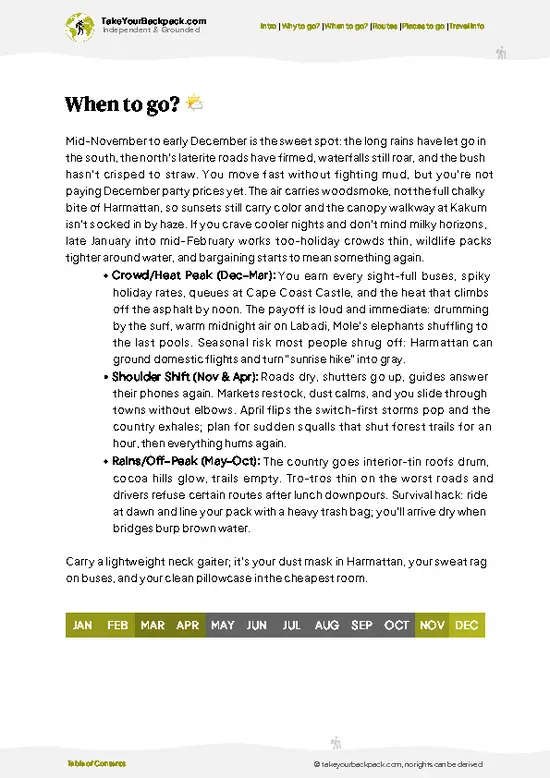
  • Topic: Weather – Obuasi’s climate is tropical, with a wet season from April to October and a dry season from November to March. The dry months offer less humidity and fewer rain interruptions, making trekking and city exploration smoother.

  • Topic: Temperature – Expect daily highs around 28-32°C (82-90°F) year-round. Nights cool to 20-23°C (68-73°F), which is comfortable for sleeping without heavy gear.

  • Topic: Daylight Hours – Near the equator, daylight is steady, roughly 12 hours year-round. This consistency means no major shifts in your daily schedule, so you can plan hikes or market visits without worrying about early sunsets.

  • Topic: Crowds – Peak tourist flow aligns with the dry season, especially December to February. Visiting just before or after this window means fewer tourists
read more 👉

  • Topic: Weather – Obuasi’s climate is tropical, with a wet season from April to October and a dry season from November to March. The dry months offer less humidity and fewer rain interruptions, making trekking and city exploration smoother.

  • Topic: Temperature – Expect daily highs around 28-32°C (82-90°F) year-round. Nights cool to 20-23°C (68-73°F), which is comfortable for sleeping without heavy gear.

  • Topic: Daylight Hours – Near the equator, daylight is steady, roughly 12 hours year-round. This consistency means no major shifts in your daily schedule, so you can plan hikes or market visits without worrying about early sunsets.

  • Topic: Crowds – Peak tourist flow aligns with the dry season, especially December to February. Visiting just before or after this window means fewer tourists and better deals without sacrificing weather quality.

  • Topic: Seasonal Activities – The dry season hosts local festivals and mining tours, which are culturally rich and worth timing your visit around if you want immersive experiences.

  • Topic: Price Fluctuations – Accommodation and transport costs spike during the dry season’s peak months. Traveling in shoulder months like March or November can save money while still enjoying decent weather.


Pro-tip: Aim for late November or early March to balance good weather, manageable crowds, and wallet-friendly prices—this timing turns logistics into your advantage, not a headache.


source: climatestotravel.comJANJanuary: excellent for travelingFEBFebruary: excellent for travelingMARMarch: highly recommended for travelingAPRApril: fair for travelingMAYMay: fair for travelingJUNJune: fair for travelingJULJuly: fair for travelingAUGAugust: fair for travelingSEPSeptember: fair for travelingOCTOctober: fair for travelingNOVNovember: highly recommended for travelingDECDecember: excellent for traveling
when-to-go

✈️ The backpacker research shortcutGhana Travel Guide

An offline-friendly backpacking guide with optimized travel routes, ranked highlights, transport advice, and the best areas to stay.
example page 0 from our offline Travel Guide for Ghana
example page 1 from our offline Travel Guide for Ghana
example page 2 from our offline Travel Guide for Ghana
example page 3 from our offline Travel Guide for Ghana
example page 4 from our offline Travel Guide for Ghana
example page 5 from our offline Travel Guide for Ghana
example page 6 from our offline Travel Guide for Ghana
example page 7 from our offline Travel Guide for Ghana
The digital guide (424 pages) contains:
111 highlights, ranked by travel appeal
Optimized 5, 10 & 15-day travel routes
Cities, national parks, landmarks, beaches
How to get around
Offline-friendly for travel without Wi-Fi
👉 Click to see all 30+ guide features

📅 Plan smarter in minutes, not weeks
Month by month travel advice
Festivals & national holidays
Budget expectations

🗺️ Go to the right places, skip the overrated ones
Honest pros & cons of destinations
Top hikes, parks & viewpoints
Lesser-known places most travelers miss
Clear “worth it vs skip it” guidance

🛏️ Travel smoothly without rookie mistakes
Best areas to stay
Transport systems explained simply
Common scams & safety advice
SIM cards, money & practical tips

🌍 Understand the country, not just visit it
Culture & traditions
52 Essential phrases & customs
Festivals worth planning around
Traveler-friendly historical context
Insights that make places more meaningful

📱 Built for real travel conditions
Fully downloadable PDF
Works completely offline
Optimized for phone use
Useful in remote areas & buses
Everything in one place
Save weeks of stressful planning
Get instant access to your full guide. 30‑day money-back guarantee.


By proceeding you agree to our terms.
Sent to your inbox immediately after payment • 100% Secure Checkout
Best Backpacking Travel Advisor 2025 tourism awardBest Backpacking
Travel Advisor
2025
What others say about Take Your Backpack Guides:
⭐⭐⭐⭐⭐
Fantastic, amazing amount of information!
⭐⭐⭐⭐⭐
My goodness this is amazing, it's what I've been looking for hats off too you!
⭐⭐⭐⭐⭐
I think this is absolutely BRILLIANT
⭐⭐⭐⭐
Very complete and informative. It's still missing places, but I gotta to commend you
⭐⭐⭐⭐⭐
This is truly amazing, thank you, can't wait to explore it with my kids!
⭐⭐⭐⭐⭐
Awesome resource, thank you!
⭐⭐⭐⭐⭐
This is amazing! Can't wait to explore the ones I haven't seen
⭐⭐⭐⭐
I love this! Well done, great idea.
⭐⭐⭐⭐⭐
Thanks for taking the time to make this gem!
⭐⭐⭐⭐⭐
This might be the best website I've ever seen.
⭐⭐⭐⭐⭐
Congratulations, and thank you so much for your work; it's incredibly valuable.
⭐⭐⭐⭐
In all seriousness I think you did a great job pointing out the important spots
⭐⭐⭐⭐⭐
10/10 very good
⭐⭐⭐⭐⭐
As someone who's only just starting to visit regularly this is awesome, thank you.
⭐⭐⭐⭐
Thank you very much! I'm going to visit my dad, it's going to be very useful!
⭐⭐⭐⭐⭐
This is really cool! We'll be travelling for the first time and this definitely come in handy.
⭐⭐⭐⭐⭐
You are now our minister of culture, congratulations 👨‍💼
⭐⭐⭐⭐⭐
Just wanted to tell you that this is a pearl! Going to follow your recommendations.
⭐⭐⭐⭐⭐
This is so cool. I'll definitely be using the resource for my travels soon.
⭐⭐⭐⭐⭐
This is very impressive! Good work.
⭐⭐⭐⭐⭐
This is an amazing and informative site. Very well done!

🛏️ Where to stay?Choosing the right base

Obuasi’s best backpacker zones cluster around the town center and the nearby residential quarters just east of the main market. This area strikes a smart balance: it’s safe enough to walk around after dark, and lively enough to meet fellow travelers and locals without the chaos of busier commercial hubs. You’ll find a handful of budget guesthouses and informal hostels here, which means you’re trading off some polished amenities for authentic, down-to-earth vibes and wallet-friendly rates.

Compared to the outskirts or industrial zones dominated by mining operations, these central neighborhoods … read more 👉
Obuasi’s best backpacker zones cluster around the town center and the nearby residential quarters just east of the main market. This area strikes a smart balance: it’s safe enough to walk around after dark, and lively enough to meet fellow travelers and locals without the chaos of busier commercial hubs. You’ll find a handful of budget guesthouses and informal hostels here, which means you’re trading off some polished amenities for authentic, down-to-earth vibes and wallet-friendly rates.

Compared to the outskirts or industrial zones dominated by mining operations, these central neighborhoods offer a more social atmosphere. The streets hum with small eateries, local bars, and markets where you can practice your negotiation skills and soak in daily life. It’s not about luxury or slick backpacker enclaves—this is where you get the pulse of Obuasi, with enough comfort to recharge but plenty of room to explore on foot. For solo travelers, it’s a practical, engaging base that respects your budget without sacrificing safety or social opportunities.

🚌 Getting aroundGetting around like a local

Obuasi moves at its own rhythm—neither strictly regimented nor wildly unpredictable. It’s a city where the clock matters, but so does the human element. You’ll find schedules, but they’re flexible, shaped by the flow of miners, traders, and locals who know when to push and when to pause. This isn’t a place where you’re herded by timetables; it’s a place where savvy travelers learn to read the subtle cues of departure times and crowd shifts. Understanding this flow is your first win: it lets you time your moves for maximum efficiency without paying a premium for comfort or speed.


  • Walking: The most reliable and cost-free way to get around Obuasi’s compact center. Walking lets you absorb the city’s pulse, but it’s best for trips under 3 kilometers due to the tropical heat and uneven sidewalks.
read more 👉
Obuasi moves at its own rhythm—neither strictly regimented nor wildly unpredictable. It’s a city where the clock matters, but so does the human element. You’ll find schedules, but they’re flexible, shaped by the flow of miners, traders, and locals who know when to push and when to pause. This isn’t a place where you’re herded by timetables; it’s a place where savvy travelers learn to read the subtle cues of departure times and crowd shifts. Understanding this flow is your first win: it lets you time your moves for maximum efficiency without paying a premium for comfort or speed.


  • Walking: The most reliable and cost-free way to get around Obuasi’s compact center. Walking lets you absorb the city’s pulse, but it’s best for trips under 3 kilometers due to the tropical heat and uneven sidewalks.


  • Shared Trotros: These minibuses run roughly from 6:00 AM to 7:00 PM, costing around 1-2 GHS per ride. They’re slow and packed but unbeatable for budget travelers who want to cover longer distances without breaking the bank. Expect frequent stops and a lively, sometimes chaotic atmosphere.


  • Motorbike Taxis (Okada): Available from dawn till late evening, these are the fastest way through traffic and cost about 3-5 GHS for short to medium trips. Comfort is minimal, but the speed and door-to-door service make them a smart choice when time is tight.


  • Private Taxis: More expensive, around 15-30 GHS depending on distance and negotiation skills. They offer comfort and flexibility but are rarely necessary unless you’re traveling in a group or carrying heavy gear. They operate 24/7 but expect to pay a premium after dark.


Mastering Obuasi’s transit means balancing your priorities: save money by embracing the trotros and walking, or buy time with okadas and taxis. Comfort is a luxury here, often sacrificed for speed or savings. Your best bet is to mix and match based on your itinerary’s demands—this is the game, and knowing when to switch gears is how you win.

👛 Costs (as of 25 October 2025)How expensive it really is

Backpacking in Obuasi, Ghana, offers a clear trade-off between cost and comfort, with prices reflecting the city’s mining-town vibe rather than a tourist hotspot. Understanding these costs lets you plan smart and avoid surprises.
  • Dorm Accommodation (High Season): Expect to pay around $10-$15 per night. Options are limited and basic, often in guesthouses rather than formal hostels, so comfort is modest but clean.
  • Dorm Accommodation (Off-Season): Prices drop to about $7-$10. Fewer travelers mean better bargaining power, but availability can be patchy, so booking ahead helps.
  • Meals: Local eateries serve filling meals for $2-$5. Street food is cheaper and authentic, but if you want a sit-down meal with some variety, budget closer to $5.
  • Local Transport: Tro-tros (shared minibuses) and taxis
read more 👉
Backpacking in Obuasi, Ghana, offers a clear trade-off between cost and comfort, with prices reflecting the city’s mining-town vibe rather than a tourist hotspot. Understanding these costs lets you plan smart and avoid surprises.
  • Dorm Accommodation (High Season): Expect to pay around $10-$15 per night. Options are limited and basic, often in guesthouses rather than formal hostels, so comfort is modest but clean.
  • Dorm Accommodation (Off-Season): Prices drop to about $7-$10. Fewer travelers mean better bargaining power, but availability can be patchy, so booking ahead helps.
  • Meals: Local eateries serve filling meals for $2-$5. Street food is cheaper and authentic, but if you want a sit-down meal with some variety, budget closer to $5.
  • Local Transport: Tro-tros (shared minibuses) and taxis cost roughly $0.30-$1 per trip within the city. They’re frequent but can be crowded and unpredictable in timing.
  • City Transport Pass: There’s no formal city transport pass system here. Budget daily for individual rides based on your itinerary.
  • Basic Activities/Entry Fees: Obuasi’s main draw is the gold mine tours, which can cost around $10-$20 depending on the operator and group size. Other attractions are minimal and often free or very low cost.
  • Miscellaneous Expenses: Include water, snacks, phone credit, and small tips. Around $2-$5 daily covers these essentials without stretching your budget.

All told, you’re looking at roughly $20 to $40 per day, depending on how much you prioritize comfort and activities. Obuasi isn’t about luxury; it’s about getting close to Ghana’s mining culture on a shoestring. Knowing where to spend and where to save turns your trip into a strategic win rather than a budget scramble.


source: ghana.travel
⚠️ Prices can change and everyone travels differently, so take this as a rough guide. Hope it helps you plan your adventure!

🚌 Day tripsWhere to go beyond the main area

Obuasi, Ghana, is a fantastic base for day trips that blend culture, nature, and adventure. Here’s how to make the most of your time without breaking the bank.

Kumasi
Just an hour away, Kumasi is the heart of the Ashanti Region. Dive into the bustling Kejetia Market, where the vibrant chaos of vendors selling everything from textiles to spices will ignite your senses. Don’t miss the Manhyia Palace Museum for a glimpse into Ashanti royalty. Budget around $10 for transport and snacks. The best time to visit is during the dry season, from November to March. First-timers often underestimate the market’s size; set aside a few hours to explore.
👉 Explore Kumasi

Lake Bosumtwi
A 30-minute ride from Obuasi, Lake Bosumtwi is a serene escape. This crater lake is perfect for a day of swimming, … read more 👉
Obuasi, Ghana, is a fantastic base for day trips that blend culture, nature, and adventure. Here’s how to make the most of your time without breaking the bank.

Kumasi
Just an hour away, Kumasi is the heart of the Ashanti Region. Dive into the bustling Kejetia Market, where the vibrant chaos of vendors selling everything from textiles to spices will ignite your senses. Don’t miss the Manhyia Palace Museum for a glimpse into Ashanti royalty. Budget around $10 for transport and snacks. The best time to visit is during the dry season, from November to March. First-timers often underestimate the market’s size; set aside a few hours to explore.
👉 Explore Kumasi

Lake Bosumtwi
A 30-minute ride from Obuasi, Lake Bosumtwi is a serene escape. This crater lake is perfect for a day of swimming, picnicking, or renting a canoe. The surrounding hills provide a stunning backdrop for photos. Expect to spend about $15 for transport and a canoe rental. The dry season is ideal for clear skies and calm waters. A common mistake is to arrive unprepared; bring snacks and water, as options around the lake are limited.


Aburi Botanical Gardens
A bit further afield, about two hours from Obuasi, the Aburi Botanical Gardens offer a lush retreat. Stroll through diverse plant species and enjoy the cooler climate. It’s a peaceful spot for a picnic or a leisurely walk. Budget around $20 for transport and entry fees. The best time to visit is during the rainy season when the gardens are in full bloom. Many visitors overlook the importance of timing; early morning visits provide the best light for photography.
👉 Explore Aburi Botanical Gardens

These trips not only enrich your experience but also keep your budget in check. Each offers a unique slice of Ghanaian life, making your stay in Obuasi truly rewarding.
Want to know what more Ghana offers?
The Ghana Travel Guide describes 111 highlights, from cities to national parks, from beaches to hikes

Get the Travel Guide -

🍲 FoodEating & Drinking in Obuasi

In Obuasi, the food scene is a vibrant tapestry of flavors that tells the story of the region. You can’t miss trying jollof rice, a spicy, tomato-based dish that’s a staple at any gathering. Pair it with grilled tilapia or kebabs from street vendors, where the smoky aroma wafts through the air, tempting you to indulge.

Markets are the heartbeat of local cuisine. Strolling through, you’ll find vendors selling fufu, a starchy side made from cassava or plantains, often served with rich, flavorful soups. The communal vibe is infectious; locals gather to share meals, and you’ll likely be invited to join in.

When it comes to drinks, don’t overlook palm wine. It’s sweet, slightly effervescent, and best enjoyed fresh from the source. Just remember, sharing is key in Ghanaian culture—offering a … read more 👉
In Obuasi, the food scene is a vibrant tapestry of flavors that tells the story of the region. You can’t miss trying jollof rice, a spicy, tomato-based dish that’s a staple at any gathering. Pair it with grilled tilapia or kebabs from street vendors, where the smoky aroma wafts through the air, tempting you to indulge.

Markets are the heartbeat of local cuisine. Strolling through, you’ll find vendors selling fufu, a starchy side made from cassava or plantains, often served with rich, flavorful soups. The communal vibe is infectious; locals gather to share meals, and you’ll likely be invited to join in.

When it comes to drinks, don’t overlook palm wine. It’s sweet, slightly effervescent, and best enjoyed fresh from the source. Just remember, sharing is key in Ghanaian culture—offering a sip to your companions is a sign of camaraderie. Embrace the local customs, and you’ll find that every meal is a celebration of community and flavor.

🛡️ SafetyTraveler Safety Guide

Obuasi is generally safe for travelers, but staying aware is key. Stick to well-lit areas at night, especially if you’re solo. The town has a friendly vibe, but like anywhere, it’s wise to keep your belongings close.

Common scams are rare, but be cautious of overly eager locals offering unsolicited help. Politely decline and keep moving. Street vendors can be persistent, so a firm “no, thank you” works wonders.

When using local transport, agree on fares upfront to avoid surprises. Carry a small amount of cash for convenience, but don’t flash it around. Trust your instincts; if something feels off, it probably is. With a bit of mindfulness, you’ll navigate Obuasi smoothly.

Other Ghanaian cities near Obuasi

Explore more nearby:

  • Kumasi—Kejetia Market, royal palace, craft villages, Ashanti traditions| 52 km away
  • Ejisu—Yaa Asantewaa mausoleum, Asante history, craft stalls| 61 km away
  • Cape Coast—castle museums, fishing harbors, colonial architecture, palm-lined beaches| 129 km away

💡 Not sure where to go next?
Create a personalized itinerary for Ghana including Obuasi and the places that fit your trip.

Generate my itinerary

👉 Discover all cities

Or checkout all Ghana has to offer (think cities, towns, villages, national parks, hikes, beaches, festivals)
Country photo of Ghana

We 💚 feedbackKey takeaways before you go

Obuasi is a gold mine of culture and history, literally and figuratively. The local mining community offers a unique glimpse into Ghana’s rich heritage. But be prepared: infrastructure can be hit-or-miss. Roads may challenge your patience, and amenities aren’t always up to par. If you’re ready to embrace the adventure, the rewards far outweigh the bumps along the way.

✈️ When did I visit Ghana?
Ghana I visited in December 2024, starting in Accra following the coast, then up north to Mole National park to finish in the Volta Region.

✍️ Help improve this page!
The information on this page is based on my own backpacking experience in Ghana, supplemented with up-to-date research and feedback from other travelers. Travel details can change, so if you notice anything outdated or incomplete, feel free to let me know.


🙋‍♂️ Give feedback

👋 Meet the founderWho’s Behind Take Your Backpack?

Johan, backpacker and founder of TakeYourBackpackHi, I’m Johan (Netherlands 🇳🇱), the creator of TakeYourBackpack. Over the past decade, I’ve backpacked through 80+ countries across six continents, gaining extensive experience with independent travel, long-term trips, and overland routes.

This site is built on a combination of firsthand travel experience and carefully curated insights from other backpackers. Many guides are based on places I’ve personally visited, while others bring together tips, observations, and practical advice shared by trusted travelers I’ve met along the way.

The goal is to provide realistic, experience-driven guidance — not generic itineraries — so you can explore destinations with better context, clearer expectations, and more confidence.

Get full Ghana guide •
Instant download • 111 highlights • Full Offline guide