×

Ghana🇬🇭 | citiesSalagaSlave trade relics, northern market, caravan routes | things to do and best time to go

Explore BawkuExplore Yendi

Backpacking in Salaga
👀 For curious travelerscity ranked #27
By Johan Kruseman 🇳🇱 | Updated June 15, 2026

A decade ago, Salaga was a name whispered by history buffs—dusty crossroads, faded echoes of its slave trade past, and little else to hold a traveler’s gaze. Today, you’ll find a town still raw and unvarnished, set in Ghana’s Northern Region, where the air smells of woodsmoke and market spices. Salaga isn’t a destination for nightlife or café culture; it’s a practical stopover, a place to catch your breath between Tamale and the Volta basin, or to launch into the savannah’s quieter corners. The old slave wells and market square are sobering, not staged, and the pace is slow—think more goats than backpackers. Transport is basic: expect shared taxis and bumpy buses, not trains. Costs are low, safety is steady, but you’ll need patience and a sense of purpose. Compared to Tamale, Salaga feels stripped-down and contemplative—less buzz, more room to think.

Discover everything you want to know in the 📖 Ghana Travel Guide.


Get your Ghana guide
111 ranked highlights, routes & tips, works offline (424 pages)
Loading the map 🌍
CLICK TO FILTER
cities
towns
villages
landmarks
national parks
hikes
beaches
attractions
festivals
regions
SHOW COUNTRY’S BESTSHOW ALL

✨ Why go?
Ranked #27 city in Ghana
Reasons people choose to visit here

Salaga is a strategic waypoint for backpackers exploring northern Ghana. Its walkable streets make it easy to navigate, while the small-scale hostels and guesthouses offer a cozy, intimate vibe. Many travelers use Salaga as a base for nearby hikes in the lush countryside or to visit cultural sites that reveal the region’s rich history. The local food scene is a treat, with street vendors serving up spicy jollof rice and fresh kelewele that fill the air with mouthwatering aromas.

Backpackers often linger here for a few days, soaking in the friendly social atmosphere that encourages connection among travelers. It’s particularly appealing to slow travelers and solo adventurers who appreciate a laid-back pace. While nightlife isn’t the main draw, the town’s charm lies in its authentic interactionsread more 👉
Salaga is a strategic waypoint for backpackers exploring northern Ghana. Its walkable streets make it easy to navigate, while the small-scale hostels and guesthouses offer a cozy, intimate vibe. Many travelers use Salaga as a base for nearby hikes in the lush countryside or to visit cultural sites that reveal the region’s rich history. The local food scene is a treat, with street vendors serving up spicy jollof rice and fresh kelewele that fill the air with mouthwatering aromas.

Backpackers often linger here for a few days, soaking in the friendly social atmosphere that encourages connection among travelers. It’s particularly appealing to slow travelers and solo adventurers who appreciate a laid-back pace. While nightlife isn’t the main draw, the town’s charm lies in its authentic interactions and the chance to unwind before heading to the next adventure. If you’re looking for a place to recharge and connect, Salaga fits the bill perfectly.
Want to include Salaga in your Ghana route?
Create a personalized Ghana itinerary that includes Salaga and the places that fit your trip — based on your travel style, budget, and available time. Get your route in seconds.

Generate my trip

💡 HighlightsKey sights and experiences for travelers

  1. Salaga Slave Market site (the slave pits) — The most important historical spot in town: shallow pits and markers where captives were held before being marched south. It’s sobering, tangible history you can walk through; local guides can point out specific spots and tell the stories you won’t find on a plaque.
  2. Salaga Central Market — A chaotic, colorful trading hub where regional goods converge: kola nuts, shea, spices, fabrics and more. Great for people-watching, bargaining practice, and sensing why Salaga was once a major trade node.
  3. Paramount Chief’s Palace (Salaga Palace) — The traditional seat of the local Gonja authority. Even if you can’t go inside without permission, the compound, regalia, and occasional public events give a real feel for local governance and customs.
  4. Shea-processing
read more 👉
  1. Salaga Slave Market site (the slave pits) — The most important historical spot in town: shallow pits and markers where captives were held before being marched south. It’s sobering, tangible history you can walk through; local guides can point out specific spots and tell the stories you won’t find on a plaque.
  2. Salaga Central Market — A chaotic, colorful trading hub where regional goods converge: kola nuts, shea, spices, fabrics and more. Great for people-watching, bargaining practice, and sensing why Salaga was once a major trade node.
  3. Paramount Chief’s Palace (Salaga Palace) — The traditional seat of the local Gonja authority. Even if you can’t go inside without permission, the compound, regalia, and occasional public events give a real feel for local governance and customs.
  4. Shea-processing cooperatives — Small, visitable workshops on the town’s edges where women hand-process shea nuts into butter. Visiting shows the labor behind a product you’ll recognize worldwide, and you can often buy fresh shea directly from the producers.
  5. White Volta riverside and bridge viewpoint — The river and its crossing are part of Salaga’s lifeblood. Walk the banks at low water, watch small boats, and catch sunrise or late-afternoon light that locals use for fishing and socializing.
  6. Livestock and trading yards (market-day livestock market) — On specific market days the livestock yards come alive with cattle, goats and haggling herders. It’s less polished than a tourist attraction but gives a blunt, useful look at regional commerce.
  7. Traditional craft and blacksmith quarter — Scattered in town are small workshops where metalworkers, woodcarvers and tailors practice skills handed down generations. Watching and buying directly supports craftspeople and connects you to everyday Salaga life.
  8. Salaga Central Mosque — An important spiritual and architectural focal point. The mosque and the surrounding quarter reflect the town’s religious life and are worth a respectful visit outside prayer times.
  9. Slave-trail walking routes and interpretive spots — Not a single monument but a set of short, walkable paths between trading points, holding sites and lookout spots. Local guides can stitch these into a 1-3 hour walk that contextualizes what you see at the main slave-market site.
  10. Local festival and drumming spots (timed experiences) — If your visit lines up with a local festival or funeral rites, you’ll see gonja drumming, dance and pageantry up close. These are ephemeral, so ask locally and get invited rather than gatecrashing.
A few nearby day-trip highlights worth adding to a Salaga stay: Mole National Park and Damongo (wildlife safaris), the historic Larabanga Mosque, and riverside communities along the White Volta at Yapei.
Spotted a mistake or missing something? Contact us.

Things to do near Salaga

Ratings based on Tripadvisor reviews. When you book through this link, you support our work at no extra cost to you.

🏘️ NeighborhoodsUnderstanding the local layout

Salaga, a vibrant town in Ghana, offers a rich tapestry of culture and experience for backpackers. Each neighborhood has its own character, making it essential to choose wisely.

Central Salaga: This area buzzes with local life. Markets overflow with fresh produce and spices, filling the air with earthy scents. It’s walkable, with affordable guesthouses and street food stalls. Perfect for short stays, you can soak in the daily rhythm and enjoy the lively atmosphere. Nightlife is low-key, with local bars offering a taste of Ghanaian music.

Salaga East: A quieter vibe prevails here. It’s less touristy, making it ideal for those seeking a more authentic experience. The streets are lined with small shops and cafes, perfect for leisurely strolls. Accommodation is budget-friendly, and the area … read more 👉
Salaga, a vibrant town in Ghana, offers a rich tapestry of culture and experience for backpackers. Each neighborhood has its own character, making it essential to choose wisely.

Central Salaga: This area buzzes with local life. Markets overflow with fresh produce and spices, filling the air with earthy scents. It’s walkable, with affordable guesthouses and street food stalls. Perfect for short stays, you can soak in the daily rhythm and enjoy the lively atmosphere. Nightlife is low-key, with local bars offering a taste of Ghanaian music.

Salaga East: A quieter vibe prevails here. It’s less touristy, making it ideal for those seeking a more authentic experience. The streets are lined with small shops and cafes, perfect for leisurely strolls. Accommodation is budget-friendly, and the area is well-connected by local transport. Great for longer stays, you can immerse yourself in the community.

Salaga West: This neighborhood is a blend of residential and commercial spaces. It’s slightly more upscale, with a few mid-range hotels and restaurants. The atmosphere is relaxed, making it suitable for both short and longer visits. Transport options are good, but you might want to use a taxi for late-night outings.

⌛️ 1 dayWhat you can realistically do in a day

Salaga, Ghana, is a town steeped in history and culture, often overlooked by travelers. Its vibrant markets, rich traditions, and the warm smiles of locals create an atmosphere that feels both welcoming and alive. The scent of spices wafts through the air, mingling with the earthy aroma of the surrounding landscape, making it a sensory delight.

Start your morning at the bustling Salaga Market. The early sun casts a golden hue over the stalls, where vendors sell everything from fresh produce to handmade crafts. Engage with the locals; their stories are as rich as the fabrics they sell. Grab a breakfast of kelewele—spicy fried plantains—at a nearby food stall. The crunch and heat will kickstart your day.

In the afternoon, head to the Salaga Slave Market Memorial. This site, often missed by … read more 👉
Salaga, Ghana, is a town steeped in history and culture, often overlooked by travelers. Its vibrant markets, rich traditions, and the warm smiles of locals create an atmosphere that feels both welcoming and alive. The scent of spices wafts through the air, mingling with the earthy aroma of the surrounding landscape, making it a sensory delight.

Start your morning at the bustling Salaga Market. The early sun casts a golden hue over the stalls, where vendors sell everything from fresh produce to handmade crafts. Engage with the locals; their stories are as rich as the fabrics they sell. Grab a breakfast of kelewele—spicy fried plantains—at a nearby food stall. The crunch and heat will kickstart your day.

In the afternoon, head to the Salaga Slave Market Memorial. This site, often missed by tourists, offers a poignant glimpse into the town’s past. The atmosphere here is heavy with history, and it’s a chance to reflect on the resilience of the community. Afterward, stroll through the nearby neighborhoods, where you can witness daily life unfold. The laughter of children playing and the rhythmic sounds of drumming from a distant gathering create a lively backdrop.

As evening approaches, find a spot at a local eatery. The sun sets, painting the sky in shades of orange and purple. Enjoy a bowl of light soup with fufu, a dish that embodies the flavors of Ghana. Share stories with fellow diners; the camaraderie is infectious.

In Salaga, every moment is a chance to connect, learn, and savor the essence of Ghana.
Turn your Salaga visit into an Ghana adventure
Build a complete Ghana route with Salaga, hidden gems, must-see destinations, and realistic travel times included.

Generate my trip

🌤️ When to go?Best time to visit Salaga


  • Topic: Weather – Salaga’s dry season from November to March offers clear skies and less humidity, making hiking and exploring more comfortable. The rainy season (April to October) brings heavy downpours that can turn dirt roads into mud traps and limit outdoor plans.

  • Topic: Temperature – Expect highs around 30-35°C (86-95°F) year-round, but the dry season mornings and evenings cool down to a pleasant 20-22°C (68-72°F), perfect for early starts without overheating.

  • Topic: Daylight Hours – Near the equator, daylight stays steady at about 12 hours daily, so plan your hikes and market visits knowing you’ll have consistent light from roughly 6:30 AM to 6:30 PM.

  • Topic: Crowds – Salaga isn’t a tourist hotspot, but local festivals in December can bring a lively buzz. Visiting just before
read more 👉

  • Topic: Weather – Salaga’s dry season from November to March offers clear skies and less humidity, making hiking and exploring more comfortable. The rainy season (April to October) brings heavy downpours that can turn dirt roads into mud traps and limit outdoor plans.

  • Topic: Temperature – Expect highs around 30-35°C (86-95°F) year-round, but the dry season mornings and evenings cool down to a pleasant 20-22°C (68-72°F), perfect for early starts without overheating.

  • Topic: Daylight Hours – Near the equator, daylight stays steady at about 12 hours daily, so plan your hikes and market visits knowing you’ll have consistent light from roughly 6:30 AM to 6:30 PM.

  • Topic: Crowds – Salaga isn’t a tourist hotspot, but local festivals in December can bring a lively buzz. Visiting just before or after these events means fewer people and more authentic interactions.

  • Topic: Seasonal Activities – The dry season aligns with traditional festivals and market days, offering a richer cultural experience. The rainy season, while quieter, reveals lush landscapes if you don’t mind the wet.

  • Topic: Price Fluctuations – Accommodation and transport prices dip during the rainy season due to lower demand, but expect to pay a premium around festival times when locals and visitors converge.


Pro-tip: Aim for late November—when the rains have just stopped and the town buzzes with festival energy but before the peak crowd and prices hit.


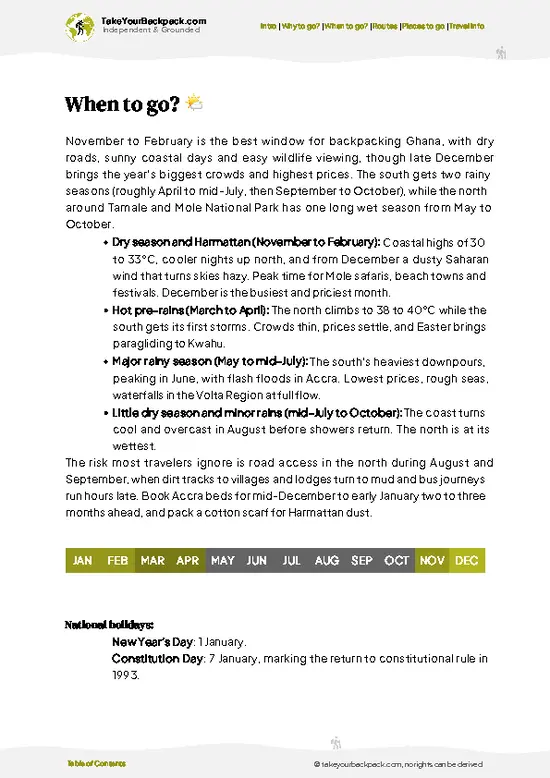
source: climatestotravel.comJANJanuary: excellent for travelingFEBFebruary: excellent for travelingMARMarch: excellent for travelingAPRApril: fair for travelingMAYMay: fair for travelingJUNJune: fair for travelingJULJuly: fair for travelingAUGAugust: fair for travelingSEPSeptember: fair for travelingOCTOctober: fair for travelingNOVNovember: highly recommended for travelingDECDecember: highly recommended for traveling
when-to-go

✈️ The backpacker research shortcutGhana Travel Guide

An offline-friendly backpacking guide with optimized travel routes, ranked highlights, transport advice, and the best areas to stay.
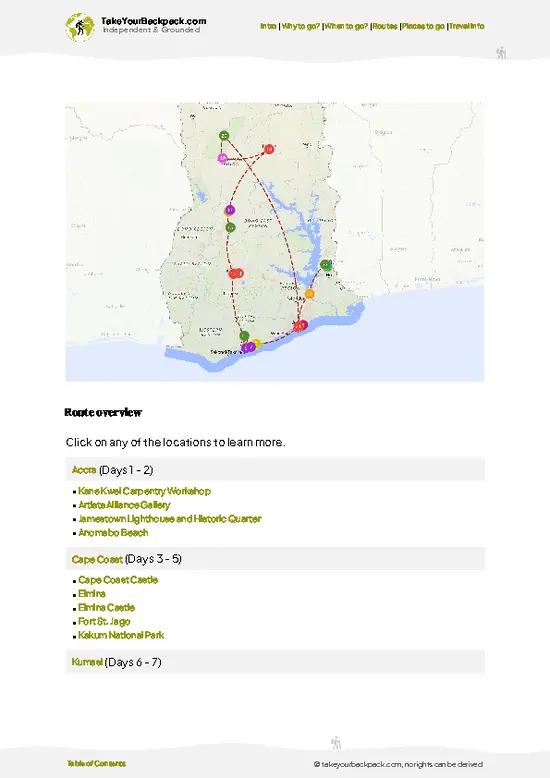
example page 0 from our offline Travel Guide for Ghana
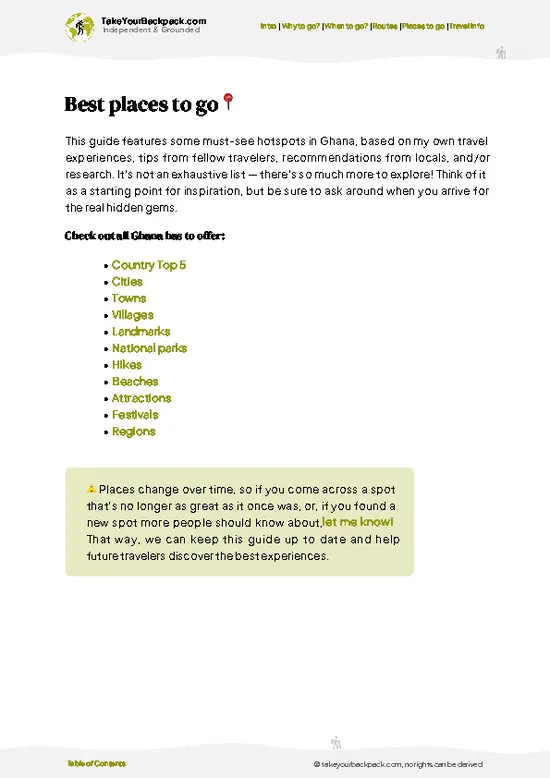
example page 1 from our offline Travel Guide for Ghana
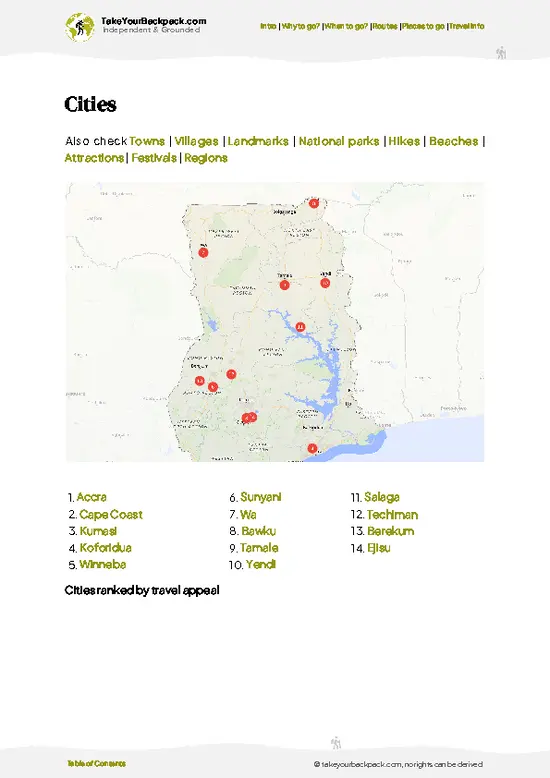
example page 2 from our offline Travel Guide for Ghana
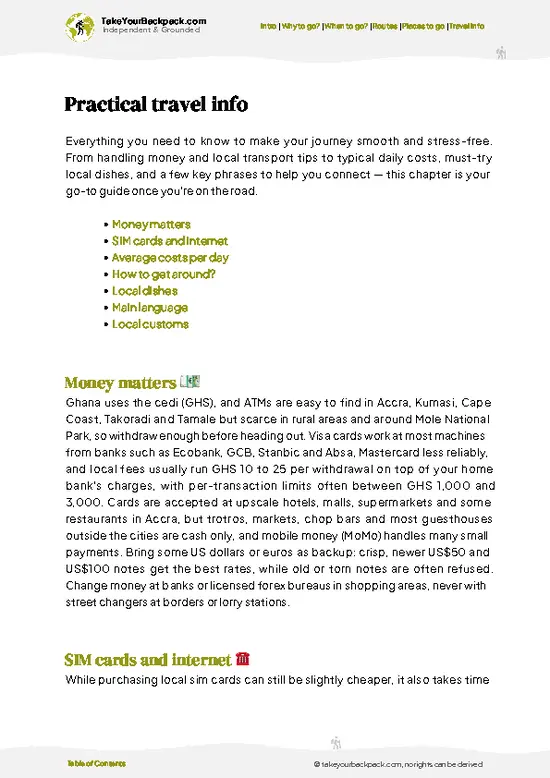
example page 3 from our offline Travel Guide for Ghana
example page 4 from our offline Travel Guide for Ghana
example page 5 from our offline Travel Guide for Ghana
example page 6 from our offline Travel Guide for Ghana
example page 7 from our offline Travel Guide for Ghana
The digital guide (424 pages) contains:
111 highlights, ranked by travel appeal
Optimized 5, 10 & 15-day travel routes
Cities, national parks, landmarks, beaches
How to get around
Offline-friendly for travel without Wi-Fi
👉 Click to see all 30+ guide features

📅 Plan smarter in minutes, not weeks
Month by month travel advice
Festivals & national holidays
Budget expectations

🗺️ Go to the right places, skip the overrated ones
Honest pros & cons of destinations
Top hikes, parks & viewpoints
Lesser-known places most travelers miss
Clear “worth it vs skip it” guidance

🛏️ Travel smoothly without rookie mistakes
Best areas to stay
Transport systems explained simply
Common scams & safety advice
SIM cards, money & practical tips

🌍 Understand the country, not just visit it
Culture & traditions
52 Essential phrases & customs
Festivals worth planning around
Traveler-friendly historical context
Insights that make places more meaningful

📱 Built for real travel conditions
Fully downloadable PDF
Works completely offline
Optimized for phone use
Useful in remote areas & buses
Everything in one place
Save weeks of stressful planning
Get instant access to your full guide. 30‑day money-back guarantee.


By proceeding you agree to our terms.
Sent to your inbox immediately after payment • 100% Secure Checkout
Best Backpacking Travel Advisor 2025 tourism awardBest Backpacking
Travel Advisor
2025
What others say about Take Your Backpack Guides:
⭐⭐⭐⭐⭐
Fantastic, amazing amount of information!
⭐⭐⭐⭐⭐
My goodness this is amazing, it's what I've been looking for hats off too you!
⭐⭐⭐⭐⭐
I think this is absolutely BRILLIANT
⭐⭐⭐⭐
Very complete and informative. It's still missing places, but I gotta to commend you
⭐⭐⭐⭐⭐
This is truly amazing, thank you, can't wait to explore it with my kids!
⭐⭐⭐⭐⭐
Awesome resource, thank you!
⭐⭐⭐⭐⭐
This is amazing! Can't wait to explore the ones I haven't seen
⭐⭐⭐⭐
I love this! Well done, great idea.
⭐⭐⭐⭐⭐
Thanks for taking the time to make this gem!
⭐⭐⭐⭐⭐
This might be the best website I've ever seen.
⭐⭐⭐⭐⭐
Congratulations, and thank you so much for your work; it's incredibly valuable.
⭐⭐⭐⭐
In all seriousness I think you did a great job pointing out the important spots
⭐⭐⭐⭐⭐
10/10 very good
⭐⭐⭐⭐⭐
As someone who's only just starting to visit regularly this is awesome, thank you.
⭐⭐⭐⭐
Thank you very much! I'm going to visit my dad, it's going to be very useful!
⭐⭐⭐⭐⭐
This is really cool! We'll be travelling for the first time and this definitely come in handy.
⭐⭐⭐⭐⭐
You are now our minister of culture, congratulations 👨‍💼
⭐⭐⭐⭐⭐
Just wanted to tell you that this is a pearl! Going to follow your recommendations.
⭐⭐⭐⭐⭐
This is so cool. I'll definitely be using the resource for my travels soon.
⭐⭐⭐⭐⭐
This is very impressive! Good work.
⭐⭐⭐⭐⭐
This is an amazing and informative site. Very well done!

🛏️ Where to stay?Choosing the right base

Salaga’s heart for backpackers beats strongest around the central market area and the nearby residential quarters. This zone hums with local life—vendors calling out, the scent of roasted maize mingling with fresh earth after rain. It’s where you’ll find the few budget guesthouses and hostels that cater to solo travelers, offering a chance to swap stories over shared meals. Safety here feels tangible; the streets are busy enough to deter trouble but not so crowded that you lose your bearings. Compared to the quieter outskirts, this area plugs you directly into Salaga’s pulse, making it easier … read more 👉
Salaga’s heart for backpackers beats strongest around the central market area and the nearby residential quarters. This zone hums with local life—vendors calling out, the scent of roasted maize mingling with fresh earth after rain. It’s where you’ll find the few budget guesthouses and hostels that cater to solo travelers, offering a chance to swap stories over shared meals. Safety here feels tangible; the streets are busy enough to deter trouble but not so crowded that you lose your bearings. Compared to the quieter outskirts, this area plugs you directly into Salaga’s pulse, making it easier to navigate, connect, and soak up the town’s raw, unfiltered character.

🚌 Getting aroundHow to get around Salaga

Salaga moves at its own pace—less a clock-driven town, more a rhythm of the sun and the market’s pulse. The air carries the scent of earth and smoke, mingling with the chatter of traders and the occasional honk of a shared taxi. Here, schedules are loose suggestions, and the best way to get around is to blend into the flow, ready to adapt. The streets are a patchwork of dirt and dust, where a quick sprint to catch a vehicle can mean the difference between waiting an hour or rolling immediately. Your best bet is to embrace the local tempo: patient but alert, flexible but purposeful.


  • Walking: The heart of Salaga is compact enough to explore on foot, especially the market and central areas. Walking costs nothing, lets you soak in the smells and sounds, and is often faster than waiting for
read more 👉
Salaga moves at its own pace—less a clock-driven town, more a rhythm of the sun and the market’s pulse. The air carries the scent of earth and smoke, mingling with the chatter of traders and the occasional honk of a shared taxi. Here, schedules are loose suggestions, and the best way to get around is to blend into the flow, ready to adapt. The streets are a patchwork of dirt and dust, where a quick sprint to catch a vehicle can mean the difference between waiting an hour or rolling immediately. Your best bet is to embrace the local tempo: patient but alert, flexible but purposeful.


  • Walking: The heart of Salaga is compact enough to explore on foot, especially the market and central areas. Walking costs nothing, lets you soak in the smells and sounds, and is often faster than waiting for transport in the busiest spots.

  • Shared Trotros: These minibuses run from dawn until dusk, roughly 6 AM to 6 PM. Fares hover around 1-2 GHS, making them the cheapest option for longer distances. They’re crowded and noisy but a direct line to neighboring towns.

  • Motorbike Taxis (Okada): Available throughout the day and into the early evening, these dart through traffic and dirt roads with ease. Expect to pay 3-5 GHS for short hops. They’re fast but hold on tight—helmets are rare.

  • Shared Taxis: Less common but useful for early morning or late-night travel when trotros stop running. Prices start at 10 GHS and can vary. They offer more comfort and speed but require negotiation and patience.

👛 Costs (as of 25 October 2025)Money, prices, and spending tips

Backpacking in Salaga, Ghana, means stepping into a place where every cedi spent feels like a direct exchange with the local rhythm—no fluff, just straightforward living costs that keep your adventure grounded.
  • Dorm Accommodation: Expect to pay around $5 to $10 per night for a basic dorm bed. Options are limited and simple, often with shared bathrooms and minimal amenities, but clean enough to rest after a day of exploring the dusty streets and market buzz.
  • Meals: Local meals are affordable and filling, typically costing between $1.50 and $3.50. Street food like waakye or fried fish with banku offers authentic flavors and a chance to eat like a local without breaking the bank. Avoid tourist spots if you want to keep costs down and taste real Ghanaian home cooking.
  • Local Transport: Getting
read more 👉
Backpacking in Salaga, Ghana, means stepping into a place where every cedi spent feels like a direct exchange with the local rhythm—no fluff, just straightforward living costs that keep your adventure grounded.
  • Dorm Accommodation: Expect to pay around $5 to $10 per night for a basic dorm bed. Options are limited and simple, often with shared bathrooms and minimal amenities, but clean enough to rest after a day of exploring the dusty streets and market buzz.
  • Meals: Local meals are affordable and filling, typically costing between $1.50 and $3.50. Street food like waakye or fried fish with banku offers authentic flavors and a chance to eat like a local without breaking the bank. Avoid tourist spots if you want to keep costs down and taste real Ghanaian home cooking.
  • Local Transport: Getting around Salaga usually involves tro-tros or shared taxis, which cost about $0.30 to $1 per ride depending on distance. Walking is also a solid option since the town is compact, but for trips to nearby villages or markets, budget a few dollars for transport.
  • Basic Activities/Entry Fees: Salaga’s main draw is its history and markets, which are mostly free to explore. If you want to visit any local museums or cultural sites, expect to pay around $1 to $3. The real cost here is time and curiosity rather than money.
  • Miscellaneous Expenses: Think small things like bottled water, snacks, or phone credit. These add up to about $1 to $2 daily. Water quality can be iffy, so bottled water is a must, especially in the heat.

All told, you’re looking at roughly $10 to $20 per day to cover the essentials in Salaga. It’s a place where the budget stays low because the pace is slow and the lifestyle is straightforward. You’re not paying for luxury; you’re paying for the chance to live in a town where every cedi stretches into an authentic slice of Ghanaian life.


source: ghana.travel
⚠️ Prices can change and everyone travels differently, so take this as a rough guide. Hope it helps you plan your adventure!

🚌 Day tripsShort trips worth adding

Salaga, Ghana, is a backpacker’s dream base for exploring the rich tapestry of culture and history in the surrounding areas. With its laid-back vibe and local charm, it’s the perfect launchpad for unforgettable day trips.

Lake Volta Adventure
Just a couple of hours from Salaga, Lake Volta offers a refreshing escape. The shimmering waters are perfect for a boat ride, where you can soak in the sights of lush hills and local fishing communities. Bring a packed lunch to enjoy on the shore, and don’t forget your camera; the sunsets here are something else. Expect to spend around $10 for transport and a few more for boat rentals. The best time to visit is during the dry season, when the skies are clear and the air is crisp. First-timers often underestimate the time it takes to get there, so leave … read more 👉
Salaga, Ghana, is a backpacker’s dream base for exploring the rich tapestry of culture and history in the surrounding areas. With its laid-back vibe and local charm, it’s the perfect launchpad for unforgettable day trips.

Lake Volta Adventure
Just a couple of hours from Salaga, Lake Volta offers a refreshing escape. The shimmering waters are perfect for a boat ride, where you can soak in the sights of lush hills and local fishing communities. Bring a packed lunch to enjoy on the shore, and don’t forget your camera; the sunsets here are something else. Expect to spend around $10 for transport and a few more for boat rentals. The best time to visit is during the dry season, when the skies are clear and the air is crisp. First-timers often underestimate the time it takes to get there, so leave early to maximize your experience.


Tamale Cultural Experience
A short bus ride away, Tamale is a bustling city rich in culture. Spend your day wandering through the vibrant markets, where the scent of spices fills the air. Try some local dishes like tuo zaafi, a staple that’s both filling and delicious. Total costs for the day can be around $15, including transport and meals. The dry season is ideal for this trip, as the heat can be intense during the rainy months. A common mistake is sticking to the main roads; venture into the side streets for a more authentic experience.
👉 Explore Tamale

Gambaga Escarpment Hike
For those craving a bit of adventure, the Gambaga Escarpment is a must. The hike offers stunning views of the surrounding landscape, with rocky outcrops and unique flora. It takes about an hour to reach the trailhead, and the hike itself is moderate, making it accessible for most. Budget around $10 for transport and snacks. The best time to hike is early morning to avoid the midday heat. Many first-timers underestimate the trail’s difficulty, so wear sturdy shoes and bring plenty of water.
Want to know what more Ghana offers?
The Ghana Travel Guide describes 111 highlights, from cities to national parks, from beaches to hikes

Get the Travel Guide -

🍲 FoodWhat to Eat & Drink

Salaga’s food scene is a lively dive into Northern Ghanaian flavors. Expect hearty dishes like tuo zaafi, a thick millet or cornmeal porridge, often paired with spicy, leafy green stews that hit the perfect balance of earthiness and heat. The air buzzes around bustling markets and street stalls, where locals gather to eat and chat, making these spots your best bet for authentic bites. Drinking here means embracing the local rhythm—grab a chilled pito, a traditional millet beer, and sip slowly while soaking in the communal vibe. Sharing food is common, so don’t be surprised if you’re invited to join a group; it’s less about formality, more about connection.

🛡️ SafetyTraveler Safety Guide

Salaga is generally safe, but a few practical tips can enhance your experience. Stick to well-lit areas after dark, especially if you’re solo. The streets can feel quiet, so keep your wits about you.

Be aware of common scams, like overly friendly locals who might offer unsolicited help with the expectation of a tip. Politely decline if you’re not interested.

When haggling at markets, remember that a smile goes a long way. It’s part of the dance, and being firm yet friendly can help you avoid overpaying.

Carry your belongings close, especially in crowded spots. The atmosphere is vibrant, but like any place, a little caution can turn a good trip into a great one. Enjoy the rich culture and warm people; they’re the heart of Salaga.

Other Ghanaian cities near Salaga

Explore more nearby:

  • Keta Krachi—Island ferries, Volta Lake outpost, fishing enclave| 98 km away
  • Yendi—Dagbon royal seat, festival grounds, northern plains| 114 km away
  • Techiman—central market, transport crossroads, yam trading, rural outskirts| 189 km away

💡 Not sure where to go next?
Create a personalized itinerary for Ghana including Salaga and the places that fit your trip.

Generate my itinerary

👉 Discover all cities

Or checkout all Ghana has to offer (think cities, towns, villages, national parks, hikes, beaches, festivals)
Country photo of Ghana

We 💚 feedbackParting advice and final tips

Salaga pulses with history and culture, especially at the vibrant market where spices mingle with laughter and the scent of grilled street food fills the air. But be ready for the heat—it’s relentless. Hydration is key, and a good hat will save you from sunburn. Embrace the sweat; it’s part of the experience. The stories you’ll gather here are worth every drop.

✈️ When did I visit Ghana?
Ghana I visited in December 2024, starting in Accra following the coast, then up north to Mole National park to finish in the Volta Region.

✍️ Help improve this page!
The information on this page is based on my own backpacking experience in Ghana, supplemented with up-to-date research and feedback from other travelers. Travel details can change, so if you notice anything outdated or incomplete, feel free to let me know.


🙋‍♂️ Give feedback

👋 Meet the founderWho’s Behind Take Your Backpack?

Johan, backpacker and founder of TakeYourBackpackHi, I’m Johan (Netherlands 🇳🇱), the creator of TakeYourBackpack. Over the past decade, I’ve backpacked through 80+ countries across six continents, gaining extensive experience with independent travel, long-term trips, and overland routes.

This site is built on a combination of firsthand travel experience and carefully curated insights from other backpackers. Many guides are based on places I’ve personally visited, while others bring together tips, observations, and practical advice shared by trusted travelers I’ve met along the way.

The goal is to provide realistic, experience-driven guidance — not generic itineraries — so you can explore destinations with better context, clearer expectations, and more confidence.

Get full Ghana guide •
Instant download • 111 highlights • Full Offline guide