×

Ghana🇬🇭 | citiesYendiDagbon royal seat, festival grounds, northern plains | things to do and best time to go

Explore SalagaExplore Berekum

Backpacking in Yendi
👌 Worth visitingcity ranked #18
By Johan Kruseman 🇳🇱 | Updated June 18, 2026

If you crave nightlife, boutique cafés, or a parade of Instagrammable landmarks, Yendi is not your town. But for backpackers who want Ghana’s north without the crowds or tourist gloss, Yendi rewards patience. Set in the heart of the Northern Region, it’s a crossroads town—dusty, sun-baked, and honest. The air smells of earth and woodsmoke; the pace is slow. Yendi works best as a launchpad for exploring Dagomba culture or as a practical stop between Tamale and the Togo border. Don’t expect hostels or a backpacker scene—guesthouses are basic, and evenings are quiet, but the market is lively and the welcome is genuine. Transport is straightforward by tro-tro or bus, though you’ll need local rides for anything beyond the center. Costs are low, safety is typical for rural Ghana, and compared to Tamale, Yendi feels more local, less polished, and refreshingly unhurried.

Discover everything you want to know in the 📖 Ghana Travel Guide.


Get your Ghana guide
111 ranked highlights, routes & tips, works offline (422 pages)
Loading the map 🌍
CLICK TO FILTER
cities
towns
villages
landmarks
national parks
hikes
beaches
attractions
festivals
regions
SHOW COUNTRY’S BESTSHOW ALL

✨ Why go?
Ranked #18 city in Ghana
Why visitors keep coming back

Backpackers flock to Yendi for its strategic location along the route to stunning hikes and cultural sites. The walkable streets invite exploration, while small-scale guesthouses offer a cozy, budget-friendly stay. You’ll find local food stalls serving up spicy stews and fresh bread, filling the air with mouthwatering aromas. This town is a social hub for slow travelers and solo adventurers, fostering connections over shared meals and stories. Many linger for a few days, soaking in the laid-back vibe and friendly faces. While it’s not a nightlife hotspot, the community atmosphere makes it easy to meet fellow backpackers. Yendi is perfect for those seeking a blend of culture and nature, making it a worthwhile stop on your journey.
Want to include Yendi in your Ghana route?
Create a personalized Ghana itinerary that includes Yendi and the places that fit your trip — based on your travel style, budget, and available time. Get your route in seconds.

Generate my trip

💡 HighlightsDon't-miss highlights and experiences

  • Gbewaa (Yaa Naa) Palace — The historic royal seat of the Yaa Naa, overlord of the Dagbon kingdom; visiting the palace grounds gives direct exposure to Dagbon political culture, royal regalia, and important local history.
  • Durbar Grounds — The open ceremonial space beside the palace where chiefs gather, horsemen parade, and public durbars take place; the atmosphere during events (colorful processions, drumming, speeches) is the best way to feel Yendi’s living traditions.
  • Yendi Central Market — A bustling regional trading hub for yams, millet, shea, poultry and everyday goods; great for people-watching, buying local produce, and seeing the town’s commercial heartbeat.
  • Yendi Central Mosque — A major mosque that anchors the town’s Islamic life; visiting gives insight into daily worship, local
read more 👉
  • Gbewaa (Yaa Naa) Palace — The historic royal seat of the Yaa Naa, overlord of the Dagbon kingdom; visiting the palace grounds gives direct exposure to Dagbon political culture, royal regalia, and important local history.
  • Durbar Grounds — The open ceremonial space beside the palace where chiefs gather, horsemen parade, and public durbars take place; the atmosphere during events (colorful processions, drumming, speeches) is the best way to feel Yendi’s living traditions.
  • Yendi Central Market — A bustling regional trading hub for yams, millet, shea, poultry and everyday goods; great for people-watching, buying local produce, and seeing the town’s commercial heartbeat.
  • Yendi Central Mosque — A major mosque that anchors the town’s Islamic life; visiting gives insight into daily worship, local architectural styles, and the strong Muslim presence in northern Ghana.
  • Damba Festival (when in season) — One of the key Dagbon festivals celebrated with drumming, dancing, horse-riding and durbars of chiefs; attending Damba in Yendi is an immersive cultural experience you can’t replicate outside the region.
Nearby day-trip highlights include Tamale (markets, craft shops and the regional cultural vibe) and Mole National Park for wildlife viewing; Tamale is my personal favorite.
Spotted a mistake or missing something? Contact us.

🏘️ NeighborhoodsUnderstanding the local layout

Yendi, a vibrant town in northern Ghana, offers a unique blend of culture and community, perfect for backpackers seeking authentic experiences.

Central Yendi: This is the heartbeat of the town. Bustling markets fill the air with the scent of spices and fresh produce. It’s walkable, making it easy to explore local shops and eateries. Nightlife is low-key, with a few bars where you can mingle with locals. Ideal for short stays, you can soak up the atmosphere without feeling rushed.

Zabzugu Road: A quieter area, perfect for those who prefer a more laid-back vibe. The streets are lined with guesthouses that offer affordable rates. You’ll find a few small cafes where you can enjoy a morning coffee while watching the world go by. It’s a good spot for longer stays, allowing you to settle in and … read more 👉
Yendi, a vibrant town in northern Ghana, offers a unique blend of culture and community, perfect for backpackers seeking authentic experiences.

Central Yendi: This is the heartbeat of the town. Bustling markets fill the air with the scent of spices and fresh produce. It’s walkable, making it easy to explore local shops and eateries. Nightlife is low-key, with a few bars where you can mingle with locals. Ideal for short stays, you can soak up the atmosphere without feeling rushed.

Zabzugu Road: A quieter area, perfect for those who prefer a more laid-back vibe. The streets are lined with guesthouses that offer affordable rates. You’ll find a few small cafes where you can enjoy a morning coffee while watching the world go by. It’s a good spot for longer stays, allowing you to settle in and connect with the community.

Yendi Township: This area is a bit further out but offers a glimpse into daily life. Transport options are available, but you’ll need to plan your trips. The atmosphere is peaceful, making it suitable for those looking to escape the hustle. It’s best for longer stays, where you can immerse yourself in local culture.

⌛️ 1 dayHow to make the most of one day

Yendi, a vibrant town in northern Ghana, pulses with the rhythm of daily life and rich cultural heritage. The air is often filled with the scent of spicy waakye, a local rice and bean dish, and the sounds of laughter and conversation echo through the streets.

Start your morning at the bustling Yendi Market. The market is a sensory overload—colors of fresh produce, the chatter of vendors, and the aroma of street food wafting through the air. Grab a breakfast of kelewele, spicy fried plantains, from a local vendor. It’s a perfect fuel for your day.

In the afternoon, head to the nearby Dagbon Palace. This isn’t just a historical site; it’s a living testament to the traditions of the Dagbani people. The intricate architecture and the stories shared by the caretakers give you a glimpse into … read more 👉
Yendi, a vibrant town in northern Ghana, pulses with the rhythm of daily life and rich cultural heritage. The air is often filled with the scent of spicy waakye, a local rice and bean dish, and the sounds of laughter and conversation echo through the streets.

Start your morning at the bustling Yendi Market. The market is a sensory overload—colors of fresh produce, the chatter of vendors, and the aroma of street food wafting through the air. Grab a breakfast of kelewele, spicy fried plantains, from a local vendor. It’s a perfect fuel for your day.

In the afternoon, head to the nearby Dagbon Palace. This isn’t just a historical site; it’s a living testament to the traditions of the Dagbani people. The intricate architecture and the stories shared by the caretakers give you a glimpse into the local culture. Afterward, wander through the surrounding neighborhoods, where you might stumble upon a community gathering or a traditional drumming session—experiences that aren’t on the typical tourist radar but are rich in authenticity.

As evening falls, find a spot to watch the sunset over the horizon. The golden light casts a warm glow on the town, making it the perfect backdrop for reflection. Consider dining at a local eatery, where you can savor a hearty bowl of light soup with fufu, surrounded by the warmth of the community. This day in Yendi isn’t just about sights; it’s about feeling the pulse of a town that thrives on connection and culture.
Turn your Yendi visit into an Ghana adventure
Build a complete Ghana route with Yendi, hidden gems, must-see destinations, and realistic travel times included.

Generate my trip

🌤️ When to go?Seasonal considerations and timing


  • Weather: Yendi’s dry season from November to March offers clear skies and minimal rain, making trails less slippery and the air easier to breathe. The wet season (April to October) brings heavy rains that can turn paths to mud and swell rivers, complicating travel.

  • Temperature: Expect highs around 33-36°C (91-97°F) during the dry season, with cooler evenings dropping to 20-23°C (68-73°F). The wet season cools things slightly but adds humidity, making the heat feel heavier.

  • Daylight Hours: Consistent year-round, roughly 12 hours of daylight, but dry season mornings are crisper and clearer, perfect for early starts and long hikes.

  • Crowds: Tourist presence is low year-round, but the dry season sees a slight uptick as travelers avoid rain, so expect a bit more local activity and open
read more 👉

  • Weather: Yendi’s dry season from November to March offers clear skies and minimal rain, making trails less slippery and the air easier to breathe. The wet season (April to October) brings heavy rains that can turn paths to mud and swell rivers, complicating travel.

  • Temperature: Expect highs around 33-36°C (91-97°F) during the dry season, with cooler evenings dropping to 20-23°C (68-73°F). The wet season cools things slightly but adds humidity, making the heat feel heavier.

  • Daylight Hours: Consistent year-round, roughly 12 hours of daylight, but dry season mornings are crisper and clearer, perfect for early starts and long hikes.

  • Crowds: Tourist presence is low year-round, but the dry season sees a slight uptick as travelers avoid rain, so expect a bit more local activity and open services.

  • Seasonal Activities: The dry season aligns with local festivals and markets, offering richer cultural encounters and fresh produce, while the wet season is quieter and more introspective.

  • Price Fluctuations: Accommodation and transport prices rise modestly during the dry season due to demand but remain reasonable compared to Ghana’s bigger cities.


Pro-tip: Aim for late dry season—February to March—when the air is dry, the light is golden, and the town hums with life before the rains reset the landscape.


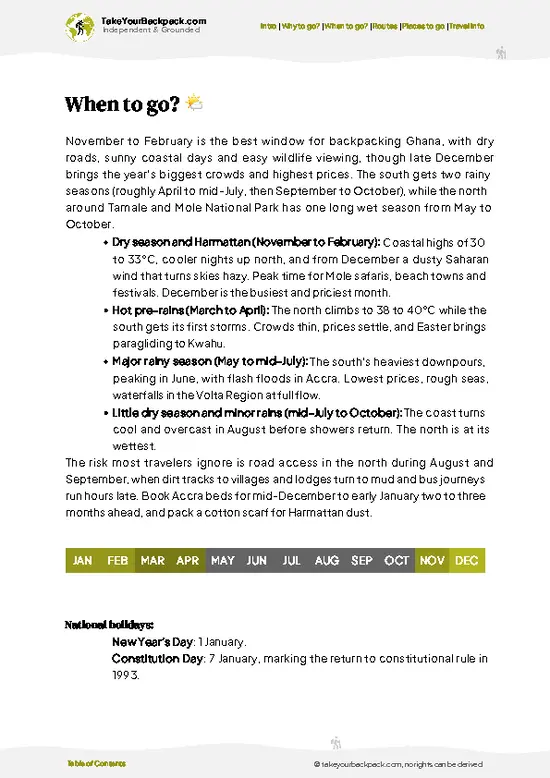
source: climatestotravel.comJANJanuary: highly recommended for travelingFEBFebruary: excellent for travelingMARMarch: excellent for travelingAPRApril: fair for travelingMAYMay: fair for travelingJUNJune: fair for travelingJULJuly: fair for travelingAUGAugust: fair for travelingSEPSeptember: fair for travelingOCTOctober: good for travelingNOVNovember: highly recommended for travelingDECDecember: highly recommended for traveling
when-to-go

✈️ The backpacker research shortcutGhana Travel Guide

An offline-friendly backpacking guide with optimized travel routes, ranked highlights, transport advice, and the best areas to stay.
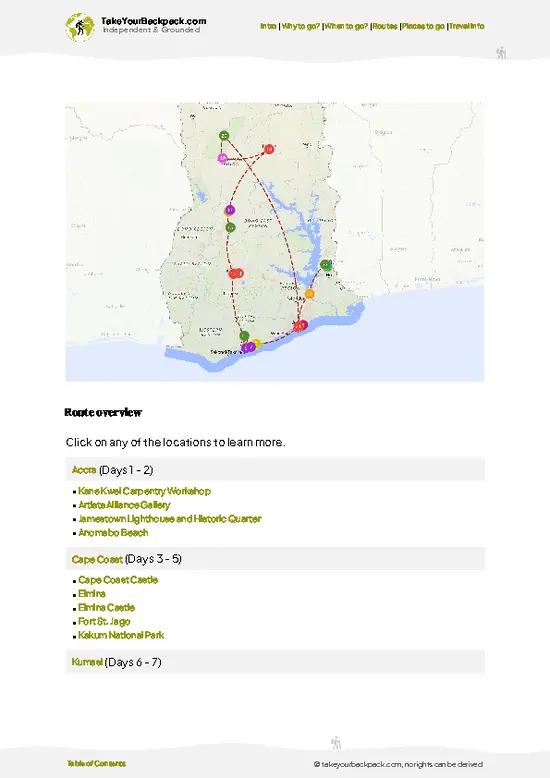
example page 0 from our offline Travel Guide for Ghana
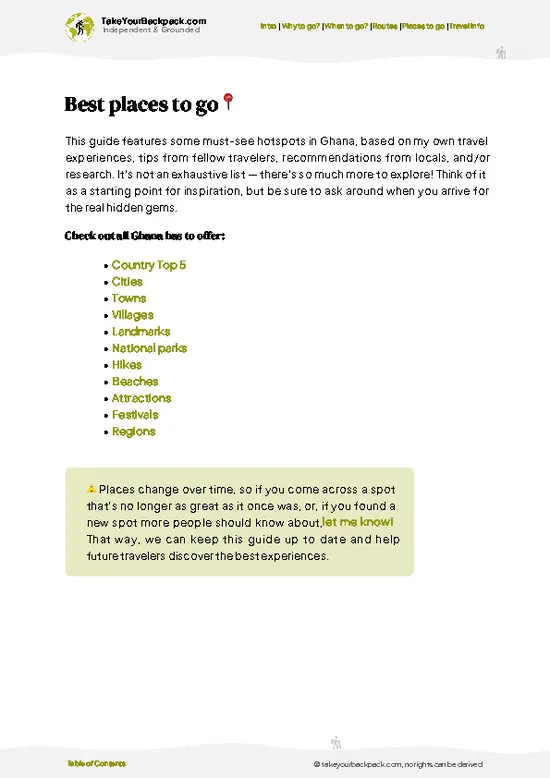
example page 1 from our offline Travel Guide for Ghana
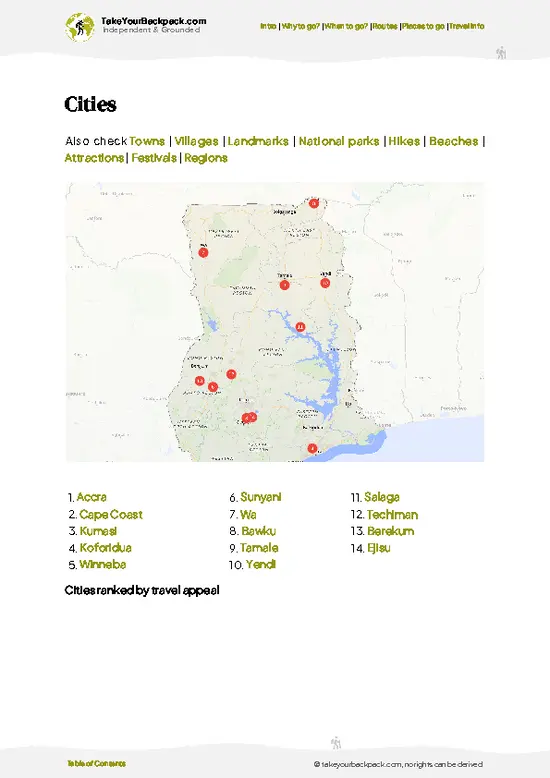
example page 2 from our offline Travel Guide for Ghana
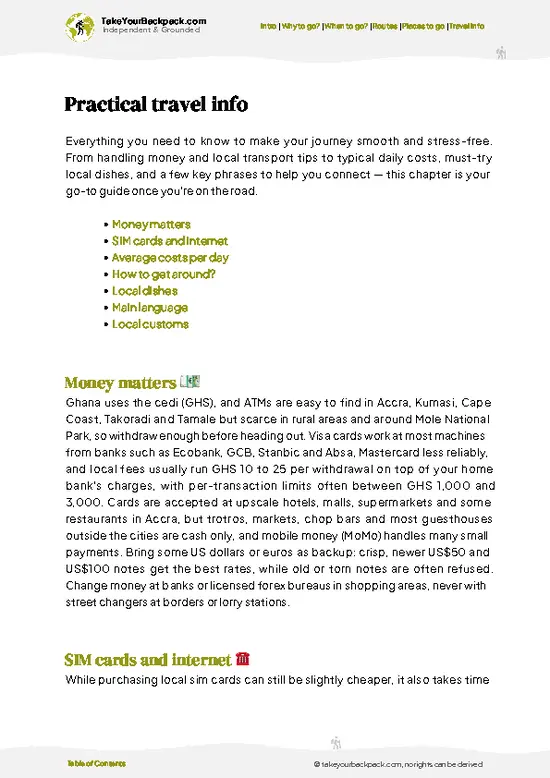
example page 3 from our offline Travel Guide for Ghana
example page 4 from our offline Travel Guide for Ghana
example page 5 from our offline Travel Guide for Ghana
example page 6 from our offline Travel Guide for Ghana
example page 7 from our offline Travel Guide for Ghana
The digital guide (422 pages) contains:
111 highlights, ranked by travel appeal
Optimized 5, 10 & 15-day travel routes
Cities, national parks, landmarks, beaches
How to get around
Offline-friendly for travel without Wi-Fi
👉 Click to see all 30+ guide features

📅 Plan smarter in minutes, not weeks
Month by month travel advice
Festivals & national holidays
Budget expectations

🗺️ Go to the right places, skip the overrated ones
Honest pros & cons of destinations
Top hikes, parks & viewpoints
Lesser-known places most travelers miss
Clear “worth it vs skip it” guidance

🛏️ Travel smoothly without rookie mistakes
Best areas to stay
Transport systems explained simply
Common scams & safety advice
SIM cards, money & practical tips

🌍 Understand the country, not just visit it
Culture & traditions
52 Essential phrases & customs
Festivals worth planning around
Traveler-friendly historical context
Insights that make places more meaningful

📱 Built for real travel conditions
Fully downloadable PDF
Works completely offline
Optimized for phone use
Useful in remote areas & buses
Everything in one place
Save weeks of stressful planning
Get instant access to your full guide. 30‑day money-back guarantee.


By proceeding you agree to our terms.
Sent to your inbox immediately after payment • 100% Secure Checkout
Best Backpacking Travel Advisor 2025 tourism awardBest Backpacking
Travel Advisor
2025
What others say about Take Your Backpack Guides:
⭐⭐⭐⭐⭐
Fantastic, amazing amount of information!
⭐⭐⭐⭐⭐
My goodness this is amazing, it's what I've been looking for hats off too you!
⭐⭐⭐⭐⭐
I think this is absolutely BRILLIANT
⭐⭐⭐⭐
Very complete and informative. It's still missing places, but I gotta to commend you
⭐⭐⭐⭐⭐
This is truly amazing, thank you, can't wait to explore it with my kids!
⭐⭐⭐⭐⭐
Awesome resource, thank you!
⭐⭐⭐⭐⭐
This is amazing! Can't wait to explore the ones I haven't seen
⭐⭐⭐⭐
I love this! Well done, great idea.
⭐⭐⭐⭐⭐
Thanks for taking the time to make this gem!
⭐⭐⭐⭐⭐
This might be the best website I've ever seen.
⭐⭐⭐⭐⭐
Congratulations, and thank you so much for your work; it's incredibly valuable.
⭐⭐⭐⭐
In all seriousness I think you did a great job pointing out the important spots
⭐⭐⭐⭐⭐
10/10 very good
⭐⭐⭐⭐⭐
As someone who's only just starting to visit regularly this is awesome, thank you.
⭐⭐⭐⭐
Thank you very much! I'm going to visit my dad, it's going to be very useful!
⭐⭐⭐⭐⭐
This is really cool! We'll be travelling for the first time and this definitely come in handy.
⭐⭐⭐⭐⭐
You are now our minister of culture, congratulations 👨‍💼
⭐⭐⭐⭐⭐
Just wanted to tell you that this is a pearl! Going to follow your recommendations.
⭐⭐⭐⭐⭐
This is so cool. I'll definitely be using the resource for my travels soon.
⭐⭐⭐⭐⭐
This is very impressive! Good work.
⭐⭐⭐⭐⭐
This is an amazing and informative site. Very well done!

🛏️ Where to stay?Where staying makes the most sense

In Yendi, the heart of the town near the central market and the main mosque is where backpackers find their rhythm. This area hums with daily life—the scent of grilled meat mingling with fresh spices, the chatter of traders, and the warm, golden light filtering through acacia trees. It’s safe, thanks to the steady flow of locals and a watchful community vibe. Budget travelers and solo backpackers gravitate here because it’s social without being overwhelming, with a handful of simple guesthouses and hostels that encourage connection over luxury. Stepping outside this core, the streets thin out, … read more 👉
In Yendi, the heart of the town near the central market and the main mosque is where backpackers find their rhythm. This area hums with daily life—the scent of grilled meat mingling with fresh spices, the chatter of traders, and the warm, golden light filtering through acacia trees. It’s safe, thanks to the steady flow of locals and a watchful community vibe. Budget travelers and solo backpackers gravitate here because it’s social without being overwhelming, with a handful of simple guesthouses and hostels that encourage connection over luxury. Stepping outside this core, the streets thin out, and the vibe shifts to quiet residential zones—better for rest but less for meeting fellow travelers or soaking in Yendi’s pulse. Staying central means you’re plugged into the town’s energy, making every moment feel earned.

🚌 Getting aroundMoving around without the hassle

Yendi moves at a pace that feels like the sun itself is setting on its own terms—no rush, no strict timetables, just the natural rhythm of daily life unfolding under a wide, dusty sky. The air carries the scent of dry earth and distant smoke from cooking fires, and the streets pulse with a mix of purposeful strides and casual pauses. Here, time bends to the needs of the moment, not the clock. To navigate Yendi like a local, you’ll want to embrace this flow, blending patience with a readiness to hop on whatever moves next.


  • Walking: The heart of Yendi is best explored on foot. Streets are compact, and walking lets you catch the subtle shifts in light and sound—the chatter of market vendors, the clatter of motorbikes, the occasional bleat of goats. It’s free, flexible, and the best way to
read more 👉
Yendi moves at a pace that feels like the sun itself is setting on its own terms—no rush, no strict timetables, just the natural rhythm of daily life unfolding under a wide, dusty sky. The air carries the scent of dry earth and distant smoke from cooking fires, and the streets pulse with a mix of purposeful strides and casual pauses. Here, time bends to the needs of the moment, not the clock. To navigate Yendi like a local, you’ll want to embrace this flow, blending patience with a readiness to hop on whatever moves next.


  • Walking: The heart of Yendi is best explored on foot. Streets are compact, and walking lets you catch the subtle shifts in light and sound—the chatter of market vendors, the clatter of motorbikes, the occasional bleat of goats. It’s free, flexible, and the best way to absorb the town’s texture.

  • Shared Trotros: These minibuses run on informal schedules, often filling up before they leave. Expect to pay around 1-2 GHS for short hops. They’re a bit cramped but fast and frequent, especially between the market and bus station.

  • Motorbike Taxis (Okada): Quick and nimble, these are your go-to for weaving through traffic or reaching spots off the main roads. Prices vary but usually hover around 3-5 GHS per ride. Negotiate upfront and hold tight—the ride is bumpy but exhilarating.

  • Private Taxis: Less common and pricier, around 10-15 GHS for typical town trips. Best if you’re carrying heavy gear or traveling in a group. They offer shade and a break from the dust but don’t expect air conditioning.

👛 Costs (as of 26 October 2025)Typical daily expenses

Backpacking in Yendi, Ghana, is a straightforward experience with costs that reflect its small-town pace and local lifestyle. Here’s a clear breakdown to help you budget smartly and enjoy the rhythm of the place without surprises.
  • Dorm Accommodation: Yendi doesn’t have a bustling hostel scene like bigger cities, so dorm options are limited and often basic. Expect to pay around €5-€10 per night for a simple shared room or guesthouse bed. These places usually have just the essentials—think a fan, a mosquito net, and a shared bathroom. It’s not luxury, but it’s clean and functional.
  • Meals: Food here is fresh and local, with street vendors and small eateries serving up hearty meals. A typical plate of rice with stew or local dishes like tuo zaafi will cost about €1-€2. If you want something
read more 👉
Backpacking in Yendi, Ghana, is a straightforward experience with costs that reflect its small-town pace and local lifestyle. Here’s a clear breakdown to help you budget smartly and enjoy the rhythm of the place without surprises.
  • Dorm Accommodation: Yendi doesn’t have a bustling hostel scene like bigger cities, so dorm options are limited and often basic. Expect to pay around €5-€10 per night for a simple shared room or guesthouse bed. These places usually have just the essentials—think a fan, a mosquito net, and a shared bathroom. It’s not luxury, but it’s clean and functional.
  • Meals: Food here is fresh and local, with street vendors and small eateries serving up hearty meals. A typical plate of rice with stew or local dishes like tuo zaafi will cost about €1-€2. If you want something a bit more substantial or in a modest restaurant, budget around €3-€5 per meal. The flavors are earthy and satisfying, with spices that wake up your senses without overwhelming.
  • Local Transport: Getting around Yendi is mostly on foot or by tro-tro (shared minibus). Tro-tro rides are cheap, usually €0.20-€0.50 for short distances within town. For longer trips to nearby villages, expect to pay up to €1. The roads can be dusty, so a scarf or bandana to cover your face is a good call.
  • Basic Activities/Entry Fees: Yendi’s main draws are cultural and historical sites, like the Yendi Palace. Entry fees are minimal, often under €1. Guided tours or local storytelling sessions might cost a bit more, around €2-€3, but these are worth it for the insight and connection to the community.
  • Miscellaneous Expenses: This covers bottled water, snacks, phone credit, and occasional small purchases. Budget around €1-€2 daily. Water quality varies, so sticking to bottled water is wise, especially in the heat.

All told, you’re looking at a daily budget of roughly €8 to €20. This range gives you room to stretch a bit on meals or a guided experience without breaking the bank. Yendi’s charm is in its simplicity—spending smart here means you get to soak in the local pace and flavors without fuss.


source: ghana.travel
⚠️ Prices can change and everyone travels differently, so take this as a rough guide. Hope it helps you plan your adventure!

🚌 Day tripsBest day trips from Yendi

Yendi, Ghana, is a fantastic launchpad for exploring the rich tapestry of northern Ghana. With its vibrant culture and welcoming locals, you’ll find day trips that are not just easy but also deeply rewarding.

Tamale
Just an hour away, Tamale is a bustling city that pulses with life. Dive into the local markets where the scent of spices fills the air, and the colors of textiles dazzle your senses. Grab a bowl of light soup with fufu from a street vendor for around 5 GHS. The best time to visit is during the dry season, from November to March, when the weather is cooler. A common mistake? Skipping the market scene; it’s where the heart of the city beats.
👉 Explore Tamale

Gambaga
A 90-minute ride from Yendi, Gambaga is known for its ancient mud mosque and the Gambaga Witch Camp. Here, … read more 👉
Yendi, Ghana, is a fantastic launchpad for exploring the rich tapestry of northern Ghana. With its vibrant culture and welcoming locals, you’ll find day trips that are not just easy but also deeply rewarding.

Tamale
Just an hour away, Tamale is a bustling city that pulses with life. Dive into the local markets where the scent of spices fills the air, and the colors of textiles dazzle your senses. Grab a bowl of light soup with fufu from a street vendor for around 5 GHS. The best time to visit is during the dry season, from November to March, when the weather is cooler. A common mistake? Skipping the market scene; it’s where the heart of the city beats.
👉 Explore Tamale

Gambaga
A 90-minute ride from Yendi, Gambaga is known for its ancient mud mosque and the Gambaga Witch Camp. Here, you’ll learn about the complex social issues surrounding the camp while witnessing the resilience of the women who live there. The trip costs about 15 GHS for transport. Visit in the morning to avoid the midday heat and engage with local guides who can share stories that you won’t find in any guidebook. Many first-timers overlook the importance of respectful engagement; these women have powerful stories to tell.


Larabanga
Just over an hour from Yendi, Larabanga is home to the oldest mosque in Ghana. The intricate mud architecture is a sight to behold, especially in the soft morning light. Entry is free, but consider a small donation for a local guide who can share the mosque’s history. The best time to visit is early morning or late afternoon for stunning photography. A common misstep is rushing through; take your time to soak in the atmosphere and chat with locals.
👉 Explore Larabanga

Mole National Park
A bit further afield, about two hours from Yendi, Mole National Park offers a chance to see elephants and other wildlife in their natural habitat. Guided walking safaris are available for around 50 GHS, and the experience is worth every cedi. The dry season is ideal for spotting animals, as they congregate around water sources. Many backpackers mistakenly think they can do this trip without a guide; don’t miss out on the expertise they provide.
👉 Explore Mole National Park
Want to know what more Ghana offers?
The Ghana Travel Guide describes 111 highlights, from cities to national parks, from beaches to hikes

Get the Travel Guide -

🍲 FoodWhat to Eat & Drink

In Yendi, the food scene is a lively dance of bold flavors and hearty tradition. You’ll want to dive into tuo zaafi, a thick, comforting porridge made from millet or corn, usually paired with a rich, spicy soup that hits the perfect balance between heat and earthiness. Don’t miss out on fufu either—pounded yam or cassava that’s as much about texture as taste, best enjoyed by hand, dipping into savory stews.

Backpackers find their groove at bustling markets and street stalls, where the air is thick with the scent of grilled meats and smoky peppers. These spots are social hubs, informal and welcoming, where sharing a meal feels like joining a local rhythm. Expect to sip on pito, a traditional millet beer, often served in calabash bowls, which adds a communal, down-to-earth vibe to your drinking … read more 👉
In Yendi, the food scene is a lively dance of bold flavors and hearty tradition. You’ll want to dive into tuo zaafi, a thick, comforting porridge made from millet or corn, usually paired with a rich, spicy soup that hits the perfect balance between heat and earthiness. Don’t miss out on fufu either—pounded yam or cassava that’s as much about texture as taste, best enjoyed by hand, dipping into savory stews.

Backpackers find their groove at bustling markets and street stalls, where the air is thick with the scent of grilled meats and smoky peppers. These spots are social hubs, informal and welcoming, where sharing a meal feels like joining a local rhythm. Expect to sip on pito, a traditional millet beer, often served in calabash bowls, which adds a communal, down-to-earth vibe to your drinking experience. Eating here isn’t just about food; it’s about connecting through shared customs and flavors.

🛡️ SafetyScams, Hazards, and Annoyances

Yendi is generally safe, but a few practical tips can enhance your experience. Stay aware in crowded markets; pickpockets can be a nuisance. If you’re wandering solo at night, stick to well-lit areas and avoid empty streets. The atmosphere shifts after dark, so it’s wise to plan your return to accommodations early.

Common scams are rare, but be cautious of overly friendly locals offering unsolicited help; they might expect payment. Approach interactions with a friendly demeanor, but maintain a clear boundary. Carry yourself confidently, and you’ll blend in seamlessly, enjoying the vibrant culture without unnecessary stress.

Other Ghanaian cities near Yendi

Explore more nearby:

  • Salaga—Slave trade relics, northern market, caravan routes| 114 km away
  • Bawku—Border town, market crossroads, Kusasi culture| 181 km away
  • Keta Krachi—Island ferries, Volta Lake outpost, fishing enclave| 183 km away

💡 Not sure where to go next?
Create a personalized itinerary for Ghana including Yendi and the places that fit your trip.

Generate my itinerary

👉 Discover all cities

Or checkout all Ghana has to offer (think cities, towns, villages, national parks, hikes, beaches, festivals)
Country photo of Ghana

We 💚 feedbackFinal thoughts on visiting Yendi

Yendi pulses with the vibrant rhythms of Dagbon culture, where the air is thick with the scent of spicy jollof and the sounds of laughter echo through the streets. But be ready for the heat; it can be relentless. Embrace the sweat, and you’ll find that the warmth of the people makes every drop worth it.

✈️ When did I visit Ghana?
Ghana I visited in December 2024, starting in Accra following the coast, then up north to Mole National park to finish in the Volta Region.

✍️ Help improve this page!
The information on this page is based on my own backpacking experience in Ghana, supplemented with up-to-date research and feedback from other travelers. Travel details can change, so if you notice anything outdated or incomplete, feel free to let me know.


🙋‍♂️ Give feedback

👋 Meet the founderWho’s Behind Take Your Backpack?

Johan, backpacker and founder of TakeYourBackpackHi, I’m Johan (Netherlands 🇳🇱), the creator of TakeYourBackpack. Over the past decade, I’ve backpacked through 80+ countries across six continents, gaining extensive experience with independent travel, long-term trips, and overland routes.

This site is built on a combination of firsthand travel experience and carefully curated insights from other backpackers. Many guides are based on places I’ve personally visited, while others bring together tips, observations, and practical advice shared by trusted travelers I’ve met along the way.

The goal is to provide realistic, experience-driven guidance — not generic itineraries — so you can explore destinations with better context, clearer expectations, and more confidence.

Get full Ghana guide •
Instant download • 111 highlights • Full Offline guide