×

Guinea🇬🇳 | best hikesExplore the 6 Best hikes in Guinea

In Guinea, hiking is a journey through diverse landscapes, from the lush Fouta Djallon highlands to the rugged Mount Nimba range. Each region offers distinct challenges and rewards. The wet season transforms trails into slippery adventures, while the dry months reveal breathtaking vistas and clearer paths. Choosing the right hike shapes your experience—opt for the steep ascents of Nimba for a physical challenge, or the gentle slopes of the surrounding valleys for a more relaxed exploration. Consider your budget and safety; some trails require local guides, enhancing cultural immersion. Ultimately, the right trail can elevate your trip from mere travel to a profound connection with Guinea’s spirit.

By Johan Kruseman 🇳🇱 | Updated June 13, 2026
Explore the best beaches in Guinea

Why go?Key Factors That Shape the Experience

Hiking in Guinea offers a unique blend of terrain variety and cultural richness that sets it apart from many other countries. The landscape ranges from lush rainforests to rugged mountains, providing a backdrop that changes dramatically with every step. This diversity not only enhances the visual experience but also presents a range of altitude challenges. Trails can be steep and demanding, rewarding hikers with breathtaking views of valleys and waterfalls that feel hard-earned.

However, the trail infrastructure can vary significantly. Some paths are well-marked and maintained, while others may require navigation skills and a sense of adventure. This inconsistency means that hikers must weigh the difficulty of a trail against its scenic reward. The more challenging routes often lead to the … read more 👉
Hiking in Guinea offers a unique blend of terrain variety and cultural richness that sets it apart from many other countries. The landscape ranges from lush rainforests to rugged mountains, providing a backdrop that changes dramatically with every step. This diversity not only enhances the visual experience but also presents a range of altitude challenges. Trails can be steep and demanding, rewarding hikers with breathtaking views of valleys and waterfalls that feel hard-earned.

However, the trail infrastructure can vary significantly. Some paths are well-marked and maintained, while others may require navigation skills and a sense of adventure. This inconsistency means that hikers must weigh the difficulty of a trail against its scenic reward. The more challenging routes often lead to the most stunning vistas, but they demand physical preparation and mental resilience.

Seasonal considerations also play a crucial role. The rainy season can make trails slippery and less accessible, while the dry months offer safer conditions but may limit the lushness of the landscape. Travelers should consider the trade-offs between travel time and the depth of exploration. While some areas are more accessible, venturing off the beaten path can lead to richer, more immersive experiences.

Guinea’s cultural and historical context adds another layer of significance to its hikes. The trails often weave through communities where traditional practices are still alive, offering a glimpse into a way of life that feels both authentic and rewarding. Understanding these dynamics is essential for anyone looking to explore the heart of Guinea through its trails.
Why These Made the Cut
The list of best hikes in Guinea is created based on scenery, challenge, trail quality, landmarks, and overall enjoyment. If you feel a hike is missing in this list, please let us know.

When to go?When to Plan Your Trip

Seasonality


Guinea’s hiking conditions shift dramatically throughout the year. The dry season, typically from November to April, offers the best access to trails. Expect clear skies and cooler temperatures, ideal for long treks. Daylight hours are generous, allowing for extended hikes without the pressure of fading light.

The wet season, from May to October, brings heavy rainfall. Trails can become muddy and treacherous, especially at higher altitudes. While the landscape bursts with lush greenery, the risk of landslides increases, and some paths may become impassable. Recovery from strenuous hikes can be more challenging during this time due to humidity and heat.

Shoulder seasons, just before and after the wet season, present a mixed bag. Fewer crowds mean a more solitary experience, … read more 👉

Seasonality


Guinea’s hiking conditions shift dramatically throughout the year. The dry season, typically from November to April, offers the best access to trails. Expect clear skies and cooler temperatures, ideal for long treks. Daylight hours are generous, allowing for extended hikes without the pressure of fading light.

The wet season, from May to October, brings heavy rainfall. Trails can become muddy and treacherous, especially at higher altitudes. While the landscape bursts with lush greenery, the risk of landslides increases, and some paths may become impassable. Recovery from strenuous hikes can be more challenging during this time due to humidity and heat.

Shoulder seasons, just before and after the wet season, present a mixed bag. Fewer crowds mean a more solitary experience, but weather can be unpredictable. Rain may still linger, and trails might be slick. Costs for accommodations and guides can be lower, making it an attractive option for budget-conscious travelers.

Peak periods coincide with the dry season, drawing more visitors. This can lead to busier trails and higher prices. Balancing safety with scenic rewards is crucial; choosing the right time can transform a challenging hike into a memorable adventure.

hike hoppingTips for Visiting Multiple Destinations

General routing logic

To efficiently combine hikes across Guinea, focus on regional clusters. Start in the Fouta Djallon highlands, where trails weave through lush landscapes and cascading waterfalls. From there, head south toward the mountainous regions of Nzérékoré, known for their dense forests and vibrant cultures. This directional flow minimizes travel time and maximizes scenic diversity.

Typical time needed

Allocate at least two to three days per major stop. This allows for acclimatization and recovery, especially after tackling steep ascents. The terrain can be demanding, so pacing is crucial. A day of hiking should be followed by a lighter day of exploration or rest to recharge.

Common planning mistakes

Travelers often underestimate the physical demands of the trails. Over-scheduling … read more 👉

General routing logic

To efficiently combine hikes across Guinea, focus on regional clusters. Start in the Fouta Djallon highlands, where trails weave through lush landscapes and cascading waterfalls. From there, head south toward the mountainous regions of Nzérékoré, known for their dense forests and vibrant cultures. This directional flow minimizes travel time and maximizes scenic diversity.

Typical time needed

Allocate at least two to three days per major stop. This allows for acclimatization and recovery, especially after tackling steep ascents. The terrain can be demanding, so pacing is crucial. A day of hiking should be followed by a lighter day of exploration or rest to recharge.

Common planning mistakes

Travelers often underestimate the physical demands of the trails. Over-scheduling can lead to burnout and missed opportunities for deeper engagement with local communities. Prioritize quality over quantity; a slower pace can yield richer experiences.

Trade-offs and constraints

Consider the balance between speed and depth of experience. While it may be tempting to cover more ground, the most rewarding moments often come from lingering in a place. Budget constraints may also dictate accommodation choices, impacting comfort after long hikes. Flexibility in planning allows for spontaneous detours that can lead to unexpected rewards.

The ListTop hikes of Guinea

1 Mount Nimba Strict Nature Reserve

mountain ridges, endemic wildlife, montane grasslands

Climb steep slopes to panoramic ridges, encountering unique species and shifting habitats found only in this protected highland region.

2 Kambadaga Falls

multi-tiered waterfalls, rocky pools, misty spray

Descend to a series of cascades where cool mist rises from the rocks and natural pools invite a refreshing pause.

3 Soumba Waterfalls

lush river valley, picnic clearings, gentle cascades

Relax beside gentle falls in a green valley, where open spaces and easy access make it ideal for a quiet afternoon outdoors.

4 Koundara Trek

savanna plateaus, remote villages, open grassland views

Traverse broad plateaus and pass through isolated communities, experiencing the open landscapes and daily rhythms of rural northern Guinea.

guinea-hike-koundara-trek
© Google |

5 Koumbia Forest Trail

dense hardwood forest, rare birdlife, shaded footpaths

Follow winding trails beneath a thick canopy, where the air cools and the calls of elusive birds echo through the undergrowth.

6 Kankan River Walk

riverbank paths, local fishing spots, urban greenery

Stroll along the river’s edge, watching fishermen at work and pausing in shaded parks that break up the city’s bustle.

Loading the map 🌍

Expert viewPro Tips for Exploring the Best

Trail Logistics

Guinea’s hiking scene is as diverse as its landscapes, offering a range of trails that cater to various skill levels. Expect to tackle anywhere from three to five hikes to truly appreciate the country’s natural beauty. Each trail presents its own challenges, from steep ascents to muddy paths, so be prepared for a mix of grit and glory.

The trails can vary significantly in altitude, with some reaching over 1,500 meters. This means you’ll need to acclimatize, especially if you’re coming from sea level. Take your time; rushing can lead to fatigue or altitude sickness. Pacing yourself is crucial. A good rule of thumb is to plan for a slower pace than you might be used to, especially on the more rugged paths.

Time and Effort

Expect to spend anywhere from a few hours to a full … read more 👉

Trail Logistics

Guinea’s hiking scene is as diverse as its landscapes, offering a range of trails that cater to various skill levels. Expect to tackle anywhere from three to five hikes to truly appreciate the country’s natural beauty. Each trail presents its own challenges, from steep ascents to muddy paths, so be prepared for a mix of grit and glory.

The trails can vary significantly in altitude, with some reaching over 1,500 meters. This means you’ll need to acclimatize, especially if you’re coming from sea level. Take your time; rushing can lead to fatigue or altitude sickness. Pacing yourself is crucial. A good rule of thumb is to plan for a slower pace than you might be used to, especially on the more rugged paths.

Time and Effort

Expect to spend anywhere from a few hours to a full day on the trails. Some hikes can be completed in half a day, while others may require a full day or even an overnight stay. The effort required can be substantial, particularly on trails that involve significant elevation changes.

Budget-wise, consider not just the cost of transportation but also the potential need for local guides. Hiring a guide can enhance your experience, providing insights into local flora and fauna, as well as cultural context. However, this adds to your overall budget, so weigh the benefits against the cost.

Planning and Prioritizing

When planning your hikes, prioritize based on your fitness level and interests. If you’re drawn to waterfalls, seek out trails that lead to these natural wonders. If you prefer panoramic views, focus on higher elevations. The trails can be less maintained in remote areas, so always check local conditions before heading out.

Local culture plays a significant role in your hiking experience. Engaging with communities along the trails can enrich your journey, but be respectful of local customs. Always ask permission before taking photos, and be mindful of your impact on the environment.

Safety and Cultural Considerations

Safety is paramount. Some trails can be isolated, so hiking in groups is advisable. Carry a basic first-aid kit and ensure you have enough water and snacks. The heat can be intense, especially in lower altitudes, so start early in the day to avoid the midday sun.

Culturally, Guinea is rich and diverse. Understanding local customs can enhance your experience. For instance, greeting locals in their native languages can open doors and create connections.

In summary, the hiking experience in Guinea is rewarding but requires thoughtful planning. The trails demand respect and preparation, but the payoff—a breathtaking view, a refreshing dip in a river, or a shared moment with locals—makes every step worthwhile. Embrace the journey, and let the trails guide you through this vibrant landscape.

✈️ The backpacker research shortcutGuinea Travel Guide

An offline-friendly backpacking guide with optimized travel routes, ranked highlights, transport advice, and the best areas to stay.
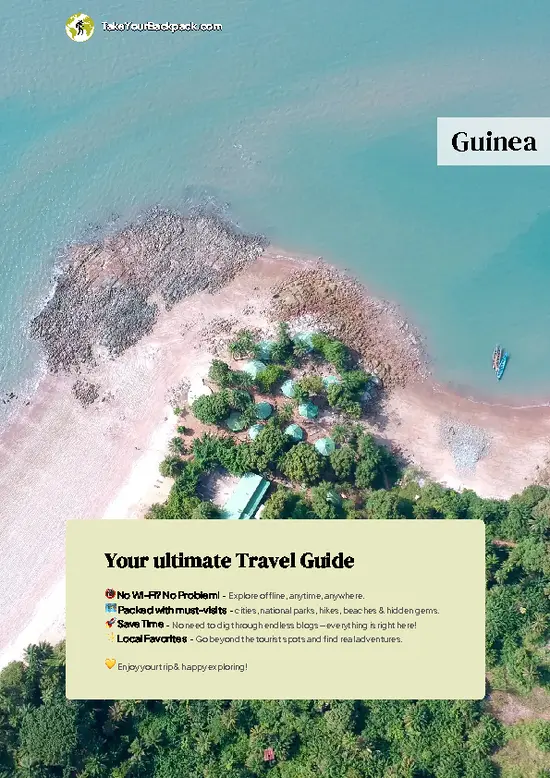
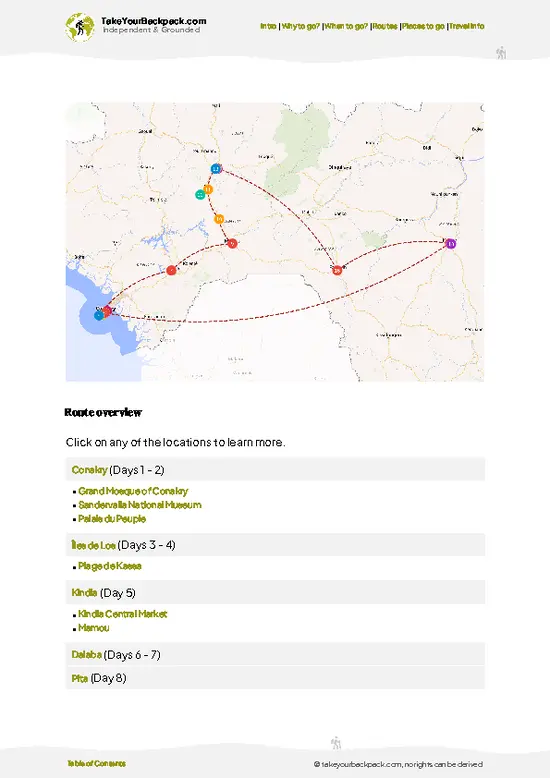
example page 0 from our offline Travel Guide for Guinea
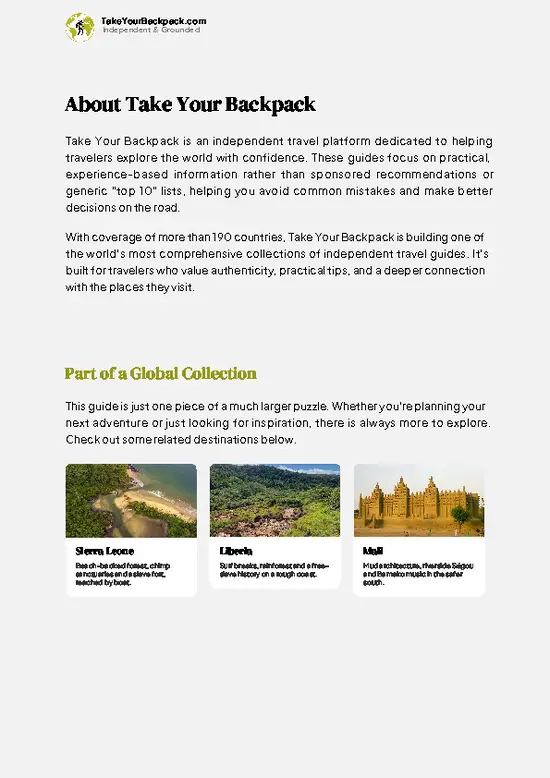
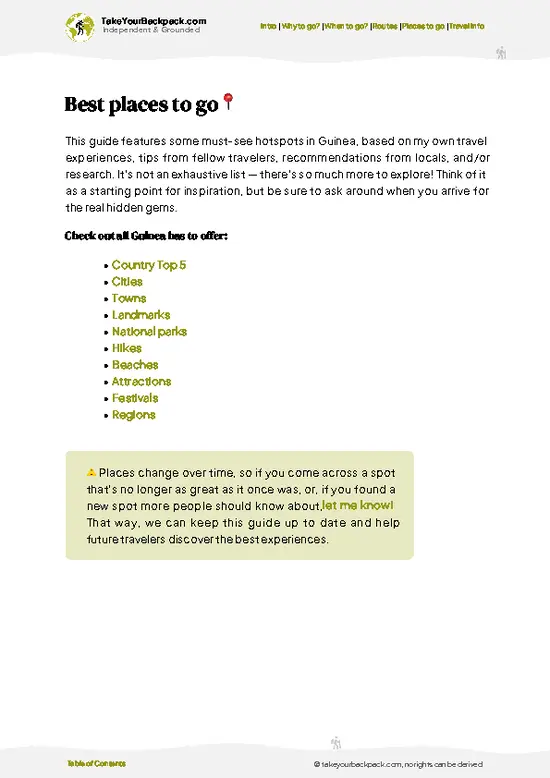
example page 1 from our offline Travel Guide for Guinea
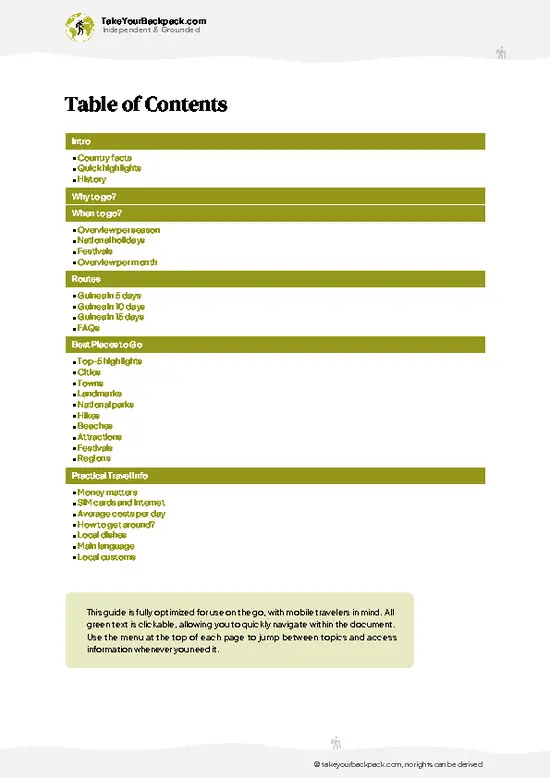
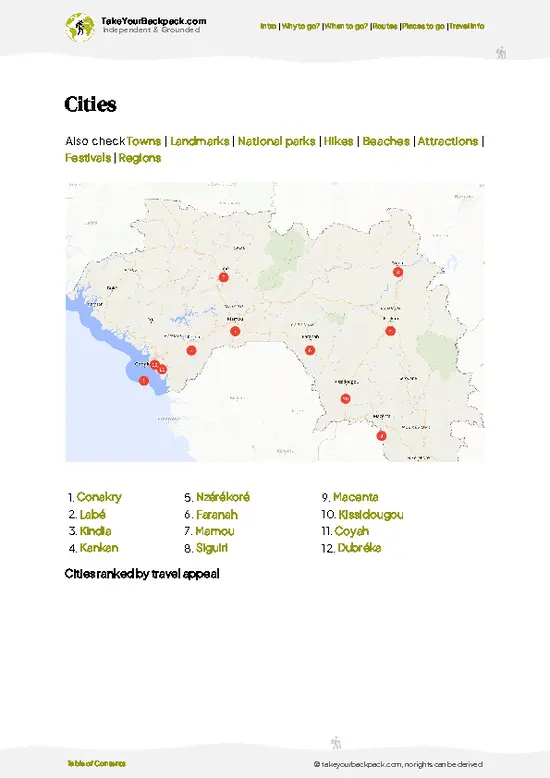
example page 2 from our offline Travel Guide for Guinea
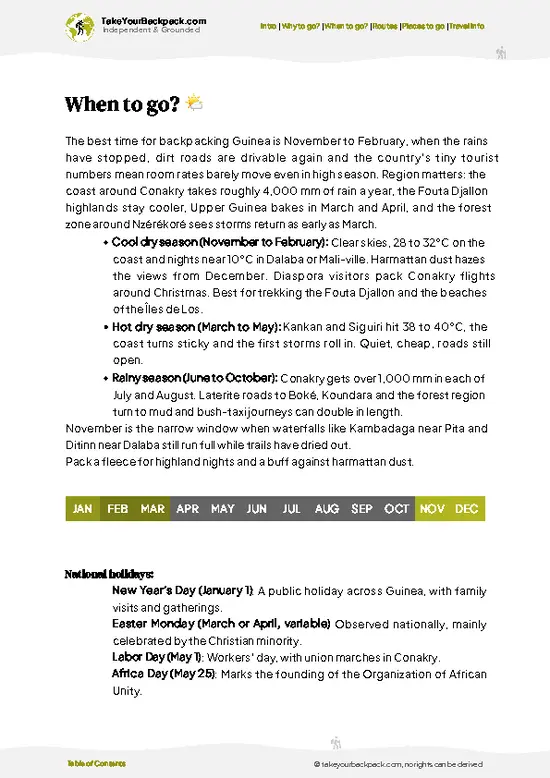
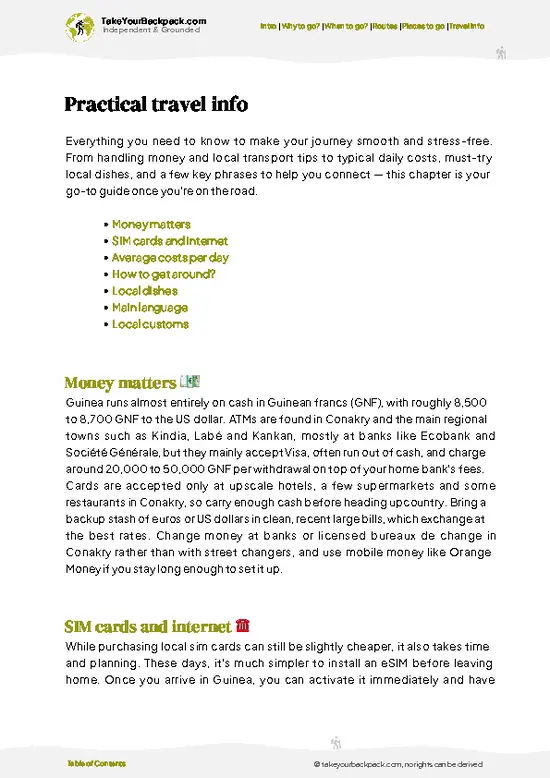
example page 3 from our offline Travel Guide for Guinea
example page 4 from our offline Travel Guide for Guinea
example page 5 from our offline Travel Guide for Guinea
example page 6 from our offline Travel Guide for Guinea
example page 7 from our offline Travel Guide for Guinea
The digital guide (282 pages) contains:
67 highlights, ranked by travel appeal
Optimized 5, 10 & 15-day travel routes
Cities, national parks, landmarks, beaches
How to get around
Offline-friendly for travel without Wi-Fi
👉 Click to see all 30+ guide features

📅 Plan smarter in minutes, not weeks
Month by month travel advice
Festivals & national holidays
Budget expectations

🗺️ Go to the right places, skip the overrated ones
Honest pros & cons of destinations
Top hikes, parks & viewpoints
Lesser-known places most travelers miss
Clear “worth it vs skip it” guidance

🛏️ Travel smoothly without rookie mistakes
Best areas to stay
Transport systems explained simply
Common scams & safety advice
SIM cards, money & practical tips

🌍 Understand the country, not just visit it
Culture & traditions
52 Essential phrases & customs
Festivals worth planning around
Traveler-friendly historical context
Insights that make places more meaningful

📱 Built for real travel conditions
Fully downloadable PDF
Works completely offline
Optimized for phone use
Useful in remote areas & buses
Everything in one place
Save weeks of stressful planning
Get instant access to your full guide. 30‑day money-back guarantee.


By proceeding you agree to our terms.
Sent to your inbox immediately after payment • 100% Secure Checkout
Best Backpacking Travel Advisor 2025 tourism awardBest Backpacking
Travel Advisor
2025
What others say about Take Your Backpack Guides:
⭐⭐⭐⭐⭐
Fantastic, amazing amount of information!
⭐⭐⭐⭐⭐
My goodness this is amazing, it's what I've been looking for hats off too you!
⭐⭐⭐⭐⭐
I think this is absolutely BRILLIANT
⭐⭐⭐⭐
Very complete and informative. It's still missing places, but I gotta to commend you
⭐⭐⭐⭐⭐
This is truly amazing, thank you, can't wait to explore it with my kids!
⭐⭐⭐⭐⭐
Awesome resource, thank you!
⭐⭐⭐⭐⭐
This is amazing! Can't wait to explore the ones I haven't seen
⭐⭐⭐⭐
I love this! Well done, great idea.
⭐⭐⭐⭐⭐
Thanks for taking the time to make this gem!
⭐⭐⭐⭐⭐
This might be the best website I've ever seen.
⭐⭐⭐⭐⭐
Congratulations, and thank you so much for your work; it's incredibly valuable.
⭐⭐⭐⭐
In all seriousness I think you did a great job pointing out the important spots
⭐⭐⭐⭐⭐
10/10 very good
⭐⭐⭐⭐⭐
As someone who's only just starting to visit regularly this is awesome, thank you.
⭐⭐⭐⭐
Thank you very much! I'm going to visit my dad, it's going to be very useful!
⭐⭐⭐⭐⭐
This is really cool! We'll be travelling for the first time and this definitely come in handy.
⭐⭐⭐⭐⭐
You are now our minister of culture, congratulations 👨‍💼
⭐⭐⭐⭐⭐
Just wanted to tell you that this is a pearl! Going to follow your recommendations.
⭐⭐⭐⭐⭐
This is so cool. I'll definitely be using the resource for my travels soon.
⭐⭐⭐⭐⭐
This is very impressive! Good work.
⭐⭐⭐⭐⭐
This is an amazing and informative site. Very well done!

🛏️ Where to stay?Where to Stay in Guinea

Yes — hostels and budget guesthouses exist in Guinea, concentrated in Conakry; options outside the capital are sparse and travel and infrastructure constraints make inland budget stays harder and less reliable.
Kaloum is the central district nearest ferries, markets and government services but is busiest and often pricier; Dixinn (university/embassy zone) and parts of Ratoma host the most and cheapest guesthouses with quieter streets and better local nightlife; Matam offers mid-range budget options near beaches and conference facilities but can feel more isolated.
Expect basic standards (intermittent electricity, limited hot water, cash-only payments), book ahead for Conakry, carry a mosquito … read more 👉
Yes — hostels and budget guesthouses exist in Guinea, concentrated in Conakry; options outside the capital are sparse and travel and infrastructure constraints make inland budget stays harder and less reliable.
Kaloum is the central district nearest ferries, markets and government services but is busiest and often pricier; Dixinn (university/embassy zone) and parts of Ratoma host the most and cheapest guesthouses with quieter streets and better local nightlife; Matam offers mid-range budget options near beaches and conference facilities but can feel more isolated.
Expect basic standards (intermittent electricity, limited hot water, cash-only payments), book ahead for Conakry, carry a mosquito net and personal lock, and favor Dixinn or Ratoma for safer, quieter budget stays while using Kaloum for short central access.

If you enjoy meeting fellow travelers, consider choosing hostels with high ratings for atmosphere. On the other hand, if you prefer having your own space, a hotel might be a better option.

GuineaMore of Guinea

👋 Meet the founderWho’s Behind Take Your Backpack?

Johan, backpacker and founder of TakeYourBackpackHi, I’m Johan (Netherlands 🇳🇱), the creator of TakeYourBackpack. Over the past decade, I’ve backpacked through 80+ countries across six continents, gaining extensive experience with independent travel, long-term trips, and overland routes.

This site is built on a combination of firsthand travel experience and carefully curated insights from other backpackers. Many guides are based on places I’ve personally visited, while others bring together tips, observations, and practical advice shared by trusted travelers I’ve met along the way.

The goal is to provide realistic, experience-driven guidance — not generic itineraries — so you can explore destinations with better context, clearer expectations, and more confidence.

Get full Guinea guide •
Instant download • 67 highlights • Full Offline guide