×

Guinea🇬🇳 | best landmarksExplore the Best landmarks in Guinea

In Guinea, unique sites are defined by their rich cultural, historical, and natural significance, each offering a distinct flavor of the country. From the bustling markets of Conakry to the serene landscapes of the Fouta Djallon highlands, the experience varies widely. Backpackers will find that accessibility can shift dramatically; some sites are easily reached by public transport, while others demand a rugged trek. Seasonal nuances also play a role—rainy seasons can transform trails into muddy challenges, while dry months reveal stunning vistas. Choosing the right site impacts your vibe, budget, and cultural immersion, making it essential for independent travelers to align their interests with the local landscape.

By Johan Kruseman 🇳🇱 | Updated June 11, 2026
Explore the best national parks in Guinea

Why go?Key Factors That Shape the Experience

Guinea stands out for its cultural richness and natural diversity, offering unique sites that reflect a blend of history and geography. The country is home to the Fouta Djallon, a mountainous region that not only shapes the landscape but also influences the climate, creating lush valleys and cascading waterfalls. This topography is crucial for understanding Guinea’s agricultural practices and the traditional lifestyles of its people.

However, accessibility can be a challenge. Many sites are remote, requiring time and effort to reach. This trade-off often means that travelers must weigh the depth of exploration against the time spent traveling. The roads can be rough, and public transport is limited, which may deter those seeking a quick visit. Yet, this very remoteness often leads to a more … read more 👉
Guinea stands out for its cultural richness and natural diversity, offering unique sites that reflect a blend of history and geography. The country is home to the Fouta Djallon, a mountainous region that not only shapes the landscape but also influences the climate, creating lush valleys and cascading waterfalls. This topography is crucial for understanding Guinea’s agricultural practices and the traditional lifestyles of its people.

However, accessibility can be a challenge. Many sites are remote, requiring time and effort to reach. This trade-off often means that travelers must weigh the depth of exploration against the time spent traveling. The roads can be rough, and public transport is limited, which may deter those seeking a quick visit. Yet, this very remoteness often leads to a more immersive experience, allowing for genuine interactions with local communities.

Guinea’s climatic conditions also play a role in site accessibility. The rainy season can make certain areas difficult to navigate, while the dry season offers clearer paths but can lead to increased tourist traffic. Understanding these patterns is essential for planning a visit that balances cultural engagement with the practicalities of travel. In essence, Guinea’s unique sites matter not just for their beauty, but for the stories they tell and the experiences they offer, making the effort to reach them worthwhile.
Behind the Scenes of Selection
The list of best unique sites in Guinea is created based on history or culture, wow factor, atmosphere, quirks, and memorability. If you feel a unique site is missing in this list, please let us know.

When to go?When to Plan Your Trip

Seasonality plays a crucial role in experiencing the unique sites of Guinea. The country has a tropical climate, characterized by a wet season and a dry season. The wet season, typically from May to October, brings heavy rains that can make access to certain areas challenging. Trails may become muddy, and some sites may be less accessible due to flooding. However, this season also transforms the landscape into a lush, vibrant green, offering a different kind of beauty.

Optimal months for visiting are often during the dry season, from November to April. This period provides clearer skies and more stable conditions for exploration. The cooler months, especially December to February, are particularly pleasant, with lower humidity and comfortable temperatures. This is when many travelers flock … read more 👉
Seasonality plays a crucial role in experiencing the unique sites of Guinea. The country has a tropical climate, characterized by a wet season and a dry season. The wet season, typically from May to October, brings heavy rains that can make access to certain areas challenging. Trails may become muddy, and some sites may be less accessible due to flooding. However, this season also transforms the landscape into a lush, vibrant green, offering a different kind of beauty.

Optimal months for visiting are often during the dry season, from November to April. This period provides clearer skies and more stable conditions for exploration. The cooler months, especially December to February, are particularly pleasant, with lower humidity and comfortable temperatures. This is when many travelers flock to the country, leading to busier sites and potentially higher costs.

Shoulder seasons, just before and after the peak dry months, can offer a balance. Fewer crowds and lower prices are appealing, but weather can be unpredictable. Rain may linger into November, while March and April can start to feel the heat.

Seasonal constraints should be carefully considered. The wet season can limit access to remote areas, while the dry season’s popularity might mean more tourists. Planning ahead is essential to navigate these dynamics effectively.

unique site hoppingTips for Visiting Multiple Destinations

Traveling through Guinea requires a strategic approach to maximize the unique sites while minimizing travel fatigue. Start by clustering destinations regionally. The capital, Conakry, serves as a natural hub. From there, head northeast to the Fouta Djallon region, known for its stunning landscapes and waterfalls. This area is rich in cultural experiences, so allocate at least two days to explore the villages and enjoy the local cuisine.

Next, consider the coastal stretch. The beaches near Conakry offer a refreshing break after the mountainous terrain. A day or two here allows for relaxation and immersion in the local fishing culture. Moving south, the Nzérékoré region presents a different vibe, with its lush rainforests and diverse wildlife. Plan for at least three days to fully appreciate read more 👉
Traveling through Guinea requires a strategic approach to maximize the unique sites while minimizing travel fatigue. Start by clustering destinations regionally. The capital, Conakry, serves as a natural hub. From there, head northeast to the Fouta Djallon region, known for its stunning landscapes and waterfalls. This area is rich in cultural experiences, so allocate at least two days to explore the villages and enjoy the local cuisine.

Next, consider the coastal stretch. The beaches near Conakry offer a refreshing break after the mountainous terrain. A day or two here allows for relaxation and immersion in the local fishing culture. Moving south, the Nzérékoré region presents a different vibe, with its lush rainforests and diverse wildlife. Plan for at least three days to fully appreciate the natural beauty and visit the nearby Mount Nimba.

Common mistakes include underestimating travel times between regions. Roads can be rough, and public transport may not adhere to schedules. Flexibility is key; allow extra time for unexpected delays. Balancing speed with depth of experience is crucial. Rushing through sites can lead to missed connections with locals and cultural insights. Prioritize comfort over budget when it comes to accommodations, as a good night’s rest can make all the difference in enjoying the next day’s adventures.

The ListTop landmarks of Guinea

1 Kankan’s Grand Mosque

ornate minaret, Friday prayers, regional gathering place

Observe daily life as locals gather for prayer, and appreciate the mosque’s architectural details that reflect centuries of cultural exchange.

Loading the map 🌍

Expert viewPro Tips for Exploring the Best

Unique Sites in Guinea

Guinea is a patchwork of landscapes and cultures, each unique site offering a different slice of its soul. You’ll want to prioritize your visits based on what resonates with you, but realistically, aim for three to five unique sites. This allows you to soak in the essence of each place without feeling rushed.

Access constraints can be a challenge. Many sites are remote, requiring a sturdy vehicle and a willingness to navigate bumpy roads. Expect to spend a good chunk of your time just getting there. The journey itself can be a lesson in patience, but it’s often where the real stories begin. For instance, the roads may be dusty and winding, but the views of lush hills and vibrant local life make the effort worthwhile.

Crowd patterns vary significantly. Some sites … read more 👉
Unique Sites in Guinea

Guinea is a patchwork of landscapes and cultures, each unique site offering a different slice of its soul. You’ll want to prioritize your visits based on what resonates with you, but realistically, aim for three to five unique sites. This allows you to soak in the essence of each place without feeling rushed.

Access constraints can be a challenge. Many sites are remote, requiring a sturdy vehicle and a willingness to navigate bumpy roads. Expect to spend a good chunk of your time just getting there. The journey itself can be a lesson in patience, but it’s often where the real stories begin. For instance, the roads may be dusty and winding, but the views of lush hills and vibrant local life make the effort worthwhile.

Crowd patterns vary significantly. Some sites attract more visitors during local festivals, while others remain relatively quiet. If you prefer solitude, plan your visits during the off-peak season. This not only enhances your experience but also gives you a chance to engage more deeply with locals. You might find yourself sharing a meal with a family or learning a traditional craft, which can be far more rewarding than snapping a quick photo in a crowded space.

When it comes to combining sites, think about geographical proximity and travel time. Some areas are rich in unique offerings, allowing you to explore multiple sites in a single trip. However, don’t underestimate the time it takes to travel between them. The scenery can be breathtaking, but the roads can be slow. A day trip might turn into an all-day affair, so factor in time for unexpected delays.

Cultural considerations are crucial. Guinea is home to diverse ethnic groups, each with its own customs and traditions. Respecting local norms is essential. Dress modestly, especially in rural areas, and be mindful of local practices. Engaging with the community can enrich your experience, but always approach with humility and openness.

Safety is another key aspect. While Guinea is generally safe for travelers, it’s wise to stay informed about local conditions. Some regions may have health advisories or require vaccinations. Carry a basic first-aid kit and be prepared for the unexpected.

Budget-wise, expect to invest in transportation and accommodations. While some sites may have entry fees, the real costs often come from getting there. Local guesthouses can offer a more authentic experience and are usually budget-friendly.

In summary, the unique sites of Guinea offer a rich tapestry of experiences, but planning is essential. Prioritize based on your interests, be prepared for the realities of travel, and embrace the journey. The grit of the streets and the burn of the trails will lead you to moments that make the effort worthwhile—a sunset over the hills, the laughter of children playing, or the taste of a cold beer after a long day. Each experience is a reward, waiting for you to discover it.

✈️ The backpacker research shortcutGuinea Travel Guide

An offline-friendly backpacking guide with optimized travel routes, ranked highlights, transport advice, and the best areas to stay.
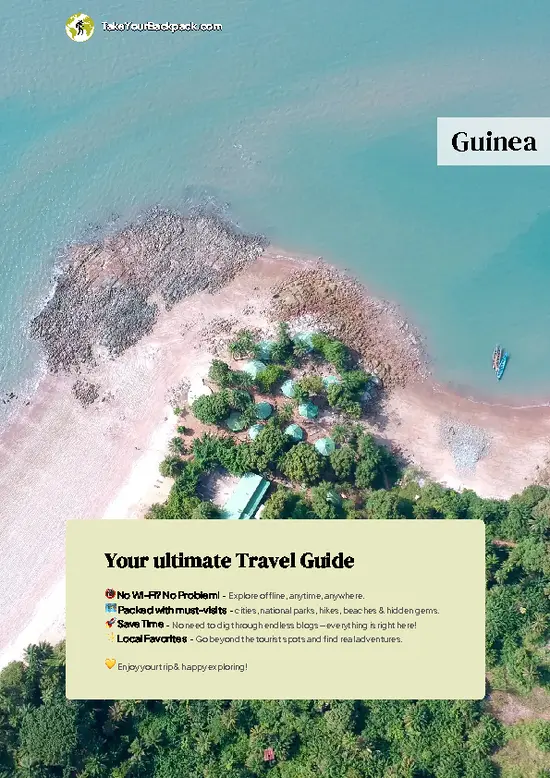
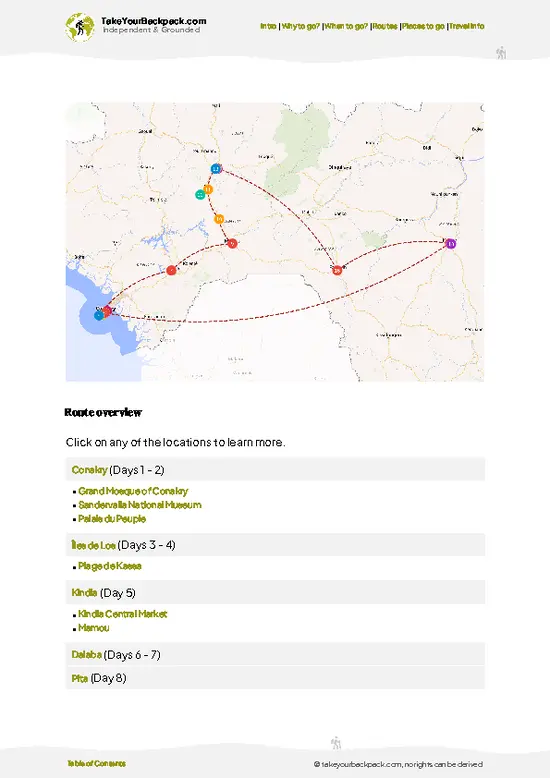
example page 0 from our offline Travel Guide for Guinea
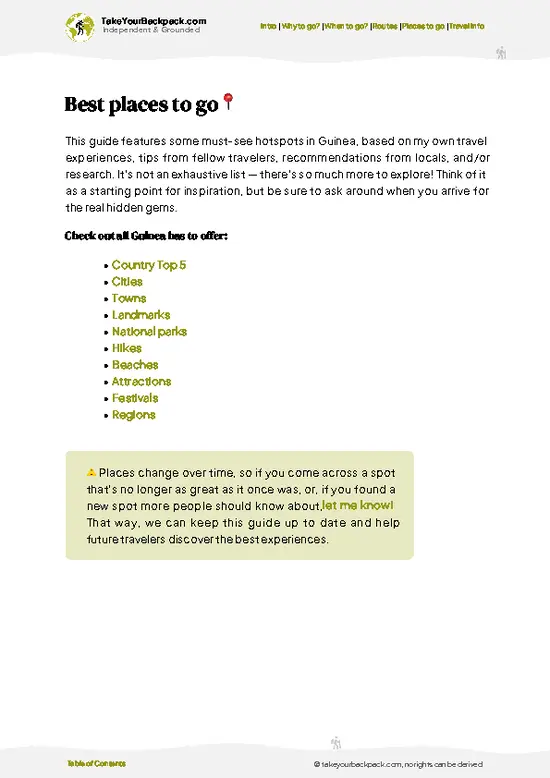
example page 1 from our offline Travel Guide for Guinea
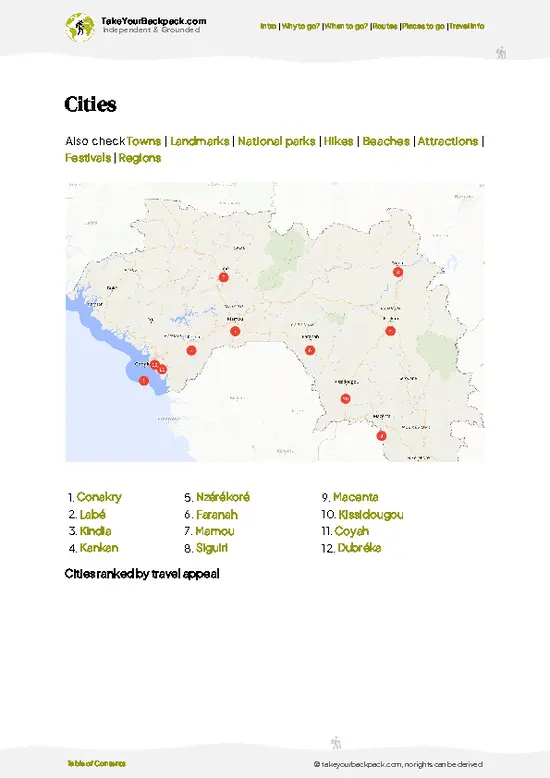
example page 2 from our offline Travel Guide for Guinea
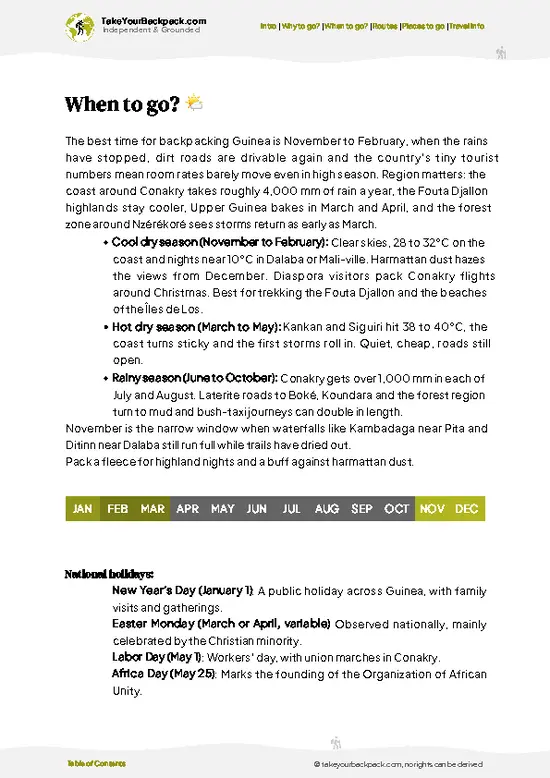
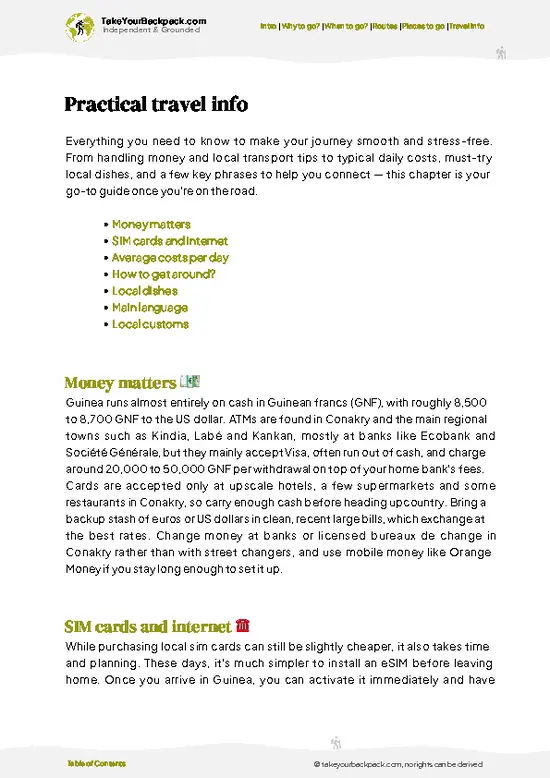
example page 3 from our offline Travel Guide for Guinea
example page 4 from our offline Travel Guide for Guinea
example page 5 from our offline Travel Guide for Guinea
example page 6 from our offline Travel Guide for Guinea
example page 7 from our offline Travel Guide for Guinea
The digital guide (282 pages) contains:
67 highlights, ranked by travel appeal
Optimized 5, 10 & 15-day travel routes
Cities, national parks, landmarks, beaches
How to get around
Offline-friendly for travel without Wi-Fi
👉 Click to see all 30+ guide features

📅 Plan smarter in minutes, not weeks
Month by month travel advice
Festivals & national holidays
Budget expectations

🗺️ Go to the right places, skip the overrated ones
Honest pros & cons of destinations
Top hikes, parks & viewpoints
Lesser-known places most travelers miss
Clear “worth it vs skip it” guidance

🛏️ Travel smoothly without rookie mistakes
Best areas to stay
Transport systems explained simply
Common scams & safety advice
SIM cards, money & practical tips

🌍 Understand the country, not just visit it
Culture & traditions
52 Essential phrases & customs
Festivals worth planning around
Traveler-friendly historical context
Insights that make places more meaningful

📱 Built for real travel conditions
Fully downloadable PDF
Works completely offline
Optimized for phone use
Useful in remote areas & buses
Everything in one place
Save weeks of stressful planning
Get instant access to your full guide. 30‑day money-back guarantee.


By proceeding you agree to our terms.
Sent to your inbox immediately after payment • 100% Secure Checkout
Best Backpacking Travel Advisor 2025 tourism awardBest Backpacking
Travel Advisor
2025
What others say about Take Your Backpack Guides:
⭐⭐⭐⭐⭐
Fantastic, amazing amount of information!
⭐⭐⭐⭐⭐
My goodness this is amazing, it's what I've been looking for hats off too you!
⭐⭐⭐⭐⭐
I think this is absolutely BRILLIANT
⭐⭐⭐⭐
Very complete and informative. It's still missing places, but I gotta to commend you
⭐⭐⭐⭐⭐
This is truly amazing, thank you, can't wait to explore it with my kids!
⭐⭐⭐⭐⭐
Awesome resource, thank you!
⭐⭐⭐⭐⭐
This is amazing! Can't wait to explore the ones I haven't seen
⭐⭐⭐⭐
I love this! Well done, great idea.
⭐⭐⭐⭐⭐
Thanks for taking the time to make this gem!
⭐⭐⭐⭐⭐
This might be the best website I've ever seen.
⭐⭐⭐⭐⭐
Congratulations, and thank you so much for your work; it's incredibly valuable.
⭐⭐⭐⭐
In all seriousness I think you did a great job pointing out the important spots
⭐⭐⭐⭐⭐
10/10 very good
⭐⭐⭐⭐⭐
As someone who's only just starting to visit regularly this is awesome, thank you.
⭐⭐⭐⭐
Thank you very much! I'm going to visit my dad, it's going to be very useful!
⭐⭐⭐⭐⭐
This is really cool! We'll be travelling for the first time and this definitely come in handy.
⭐⭐⭐⭐⭐
You are now our minister of culture, congratulations 👨‍💼
⭐⭐⭐⭐⭐
Just wanted to tell you that this is a pearl! Going to follow your recommendations.
⭐⭐⭐⭐⭐
This is so cool. I'll definitely be using the resource for my travels soon.
⭐⭐⭐⭐⭐
This is very impressive! Good work.
⭐⭐⭐⭐⭐
This is an amazing and informative site. Very well done!

🛏️ Where to stay?Best Places to Stay in Guinea

Yes — hostels and budget guesthouses exist in Guinea, concentrated in Conakry; options outside the capital are sparse and travel and infrastructure constraints make inland budget stays harder and less reliable.
Kaloum is the central district nearest ferries, markets and government services but is busiest and often pricier; Dixinn (university/embassy zone) and parts of Ratoma host the most and cheapest guesthouses with quieter streets and better local nightlife; Matam offers mid-range budget options near beaches and conference facilities but can feel more isolated.
Expect basic standards (intermittent electricity, limited hot water, cash-only payments), book ahead for Conakry, carry a mosquito … read more 👉
Yes — hostels and budget guesthouses exist in Guinea, concentrated in Conakry; options outside the capital are sparse and travel and infrastructure constraints make inland budget stays harder and less reliable.
Kaloum is the central district nearest ferries, markets and government services but is busiest and often pricier; Dixinn (university/embassy zone) and parts of Ratoma host the most and cheapest guesthouses with quieter streets and better local nightlife; Matam offers mid-range budget options near beaches and conference facilities but can feel more isolated.
Expect basic standards (intermittent electricity, limited hot water, cash-only payments), book ahead for Conakry, carry a mosquito net and personal lock, and favor Dixinn or Ratoma for safer, quieter budget stays while using Kaloum for short central access.

If you enjoy meeting fellow travelers, consider choosing hostels with high ratings for atmosphere. On the other hand, if you prefer having your own space, a hotel might be a better option.

GuineaExplore Guinea

👋 Meet the founderWho’s Behind Take Your Backpack?

Johan, backpacker and founder of TakeYourBackpackHi, I’m Johan (Netherlands 🇳🇱), the creator of TakeYourBackpack. Over the past decade, I’ve backpacked through 80+ countries across six continents, gaining extensive experience with independent travel, long-term trips, and overland routes.

This site is built on a combination of firsthand travel experience and carefully curated insights from other backpackers. Many guides are based on places I’ve personally visited, while others bring together tips, observations, and practical advice shared by trusted travelers I’ve met along the way.

The goal is to provide realistic, experience-driven guidance — not generic itineraries — so you can explore destinations with better context, clearer expectations, and more confidence.

Get full Guinea guide •
Instant download • 67 highlights • Full Offline guide