×

Honduras🇭🇳 | regionsLa Mosquitiarainforest rivers, indigenous territories, remote wetlands | things to do and best time to go

Explore GuanajaExplore Amapala

Backpacking in La Mosquitia
🌟 Highlightregion ranked #2
By Johan Kruseman 🇳🇱 | Updated September 4, 2026

Your boots sink half a step into warm, sucking mud; the air tastes like wet leaves and woodsmoke; somewhere close, a howler monkey detonates the quiet while a dugout canoe thumps against the riverbank behind you. That’s La Mosquitia: the far-eastern, jungle-and-lagoon corner of Honduras, pressed up against the Caribbean and the Nicaraguan border. For backpackers, it’s the opposite of Roatán polish or Copán’s tidy ruins. It’s raw, spread-out, and logistically annoying in a way that keeps crowds away and prices surprisingly low once you actually get there. Boats instead of buses, long gaps between towns, and very basic stays in Miskito and Garífuna communities mean you trade comfort and time for serious wilderness, empty beaches, and real conversations instead of tour scripts. Compared with the more visited north coast, La Mosquitia feels like stepping behind the curtain—less nightlife, more river crossings, and the sense you’re earning every view.

Discover everything you want to know in the 📖 Honduras Travel Guide.


Get your Honduras guide
80 ranked highlights, routes & tips, works offline (328 pages)
Loading the map 🌍
CLICK TO FILTER
cities
towns
landmarks
national parks
hikes
beaches
attractions
festivals
regions
SHOW COUNTRY’S BESTSHOW ALL

✨ Why go?
Ranked #2 region in Honduras
What sets this place apart

La Mosquitia in Honduras is a backpacker’s paradise that offers a unique blend of nature and culture. First off, the variety of landscapes is staggering. You can hike through dense jungles, paddle in pristine rivers, or chill on remote beaches—all without the hassle of constant relocation. This region is a slow travel dream; you can immerse yourself in local life while exploring diverse ecosystems.

Transport here is surprisingly flexible. Local boats and buses connect you to hidden villages and vibrant towns, making it easy to hop from one experience to another. Want to visit the Garífuna communities? You can do that. Interested in the Maya ruins? They’re just a bus ride away.

The beauty of La Mosquitia is that you can mix adventure and relaxation. Spend a day trekking, then unwind with … read more 👉
La Mosquitia in Honduras is a backpacker’s paradise that offers a unique blend of nature and culture. First off, the variety of landscapes is staggering. You can hike through dense jungles, paddle in pristine rivers, or chill on remote beaches—all without the hassle of constant relocation. This region is a slow travel dream; you can immerse yourself in local life while exploring diverse ecosystems.

Transport here is surprisingly flexible. Local boats and buses connect you to hidden villages and vibrant towns, making it easy to hop from one experience to another. Want to visit the Garífuna communities? You can do that. Interested in the Maya ruins? They’re just a bus ride away.

The beauty of La Mosquitia is that you can mix adventure and relaxation. Spend a day trekking, then unwind with a local meal while listening to stories from the villagers. This isn’t just a trip; it’s an opportunity to connect deeply with the land and its people. Choose wisely, and you’ll walk away with memories that last a lifetime.
Want to include La Mosquitia in your Honduras route?
Create a personalized Honduras itinerary that includes La Mosquitia and the places that fit your trip — based on your travel style, budget, and available time. Get your route in seconds.

Generate my trip

💡 HighlightsKey sights and experiences for travelers

  • Puerto Lempira market & Miskito neighborhoods — The real entry point to Mosquitia life: a rowdy fish market, palm-thatched stalls, and vendors selling coconut juice, smoked fish and handmade hammocks. Walk the waterfront and you’ll see dugout canoes, people mending nets, and a day-to-day rhythm that you won’t get from photos. Good place to arrange boat rides and pick up a local guide.
  • Laguna de Caratasca (Caratasca Lagoon) — A huge mangrove-laced lagoon where fishermen live on stilts and birds rule the mornings. It’s prime for slow boat trips, spotting herons, kingfishers and howler monkeys at the edge of the water, plus cheap, fresh lobster right from the grill. The landscape feels uniquely Mosquitia: low, watery, and full of life.
  • Río Plátano Biosphere Reserve — river routes and community
read more 👉
  • Puerto Lempira market & Miskito neighborhoods — The real entry point to Mosquitia life: a rowdy fish market, palm-thatched stalls, and vendors selling coconut juice, smoked fish and handmade hammocks. Walk the waterfront and you’ll see dugout canoes, people mending nets, and a day-to-day rhythm that you won’t get from photos. Good place to arrange boat rides and pick up a local guide.
  • Laguna de Caratasca (Caratasca Lagoon) — A huge mangrove-laced lagoon where fishermen live on stilts and birds rule the mornings. It’s prime for slow boat trips, spotting herons, kingfishers and howler monkeys at the edge of the water, plus cheap, fresh lobster right from the grill. The landscape feels uniquely Mosquitia: low, watery, and full of life.
  • Río Plátano Biosphere Reserve — river routes and community trails — Old-growth rainforest, river corridors, and indigenous villages tucked into the reserve make this a place you can’t replicate elsewhere. Guided canoe trips take you past jaguar trails (signs rather than sightings), giant ceiba trees, and traditional Miskito/Pech communities who still practice swidden agriculture and river fishing. My personal favorite — the mix of deep jungle silence and river life is unbeatable, but bring a guide and time (it’s not a day-trip).
  • Patuca River & Patuca Delta — One of Central America’s great wild rivers, running through broad floodplains into mangrove-dominated delta channels. Traveling by boat here gives a sense of scale — long river beaches, stilt houses, fishermen, and floating gardens in season. The river trips are travel in the old style: slow, remote, and very local.
  • Cayos Perlas (Pearl Cays) — Tiny coral cays off the Mosquitia coast with sugar sand, shallow snorkel reefs and a handful of Miskito island communities. It’s a classic island-hop day: swim, snorkel, eat conch and sample island life with almost no tourism infrastructure. For true low-impact beach time and simple homestays, this is Mosquitia’s best island option.
  • Brus Laguna and the lagoon islands — A tidy, lived-in town on a protected lagoon that’s the jump-off for nearby islands, fisheries and paddling routes. The town itself has a relaxed vibe, local seafood stalls and craft sellers; the surrounding small islands and mangrove islets are great for short explorations without committing to multi-day jungle logistics.
  • Ahuas — riverside community life (Hidden gem) — Quiet, rarely visited Ahuas is pure Mosquitia: wooden houses, dugout canoes and community-run boat trails into nearby forested creeks. It’s an honest place to stay with families, learn fishing and see how seasonal rhythms shape daily life — tourists are rare so you get an authentic welcome.
  • Wampusirpi — market days and river neighbourhoods (Hidden gem) — A small Patuca-side town where riverine commerce happens: produce, smoked fish, and traders arriving by canoe. If you time a visit for market day you’ll see the social hub of the area, local trade networks, and homemade goods — plus it’s a good, low-cost base for nearby jungle walks.
  • Patuca mangrove canal boat trips — narrow waterways and wildlife (Hidden gem) — Skip the main lagoon routes and ask a captain for the back-channel runs: skinny mangrove canals where kingfishers, crocodiles and manatees are more likely to show up. These quieter, skillful boat runs feel like a different region — intimate, wild, and easily missed by standard tours.
  • Seasonal turtle-nesting beaches and community patrols — Along stretches of Mosquitia’s coastline local groups protect nesting sites for leatherbacks, greens and hawksbills; visits are seasonal but unforgettable. Join a community patrol or a guided night walk (when available) to see hatchlings or learn the conservation work that locals do — an experience that ties nature and people together in a way you won’t find in busier beach zones.
Spotted a mistake or missing something? Contact us.

⌛️ 5 daysWhat you can realistically do in a week

Day 1: La Ceiba
The journey kicks off in La Ceiba, the gateway to La Mosquitia. You’ll want to arrive early to catch a morning ferry to Utila or Roatan. This isn’t just about getting from point A to B; it’s your first taste of the Caribbean vibe. The ferry ride is a chance to soak in the scenery and meet fellow travelers. Plus, the morning light makes for killer photos.

Day 2: Utila
Spend the day diving or snorkeling in Utila’s crystal-clear waters. This island is known for its laid-back atmosphere and vibrant marine life. You’ll find budget-friendly dive shops offering courses and day trips. The trade-off here is time versus comfort; you could spend more on a private tour, but the group dives are just as rewarding.

Day 3: La Mosquitia
Head back to La Ceiba and take a flight to La … read more 👉
Day 1: La Ceiba
The journey kicks off in La Ceiba, the gateway to La Mosquitia. You’ll want to arrive early to catch a morning ferry to Utila or Roatan. This isn’t just about getting from point A to B; it’s your first taste of the Caribbean vibe. The ferry ride is a chance to soak in the scenery and meet fellow travelers. Plus, the morning light makes for killer photos.

Day 2: Utila
Spend the day diving or snorkeling in Utila’s crystal-clear waters. This island is known for its laid-back atmosphere and vibrant marine life. You’ll find budget-friendly dive shops offering courses and day trips. The trade-off here is time versus comfort; you could spend more on a private tour, but the group dives are just as rewarding.

Day 3: La Mosquitia
Head back to La Ceiba and take a flight to La Mosquitia. This is where the real adventure begins. The flights are short but can be delayed, so keep your schedule flexible. Once you land, you’ll feel the remoteness. The lack of infrastructure means you’ll be trading comfort for authenticity. Embrace it; this is where you’ll find the heart of Honduras.

Day 4: Patuca
Travel to Patuca, the hub of La Mosquitia. The roads are rough, but the journey is part of the experience. You’ll see local life unfold—fishing, farming, and the vibrant culture. This is your chance to connect with the community.

Day 5: Off-Path Reward: Río Plátano Biosphere Reserve
Take a detour to the Río Plátano Biosphere Reserve. This UNESCO site is a treasure trove of biodiversity. Hire a local guide to navigate the waterways. The trade-off here is time; it’s a full day, but the lush landscapes and wildlife sightings are worth every minute.

The must-do day? Day 4 in Patuca. It’s the heart of La Mosquitia, where you’ll truly feel the pulse of the region. The connections you make and the experiences you share will justify every ounce of effort.
Turn your La Mosquitia visit into an Honduras adventure
Build a complete Honduras route with La Mosquitia, hidden gems, must-see destinations, and realistic travel times included.

Generate my trip

🌤️ When to go?Weather, crowds, and seasonal trade-offs


  • Topic: Weather – The dry season from February to May is your golden window. Expect less rain, making trails manageable and river crossings safer. The wet season (June to January) turns the jungle into a muddy slog, with daily downpours that can wash out paths and slow you down.

  • Topic: Temperature – Daytime temps hover around 28-32°C (82-90°F) year-round, but humidity spikes in the wet season, making it feel hotter and stickier. Nights cool to about 20-22°C (68-72°F), perfect for sleeping if you’re prepared with a good hammock or tent.

  • Topic: Daylight Hours – Roughly 11 to 12 hours of daylight year-round, with sunrise around 6 AM and sunset near 6 PM. Plan early starts to maximize trekking before afternoon heat or rain hits.

  • Topic: Crowds – La Mosquitia is remote, so crowds are minimal
read more 👉

  • Topic: Weather – The dry season from February to May is your golden window. Expect less rain, making trails manageable and river crossings safer. The wet season (June to January) turns the jungle into a muddy slog, with daily downpours that can wash out paths and slow you down.

  • Topic: Temperature – Daytime temps hover around 28-32°C (82-90°F) year-round, but humidity spikes in the wet season, making it feel hotter and stickier. Nights cool to about 20-22°C (68-72°F), perfect for sleeping if you’re prepared with a good hammock or tent.

  • Topic: Daylight Hours – Roughly 11 to 12 hours of daylight year-round, with sunrise around 6 AM and sunset near 6 PM. Plan early starts to maximize trekking before afternoon heat or rain hits.

  • Topic: Crowds – La Mosquitia is remote, so crowds are minimal anytime. However, the dry season attracts more eco-tourists and researchers, so expect a few more faces on popular routes.

  • Topic: Seasonal Activities – Dry months are prime for wildlife spotting and river navigation. The wet season brings swollen rivers, which can be a double-edged sword: easier boat travel but riskier conditions.

  • Topic: Price Fluctuations – Expect higher prices and limited availability during the dry season when demand peaks. Off-season offers bargains but comes with the trade-off of tougher conditions and less reliable transport.


Pro-tip: Arrive just as the dry season starts in late January or early February—trails are drying out, crowds are still thin, and prices haven’t spiked yet. You’ll feel like you’ve hacked the system.


source: climatestotravel.comJANJanuary: fair for travelingFEBFebruary: excellent for travelingMARMarch: excellent for travelingAPRApril: excellent for travelingMAYMay: highly recommended for travelingJUNJune: fair for travelingJULJuly: fair for travelingAUGAugust: fair for travelingSEPSeptember: fair for travelingOCTOctober: fair for travelingNOVNovember: fair for travelingDECDecember: fair for traveling
when-to-go

✈️ The backpacker research shortcutHonduras Travel Guide

An offline-friendly backpacking guide with optimized travel routes, ranked highlights, transport advice, and the best areas to stay.
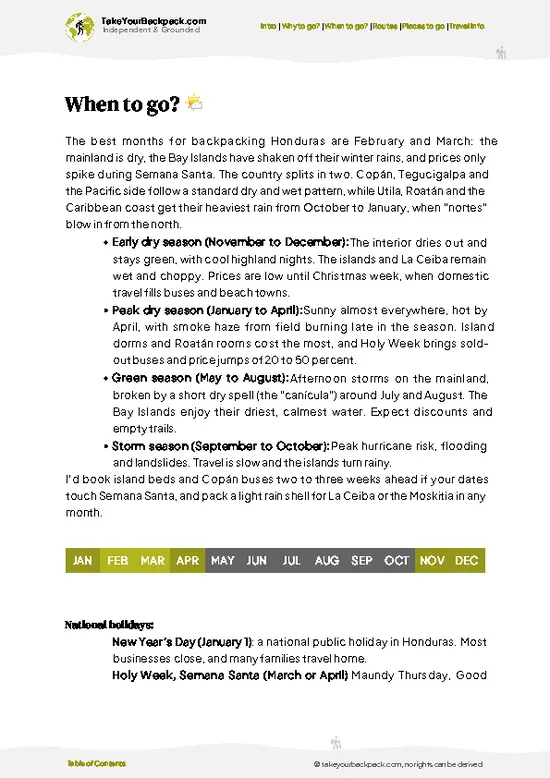
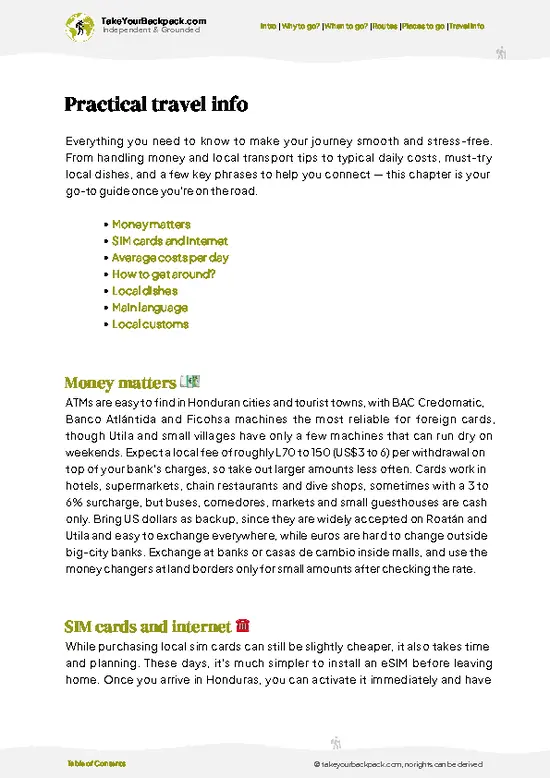
example page 0 from our offline Travel Guide for Honduras
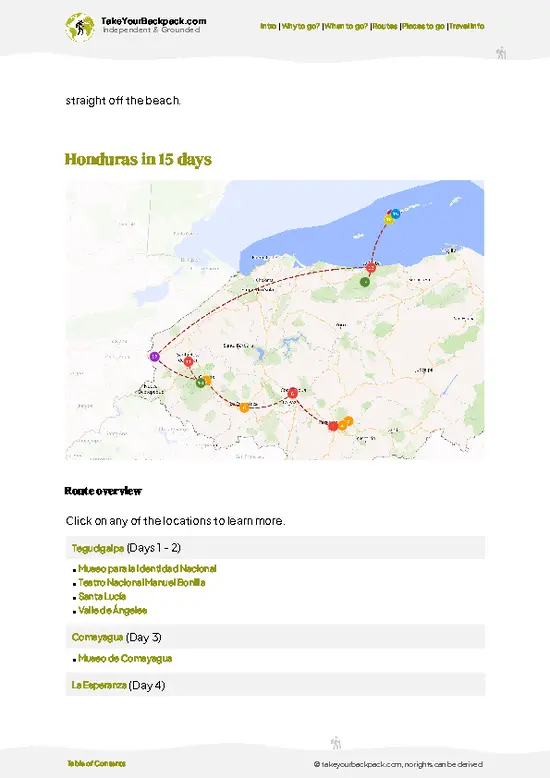
example page 1 from our offline Travel Guide for Honduras
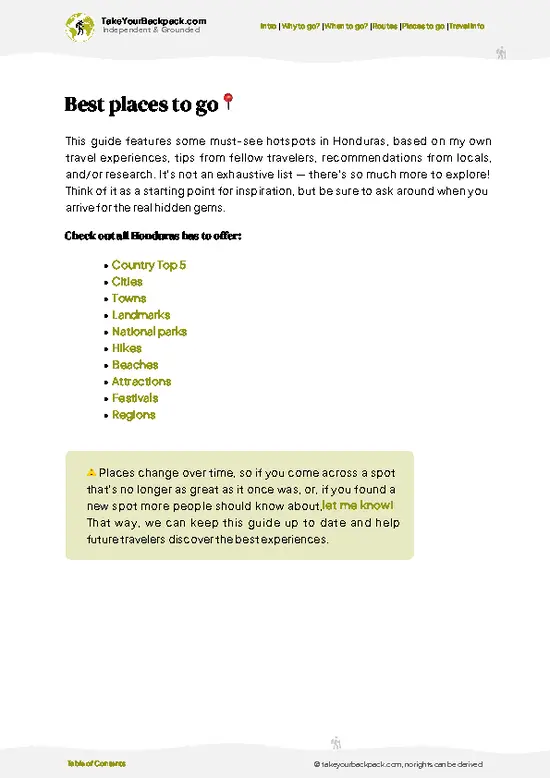
example page 2 from our offline Travel Guide for Honduras
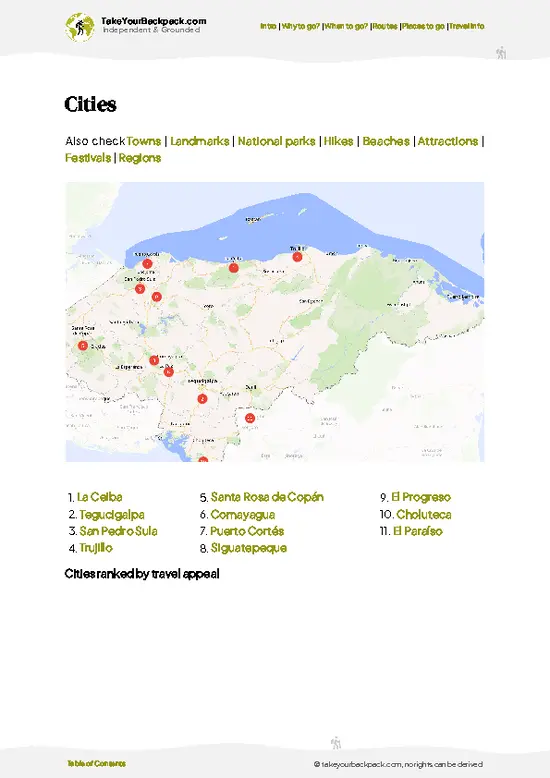
example page 3 from our offline Travel Guide for Honduras
example page 4 from our offline Travel Guide for Honduras
example page 5 from our offline Travel Guide for Honduras
example page 6 from our offline Travel Guide for Honduras
example page 7 from our offline Travel Guide for Honduras
The digital guide (328 pages) contains:
80 highlights, ranked by travel appeal
Optimized 5, 10 & 15-day travel routes
Cities, national parks, landmarks, beaches
How to get around
Offline-friendly for travel without Wi-Fi
👉 Click to see all 30+ guide features

📅 Plan smarter in minutes, not weeks
Month by month travel advice
Festivals & national holidays
Budget expectations

🗺️ Go to the right places, skip the overrated ones
Honest pros & cons of destinations
Top hikes, parks & viewpoints
Lesser-known places most travelers miss
Clear “worth it vs skip it” guidance

🛏️ Travel smoothly without rookie mistakes
Best areas to stay
Transport systems explained simply
Common scams & safety advice
SIM cards, money & practical tips

🌍 Understand the country, not just visit it
Culture & traditions
52 Essential phrases & customs
Festivals worth planning around
Traveler-friendly historical context
Insights that make places more meaningful

📱 Built for real travel conditions
Fully downloadable PDF
Works completely offline
Optimized for phone use
Useful in remote areas & buses
Everything in one place
Save weeks of stressful planning
Get instant access to your full guide. 30‑day money-back guarantee.
+ Add another guide for just US$7.80

By proceeding you agree to our terms.
Sent to your inbox immediately after payment • 100% Secure Checkout
Best Backpacking Travel Advisor 2025 tourism awardBest Backpacking
Travel Advisor
2025
What others say about Take Your Backpack Guides:
⭐⭐⭐⭐⭐
Fantastic, amazing amount of information!
⭐⭐⭐⭐⭐
My goodness this is amazing, it's what I've been looking for hats off too you!
⭐⭐⭐⭐⭐
I think this is absolutely BRILLIANT
⭐⭐⭐⭐
Very complete and informative. It's still missing places, but I gotta to commend you
⭐⭐⭐⭐⭐
This is truly amazing, thank you, can't wait to explore it with my kids!
⭐⭐⭐⭐⭐
Awesome resource, thank you!
⭐⭐⭐⭐⭐
This is amazing! Can't wait to explore the ones I haven't seen
⭐⭐⭐⭐
I love this! Well done, great idea.
⭐⭐⭐⭐⭐
Thanks for taking the time to make this gem!
⭐⭐⭐⭐⭐
This might be the best website I've ever seen.
⭐⭐⭐⭐⭐
Congratulations, and thank you so much for your work; it's incredibly valuable.
⭐⭐⭐⭐
In all seriousness I think you did a great job pointing out the important spots
⭐⭐⭐⭐⭐
10/10 very good
⭐⭐⭐⭐⭐
As someone who's only just starting to visit regularly this is awesome, thank you.
⭐⭐⭐⭐
Thank you very much! I'm going to visit my dad, it's going to be very useful!
⭐⭐⭐⭐⭐
This is really cool! We'll be travelling for the first time and this definitely come in handy.
⭐⭐⭐⭐⭐
You are now our minister of culture, congratulations 👨‍💼
⭐⭐⭐⭐⭐
Just wanted to tell you that this is a pearl! Going to follow your recommendations.
⭐⭐⭐⭐⭐
This is so cool. I'll definitely be using the resource for my travels soon.
⭐⭐⭐⭐⭐
This is very impressive! Good work.
⭐⭐⭐⭐⭐
This is an amazing and informative site. Very well done!

🛏️ Where to stay?Best areas to stay in Honduras

La Mosquitia is a treasure trove for backpackers, but knowing where to stay can make or break your experience.

Start in La Ceiba. This bustling port city is your gateway to the region. It’s safe, with a lively atmosphere that attracts fellow travelers. The waterfront is perfect for sunset chats over fresh seafood. Plus, it’s a launching pad for trips to the Bay Islands or the nearby Pico Bonito National Park.

Next up, Tocoa. This small town has a laid-back vibe and is often overlooked. It’s a great spot to connect with locals and other backpackers. The market is a must-visit for authentic … read more 👉
La Mosquitia is a treasure trove for backpackers, but knowing where to stay can make or break your experience.

Start in La Ceiba. This bustling port city is your gateway to the region. It’s safe, with a lively atmosphere that attracts fellow travelers. The waterfront is perfect for sunset chats over fresh seafood. Plus, it’s a launching pad for trips to the Bay Islands or the nearby Pico Bonito National Park.

Next up, Tocoa. This small town has a laid-back vibe and is often overlooked. It’s a great spot to connect with locals and other backpackers. The market is a must-visit for authentic street food and a taste of daily life.

Then there’s Cayos Cochinos. While technically a group of islands, it’s worth mentioning. Stay on the main island for a slice of paradise. The snorkeling is top-notch, and the community is welcoming. You’ll find it easy to bond with other travelers here.

Lastly, Puerto Lempira. This is the heart of the Mosquitia culture. It’s a bit off the beaten path, but that’s the charm. You’ll meet indigenous communities and experience a slower pace of life.

Each of these spots offers a unique slice of La Mosquitia, balancing safety, social opportunities, and budget-friendly options. Choose wisely, and you’ll unlock the region’s true spirit.

🚌 Getting aroundHow to get around La Mosquitia

La Mosquitia is a wild, untamed corner of Honduras where the rhythm of life dances to its own beat. Forget rigid schedules; this is a place where intuition reigns supreme. You’ll find yourself navigating a landscape that feels more like a living organism than a map. The air is thick with the scent of the jungle, and the sounds of howler monkeys echo through the trees. Here, transport isn’t just about getting from A to B; it’s an adventure in itself. You’ll need to embrace the chaos, but with a few insider tips, you can glide through this region like a local.


  • Boat Taxis: These are your lifeline across rivers and lagoons. Expect to pay around $10-$20, depending on the distance. They usually run from dawn until dusk, but be prepared for delays. The ride can be bumpy, but the views of the lush
read more 👉
La Mosquitia is a wild, untamed corner of Honduras where the rhythm of life dances to its own beat. Forget rigid schedules; this is a place where intuition reigns supreme. You’ll find yourself navigating a landscape that feels more like a living organism than a map. The air is thick with the scent of the jungle, and the sounds of howler monkeys echo through the trees. Here, transport isn’t just about getting from A to B; it’s an adventure in itself. You’ll need to embrace the chaos, but with a few insider tips, you can glide through this region like a local.


  • Boat Taxis: These are your lifeline across rivers and lagoons. Expect to pay around $10-$20, depending on the distance. They usually run from dawn until dusk, but be prepared for delays. The ride can be bumpy, but the views of the lush landscape are worth it.


  • Chicken Buses: These colorful, converted school buses are the backbone of local transport. Fares are dirt cheap, often less than $2 for long distances. They leave when full, which can mean waiting a while, but the experience is a cultural immersion. Just don’t expect luxury; it’s all about the journey, not the comfort.


  • Motorcycle Taxis: For a quick and exhilarating ride, hop on a moto-taxi. Prices vary, but you can expect to pay around $3-$5 for short trips. They’re fast and can weave through traffic, but hold on tight! It’s a thrilling way to see the sights up close.


  • Private Shuttles: If you’re looking for a bit more comfort and speed, consider booking a private shuttle. Prices can range from $30-$100, depending on the distance and number of passengers. They operate on a more reliable schedule, but you’ll sacrifice some of that local flavor.


  • Walking: Don’t underestimate the power of your own two feet. Many villages are small enough to explore on foot. It’s free, and you’ll stumble upon local life in a way that no vehicle can offer. Just be ready for some muddy paths!


For a tactical tip: always ask locals about the best times to travel. They know the ins and outs of the schedules and can help you avoid the busiest times. Plus, you’ll often get the scoop on the best routes and hidden spots along the way. Embrace the unpredictability, and you’ll find that the journey is just as rewarding as the destination.

🍲 FoodEating & Drinking in La Mosquitia

In La Mosquitia, the culinary scene is a vibrant tapestry of flavors that tells the story of its rich cultural heritage. Dive into coconut rice paired with fresh fish, a staple that captures the essence of coastal living. The tostones—crispy, twice-fried plantains—are a must-try, often served with a sprinkle of salt and a side of zesty salsa. Don’t miss the chance to savor cacao drinks, a local favorite that’s both refreshing and energizing, often sweetened with honey.

For a true backpacker experience, head to the bustling local markets. Here, the air is thick with the aroma of grilled meats and spices. You’ll find vendors serving up baleadas, soft flour tortillas stuffed with beans, cheese, and avocado—perfect for a quick, satisfying meal. Street food stalls are your best bet for authentic … read more 👉
In La Mosquitia, the culinary scene is a vibrant tapestry of flavors that tells the story of its rich cultural heritage. Dive into coconut rice paired with fresh fish, a staple that captures the essence of coastal living. The tostones—crispy, twice-fried plantains—are a must-try, often served with a sprinkle of salt and a side of zesty salsa. Don’t miss the chance to savor cacao drinks, a local favorite that’s both refreshing and energizing, often sweetened with honey.

For a true backpacker experience, head to the bustling local markets. Here, the air is thick with the aroma of grilled meats and spices. You’ll find vendors serving up baleadas, soft flour tortillas stuffed with beans, cheese, and avocado—perfect for a quick, satisfying meal. Street food stalls are your best bet for authentic flavors; grab a plate of sopa de caracol (conch soup) and enjoy it while mingling with locals.

Dining customs are relaxed but communal. Expect to share tables and engage in lively conversations. Don’t be surprised if you’re offered a taste of someone’s meal—it’s all part of the experience. Just remember, when in doubt, eat with your hands; it’s not just acceptable, it’s encouraged. Embrace the flavors and the warmth of the people, and you’ll leave with more than just a full stomach.

FAQCommon questions from travelers

5 to 7 days are needed to explore La Mosquitia thoroughly, allowing time for trekking, wildlife watching, and visiting remote indigenous communities. The region is vast and remote, so plan for slow travel and possible delays. A typical itinerary includes a multi-day hike to the Río Plátano Biosphere Reserve.
You get around La Mosquitia primarily by foot, boat, or small planes, as there are no roads connecting the area to major cities. Canoes and motorized boats are common for river travel, especially on the Patuca and Plátano rivers. Local guides usually arrange transportation and navigation through dense jungle and waterways.
La Mosquitia is known for its vast, untouched rainforest and the Río Plátano Biosphere Reserve, a UNESCO World Heritage site. It is famous for rich biodiversity, indigenous Miskito culture, and archaeological sites like the 'White City' ruins. The area is one of the largest tropical wildernesses in Central America.
⚠️ Things can change over time, so always validate details locally before you go.

Other Honduran regions near La Mosquitia

Explore more nearby:

  • Guanaja—coral reefs, mangrove channels, island settlements| 220 km away
  • El Cacao—cacao farms, rural villages, foothill trails| 332 km away

💡 Not sure where to go next?
Create a personalized itinerary for Honduras including La Mosquitia and the places that fit your trip.

Generate my itinerary

👉 Discover all regions

Or checkout all Honduras has to offer (think cities, towns, villages, national parks, hikes, beaches, festivals)
Country photo of Honduras

We 💚 feedbackWhat to keep in mind

La Mosquitia is a wild slice of paradise where the jungle meets the Caribbean. The biodiversity is mind-blowing; you’ll feel like an explorer in a living museum. But here’s the kicker: getting around can be a slog. Expect bumpy roads and limited transport options. Embrace the chaos, though. It’s all part of the adventure. Just remember, the journey is as rich as the destination.

✈️ When did I visit Honduras?
Honduras I visited during my half year trip through South and Central America back in 2003

✍️ Help improve this page!
The information on this page is based on my own backpacking experience in Honduras, supplemented with up-to-date research and feedback from other travelers. Travel details can change, so if you notice anything outdated or incomplete, feel free to let me know.


🙋‍♂️ Give feedback

👋 Meet the founderWho’s Behind Take Your Backpack?

Johan, backpacker and founder of TakeYourBackpackHi, I’m Johan (Netherlands 🇳🇱), the creator of TakeYourBackpack. Over the past decade, I’ve backpacked through 80+ countries across six continents, gaining extensive experience with independent travel, long-term trips, and overland routes.

This site is built on a combination of firsthand travel experience and carefully curated insights from other backpackers. Many guides are based on places I’ve personally visited, while others bring together tips, observations, and practical advice shared by trusted travelers I’ve met along the way.

The goal is to provide realistic, experience-driven guidance — not generic itineraries — so you can explore destinations with better context, clearer expectations, and more confidence.

Get full Honduras guide •
Instant download • 80 highlights • Full Offline guide