Yes, Hong Kong is one of the easiest places in Asia to backpack on your own: signs are bilingual in English and Chinese, and public transport reaches nearly every trailhead, beach and island.
Dorm beds in
Tsim Sha Tsui,
Mong Kok and
Sheung Wan run about HK$160 to 350 (US$20 to 45), a cha chaan teng lunch costs HK$50 to 80, and most MTR rides fall between HK$5 and 30. Trails such as
Dragon’s Back and the
MacLehose Trail are well waymarked, and island ferries leave the Central piers on posted timetables. A realistic daily budget sits around HK$350 to 780 (US$45 to 100).
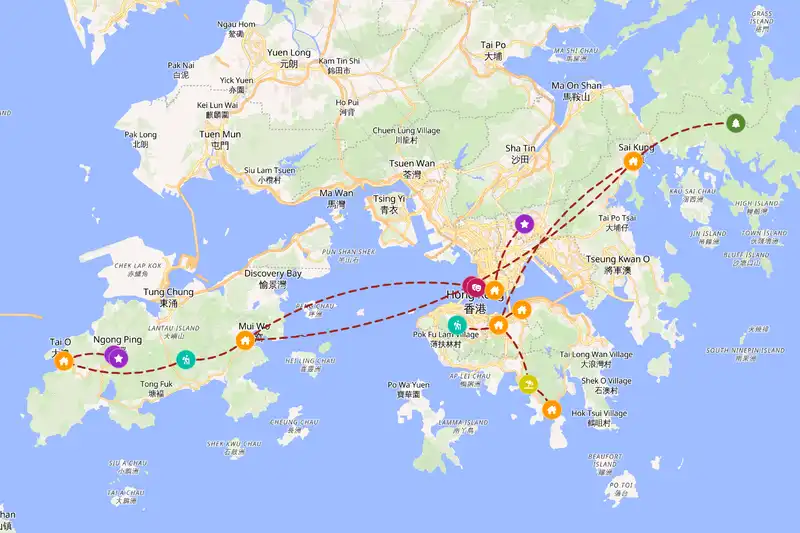
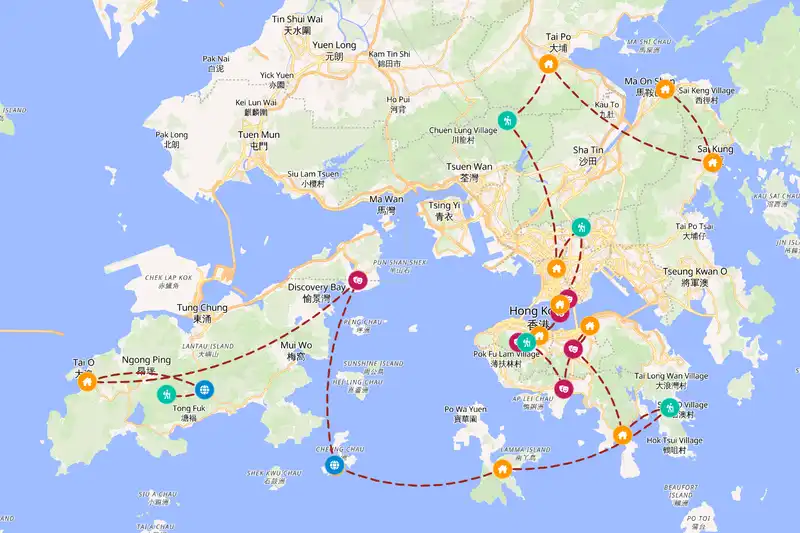
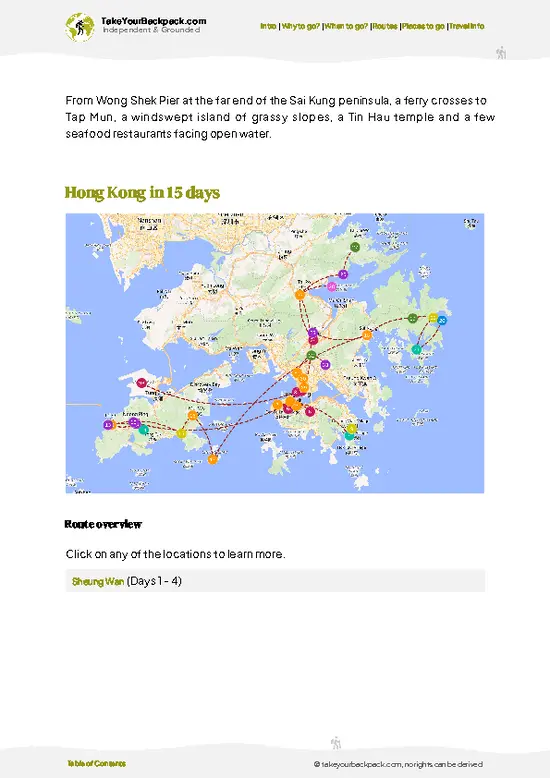
Five days covers Hong Kong Island and Kowloon properly, 10 days adds Lantau and Sai Kung, and 15 days lets you sleep on the outlying islands and reach the northeastern New Territories.
Distances in Hong Kong are short, but hikes eat time:
Dragon’s Back takes about 3 hours,
Lantau Peak 2 to 3 hours from Ngong Ping, and the walk to
Tai Long Wan a full day. Central to Tung Chung is about 30 minutes by MTR, Central to
Sai Kung 1 to 1.5 hours by MTR and minibus, and the ferry to
Cheung Chau 35 to 55 minutes. Plan on one outdoor day for every city day.
Yes, and you won’t want one: Hong Kong’s MTR, buses, trams, minibuses and ferries reach almost everywhere for roughly HK$3 to 50 (US$0.40 to 6.50) a ride.
The Airport Express reaches Hong Kong Station in Central in about 24 minutes for around HK$110 to 120, while bus A21 to
Tsim Sha Tsui takes about an hour for about HK$34. The Star Ferry across the harbor costs HK$5 to 6.5, and the Island Line trams about HK$3. Use an Octopus card or a contactless bank card. Taxis fill the few gaps, such as the ride from
Sai Kung to Sai Wan Pavilion or the East Dam.
The essential Hong Kong stops are
The Peak, the
Tian Tan Buddha on Lantau, the
Dragon’s Back ridge hike,
Mong Kok’s street markets and the Sai Kung coast.
Ride the Peak Tram or walk up Old Peak Road (about an hour) for the skyline at dusk. Reach the Buddha by the
Ngong Ping 360 cable car, about 25 minutes from Tung Chung, and continue by bus to the stilt houses of
Tai O. Dragon’s Back takes around 3 hours and ends near the beaches of Shek O and Big Wave Bay. On a Wednesday from September to mid-July, add the
Happy Valley races for HK$10 entry.
If time is tight in Hong Kong, skip the theme parks:
Disneyland and
Ocean Park each swallow a full day and HK$500 to 800 (US$65 to 100) per ticket.
That same money and time buys a ferry to
Cheung Chau plus a seafood dinner, or a full day in
Sai Kung East Country Park. You can also drop
Stanley Market, whose souvenir stalls sell the same goods you’ll pass in
Mong Kok, and the mall-heavy blocks of Causeway Bay. If you only have time for one beach, choose
Shek O, which pairs with the Dragon’s Back hike, over
Repulse Bay, an extra 30 to 40 minutes by bus from Central.
Yes, our itinerary-planner does exactly that. Set your trip length in days, give your interests and travel style, optionally give start- and end location and/or some mandatory stops you would like to include and the itinerary planner creates your personalized routes for Hong Kong in seconds. Try it out!
Try the itinerary plannerv2.webp)

 Best Backpacking