×

Hong Kong🇭🇰 | best beachesThe Must-See 7 beaches in Hong Kong

Beaches in Hong Kong surprise people who arrive expecting only skyscrapers. Roughly 40 gazetted beaches sit within reach of the MTR and a short bus or ferry ride, and most are free. Southern Hong Kong Island has lifeguarded, shower-equipped sand that fills up on weekends. The Sai Kung and outlying islands side offers quieter coves, with village cafés and a boat or minibus between you and the water. Independent travelers can swim for the price of a metro fare. Go on a weekday morning, bring cash for snacks, and skip July Sundays entirely.

By Johan Kruseman 🇳🇱 | Updated October 19, 2026
Explore the best attractions in Hong Kong

Why go?Understanding Their Importance

Hong Kong is a compact, hilly coastline with more than 250 islands, which means the sand is rarely far from a metro station yet often tucked under green hills rather than beside a highway. That mix is the whole appeal: a morning in a glass tower, an afternoon barefoot with a cold drink. Government-run beaches are the norm, so you get lifeguards, changing rooms, showers and shark nets at most popular spots, all at no entry cost. That infrastructure is a real advantage if you travel solo and want an easy, safe swim.

What you should know before choosing it: this is a subtropical city, not a tropical island destination. Water quality can swing after heavy rain, and the Environmental Protection Department posts grades that are worth a quick check. Swimming is officially open roughly from March … read more 👉
Hong Kong is a compact, hilly coastline with more than 250 islands, which means the sand is rarely far from a metro station yet often tucked under green hills rather than beside a highway. That mix is the whole appeal: a morning in a glass tower, an afternoon barefoot with a cold drink. Government-run beaches are the norm, so you get lifeguards, changing rooms, showers and shark nets at most popular spots, all at no entry cost. That infrastructure is a real advantage if you travel solo and want an easy, safe swim.

What you should know before choosing it: this is a subtropical city, not a tropical island destination. Water quality can swing after heavy rain, and the Environmental Protection Department posts grades that are worth a quick check. Swimming is officially open roughly from March to October, and lifeguards and nets disappear outside that window. Expect clear, calm bays more than dramatic surf. Locals treat beaches as social spaces, so barbecue pits, picnic tents and loud weekend crowds are part of the culture. Weekdays belong to you, and the water turns noticeably cleaner and emptier the farther you get from the urban core.
How the List Was Created
The list of best beaches in Hong Kong is created based on beauty, vibe, water quality, activities, and surrounding scenery. If you feel a beach is missing in this list, please let us know.

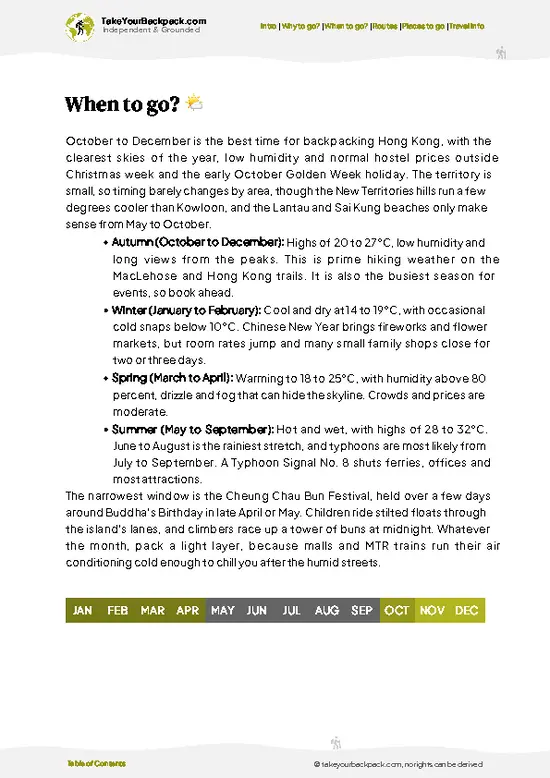
When to go?Seasonal Guide to Visiting

Best months for beach days: The best months for beaches in Hong Kong are October and November, when sunny skies, low humidity and sea temperatures around 24 to 27°C make swimming comfortable without the heat. Air temperatures sit around 22 to 27°C, and rain is scarce, often under 60 mm a month in the late autumn.
Shoulder seasons and peak summer: April, May and early autumn are good shoulder months. In April and May the water is warming toward 22 to 26°C, though fog and drizzle can ruin a given day. The lifeguarded season runs roughly from March to October, so a swim in these months comes with full facilities.

June to August is hot at 30 to 33°C with humidity near 80 to 90 percent, and it is the wettest stretch, with heavy downpours and a typhoon risk from July to September. When the Hong … read more 👉
Best months for beach days: The best months for beaches in Hong Kong are October and November, when sunny skies, low humidity and sea temperatures around 24 to 27°C make swimming comfortable without the heat. Air temperatures sit around 22 to 27°C, and rain is scarce, often under 60 mm a month in the late autumn.
Shoulder seasons and peak summer: April, May and early autumn are good shoulder months. In April and May the water is warming toward 22 to 26°C, though fog and drizzle can ruin a given day. The lifeguarded season runs roughly from March to October, so a swim in these months comes with full facilities.

June to August is hot at 30 to 33°C with humidity near 80 to 90 percent, and it is the wettest stretch, with heavy downpours and a typhoon risk from July to September. When the Hong Kong Observatory raises a Signal No. 3 or higher, beaches close. Summer weekends and public holidays bring packed sand, so go midweek and arrive before 10 a.m.
Winter: From December to February, the air is 14 to 20°C and the water drops to 16 to 20°C. Swimming is off the table, and nets and lifeguards are gone. A winter beach walk is pleasant and nearly empty. Hotel prices are highest around Lunar New Year and in autumn, while summer rooms are often cheaper.

beach hoppingOptimizing Your Multi-Stop Itinerary

How many days to plan: A trip combining several beaches in Hong Kong needs 3 to 5 days, and that gives you slack for weather. Group stops by region: the south side of Hong Kong Island is easy by bus from Central, the Sai Kung peninsula works from Diamond Hill or Choi Hung MTR, and the outlying islands go by ferry from Central or Hong Kong Island piers.
Direction and pacing: Start on Hong Kong Island while jet lag is fresh, since the buses are frequent and the roads familiar. Then move east to Sai Kung, where the trip needs a minibus or a boat, and finish with an island day by ferry, because ferry schedules thin out on weekday evenings. Budget half a day to a full day per stop, and 2 to 4 hours for a quick dip near transit. Travel between regions usually takes 45 to 90 minutes door to door, … read more 👉
How many days to plan: A trip combining several beaches in Hong Kong needs 3 to 5 days, and that gives you slack for weather. Group stops by region: the south side of Hong Kong Island is easy by bus from Central, the Sai Kung peninsula works from Diamond Hill or Choi Hung MTR, and the outlying islands go by ferry from Central or Hong Kong Island piers.
Direction and pacing: Start on Hong Kong Island while jet lag is fresh, since the buses are frequent and the roads familiar. Then move east to Sai Kung, where the trip needs a minibus or a boat, and finish with an island day by ferry, because ferry schedules thin out on weekday evenings. Budget half a day to a full day per stop, and 2 to 4 hours for a quick dip near transit. Travel between regions usually takes 45 to 90 minutes door to door, and an island ferry runs 30 to 60 minutes.
Mistakes to avoid: The most common error is stacking two distant regions in one day, which means losing half the sun to transit. Pick one region per day. Another is leaving at midday on weekends, when buses and ferries are full, so aim for before 9 a.m. Check the weather forecast and typhoon signals the night before, and keep a flexible day for rain.

The ListTop beaches of Hong Kong

1 Repulse Bay

iconic architecture, wide promenade, upscale dining

Stroll along a broad, palm-lined walkway, admire art deco buildings, and sample international cuisine overlooking the South China Sea.

hong-kong-beach-repulse-bay
© Google |

2 Shek O Beach

colorful village, rocky outcrops, local grills

Relax on soft sand framed by granite boulders, wander narrow lanes, and enjoy grilled seafood at casual open-air restaurants.

hong-kong-beach-shek-o-beach
© Google |

3 Big Wave Bay

surf breaks, rugged cliffs, village eateries

Watch surfers tackle consistent waves while hikers descend from Dragon’s Back, then unwind with simple seafood meals near the sand.

hong-kong-beach-big-wave-bay
© Google |

4 Ham Tin Beach

remote sands, camping spots, Sai Kung trails

Reach this isolated stretch by hiking or boat, pitch a tent, and enjoy quiet evenings far from city lights and crowds.

5 Pui O Beach

black-gold sand, water buffalo, laid-back bars

Share the shoreline with grazing buffalo, swim in shallow waters, and end the day with a drink at a rustic beachside shack.

6 Clear Water Bay Beach

calm waters, family picnics, scenic headlands

Swim in gentle seas bordered by forested slopes, with barbecue sites and open views drawing weekend crowds seeking a relaxed escape.

7 Stanley Main Beach

windsurfing hub, market access, festival events

Join windsurfers on breezy afternoons, browse nearby market stalls, and catch dragon boat races during the annual summer festival.

hong-kong-beach-stanley-main-beach
© Google |
Loading the map 🌍

Expert viewPro Tips for Exploring the Best

How many beaches to visit: Plan on 3 to 5 beaches in total. Hong Kong’s sand is spread across different regions, and one swim per region gives you real variety without chewing through your time on buses and ferries. More than that and you are repeating the same bay with different names.
Which kind for your travel style: First-timers and solo travelers on a tight schedule should favor the lifeguarded, transit-friendly beaches on Hong Kong Island, where showers, lockers and snack kiosks are standard. If you want space, pick a remote cove in Sai Kung or the outlying islands, where you need a minibus, a hike or a boat. Hikers can combine a coastal trail with a swim. Beach-party types will find weekend barbecue crowds and music, while quiet seekers should go on weekday mornings.
What it costs: Entry … read more 👉
How many beaches to visit: Plan on 3 to 5 beaches in total. Hong Kong’s sand is spread across different regions, and one swim per region gives you real variety without chewing through your time on buses and ferries. More than that and you are repeating the same bay with different names.
Which kind for your travel style: First-timers and solo travelers on a tight schedule should favor the lifeguarded, transit-friendly beaches on Hong Kong Island, where showers, lockers and snack kiosks are standard. If you want space, pick a remote cove in Sai Kung or the outlying islands, where you need a minibus, a hike or a boat. Hikers can combine a coastal trail with a swim. Beach-party types will find weekend barbecue crowds and music, while quiet seekers should go on weekday mornings.
What it costs: Entry to government beaches is free. A realistic budget is US$25 to 45 a day (about HK$200 to 350) for transit, food and drink, with most spending going to meals. Per visit, expect HK$10 to 40 for bus or MTR fares, HK$15 to 40 for a ferry, and HK$40 to 150 for a beachside lunch. Water taxis and kaito boats to remote coves typically run HK$30 to 100 a person as a shared ride, and private charters cost more. Lockers are often HK$10 to 20 in coins, so carry change. Gear rental such as a paddleboard or kayak runs about HK$100 to 250 an hour.
Safety: Swim only between the flags in lifeguarded areas, and obey the beach flag system: black means no swimming. Jellyfish and sea lice can appear in summer, and red tide occasionally closes sections. Check the Environmental Protection Department’s water quality grades, which are posted online and at the beach, and avoid swimming for a day or two after heavy rain. Typhoon Signal No. 3 or above closes beaches. Shark nets are in place at gazetted beaches, and unnetted coves have no lifeguard at all. The sun is strong, so reapply sunscreen often and carry a liter or two of water.
Culture and etiquette: Most locals swim in modest swimwear, and nude or topless sunbathing is not accepted. Take your rubbish back or use the bins, and barbecue only in designated pits. Do not feed wild boars or stray cattle in the countryside areas. Expect families, groups and crowded weekends, and remember that outlying island cafés may close early or on weekdays, so bring snacks and cash.

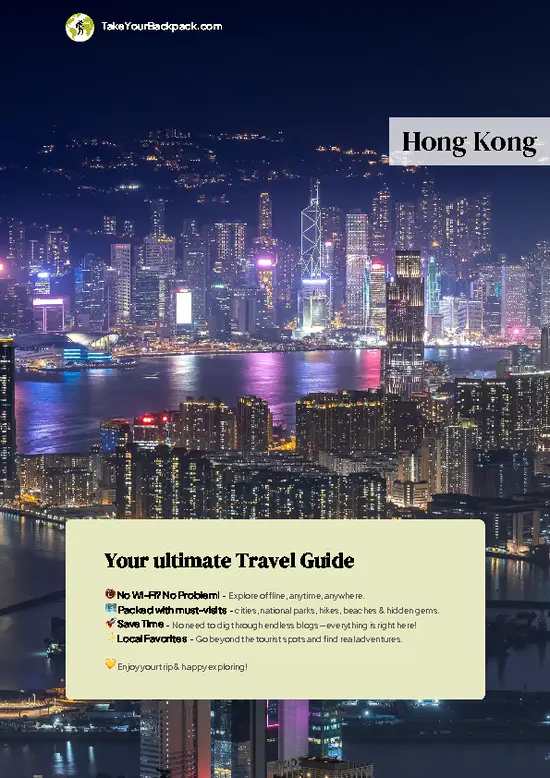
✈️ The backpacker research shortcutHong Kong Travel Guide

An offline-friendly backpacking guide with optimized travel routes, ranked highlights, transport advice, and the best areas to stay.
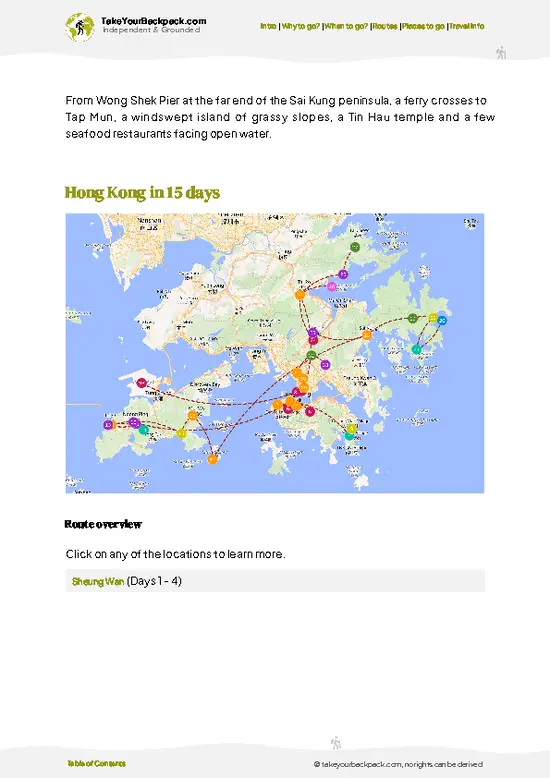
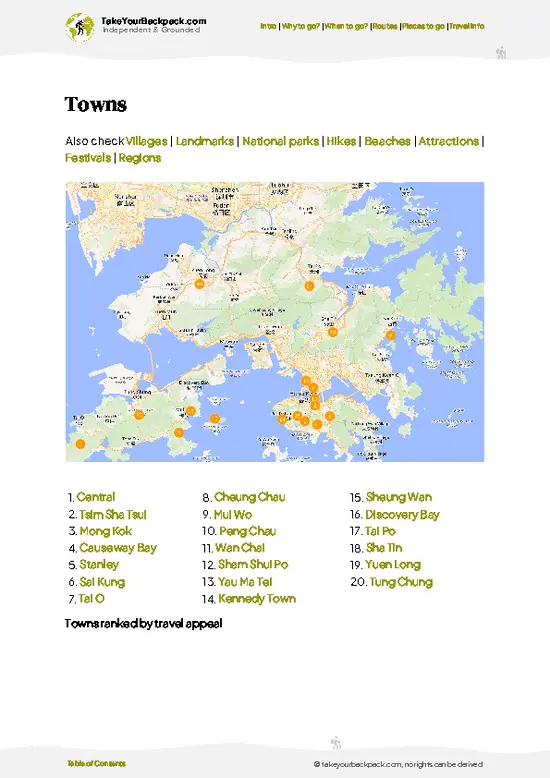
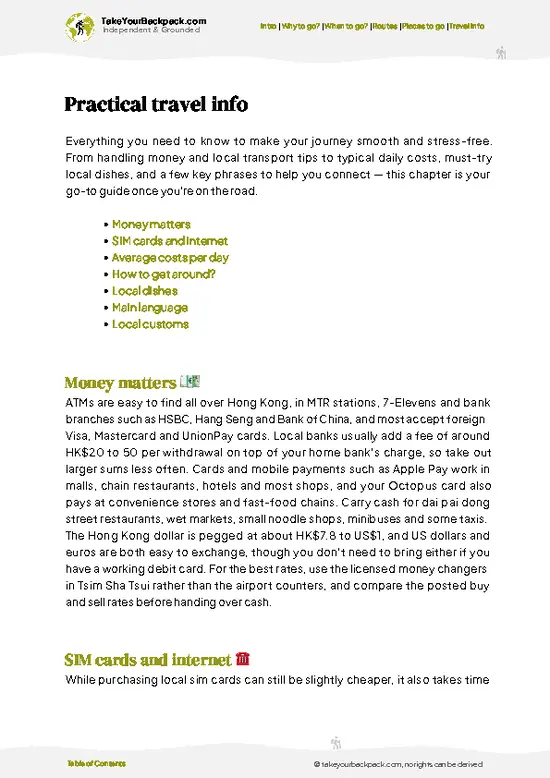
example page 0 from our offline Travel Guide for Hong Kong
example page 1 from our offline Travel Guide for Hong Kong
example page 2 from our offline Travel Guide for Hong Kong
example page 3 from our offline Travel Guide for Hong Kong
example page 4 from our offline Travel Guide for Hong Kong
example page 5 from our offline Travel Guide for Hong Kong
example page 6 from our offline Travel Guide for Hong Kong
example page 7 from our offline Travel Guide for Hong Kong
The digital guide (359 pages) contains:
✅ 97 highlights, ranked by travel appeal
✅ Optimized 5, 10 & 15-day travel routes
✅ Cities, national parks, landmarks, beaches
✅ How to get around
✅ Offline-friendly for travel without Wi-Fi
👉 Click to see all 30+ guide features

📅 Plan smarter in minutes, not weeks
✅ Month by month travel advice
✅ Festivals & national holidays
✅ Budget expectations

🗺️ Go to the right places, skip the overrated ones
✅ Honest pros & cons of destinations
✅ Top hikes, parks & viewpoints
✅ Lesser-known places most travelers miss
✅ Clear “worth it vs skip it” guidance

🛏️ Travel smoothly without rookie mistakes
✅ Best areas to stay
✅ Transport systems explained simply
✅ Common scams & safety advice
✅ SIM cards, money & practical tips

🌍 Understand the country, not just visit it
✅ Culture & traditions
✅ 52 Essential phrases & customs
✅ Festivals worth planning around
✅ Traveler-friendly historical context
✅ Insights that make places more meaningful

📱 Built for real travel conditions
✅ Fully downloadable PDF
✅ Works completely offline
✅ Optimized for phone use
✅ Useful in remote areas & buses
✅ Everything in one place
Stop searching, start planning
Get instant access to your full guide. 30‑day money-back guarantee.
+ Add another guide for just

By proceeding you agree to our terms.
Sent to your inbox immediately after payment • 100% Secure Checkout
Best Backpacking Travel Advisor 2025 tourism awardBest Backpacking
Travel Advisor
2025
What others say about Take Your Backpack Guides:
⭐⭐⭐⭐⭐
Fantastic, amazing amount of information!
⭐⭐⭐⭐⭐
My goodness this is amazing, it's what I've been looking for hats off too you!
⭐⭐⭐⭐⭐
I think this is absolutely BRILLIANT
⭐⭐⭐⭐
Very complete and informative. It's still missing places, but I gotta to commend you
⭐⭐⭐⭐⭐
This is truly amazing, thank you, can't wait to explore it with my kids!
⭐⭐⭐⭐⭐
Awesome resource, thank you!
⭐⭐⭐⭐⭐
This is amazing! Can't wait to explore the ones I haven't seen
⭐⭐⭐⭐
I love this! Well done, great idea.
⭐⭐⭐⭐⭐
Thanks for taking the time to make this gem!
⭐⭐⭐⭐⭐
This might be the best website I've ever seen.
⭐⭐⭐⭐⭐
Congratulations, and thank you so much for your work; it's incredibly valuable.
⭐⭐⭐⭐
In all seriousness I think you did a great job pointing out the important spots
⭐⭐⭐⭐⭐
10/10 very good
⭐⭐⭐⭐⭐
As someone who's only just starting to visit regularly this is awesome, thank you.
⭐⭐⭐⭐
Thank you very much! I'm going to visit my dad, it's going to be very useful!
⭐⭐⭐⭐⭐
This is really cool! We'll be travelling for the first time and this definitely come in handy.
⭐⭐⭐⭐⭐
You are now our minister of culture, congratulations 👨‍💼
⭐⭐⭐⭐⭐
Just wanted to tell you that this is a pearl! Going to follow your recommendations.
⭐⭐⭐⭐⭐
This is so cool. I'll definitely be using the resource for my travels soon.
⭐⭐⭐⭐⭐
This is very impressive! Good work.
⭐⭐⭐⭐⭐
This is an amazing and informative site. Very well done!

🛏️ Where to stay?Best Stay Options in Hong Kong

Hong Kong has plenty of hostels and guesthouses, with dorm beds typically running HK$150 to 350 (US$20 to 45) a night and private rooms often the size of a closet. Tsim Sha Tsui puts you on the harbor promenade with the densest cluster of cheap guesthouses, though the older blocks can feel cramped and hectic, while Mong Kok and Yau Ma Tei are a bit cheaper, close to the night markets and street food, and very loud until late. On Hong Kong Island, Causeway Bay and Wan Chai keep you near shopping and the bar scene, and Sheung Wan is quieter and more local but pricier per bed, and the whole city stays very safe after dark.

If you enjoy meeting fellow travelers, consider choosing hostels with high … read more 👉
Hong Kong has plenty of hostels and guesthouses, with dorm beds typically running HK$150 to 350 (US$20 to 45) a night and private rooms often the size of a closet. Tsim Sha Tsui puts you on the harbor promenade with the densest cluster of cheap guesthouses, though the older blocks can feel cramped and hectic, while Mong Kok and Yau Ma Tei are a bit cheaper, close to the night markets and street food, and very loud until late. On Hong Kong Island, Causeway Bay and Wan Chai keep you near shopping and the bar scene, and Sheung Wan is quieter and more local but pricier per bed, and the whole city stays very safe after dark.

If you enjoy meeting fellow travelers, consider choosing hostels with high ratings for atmosphere. On the other hand, if you prefer having your own space, a hotel might be a better option.

Hong KongWhere to Go Next

👋 Meet the founderWho’s Behind Take Your Backpack?

Johan, backpacker and founder of TakeYourBackpackHi, I’m Johan (Netherlands 🇳🇱), the creator of TakeYourBackpack. Over the past 3 decades, I’ve backpacked through 90+ countries across six continents, gaining extensive experience with independent travel, long-term trips, and overland routes.

This site is built on a combination of firsthand travel experience and carefully curated insights from other backpackers. Many guides are based on places I’ve personally visited, while others bring together tips, observations, and practical advice shared by trusted travelers I’ve met along the way.

The goal is to provide realistic, experience-driven guidance — not generic itineraries — so you can explore destinations with better context, clearer expectations, and more confidence.