×

Hong Kong🇭🇰 | best hikesThe Must-See 12 hikes in Hong Kong

Hong Kong packs hiking trails into a territory smaller than most national parks, and about 40 percent of the land is protected country park. Forget the skyscraper cliché: you can leave a metro station and be on a ridge within 30 minutes. The trails split into Hong Kong Island ridgelines with skyline views, the New Territories for wild coast and long routes, and the outlying islands for quieter paths and ferry rides. Access costs next to nothing, since trails are free and public transport is cheap, which suits independent travel on a tight budget. Weekends bring crowds, so go on a weekday morning and pack your own water.

By Johan Kruseman 🇳🇱 | Updated October 19, 2026
Explore the best beaches in Hong Kong

Why go?Understanding Their Importance

Hong Kong is an unlikely hiking destination, and that is exactly what makes it special. Steep volcanic hills, deep green valleys and over 260 islands sit right beside one of the densest cities on earth, and a single Mass Transit Railway (MTR) ticket, bus or ferry gets you to most trailheads. The government protects roughly 40 percent of the land as country parks, so trails are free, waymarked and kept in good order, with distance posts and emergency location markers along the way.

The climate shapes everything. Summers are hot, humid and storm-prone, with heat that can make a short climb feel brutal, while the cooler dry months make walking a pleasure. Because the terrain is steep, even short routes can involve hundreds of meters of ascent, so do not judge difficulty by distance alone.

Before … read more 👉
Hong Kong is an unlikely hiking destination, and that is exactly what makes it special. Steep volcanic hills, deep green valleys and over 260 islands sit right beside one of the densest cities on earth, and a single Mass Transit Railway (MTR) ticket, bus or ferry gets you to most trailheads. The government protects roughly 40 percent of the land as country parks, so trails are free, waymarked and kept in good order, with distance posts and emergency location markers along the way.

The climate shapes everything. Summers are hot, humid and storm-prone, with heat that can make a short climb feel brutal, while the cooler dry months make walking a pleasure. Because the terrain is steep, even short routes can involve hundreds of meters of ascent, so do not judge difficulty by distance alone.

Before choosing Hong Kong, know what you are getting. This is day hiking, not multi-day wilderness trekking, and there are few places to buy food or water on the trail. Wild camping is limited to designated sites. Weekends fill up with local hikers, so a weekday start is the small local trick that gives you empty paths. Shops and cafés near trailheads are handy for a post-hike meal, and local snacks beat anything you carry.
Our Approach to Ranking
The list of best hikes in Hong Kong is created based on scenery, challenge, trail quality, landmarks, and overall enjoyment. If you feel a hike is missing in this list, please let us know.

When to go?Seasonal Guide to Visiting

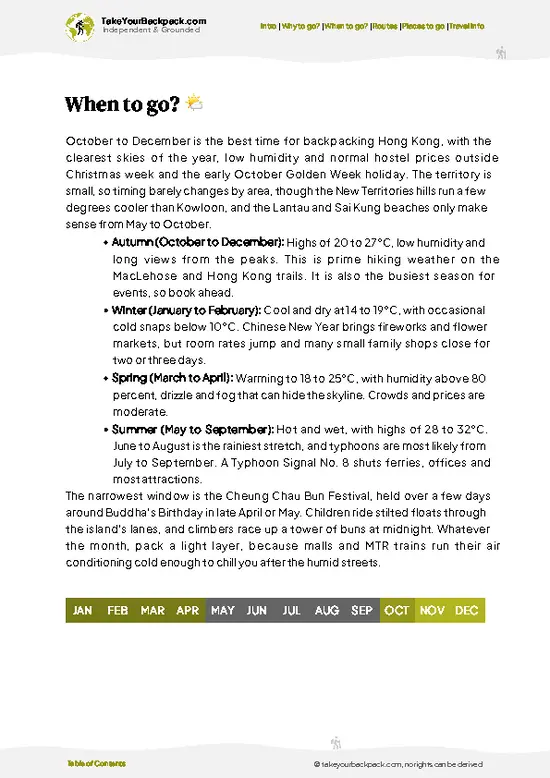
Best months and weather: The best months for hiking in Hong Kong are late October to December, when humidity drops, skies clear and daytime temperatures sit around 18 to 26°C. Rainfall is minimal in these months, so views carry across the harbor and out to sea.
Shoulder seasons: January to February is cooler, around 10 to 18°C, and can be misty or overcast, though it is still pleasant for walking. Cold snaps occasionally push the temperature below 10°C on high ridges. March to April turns warmer and foggier, with humidity creeping up. Visibility can be poor on peaks, so low coastal routes are the safer choice then.
Seasons to avoid: May to September is hot and wet, with highs of 31 to 34°C, very high humidity and heavy thunderstorms. Rainfall is concentrated in these months, and July to September … read more 👉
Best months and weather: The best months for hiking in Hong Kong are late October to December, when humidity drops, skies clear and daytime temperatures sit around 18 to 26°C. Rainfall is minimal in these months, so views carry across the harbor and out to sea.
Shoulder seasons: January to February is cooler, around 10 to 18°C, and can be misty or overcast, though it is still pleasant for walking. Cold snaps occasionally push the temperature below 10°C on high ridges. March to April turns warmer and foggier, with humidity creeping up. Visibility can be poor on peaks, so low coastal routes are the safer choice then.
Seasons to avoid: May to September is hot and wet, with highs of 31 to 34°C, very high humidity and heavy thunderstorms. Rainfall is concentrated in these months, and July to September is the typhoon season, when the Observatory can raise storm signals that close ferries and shut the country parks. Start at dawn, carry at least 2 liters of water, and check the forecast the night before.
Crowds and prices: Weekends and public holidays, including Lunar New Year, Easter and the autumn Golden Week, bring crowds at popular trailheads. Accommodation is priciest in October to December and during major events, so book early if you want those peak weeks.

hike hoppingOptimizing Your Multi-Stop Itinerary

How many days to plan: A trip combining several hikes in Hong Kong needs 4 to 7 days, which leaves room for weather and rest. Most day hikes take 3 to 6 hours on the trail, and you should add 1 to 2 hours for transport and a meal.
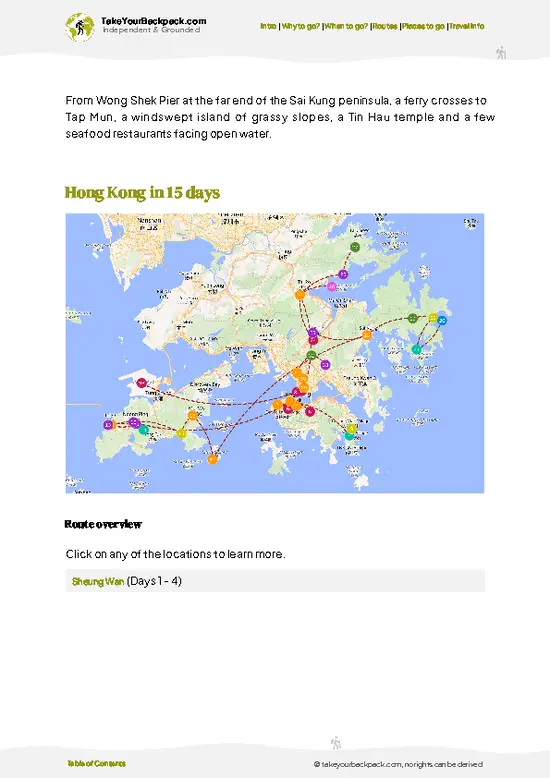
Grouping regions and direction: Hong Kong is compact, so base yourself in Kowloon or Hong Kong Island and make day trips from there. The MTR hubs at Central, Admiralty, Tsim Sha Tsui and Sha Tin connect to most trailheads. Group Hong Kong Island routes together first, since they need the least travel (15 to 40 minutes by MTR or bus). Then head to the New Territories, where trailheads can be 45 to 90 minutes away by MTR and bus or minibus. Leave the outlying islands for last, as ferries from Central take 30 to 60 minutes and run less often on weekdays.
Planning mistakes: … read more 👉
How many days to plan: A trip combining several hikes in Hong Kong needs 4 to 7 days, which leaves room for weather and rest. Most day hikes take 3 to 6 hours on the trail, and you should add 1 to 2 hours for transport and a meal.
Grouping regions and direction: Hong Kong is compact, so base yourself in Kowloon or Hong Kong Island and make day trips from there. The MTR hubs at Central, Admiralty, Tsim Sha Tsui and Sha Tin connect to most trailheads. Group Hong Kong Island routes together first, since they need the least travel (15 to 40 minutes by MTR or bus). Then head to the New Territories, where trailheads can be 45 to 90 minutes away by MTR and bus or minibus. Leave the outlying islands for last, as ferries from Central take 30 to 60 minutes and run less often on weekdays.
Planning mistakes: The most common error is trying to stack two long hikes in one day. Hills are steep, daylight ends around 5:30 to 7:00 pm depending on season, and last buses or ferries from remote trailheads can leave early. Allow a buffer of at least 90 minutes before dark. Another mistake is skipping rest days in the hot months, when heat saps energy by midday. Plan a lighter city day between big hikes. Check bus and ferry timetables ahead, as services thin out on Sundays and holidays.

The ListTop hikes of Hong Kong

1 Dragon’s Back

undulating ridge, sea vistas, Shek O peninsula

Follow a rolling path above the coastline, passing through breezy hills with open views of beaches, bays, and the South China Sea.

2 Lantau Peak

second-highest summit, sunrise climb, Lantau panoramas

Ascend stone steps before dawn to reach a breezy summit, where early light reveals sweeping mountain and island scenery.

3 Victoria Peak

circular path, cityscape lookout, lush gardens

Walk a paved loop with frequent benches and shaded spots, offering sweeping views over Hong Kong’s skyscrapers and harbor.

4 Sunset Peak

silver grass slopes, mountain huts, Lantau uplands

Hike across open hillsides covered in tall grasses, with rustic shelters and broad views of valleys and distant peaks.

5 MacLehose Trail

long-distance route, diverse terrain, remote reservoirs

Traverse changing landscapes from forested hills to open ridges, passing through remote sections and multiple country parks over many days.

hong-kong-hike-maclehose-trail
© Google |

6 Wilson Trail

cross-territory trail, steep climbs, urban-rural contrasts

Navigate a multi-section route linking city edges to remote hills, with frequent elevation changes and varied scenery throughout.

7 Tung O Ancient Trail

coastal villages, ferry piers, old stone paths

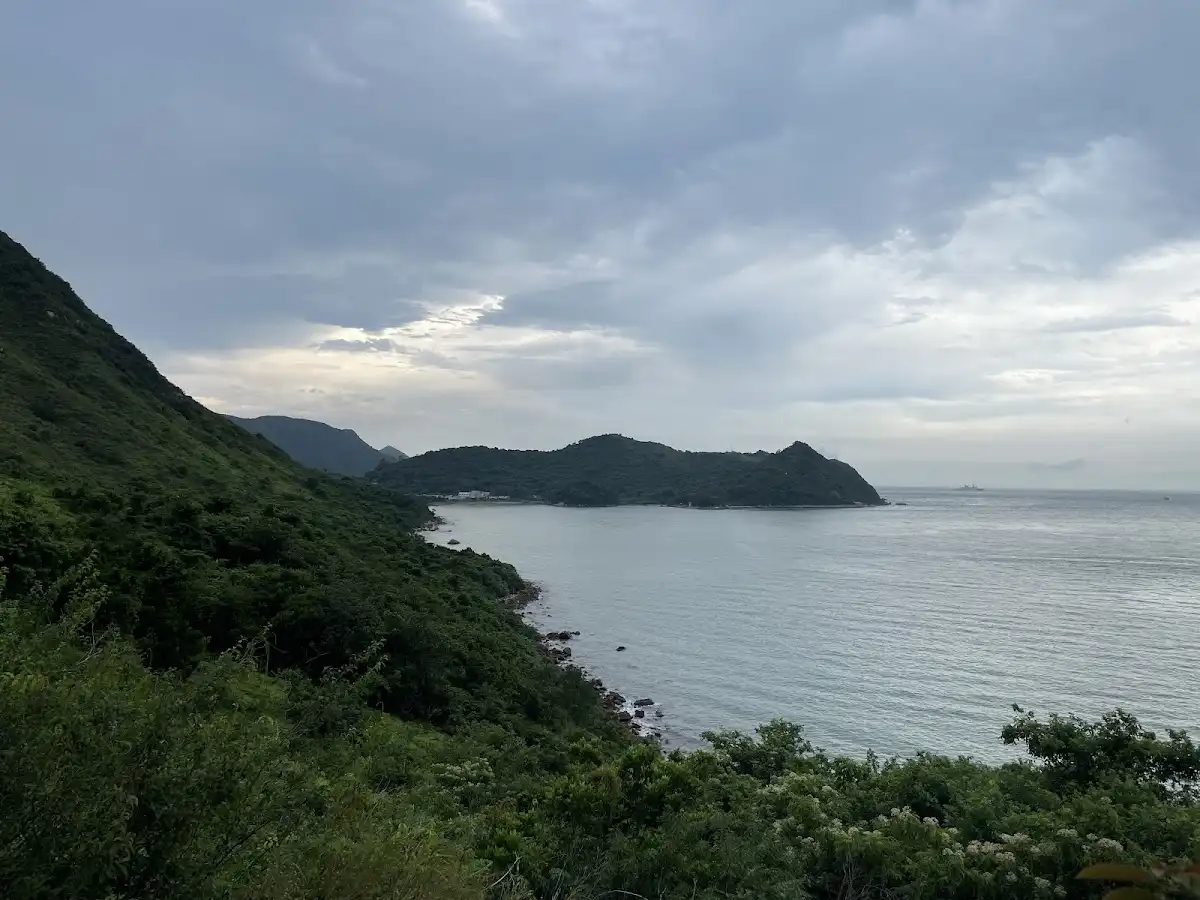
Trace a historic footpath between fishing hamlets, passing abandoned houses and sea views along a quiet, mostly level coastline.

hong-kong-hike-tung-o-ancient-trail
© Google |

8 Lai Chi Wo Nature Trail

ancient Hakka village, mangrove boardwalk, rural farmland

Walk through centuries-old settlements and tidal wetlands, encountering traditional architecture and quiet agricultural landscapes rarely seen in Hong Kong.

9 Tai Lam Chung Reservoir

thousand-island lake, dam crossings, forested peninsulas

Circle a reservoir dotted with tree-covered islets, following shaded trails and causeways through quiet woodland and gentle hills.

10 Ping Shan Heritage Trail

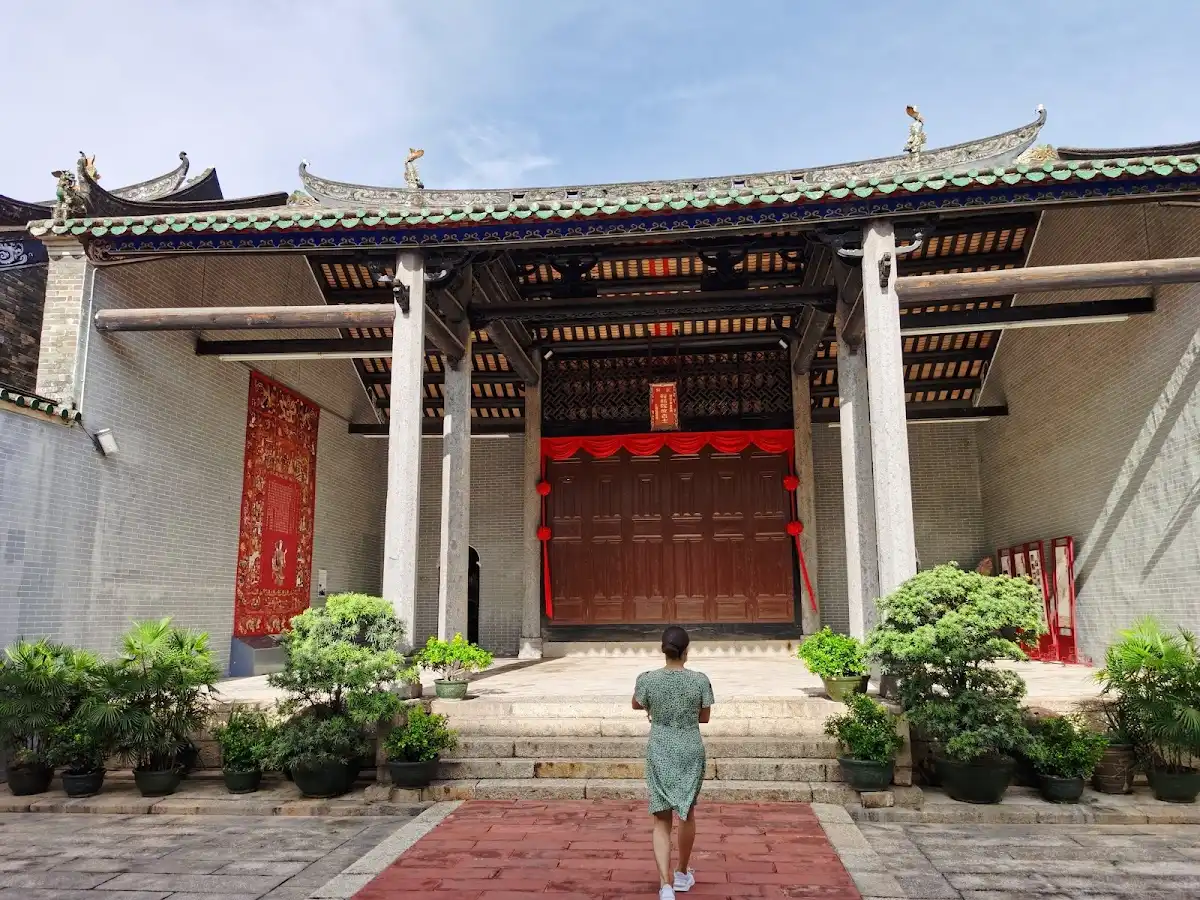
ancestral halls, walled villages, Tang clan heritage

Stroll a flat route linking historic buildings and temples, offering insight into the region’s clan-based rural traditions and architecture.

hong-kong-hike-ping-shan-heritage-trail
© Google |

11 Castle Peak

steep ascent, exposed ridge, panoramic Tuen Mun views

Climb a rugged, sun-baked ridge to reach windswept heights overlooking urban sprawl and distant islands, with little shade along the way.

12 Tsing Yi Nature Trails

harbor vistas, urban fringe, short hillside walks

Stroll gentle paths above container ports, glimpse city life from wooded ridges, and enjoy quick escapes close to dense neighborhoods.

Loading the map 🌍

Expert viewPro Tips for Exploring the Best

How many hikes: I recommend 3 to 5 hikes for a typical trip. That number fits a 5 to 7 day stay and leaves buffer days for heat, rain or typhoon warnings. Fewer than three and you miss how different Hong Kong's terrain is. More than five and the steep climbs and humidity start to wear you down.
Prioritizing by travel style: First-timers and short-stay visitors should start with skyline ridge walks on Hong Kong Island. They are easy to reach and give the classic views. Travelers who want space and wilder scenery should pick New Territories coastal or peak routes, which are longer and less crowded on weekdays. Anyone craving a quieter day with a meal at the end should add an outlying island walk, where seafood restaurants wait near the pier. Avoid mixing all three types on consecutive days. Alternate … read more 👉
How many hikes: I recommend 3 to 5 hikes for a typical trip. That number fits a 5 to 7 day stay and leaves buffer days for heat, rain or typhoon warnings. Fewer than three and you miss how different Hong Kong's terrain is. More than five and the steep climbs and humidity start to wear you down.
Prioritizing by travel style: First-timers and short-stay visitors should start with skyline ridge walks on Hong Kong Island. They are easy to reach and give the classic views. Travelers who want space and wilder scenery should pick New Territories coastal or peak routes, which are longer and less crowded on weekdays. Anyone craving a quieter day with a meal at the end should add an outlying island walk, where seafood restaurants wait near the pier. Avoid mixing all three types on consecutive days. Alternate hard hikes with easy city days.
Budget: Hiking itself is free, as country park trails charge no entry fee. Budget US$40 to 70 a day (about HK$310 to 550) with a hostel or guesthouse bed, local meals and public transport. Transport per hike usually runs HK$10 to 60 (US$1.30 to 8) each way by MTR, bus or ferry. Ferries to islands cost more on weekends and holidays. A guided hike costs roughly US$50 to 100 a person, which is only worth it for rarely marked or technical routes. Budget HK$40 to 80 (US$5 to 10) for a trailside meal, and carry 2 to 3 liters of water, since refill points are scarce.
Safety: Heat and humidity are the main hazards. Start before 8 am from May to September and rest in shade. Avoid hiking during Amber or Black rainstorm warnings or when typhoon signal No. 3 or higher is up, as paths can flood or slip. Stay on marked trails, since cliffs and slopes can be steep and loose. Mobile coverage is generally good, and 999 is the emergency number. Use the distance posts, which carry a location code you can quote to rescuers. Carry sun protection, a headlamp and a charged phone. Snakes, wild boar and feral cattle exist, so keep your distance and never feed them. Monkeys at some country parks can snatch food, so keep it sealed in your pack.
Cultural notes: Take all rubbish out, as bins are scarce on trails. Keep noise low near villages and shrines. Local walkers often start early on weekends and greet people on the path, so a nod goes a long way. Barbecue and campfire rules are strict outside designated sites, and fires can cause heavy fines.

✈️ The backpacker research shortcutHong Kong Travel Guide

An offline-friendly backpacking guide with optimized travel routes, ranked highlights, transport advice, and the best areas to stay.
example page 0 from our offline Travel Guide for Hong Kong
example page 1 from our offline Travel Guide for Hong Kong
example page 2 from our offline Travel Guide for Hong Kong
example page 3 from our offline Travel Guide for Hong Kong
example page 4 from our offline Travel Guide for Hong Kong
example page 5 from our offline Travel Guide for Hong Kong
example page 6 from our offline Travel Guide for Hong Kong
example page 7 from our offline Travel Guide for Hong Kong
The digital guide (359 pages) contains:
✅ 97 highlights, ranked by travel appeal
✅ Optimized 5, 10 & 15-day travel routes
✅ Cities, national parks, landmarks, beaches
✅ How to get around
✅ Offline-friendly for travel without Wi-Fi
👉 Click to see all 30+ guide features

📅 Plan smarter in minutes, not weeks
✅ Month by month travel advice
✅ Festivals & national holidays
✅ Budget expectations

🗺️ Go to the right places, skip the overrated ones
✅ Honest pros & cons of destinations
✅ Top hikes, parks & viewpoints
✅ Lesser-known places most travelers miss
✅ Clear “worth it vs skip it” guidance

🛏️ Travel smoothly without rookie mistakes
✅ Best areas to stay
✅ Transport systems explained simply
✅ Common scams & safety advice
✅ SIM cards, money & practical tips

🌍 Understand the country, not just visit it
✅ Culture & traditions
✅ 52 Essential phrases & customs
✅ Festivals worth planning around
✅ Traveler-friendly historical context
✅ Insights that make places more meaningful

📱 Built for real travel conditions
✅ Fully downloadable PDF
✅ Works completely offline
✅ Optimized for phone use
✅ Useful in remote areas & buses
✅ Everything in one place
Stop searching, start planning
Get instant access to your full guide. 30‑day money-back guarantee.
+ Add another guide for just

By proceeding you agree to our terms.
Sent to your inbox immediately after payment • 100% Secure Checkout
Best Backpacking Travel Advisor 2025 tourism awardBest Backpacking
Travel Advisor
2025
What others say about Take Your Backpack Guides:
⭐⭐⭐⭐⭐
Fantastic, amazing amount of information!
⭐⭐⭐⭐⭐
My goodness this is amazing, it's what I've been looking for hats off too you!
⭐⭐⭐⭐⭐
I think this is absolutely BRILLIANT
⭐⭐⭐⭐
Very complete and informative. It's still missing places, but I gotta to commend you
⭐⭐⭐⭐⭐
This is truly amazing, thank you, can't wait to explore it with my kids!
⭐⭐⭐⭐⭐
Awesome resource, thank you!
⭐⭐⭐⭐⭐
This is amazing! Can't wait to explore the ones I haven't seen
⭐⭐⭐⭐
I love this! Well done, great idea.
⭐⭐⭐⭐⭐
Thanks for taking the time to make this gem!
⭐⭐⭐⭐⭐
This might be the best website I've ever seen.
⭐⭐⭐⭐⭐
Congratulations, and thank you so much for your work; it's incredibly valuable.
⭐⭐⭐⭐
In all seriousness I think you did a great job pointing out the important spots
⭐⭐⭐⭐⭐
10/10 very good
⭐⭐⭐⭐⭐
As someone who's only just starting to visit regularly this is awesome, thank you.
⭐⭐⭐⭐
Thank you very much! I'm going to visit my dad, it's going to be very useful!
⭐⭐⭐⭐⭐
This is really cool! We'll be travelling for the first time and this definitely come in handy.
⭐⭐⭐⭐⭐
You are now our minister of culture, congratulations 👨‍💼
⭐⭐⭐⭐⭐
Just wanted to tell you that this is a pearl! Going to follow your recommendations.
⭐⭐⭐⭐⭐
This is so cool. I'll definitely be using the resource for my travels soon.
⭐⭐⭐⭐⭐
This is very impressive! Good work.
⭐⭐⭐⭐⭐
This is an amazing and informative site. Very well done!

🛏️ Where to stay?Where to Stay in Hong Kong

Hong Kong has plenty of hostels and guesthouses, with dorm beds typically running HK$150 to 350 (US$20 to 45) a night and private rooms often the size of a closet. Tsim Sha Tsui puts you on the harbor promenade with the densest cluster of cheap guesthouses, though the older blocks can feel cramped and hectic, while Mong Kok and Yau Ma Tei are a bit cheaper, close to the night markets and street food, and very loud until late. On Hong Kong Island, Causeway Bay and Wan Chai keep you near shopping and the bar scene, and Sheung Wan is quieter and more local but pricier per bed, and the whole city stays very safe after dark.

If you enjoy meeting fellow travelers, consider choosing hostels with high … read more 👉
Hong Kong has plenty of hostels and guesthouses, with dorm beds typically running HK$150 to 350 (US$20 to 45) a night and private rooms often the size of a closet. Tsim Sha Tsui puts you on the harbor promenade with the densest cluster of cheap guesthouses, though the older blocks can feel cramped and hectic, while Mong Kok and Yau Ma Tei are a bit cheaper, close to the night markets and street food, and very loud until late. On Hong Kong Island, Causeway Bay and Wan Chai keep you near shopping and the bar scene, and Sheung Wan is quieter and more local but pricier per bed, and the whole city stays very safe after dark.

If you enjoy meeting fellow travelers, consider choosing hostels with high ratings for atmosphere. On the other hand, if you prefer having your own space, a hotel might be a better option.

Hong KongMore of Hong Kong

👋 Meet the founderWho’s Behind Take Your Backpack?

Johan, backpacker and founder of TakeYourBackpackHi, I’m Johan (Netherlands 🇳🇱), the creator of TakeYourBackpack. Over the past 3 decades, I’ve backpacked through 90+ countries across six continents, gaining extensive experience with independent travel, long-term trips, and overland routes.

This site is built on a combination of firsthand travel experience and carefully curated insights from other backpackers. Many guides are based on places I’ve personally visited, while others bring together tips, observations, and practical advice shared by trusted travelers I’ve met along the way.

The goal is to provide realistic, experience-driven guidance — not generic itineraries — so you can explore destinations with better context, clearer expectations, and more confidence.