
×

Indonesia🇮🇩 | hikesKelimututri-colored lakes, volcanic summit, remote Flores | things to do and best time to go

Explore Ijen CraterExplore Mount Bromo

Backpacking in Kelimutu
🏆 Top pickhike ranked #4
By Johan Kruseman 🇳🇱 | Updated June 5, 2026

You have to choose: drag yourself out of bed at 3:30 a.m. for sunrise at Kelimutu, or sleep in and risk flat daylight on one of Indonesia’s strangest volcanoes. It matters, because light is everything here. Kelimutu sits in central Flores, east of Komodo, and the whole hike revolves around those three color-shifting crater lakes. The walk itself is short and tame by Indonesian standards: roughly 30–45 minutes from the upper car park, on paved steps and a clear path, more “elevated stroll” than expedition. That’s the pro—and the con. Easy public minivans and bemos get you to Moni, then ojek or shared cars grind up to the trailhead, so access is simple, almost too simple. Compared to long, punishing slogs like Rinjani or Egon, Kelimutu feels like cheating—but when the mist tears open and the lakes glow, you stop caring how hard you worked to get there.

Discover everything you want to know in the 📖 Indonesia Travel Guide.
Best time to go: April - October
Duration: 3 to 4 hours
Distance: 8 kilometers
Total ascent: 600 meters
Loading the map 🌍
CLICK TO FILTER
cities
towns
landmarks
national parks
hikes
beaches
attractions
festivals
regions
SHOW COUNTRY’S BESTSHOW ALL

✨ Why go?
Ranked #4 hike in Indonesia
The unique appeal for travelers

Kelimutu is a magnet for backpackers, and for good reason. The scenery-to-effort ratio is off the charts. You’ll trek through lush forests, feel the cool mountain air, and finally stand before three crater lakes, each a different color, shifting with the light. It’s a visual feast that rewards every step.

Getting there is a breeze. Public transport access is straightforward, with local buses whisking you from Ende to the trailhead. You can dive into this adventure without breaking the bank; it’s a low-cost experience that packs a punch.

The hike itself is flexible. You can choose a quick jaunt to the viewpoints or extend your journey into the surrounding hills. Either way, you’re in for a treat.

Kelimutu fits seamlessly into a longer backpacking route through Flores, making it a perfect … read more 👉
Kelimutu is a magnet for backpackers, and for good reason. The scenery-to-effort ratio is off the charts. You’ll trek through lush forests, feel the cool mountain air, and finally stand before three crater lakes, each a different color, shifting with the light. It’s a visual feast that rewards every step.

Getting there is a breeze. Public transport access is straightforward, with local buses whisking you from Ende to the trailhead. You can dive into this adventure without breaking the bank; it’s a low-cost experience that packs a punch.

The hike itself is flexible. You can choose a quick jaunt to the viewpoints or extend your journey into the surrounding hills. Either way, you’re in for a treat.

Kelimutu fits seamlessly into a longer backpacking route through Flores, making it a perfect pit stop. The burn of the trail is worth it when you catch that first glimpse of the lakes, and the moment you crack open a cold beer afterward is pure bliss.
Want to include Kelimutu in your Indonesia route?
Create a personalized Indonesia itinerary that includes Kelimutu and the places that fit your trip — based on your travel style, budget, and available time. Get your route in seconds.

Generate my trip

💡 HighlightsPlaces and moments you shouldn't skip

  1. The Three Colored Crater Lakes (Tiwu Ata Mbupu, Tiwu Nuwa Muri & Tiwu Ata Polo) — The headline act: three crater lakes sitting side-by-side that can change color from blue to green to black because of shifting minerals and gases. You won’t see anything quite like this on most hikes — it’s geological theatre, best at sunrise when the colors and low light play off each other. (personal favorite)
  2. Sunrise Atmosphere on the Crater Rim — Getting up before dawn and walking the rim while the sky goes from navy to gold is a big part of the Kelimutu experience. Mist curls out of the crater, shadows slide across the lakes, and the quiet makes the whole place feel sacred — way more atmospheric than a mid-day viewpoint.
  3. Close-up Volcanic Features and Fumaroles — The rim walk brings you near fumaroles,
read more 👉
  1. The Three Colored Crater Lakes (Tiwu Ata Mbupu, Tiwu Nuwa Muri & Tiwu Ata Polo) — The headline act: three crater lakes sitting side-by-side that can change color from blue to green to black because of shifting minerals and gases. You won’t see anything quite like this on most hikes — it’s geological theatre, best at sunrise when the colors and low light play off each other. (personal favorite)
  2. Sunrise Atmosphere on the Crater Rim — Getting up before dawn and walking the rim while the sky goes from navy to gold is a big part of the Kelimutu experience. Mist curls out of the crater, shadows slide across the lakes, and the quiet makes the whole place feel sacred — way more atmospheric than a mid-day viewpoint.
  3. Close-up Volcanic Features and Fumaroles — The rim walk brings you near fumaroles, mineral crusts and steam vents: tangible volcanic stuff you can smell and see. That raw, active geology undercuts the postcard views and reminds you this is a living landscape, not just a pretty lookout.
  4. Panoramas of Flores and Mount Inerie — On a clear day you get sweeping views of the Flores highlands and the perfect cone of Mount Inerie across the valley. The contrast between the crater’s color drama and the rolling savannah/hillscapes makes the scenery feel layered and surprisingly varied for a short hike.
  5. Local Culture, Shrines and Village Life — The lakes are sacred to the Lio people and you’ll spot small shrines, offerings, and old graves around the rim. The hike starts near Moni village, so you can combine the trail with simple homestay coffee or a chat with locals — a cultural depth most purely scenic hikes don’t have.
Spotted a mistake or missing something? Contact us.

🌤️ When to go?Seasonal considerations and timing


  • Weather: The dry season from April to October is your best bet. Trails stay firm and dust-free, making the climb less slippery and more straightforward. Avoid the wet season (November to March) when heavy rains turn paths into mudslides and visibility drops.

  • Temperature: Early mornings hover around 10-15°C (50-59°F), crisp enough to wake your senses but not freeze your fingers. Midday warms up to 20-25°C (68-77°F), perfect for pushing upward without overheating.

  • Daylight Hours: Expect roughly 11 to 12 hours of daylight year-round, but starting your hike before dawn is crucial to catch the sunrise over the tri-colored crater lakes—a moment worth the early alarm.

  • Crowds: Peak season (July-August) draws more tourists, especially at sunrise. For a quieter, more intimate experience, aim
read more 👉

  • Weather: The dry season from April to October is your best bet. Trails stay firm and dust-free, making the climb less slippery and more straightforward. Avoid the wet season (November to March) when heavy rains turn paths into mudslides and visibility drops.

  • Temperature: Early mornings hover around 10-15°C (50-59°F), crisp enough to wake your senses but not freeze your fingers. Midday warms up to 20-25°C (68-77°F), perfect for pushing upward without overheating.

  • Daylight Hours: Expect roughly 11 to 12 hours of daylight year-round, but starting your hike before dawn is crucial to catch the sunrise over the tri-colored crater lakes—a moment worth the early alarm.

  • Crowds: Peak season (July-August) draws more tourists, especially at sunrise. For a quieter, more intimate experience, aim for shoulder months like May or September when the trail feels more like your own.

  • Seasonal Activities: Outside the dry season, local villages slow down, and some guesthouses close. Dry months also align with local festivals, adding cultural spice to your trek.

  • Price Fluctuations: Expect higher prices for guides and accommodations during peak months. Booking in shoulder seasons can save you a few bucks and deliver a less commercialized vibe.


Pro-tip: Start your hike in the dry season’s shoulder months—early enough for clear skies, late enough to dodge the crowds—and savor that sunrise moment with fewer elbows in your ribs.


source: climatestotravel.comJANJanuary: below average for travelingFEBFebruary: below average for travelingMARMarch: fair for travelingAPRApril: highly recommended for travelingMAYMay: excellent for travelingJUNJune: highly recommended for travelingJULJuly: highly recommended for travelingAUGAugust: highly recommended for travelingSEPSeptember: excellent for travelingOCTOctober: highly recommended for travelingNOVNovember: below average for travelingDECDecember: below average for traveling
when-to-go

✈️ The backpacker research shortcutIndonesia Travel Guide

An offline-friendly backpacking guide with optimized travel routes, ranked highlights, transport advice, and the best areas to stay.
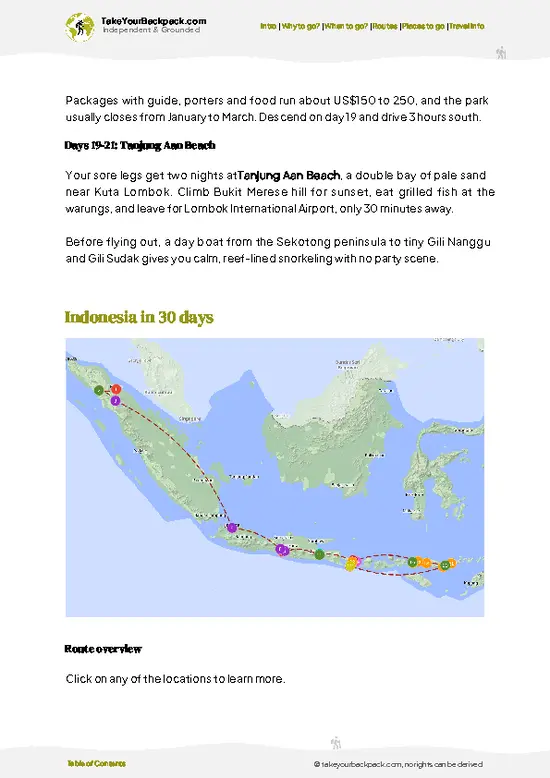
example page 0 from our offline Travel Guide for Indonesia
example page 1 from our offline Travel Guide for Indonesia
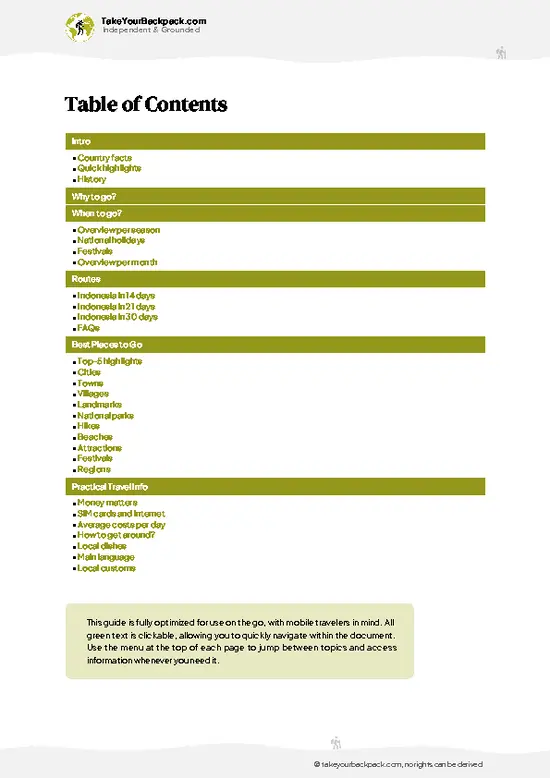
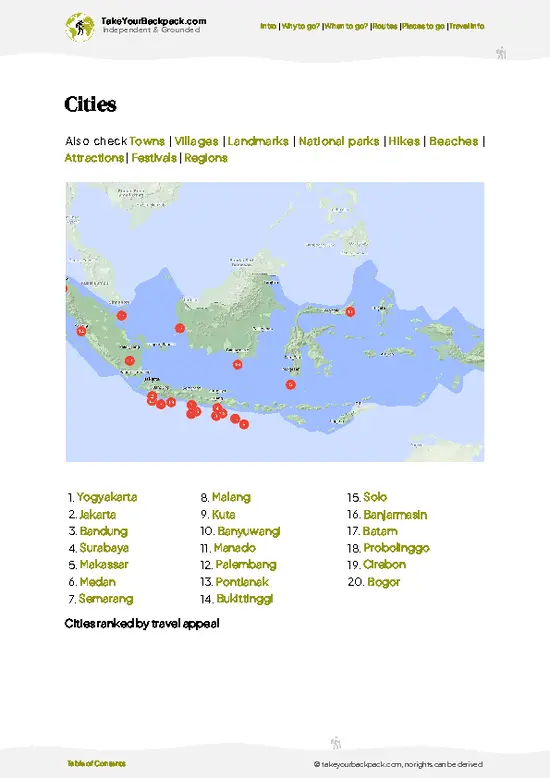
example page 2 from our offline Travel Guide for Indonesia
example page 3 from our offline Travel Guide for Indonesia
example page 4 from our offline Travel Guide for Indonesia
example page 5 from our offline Travel Guide for Indonesia
example page 6 from our offline Travel Guide for Indonesia
example page 7 from our offline Travel Guide for Indonesia
The digital guide (550 pages) contains:
155 highlights, ranked by travel appeal
Optimized 14, 21 & 30-day travel routes
Cities, national parks, landmarks, beaches
How to get around
Offline-friendly for travel without Wi-Fi
👉 Click to see all 30+ guide features

📅 Plan smarter in minutes, not weeks
Month by month travel advice
Festivals & national holidays
Budget expectations

🗺️ Go to the right places, skip the overrated ones
Honest pros & cons of destinations
Top hikes, parks & viewpoints
Lesser-known places most travelers miss
Clear “worth it vs skip it” guidance

🛏️ Travel smoothly without rookie mistakes
Best areas to stay
Transport systems explained simply
Common scams & safety advice
SIM cards, money & practical tips

🌍 Understand the country, not just visit it
Culture & traditions
52 Essential phrases & customs
Festivals worth planning around
Traveler-friendly historical context
Insights that make places more meaningful

📱 Built for real travel conditions
Fully downloadable PDF
Works completely offline
Optimized for phone use
Useful in remote areas & buses
Everything in one place
Save weeks of stressful planning
Get instant access to your full guide. 30‑day money-back guarantee.


By proceeding you agree to our terms.
Sent to your inbox immediately after payment • 100% Secure Checkout
Best Backpacking Travel Advisor 2025 tourism awardBest Backpacking
Travel Advisor
2025
What others say about Take Your Backpack Guides:
⭐⭐⭐⭐⭐
Fantastic, amazing amount of information!
⭐⭐⭐⭐⭐
My goodness this is amazing, it's what I've been looking for hats off too you!
⭐⭐⭐⭐⭐
I think this is absolutely BRILLIANT
⭐⭐⭐⭐
Very complete and informative. It's still missing places, but I gotta to commend you
⭐⭐⭐⭐⭐
This is truly amazing, thank you, can't wait to explore it with my kids!
⭐⭐⭐⭐⭐
Awesome resource, thank you!
⭐⭐⭐⭐⭐
This is amazing! Can't wait to explore the ones I haven't seen
⭐⭐⭐⭐
I love this! Well done, great idea.
⭐⭐⭐⭐⭐
Thanks for taking the time to make this gem!
⭐⭐⭐⭐⭐
This might be the best website I've ever seen.
⭐⭐⭐⭐⭐
Congratulations, and thank you so much for your work; it's incredibly valuable.
⭐⭐⭐⭐
In all seriousness I think you did a great job pointing out the important spots
⭐⭐⭐⭐⭐
10/10 very good
⭐⭐⭐⭐⭐
As someone who's only just starting to visit regularly this is awesome, thank you.
⭐⭐⭐⭐
Thank you very much! I'm going to visit my dad, it's going to be very useful!
⭐⭐⭐⭐⭐
This is really cool! We'll be travelling for the first time and this definitely come in handy.
⭐⭐⭐⭐⭐
You are now our minister of culture, congratulations 👨‍💼
⭐⭐⭐⭐⭐
Just wanted to tell you that this is a pearl! Going to follow your recommendations.
⭐⭐⭐⭐⭐
This is so cool. I'll definitely be using the resource for my travels soon.
⭐⭐⭐⭐⭐
This is very impressive! Good work.
⭐⭐⭐⭐⭐
This is an amazing and informative site. Very well done!

🛏️ Where to stay?How to pick the right area

If you enjoy meeting fellow travelers, consider choosing hostels with high ratings for atmosphere. On the other hand, if you prefer having your own space, a hotel might be a better option.

🥾 Hike detailsA practical overview of the hike

Total Distance: The Kelimutu hike is approximately 7 kilometers (about 4.3 miles) round trip.

Estimated Duration: Most hikers can complete the trek in about 3 to 4 hours, depending on your pace and how long you spend at the lakes.

Difficulty Level: This trail is considered moderate. While the path is well-marked, some sections can be steep and rocky, so a decent level of fitness is helpful.

Starting Point: The hike begins at the Kelimutu National Park entrance. To get there, you can take a public bus or minivan from Ende or Moni. From Ende, it’s about a 2-hour ride. If you’re coming from … read more 👉
Total Distance: The Kelimutu hike is approximately 7 kilometers (about 4.3 miles) round trip.

Estimated Duration: Most hikers can complete the trek in about 3 to 4 hours, depending on your pace and how long you spend at the lakes.

Difficulty Level: This trail is considered moderate. While the path is well-marked, some sections can be steep and rocky, so a decent level of fitness is helpful.

Starting Point: The hike begins at the Kelimutu National Park entrance. To get there, you can take a public bus or minivan from Ende or Moni. From Ende, it’s about a 2-hour ride. If you’re coming from Moni, it’s a shorter trip, around 30 minutes. Just ask locals for the right bus, and they’ll point you to the right one.

Major Landmarks Along the Route:
  • Park Entrance: You’ll need to pay a small entrance fee here.
  • Viewing Platforms: There are several spots along the way where you can catch glimpses of the lakes before reaching the main viewing area.
  • Kelimutu Lakes: The three colored lakes are the main attraction, each with its own unique hue that changes over time.

Type of Terrain and Scenery: The trail features a mix of well-maintained paths and rocky sections. Expect some steep climbs, but the views are absolutely worth it. You’ll be surrounded by lush forests and volcanic landscapes, with occasional clearings that offer stunning vistas of the surrounding area.

Typical Vegetation and Wildlife:
  • Vegetation: You’ll see a lot of tropical plants, including ferns and flowering shrubs, particularly in the lower sections. As you ascend, the vegetation becomes more sparse.
  • Wildlife: Keep an eye out for various bird species, like the black-winged starling, and maybe even some monkeys if you’re lucky. The area is also home to unique butterflies.

Pack plenty of water, wear good shoes, and enjoy the stunning colors of the lakes. It’s a memorable experience, especially if you catch the sunrise!
⚠️ Hiking info can sometimes be outdated or inaccurate. Before you hit the trail, check the latest conditions with locals. If you do spot anything that's off, I'd love to hear from you, so I can update it for fellow travelers.

🛡️ SafetyTraveler Safety Guide

The hike to Kelimutu is a thrilling blend of challenge and reward. Expect variable weather—mornings can be crisp, while afternoons may bring sudden rain. Dress in layers and pack a lightweight rain jacket. The trail is well-marked but steep in sections, so good footwear is essential. Trekking poles can help with stability on the rocky paths.

Altitude isn’t a major concern here, but take your time to acclimate. Watch for loose stones underfoot; a misstep can lead to a tumble. Wildlife is generally shy, but keep an eye out for monkeys. If you encounter them, maintain your distance—don’t feed them.

Start early to beat the crowds and catch the sunrise over the lakes. The view from the summit, with the vibrant colors of the crater lakes, makes every step worthwhile. After the hike, reward yourself … read more 👉
The hike to Kelimutu is a thrilling blend of challenge and reward. Expect variable weather—mornings can be crisp, while afternoons may bring sudden rain. Dress in layers and pack a lightweight rain jacket. The trail is well-marked but steep in sections, so good footwear is essential. Trekking poles can help with stability on the rocky paths.

Altitude isn’t a major concern here, but take your time to acclimate. Watch for loose stones underfoot; a misstep can lead to a tumble. Wildlife is generally shy, but keep an eye out for monkeys. If you encounter them, maintain your distance—don’t feed them.

Start early to beat the crowds and catch the sunrise over the lakes. The view from the summit, with the vibrant colors of the crater lakes, makes every step worthwhile. After the hike, reward yourself with a cold drink at a local warung; you’ve earned it.

Other Indonesian hikes near Kelimutu

Explore more nearby:

  • Mount Rinjani—high-altitude crater lake, steep ascent, hot springs| 591 km away
  • Tete Batu—rice terraces, rural village, monkey forest| 596 km away
  • Sendang Gile in Senaru—tall waterfall, jungle gorge, easy trail| 598 km away

💡 Not sure where to go next?
Create a personalized itinerary for Indonesia including Kelimutu and the places that fit your trip.

Generate my itinerary

👉 Discover all hikes

Or checkout all Indonesia has to offer (think cities, towns, villages, national parks, hikes, beaches, festivals)
Country photo of Indonesia

We 💚 feedbackParting advice and final tips

Kelimutu’s crater lakes are a kaleidoscope of colors that shift with the light—an otherworldly sight that makes every step worth it. But be ready for the climb; the trail can be steep and slippery, especially after rain. You’ll sweat, maybe curse a bit, but when you finally catch that view, it’s pure magic. Just don’t expect a quick trip; the journey demands patience, but the payoff is a memory etched in your mind.

✈️ When did I visit Indonesia?
As part of my 1.5 year travel around the world trip, I visited Indonesia twice (and it was worth it. First in September 2015 and a bit later again in January and February 2016.

✍️ Help improve this page!
The information on this page is based on my own backpacking experience in Indonesia, supplemented with up-to-date research and feedback from other travelers. Travel details can change, so if you notice anything outdated or incomplete, feel free to let me know.


🙋‍♂️ Give feedback

👋 Meet the founderWho’s Behind Take Your Backpack?

Johan, backpacker and founder of TakeYourBackpackHi, I’m Johan (Netherlands 🇳🇱), the creator of TakeYourBackpack. Over the past decade, I’ve backpacked through 80+ countries across six continents, gaining extensive experience with independent travel, long-term trips, and overland routes.

This site is built on a combination of firsthand travel experience and carefully curated insights from other backpackers. Many guides are based on places I’ve personally visited, while others bring together tips, observations, and practical advice shared by trusted travelers I’ve met along the way.

The goal is to provide realistic, experience-driven guidance — not generic itineraries — so you can explore destinations with better context, clearer expectations, and more confidence.

Get full Indonesia guide •
Instant download • 155 highlights • Full Offline guide