×

Indonesia🇮🇩 | hikesMount Bromosea of sand, smoking caldera, Tengger culture | things to do and best time to go

Explore KelimutuExplore Mount Rinjani

Backpacking in Mount Bromo
🏆 Top pickhike ranked #2
By Johan Kruseman 🇳🇱 | Updated June 3, 2026

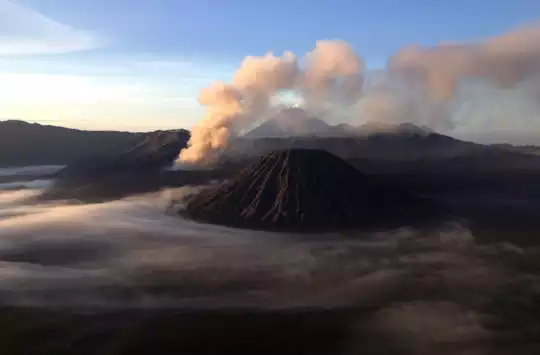
Your boots crunch on volcanic sand while jeeps growl past in the dark, headlights cutting through sulfur-tinged mist, and then the first orange line cracks open over a black sea of calderas and everyone around you just goes quiet. Mount Bromo sits in East Java, Indonesia, inside the Tengger caldera, and the classic “Bromo hike” is less a single epic trek and more a gritty, pre-dawn sequence: viewpoint climb, jeep ride, ash-flat crossing, and a short but lung-burning stair push to the crater rim. The payoff is huge for the effort—otherworldly scenery, smoking crater, ridges that look like they were drawn with charcoal—but it’s crowded, dusty, and the sulfur can sting your throat. It’s easy to reach by public transport via Probolinggo and Cemoro Lawang, especially compared with more remote Indonesian volcanoes like Semeru or Rinjani, but that accessibility also makes it feel more choreographed than wild.

Discover everything you want to know in the 📖 Indonesia Travel Guide.
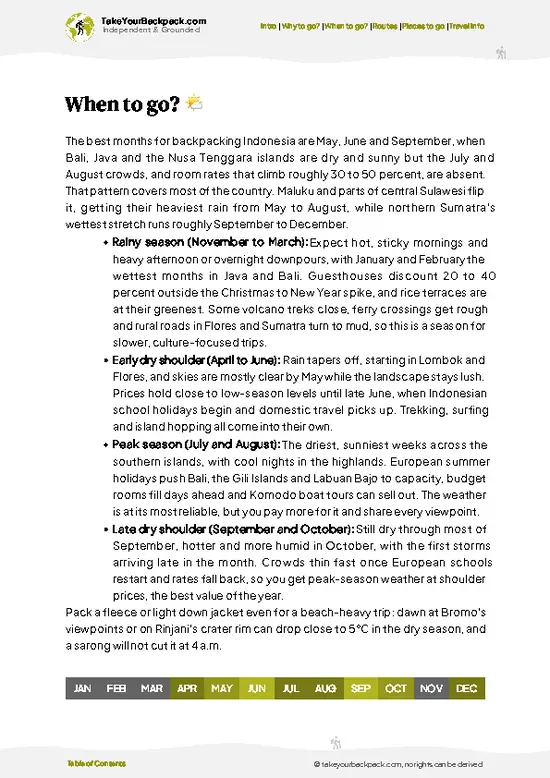
Best time to go: May - September
Duration: 2 to 3 hours
Distance: 10 kilometers
Total ascent: 250 meters
Loading the map 🌍
CLICK TO FILTER
cities
towns
landmarks
national parks
hikes
beaches
attractions
festivals
regions
SHOW COUNTRY’S BESTSHOW ALL

✨ Why go?
Ranked #2 hike in Indonesia
Reasons people choose to hike the here

Mount Bromo pulls in backpackers like a magnet, and for good reason. The scenery-to-effort ratio is off the charts. You’ll trek through the otherworldly Bromo Tengger Semeru National Park, where volcanic landscapes stretch out like a canvas of raw nature. The burn in your legs is worth it when you reach the viewpoint at sunrise, watching the sun spill golden light over the caldera.

Getting there? Easy. Public transport is a breeze, with buses and shared vans whisking you from Surabaya or Malang. It’s low-cost, too—perfect for those on a budget. You can choose your own adventure with flexible distances; whether you want a quick jaunt or a longer trek, it’s all possible.

Plus, it fits seamlessly into a longer backpacking route through Java. After the hike, nothing beats that first cold beer … read more 👉
Mount Bromo pulls in backpackers like a magnet, and for good reason. The scenery-to-effort ratio is off the charts. You’ll trek through the otherworldly Bromo Tengger Semeru National Park, where volcanic landscapes stretch out like a canvas of raw nature. The burn in your legs is worth it when you reach the viewpoint at sunrise, watching the sun spill golden light over the caldera.

Getting there? Easy. Public transport is a breeze, with buses and shared vans whisking you from Surabaya or Malang. It’s low-cost, too—perfect for those on a budget. You can choose your own adventure with flexible distances; whether you want a quick jaunt or a longer trek, it’s all possible.

Plus, it fits seamlessly into a longer backpacking route through Java. After the hike, nothing beats that first cold beer in Cemoro Lawang, soaking in the vibrant local culture. Every step, every view, and every moment is a reward, making Mount Bromo a must-do for any backpacker.
Want to include Mount Bromo in your Indonesia route?
Create a personalized Indonesia itinerary that includes Mount Bromo and the places that fit your trip — based on your travel style, budget, and available time. Get your route in seconds.

Generate my trip

💡 HighlightsDon't-miss highlights and experiences

  • Penanjakan Sunrise Viewpoint — The classic Bromo moment: a pre-dawn climb (or jeep ride) to watch the sun burn through a sea of clouds and light up Mount Semeru and the black sand below. Dramatic silhouettes, epic colors, and that spine-tingling sense of being on the rim of a volcanic world. (Personal favorite — it hits different at 4:30 a.m.)
  • Lautan Pasir (Sea of Sand) — A flat, lunar-like plain of volcanic ash that you have to cross to reach Bromo’s base. Walking it feels oddly cinematic: black sand underfoot, scattered horsemen and vendors, and huge open skies that make the crater and surrounding peaks feel impossibly remote.
  • Bromo Crater Rim & the Stairs Up — The short but sharp ascent from the Sea of Sand up the paved stairs to the crater rim is uniquely visceral — you can smell the
read more 👉
  • Penanjakan Sunrise Viewpoint — The classic Bromo moment: a pre-dawn climb (or jeep ride) to watch the sun burn through a sea of clouds and light up Mount Semeru and the black sand below. Dramatic silhouettes, epic colors, and that spine-tingling sense of being on the rim of a volcanic world. (Personal favorite — it hits different at 4:30 a.m.)
  • Lautan Pasir (Sea of Sand) — A flat, lunar-like plain of volcanic ash that you have to cross to reach Bromo’s base. Walking it feels oddly cinematic: black sand underfoot, scattered horsemen and vendors, and huge open skies that make the crater and surrounding peaks feel impossibly remote.
  • Bromo Crater Rim & the Stairs Up — The short but sharp ascent from the Sea of Sand up the paved stairs to the crater rim is uniquely visceral — you can smell the sulfur, see steam rising, and peer straight into an active volcano. It’s raw, hot, loud at times, and totally unlike walking a forest trail.
  • Bukit Teletubbies & Savanna Slopes — Rolling grassy hills that cushion the harshness of the sand with soft, waving grass. Golden in late afternoon or after the rains, the hills are peaceful, easy to roam, and great for wide-angle photos that contrast green waves against volcanic blacks.
  • Tenggerese Villages & Yadnya Kasada Ceremony — The cultural heartbeat of the area: small Tenggerese villages (Cemoro Lawang, Ngadisari) and the annual Kasada festival where offerings are tossed into the crater. Seeing local life, simple homestays, and ceremonial rituals makes Bromo more than just a photo—there’s real community and history here.
Spotted a mistake or missing something? Contact us.

🌤️ When to go?Seasonal considerations and timing


  • Weather: Dry season from May to September is your best bet. Skies clear, trails firm up, and the volcanic dust settles just enough to reveal those epic sunrise views. Wet season (October to April) means slippery paths and frequent fog that can swallow the landscape whole.

  • Temperature: Expect chilly mornings around 10°C (50°F) that bite through your layers, warming to a comfortable 20-25°C (68-77°F) by midday. Nights can drop near freezing, especially at the crater rim, so pack accordingly.

  • Daylight Hours: Roughly 11-12 hours of daylight year-round, but the dry season offers more consistent sunrise times, perfect for hitting the trail early and catching that volcanic glow without rushing.

  • Crowds: Peak season (July-August) draws a steady stream of tourists and local pilgrims, especially
read more 👉

  • Weather: Dry season from May to September is your best bet. Skies clear, trails firm up, and the volcanic dust settles just enough to reveal those epic sunrise views. Wet season (October to April) means slippery paths and frequent fog that can swallow the landscape whole.

  • Temperature: Expect chilly mornings around 10°C (50°F) that bite through your layers, warming to a comfortable 20-25°C (68-77°F) by midday. Nights can drop near freezing, especially at the crater rim, so pack accordingly.

  • Daylight Hours: Roughly 11-12 hours of daylight year-round, but the dry season offers more consistent sunrise times, perfect for hitting the trail early and catching that volcanic glow without rushing.

  • Crowds: Peak season (July-August) draws a steady stream of tourists and local pilgrims, especially during the Yadnya Kasada festival in July when offerings are tossed into the crater. If you want solitude, aim for shoulder months like May or September.

  • Seasonal Activities: The Yadnya Kasada festival is a raw, intense cultural experience but expect throngs and higher prices. Outside festival times, the trails are quieter, letting you soak in the landscape without distractions.

  • Price Fluctuations: Dry season and festival periods push up accommodation and tour costs. Booking early can save you some cash, but off-season rates drop significantly—just be ready for mud and rain.


Pro-tip: Time your hike for early dry season—May or early June—when the trails are firm, crowds thin, and the air still holds that fresh, volcanic crispness that makes every step feel alive.


source: climatestotravel.comJANJanuary: fair for travelingFEBFebruary: fair for travelingMARMarch: fair for travelingAPRApril: fair for travelingMAYMay: excellent for travelingJUNJune: highly recommended for travelingJULJuly: highly recommended for travelingAUGAugust: highly recommended for travelingSEPSeptember: excellent for travelingOCTOctober: fair for travelingNOVNovember: fair for travelingDECDecember: fair for traveling
indonesia-hike-mount-bromo
© Google |

✈️ The backpacker research shortcutIndonesia Travel Guide

An offline-friendly backpacking guide with optimized travel routes, ranked highlights, transport advice, and the best areas to stay.
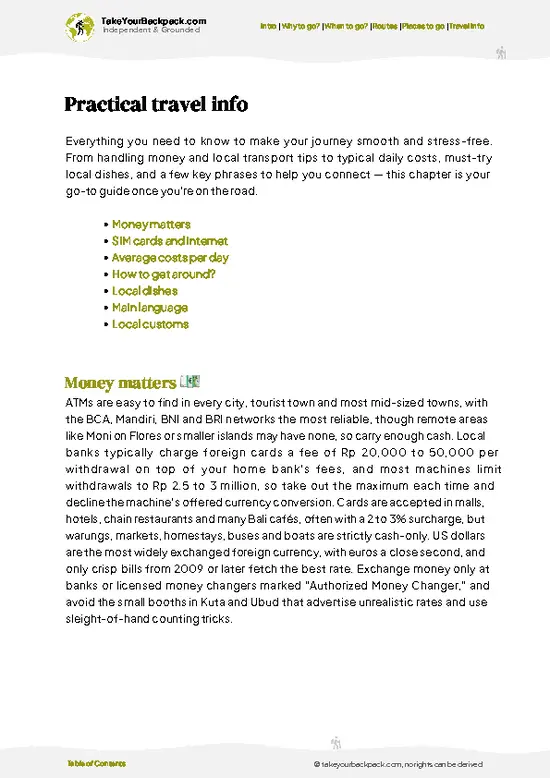
example page 0 from our offline Travel Guide for Indonesia
example page 1 from our offline Travel Guide for Indonesia
example page 2 from our offline Travel Guide for Indonesia
example page 3 from our offline Travel Guide for Indonesia
example page 4 from our offline Travel Guide for Indonesia
example page 5 from our offline Travel Guide for Indonesia
example page 6 from our offline Travel Guide for Indonesia
example page 7 from our offline Travel Guide for Indonesia
The digital guide (550 pages) contains:
155 highlights, ranked by travel appeal
Optimized 14, 21 & 30-day travel routes
Cities, national parks, landmarks, beaches
How to get around
Offline-friendly for travel without Wi-Fi
👉 Click to see all 30+ guide features

📅 Plan smarter in minutes, not weeks
Month by month travel advice
Festivals & national holidays
Budget expectations

🗺️ Go to the right places, skip the overrated ones
Honest pros & cons of destinations
Top hikes, parks & viewpoints
Lesser-known places most travelers miss
Clear “worth it vs skip it” guidance

🛏️ Travel smoothly without rookie mistakes
Best areas to stay
Transport systems explained simply
Common scams & safety advice
SIM cards, money & practical tips

🌍 Understand the country, not just visit it
Culture & traditions
52 Essential phrases & customs
Festivals worth planning around
Traveler-friendly historical context
Insights that make places more meaningful

📱 Built for real travel conditions
Fully downloadable PDF
Works completely offline
Optimized for phone use
Useful in remote areas & buses
Everything in one place
Save weeks of stressful planning
Get instant access to your full guide. 30‑day money-back guarantee.


By proceeding you agree to our terms.
Sent to your inbox immediately after payment • 100% Secure Checkout
Best Backpacking Travel Advisor 2025 tourism awardBest Backpacking
Travel Advisor
2025
What others say about Take Your Backpack Guides:
⭐⭐⭐⭐⭐
Fantastic, amazing amount of information!
⭐⭐⭐⭐⭐
My goodness this is amazing, it's what I've been looking for hats off too you!
⭐⭐⭐⭐⭐
I think this is absolutely BRILLIANT
⭐⭐⭐⭐
Very complete and informative. It's still missing places, but I gotta to commend you
⭐⭐⭐⭐⭐
This is truly amazing, thank you, can't wait to explore it with my kids!
⭐⭐⭐⭐⭐
Awesome resource, thank you!
⭐⭐⭐⭐⭐
This is amazing! Can't wait to explore the ones I haven't seen
⭐⭐⭐⭐
I love this! Well done, great idea.
⭐⭐⭐⭐⭐
Thanks for taking the time to make this gem!
⭐⭐⭐⭐⭐
This might be the best website I've ever seen.
⭐⭐⭐⭐⭐
Congratulations, and thank you so much for your work; it's incredibly valuable.
⭐⭐⭐⭐
In all seriousness I think you did a great job pointing out the important spots
⭐⭐⭐⭐⭐
10/10 very good
⭐⭐⭐⭐⭐
As someone who's only just starting to visit regularly this is awesome, thank you.
⭐⭐⭐⭐
Thank you very much! I'm going to visit my dad, it's going to be very useful!
⭐⭐⭐⭐⭐
This is really cool! We'll be travelling for the first time and this definitely come in handy.
⭐⭐⭐⭐⭐
You are now our minister of culture, congratulations 👨‍💼
⭐⭐⭐⭐⭐
Just wanted to tell you that this is a pearl! Going to follow your recommendations.
⭐⭐⭐⭐⭐
This is so cool. I'll definitely be using the resource for my travels soon.
⭐⭐⭐⭐⭐
This is very impressive! Good work.
⭐⭐⭐⭐⭐
This is an amazing and informative site. Very well done!

🛏️ Where to stay?Best areas and accommodation options

If you enjoy meeting fellow travelers, consider choosing hostels with high ratings for atmosphere. On the other hand, if you prefer having your own space, a hotel might be a better option.

🥾 Hike detailsEverything you need to know before hiking Mount Bromo

Total Distance: The Mount Bromo hike is about 10 kilometers (6.2 miles) round trip if you start from the base and make your way up to the crater.

Estimated Duration: Expect to spend around 2 to 3 hours hiking to the crater from the base, depending on your pace and how many photos you stop to take along the way.

Difficulty Level: This trail is generally considered moderate. The ascent can be steep in parts, but it’s manageable for most hikers with a reasonable fitness level.

Starting Point: The hike typically starts from Cemoro Lawang, a small village near the Bromo-Tengger-Semeru National Park. … read more 👉
Total Distance: The Mount Bromo hike is about 10 kilometers (6.2 miles) round trip if you start from the base and make your way up to the crater.

Estimated Duration: Expect to spend around 2 to 3 hours hiking to the crater from the base, depending on your pace and how many photos you stop to take along the way.

Difficulty Level: This trail is generally considered moderate. The ascent can be steep in parts, but it’s manageable for most hikers with a reasonable fitness level.

Starting Point: The hike typically starts from Cemoro Lawang, a small village near the Bromo-Tengger-Semeru National Park.
  • How to Get There by Public Transport: You can catch a bus from Surabaya or Malang to Probolinggo. From Probolinggo, take a local minibus or a shared taxi to Cemoro Lawang. The whole journey can take about 3 to 4 hours, so plan accordingly.

Major Landmarks Along the Route:
  • Sunrise Viewpoint: Many hikers start early to catch the sunrise over Bromo, which is absolutely stunning.
  • Sea of Sand: As you approach Bromo, you’ll walk through this vast expanse of volcanic ash, which feels otherworldly.
  • Bromo Crater: The main attraction, where you can peer into the smoking crater and feel the heat emanating from the earth.

Type of Terrain and Scenery: The terrain is a mix of rocky paths, loose sand, and some steep sections. The landscape is dramatic, with the towering Mount Bromo surrounded by the vast caldera and the stark contrast of the lush green hills in the distance.

Typical Vegetation and Wildlife:
  • Vegetation: You’ll see sparse vegetation, mainly grass and hardy shrubs that have adapted to the volcanic soil.
  • Wildlife: Keep an eye out for birds like the Javan hawk-eagle and various small mammals, though wildlife sightings can be rare due to the altitude and environment.

This trail is a gem for independent travelers, offering a unique blend of adventure and breathtaking views. Just remember to pack plenty of water and maybe some snacks; the last thing you want is to run out of energy halfway up!
⚠️ Hiking info can sometimes be outdated or inaccurate. Before you hit the trail, check the latest conditions with locals. If you do spot anything that's off, I'd love to hear from you, so I can update it for fellow travelers.

🛡️ SafetyStaying Safe: What Travelers Should Know

Mount Bromo is a feast for the senses, but it demands respect. Weather can shift in an instant; mornings are often shrouded in mist, so start early to catch the sunrise. The trail is well-marked but steep in sections, with loose gravel that can test your footing. Take it slow; the reward is worth every careful step.

Altitude can sneak up on you. Hydrate and acclimatize as you climb. Wildlife is generally shy, but you might spot monkeys or birds. Keep your distance and don’t feed them; they’re part of the ecosystem, not your hiking buddies.

Pack layers for temperature swings and sturdy shoes for grip. A walking stick can help on the descent. Trail etiquette matters—keep noise down and respect the space of others. Embrace the challenge, and when you reach that viewpoint, the panoramic expanse … read more 👉
Mount Bromo is a feast for the senses, but it demands respect. Weather can shift in an instant; mornings are often shrouded in mist, so start early to catch the sunrise. The trail is well-marked but steep in sections, with loose gravel that can test your footing. Take it slow; the reward is worth every careful step.

Altitude can sneak up on you. Hydrate and acclimatize as you climb. Wildlife is generally shy, but you might spot monkeys or birds. Keep your distance and don’t feed them; they’re part of the ecosystem, not your hiking buddies.

Pack layers for temperature swings and sturdy shoes for grip. A walking stick can help on the descent. Trail etiquette matters—keep noise down and respect the space of others. Embrace the challenge, and when you reach that viewpoint, the panoramic expanse of volcanic craters will make every effort feel like a victory.

Other Indonesian hikes near Mount Bromo

Explore more nearby:

  • Gunung Semeru—active volcano, ash plain, summit crater| 19 km away
  • Ijen Crater—sulfur mine, turquoise lake, blue flames| 143 km away
  • Alas Purwo—coastal forest, wild banteng, remote savanna| 184 km away

💡 Not sure where to go next?
Create a personalized itinerary for Indonesia including Mount Bromo and the places that fit your trip.

Generate my itinerary

👉 Discover all hikes

Or checkout all Indonesia has to offer (think cities, towns, villages, national parks, hikes, beaches, festivals)
Country photo of Indonesia

We 💚 feedbackFinal thoughts on hiking the Mount Bromo

Mount Bromo is a wild ride. The sunrise view, with its swirling mists and fiery colors, feels like a front-row seat to nature’s greatest show. But brace yourself: the hike can be a slog, especially with the crowds jostling for that perfect shot. It’s worth it, though. The moment you stand there, breathless and awestruck, you’ll know every step was a small price to pay for that epic scene.

✈️ When did I visit Indonesia?
As part of my 1.5 year travel around the world trip, I visited Indonesia twice (and it was worth it. First in September 2015 and a bit later again in January and February 2016.

✍️ Help improve this page!
The information on this page is based on my own backpacking experience in Indonesia, supplemented with up-to-date research and feedback from other travelers. Travel details can change, so if you notice anything outdated or incomplete, feel free to let me know.


🙋‍♂️ Give feedback

👋 Meet the founderWho’s Behind Take Your Backpack?

Johan, backpacker and founder of TakeYourBackpackHi, I’m Johan (Netherlands 🇳🇱), the creator of TakeYourBackpack. Over the past decade, I’ve backpacked through 80+ countries across six continents, gaining extensive experience with independent travel, long-term trips, and overland routes.

This site is built on a combination of firsthand travel experience and carefully curated insights from other backpackers. Many guides are based on places I’ve personally visited, while others bring together tips, observations, and practical advice shared by trusted travelers I’ve met along the way.

The goal is to provide realistic, experience-driven guidance — not generic itineraries — so you can explore destinations with better context, clearer expectations, and more confidence.

Get full Indonesia guide •
Instant download • 155 highlights • Full Offline guide