×

Indonesia🇮🇩 | regionsGedevolcano summit, montane forest, crater lakes | things to do and best time to go

Explore Gili NangguExplore Gili Asahan

Backpacking in Gede
👀 For curious travelersregion ranked #22
By Johan Kruseman 🇳🇱 | Updated September 4, 2026

You’re hunched on a battered wooden bench, steam curling from a bowl of soto mie as the morning mist lifts off the slopes of Mount Gede. Roosters crow, motorbikes sputter, and the air smells like wet earth and clove cigarettes. This is Gede—technically, the Gunung Gede region, tucked in West Java, Indonesia, just a few hours’ chaos from Jakarta’s sprawl.

Gede is where you trade city noise for volcano trails and waterfall swims. It’s not Bali—thank the gods. The crowds thin out, prices drop, and you get a shot at real, unvarnished Indonesia. The national park is the star: mossy forests, crater views, and hot springs that feel earned after a muddy climb. Cianjur and Cipanas are the main towns—cheap eats, friendly faces, and a pace that’s slow enough to notice. Transport is clunky, but that’s the tax for authenticity. Compared to Bandung or Bogor, Gede feels raw, less curated, and infinitely more rewarding if you’re chasing the kind of stories you can’t buy in a package tour.

Discover everything you want to know in the 📖 Indonesia Travel Guide.
Loading the map 🌍
CLICK TO FILTER
cities
towns
landmarks
national parks
hikes
beaches
attractions
festivals
regions
SHOW COUNTRY’S BESTSHOW ALL

✨ Why go?
Ranked #22 region in Indonesia
What makes it a must-see region

Backpackers linger in Gede because it’s a rare spot where you get a lot without the usual hassle. First off, the variety of landscapes is a game-changer. You can wake up to misty mountains, spend the afternoon trekking through dense jungle, and by evening, be chilling near a quiet beach—all without packing up and moving every day. That means less time lost to travel and more time soaking it all in.

Transport here is surprisingly flexible. Local minibuses, motorbike rentals, and even hitchhiking options let you tailor your pace. You’re not stuck on a rigid schedule or expensive transfers. This freedom means you can dive deep into the slow travel vibe, mixing nature and culture effortlessly. Visit traditional villages, catch local markets, or join a community event without the tourist crowds. … read more 👉
Backpackers linger in Gede because it’s a rare spot where you get a lot without the usual hassle. First off, the variety of landscapes is a game-changer. You can wake up to misty mountains, spend the afternoon trekking through dense jungle, and by evening, be chilling near a quiet beach—all without packing up and moving every day. That means less time lost to travel and more time soaking it all in.

Transport here is surprisingly flexible. Local minibuses, motorbike rentals, and even hitchhiking options let you tailor your pace. You’re not stuck on a rigid schedule or expensive transfers. This freedom means you can dive deep into the slow travel vibe, mixing nature and culture effortlessly. Visit traditional villages, catch local markets, or join a community event without the tourist crowds.

The real insider move? Spend your days exploring different micro-environments and your nights in one or two well-chosen bases. It’s the perfect balance of comfort and adventure, letting you stretch your budget while still feeling like you’re living the local rhythm. Gede isn’t just a stop; it’s a place to breathe, explore, and truly connect.
Want to include Gede in your Indonesia route?
Create a personalized Indonesia itinerary that includes Gede and the places that fit your trip — based on your travel style, budget, and available time. Get your route in seconds.

Generate my trip

💡 HighlightsWhat this place is best known for

Gunung Gede Pangrango National Park
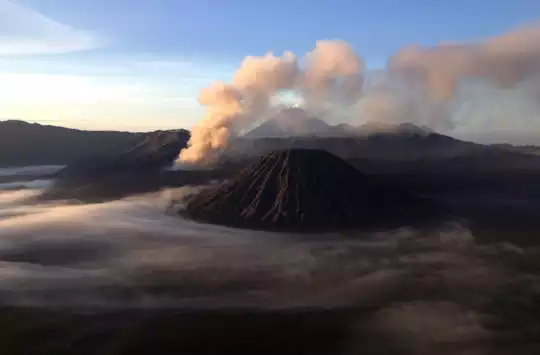
This is the heavyweight champion of the region. Two volcanic peaks, tangled jungle, and a network of trails that’ll test your legs and reward your soul. The sunrise from the Gede summit is a rite of passage—clouds boiling below, sulfur in the air, and the kind of silence that makes you feel like you’ve slipped out of the modern world. The park’s biodiversity is off the charts: Javan gibbons, giant ferns, and orchids that look like they belong in a sci-fi movie. If you only do one thing in Gede, make it this.

Cibodas Botanical Gardens
A living encyclopedia of tropical plants, but don’t let the “botanical” label fool you—this is not your grandma’s garden stroll. The altitude keeps things cool, and the collection of mosses, orchids, and towering trees is wild … read more 👉
Gunung Gede Pangrango National Park
This is the heavyweight champion of the region. Two volcanic peaks, tangled jungle, and a network of trails that’ll test your legs and reward your soul. The sunrise from the Gede summit is a rite of passage—clouds boiling below, sulfur in the air, and the kind of silence that makes you feel like you’ve slipped out of the modern world. The park’s biodiversity is off the charts: Javan gibbons, giant ferns, and orchids that look like they belong in a sci-fi movie. If you only do one thing in Gede, make it this.

Cibodas Botanical Gardens
A living encyclopedia of tropical plants, but don’t let the “botanical” label fool you—this is not your grandma’s garden stroll. The altitude keeps things cool, and the collection of mosses, orchids, and towering trees is wild enough to feel like a lost world. Locals picnic here on weekends, but midweek you’ll have the winding paths and glassy ponds almost to yourself.

Air Terjun Cibeureum
A waterfall that’s more than just a photo op. The hike in is half the fun—think mossy rocks, swinging bridges, and the constant soundtrack of birds. The falls themselves are a trio, not just one, and the mist in the morning is pure magic. Bring a snack and linger; this is where you’ll see local hikers, not tour groups.

Alun-Alun Suryakencana
This high-altitude meadow is the stuff of local legend. Blanketed in edelweiss (yes, the same flower from the Alps, but with a Javanese twist), it’s a surreal place to camp. The stars here are ridiculous—no city glow, just the Milky Way and the occasional shooting star. If you want to feel like you’ve earned your stripes, spend a night here.

Kebun Teh Gunung Mas
Rolling tea plantations that look like someone ironed the hills. You can walk the rows at sunrise, chat with pickers, and sip the freshest tea of your life at the old Dutch-era factory. The air smells like green tea and rain. It’s a working landscape, not a theme park, and that’s exactly the point.

Curug Cilember
Hidden gem alert: This seven-tiered waterfall complex is where local families go to cool off. Each level has its own vibe—some are gentle enough for a swim, others thunder down like a mini-Niagara. The hike up is steep but short, and you’ll pass butterfly gardens and warungs selling fried bananas. Go early to beat the crowds.

Pasar Cipanas
If you want to eat like a local, skip the hotel buffet and hit this bustling market. Spices, tropical fruit, and street food that’ll make you rethink your relationship with chili. The satay here is legendary, and the vendors love to chat if you show genuine curiosity. This is where the region’s flavors come alive.

Telaga Biru
A small, electric-blue lake tucked into the forest. Most people miss it on their way to bigger sights, but the color is real—caused by minerals and algae, not Photoshop. It’s quiet, cool, and feels like a secret. Bring a thermos of coffee and just watch the light change.

Curug Ciherang
Another local favorite, this waterfall is less polished than the guidebook darlings, but that’s its charm. There’s a rickety bamboo bridge for the brave, and the pool at the base is perfect for a post-hike dip. The air smells like wet stone and pine.

Gunung Putri
My personal favorite. It’s the “locals’ mountain”—shorter, steeper, and less crowded than Gede, but with a summit view that punches way above its weight. Sunrise here is a shared secret: you, a handful of die-hard hikers, and a panorama that stretches from tea fields to volcanoes. If you want bragging rights without the crowds, this is your move.
Spotted a mistake or missing something? Contact us.

⌛️ 5 daysA smart one-week plan

Day 1: Gede Town

Start your journey right in Gede Town, the region’s transport hub. This is where the ’spine’ of the network pulses strongest—buses, minibuses, and motorbike taxis converge here, making it your launchpad. Spend the day settling in, scouting local eateries, and syncing your schedule with the transport rhythms. The key here is patience; buses run on a loose timetable, so use this downtime to soak in the local vibe and plan your next moves with flexibility.

Day 2: Coastal Village

Hop on a minibus early to the coastal village south of Gede. This leg is your first real taste of the ’wiring’—the smaller, less predictable routes that connect the dots beyond the main roads. The ride is bumpy but scenic, and the payoff is a quiet beach where fishermen mend nets and kids chase crabs. … read more 👉

Day 1: Gede Town

Start your journey right in Gede Town, the region’s transport hub. This is where the ’spine’ of the network pulses strongest—buses, minibuses, and motorbike taxis converge here, making it your launchpad. Spend the day settling in, scouting local eateries, and syncing your schedule with the transport rhythms. The key here is patience; buses run on a loose timetable, so use this downtime to soak in the local vibe and plan your next moves with flexibility.

Day 2: Coastal Village

Hop on a minibus early to the coastal village south of Gede. This leg is your first real taste of the ’wiring’—the smaller, less predictable routes that connect the dots beyond the main roads. The ride is bumpy but scenic, and the payoff is a quiet beach where fishermen mend nets and kids chase crabs. Stick around for sunset; it’s a low-key spectacle that feels like a secret handshake with the region.

Day 3: Mountain Hamlet

Shift gears and head inland to a mountain hamlet accessible only by motorbike taxi or a rugged local jeep. This is where comfort takes a hit, but the trade-off is a raw, authentic slice of Gede’s highland life. The air is cooler, the pace slower, and the views—well, they’re worth every jolt. This is your ’Off-Path Reward’: a brief detour to a family-run coffee plantation where you can sip fresh brew while chatting with the growers.

Day 4: Market Town

Descend back toward a bustling market town, timed to coincide with the weekly market day. This phase is about recharging your social batteries and indulging in street food that’s as much a cultural lesson as a meal. Transport here is more frequent, so you can afford to linger and explore without worrying about missing the last ride back.

Day 5: Gede Town Return

Circle back to Gede Town for your final day. Use this time to revisit favorite spots or squeeze in last-minute shopping. The transport system’s spine means you’ll have options for onward travel or a relaxed exit. If you ask me, Day 3 is the trip’s crown jewel—the mountain hamlet’s blend of challenge, charm, and that coffee plantation detour justifies the whole adventure. It’s the kind of day that sticks with you long after the journey ends.
Turn your Gede visit into an Indonesia adventure
Build a complete Indonesia route with Gede, hidden gems, must-see destinations, and realistic travel times included.

Generate my trip

🌤️ When to go?When to go for the best experience


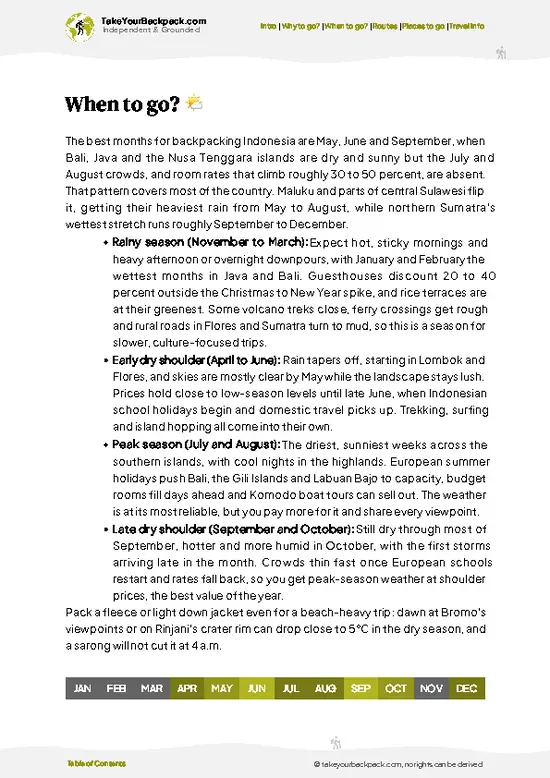
  • Topic: Weather – Gede’s dry season runs from May to September, offering clear skies and minimal rain. The wet season, October through April, brings heavy showers and humidity that can turn trails slippery and slow your pace.

  • Topic: Temperature – Expect daytime highs around 24-28°C (75-82°F) year-round, but nights dip to 15-18°C (59-64°F), especially in the dry months. Pack layers for chilly evenings, even if the days feel tropical.

  • Topic: Daylight Hours – Daylight stays steady at about 12 hours year-round, sunrise around 6 AM and sunset near 6 PM. Early starts are your friend to beat heat and crowds.

  • Topic: Crowds – Peak trekking season aligns with the dry months, especially July and August. Trails and guesthouses fill up fast, so book early or aim for shoulder months like May or
read more 👉

  • Topic: Weather – Gede’s dry season runs from May to September, offering clear skies and minimal rain. The wet season, October through April, brings heavy showers and humidity that can turn trails slippery and slow your pace.

  • Topic: Temperature – Expect daytime highs around 24-28°C (75-82°F) year-round, but nights dip to 15-18°C (59-64°F), especially in the dry months. Pack layers for chilly evenings, even if the days feel tropical.

  • Topic: Daylight Hours – Daylight stays steady at about 12 hours year-round, sunrise around 6 AM and sunset near 6 PM. Early starts are your friend to beat heat and crowds.

  • Topic: Crowds – Peak trekking season aligns with the dry months, especially July and August. Trails and guesthouses fill up fast, so book early or aim for shoulder months like May or September for fewer people.

  • Topic: Seasonal Activities – The dry season is prime for hiking, wildlife spotting, and visiting local villages. The wet season offers lush greenery but expect limited access to some trails and fewer cultural events.

  • Topic: Price Fluctuations – Accommodation and guide fees spike during the dry season’s peak months. Visiting just before or after (May, September) can save you 20-30% without sacrificing much on weather or experience.


Pro-tip: Hit Gede in late May or early September—dry enough to enjoy the trails, light on crowds, and your wallet will thank you. Early mornings are gold for both weather and wildlife sightings.


source: climatestotravel.comJANJanuary: fair for travelingFEBFebruary: fair for travelingMARMarch: fair for travelingAPRApril: fair for travelingMAYMay: highly recommended for travelingJUNJune: excellent for travelingJULJuly: excellent for travelingAUGAugust: excellent for travelingSEPSeptember: highly recommended for travelingOCTOctober: fair for travelingNOVNovember: fair for travelingDECDecember: fair for traveling
when-to-go

✈️ The backpacker research shortcutIndonesia Travel Guide

An offline-friendly backpacking guide with optimized travel routes, ranked highlights, transport advice, and the best areas to stay.
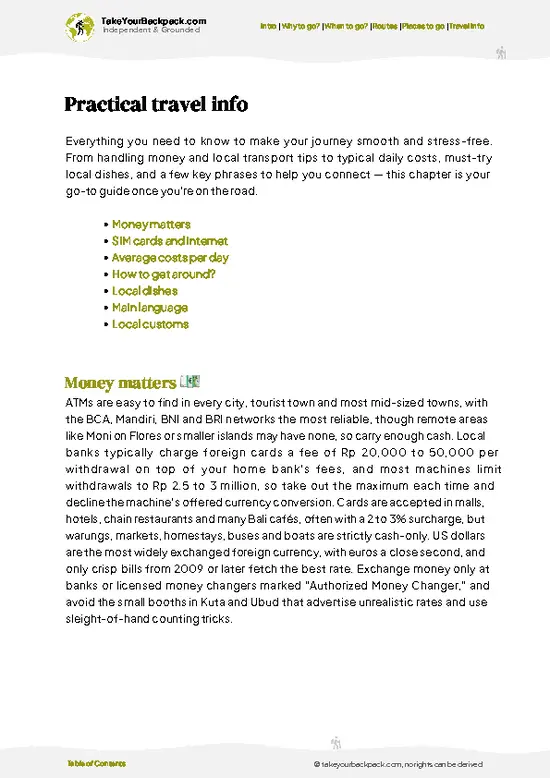
example page 0 from our offline Travel Guide for Indonesia
example page 1 from our offline Travel Guide for Indonesia
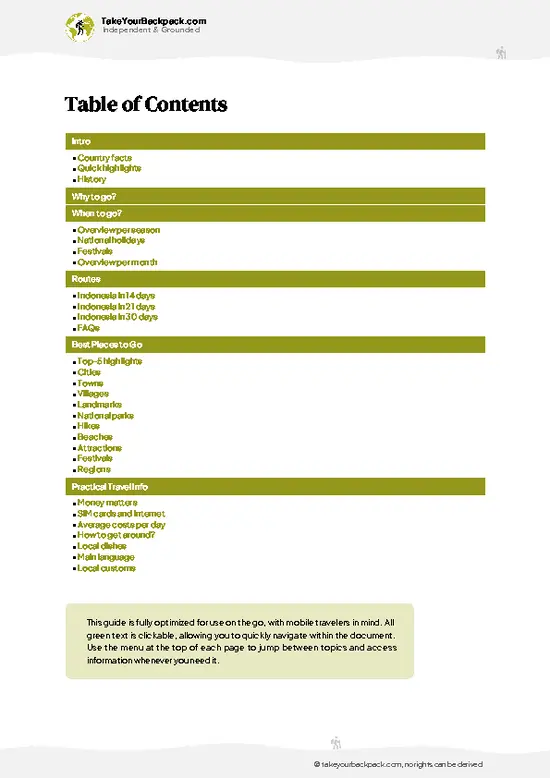
example page 2 from our offline Travel Guide for Indonesia
example page 3 from our offline Travel Guide for Indonesia
example page 4 from our offline Travel Guide for Indonesia
example page 5 from our offline Travel Guide for Indonesia
example page 6 from our offline Travel Guide for Indonesia
example page 7 from our offline Travel Guide for Indonesia
The digital guide (546 pages) contains:
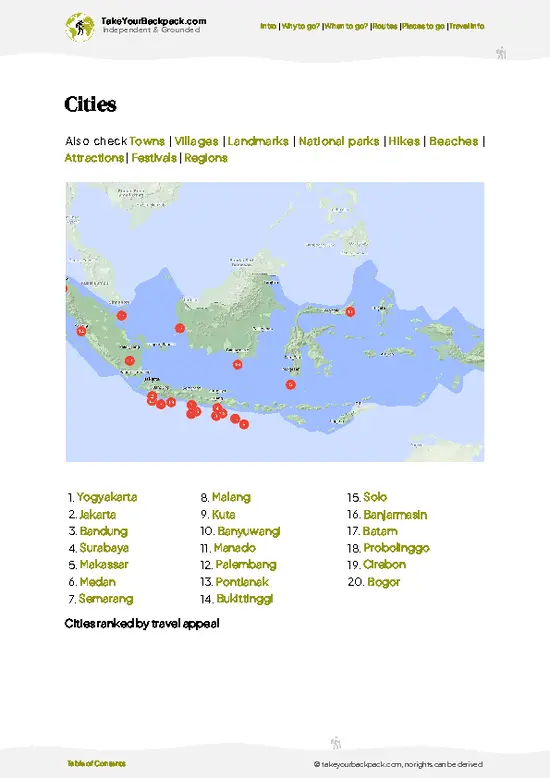
156 highlights, ranked by travel appeal
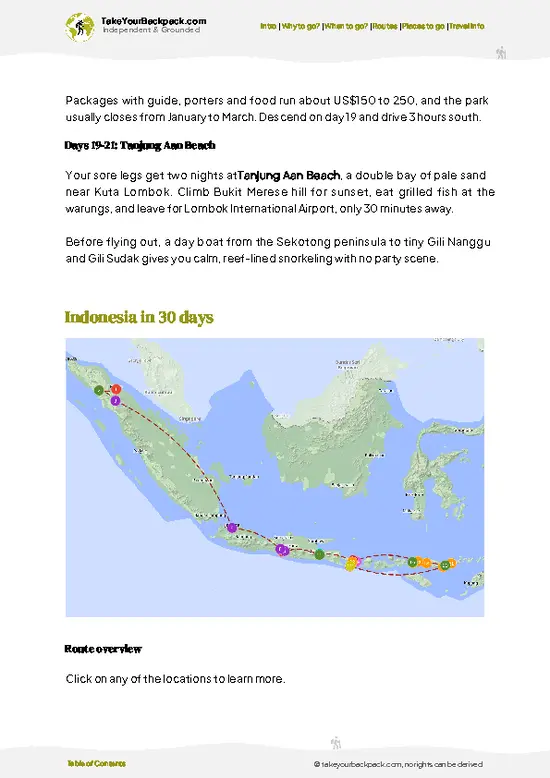
Optimized 14, 21 & 30-day travel routes
Cities, national parks, landmarks, beaches
How to get around
Offline-friendly for travel without Wi-Fi
👉 Click to see all 30+ guide features

📅 Plan smarter in minutes, not weeks
Month by month travel advice
Festivals & national holidays
Budget expectations

🗺️ Go to the right places, skip the overrated ones
Honest pros & cons of destinations
Top hikes, parks & viewpoints
Lesser-known places most travelers miss
Clear “worth it vs skip it” guidance

🛏️ Travel smoothly without rookie mistakes
Best areas to stay
Transport systems explained simply
Common scams & safety advice
SIM cards, money & practical tips

🌍 Understand the country, not just visit it
Culture & traditions
52 Essential phrases & customs
Festivals worth planning around
Traveler-friendly historical context
Insights that make places more meaningful

📱 Built for real travel conditions
Fully downloadable PDF
Works completely offline
Optimized for phone use
Useful in remote areas & buses
Everything in one place
Save weeks of stressful planning
Get instant access to your full guide. 30‑day money-back guarantee.
+ Add another guide for just US$7.80

By proceeding you agree to our terms.
Sent to your inbox immediately after payment • 100% Secure Checkout
Best Backpacking Travel Advisor 2025 tourism awardBest Backpacking
Travel Advisor
2025
What others say about Take Your Backpack Guides:
⭐⭐⭐⭐⭐
Fantastic, amazing amount of information!
⭐⭐⭐⭐⭐
My goodness this is amazing, it's what I've been looking for hats off too you!
⭐⭐⭐⭐⭐
I think this is absolutely BRILLIANT
⭐⭐⭐⭐
Very complete and informative. It's still missing places, but I gotta to commend you
⭐⭐⭐⭐⭐
This is truly amazing, thank you, can't wait to explore it with my kids!
⭐⭐⭐⭐⭐
Awesome resource, thank you!
⭐⭐⭐⭐⭐
This is amazing! Can't wait to explore the ones I haven't seen
⭐⭐⭐⭐
I love this! Well done, great idea.
⭐⭐⭐⭐⭐
Thanks for taking the time to make this gem!
⭐⭐⭐⭐⭐
This might be the best website I've ever seen.
⭐⭐⭐⭐⭐
Congratulations, and thank you so much for your work; it's incredibly valuable.
⭐⭐⭐⭐
In all seriousness I think you did a great job pointing out the important spots
⭐⭐⭐⭐⭐
10/10 very good
⭐⭐⭐⭐⭐
As someone who's only just starting to visit regularly this is awesome, thank you.
⭐⭐⭐⭐
Thank you very much! I'm going to visit my dad, it's going to be very useful!
⭐⭐⭐⭐⭐
This is really cool! We'll be travelling for the first time and this definitely come in handy.
⭐⭐⭐⭐⭐
You are now our minister of culture, congratulations 👨‍💼
⭐⭐⭐⭐⭐
Just wanted to tell you that this is a pearl! Going to follow your recommendations.
⭐⭐⭐⭐⭐
This is so cool. I'll definitely be using the resource for my travels soon.
⭐⭐⭐⭐⭐
This is very impressive! Good work.
⭐⭐⭐⭐⭐
This is an amazing and informative site. Very well done!

🛏️ Where to stay?Choosing the right base

Gede’s backpacker scene is quietly concentrated, but it’s all about picking the right base to maximize your time and vibe. First off, Bandung is your go-to if you want a mix of safety and social buzz without the tourist chaos. It’s a city that knows how to keep things chill but lively, with plenty of budget-friendly spots where you’ll bump into fellow travelers swapping tips over kopi. The trick here is to stay near the Setiabudi area—it’s a sweet spot for cafes, street food, and easy access to transport, so you’re never stuck wasting time or cash on long rides.

If you’re chasing a more laid-back, … read more 👉
Gede’s backpacker scene is quietly concentrated, but it’s all about picking the right base to maximize your time and vibe. First off, Bandung is your go-to if you want a mix of safety and social buzz without the tourist chaos. It’s a city that knows how to keep things chill but lively, with plenty of budget-friendly spots where you’ll bump into fellow travelers swapping tips over kopi. The trick here is to stay near the Setiabudi area—it’s a sweet spot for cafes, street food, and easy access to transport, so you’re never stuck wasting time or cash on long rides.

If you’re chasing a more laid-back, village feel but still want to keep your options open, Ciwidey is the place. It’s quieter, safer, and perfect for solo backpackers who want to recharge without losing touch with the backpacker circuit. The social scene is smaller but tight-knit, and you’ll find locals and travelers mingling over hot springs and local markets. The trade-off? You’ll spend a bit more time getting around, but the comfort and calm are worth it.

For the real insiders, Lembang offers a sweet middle ground. It’s a bit pricier but trades money for comfort and a social scene that’s more about quality than quantity. You’ll find yourself in a community of like-minded travelers and locals who know the best off-the-beaten paths. Staying here means sacrificing a little budget but gaining a lot in experience and ease.

Pick your spot based on what you want to trade: time, money, or comfort. Each place has its rhythm, and knowing when to lean into one or the other is the secret to making Gede unforgettable.

🚌 Getting aroundGetting around like a local

Gede’s transport scene is a dance between laid-back rhythm and sudden bursts of chaos. Forget rigid timetables—here, intuition rules. Drivers and passengers alike rely on a mix of shouted deals, hand signals, and the occasional bribe to keep things moving. It’s not about catching a bus at 8:00 sharp; it’s about knowing when the crowd swells, when the driver’s mood shifts, and when to jump in before the vehicle fills up. If you’re a budget traveler, this is your playground—but only if you’re ready to read the room and roll with the flow.


  • Angkot (Shared Minivan): Runs roughly from 6 AM to 7 PM, fares hover around IDR 5,000–10,000. Slow and cramped but dirt cheap, angkots zigzag through villages and towns, perfect for short hops and soaking in local life. Don’t expect air conditioning or
read more 👉
Gede’s transport scene is a dance between laid-back rhythm and sudden bursts of chaos. Forget rigid timetables—here, intuition rules. Drivers and passengers alike rely on a mix of shouted deals, hand signals, and the occasional bribe to keep things moving. It’s not about catching a bus at 8:00 sharp; it’s about knowing when the crowd swells, when the driver’s mood shifts, and when to jump in before the vehicle fills up. If you’re a budget traveler, this is your playground—but only if you’re ready to read the room and roll with the flow.


  • Angkot (Shared Minivan): Runs roughly from 6 AM to 7 PM, fares hover around IDR 5,000–10,000. Slow and cramped but dirt cheap, angkots zigzag through villages and towns, perfect for short hops and soaking in local life. Don’t expect air conditioning or legroom; it’s all about the experience.

  • Ojek (Motorcycle Taxi): Available 24/7, prices start at IDR 10,000 for short rides. Fast and nimble, ojeks are your best bet for weaving through traffic or reaching spots off the beaten path. Negotiate upfront—drivers love to test your tourist wallet.

  • Public Buses: Limited schedules, mostly morning and late afternoon departures, fares around IDR 15,000–25,000. These are bulkier and slower but cover longer distances between towns. Expect stops every few kilometers and a no-frills ride.

  • Renting a Scooter: Roughly IDR 70,000–100,000 per day. Offers ultimate freedom and speed, letting you chase sunrise views or secret waterfalls on your own timetable. Requires confidence in local traffic chaos and a valid license.

  • Local Ferries: If your route includes crossing rivers or coastal stretches, ferries run sporadically from dawn till dusk, costing IDR 5,000–15,000. They’re slow but scenic, and a chance to catch a break from the road’s madness.


Here’s the insider move: skip the angkot during peak hours when they’re packed and slow. Instead, grab an ojek just before the morning rush or late afternoon lull. It’s a small premium for speed and comfort, but it saves you from standing shoulder-to-shoulder in a sweaty minivan. And if you’re covering multiple towns, rent a scooter for at least one day—nothing beats the freedom to stop wherever you want, whenever you want. Trust me, that’s how you turn a chaotic transit scene into your personal adventure playground.

🍲 FoodLocal Cuisine & Drinks

In Gede, Indonesia, your taste buds are in for a wild ride. The air is thick with the scent of sambal, that fiery chili paste that’s the heartbeat of every meal here. Don’t miss out on Nasi Liwet, a fragrant rice dish cooked in coconut milk and chicken broth, served with shredded chicken, boiled eggs, and a side of crispy tempeh. It’s comfort food with a kick, perfect after a day on the trail. For something lighter, grab a bowl of Soto Betawi—a creamy beef soup with a rich, coconut-infused broth that feels like a warm hug in a bowl.

Forget the polished restaurants; the real magic happens at the street food stalls and bustling markets where locals gather. Early mornings are prime time to hit the market for fresh fruit juices—think sweet, tangy soursop or the sharp zing of tamarind—served ice-cold … read more 👉
In Gede, Indonesia, your taste buds are in for a wild ride. The air is thick with the scent of sambal, that fiery chili paste that’s the heartbeat of every meal here. Don’t miss out on Nasi Liwet, a fragrant rice dish cooked in coconut milk and chicken broth, served with shredded chicken, boiled eggs, and a side of crispy tempeh. It’s comfort food with a kick, perfect after a day on the trail. For something lighter, grab a bowl of Soto Betawi—a creamy beef soup with a rich, coconut-infused broth that feels like a warm hug in a bowl.

Forget the polished restaurants; the real magic happens at the street food stalls and bustling markets where locals gather. Early mornings are prime time to hit the market for fresh fruit juices—think sweet, tangy soursop or the sharp zing of tamarind—served ice-cold to beat the tropical heat. These spots are loud, chaotic, and full of life, with vendors shouting over sizzling woks and the clatter of knives chopping fresh herbs.

When you sit down to eat, remember: meals are social, often shared family-style. Don’t rush. It’s polite to wait for the eldest to start, and using your right hand is the unspoken rule. And if someone offers you a sip of tuak, the local palm wine, say yes. It’s not just a drink—it’s a ticket into the heart of Gede’s community.

FAQTraveler FAQ

2 to 3 days are sufficient to explore Gede, focusing on the main hiking trails and natural attractions. The most popular trek to Mount Gede summit takes about 6 to 8 hours one way, so plan accordingly. Allocate extra time for rest and exploring nearby waterfalls and hot springs.
You can get around Gede without a car by using local angkot minibuses, motorbike taxis (ojek), or renting a motorbike. Walking is also feasible for short distances around the base area and trailheads. Public transport fares typically range from 5,000 to 20,000 IDR depending on distance.
Gede is known for Mount Gede Pangrango National Park, a popular hiking destination with rich biodiversity and volcanic landscapes. It features tropical rainforests, endemic flora and fauna, and scenic waterfalls. The park is a key conservation area and attracts nature lovers and trekkers year-round.
⚠️ Things can change over time, so always validate details locally before you go.

Other Indonesian regions near Gede

Explore more nearby:

  • Java—volcanic peaks, ancient temples, urban sprawl| 369 km away
  • Menjangan island—marine park, deer population, wall diving| 843 km away
  • Sumatra—rainforest trekking, volcanic lakes, Sumatran wildlife| 894 km away

💡 Not sure where to go next?
Create a personalized itinerary for Indonesia including Gede and the places that fit your trip.

Generate my itinerary

👉 Discover all regions

Or checkout all Indonesia has to offer (think cities, towns, villages, national parks, hikes, beaches, festivals)
Country photo of Indonesia

We 💚 feedbackParting advice and final tips

Here’s the deal with Gede: if you want to feel like you’ve stepped into a living rainforest, with trails that challenge your legs and reward you with misty views that don’t feel staged, this is your spot. But heads up—this isn’t a quick-hit destination. The humidity and sudden rain can slow you down, and the infrastructure isn’t polished. So, pack patience and good shoes, and you’ll walk away with a story worth telling.

✈️ When did I visit Indonesia?
As part of my 1.5 year travel around the world trip, I visited Indonesia twice (and it was worth it. First in September 2015 and a bit later again in January and February 2016.

✍️ Help improve this page!
The information on this page is based on my own backpacking experience in Indonesia, supplemented with up-to-date research and feedback from other travelers. Travel details can change, so if you notice anything outdated or incomplete, feel free to let me know.


🙋‍♂️ Give feedback

👋 Meet the founderWho’s Behind Take Your Backpack?

Johan, backpacker and founder of TakeYourBackpackHi, I’m Johan (Netherlands 🇳🇱), the creator of TakeYourBackpack. Over the past decade, I’ve backpacked through 80+ countries across six continents, gaining extensive experience with independent travel, long-term trips, and overland routes.

This site is built on a combination of firsthand travel experience and carefully curated insights from other backpackers. Many guides are based on places I’ve personally visited, while others bring together tips, observations, and practical advice shared by trusted travelers I’ve met along the way.

The goal is to provide realistic, experience-driven guidance — not generic itineraries — so you can explore destinations with better context, clearer expectations, and more confidence.

Get full Indonesia guide •
Instant download • 156 highlights • Full Offline guide