×

Ireland🇮🇪 | best beachesWhere to Find the 10 Best beaches in Ireland

Beaches in Ireland come with a rule the brochures skip: you are here for the sand, not the swim. The Atlantic coast from Donegal to Kerry delivers long, empty strands, dunes and surf, with water that wakes you up faster than espresso. The east and south coasts are gentler, a little busier and easier to reach by train. Almost everything is free, and on the west coast you may share a mile of sand with three dog walkers and a horse. For backpackers and independent travelers, the real choice is wild and remote versus easy and social.

By Johan Kruseman 🇳🇱 | Updated October 18, 2026
Explore the best attractions in Ireland

Why go?Understanding Their Importance

Ireland is an island sitting in the path of the North Atlantic, which explains almost everything about its shores. Swells arrive from thousands of kilometers away, so the west coast has big, open strands, tall dunes and some of Europe's most consistent surf. The Gulf Stream keeps winters mild, but it does not make the sea warm. Summer water temperatures hover around 14 to 17°C, so swimming is a brisk, character-building affair, and a wetsuit is common even among locals.

There is also a cultural difference. Irish beaches are public and uncommercial. No sunbed rows, no entry gates, no beach clubs, usually just a car park, a kiosk and a pub within walking distance. Many sit beside working farms, ruined churches and fishing harbors, so a beach day tends to include sheep. Parts of the coast also … read more 👉
Ireland is an island sitting in the path of the North Atlantic, which explains almost everything about its shores. Swells arrive from thousands of kilometers away, so the west coast has big, open strands, tall dunes and some of Europe's most consistent surf. The Gulf Stream keeps winters mild, but it does not make the sea warm. Summer water temperatures hover around 14 to 17°C, so swimming is a brisk, character-building affair, and a wetsuit is common even among locals.

There is also a cultural difference. Irish beaches are public and uncommercial. No sunbed rows, no entry gates, no beach clubs, usually just a car park, a kiosk and a pub within walking distance. Many sit beside working farms, ruined churches and fishing harbors, so a beach day tends to include sheep. Parts of the coast also fall within the Wild Atlantic Way, a signposted driving route that has improved access and signage.

Before choosing Ireland for its beaches, accept that weather is a negotiation. Four seasons can pass in an afternoon, wind is routine, and a 20°C day counts as a heat wave. Pack layers, treat sunbathing as a bonus and the coast will repay you generously.
Behind the Scenes of Selection
The list of best beaches in Ireland is created based on beauty, vibe, water quality, activities, and surrounding scenery. If you feel a beach is missing in this list, please let us know.

When to go?Best Time to Visit Ireland for beaches

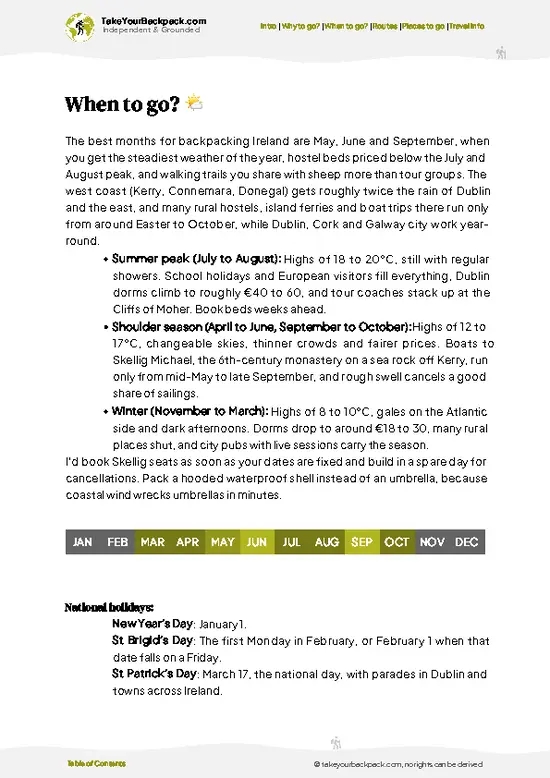
Best Months for Beach Days: June to August are the best months for beaches in Ireland, with daytime highs of roughly 17 to 21°C, the longest light (sunset near 10 pm in midsummer) and the calmest, warmest sea of the year at about 14 to 17°C. Rain falls year round, so no month is a guarantee, but the east and southeast are drier than the west. Dublin and Wexford see roughly half the annual rainfall of the Atlantic counties.

Shoulder Seasons: May and September are the smart picks. Temperatures run around 13 to 17°C, crowds thin out, and accommodation drops noticeably from July and August levels, often by 20 to 30 percent. Spring brings the best chance of crisp, dry spells, while September can hold onto settled weather and a sea still warmed by summer. Surfers prefer September to November, when … read more 👉
Best Months for Beach Days: June to August are the best months for beaches in Ireland, with daytime highs of roughly 17 to 21°C, the longest light (sunset near 10 pm in midsummer) and the calmest, warmest sea of the year at about 14 to 17°C. Rain falls year round, so no month is a guarantee, but the east and southeast are drier than the west. Dublin and Wexford see roughly half the annual rainfall of the Atlantic counties.

Shoulder Seasons: May and September are the smart picks. Temperatures run around 13 to 17°C, crowds thin out, and accommodation drops noticeably from July and August levels, often by 20 to 30 percent. Spring brings the best chance of crisp, dry spells, while September can hold onto settled weather and a sea still warmed by summer. Surfers prefer September to November, when swells strengthen and water sits near 14 to 15°C.

Peak Periods and Winter: Peak pressure falls on school holidays and the August bank holiday weekend, when popular beach towns in Kerry, Clare, Donegal and Sligo fill up and rooms need booking weeks ahead. Winter brings gales, 6 to 9°C air and many seasonal hostels, cafes and surf schools closed from October to March. The coast is dramatic then, but the sunbathing plan is, let's say, ambitious.

beach hoppingTips for Visiting Multiple Destinations

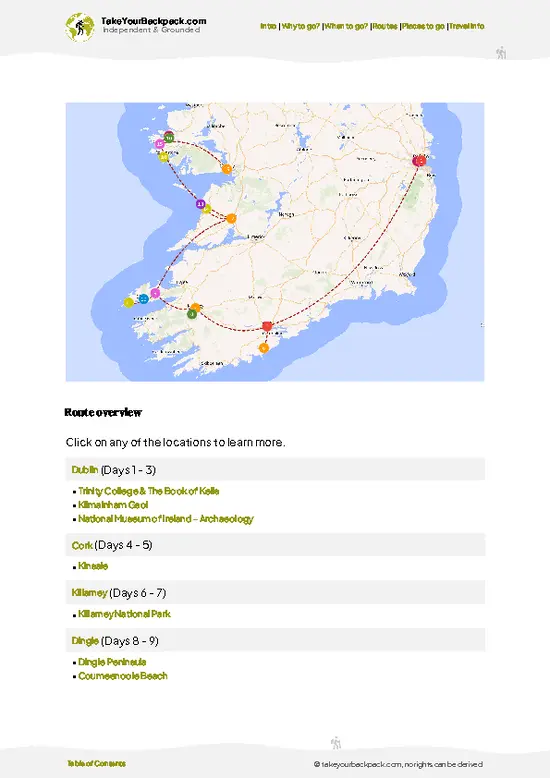
How Long to Allow: A trip combining several beaches in Ireland works best over 7 to 14 days, because distances look small on the map and behave like something else once the roads narrow. Regions cluster naturally. The northwest (Donegal and Sligo) links together, as do the west (Clare, Galway and Mayo) and the southwest (Kerry and West Cork). The east and southeast (Dublin to Wexford) can be done on trains and buses from Dublin.

Direction and Pacing: Traveling north to south along the Atlantic coast puts the prevailing wind and road signage in your favor and ends near Cork or Shannon airports for onward flights. Allow one to two nights per stop. Allow 2 to 4 hours between neighboring regions, and 5 to 7 hours for longer jumps such as Donegal to Kerry. Buses connect main towns like Galway, … read more 👉
How Long to Allow: A trip combining several beaches in Ireland works best over 7 to 14 days, because distances look small on the map and behave like something else once the roads narrow. Regions cluster naturally. The northwest (Donegal and Sligo) links together, as do the west (Clare, Galway and Mayo) and the southwest (Kerry and West Cork). The east and southeast (Dublin to Wexford) can be done on trains and buses from Dublin.

Direction and Pacing: Traveling north to south along the Atlantic coast puts the prevailing wind and road signage in your favor and ends near Cork or Shannon airports for onward flights. Allow one to two nights per stop. Allow 2 to 4 hours between neighboring regions, and 5 to 7 hours for longer jumps such as Donegal to Kerry. Buses connect main towns like Galway, Sligo, Killarney and Cork, but reaching the beaches themselves often needs a car, a bike or a lift, and rural services can run just once or twice a day.

Planning Mistakes: The classic error is trusting map distances. A 60 km stretch of coast road can take two hours behind a tractor. Another is packing too many regions into a week, which turns a beach trip into a driving tour. Pick two or three regions, build in a spare day for rain, and check tide times and the last bus before leaving a town.

The ListMust-Visit beaches in Ireland

1 Keem Bay

horseshoe cove, turquoise water, steep cliffs

Descend winding roads to a sheltered bay where clear water meets grassy slopes, ideal for quiet swims and panoramic coastal walks.

ireland-beach-keem-bay
© Google |

2 Inchydoney Beach

wide tidal flats, surf breaks, island views

Experience broad, sandy expanses popular with surfers and walkers, framed by tidal channels and distant offshore islands.

ireland-beach-inchydoney-beach
© Google |

3 Curracloe Strand

endless sand, forest fringe, film location

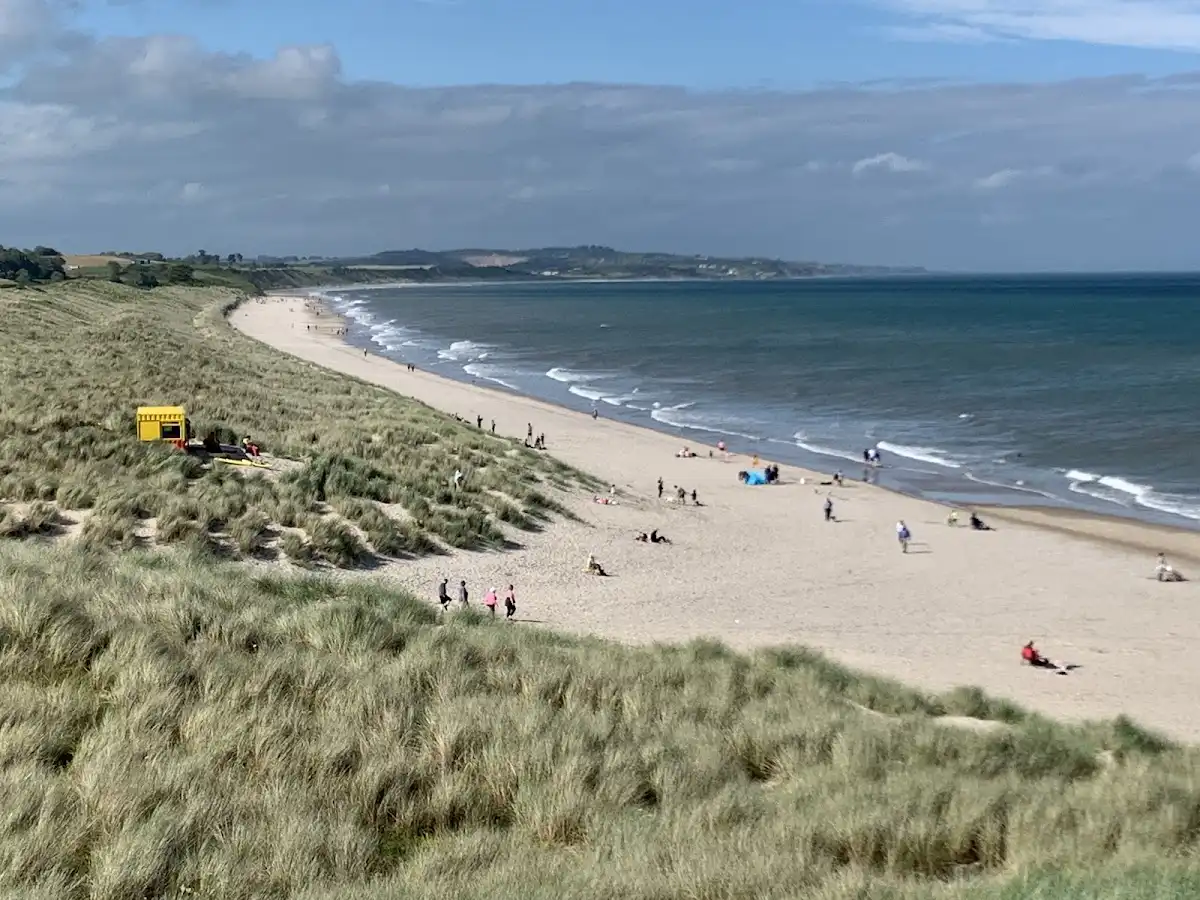
Walk for miles on fine, pale sand bordered by pine woods, with open space and cinematic views along the southeast coast.

ireland-beach-curracloe-strand
© Google |

4 Ballymastocker Bay

sheltered bay, golden arc, viewpoint access

Descend from a scenic overlook to a sheltered, crescent-shaped beach, with calm waters and easy access for relaxed days.

ireland-beach-ballymastocker-bay
© Google |

5 Dog’s Bay

white shell sand, gentle dunes, horseshoe shape

Walk along fine, pale sand formed from crushed shells, with calm shallows and a backdrop of low dunes perfect for relaxed exploration.

ireland-beach-dogs-bay
© Google |

6 Coumeenoole Beach

rugged headlands, Atlantic swell, remote access

Stand at the edge of the Dingle Peninsula, where strong waves and dramatic cliffs create a wild, photogenic setting best suited to short visits.

ireland-beach-coumeenoole-beach
© Google |

7 Ballybunion Beach

sea stacks, cliff walks, tidal caves

Explore a coastline marked by natural arches and caves, with cliff-top paths and sandy stretches exposed at low tide.

ireland-beach-ballybunion-beach
© Google | Grace O'brien

8 Barleycove Beach

floating boardwalk, shifting dunes, shallow lagoon

Follow wooden walkways over dynamic dunes to a broad, sandy bay with gentle waters and a unique, ever-changing landscape.

9 Derrynane Beach

island ruins, sheltered coves, tidal causeway

Explore sandy inlets and tidal islands, where shallow waters and historical remnants invite both swimming and low-tide discoveries.

ireland-beach-derrynane-beach
© Google |

10 Banna Strand

dune system, open sands, WWII lookout

Roam a vast, windswept beach lined with tall dunes and remnants of wartime history, offering space for long, uninterrupted walks.

ireland-beach-banna-strand
© Google |

11 Rossbeigh Beach

spit peninsula, pebble banks, mountain views

Traverse a narrow sandbar stretching into the bay, with pebbled stretches and panoramic views of the surrounding hills.

12 Tramore Beach

curved bay, amusement park, promenade

Combine seaside walks with classic amusements and a lively promenade, all set along a broad, gently curving shoreline.

13 Killiney Beach

pebble shore, suburban rail, coastal views

Access a stony beach just outside Dublin, where train lines hug the coast and elevated paths provide sweeping sea vistas.

14 Lahinch Beach

reef break, promenade, surf town

Join surfers and locals on a lively strand with a bustling promenade, known for consistent waves and easy access to town.

ireland-beach-lahinch-beach
© Google |

15 Fanore Beach

limestone backdrop, golden sand, steady surf

Cross the Burren’s edge to a windswept beach with consistent waves, ideal for surfing and observing unique coastal flora.

16 Portmarnock Beach

velvet strand, golf links, tidal flats

Enjoy expansive, firm sands ideal for running or kite flying, with views of nearby golf courses and distant headlands.

17 Silver Strand (County Mayo)

remote sands, grassy bluffs, tidal pools

Reach a secluded stretch bordered by rolling hills, where shifting tides reveal rock pools and long, empty sands for peaceful wandering.

18 Streedagh Beach

sand spit, shipwreck sites, tidal flats

Walk along a narrow, sandy strip where low tides reveal historic wrecks and wide flats, attracting history buffs and nature watchers.

19 Trawmore Bay

exposed surf, long strand, cliff backdrop

Watch Atlantic waves roll onto a lengthy, open beach, popular with surfers and backed by steep cliffs for dramatic scenery.

20 White Strand (Miltown Malbay)

small cove, rocky outcrops, sheltered swimming

Swim in calm waters protected by rocky headlands, with a compact sandy area suited to families and low-key afternoons.

Think you know Ireland?

Prove you’re a true local — uncover 10 lesser-known beaches in Ireland that locals tend to keep to themselves.
Loading the map 🌍

Expert viewTips and Advice from Travelers

How Many Beaches to Visit: Aim for four to six beaches across a trip, not a checklist of twenty. Irish beach days are weather-dependent, so having slack lets you swap a drizzly one for a dry one, and each stop deserves a few hours for walking the tideline, a coffee from a kiosk and a slow look at the horizon. Rush it and you gain a photo and lose the quiet.

Choosing by Travel Style: Surfers and hikers should favor the wild Atlantic strands, where dunes, cliffs and surf schools sit close together and the reward is empty sand and a proper workout. Social travelers and those on public transport do better at east and south coast beaches near towns, where hostels, pubs and trains are close and the sea is calmer for a first dip. Families and photographers can mix both. Cold-water swimmers, who … read more 👉
How Many Beaches to Visit: Aim for four to six beaches across a trip, not a checklist of twenty. Irish beach days are weather-dependent, so having slack lets you swap a drizzly one for a dry one, and each stop deserves a few hours for walking the tideline, a coffee from a kiosk and a slow look at the horizon. Rush it and you gain a photo and lose the quiet.

Choosing by Travel Style: Surfers and hikers should favor the wild Atlantic strands, where dunes, cliffs and surf schools sit close together and the reward is empty sand and a proper workout. Social travelers and those on public transport do better at east and south coast beaches near towns, where hostels, pubs and trains are close and the sea is calmer for a first dip. Families and photographers can mix both. Cold-water swimmers, who are increasingly common, will find sheltered coves and harbor steps with a post-swim tea waiting.

What It Costs: Beaches themselves are almost always free. Some have a car park charge of about €2 to 5, and a few busy ones use pay-and-display. Surf lessons run about €40 to 60 for a group session, and wetsuit and board hire is roughly €20 to 35 for a half day. Realistic backpacker budgets are about €50 to 80 a day with hostel dorms (€25 to 45), self-catering and public transport, or €90 to 130 if you add a rental car, fuel and some pub meals. A fish and chips lunch, around €12 to 16, eaten on a sea wall, is a budget highlight.

Safety and Local Etiquette: The Atlantic is colder and stronger than it looks. Rip currents, sudden swells and fast-rising tides catch people out, so swim only where lifeguards are posted (they usually patrol from June to early September) and read the flag signs. Red and yellow flags mark the guarded swim zone, and a black and white chequered flag is for surfers and board users. Cold shock is real, so ease in and keep a dry layer ready. Never walk onto tidal flats without checking tide times. Many beaches are used by farmers, anglers and horse riders, so close gates, keep to marked paths through dunes and take litter with you. Wild camping is tightly restricted on much of the coast, so use campsites or hostels. Dress for wind first and sunshine second, and the view stays yours either way.

✈️ The backpacker research shortcutIreland Travel Guide

An offline-friendly backpacking guide with optimized travel routes, ranked highlights, transport advice, and the best areas to stay.
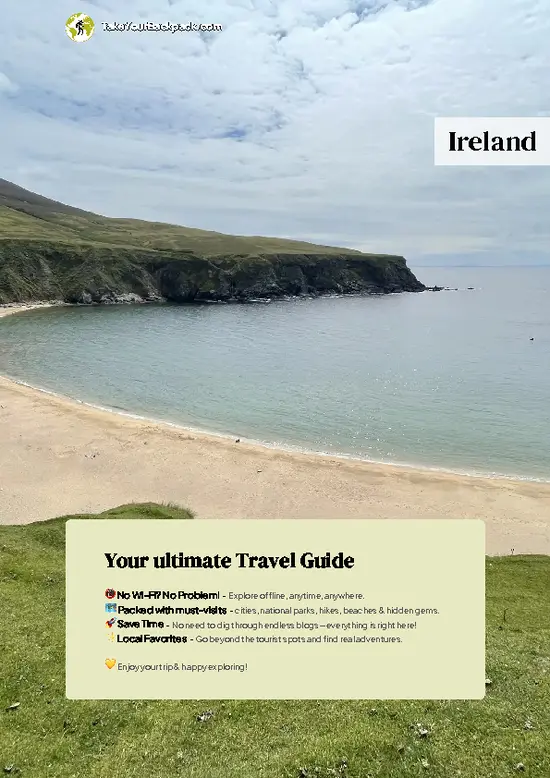
example page 0 from our offline Travel Guide for Ireland
example page 1 from our offline Travel Guide for Ireland
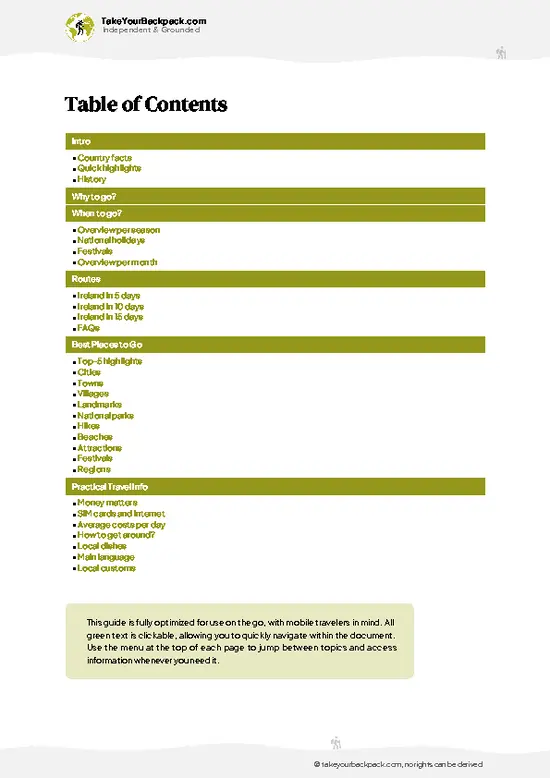
example page 2 from our offline Travel Guide for Ireland
example page 3 from our offline Travel Guide for Ireland
example page 4 from our offline Travel Guide for Ireland
example page 5 from our offline Travel Guide for Ireland
example page 6 from our offline Travel Guide for Ireland
example page 7 from our offline Travel Guide for Ireland
The digital guide (366 pages) contains:
✅ 103 highlights, ranked by travel appeal
✅ Optimized 5, 10 & 15-day travel routes
✅ Cities, national parks, landmarks, beaches
✅ How to get around
✅ Offline-friendly for travel without Wi-Fi
👉 Click to see all 30+ guide features

📅 Plan smarter in minutes, not weeks
✅ Month by month travel advice
✅ Festivals & national holidays
✅ Budget expectations

🗺️ Go to the right places, skip the overrated ones
✅ Honest pros & cons of destinations
✅ Top hikes, parks & viewpoints
✅ Lesser-known places most travelers miss
✅ Clear “worth it vs skip it” guidance

🛏️ Travel smoothly without rookie mistakes
✅ Best areas to stay
✅ Transport systems explained simply
✅ Common scams & safety advice
✅ SIM cards, money & practical tips

🌍 Understand the country, not just visit it
✅ Culture & traditions
✅ Local customs
✅ Festivals worth planning around
✅ Traveler-friendly historical context
✅ Insights that make places more meaningful

📱 Built for real travel conditions
✅ Fully downloadable PDF
✅ Works completely offline
✅ Optimized for phone use
✅ Useful in remote areas & buses
✅ Everything in one place
Stop searching, start planning
Get instant access to your full guide. 30‑day money-back guarantee.
+ Add another guide for just

By proceeding you agree to our terms.
Sent to your inbox immediately after payment • 100% Secure Checkout
Best Backpacking Travel Advisor 2025 tourism awardBest Backpacking
Travel Advisor
2025
What others say about Take Your Backpack Guides:
⭐⭐⭐⭐⭐
Fantastic, amazing amount of information!
⭐⭐⭐⭐⭐
My goodness this is amazing, it's what I've been looking for hats off too you!
⭐⭐⭐⭐⭐
I think this is absolutely BRILLIANT
⭐⭐⭐⭐
Very complete and informative. It's still missing places, but I gotta to commend you
⭐⭐⭐⭐⭐
This is truly amazing, thank you, can't wait to explore it with my kids!
⭐⭐⭐⭐⭐
Awesome resource, thank you!
⭐⭐⭐⭐⭐
This is amazing! Can't wait to explore the ones I haven't seen
⭐⭐⭐⭐
I love this! Well done, great idea.
⭐⭐⭐⭐⭐
Thanks for taking the time to make this gem!
⭐⭐⭐⭐⭐
This might be the best website I've ever seen.
⭐⭐⭐⭐⭐
Congratulations, and thank you so much for your work; it's incredibly valuable.
⭐⭐⭐⭐
In all seriousness I think you did a great job pointing out the important spots
⭐⭐⭐⭐⭐
10/10 very good
⭐⭐⭐⭐⭐
As someone who's only just starting to visit regularly this is awesome, thank you.
⭐⭐⭐⭐
Thank you very much! I'm going to visit my dad, it's going to be very useful!
⭐⭐⭐⭐⭐
This is really cool! We'll be travelling for the first time and this definitely come in handy.
⭐⭐⭐⭐⭐
You are now our minister of culture, congratulations 👨‍💼
⭐⭐⭐⭐⭐
Just wanted to tell you that this is a pearl! Going to follow your recommendations.
⭐⭐⭐⭐⭐
This is so cool. I'll definitely be using the resource for my travels soon.
⭐⭐⭐⭐⭐
This is very impressive! Good work.
⭐⭐⭐⭐⭐
This is an amazing and informative site. Very well done!

🛏️ Where to stay?Best Stay Options in Ireland

Hostels are easy to find in Ireland, with dorm beds running roughly €30 to €60 a night in Dublin and €20 to €35 in smaller cities, plus a network of independent hostels along the west coast. In Dublin, Temple Bar puts you on top of the pubs and walkable to Trinity College, though weekend noise and premium prices are part of the deal, while the area around O’Connell Street and Smithfield north of the Liffey costs less and sits near the Busáras coach station but feels rougher late at night. Galway’s Latin Quarter is compact, lively and full of live music until late, and central Cork around St Patrick’s Street keeps you close to the English Market and the pubs without Dublin prices.

If you enjoy … read more 👉
Hostels are easy to find in Ireland, with dorm beds running roughly €30 to €60 a night in Dublin and €20 to €35 in smaller cities, plus a network of independent hostels along the west coast. In Dublin, Temple Bar puts you on top of the pubs and walkable to Trinity College, though weekend noise and premium prices are part of the deal, while the area around O’Connell Street and Smithfield north of the Liffey costs less and sits near the Busáras coach station but feels rougher late at night. Galway’s Latin Quarter is compact, lively and full of live music until late, and central Cork around St Patrick’s Street keeps you close to the English Market and the pubs without Dublin prices.

If you enjoy meeting fellow travelers, consider choosing hostels with high ratings for atmosphere. On the other hand, if you prefer having your own space, a hotel might be a better option.

IrelandWhere to Go Next

👋 Meet the founderWho’s Behind Take Your Backpack?

Johan, backpacker and founder of TakeYourBackpackHi, I’m Johan (Netherlands 🇳🇱), the creator of TakeYourBackpack. Over the past 3 decades, I’ve backpacked through 90+ countries across six continents, gaining extensive experience with independent travel, long-term trips, and overland routes.

This site is built on a combination of firsthand travel experience and carefully curated insights from other backpackers. Many guides are based on places I’ve personally visited, while others bring together tips, observations, and practical advice shared by trusted travelers I’ve met along the way.

The goal is to provide realistic, experience-driven guidance — not generic itineraries — so you can explore destinations with better context, clearer expectations, and more confidence.