×

Ireland🇮🇪 | best regionsWhere to Find the 5 Best regions in Ireland

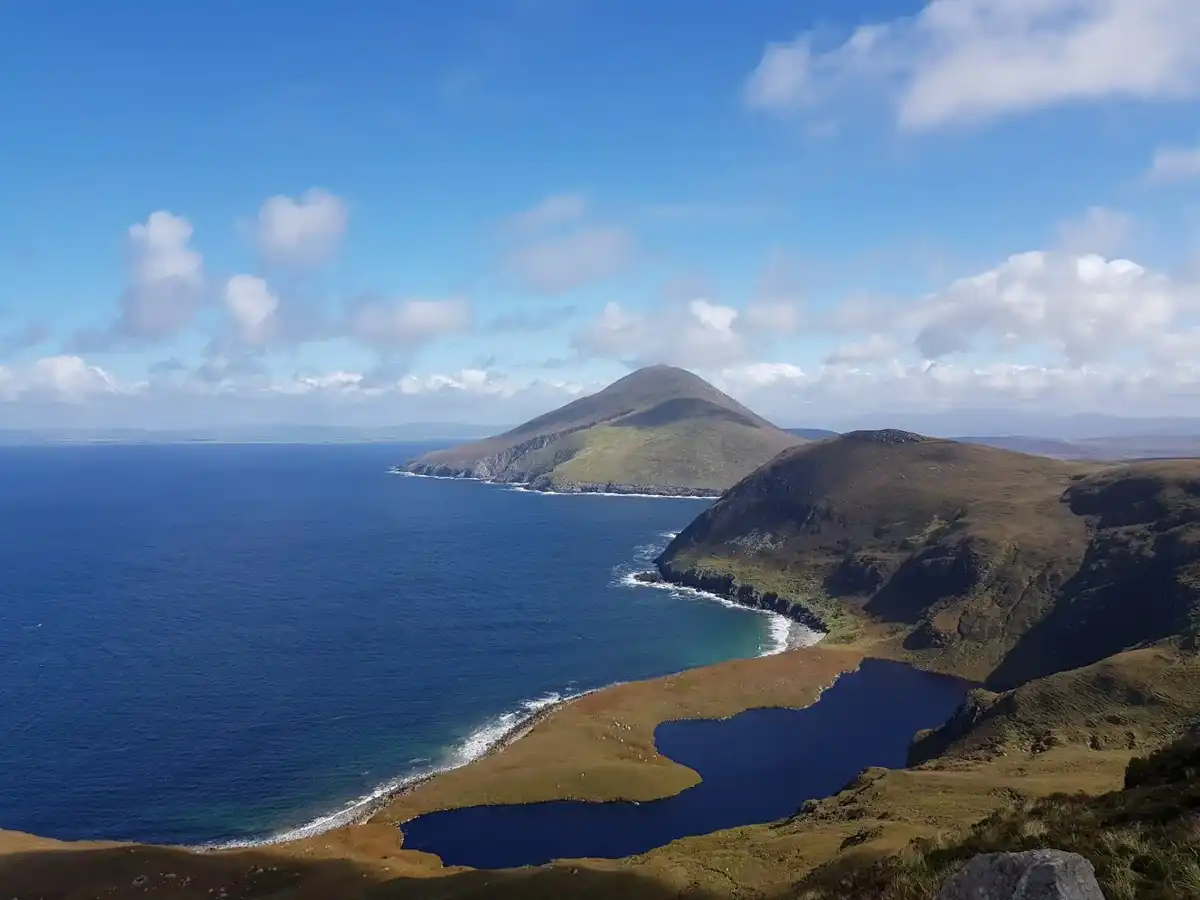
Ireland is small enough to cross by bus in a day, yet the regions feel like they argue about everything, starting with the weather. The Atlantic west is wild, slow and wet, with distances that look short on a map and take twice as long on a road shared with sheep. The east is where the trains, hostels and Dublin prices live. The north and the midlands sit in between, cheaper and quieter, with fewer tour coaches. For backpacking or any independent travel, the real choice is between easy access and elbow room. Pick which one you want, then budget for the rain either way.

By Johan Kruseman 🇳🇱 | Updated October 18, 2026
Explore the best cities in Ireland

Why go?Understanding Their Importance

Ireland suits regional travel because it packs sharply different landscapes, accents and histories onto an island roughly 480 kilometers long. The Atlantic coast takes the weather first, the glaciated uplands and old bog country shape the interior, and centuries of Gaelic, Norman and British influence left each area with its own place names, music and pace. Irish is still a living Gaeltacht language in pockets of the west and southwest, and road signs there can show only the Irish name.

The catch is infrastructure. The rail network fans out from Dublin like spokes, so crossing between regions often means going back through the hub or switching to a bus. Rural roads are narrow, rarely straight and speed limits are optimistic. Public transport in the west can mean one bus a day, sometimes none … read more 👉
Ireland suits regional travel because it packs sharply different landscapes, accents and histories onto an island roughly 480 kilometers long. The Atlantic coast takes the weather first, the glaciated uplands and old bog country shape the interior, and centuries of Gaelic, Norman and British influence left each area with its own place names, music and pace. Irish is still a living Gaeltacht language in pockets of the west and southwest, and road signs there can show only the Irish name.

The catch is infrastructure. The rail network fans out from Dublin like spokes, so crossing between regions often means going back through the hub or switching to a bus. Rural roads are narrow, rarely straight and speed limits are optimistic. Public transport in the west can mean one bus a day, sometimes none on Sundays.

The island also holds two jurisdictions. The Republic uses euros and Northern Ireland uses pounds sterling, so a short border hop means a second wallet. Weather can change four times before lunch, so pack layers and treat sunshine as a bonus. Travelers who accept the slower rhythm, and the pub conversation that comes with it, get the best of the place.
Our Approach to Ranking
The list of best regions in Ireland is created based on landscapes, local culture, attractions, vibes, and overall appeal. If you feel a region is missing in this list, please let us know.

When to go?Best Time to Visit Ireland for regions

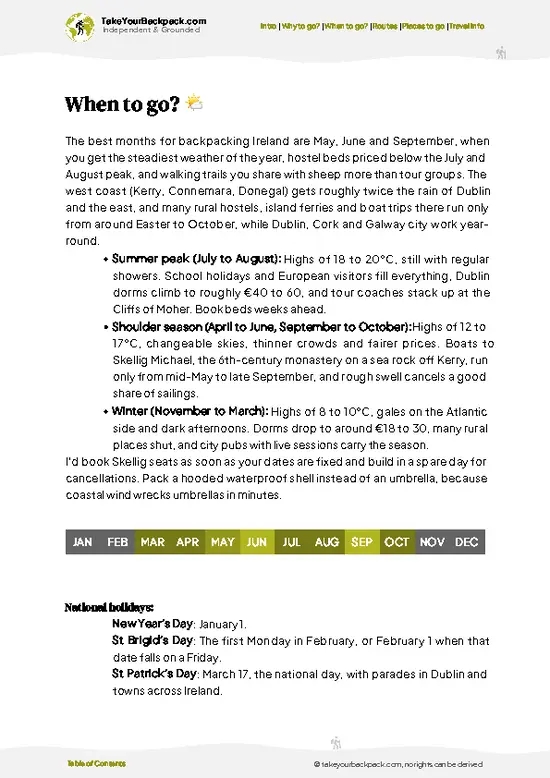
Best months and weather: The best months for exploring Ireland’s regions are May to September, when days run 16 to 17 hours at midsummer and highs sit around 15 to 20°C. Rain is not seasonal so much as constant: most areas see rain on 150 to 225 days a year, with the west wettest at roughly 1,200 to 2,500 mm annually and the east drier at about 750 to 1,000 mm. Packing a waterproof is not pessimism, it is local etiquette.
Shoulder seasons and peak crowds: April, May and September to October are the shoulder seasons, with highs of 10 to 16°C, fewer coaches and hostel dorm beds often 15 to 30 percent cheaper than July and August. Spring brings long light and lambs; autumn brings calmer seas and golden bracken. July and August push prices up, particularly in the west and on the southwest coast, … read more 👉
Best months and weather: The best months for exploring Ireland’s regions are May to September, when days run 16 to 17 hours at midsummer and highs sit around 15 to 20°C. Rain is not seasonal so much as constant: most areas see rain on 150 to 225 days a year, with the west wettest at roughly 1,200 to 2,500 mm annually and the east drier at about 750 to 1,000 mm. Packing a waterproof is not pessimism, it is local etiquette.
Shoulder seasons and peak crowds: April, May and September to October are the shoulder seasons, with highs of 10 to 16°C, fewer coaches and hostel dorm beds often 15 to 30 percent cheaper than July and August. Spring brings long light and lambs; autumn brings calmer seas and golden bracken. July and August push prices up, particularly in the west and on the southwest coast, and rooms in small towns can sell out weeks ahead around festivals and bank holiday weekends.
Winter closures: November to March means highs of 5 to 9°C, daylight of about 7.5 hours in December and storms that cancel ferries. Many seasonal hostels, island boats and coastal attractions in the west close from October to Easter. Cities stay open, and pubs keep fires going, which is a fair consolation.

region hoppingTips for Visiting Multiple Destinations

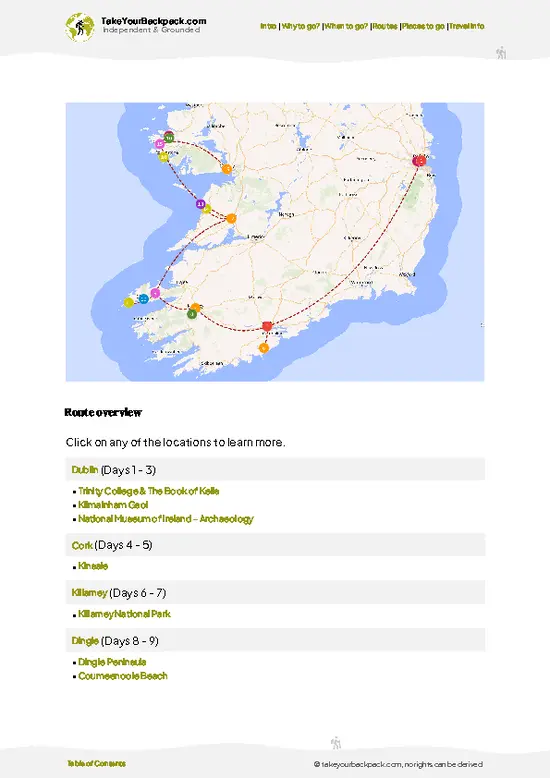
How many days to plan: A trip combining several regions in Ireland needs 10 to 14 days, and 7 days is the practical minimum for two or three. Ireland looks tiny on a map, but a 250-kilometer drive can take 4 to 5 hours once you meet a tractor or a village with one street and four speed bumps.
Grouping and direction: Cluster regions along the coast rather than zigzagging across the middle. A loop starting in Dublin, running south, then up the Atlantic side and finishing in the north works well, and a clockwise loop keeps the sea on your side of the road in a hire car. Dublin to Cork by train takes about 2.5 hours, Cork to Galway by bus 4 to 5 hours, and Galway to Belfast about 5 to 6 hours by bus or train via Dublin. Galway, Cork and Limerick make useful transport hubs for the west and south. … read more 👉
How many days to plan: A trip combining several regions in Ireland needs 10 to 14 days, and 7 days is the practical minimum for two or three. Ireland looks tiny on a map, but a 250-kilometer drive can take 4 to 5 hours once you meet a tractor or a village with one street and four speed bumps.
Grouping and direction: Cluster regions along the coast rather than zigzagging across the middle. A loop starting in Dublin, running south, then up the Atlantic side and finishing in the north works well, and a clockwise loop keeps the sea on your side of the road in a hire car. Dublin to Cork by train takes about 2.5 hours, Cork to Galway by bus 4 to 5 hours, and Galway to Belfast about 5 to 6 hours by bus or train via Dublin. Galway, Cork and Limerick make useful transport hubs for the west and south.
Time per stop and common mistakes: Give each region 2 to 4 nights; one night means mostly watching the road. The usual mistakes are cramming five areas into a week, trusting the map’s distances and relying on rural buses without checking the Sunday timetable. Instead, choose fewer bases, check schedules a day ahead and allow a buffer day for weather. A rainy day in a pub is a legitimate itinerary item.

The ListMust-Visit regions in Ireland

1 Wild Atlantic Way

coastal drive, surf beaches, rugged headlands

Follow a winding route along Ireland’s western edge, passing remote beaches, dramatic promontories, and towns shaped by the ocean’s force.

ireland-region-wild-atlantic-way
© Google | Slobodan Popović

2 Dingle Peninsula

cliffside roads, fishing villages, prehistoric sites

Travel narrow lanes past Atlantic cliffs, encounter working harbors, and discover early Christian relics amid rolling farmland and sea views.

3 Aran Islands

windswept limestone, Gaelic language, stone forts

Experience daily life shaped by Atlantic weather, traditional Irish spoken in homes, and ancient ruins scattered across stark, open landscapes.

ireland-region-aran-islands
© Google | Louis Thd69

4 County Donegal

sea cliffs, Gaeltacht villages, rugged peninsulas

Drive winding coastal roads, hear Irish spoken in daily conversation, and experience landscapes shaped by Atlantic winds and remote traditions.

ireland-region-county-donegal
© Google |

5 Achill Island

multiple beaches, rugged cliffs, remote villages

Venture across a windswept island dotted with varied beaches, dramatic cliffs, and small settlements offering a sense of isolation.

ireland-region-achill-island
© Google | Stephen Byrne
Loading the map 🌍

Expert viewTips and Advice from Travelers

How many regions to visit: Three regions is the number I would advise for a trip of 10 to 14 days, and two if you have a week. Irish roads and buses move at a gentler pace than the map suggests, so each extra region costs half a day of sitting on a bus watching hedgerows pass. With three, you get a mix of landscape and one proper city night out, with time left for a long lunch that turns into an afternoon.
Choosing between kinds of regions: Pick by travel style. If you rely on public transport and want hostels, social dorms and live music, favor the east and the larger southern and western cities, where trains and frequent buses run. If you want coast, hiking and quiet, choose the Atlantic side and accept slower connections, fewer shops and long evenings in a pub where the fire, the stout and … read more 👉
How many regions to visit: Three regions is the number I would advise for a trip of 10 to 14 days, and two if you have a week. Irish roads and buses move at a gentler pace than the map suggests, so each extra region costs half a day of sitting on a bus watching hedgerows pass. With three, you get a mix of landscape and one proper city night out, with time left for a long lunch that turns into an afternoon.
Choosing between kinds of regions: Pick by travel style. If you rely on public transport and want hostels, social dorms and live music, favor the east and the larger southern and western cities, where trains and frequent buses run. If you want coast, hiking and quiet, choose the Atlantic side and accept slower connections, fewer shops and long evenings in a pub where the fire, the stout and a stranger’s story are the entertainment. If you want history without crowds, the north and midlands are cheaper and emptier, with castles and monastic ruins you may have to yourself. A hire car opens the west, but the narrow lanes and wandering livestock demand patience.
What it costs: Budget €55 to 90 a day on a backpacker budget, covering a dorm bed at €25 to 40, a supermarket or café meal at €10 to 18 and local buses. Midrange travelers should plan €120 to 180. Dublin sits at the top of those ranges, rural areas at the bottom. Attraction entry runs €8 to 20, with big sites such as the Cliffs of Moher and Guinness Storehouse at the higher end. Day tours cost €30 to 70, intercity buses €10 to 30 and a hire car €40 to 80 a day plus fuel. For a 10 to 14 day trip, plan roughly €700 to 1,300 on the ground, excluding flights. A pint is €6 to 7.50, which is its own line item.
Safety and etiquette: Ireland is among the safest countries in Europe for backpackers. Petty theft occurs in Dublin, so keep your phone out of back pockets and bags zipped on crowded streets. The real hazards are weather and water: cliff edges in wind, tidal flats, slippery rock and sudden fog on upland trails. Carry a waterproof layer and tell your hostel where you are walking. Drive on the left, give sheep right of way and slow down on single-track roads, using passing bays.
Cultural notes: Chat is part of the transaction, so a friendly hello at a counter or in a pub brings recommendations that no guidebook has. Rounds are standard in groups, so join in or politely step out. Tipping is modest, around 10 percent in sit-down restaurants. In Northern Ireland, avoid casual comments about politics or flags, and listen before offering an opinion. Border crossings are invisible, but remember pounds there and euros in the Republic.

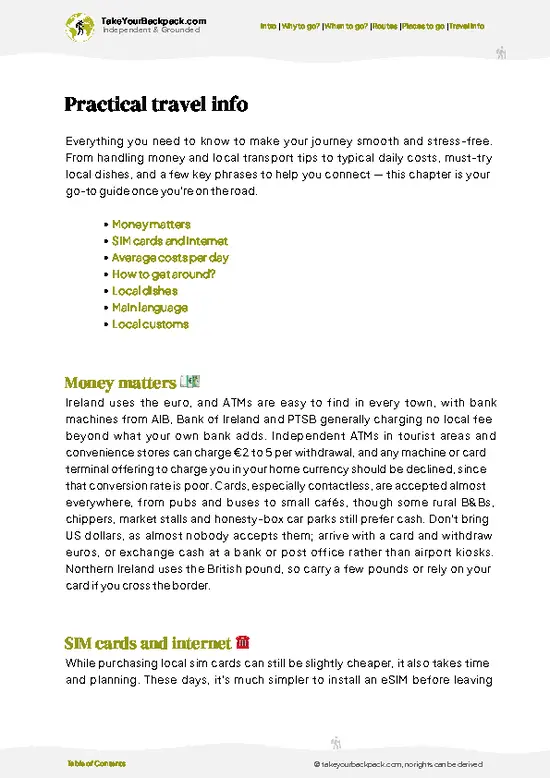
✈️ The backpacker research shortcutIreland Travel Guide

An offline-friendly backpacking guide with optimized travel routes, ranked highlights, transport advice, and the best areas to stay.
example page 0 from our offline Travel Guide for Ireland
example page 1 from our offline Travel Guide for Ireland
example page 2 from our offline Travel Guide for Ireland
example page 3 from our offline Travel Guide for Ireland
example page 4 from our offline Travel Guide for Ireland
example page 5 from our offline Travel Guide for Ireland
example page 6 from our offline Travel Guide for Ireland
example page 7 from our offline Travel Guide for Ireland
The digital guide (366 pages) contains:
✅ 103 highlights, ranked by travel appeal
✅ Optimized 5, 10 & 15-day travel routes
✅ Cities, national parks, landmarks, beaches
✅ How to get around
✅ Offline-friendly for travel without Wi-Fi
👉 Click to see all 30+ guide features

📅 Plan smarter in minutes, not weeks
✅ Month by month travel advice
✅ Festivals & national holidays
✅ Budget expectations

🗺️ Go to the right places, skip the overrated ones
✅ Honest pros & cons of destinations
✅ Top hikes, parks & viewpoints
✅ Lesser-known places most travelers miss
✅ Clear “worth it vs skip it” guidance

🛏️ Travel smoothly without rookie mistakes
✅ Best areas to stay
✅ Transport systems explained simply
✅ Common scams & safety advice
✅ SIM cards, money & practical tips

🌍 Understand the country, not just visit it
✅ Culture & traditions
✅ Local customs
✅ Festivals worth planning around
✅ Traveler-friendly historical context
✅ Insights that make places more meaningful

📱 Built for real travel conditions
✅ Fully downloadable PDF
✅ Works completely offline
✅ Optimized for phone use
✅ Useful in remote areas & buses
✅ Everything in one place
Stop searching, start planning
Get instant access to your full guide. 30‑day money-back guarantee.
+ Add another guide for just

By proceeding you agree to our terms.
Sent to your inbox immediately after payment • 100% Secure Checkout
Best Backpacking Travel Advisor 2025 tourism awardBest Backpacking
Travel Advisor
2025
What others say about Take Your Backpack Guides:
⭐⭐⭐⭐⭐
Fantastic, amazing amount of information!
⭐⭐⭐⭐⭐
My goodness this is amazing, it's what I've been looking for hats off too you!
⭐⭐⭐⭐⭐
I think this is absolutely BRILLIANT
⭐⭐⭐⭐
Very complete and informative. It's still missing places, but I gotta to commend you
⭐⭐⭐⭐⭐
This is truly amazing, thank you, can't wait to explore it with my kids!
⭐⭐⭐⭐⭐
Awesome resource, thank you!
⭐⭐⭐⭐⭐
This is amazing! Can't wait to explore the ones I haven't seen
⭐⭐⭐⭐
I love this! Well done, great idea.
⭐⭐⭐⭐⭐
Thanks for taking the time to make this gem!
⭐⭐⭐⭐⭐
This might be the best website I've ever seen.
⭐⭐⭐⭐⭐
Congratulations, and thank you so much for your work; it's incredibly valuable.
⭐⭐⭐⭐
In all seriousness I think you did a great job pointing out the important spots
⭐⭐⭐⭐⭐
10/10 very good
⭐⭐⭐⭐⭐
As someone who's only just starting to visit regularly this is awesome, thank you.
⭐⭐⭐⭐
Thank you very much! I'm going to visit my dad, it's going to be very useful!
⭐⭐⭐⭐⭐
This is really cool! We'll be travelling for the first time and this definitely come in handy.
⭐⭐⭐⭐⭐
You are now our minister of culture, congratulations 👨‍💼
⭐⭐⭐⭐⭐
Just wanted to tell you that this is a pearl! Going to follow your recommendations.
⭐⭐⭐⭐⭐
This is so cool. I'll definitely be using the resource for my travels soon.
⭐⭐⭐⭐⭐
This is very impressive! Good work.
⭐⭐⭐⭐⭐
This is an amazing and informative site. Very well done!

🛏️ Where to stay?Accommodation Highlights

Hostels are easy to find in Ireland, with dorm beds running roughly €30 to €60 a night in Dublin and €20 to €35 in smaller cities, plus a network of independent hostels along the west coast. In Dublin, Temple Bar puts you on top of the pubs and walkable to Trinity College, though weekend noise and premium prices are part of the deal, while the area around O’Connell Street and Smithfield north of the Liffey costs less and sits near the Busáras coach station but feels rougher late at night. Galway’s Latin Quarter is compact, lively and full of live music until late, and central Cork around St Patrick’s Street keeps you close to the English Market and the pubs without Dublin prices.

If you enjoy … read more 👉
Hostels are easy to find in Ireland, with dorm beds running roughly €30 to €60 a night in Dublin and €20 to €35 in smaller cities, plus a network of independent hostels along the west coast. In Dublin, Temple Bar puts you on top of the pubs and walkable to Trinity College, though weekend noise and premium prices are part of the deal, while the area around O’Connell Street and Smithfield north of the Liffey costs less and sits near the Busáras coach station but feels rougher late at night. Galway’s Latin Quarter is compact, lively and full of live music until late, and central Cork around St Patrick’s Street keeps you close to the English Market and the pubs without Dublin prices.

If you enjoy meeting fellow travelers, consider choosing hostels with high ratings for atmosphere. On the other hand, if you prefer having your own space, a hotel might be a better option.

IrelandSee More of Ireland

👋 Meet the founderWho’s Behind Take Your Backpack?

Johan, backpacker and founder of TakeYourBackpackHi, I’m Johan (Netherlands 🇳🇱), the creator of TakeYourBackpack. Over the past 3 decades, I’ve backpacked through 90+ countries across six continents, gaining extensive experience with independent travel, long-term trips, and overland routes.

This site is built on a combination of firsthand travel experience and carefully curated insights from other backpackers. Many guides are based on places I’ve personally visited, while others bring together tips, observations, and practical advice shared by trusted travelers I’ve met along the way.

The goal is to provide realistic, experience-driven guidance — not generic itineraries — so you can explore destinations with better context, clearer expectations, and more confidence.