×

Ireland🇮🇪 | best festivalsWhere to Find the 12 Best festivals in Ireland

Festivals in Ireland run on a simple formula: a stage, a pub, and weather that treats both as optional. The country is small, so a music weekend in Galway and a trad session in a Clare village sit a couple of hours apart, yet they feel like different trips. Big city events bring crowds and inflated beds, while small-town gatherings in the west offer free sessions and landlords who will adopt you. For backpacking and independent travel, the ease of access varies sharply: Dublin, Cork and Galway are simple, rural Donegal and Kerry demand patience with buses. Pack a rain jacket regardless.

By Johan Kruseman 🇳🇱 | Updated October 18, 2026
Explore the best regions in Ireland

Why go?Understanding Their Importance

Ireland suits festivals because gathering is a habit here, not an occasion. Music, storytelling and sport were passed along in kitchens, pubs and village halls long before anyone sold a ticket, and that is why even large events keep a local, participatory feel. Fairs and feast days tied to parishes, a strong Gaelic language and music revival, and a literary tradition that gave a small island several Nobel laureates all feed a calendar that runs from January to December. The compact size helps too: few festival towns sit more than three or four hours from a major city.

The other side is the climate. The Atlantic delivers rain in every month, so outdoor events mean mud, wind and ponchos worn with great dignity. Accommodation is the real pinch point. Small towns have limited beds, and a single … read more 👉
Ireland suits festivals because gathering is a habit here, not an occasion. Music, storytelling and sport were passed along in kitchens, pubs and village halls long before anyone sold a ticket, and that is why even large events keep a local, participatory feel. Fairs and feast days tied to parishes, a strong Gaelic language and music revival, and a literary tradition that gave a small island several Nobel laureates all feed a calendar that runs from January to December. The compact size helps too: few festival towns sit more than three or four hours from a major city.

The other side is the climate. The Atlantic delivers rain in every month, so outdoor events mean mud, wind and ponchos worn with great dignity. Accommodation is the real pinch point. Small towns have limited beds, and a single festival weekend can fill every hostel and B&B for miles, with prices jumping accordingly. Public transport thins out fast beyond the main intercity lines, and late-night buses to rural venues are often nonexistent. Alcohol is woven into the social side, though plenty of events are family-friendly and daytime-focused. Book early, expect the weather to have opinions, and treat the informal sessions in pubs as part of the program.
Evaluating the Top Choices
The list of best festivals in Ireland is created based on energy, traditions, crowd experience, activities, and overall excitement. If you feel a festival is missing in this list, please let us know.

When to go?Best Time to Visit Ireland for festivals

Best months and weather: The best months for festivals in Ireland are May to September, when daytime highs sit around 15 to 20°C and daylight stretches past 10 pm in June, so outdoor stages run late and the schedule actually makes sense. Rain does not take a summer holiday. Expect roughly 8 to 15 wet days a month even in July, with the west coast (Galway, Mayo, Kerry, Donegal) wetter than the drier southeast around Wexford and Waterford. Pack layers and accept that sunshine is a rumor with good PR.
Shoulder seasons and peak crowds: April, early May, late September and October are the shoulder months, with highs of 10 to 15°C, fewer tourists and beds often 20 to 40 percent cheaper than July and August. Many arts, literary and trad music events cluster here, and indoor venues make the weather … read more 👉
Best months and weather: The best months for festivals in Ireland are May to September, when daytime highs sit around 15 to 20°C and daylight stretches past 10 pm in June, so outdoor stages run late and the schedule actually makes sense. Rain does not take a summer holiday. Expect roughly 8 to 15 wet days a month even in July, with the west coast (Galway, Mayo, Kerry, Donegal) wetter than the drier southeast around Wexford and Waterford. Pack layers and accept that sunshine is a rumor with good PR.
Shoulder seasons and peak crowds: April, early May, late September and October are the shoulder months, with highs of 10 to 15°C, fewer tourists and beds often 20 to 40 percent cheaper than July and August. Many arts, literary and trad music events cluster here, and indoor venues make the weather irrelevant. July and August are peak: hostel dorms in Dublin, Galway and Killarney commonly run €30 to 55 a night, and festival weekends push that higher. The bank holiday weekends (early May, June, August and late October) fill transport and rooms across the whole country.
Winter: November to March brings highs of 5 to 9°C, short days and some seasonal closures in coastal towns, though cities keep a lively indoor calendar around Christmas and St. Patrick’s Day in March.

festival hoppingTips for Visiting Multiple Destinations

How long and in what order: A trip combining several festivals in Ireland needs 10 to 14 days, which is enough to cover two or three regions without living on a bus. The cleanest loop runs Dublin, then west to Galway, then south through Clare and Kerry to Cork, with the east coast as a final or opening stretch. Travel clockwise or counterclockwise based on the festival dates, not on tradition, since the calendar should drive the map and not the other way around.
Time per stop and transfers: Plan 2 to 3 nights in a city or major festival town and 1 to 2 in a village. Dublin to Galway takes about 2.5 hours by bus or train, Galway to Killarney 4 to 5 hours, Killarney to Cork around 2 hours, and Cork to Dublin roughly 2.5 to 3 hours by train. Intercity buses and trains are reliable; rural links … read more 👉
How long and in what order: A trip combining several festivals in Ireland needs 10 to 14 days, which is enough to cover two or three regions without living on a bus. The cleanest loop runs Dublin, then west to Galway, then south through Clare and Kerry to Cork, with the east coast as a final or opening stretch. Travel clockwise or counterclockwise based on the festival dates, not on tradition, since the calendar should drive the map and not the other way around.
Time per stop and transfers: Plan 2 to 3 nights in a city or major festival town and 1 to 2 in a village. Dublin to Galway takes about 2.5 hours by bus or train, Galway to Killarney 4 to 5 hours, Killarney to Cork around 2 hours, and Cork to Dublin roughly 2.5 to 3 hours by train. Intercity buses and trains are reliable; rural links often run only a few times a day, or not at all on Sundays.
Planning mistakes: The classic error is cramming five regions into a week and discovering that Irish roads are narrow, winding and shared with sheep. Allow a buffer day for every long transfer. Another is booking festival-weekend beds late, so reserve early and consider a base in a larger town with a shuttle or bus link instead of sleeping on the venue’s doorstep. Tight same-day connections after late finishes also fail, because last buses leave early. Stay the night and travel in the morning.

The ListMust-Visit festivals in Ireland

1 St. Patrick’s Day

parades, citywide celebrations, marching bands, public festivities

Join crowds lining the streets for processions, music, and communal gatherings that mark Ireland’s national holiday in every town and city.

2 Electric Picnic

music stages, art installations, boutique camping, festival fields

Roam between music acts, interactive art, and themed campsites in a sprawling outdoor setting that attracts diverse crowds.

3 Galway International Arts Festival

street spectacle, visual installations, theatre, citywide events

Immerse yourself in a city transformed by large-scale art, outdoor performances, and a packed schedule of creative events.

4 Cork Jazz Festival

live jazz, citywide venues, international acts, late-night sessions

Follow the sound of brass and improvisation through bars, clubs, and concert halls as Cork fills with musicians and fans.

5 Dingle Food Festival

harbor town, tasting trails, seafood, artisan producers

Sample local specialties along winding streets, meet producers, and discover regional flavors in a compact, walkable setting.

6 Lisdoonvarna Matchmaking Festival

rural village, traditional music, dance halls, matchmaking sessions

Join locals and visitors for social dances, live bands, and matchmaking traditions that draw singles and spectators from across Ireland.

7 Fleadh Cheoil

traditional Irish music, competitions, pub sessions, youth performers

Hear spontaneous music in streets and pubs, watch skilled musicians compete, and experience the energy of Ireland’s largest traditional music event.

8 Wexford Festival Opera

opera performances, restored theatre, rare works, international casts

Attend lesser-known operas staged in an intimate theatre, where dedicated audiences and visiting artists create a focused cultural experience.

9 Dublin Fringe Festival

experimental theatre, new writing, pop-up venues, multidisciplinary shows

Discover original performances in unconventional spaces, where artists test boundaries and audiences encounter unexpected forms of storytelling.

10 Kilkenny Arts Festival

medieval venues, visual art, classical music, literary events

Experience performances and exhibitions in centuries-old spaces, where international artists and local talent create a lively, immersive atmosphere.

11 Puck Fair

mountain goat crowning, street stalls, rural fairground, livestock market

Witness the crowning of a wild goat, browse open-air markets, and mingle with crowds at one of Ireland’s oldest rural gatherings.

12 Cat Laughs Comedy Festival

stand-up shows, Irish comedians, intimate venues, late-night gigs

Catch established and emerging comics in small rooms, with a packed schedule that rewards those who seek out lesser-known acts.

Loading the map 🌍

Expert viewTips and Advice from Travelers

How many to visit: Two or three festivals is the right number for a backpacker, spread across a trip of one to two weeks. More than that and you spend the budget on beds and the energy on getting between them. Each event then gets a full weekend, plus the unscheduled bonus of pub sessions in the towns around it. You get time to actually hear the music instead of just queuing for it.
Which kind for your travel style: On a tight budget, choose free or low-cost town festivals with street programming and pub sessions, where wandering between venues costs nothing but patience. If you want a big lineup, a multi-day music event brings camping, mud and headliners, and the field at 2 am is a good place to realize your boots are not waterproof. For culture-minded travelers, literary, trad music and arts … read more 👉
How many to visit: Two or three festivals is the right number for a backpacker, spread across a trip of one to two weeks. More than that and you spend the budget on beds and the energy on getting between them. Each event then gets a full weekend, plus the unscheduled bonus of pub sessions in the towns around it. You get time to actually hear the music instead of just queuing for it.
Which kind for your travel style: On a tight budget, choose free or low-cost town festivals with street programming and pub sessions, where wandering between venues costs nothing but patience. If you want a big lineup, a multi-day music event brings camping, mud and headliners, and the field at 2 am is a good place to realize your boots are not waterproof. For culture-minded travelers, literary, trad music and arts festivals in small western towns offer talks, workshops and sessions in rooms holding 50 people. City events suit those who want comfort and transport on tap.
What it costs: Budget €60 to 90 a day for a backpacker in Ireland, rising to €100 to 140 on a festival weekend because beds jump in price. Dorms run €25 to 55 a night, pints €6 to 7.50 in most towns and more in Dublin, and a pub meal €15 to 22. Entry runs from free for many town events to €10 to 40 for single-day concerts and €200 to 350 for major multi-day camping festivals. Add €10 to 40 for buses to and from venues, and €15 to 25 for a camping pitch where it is not included.
Safety and culture: Ireland is safe, and the usual risks are pickpockets in crowded Dublin and Galway streets and wet-weather misery. Keep phones and wallets in a front pocket in a packed crowd. Drink spiking is rare but real at big events, so keep your glass in hand. Weather is the more common hazard: rain gear, a dry bag and warm layers matter more than any other item you will bring.

In pubs, rounds are the rule. If someone buys you a drink, you buy the next, and skipping it is the one social crime that gets noticed. During trad sessions, stay quiet while the musicians play, sit back from the circle unless invited, and clap between tunes. Phones held up the whole time will draw a look sharper than any review. Tipping is modest, around 10 percent for table service and nothing at the bar. Sunday and bank holiday trains and buses run reduced timetables, so check the last departure before you commit to the late set.

✈️ The backpacker research shortcutIreland Travel Guide

An offline-friendly backpacking guide with optimized travel routes, ranked highlights, transport advice, and the best areas to stay.
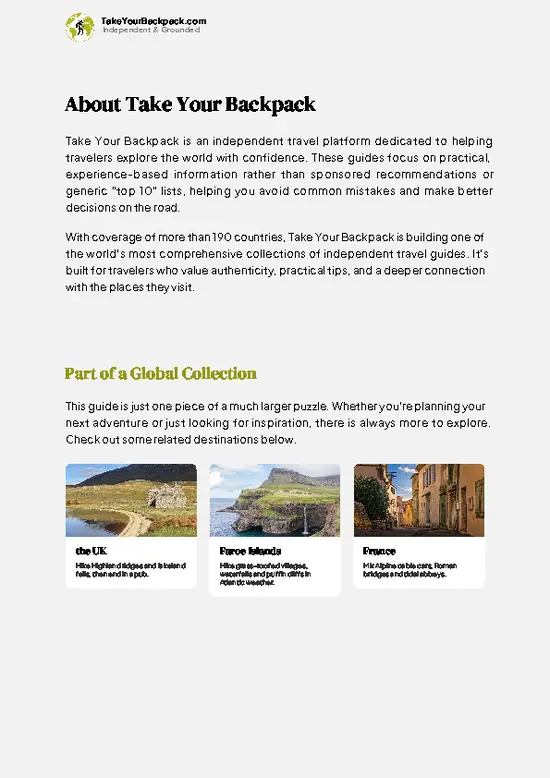
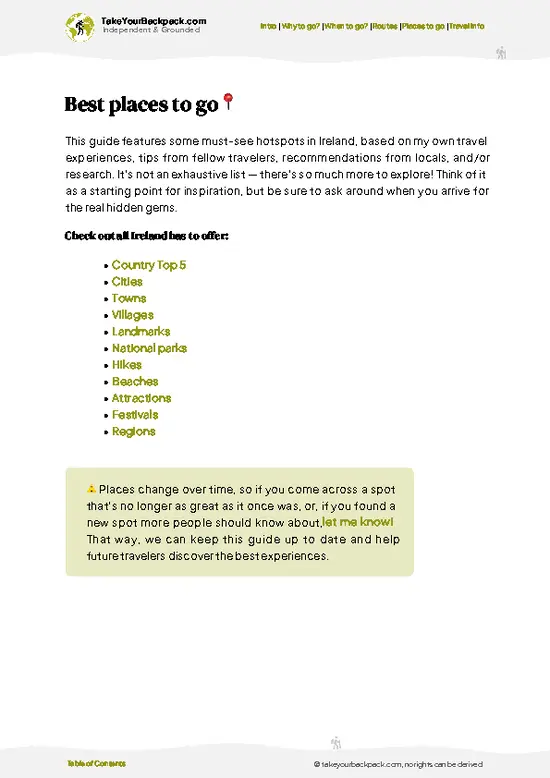
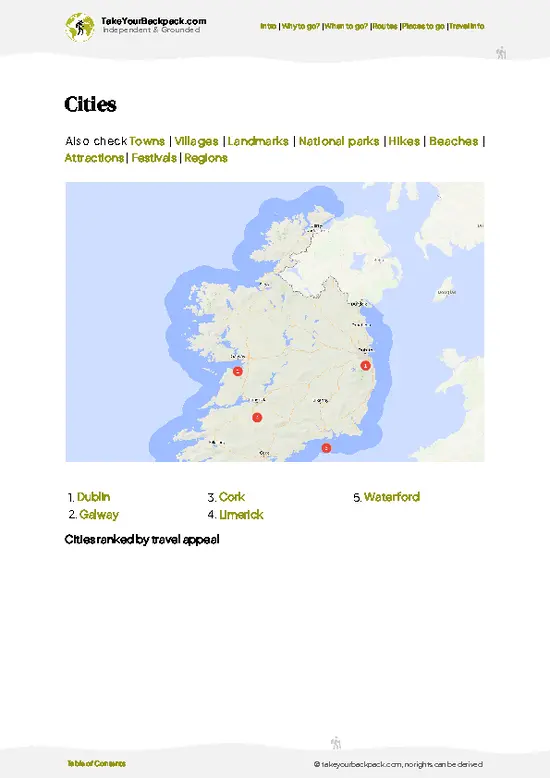
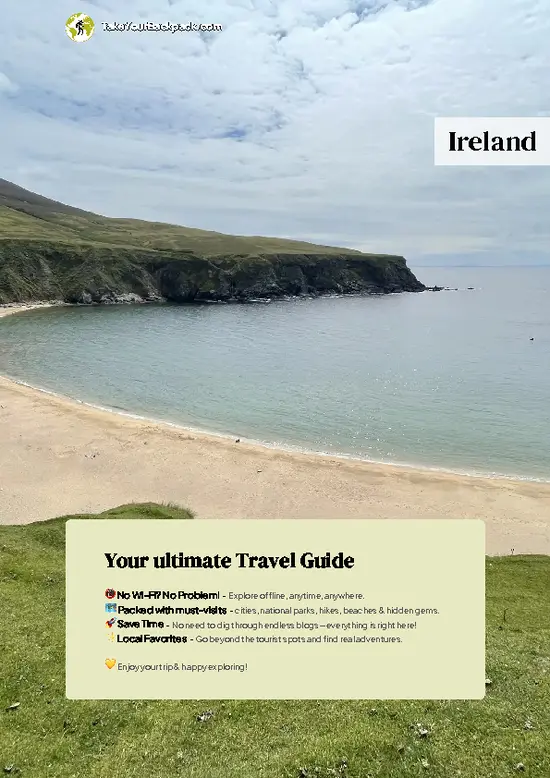
example page 0 from our offline Travel Guide for Ireland
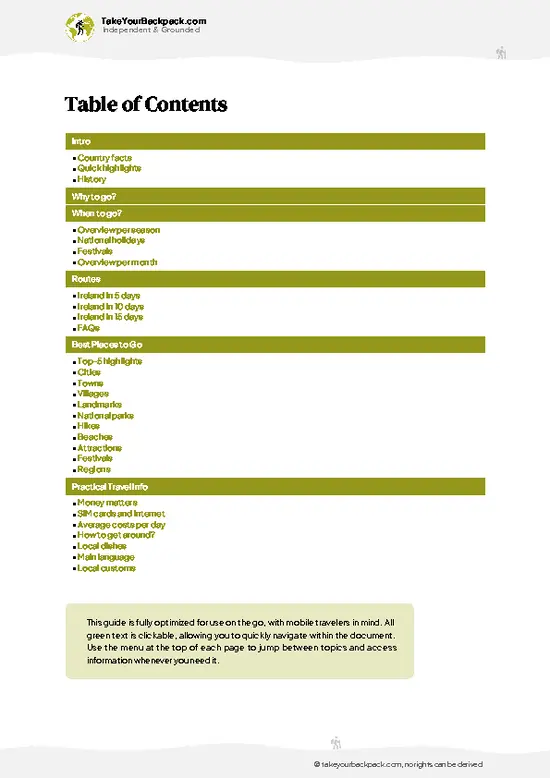
example page 1 from our offline Travel Guide for Ireland
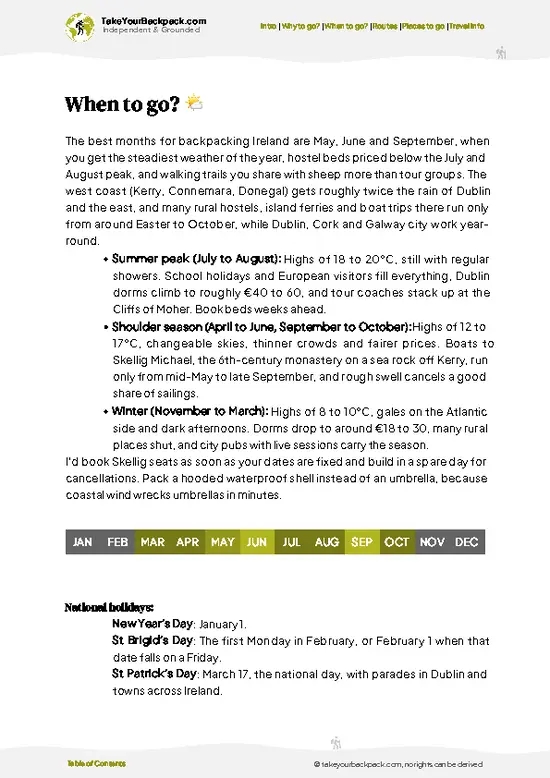
example page 2 from our offline Travel Guide for Ireland
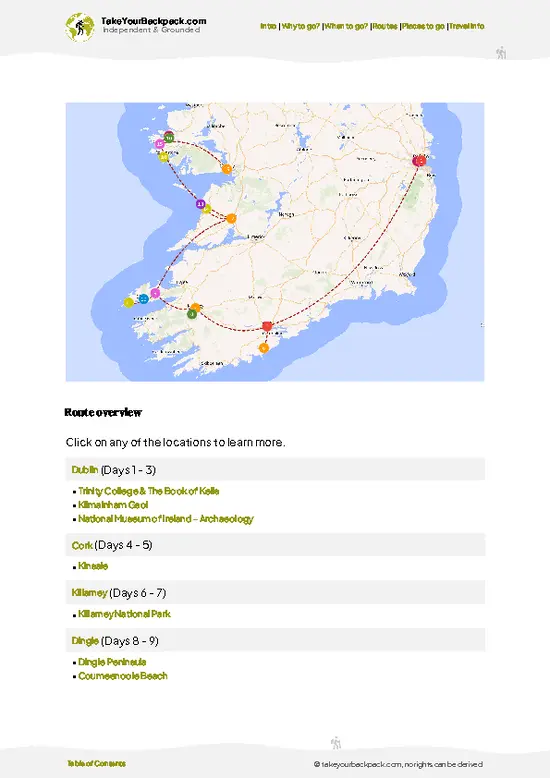
example page 3 from our offline Travel Guide for Ireland
example page 4 from our offline Travel Guide for Ireland
example page 5 from our offline Travel Guide for Ireland
example page 6 from our offline Travel Guide for Ireland
example page 7 from our offline Travel Guide for Ireland
The digital guide (366 pages) contains:
✅ 103 highlights, ranked by travel appeal
✅ Optimized 5, 10 & 15-day travel routes
✅ Cities, national parks, landmarks, beaches
✅ How to get around
✅ Offline-friendly for travel without Wi-Fi
👉 Click to see all 30+ guide features

📅 Plan smarter in minutes, not weeks
✅ Month by month travel advice
✅ Festivals & national holidays
✅ Budget expectations

🗺️ Go to the right places, skip the overrated ones
✅ Honest pros & cons of destinations
✅ Top hikes, parks & viewpoints
✅ Lesser-known places most travelers miss
✅ Clear “worth it vs skip it” guidance

🛏️ Travel smoothly without rookie mistakes
✅ Best areas to stay
✅ Transport systems explained simply
✅ Common scams & safety advice
✅ SIM cards, money & practical tips

🌍 Understand the country, not just visit it
✅ Culture & traditions
✅ Local customs
✅ Festivals worth planning around
✅ Traveler-friendly historical context
✅ Insights that make places more meaningful

📱 Built for real travel conditions
✅ Fully downloadable PDF
✅ Works completely offline
✅ Optimized for phone use
✅ Useful in remote areas & buses
✅ Everything in one place
Stop searching, start planning
Get instant access to your full guide. 30‑day money-back guarantee.
+ Add another guide for just

By proceeding you agree to our terms.
Sent to your inbox immediately after payment • 100% Secure Checkout
Best Backpacking Travel Advisor 2025 tourism awardBest Backpacking
Travel Advisor
2025
What others say about Take Your Backpack Guides:
⭐⭐⭐⭐⭐
Fantastic, amazing amount of information!
⭐⭐⭐⭐⭐
My goodness this is amazing, it's what I've been looking for hats off too you!
⭐⭐⭐⭐⭐
I think this is absolutely BRILLIANT
⭐⭐⭐⭐
Very complete and informative. It's still missing places, but I gotta to commend you
⭐⭐⭐⭐⭐
This is truly amazing, thank you, can't wait to explore it with my kids!
⭐⭐⭐⭐⭐
Awesome resource, thank you!
⭐⭐⭐⭐⭐
This is amazing! Can't wait to explore the ones I haven't seen
⭐⭐⭐⭐
I love this! Well done, great idea.
⭐⭐⭐⭐⭐
Thanks for taking the time to make this gem!
⭐⭐⭐⭐⭐
This might be the best website I've ever seen.
⭐⭐⭐⭐⭐
Congratulations, and thank you so much for your work; it's incredibly valuable.
⭐⭐⭐⭐
In all seriousness I think you did a great job pointing out the important spots
⭐⭐⭐⭐⭐
10/10 very good
⭐⭐⭐⭐⭐
As someone who's only just starting to visit regularly this is awesome, thank you.
⭐⭐⭐⭐
Thank you very much! I'm going to visit my dad, it's going to be very useful!
⭐⭐⭐⭐⭐
This is really cool! We'll be travelling for the first time and this definitely come in handy.
⭐⭐⭐⭐⭐
You are now our minister of culture, congratulations 👨‍💼
⭐⭐⭐⭐⭐
Just wanted to tell you that this is a pearl! Going to follow your recommendations.
⭐⭐⭐⭐⭐
This is so cool. I'll definitely be using the resource for my travels soon.
⭐⭐⭐⭐⭐
This is very impressive! Good work.
⭐⭐⭐⭐⭐
This is an amazing and informative site. Very well done!

🛏️ Where to stay?Top Areas to Stay

Hostels are easy to find in Ireland, with dorm beds running roughly €30 to €60 a night in Dublin and €20 to €35 in smaller cities, plus a network of independent hostels along the west coast. In Dublin, Temple Bar puts you on top of the pubs and walkable to Trinity College, though weekend noise and premium prices are part of the deal, while the area around O’Connell Street and Smithfield north of the Liffey costs less and sits near the Busáras coach station but feels rougher late at night. Galway’s Latin Quarter is compact, lively and full of live music until late, and central Cork around St Patrick’s Street keeps you close to the English Market and the pubs without Dublin prices.

If you enjoy … read more 👉
Hostels are easy to find in Ireland, with dorm beds running roughly €30 to €60 a night in Dublin and €20 to €35 in smaller cities, plus a network of independent hostels along the west coast. In Dublin, Temple Bar puts you on top of the pubs and walkable to Trinity College, though weekend noise and premium prices are part of the deal, while the area around O’Connell Street and Smithfield north of the Liffey costs less and sits near the Busáras coach station but feels rougher late at night. Galway’s Latin Quarter is compact, lively and full of live music until late, and central Cork around St Patrick’s Street keeps you close to the English Market and the pubs without Dublin prices.

If you enjoy meeting fellow travelers, consider choosing hostels with high ratings for atmosphere. On the other hand, if you prefer having your own space, a hotel might be a better option.

IrelandDiscover the Country

👋 Meet the founderWho’s Behind Take Your Backpack?

Johan, backpacker and founder of TakeYourBackpackHi, I’m Johan (Netherlands 🇳🇱), the creator of TakeYourBackpack. Over the past 3 decades, I’ve backpacked through 90+ countries across six continents, gaining extensive experience with independent travel, long-term trips, and overland routes.

This site is built on a combination of firsthand travel experience and carefully curated insights from other backpackers. Many guides are based on places I’ve personally visited, while others bring together tips, observations, and practical advice shared by trusted travelers I’ve met along the way.

The goal is to provide realistic, experience-driven guidance — not generic itineraries — so you can explore destinations with better context, clearer expectations, and more confidence.