×

Japan🇯🇵 | best beachesTop-Rated 10 beaches in Japan

Beaches in Japan are seasonal, regional and heavily managed, which shapes everything from what you pay to when you can swim. Most are patrolled umi-no-ie (seasonal beach huts) shorelines that open only for a short July to August swimming season, with lifeguards, showers and rental gear, and they fill with day-trippers from big cities. Okinawa and the Ryukyu islands are the exception: coral reefs, clear water and a longer season make them the real tropical option, though flights push costs up. The Pacific coast around Tokyo and Kanagawa is easy to reach by train but crowded, while the Sea of Japan side, Kyushu and the Izu Islands are quieter and need buses, ferries or a rental car. For backpackers and independent travelers, the choice comes down to convenience versus clear water: mainland beaches are cheap and reachable by rail pass or local train, while island beaches reward extra planning and budget.

By Johan Kruseman 🇳🇱 | Updated October 18, 2026
Explore the best attractions in Japan

Why go?Why These beach Stand Out

Japan is an archipelago of roughly 14,000 islands with about 30,000 kilometers of coastline, yet it is a mixed proposition for beach travel. The range of latitude is the main reason. Hokkaido sits in a cool temperate zone, while Okinawa lies near the Tropic of Cancer, so the country offers cold northern surf and warm subtropical reef water within one passport stamp. Geography also matters. Steep volcanic terrain means many shores are rocky, dark-sanded or backed by sea walls, and concrete tetrapods line much of the mainland coast to guard against typhoons and tsunami. White sand and coral are concentrated in the southwest islands.

Culture sets the rhythm. Beach use follows a strict swimming season, and outside it the water is often closed, lifeguards are gone and huts are shuttered. Many … read more 👉
Japan is an archipelago of roughly 14,000 islands with about 30,000 kilometers of coastline, yet it is a mixed proposition for beach travel. The range of latitude is the main reason. Hokkaido sits in a cool temperate zone, while Okinawa lies near the Tropic of Cancer, so the country offers cold northern surf and warm subtropical reef water within one passport stamp. Geography also matters. Steep volcanic terrain means many shores are rocky, dark-sanded or backed by sea walls, and concrete tetrapods line much of the mainland coast to guard against typhoons and tsunami. White sand and coral are concentrated in the southwest islands.

Culture sets the rhythm. Beach use follows a strict swimming season, and outside it the water is often closed, lifeguards are gone and huts are shuttered. Many locals cover up with rash guards, hoodies and parasols, and the idea of lying out tanning is less common than elsewhere. Rules are explicit: tattoos can be a problem at some beaches and resort facilities, alcohol, barbecues and fireworks are restricted at many sites, and noise limits are enforced by local ordinance.

Infrastructure is a real strength. Cleanliness, signage, changing rooms and coin showers are reliable, and public transport reaches most popular shorelines, at least in summer. The tradeoff is cost and crowds: peak weeks, especially the mid-August Obon holiday, bring heavy traffic and packed sand. Typhoons from August to October can cancel ferries and flights, and jellyfish arrive on many coasts by late August. Choose Japan for clean, orderly, well-run beaches and a distinct culture, and look to Okinawa if reef snorkeling is the priority.
Behind the Scenes of Selection
The list of best beaches in Japan is created based on beauty, vibe, water quality, activities, and surrounding scenery. If you feel a beach is missing in this list, please let us know.

When to go?Timing Your Visit for the Best Experience

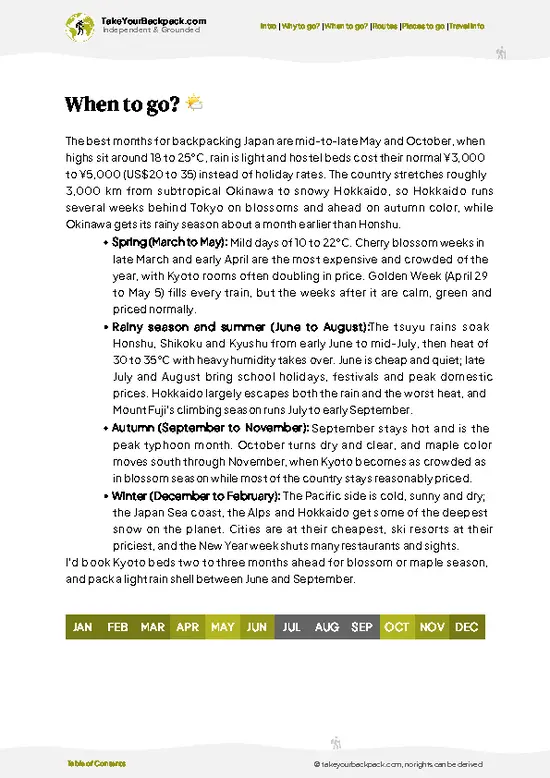
Best months for beaches: The best months for beaches in Japan are July and August, when water temperatures on most of the mainland reach about 24 to 27°C and lifeguards and beach huts operate. This is the only period when most mainland beaches officially open for swimming, usually from mid-July to late August, which is why it dominates planning.

Okinawa and the south: Okinawa has a much longer window. May to October is comfortable for swimming, with sea temperatures of roughly 24 to 29°C, and many reef beaches open from April. The rainy season (tsuyu) runs from about mid-May to late June in Okinawa and from early June to mid-July across most of the mainland, bringing frequent rain and gray skies. Typhoon season peaks from August to September and can ground flights and ferries for a day or … read more 👉
Best months for beaches: The best months for beaches in Japan are July and August, when water temperatures on most of the mainland reach about 24 to 27°C and lifeguards and beach huts operate. This is the only period when most mainland beaches officially open for swimming, usually from mid-July to late August, which is why it dominates planning.

Okinawa and the south: Okinawa has a much longer window. May to October is comfortable for swimming, with sea temperatures of roughly 24 to 29°C, and many reef beaches open from April. The rainy season (tsuyu) runs from about mid-May to late June in Okinawa and from early June to mid-July across most of the mainland, bringing frequent rain and gray skies. Typhoon season peaks from August to September and can ground flights and ferries for a day or more, so build in buffer days if booking tight connections.

Shoulder seasons and crowds: For fewer people, aim for late June in Okinawa after the rains thin or September on the mainland, when crowds fall, though jellyfish become more common and swimming areas begin to close. Late April to early June suits Okinawa for lower prices and calm conditions, although water is cooler at around 22 to 24°C. Hokkaido and the Sea of Japan coast have a short season, essentially late July to mid-August.

Peak periods and prices: Avoid the Obon week in mid-August and Golden Week (late April to early May) if possible. Domestic demand pushes accommodation up by roughly 30 to 100 percent, trains and flights sell out, and beaches near Tokyo fill early in the day. Winter is not for swimming, though Okinawa stays mild at 17 to 20°C and is cheap for walking beaches.

beach hoppingPlanning Your Route Efficiently

How long to allow: A trip combining several beaches in Japan needs 10 to 14 days if you mix the mainland with Okinawa, and 5 to 7 days if you stay on one coast. Japan is long and north-south, so distances add up faster than the map suggests.

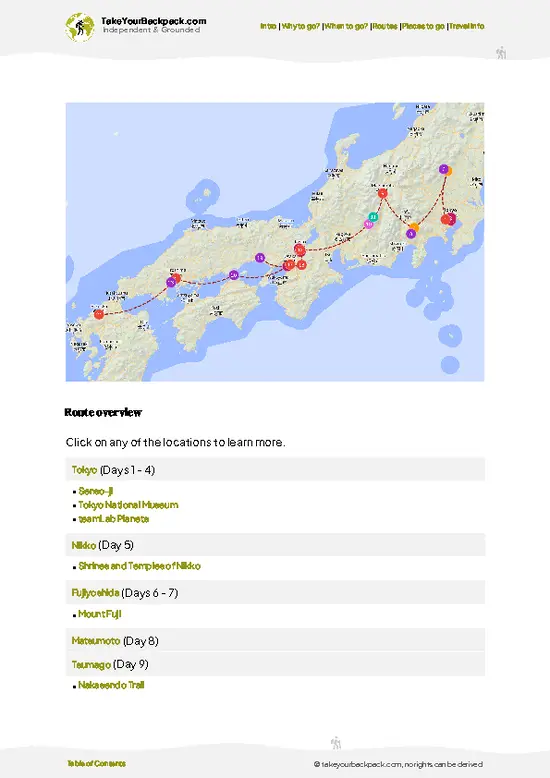
Which regions group well: The simplest cluster is Tokyo with Kanagawa, the Shonan coast and the Izu Peninsula, all reachable by train in 1 to 3 hours. Kyushu and western Honshu form another sensible group, linked by the Shinkansen from Osaka or Hiroshima to Fukuoka in about 1.5 to 2.5 hours. Okinawa sits apart: flights from Tokyo take around 3 hours, and from Osaka or Fukuoka about 2 hours, with budget carriers often cheaper than rail. Because the swimming season is set by climate, the best direction of travel is to start on the mainland and finish in … read more 👉
How long to allow: A trip combining several beaches in Japan needs 10 to 14 days if you mix the mainland with Okinawa, and 5 to 7 days if you stay on one coast. Japan is long and north-south, so distances add up faster than the map suggests.

Which regions group well: The simplest cluster is Tokyo with Kanagawa, the Shonan coast and the Izu Peninsula, all reachable by train in 1 to 3 hours. Kyushu and western Honshu form another sensible group, linked by the Shinkansen from Osaka or Hiroshima to Fukuoka in about 1.5 to 2.5 hours. Okinawa sits apart: flights from Tokyo take around 3 hours, and from Osaka or Fukuoka about 2 hours, with budget carriers often cheaper than rail. Because the swimming season is set by climate, the best direction of travel is to start on the mainland and finish in Okinawa in late spring, or the reverse in September when the mainland closes up and the south stays open.

Time per stop: Allow 2 to 3 nights for each mainland region and 4 to 6 nights on Okinawa or a remote island, where ferries and buses run on thin schedules. Transfers between regions typically cost half a day once you add station changes and luggage handling.

Planning mistakes: The most common error is squeezing too many coasts into one week, which turns a beach trip into a transit trip. Instead, pick two regions. Another is ignoring last trains and ferries, since service to seaside towns often ends by early evening and some island ferries run only once or twice daily. Check timetables the day before. Travelers also book flights without a typhoon buffer, so leave a spare day before any international departure. Finally, many arrive in mid-August without reservations; book rooms and rail seats well ahead.

The ListMust-Visit beaches in Japan

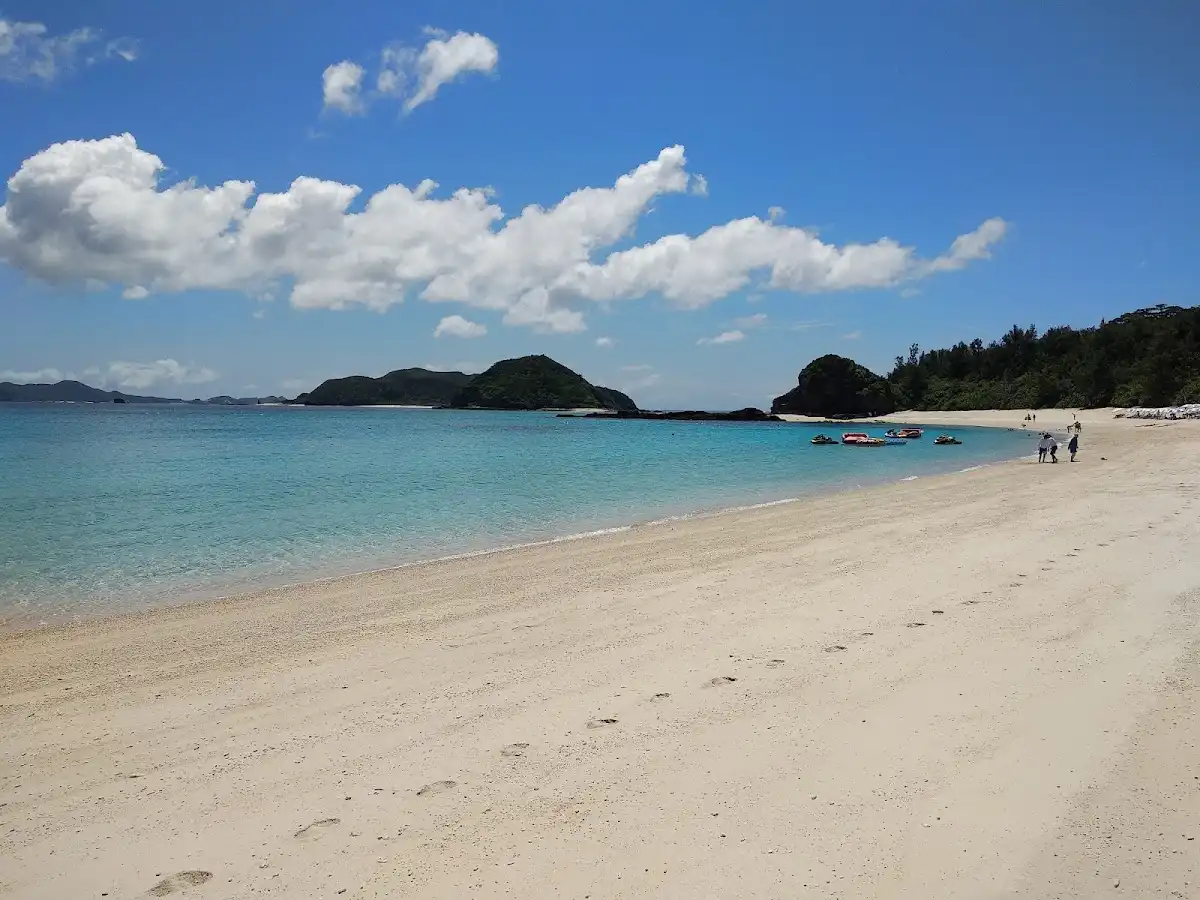
1 Furuzamami Beach

coral reefs, snorkeling, island ferry access

Snorkel just offshore among coral and tropical fish, with easy ferry connections making this a popular day trip from Okinawa’s main island.

japan-beach-furuzamami-beach
© Google |

2 Yonaha Maehama Beach

wide bay, fine white sand, shallow gradient

Stroll along a broad, gently curving beach where shallow water stretches far out, making it ideal for wading and family swimming.

japan-beach-yonaha-maehama-beach
© Google |

3 Hatenohama Beach

offshore sandbar, boat-only, open horizon

Reach a long, isolated sandbar by boat, surrounded by clear water and sky, with no shade or facilities—just pure, exposed sand.

4 Sunayama Beach

sand arch, white dunes, shallow entry

Pass through a natural archway to reach soft sand and shallow water, with gentle slopes ideal for relaxed swimming and sunset views.

5 Kondoi Beach

tidal flats, shallow turquoise, Taketomi Island

Wade through shallow, glassy water over wide tidal flats, with distant views of neighboring islands and minimal development along the shore.

6 Nishihama Beach

remote island, blue lagoon, powder sand

Experience a quiet island shoreline with fine sand and shallow, intensely blue water, popular for snorkeling and peaceful walks.

japan-beach-nishihama-beach
© Google |

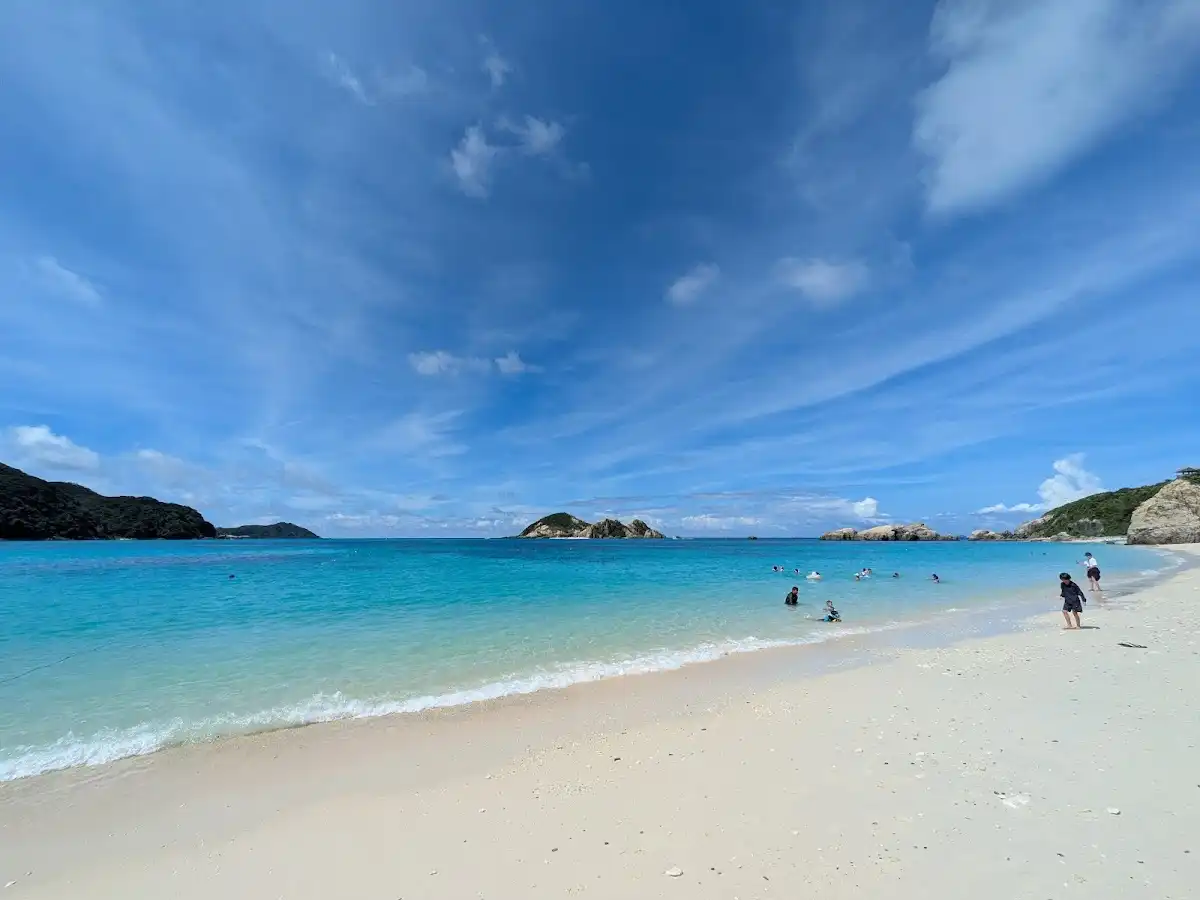
7 Aharen Beach

gentle bay, kayak rentals, soft sand

Paddle calm waters in a protected bay, rent gear on site, and enjoy a relaxed atmosphere with a few small cafés nearby.

japan-beach-aharen-beach
© Google |

8 Emerald Beach

protected lagoon, family facilities, Okinawa main island

Swim in sheltered water within a designated swimming zone, with lifeguards and easy access to restrooms and shaded picnic spots.

japan-beach-emerald-beach
© Google |

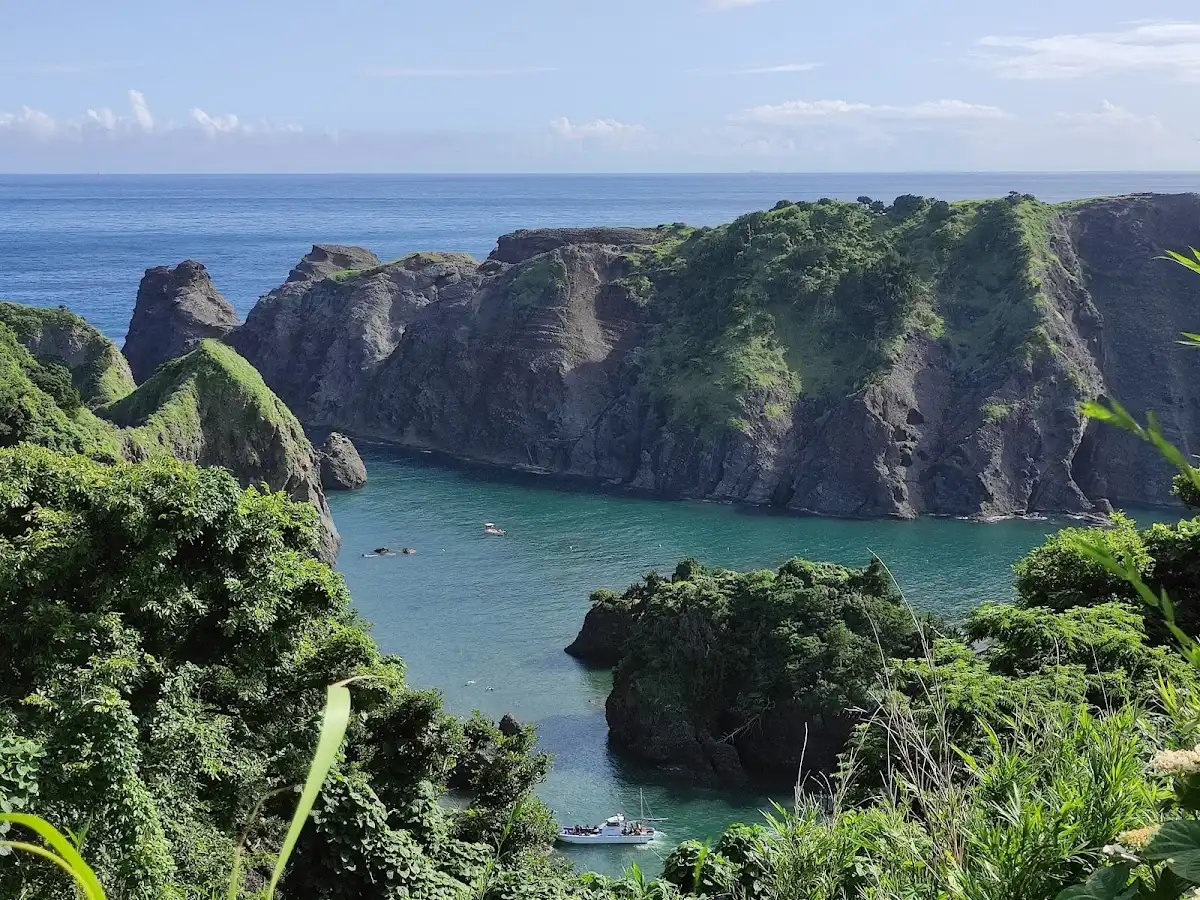
9 Hirizo Beach

boat access, clear water, snorkeling reefs

Arrive by boat to a secluded cove known for underwater visibility, where rocky reefs attract snorkelers seeking vibrant marine life.

japan-beach-hirizo-beach
© Google |

10 Chichibugahama Beach

tidal pools, mirror reflections, Seto Inland Sea

Visit at low tide to see shallow pools create striking mirror effects, drawing photographers and sunset watchers to this unique spot.

11 Jodogahama Beach

rocky coves, pine-topped islets, calm bay

Wander along a coastline where sculpted white rocks and tranquil waters create a sheltered spot for swimming and easy coastal walks.

12 Kujukuri Beach

endless sand, surf breaks, open Pacific

Walk for miles on uninterrupted shoreline, watch surfers ride steady waves, and experience the expanse of Japan’s longest straight beach.

japan-beach-kujukuri-beach
© Google |

13 Shirahama Ohama Beach

broad sand, summer crowds, hot spring town

Swim in the ocean by day and soak in nearby hot springs at night, with a lively summer scene and wide, accessible shoreline.

14 Kouri Beach

bridge access, shallow lagoon, heart-shaped rock

Cross a scenic bridge to reach shallow, swimmable water and a photogenic rock formation that draws day-trippers and couples.

japan-beach-kouri-beach
© Google |

15 Okuma Beach

resort area, palm trees, calm inlet

Relax on a managed stretch of sand lined with palms, where gentle waves and nearby amenities suit travelers seeking comfort and convenience.

16 Kamakura Beach

historic town, surfing, easy train access

Combine a visit to ancient temples with a swim or surf session, just steps from a lively town and direct rail connections.

17 Zushi Beach

bay views, windsurfing, Tokyo proximity

Try windsurfing or paddleboarding close to Tokyo, with a relaxed vibe and views across the bay toward distant hills.

18 Miho no Matsubara

pine groves, black sand, Mount Fuji views

Walk beneath ancient pines along a dark sand shore, with clear weather offering distant views of Mount Fuji across the bay.

19 Tatadohama Beach

surf waves, golden sand, rugged cliffs

Watch surfers tackle consistent breaks, relax on wide sand, and explore rocky outcrops that frame this energetic stretch of coast.

20 Takeno Beach

gentle surf, camping area, rural coastline

Camp near a quiet stretch of sand with mild waves, where rural surroundings and simple facilities attract independent travelers.

21 Tomori Beach

coral sand, turquoise shallows, subtropical flora

Swim in clear, shallow water edged by lush greenery, with coral fragments underfoot and a quiet, remote feel even in summer.

22 Suishohama Beach

clear water, pebbly shore, Sea of Japan

Swim in unusually transparent water for the region, with a pebbled beach that stays quieter than sandy alternatives nearby.

23 Futamiura Beach

sacred rocks, sunrise views, Shinto rituals

Watch the sun rise behind two sacred rocks joined by a rope, with religious ceremonies and a spiritual atmosphere year-round.

24 Katsuura Beach

fishing port, local seafood, small bay

Sample fresh catch at nearby markets, swim in a compact bay, and watch fishing boats come and go from the working harbor.

25 Koganezaki Beach

golden cliffs, rocky shore, sunset views

Climb over rocky outcrops and watch the sun set against ochre cliffs, with limited sand but striking scenery for photographers.

26 Hoshizuna no Hama

star-shaped sand, Ishigaki region, shallow reef

Examine tiny star-shaped grains underfoot, snorkel in shallow water, and enjoy a quiet setting far from large resorts.

27 Ibusuki Beach

black sand, natural hot springs, volcanic coast

Sink into naturally heated sand baths on a volcanic shoreline, where geothermal activity shapes both the landscape and the local bathing culture.

28 Kafuka Beach

remote Hokkaido, drift ice, cool summers

Experience a northern shoreline where cool air and occasional drift ice set a stark contrast to Japan’s southern beaches.

Think you know Japan?

Prove you’re a true local — uncover 18 lesser-known beaches in Japan that locals tend to keep to themselves.
Loading the map 🌍

Expert viewExpert Commentary on beaches

How many beaches to visit: I advise three to five beach stops in a single trip. Japan’s beach experience depends on seasonal facilities and on getting between far-apart coasts, so each extra stop adds transfer time more than swim time. Three stops let you spend whole days in the water; more than five and you spend most of your trip on trains, ferries and platforms.

Prioritizing by travel style: If you want reef snorkeling and clear water, put Okinawa or another southwestern island first, because mainland water is rarely as clear. If you travel on a tight budget or on a rail pass, pick mainland beaches near big cities, where a local train does the work. If you want quiet and space, choose the Sea of Japan coast or remote islands outside Obon, and accept longer transfers. Surfers can ride on … read more 👉
How many beaches to visit: I advise three to five beach stops in a single trip. Japan’s beach experience depends on seasonal facilities and on getting between far-apart coasts, so each extra stop adds transfer time more than swim time. Three stops let you spend whole days in the water; more than five and you spend most of your trip on trains, ferries and platforms.

Prioritizing by travel style: If you want reef snorkeling and clear water, put Okinawa or another southwestern island first, because mainland water is rarely as clear. If you travel on a tight budget or on a rail pass, pick mainland beaches near big cities, where a local train does the work. If you want quiet and space, choose the Sea of Japan coast or remote islands outside Obon, and accept longer transfers. Surfers can ride on the Pacific side much of the year, with wetsuits needed outside summer. Because many mainland beaches close outside July and August, experienced travelers plan around the opening dates instead of assuming the sand will be staffed.

What it costs: Plan on US$60 to 110 a day (about ¥9,000 to 16,500) on the mainland, including a hostel dorm or budget business hotel, local transport and simple meals from convenience stores and set-meal restaurants. Okinawa and island stays run US$80 to 140 a day because flights, ferries and lodging cost more in season. Beach entry is usually free, but extras add up per visit: showers and lockers about ¥300 to 700 (US$2 to 5), parasol and chair rental ¥1,000 to 3,000 (US$7 to 20), snorkel gear ¥1,000 to 2,500 (US$7 to 17), and parking ¥500 to 2,000 (US$3 to 14) at busy sites. Guided snorkeling or diving tours generally run ¥6,000 to 15,000 (US$40 to 100). Experienced travelers bring their own mask and snorkel, since daily rental pays for a set within a few days.

Safety: Swim only between flagged zones during lifeguard hours. Outside the season, many beaches have no patrol and warnings apply, even when the water looks calm. Rip currents, called kishō nami or offshore flows, are a leading cause of drowning on the Pacific coast, and swells from distant typhoons can arrive under clear skies, so check the Japan Meteorological Agency forecast before entering. Box jellyfish and other stinging species appear around Okinawa from roughly May to October, and many beaches install nets, so swim inside them and wear a rash guard. Sea urchins and cone shells inhabit reef flats, so water shoes help. Do not touch or collect marine life.

Cultural considerations: Rules are posted and enforced. Tattoos can bring refusal at some beaches, pools and resort facilities, and covering them with a rash guard or patch is the usual workaround. Rinse sand off before entering huts or vehicles, take all rubbish home or sort it into the marked bins, and skip alcohol, fires, fireworks or barbecues unless a site designates an area. Keep music low. Changing in public is frowned upon, so use the paid changing rooms. Carry some cash, as many beach huts and rental stands do not accept cards.

✈️ The backpacker research shortcutJapan Travel Guide

An offline-friendly backpacking guide with optimized travel routes, ranked highlights, transport advice, and the best areas to stay.
example page 0 from our offline Travel Guide for Japan
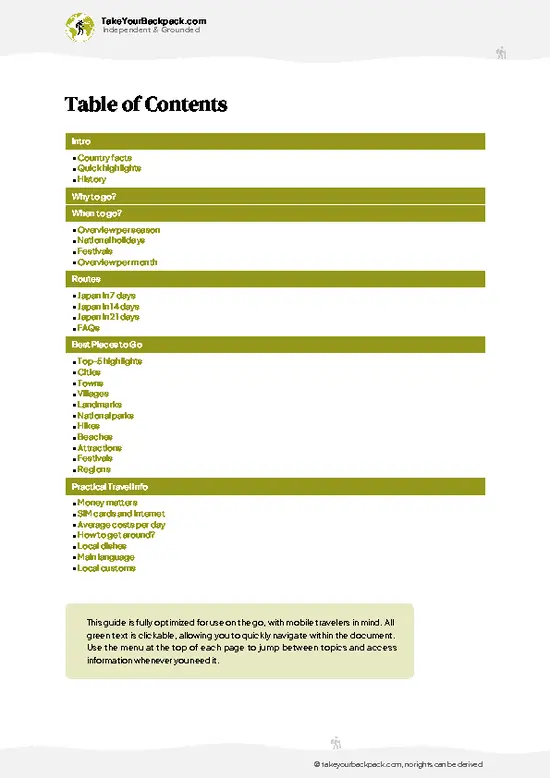
example page 1 from our offline Travel Guide for Japan
example page 2 from our offline Travel Guide for Japan
example page 3 from our offline Travel Guide for Japan
example page 4 from our offline Travel Guide for Japan
example page 5 from our offline Travel Guide for Japan
example page 6 from our offline Travel Guide for Japan
example page 7 from our offline Travel Guide for Japan
The digital guide (475 pages) contains:
✅ 139 highlights, ranked by travel appeal
✅ Optimized 7, 14 & 21-day travel routes
✅ Cities, national parks, landmarks, beaches
✅ How to get around
✅ Offline-friendly for travel without Wi-Fi
👉 Click to see all 30+ guide features

📅 Plan smarter in minutes, not weeks
✅ Month by month travel advice
✅ Festivals & national holidays
✅ Budget expectations

🗺️ Go to the right places, skip the overrated ones
✅ Honest pros & cons of destinations
✅ Top hikes, parks & viewpoints
✅ Lesser-known places most travelers miss
✅ Clear “worth it vs skip it” guidance

🛏️ Travel smoothly without rookie mistakes
✅ Best areas to stay
✅ Transport systems explained simply
✅ Common scams & safety advice
✅ SIM cards, money & practical tips

🌍 Understand the country, not just visit it
✅ Culture & traditions
✅ 52 Essential phrases & customs
✅ Festivals worth planning around
✅ Traveler-friendly historical context
✅ Insights that make places more meaningful

📱 Built for real travel conditions
✅ Fully downloadable PDF
✅ Works completely offline
✅ Optimized for phone use
✅ Useful in remote areas & buses
✅ Everything in one place
Stop searching, start planning
Get instant access to your full guide. 30‑day money-back guarantee.
+ Add another guide for just

By proceeding you agree to our terms.
Sent to your inbox immediately after payment • 100% Secure Checkout
Best Backpacking Travel Advisor 2025 tourism awardBest Backpacking
Travel Advisor
2025
What others say about Take Your Backpack Guides:
⭐⭐⭐⭐⭐
Fantastic, amazing amount of information!
⭐⭐⭐⭐⭐
My goodness this is amazing, it's what I've been looking for hats off too you!
⭐⭐⭐⭐⭐
I think this is absolutely BRILLIANT
⭐⭐⭐⭐
Very complete and informative. It's still missing places, but I gotta to commend you
⭐⭐⭐⭐⭐
This is truly amazing, thank you, can't wait to explore it with my kids!
⭐⭐⭐⭐⭐
Awesome resource, thank you!
⭐⭐⭐⭐⭐
This is amazing! Can't wait to explore the ones I haven't seen
⭐⭐⭐⭐
I love this! Well done, great idea.
⭐⭐⭐⭐⭐
Thanks for taking the time to make this gem!
⭐⭐⭐⭐⭐
This might be the best website I've ever seen.
⭐⭐⭐⭐⭐
Congratulations, and thank you so much for your work; it's incredibly valuable.
⭐⭐⭐⭐
In all seriousness I think you did a great job pointing out the important spots
⭐⭐⭐⭐⭐
10/10 very good
⭐⭐⭐⭐⭐
As someone who's only just starting to visit regularly this is awesome, thank you.
⭐⭐⭐⭐
Thank you very much! I'm going to visit my dad, it's going to be very useful!
⭐⭐⭐⭐⭐
This is really cool! We'll be travelling for the first time and this definitely come in handy.
⭐⭐⭐⭐⭐
You are now our minister of culture, congratulations 👨‍💼
⭐⭐⭐⭐⭐
Just wanted to tell you that this is a pearl! Going to follow your recommendations.
⭐⭐⭐⭐⭐
This is so cool. I'll definitely be using the resource for my travels soon.
⭐⭐⭐⭐⭐
This is very impressive! Good work.
⭐⭐⭐⭐⭐
This is an amazing and informative site. Very well done!

🛏️ Where to stay?Top Places to Consider Staying

Japan has a dense network of hostels, capsule hotels and guesthouses, with dorm beds typically running ¥3,000 to 5,500 (US$20 to 37) a night and private twin rooms from about ¥8,000 (US$53). In Tokyo, Asakusa and Ueno hold the most budget beds and stay calm at night with easy airport rail links, while Shinjuku puts you on top of the nightlife and the busiest train hub at the cost of noise and higher prices. In Osaka, Namba is loud, central and walkable to Dotonbori, and Shin-Imamiya is the cheapest area in the country but scruffier after dark; in Kyoto, the streets around Kyoto Station and Gion trade a quieter evening for short walks or bus rides to the temples.

If you enjoy meeting fellow travelers, … read more 👉
Japan has a dense network of hostels, capsule hotels and guesthouses, with dorm beds typically running ¥3,000 to 5,500 (US$20 to 37) a night and private twin rooms from about ¥8,000 (US$53). In Tokyo, Asakusa and Ueno hold the most budget beds and stay calm at night with easy airport rail links, while Shinjuku puts you on top of the nightlife and the busiest train hub at the cost of noise and higher prices. In Osaka, Namba is loud, central and walkable to Dotonbori, and Shin-Imamiya is the cheapest area in the country but scruffier after dark; in Kyoto, the streets around Kyoto Station and Gion trade a quieter evening for short walks or bus rides to the temples.

If you enjoy meeting fellow travelers, consider choosing hostels with high ratings for atmosphere. On the other hand, if you prefer having your own space, a hotel might be a better option.

JapanMore Places Across Japan

👋 Meet the founderWho’s Behind Take Your Backpack?

Johan, backpacker and founder of TakeYourBackpackHi, I’m Johan (Netherlands 🇳🇱), the creator of TakeYourBackpack. Over the past 3 decades, I’ve backpacked through 90+ countries across six continents, gaining extensive experience with independent travel, long-term trips, and overland routes.

This site is built on a combination of firsthand travel experience and carefully curated insights from other backpackers. Many guides are based on places I’ve personally visited, while others bring together tips, observations, and practical advice shared by trusted travelers I’ve met along the way.

The goal is to provide realistic, experience-driven guidance — not generic itineraries — so you can explore destinations with better context, clearer expectations, and more confidence.